


 Скачать презентацию What Will Education Look Like During the 21
a88a277b175c0f6c324786b3736712ed.ppt
- Количество слайдов: 41
 What Will Education Look Like During the 21 st Century? • By: Ken Stevenson • University of South Carolina
 First, What’s Occurring in the US that’s Driving Educational Trends? • • • BIRTH PATTERNS AGING POPULATION FAMILY STATUS VALUE OF AN EDUCATION TECHNOLOGY CULTURE
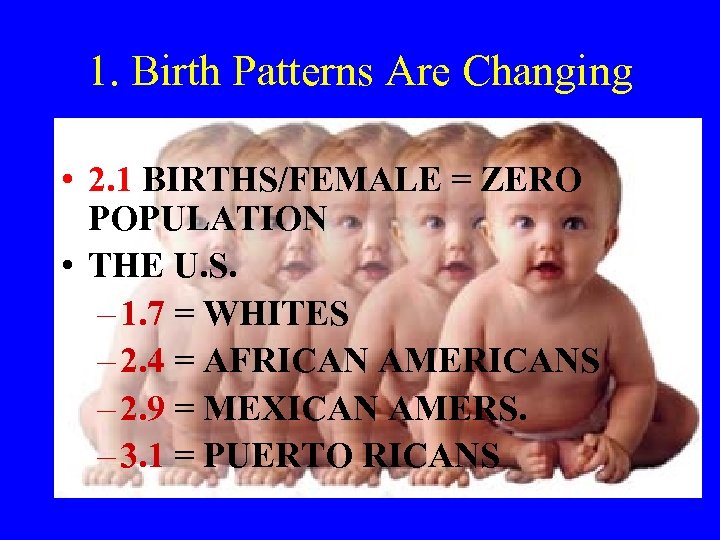 1. Birth Patterns Are Changing • 2. 1 BIRTHS/FEMALE = ZERO POPULATION • THE U. S. – 1. 7 = WHITES – 2. 4 = AFRICAN AMERICANS – 2. 9 = MEXICAN AMERS. – 3. 1 = PUERTO RICANS
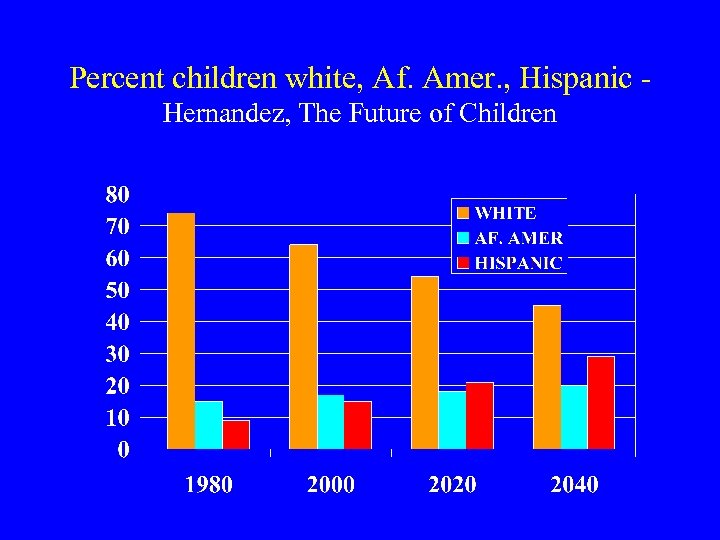 Percent children white, Af. Amer. , Hispanic Hernandez, The Future of Children
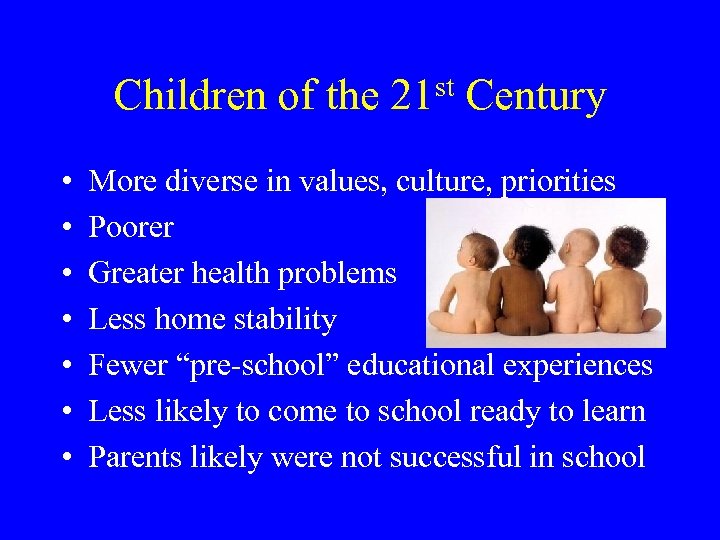 Children of the • • st 21 Century More diverse in values, culture, priorities Poorer Greater health problems Less home stability Fewer “pre-school” educational experiences Less likely to come to school ready to learn Parents likely were not successful in school
 2. WE’RE GETTING OLDER
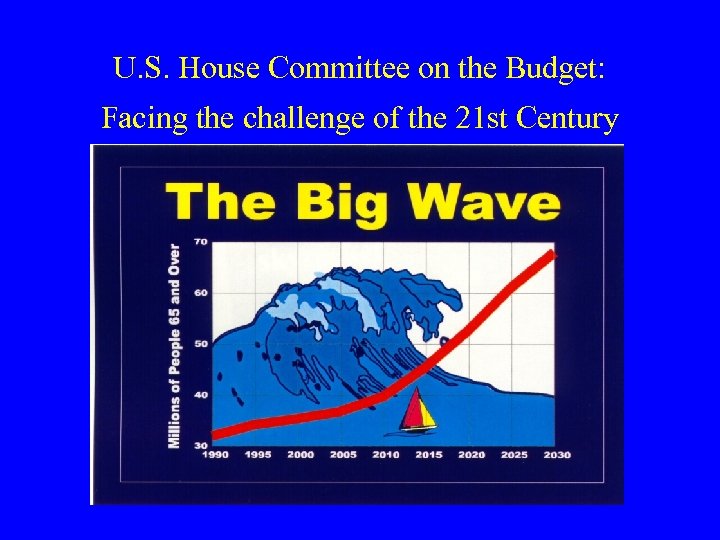 U. S. House Committee on the Budget: Facing the challenge of the 21 st Century
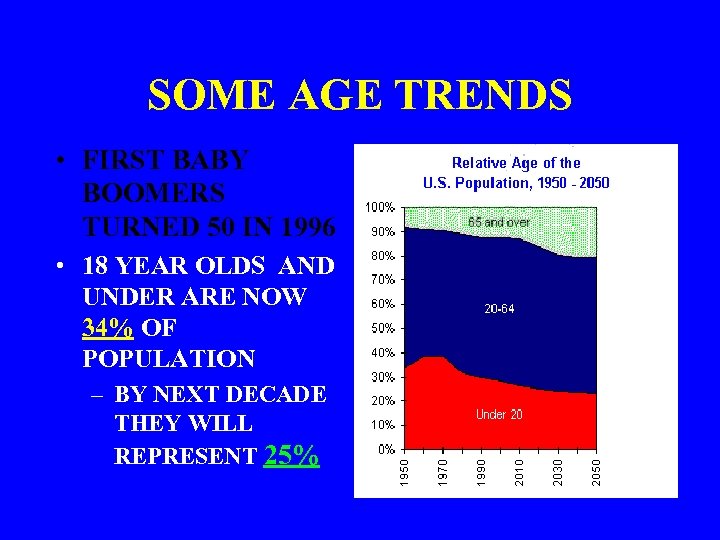 SOME AGE TRENDS • FIRST BABY BOOMERS TURNED 50 IN 1996 • 18 YEAR OLDS AND UNDER ARE NOW 34% OF POPULATION – BY NEXT DECADE THEY WILL REPRESENT 25% •
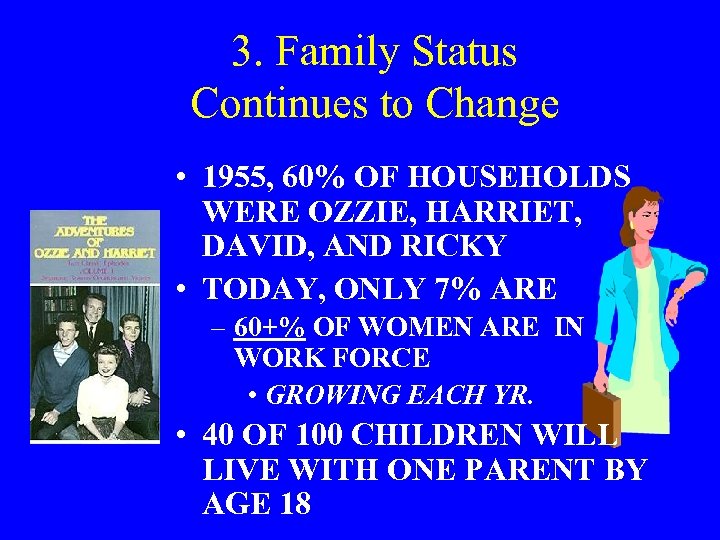 3. Family Status Continues to Change • 1955, 60% OF HOUSEHOLDS WERE OZZIE, HARRIET, DAVID, AND RICKY • TODAY, ONLY 7% ARE – 60+% OF WOMEN ARE IN WORK FORCE • GROWING EACH YR. • 40 OF 100 CHILDREN WILL LIVE WITH ONE PARENT BY AGE 18
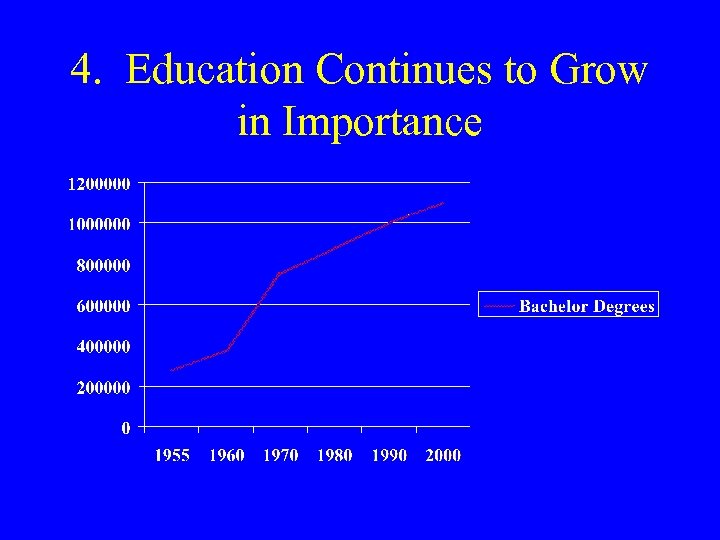 4. Education Continues to Grow in Importance
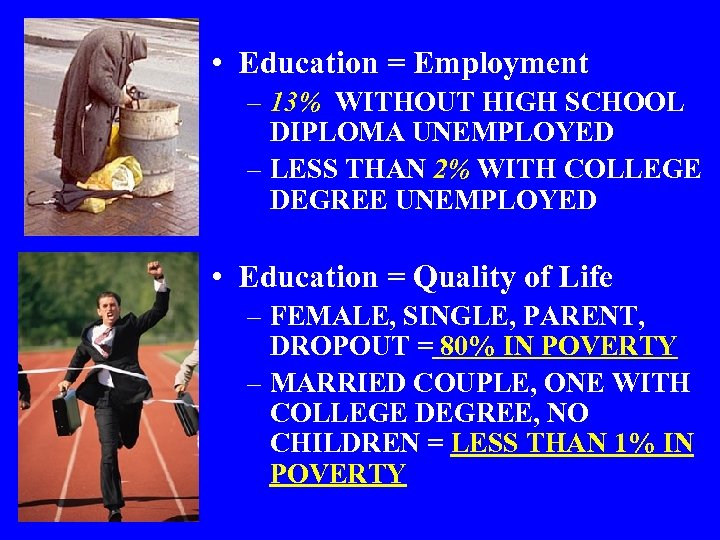 • Education = Employment – 13% WITHOUT HIGH SCHOOL DIPLOMA UNEMPLOYED – LESS THAN 2% WITH COLLEGE DEGREE UNEMPLOYED • Education = Quality of Life – FEMALE, SINGLE, PARENT, DROPOUT = 80% IN POVERTY – MARRIED COUPLE, ONE WITH COLLEGE DEGREE, NO CHILDREN = LESS THAN 1% IN POVERTY
 5. Technology Grows - & Grows! "Since 1984, the country has experienced more than a five-fold increase in the proportion of households with computers, " said Census Bureau analyst Eric Newburger, author of Home Computers and Internet Use in the United States: August 2000. "In addition, Internet use is rapidly becoming synonymous with computer availability. "
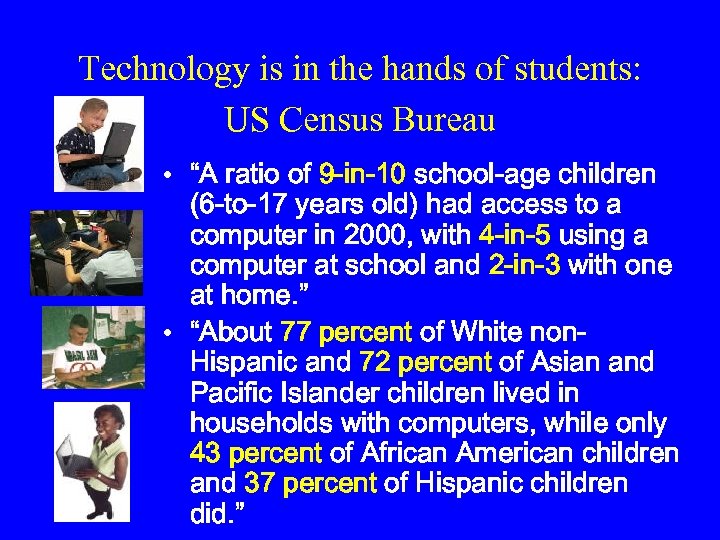 Technology is in the hands of students: US Census Bureau • “A ratio of 9 -in-10 school-age children (6 -to-17 years old) had access to a computer in 2000, with 4 -in-5 using a computer at school and 2 -in-3 with one at home. ” • “About 77 percent of White non. Hispanic and 72 percent of Asian and Pacific Islander children lived in households with computers, while only 43 percent of African American children and 37 percent of Hispanic children did. ”
 6. A Changing Culture • PLURALISM AND DIVERSITY • “I” GENERATIONS • MORE CONSERVATIVE VIEW OF GOVERNMENT • FEAR & VIOLENCE
 Cocooning Ourselves From Reality?
 How will the Six General Trends Affect Education? Let’s Look at the Possibilities
 Immediate and Intermediate Trends of the Future: A Baker’s Dozen
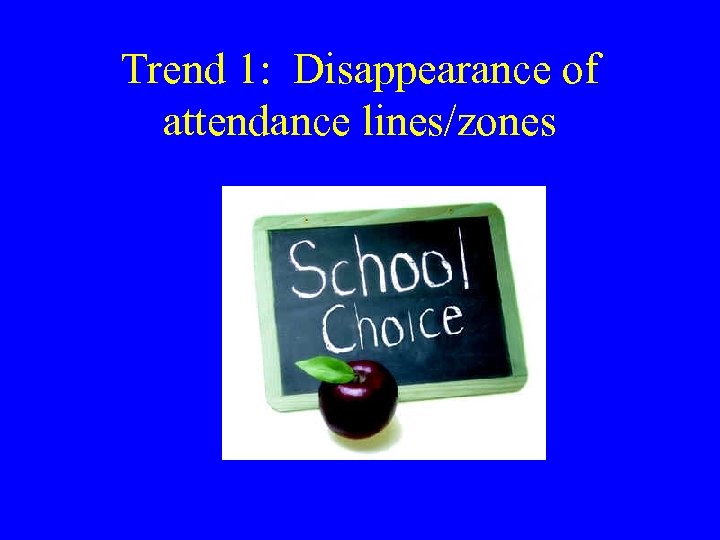 Trend 1: Disappearance of attendance lines/zones
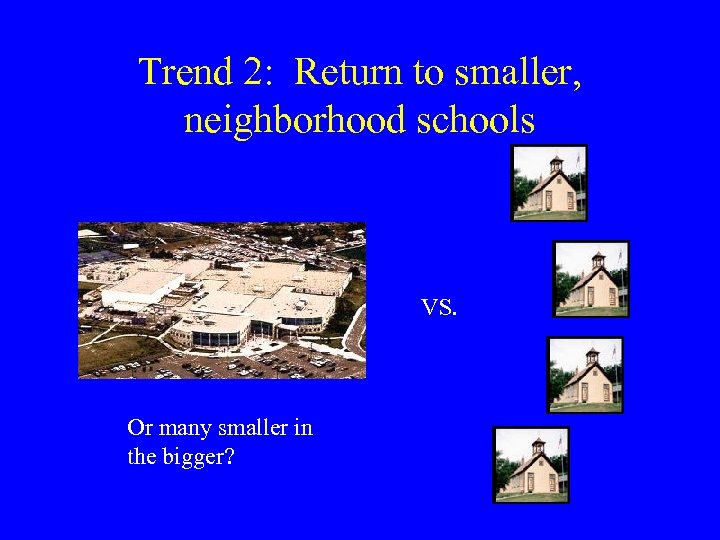 Trend 2: Return to smaller, neighborhood schools VS. Or many smaller in the bigger?
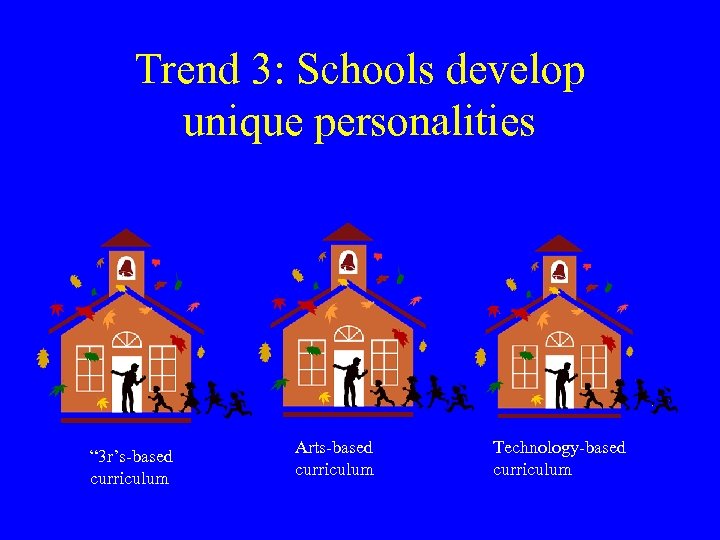 Trend 3: Schools develop unique personalities “ 3 r’s-based curriculum Arts-based curriculum Technology-based curriculum
 New Definition of “Fairness? ” VS.
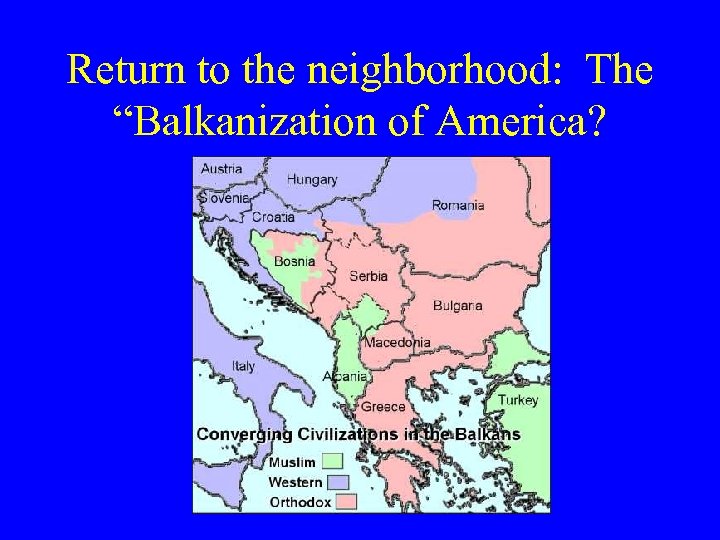 Return to the neighborhood: The “Balkanization of America?
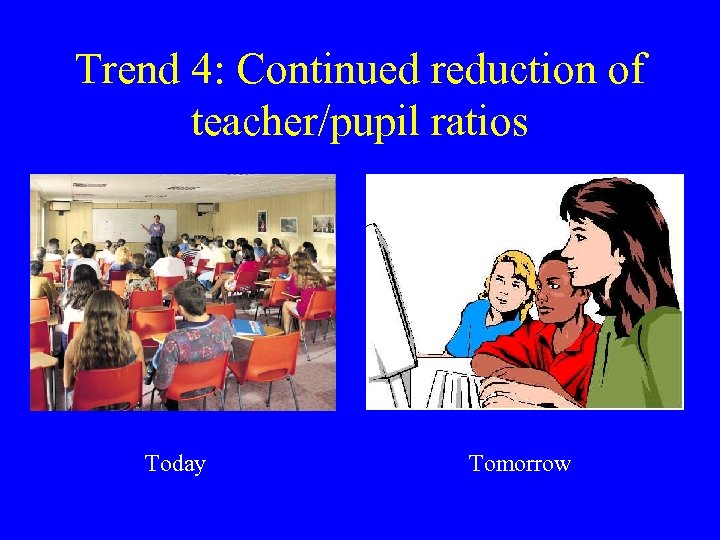 Trend 4: Continued reduction of teacher/pupil ratios Today Tomorrow
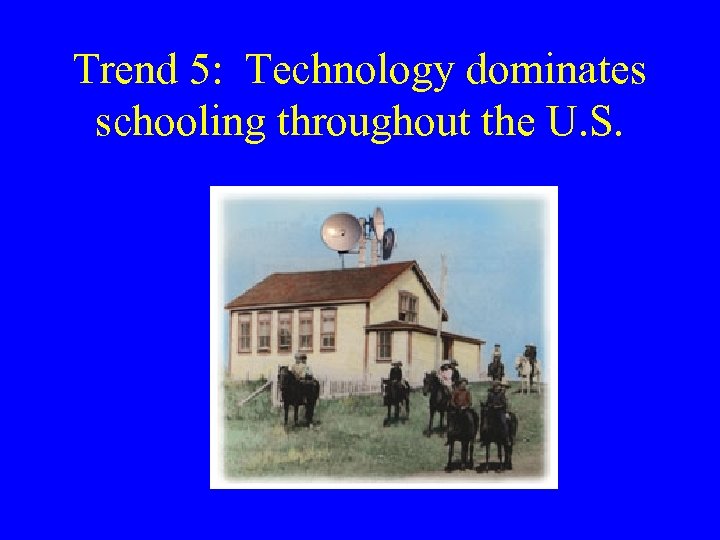 Trend 5: Technology dominates schooling throughout the U. S.
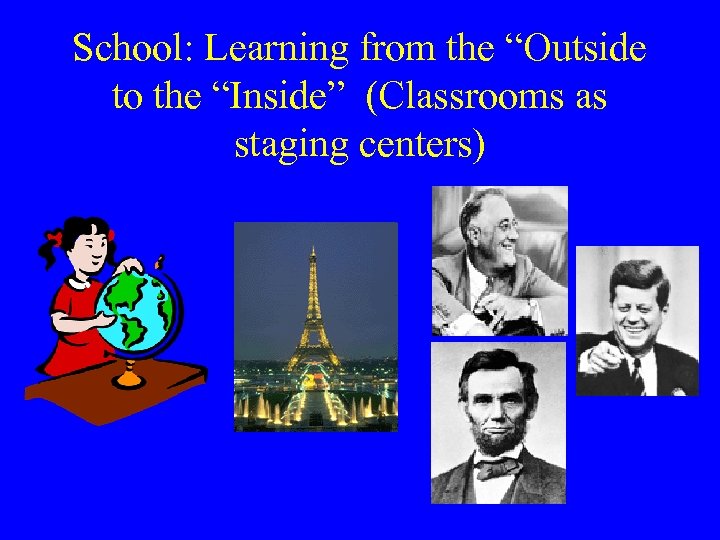 School: Learning from the “Outside to the “Inside” (Classrooms as staging centers)
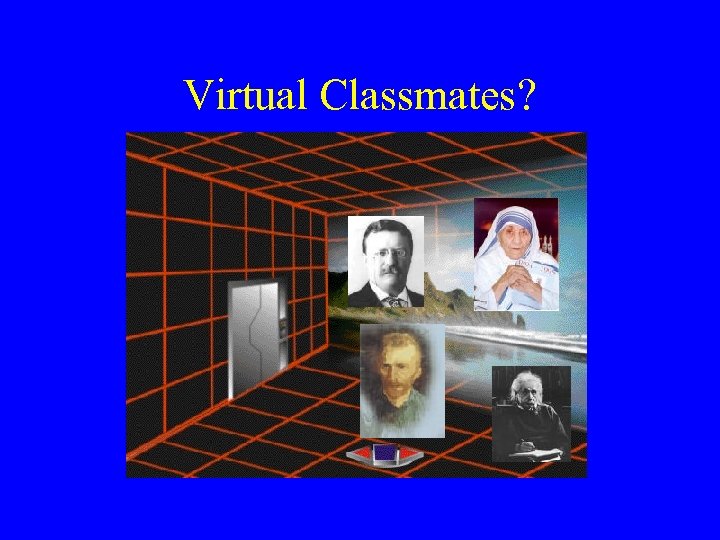 Virtual Classmates?
 One Vision: Teachers become technical team managers (Master Teachers) Teacher as “doctor” with the technical support team?
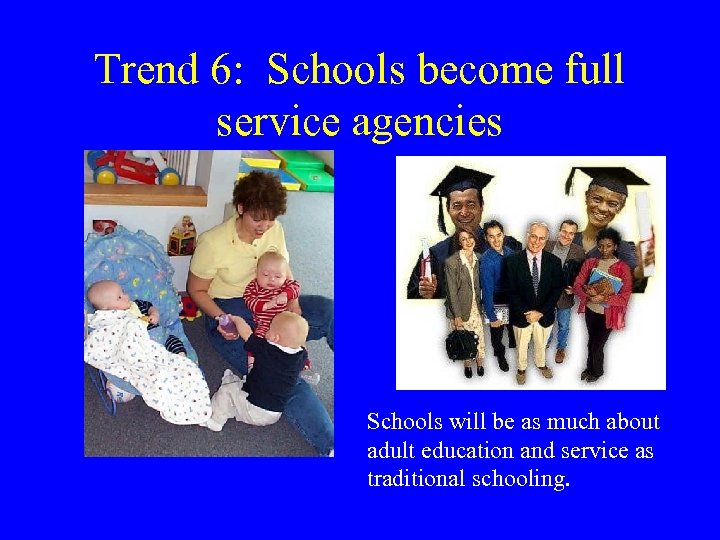 Trend 6: Schools become full service agencies Schools will be as much about adult education and service as traditional schooling.
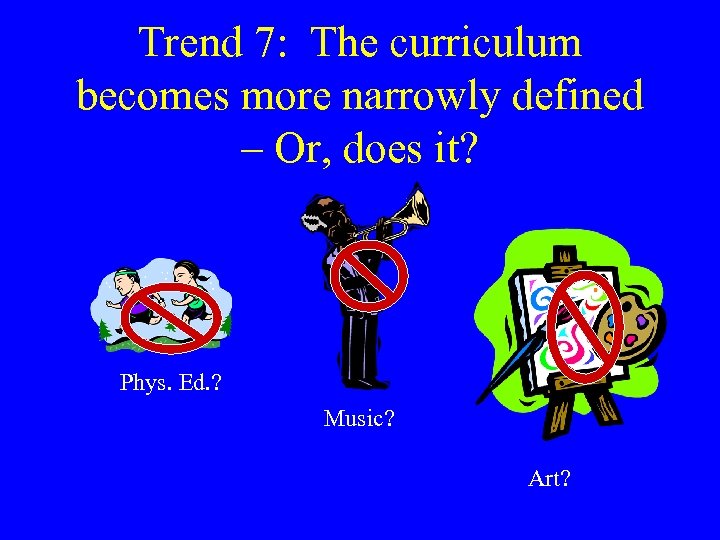 Trend 7: The curriculum becomes more narrowly defined – Or, does it? Phys. Ed. ? Music? Art?
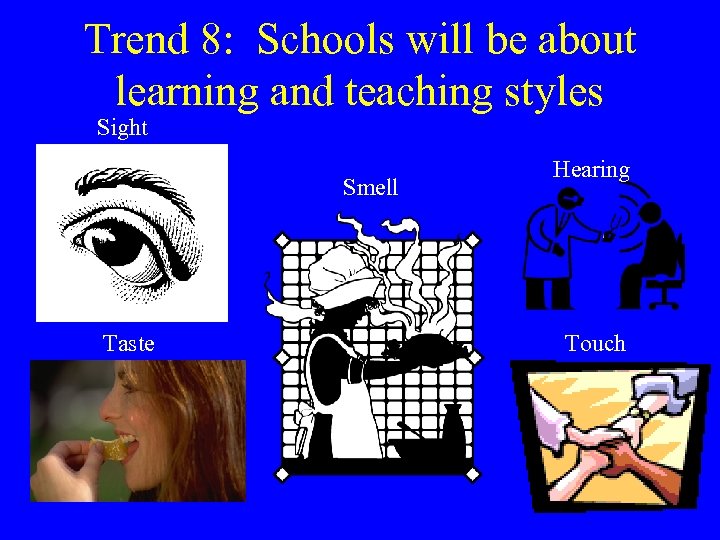 Trend 8: Schools will be about learning and teaching styles Sight Smell Taste Hearing Touch
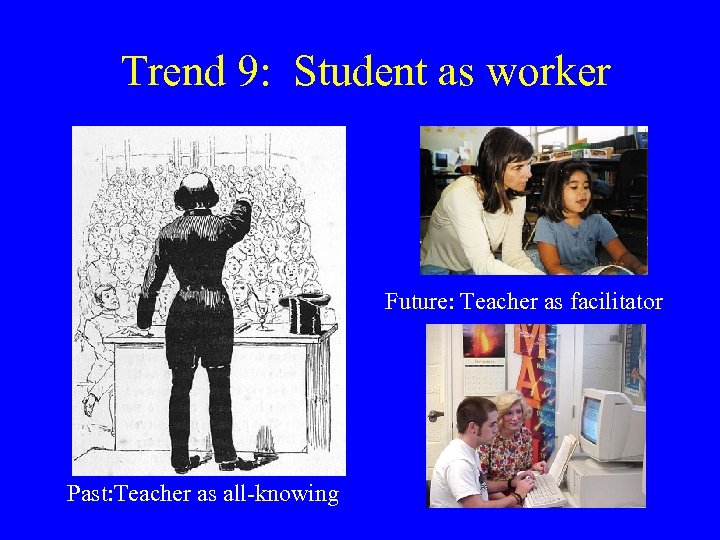 Trend 9: Student as worker Future: Teacher as facilitator Past: Teacher as all-knowing
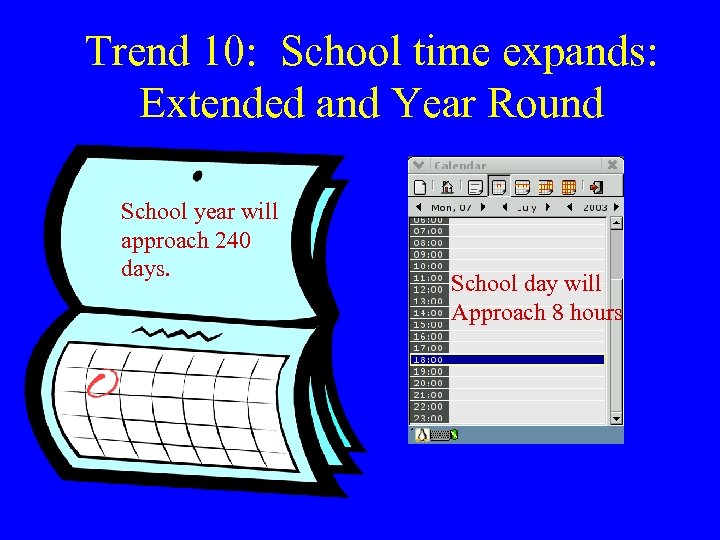 Trend 10: School time expands: Extended and Year Round School year will approach 240 days. School day will Approach 8 hours
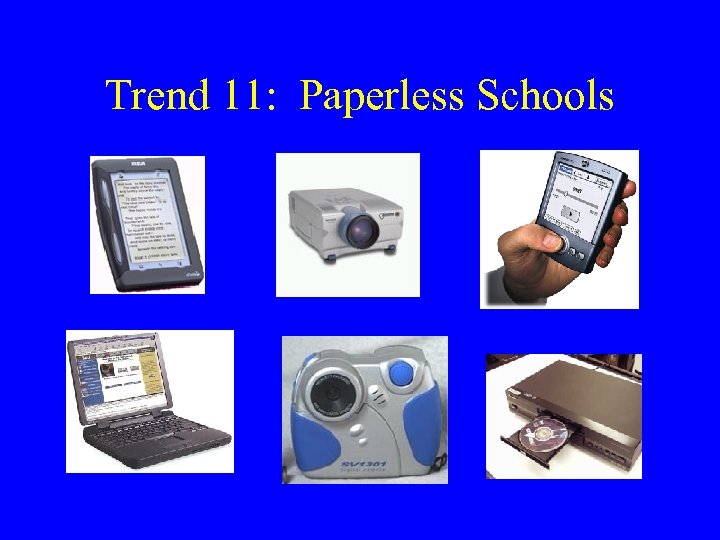 Trend 11: Paperless Schools
 Trend 12: Grades will be grouped differently K-5? K-8? K-12?
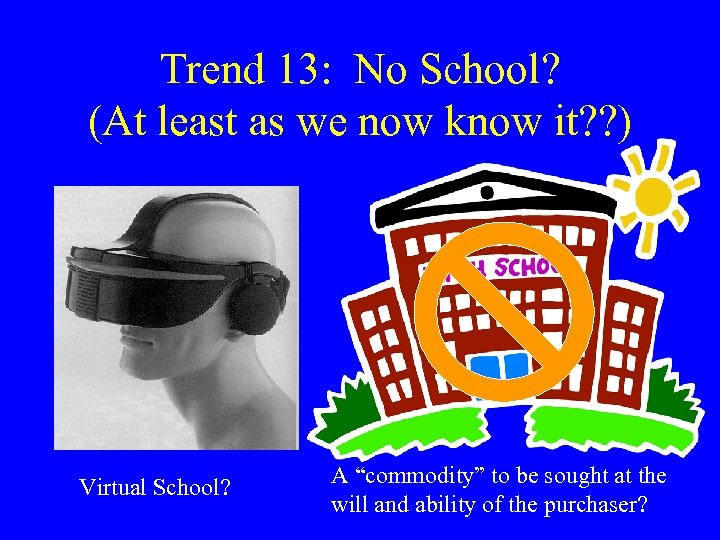 Trend 13: No School? (At least as we now know it? ? ) Virtual School? A “commodity” to be sought at the will and ability of the purchaser?
 What to do: A) Base decisions on HARD data whenever possible
 What to do: B) Remember that you never arrive Today’s accomplishments are merely building blocks to the “next” future
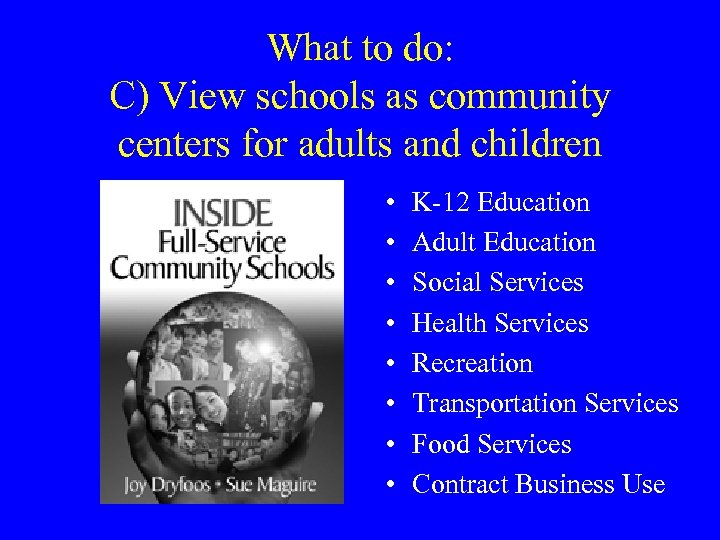 What to do: C) View schools as community centers for adults and children • • K-12 Education Adult Education Social Services Health Services Recreation Transportation Services Food Services Contract Business Use
 What to do: D) Plan and construct schools with the trends in mind • Build schools: – that are highly flexible – with security and safety as high priorities – that support technology today – and tomorrow – which are durable – Use of 16 hours daily, year round – That are inviting and important to the community as a whole
 What to do: E) Scan the environment continuously. Who really knows what’s on the horizon?
 In closing: Why not create your future? ! Yesterday is not ours to recover, but tomorrow is ours to win or lose. * Lyndon B. Johnson Morning comes whether you set the alarm or not. * Ursula K. Le Guin