


 Скачать презентацию What s new What s easily forgotten in Travel Medicine
76caf81de6fe8b1e0ba848de78c5c835.ppt
- Количество слайдов: 40
 What’s new… What’s easily forgotten… in Travel Medicine Elaine Rosenblatt MSN, FNP-BC, CTH Clinical Professor School of Nursing University of Wisconsin, Madison April 23, 2008
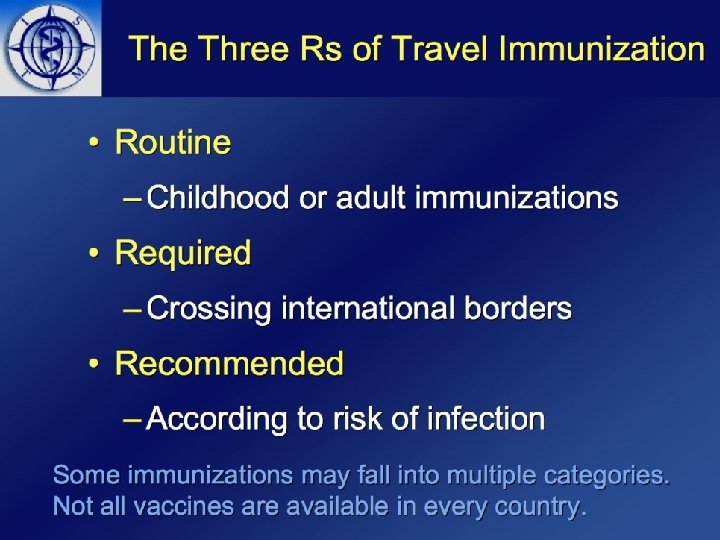
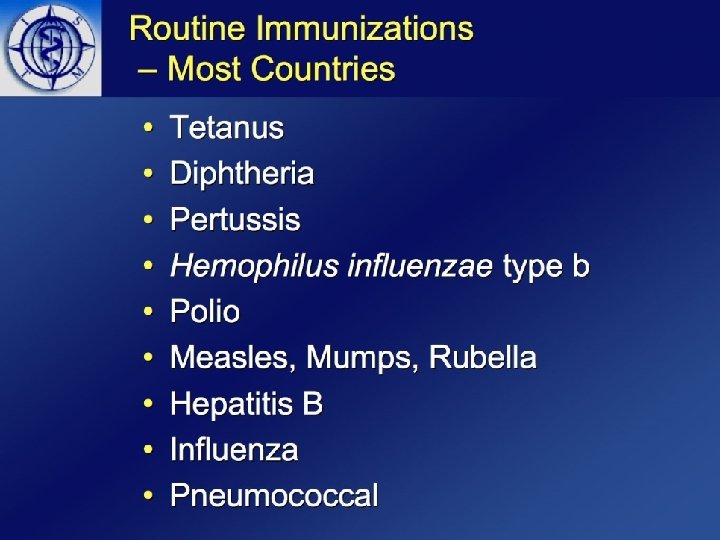
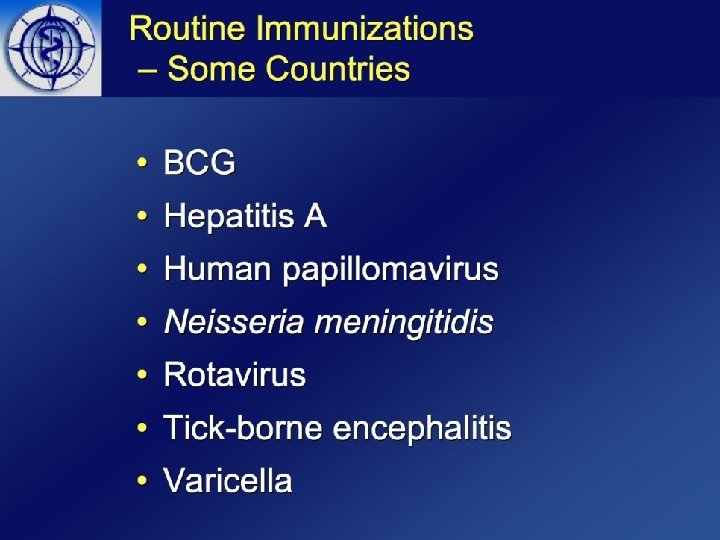
 Objectives n Understand the importance of required, recommended and routine immunizations n Discuss recent outbreaks of diseases that affect travelers n Review ‘often missed’ teaching opportunities n No financial disclosures
 QUIZ n n What is the most frequent vaccinepreventable disease among travelers going to countries of lower hygiene standards? What is the most common clinical illness in travelers to tropical and semi-tropical regions?
 QUIZ n n What is the most common cause of morbidity and mortality in travelers 50 years and older? What is the most common cause of morbidity and mortality in travelers under 50 years of age?
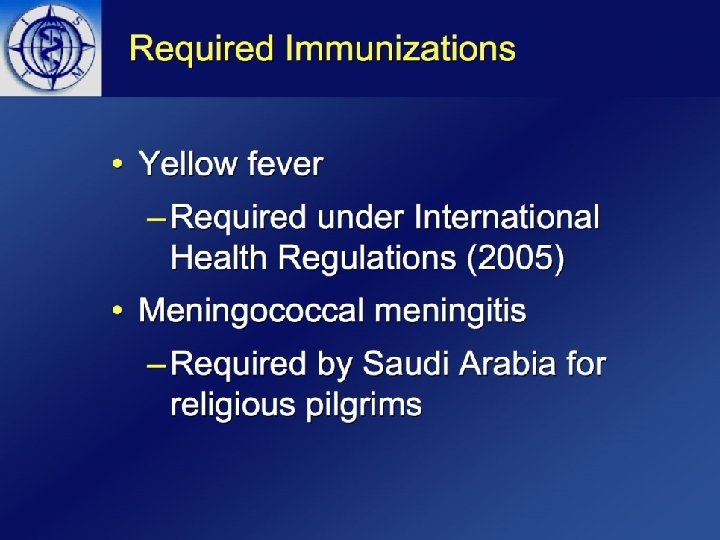
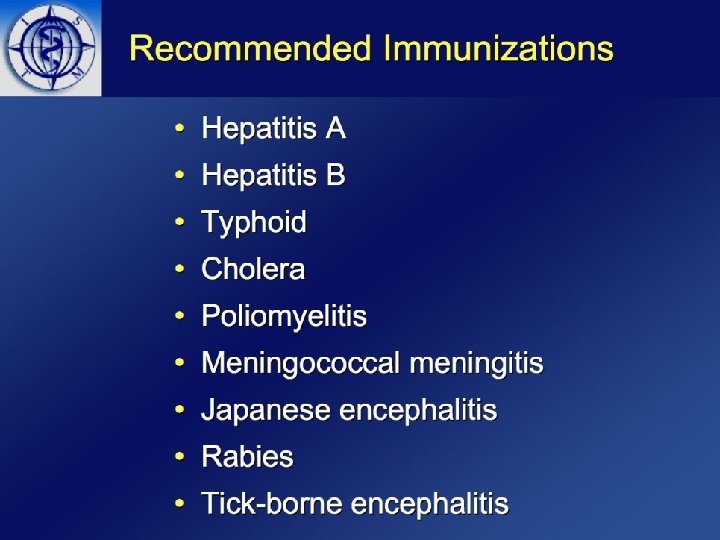
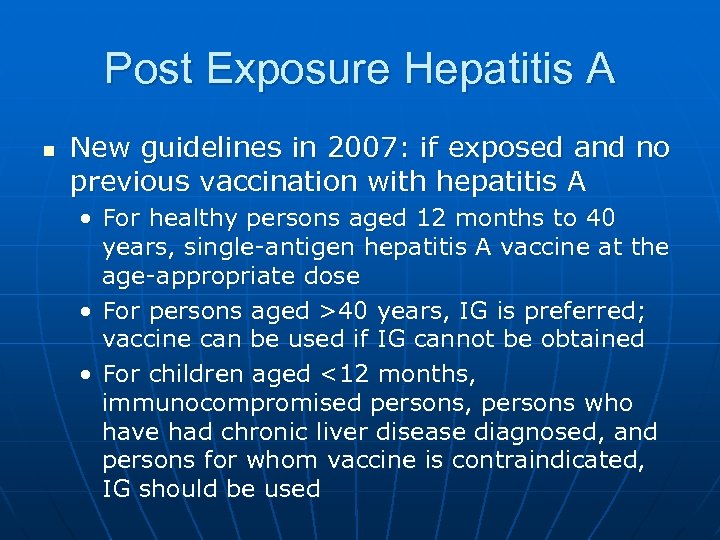 Post Exposure Hepatitis A n New guidelines in 2007: if exposed and no previous vaccination with hepatitis A • For healthy persons aged 12 months to 40 years, single-antigen hepatitis A vaccine at the age-appropriate dose • For persons aged >40 years, IG is preferred; vaccine can be used if IG cannot be obtained • For children aged <12 months, immunocompromised persons, persons who have had chronic liver disease diagnosed, and persons for whom vaccine is contraindicated, IG should be used
 Twinrix: Hepatitis A&B n n Recommended for at risk who are age 18 or older 0, 1, 6 months Accelerated schedule 0, 7, 21 days with a booster at 1 year Became available in 2001
 Twinrix to cover Hepatitis A and B In which case is it appropriate? n n Case A: 40 year old man leaving for China and other parts of southeast asia in 2 weeks. Will be gone for 2 -3 weeks, but will travel multiple times over the next 1 -3 years. Case B: 50 year old woman leaving for China and other parts of southeast asia in 6 weeks and will be gone for 3 months.
 Appropriateness of Twinrix (Hepatitis A and B) n n n Case A: no time for Twinrix before going on trip. But this is okay. He needs hepatitis A before he goes, so give hepatitis A vaccine as scheduled. Can start separate series of hepatitis B at that visit, doing the second dose after he returns and the third 5 -6 months later (if do at least 6 months later can do at same visit with second hepatitis A. ) Hepatitis B is appropriate for this man because of multiple trips increasing his risk, not necessarily just the first 2 -3 week trip. Once he gets the second dose of hepatitis B he will have 80% protection.
 Appropriateness of Twinrix (Hepatitis A and B) n n n Case B: Both vaccines needed for this trip —long trip to an endemic area. Sufficient time to do Twinrix in usual schedule. Once she has second dose, she has over 90% protection for hepatitis A and over 80% for hepatitis B. She can receive third dose in the series when she returns. If she was leaving in 3 weeks could have used the accelerated series.
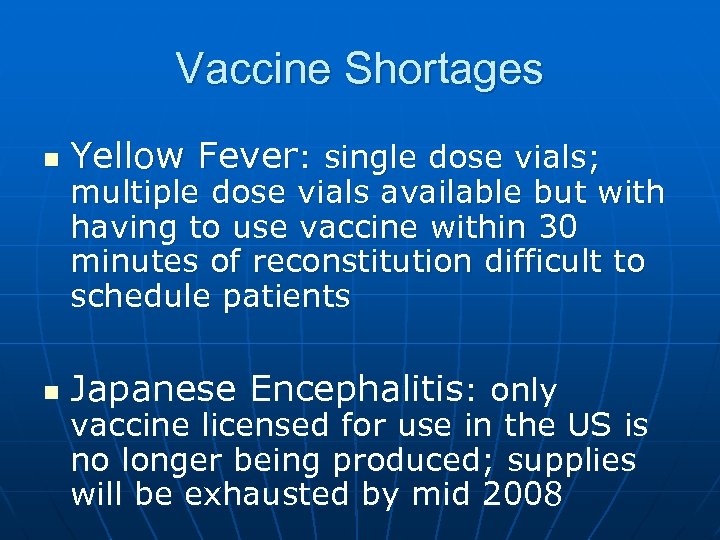 Vaccine Shortages n Yellow Fever: single dose vials; n Japanese Encephalitis: only multiple dose vials available but with having to use vaccine within 30 minutes of reconstitution difficult to schedule patients vaccine licensed for use in the US is no longer being produced; supplies will be exhausted by mid 2008
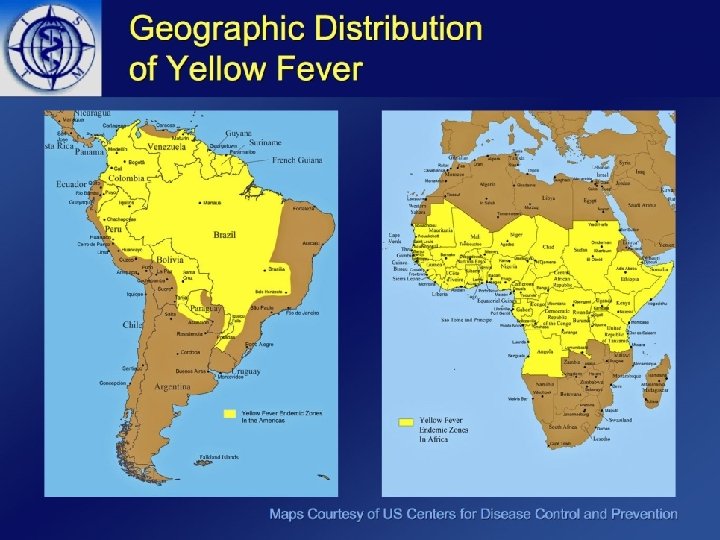
 Disease Outbreaks that Affect Travelers 2008 n n n n Yellow Fever: South America Avian Flu Chikingunya Dengue Mumps: Canada, United States 2 years ago Measles Hepatitis E • Outbreaks on cruise ships Jan-Mar • Hong Kong April
 Measles Outbreaks 2007 -8 n n Israel, Switzerland, Austria, Japan United States • Wisconsin: as of 4/4/08 3 cases in Milwaukee county and 1 in Waukesha • Texas • Michigan • Pennsylvania • San Diego • Arizona • Virginia • Georgia
 Travelers’ Diarrhea Selftreatment: Antibiotics n Antibiotic +/- loperamide • Quinolones: single dose, max 3 days • Azithromycin: single dose of 500 mg max 3 days n n n Use in areas of campylobacter resistance, and for children and pregnant women New data suggesting one time dose of 1000 mg is as effective as the 3 day regimen • Rifaximin (Xifaxan): new nonabsorbable gi antibiotic, twice daily for 3 days See a healthcare provider if symptoms persist after 3 days of treatment
 Personal Protection Measures · · · Wear long-sleeved shirts and long trousers Apply insect repellent containing no more than 30% DEET, or use 20% or greater Picaridin At dusk, spray aerosolized insecticides (such as those containing pyrthrins) in living and sleeping areas
 Personal Protection Measures · · · Sleep in a screened or airconditioned room Use bednetting of good quality with small mesh that is not damaged and preferably impregnated with permethrin Pretreat clothing with permethrin
 Advice for Acclimatization n n Avoid abrupt ascent to sleeping altitudes above 9850 ft Spend 2 -3 nights at 8200 -9850 ft before further ascent Add an extra night of acclimatization for every 2000 -3000 ft of ascent Make day trips to higher elevation with return to lower elevation for sleep
 Advice for Acclimatization n Avoid alcohol and sedatives for the first 2 nights at altitude. Moderate exercise. Extreme exercise at altitude may be deleterious. Consider acetazolamide 125 -250 mg bid starting 24 hours before ascent and continue for 48 hrs at maximum altitude. Caution if sulfa and/or penicillin allergic. Side effects may include paresthesias, polyuria, nausea, drowsiness, impotence, myopia, and bitter taste
 STI’s and Travel • Greatest risk age 15 -29, and in SE Asia • All travellers do more risk -taking behaviours while travelling, but highest rates in expatriates, backpackers, business travellers, military • Education: safe sex practices, especially use of condoms • Sexual tourism is a big problem
 STI’s and Travel: Prevention n n n Abstain from sexual activity, or, if you choose to be sexually active, limit number of partners with highrisk behaviors and limit number of new sexual partners Use high quality condoms Limit consumption of alcohol, drugs Get Hepatitis B vaccine Be aware of the possibility of rape Avoid piercings
 Safety and Security: Recommendations n n n Dress inconspicuously Leave expensive jewelry at home Travel in pairs or groups at night Carry wallet in the front pocket, purse straps across the shoulder Be cognizant of travel advisories Know where to go for medical assistance abroad
 Medical Tourism n n Also called: medical travel or health tourism or global healthcare. Term coined by travel agencies and mass media to describe a rapidly-growing practice of traveling abroad for medical treatments and procedures Motivations for patients: saving money and access to care in a timely manner Some of the international institutions affiliated with top US hospitals
 Medical Tourism n n Elective and cosmetic procedures as well as specialized surgeries Businesses have developed to help patients facilitate their treatments Sometimes leisure activities included in on trip. South Africa for example has medical safaris Popular destinations include: India, Brunei, Cuba, Colombia, Hong Kong, Hungary, Jordan, Lithuania, Malaysia, The Philippines, Singapore, South Africa, Thailand, and recently Saudi Arabia, UAE, Tunisia and New Zealand
 Medical Tourism: Risks n n Should complications arise, patients might not be covered by insurance or able to seek compensation via malpractice lawsuits. But new insurance products are being promoted Some countries have different infectious diseases which may result in exposure to disease Travel soon after surgery can increase the risk of complications, as can vacation activities Unfamiliar legal and ethical issues
 Medical Tourism n n n In US, Joint Commission International (JCI) fulfills an accreditation role In the UK and Hong Kong, the Trent International Accreditations Scheme fulfills an accreditation role Society for International Healthcare Accreditation (SOFIHA) is a group providing a forum for discussion and sharing of ideas and practice by providers of international healthcare accreditation to promote safe hospital environment for patients
 Getting Ready for the 29 th Olympic Summer Games n n n Held in Beijing, China and 6 other cities from August 8 -24, 2008 28 major and 302 minor events in 37 venues in Beijing, Hong Kong, Shanghai, Qingdao, Qinhuangdao, Shenyang and Tianjin Paralympic Games Sept 6 -17 in Beijing
 Getting Ready for the 29 th Olympic Summer Games n n n Travelers Diarrhea—strict food and water hygiene Air Pollution capital in the world None of the game venues in malaria areas, but there have been cases of dengue fever
 Getting Ready for the 29 th Olympic Summer Games n Vaccine preventable diseases • Routine vaccines-Td/Tdap, MMR • Recommended vaccines—Hepatitis A, Hepatitis B (especially if involved in contact sports, plan on sexual actiivity), influenza, consider meningococcal vaccine n Avian flu—avoid live poultry
 Getting Ready for the 29 th Olympic Summer Games: Issues to be aware of n n n Safety and security Road safety—as a driver and a pedestrian There will be a lot of walking between venues Warm—be aware of sunburn, dehydration, limit exercise to early morning or late afternoon Assess if there will be any problems with customs with the medications you take
 Getting Ready for the 29 th Olympic Summer Games: Issues to be aware of n n Avoid buying medications there—may be fake or contaminated Avoid tattoos, acupuncture or medical treatments STDs—avoid sexual activity that will put you at risk Make sure have travel health insurance and consider air evacuation plans
 Getting the Athlete Ready n n n n Personal health issues, including dental and sexual issues How to cope with acclimatization and jetlag How to cope with culture shock and managing personal stresses due to altered environment Immunizations Diet issues Packing a medical kit Safety and security issues
 Questions?
 Chikingunya n n Makonde word: “that which bends up” referring to the inability of some patients to walk upright Originally in Africa and Asia but now imported to Europe, Australia and the US Transmitted by Aedes aegypti Multiple small joints affected