


 Скачать презентацию What s New in the 2011 Guideline for Preventing
0039d699f04a7f6836ea127575f24009.ppt
- Количество слайдов: 51
 What’s New in the 2011 Guideline for Preventing Catheter Related BSI? Naomi P. O’Grady, MD Critical Care Medicine Department National Institutes of Health
 I have no disclosures.
 Objectives Highlight some areas of controversy, including catheter site selection, antimicrobial locks, and chlorhexidine impregnated sponge dressings Discuss the recommendations in the updated guideline Outline some of the data to support the new recommendations
 Clinical Infectious Diseases 2011; 52(9) e 162 -e 193
 Site Selection
 Old Recommendation Use a subclavian site (rather than a jugular or a femoral site) in adult patients to minimize infection risk for non-tunneled CVC placement
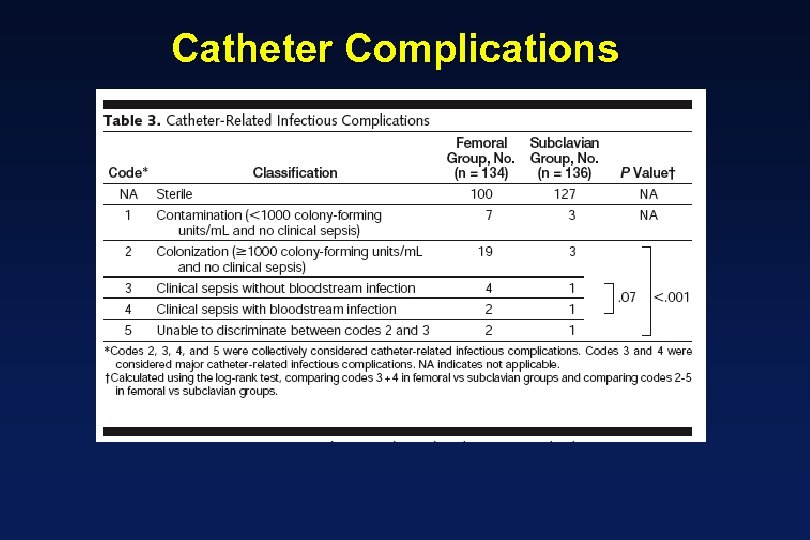
 Site Selection Rather than focus on one specific site to select, we now focus on one specific site to avoid. Avoid the femoral vein for central venous access in adults Femoral site associated with greater risk of infection and DVT Merrer; JAMA, 2001 Parienti; JAMA, 2008
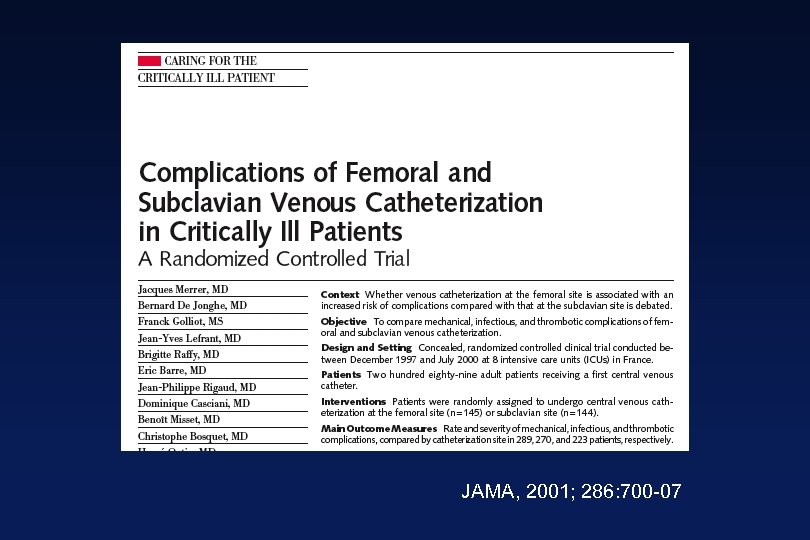 JAMA, 2001; 286: 700 -07
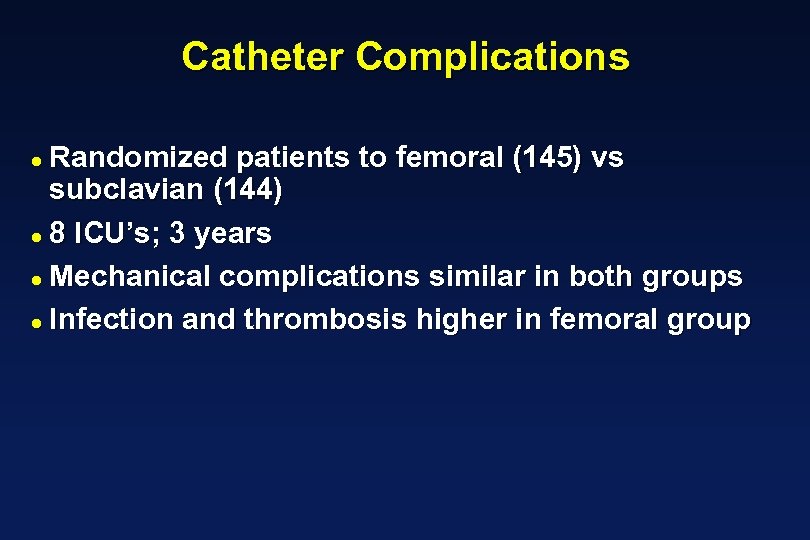 Catheter Complications Randomized patients to femoral (145) vs subclavian (144) 8 ICU’s; 3 years Mechanical complications similar in both groups Infection and thrombosis higher in femoral group
 Catheter Complications
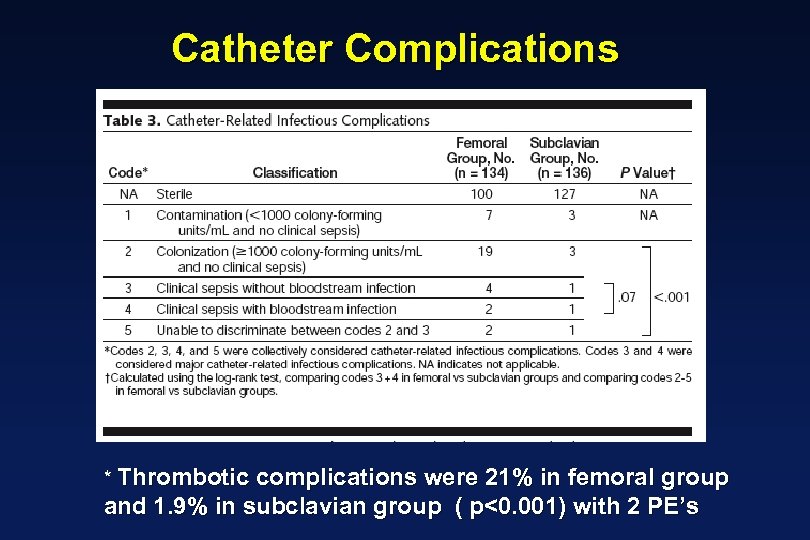 Catheter Complications * Thrombotic complications were 21% in femoral group and 1. 9% in subclavian group ( p<0. 001) with 2 PE’s
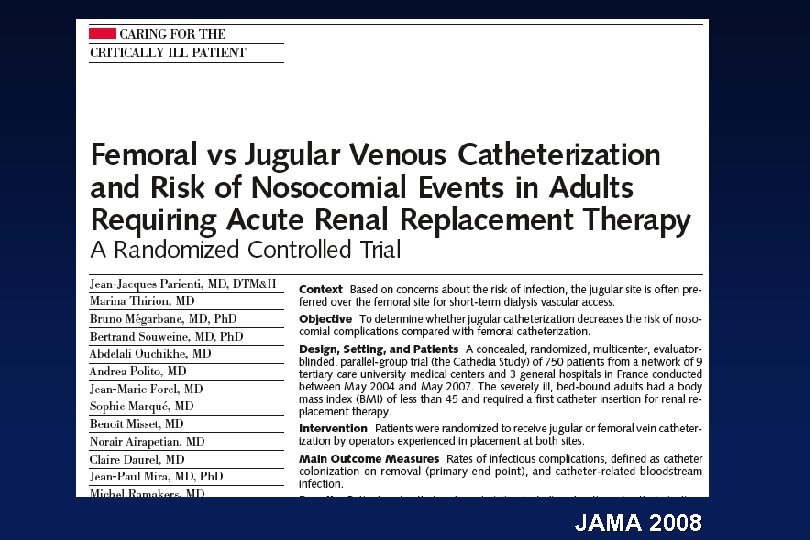 JAMA 2008
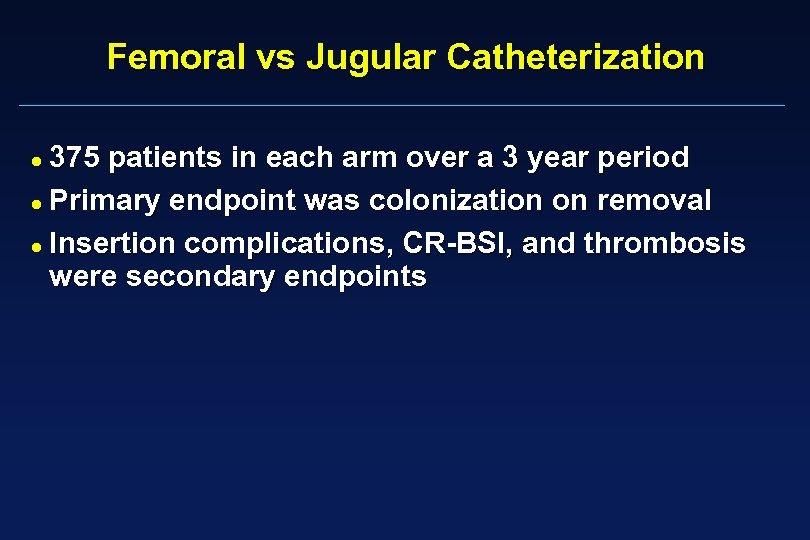 Femoral vs Jugular Catheterization 375 patients in each arm over a 3 year period Primary endpoint was colonization on removal Insertion complications, CR-BSI, and thrombosis were secondary endpoints
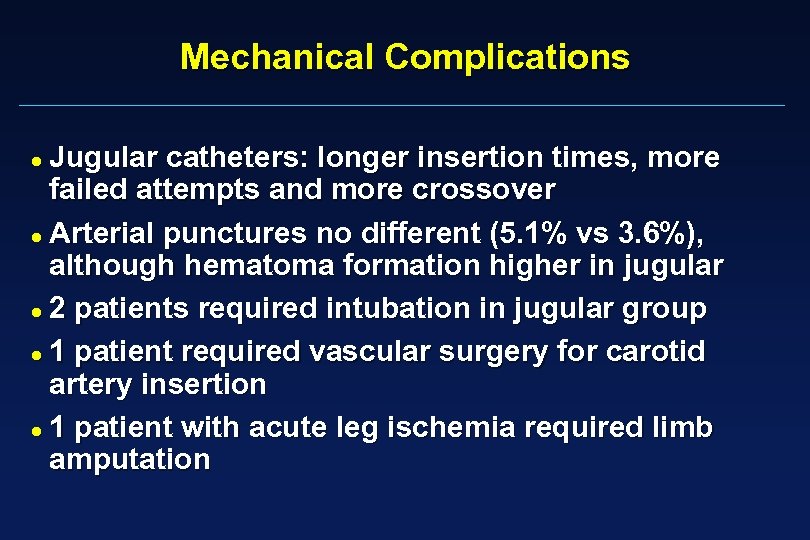 Mechanical Complications Jugular catheters: longer insertion times, more failed attempts and more crossover Arterial punctures no different (5. 1% vs 3. 6%), although hematoma formation higher in jugular 2 patients required intubation in jugular group 1 patient required vascular surgery for carotid artery insertion 1 patient with acute leg ischemia required limb amputation
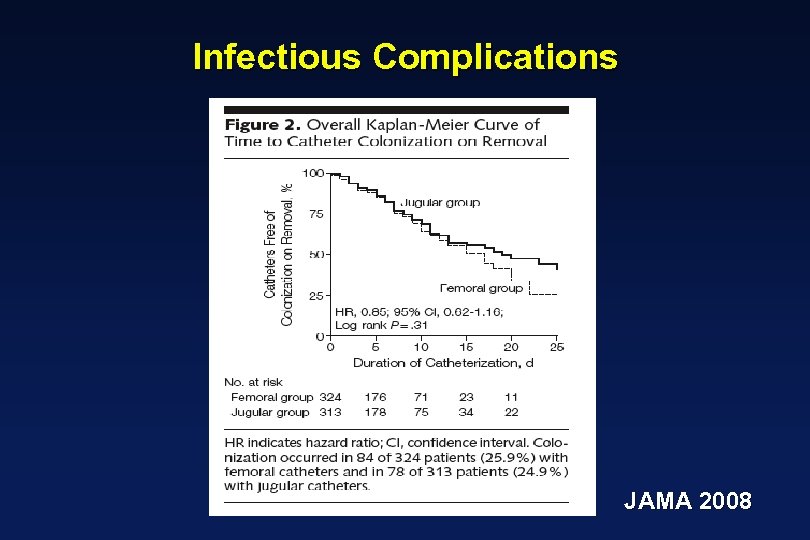 Infectious Complications JAMA 2008
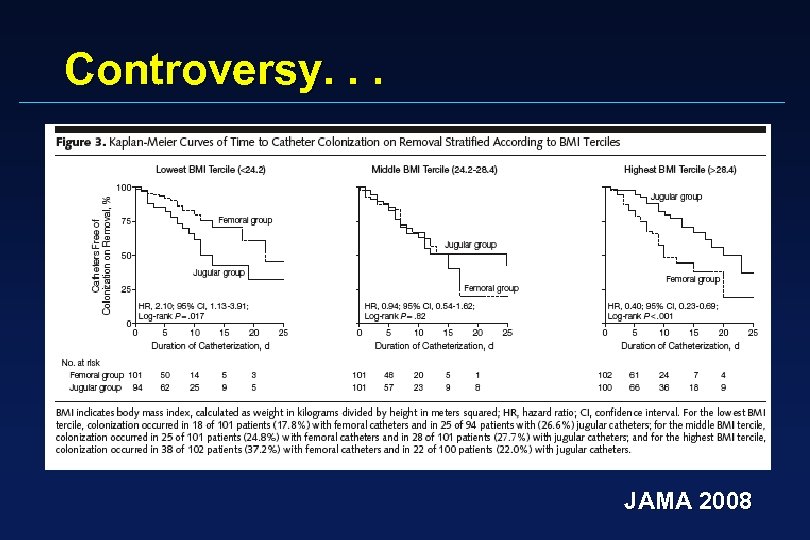 Controversy. . . JAMA 2008
 Skin Antisepsis
 Old Recommendation Disinfect clean skin with an appropriate antiseptic. A chlorhexidine-based preparation with >2% is preferred. Alternatively, tincture of iodine, an iodophor, or 70% alcohol could be used.
 New Recommendation Disinfect clean skin with an appropriate antiseptic. A chlorhexidine-based preparation with >0. 5% is preferred. Alternatively, tincture of iodine, an iodophor, or 70% alcohol could be used.
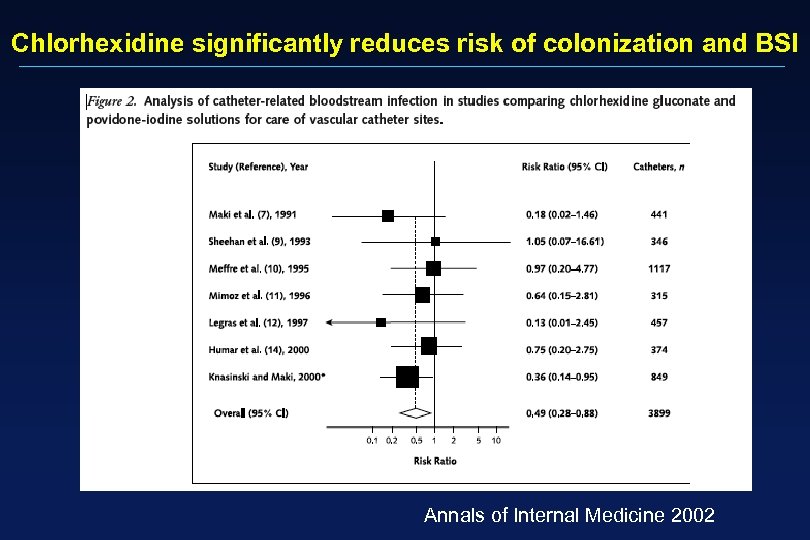 Chlorhexidine significantly reduces risk of colonization and BSI Annals of Internal Medicine 2002
 Catheter Site Dressing Regimens
 Old Recommendation: No recommendation
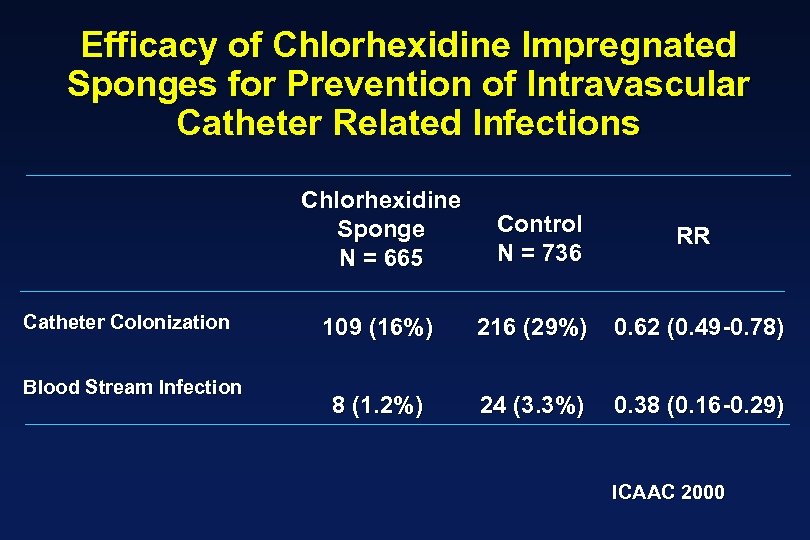 Efficacy of Chlorhexidine Impregnated Sponges for Prevention of Intravascular Catheter Related Infections Chlorhexidine Sponge N = 665 Catheter Colonization Blood Stream Infection Control N = 736 RR 109 (16%) 216 (29%) 0. 62 (0. 49 -0. 78) 8 (1. 2%) 24 (3. 3%) 0. 38 (0. 16 -0. 29) ICAAC 2000
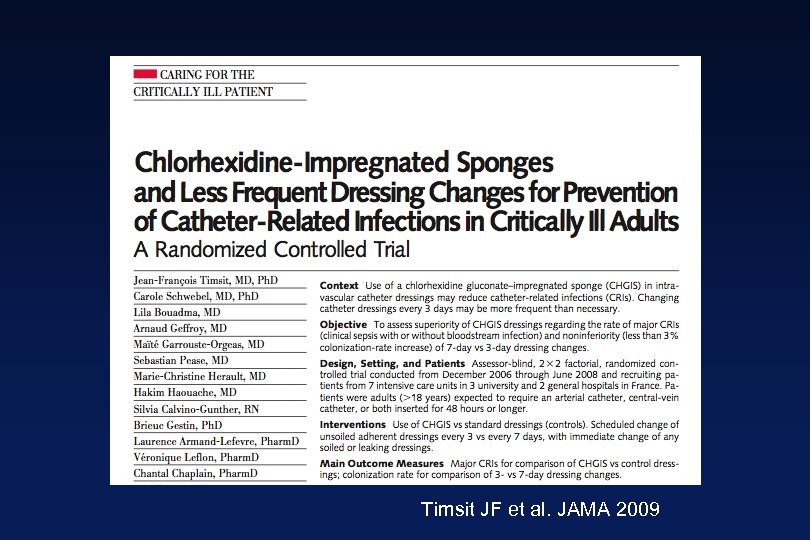 Timsit JF et al. JAMA 2009
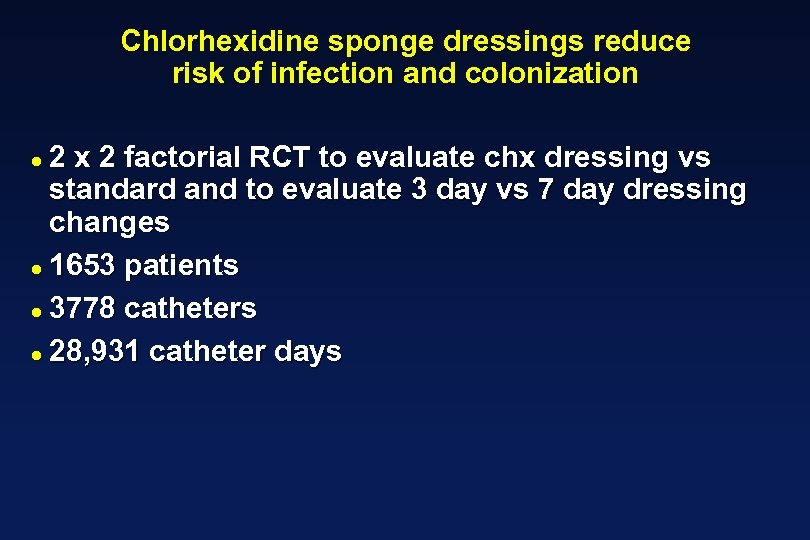 Chlorhexidine sponge dressings reduce risk of infection and colonization 2 x 2 factorial RCT to evaluate chx dressing vs standard and to evaluate 3 day vs 7 day dressing changes 1653 patients 3778 catheters 28, 931 catheter days
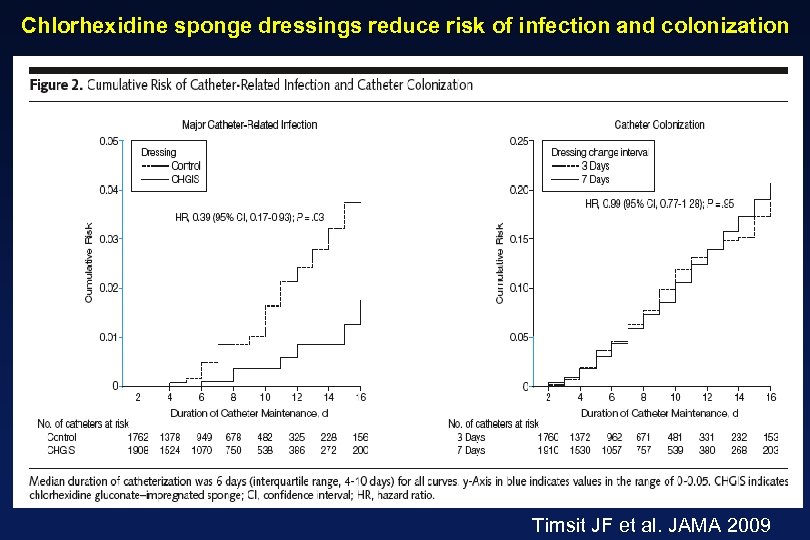 Chlorhexidine sponge dressings reduce risk of infection and colonization Timsit JF et al. JAMA 2009
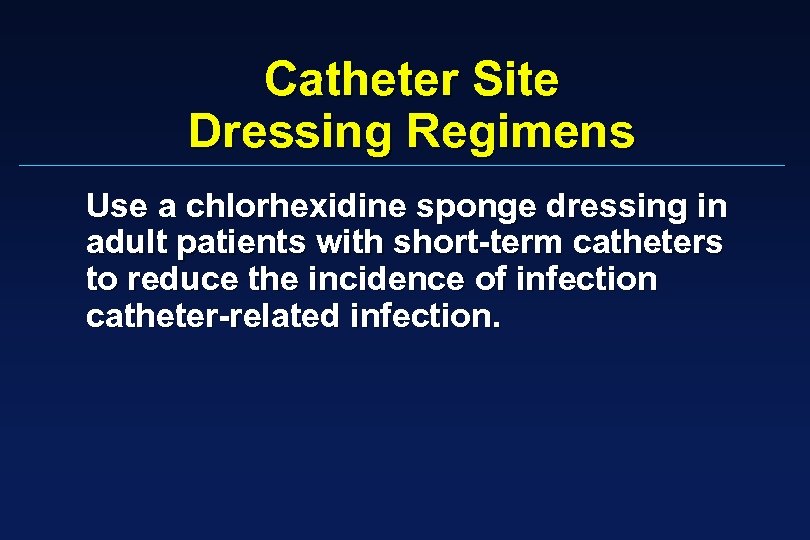 Catheter Site Dressing Regimens Use a chlorhexidine sponge dressing in adult patients with short-term catheters to reduce the incidence of infection catheter-related infection.
 Antimicrobial Lock Solutions
 Use prophylactic antimicrobial lock solution in patients with long term catheters who have a history of multiple CRBSI despite optimal maximal adherence to aseptic technique.
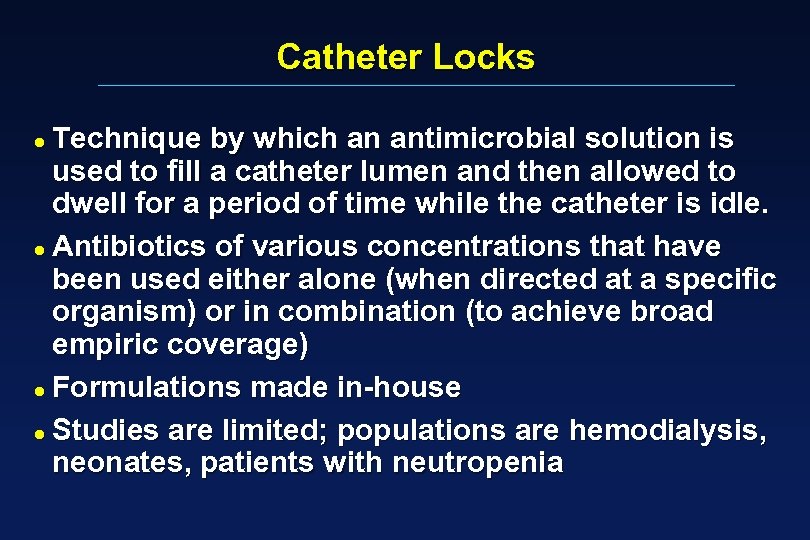 Catheter Locks Technique by which an antimicrobial solution is used to fill a catheter lumen and then allowed to dwell for a period of time while the catheter is idle. Antibiotics of various concentrations that have been used either alone (when directed at a specific organism) or in combination (to achieve broad empiric coverage) Formulations made in-house Studies are limited; populations are hemodialysis, neonates, patients with neutropenia
 Needleless Connectors
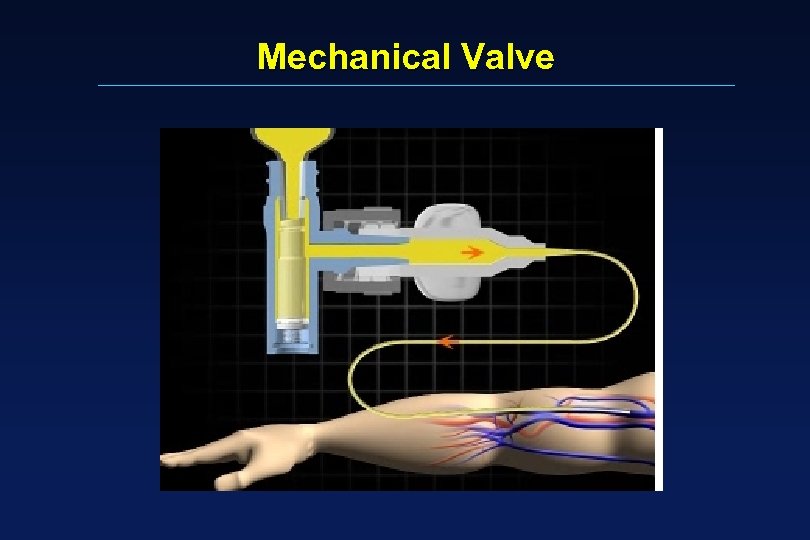 Mechanical Valve
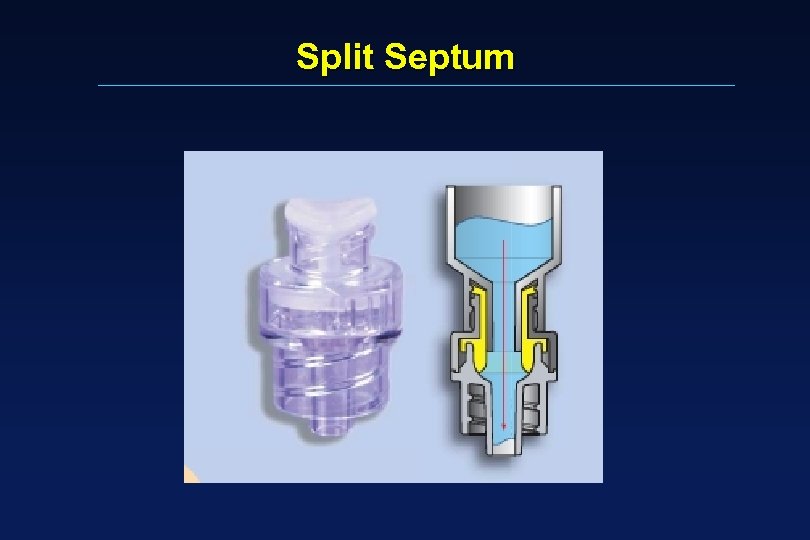 Split Septum
 Recommendation When needleless systems are used, a split septum valve may be preferred over a mechanical valve due to increased risk of infection with some mechanical valves. Category II
 Bundles and Checklists
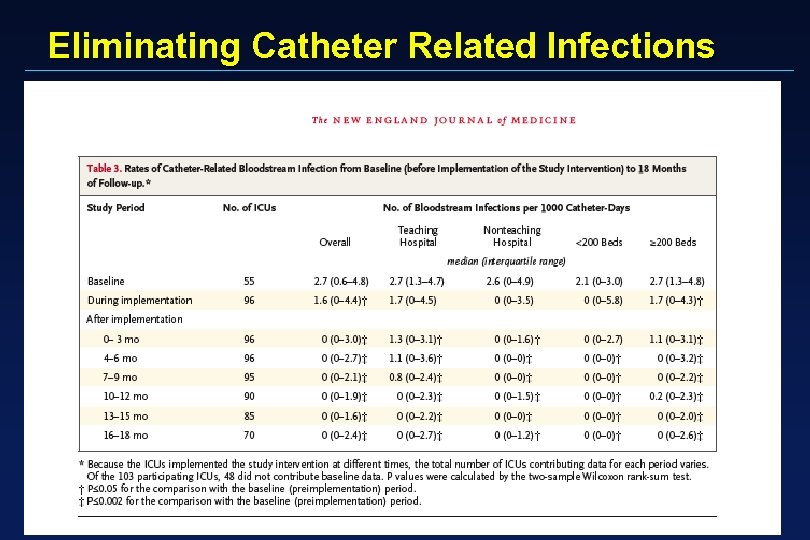
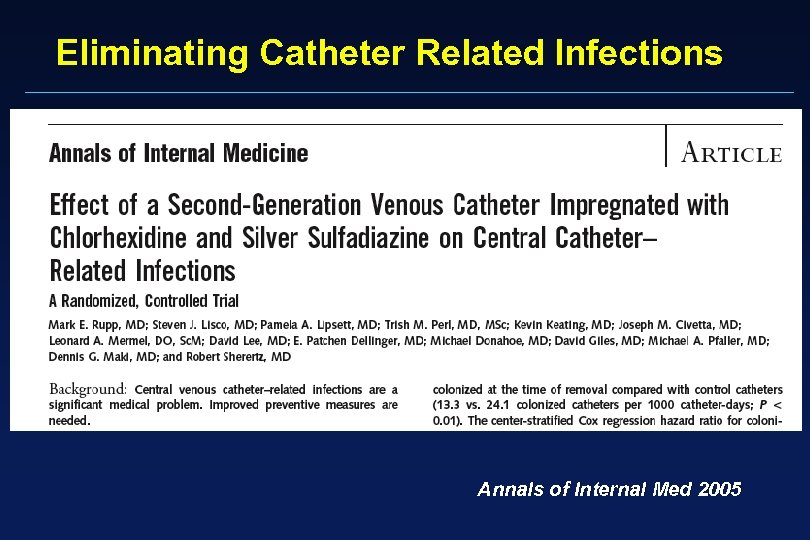
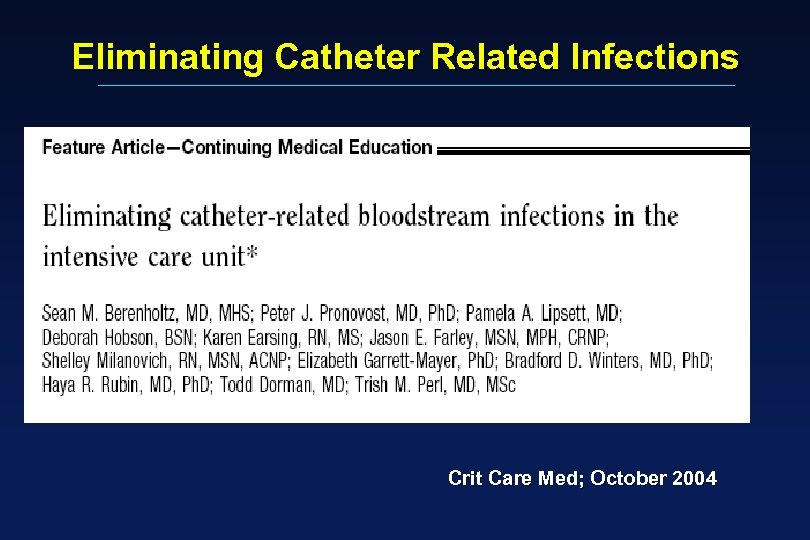 Eliminating Catheter Related Infections Crit Care Med; October 2004
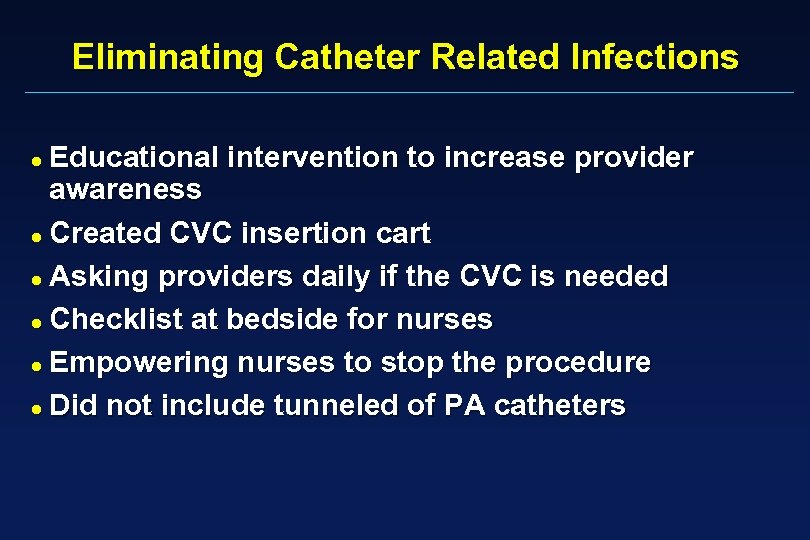 Eliminating Catheter Related Infections Educational intervention to increase provider awareness Created CVC insertion cart Asking providers daily if the CVC is needed Checklist at bedside for nurses Empowering nurses to stop the procedure Did not include tunneled of PA catheters
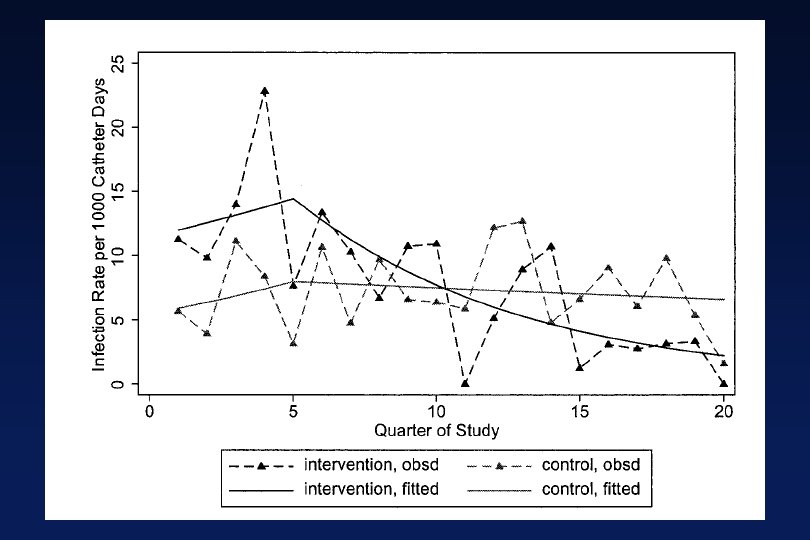
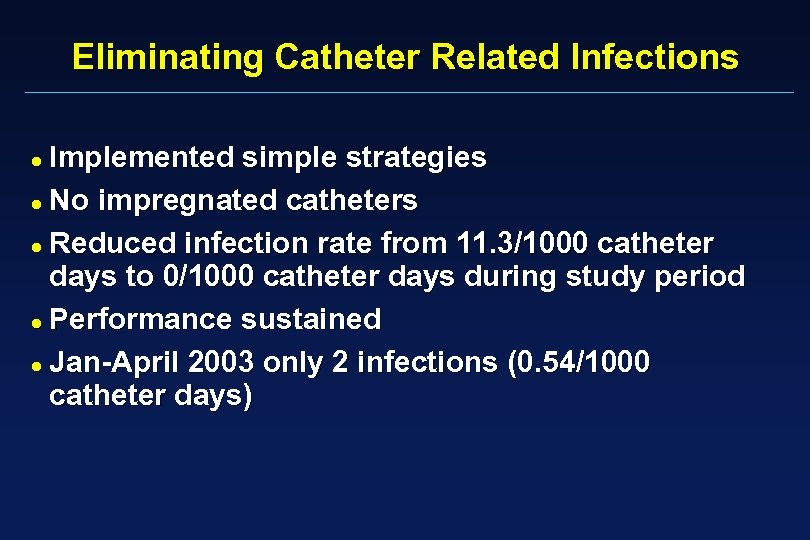 Eliminating Catheter Related Infections Implemented simple strategies No impregnated catheters Reduced infection rate from 11. 3/1000 catheter days to 0/1000 catheter days during study period Performance sustained Jan-April 2003 only 2 infections (0. 54/1000 catheter days)
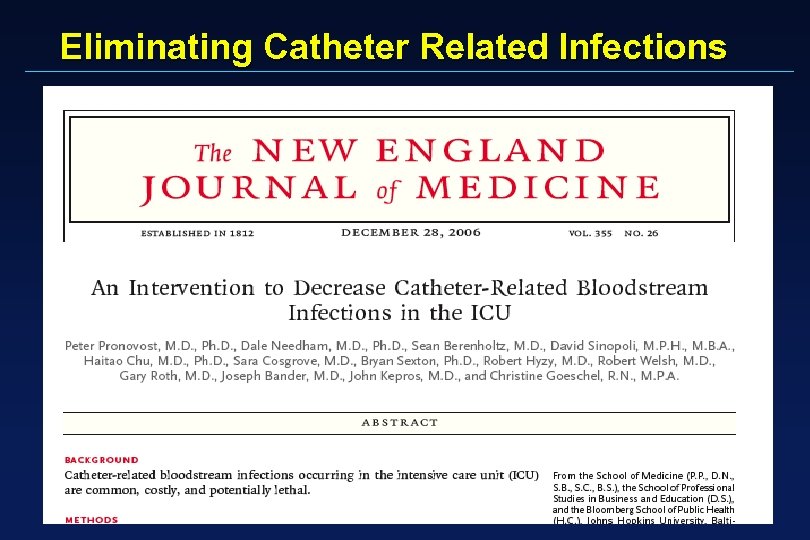 Eliminating Catheter Related Infections
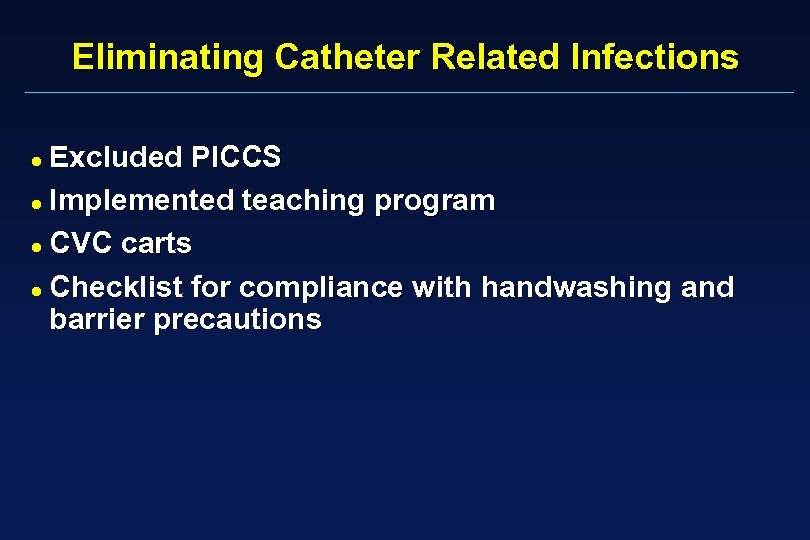 Eliminating Catheter Related Infections Excluded PICCS Implemented teaching program CVC carts Checklist for compliance with handwashing and barrier precautions
 Eliminating Catheter Related Infections
 Antibiotic/Antiseptic Catheters
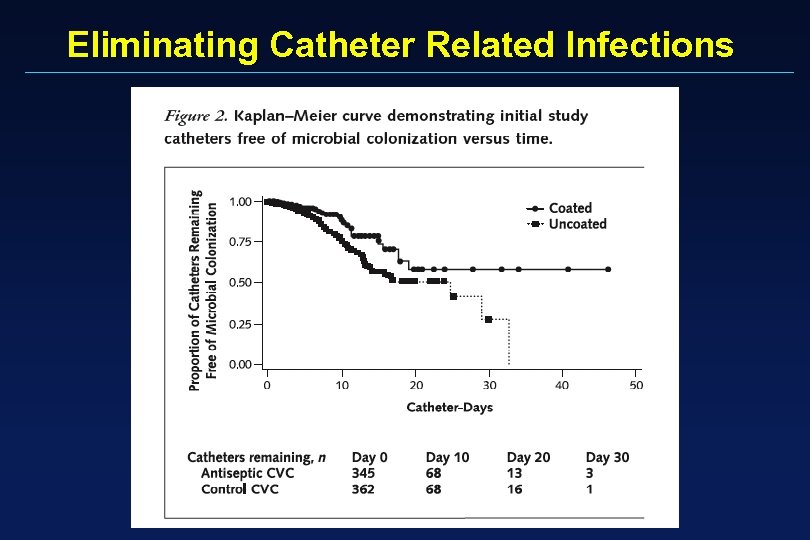
 Antibiotic/Antiseptic Catheters Use an antimicrobial or antiseptic-impregnated CVC in adults whose catheter is expected to remain in place >5 days if, after implementing a comprehensive strategy to reduce rates of CR-BSI, the rate has not sufficiently decreased. The comprehensive strategy should include the following 3 components: educating persons who insert and maintain catheters, use of maximal barrier precautions, and a 0. 5% chlorhexidine preparation for skin antisepsis during central venous catheter insertion.
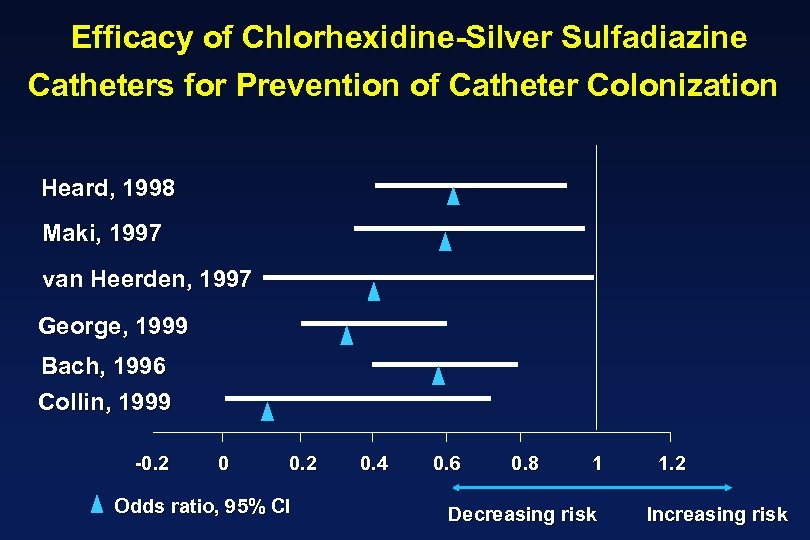 Efficacy of Chlorhexidine-Silver Sulfadiazine Catheters for Prevention of Catheter Colonization Heard, 1998 Maki, 1997 van Heerden, 1997 George, 1999 Bach, 1996 Collin, 1999 -0. 2 0 0. 2 Odds ratio, 95% CI 0. 4 0. 6 0. 8 1 Decreasing risk 1. 2 Increasing risk
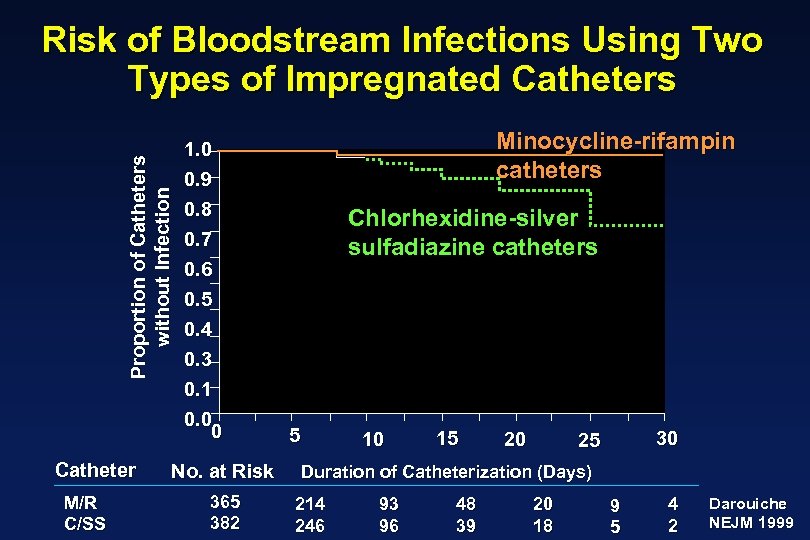 Proportion of Catheters without Infection Risk of Bloodstream Infections Using Two Types of Impregnated Catheters Catheter M/R C/SS Minocycline-rifampin catheters 1. 0 0. 9 0. 8 0. 7 0. 6 0. 5 0. 4 0. 3 0. 1 0. 0 0 No. at Risk 365 382 Chlorhexidine-silver sulfadiazine catheters 5 10 15 20 30 25 Duration of Catheterization (Days) 214 246 93 96 48 39 20 18 9 5 4 2 Darouiche NEJM 1999
 Eliminating Catheter Related Infections Annals of Internal Med 2005
 Eliminating Catheter Related Infections
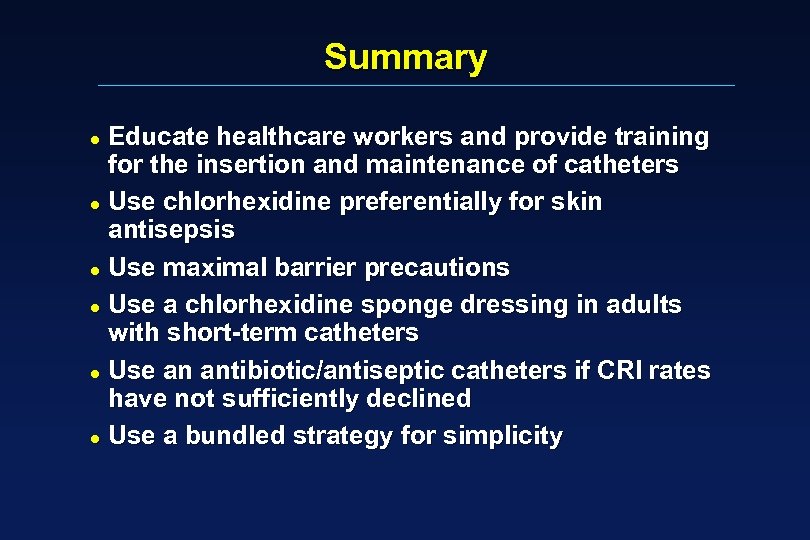 Summary Educate healthcare workers and provide training for the insertion and maintenance of catheters Use chlorhexidine preferentially for skin antisepsis Use maximal barrier precautions Use a chlorhexidine sponge dressing in adults with short-term catheters Use an antibiotic/antiseptic catheters if CRI rates have not sufficiently declined Use a bundled strategy for simplicity
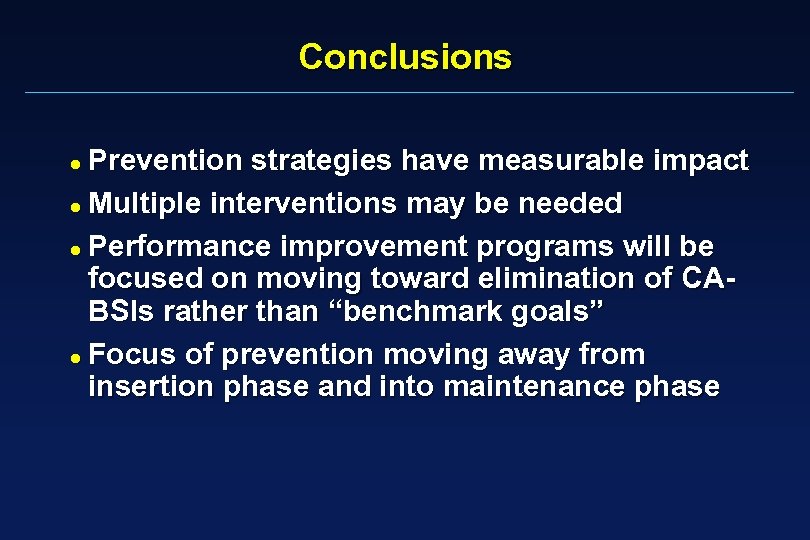 Conclusions Prevention strategies have measurable impact Multiple interventions may be needed Performance improvement programs will be focused on moving toward elimination of CABSIs rather than “benchmark goals” Focus of prevention moving away from insertion phase and into maintenance phase
 Thank you.