


 Скачать презентацию What s New and What s Not in Acne and
7f8337b3d707e2d314e2687fa407911a.ppt
- Количество слайдов: 84
 What’s New (and What’s Not) in Acne and Rosacea Adam O. Goldstein, MD Assistant Professor Department of Family Medicine University of North Carolina at Chapel Hill Email: aog@med. unc. edu
 Objectives 1. Know differential diagnosis acne/rosacea 2. Increased knowledge treatment strategies 3. Increased familiarity new products 4. Learn 2 new patient education tips GOAL: Improved therapeutic outcomes
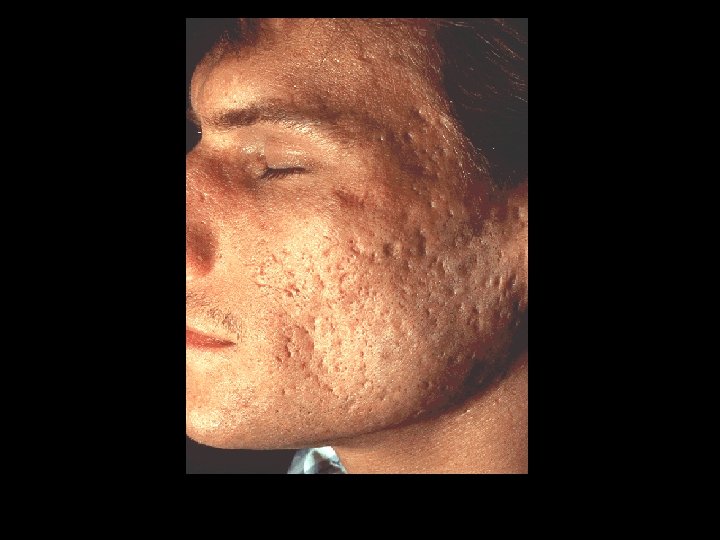
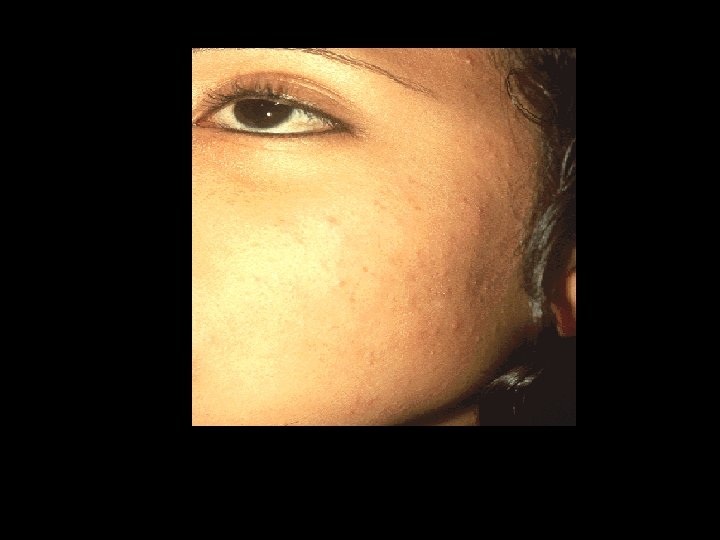
 Acne • • Most common dermatologic disease Onset usually adolescence but anytime More frequent and severe in males 70% women premenstrual flares
 Acne Quiz (T/F) 1. Certain foods make acne worse. . . 2. Dirty skin makes acne worse. . . 3. Acne worsens with sexual activity. . . 4. Acne improves within 24 hours of tx. . . 5. Sweating may make acne worse. . . 6. Humidity may exacerbate acne. . . 7. Acne may worsen during menstruation. . . 8. Stress may make acne worse. . .
 Art of acne treatment: • Negotiating long-term treatment • Increasing compliance by using fewer • • medications Contracting with adolescents Thorough explanation of natural history of disease Patience with acne’s emotional toil Combining drugs @ different mechanisms
 Art of acne treatment: • “Quality of Life” scale 0 1 1. Feeling self-conscious 2. Decrease in socialization 3. Difficulties in relationships (partner, friends, family) 4. Feeling like an outcast 5. People making fun of you 6. Feeling rejected (romance, friends) 2 3
 Common pitfalls in acne treatment • Using more than two medications • Insufficient patient education or unrealistic • expectations Frustration all around
 Acne: Etiology • • • Combination hormonal (androgen), bacterial (Proprionibacterium acnes) and follicular (hyperkeratosis)causing debris and occlusion Bacteria multiply and inflammatory response Comedones: “Blackheads” and “Whiteheads” Blackheads = open comedones Whiteheads = closed comedones
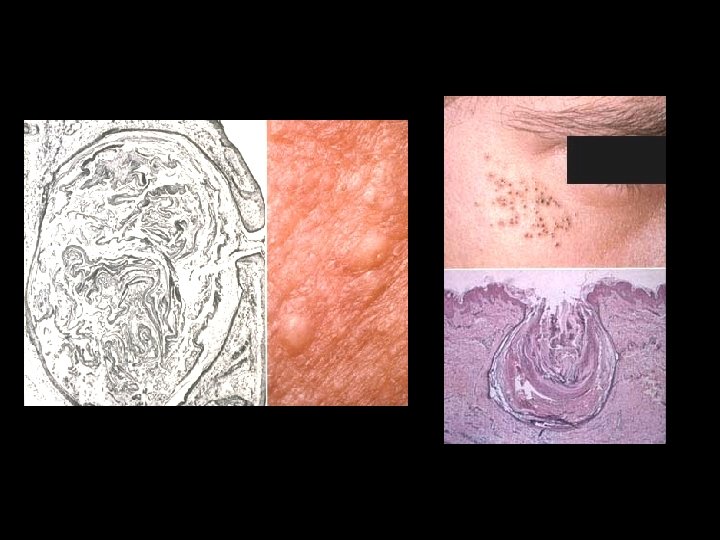
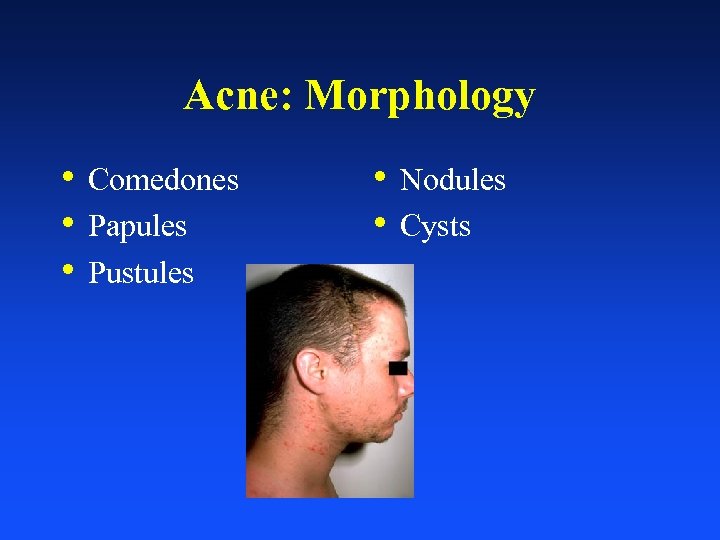 Acne: Morphology • Comedones • Papules • Pustules • Nodules • Cysts
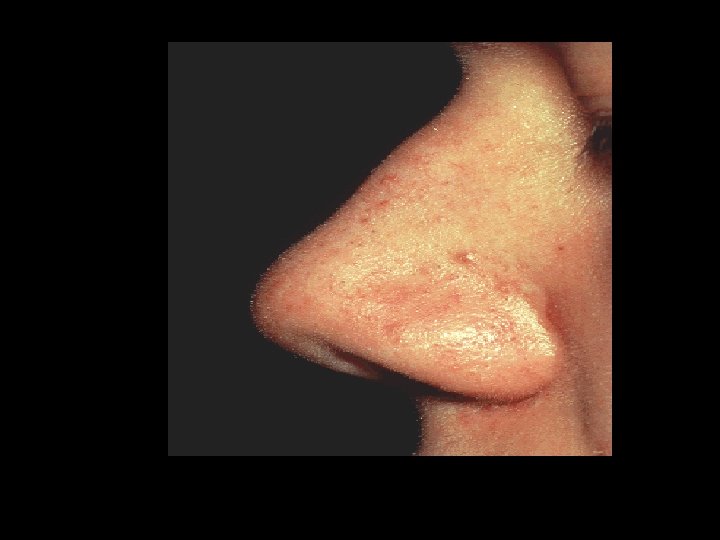
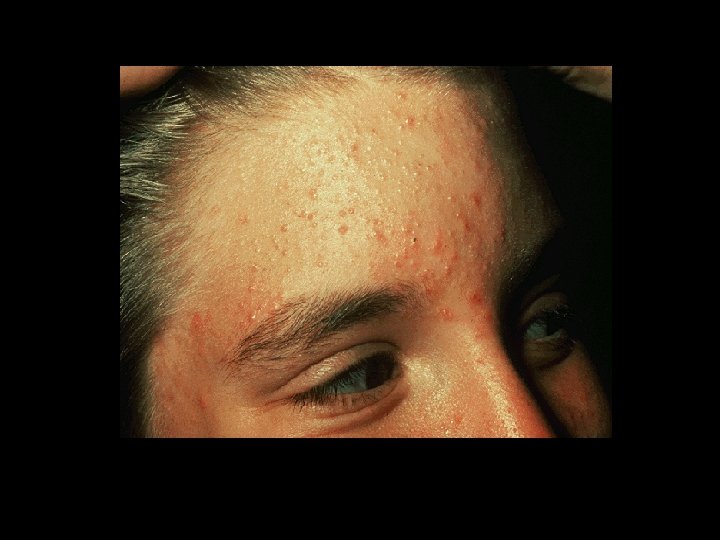
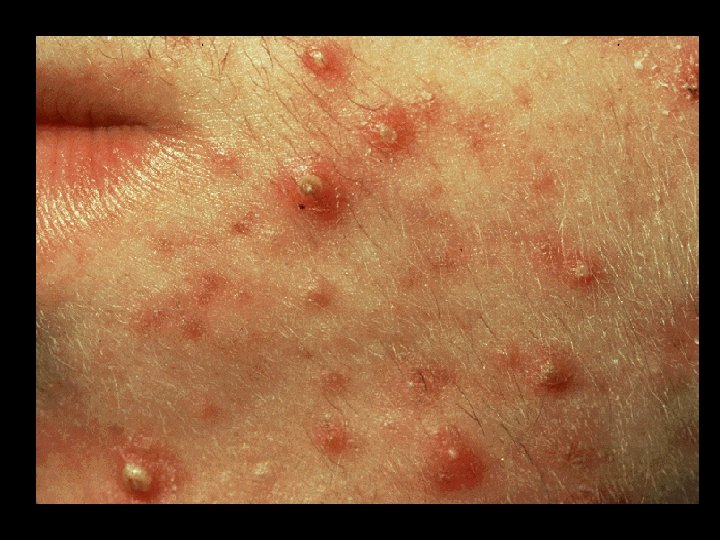
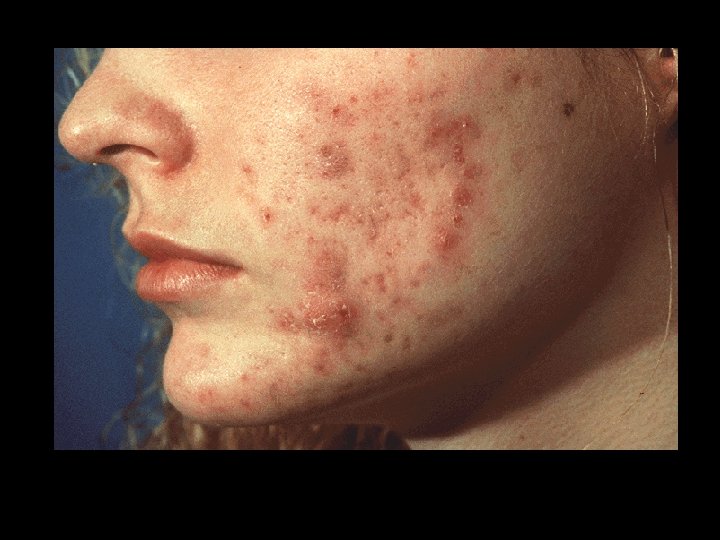
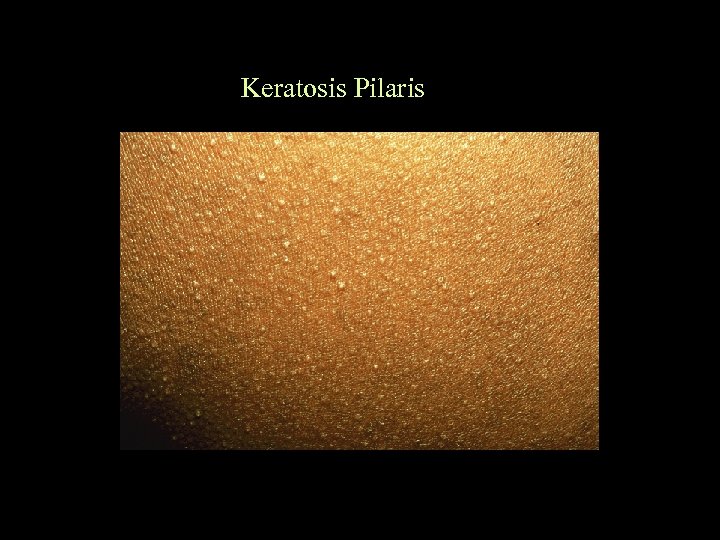
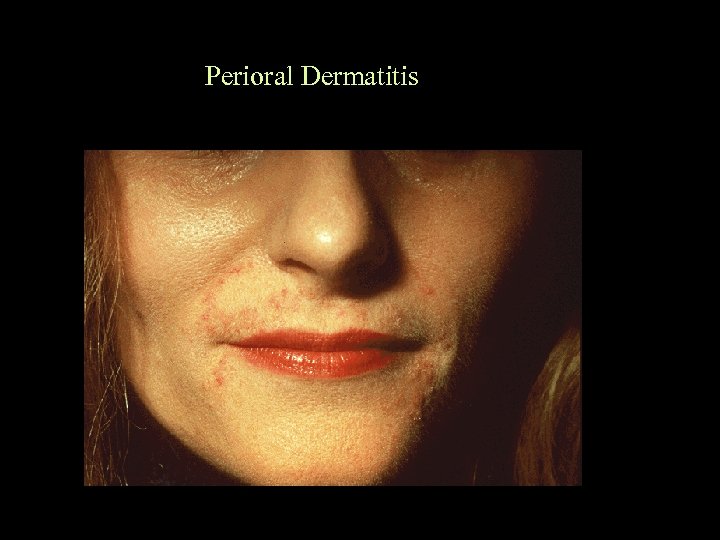
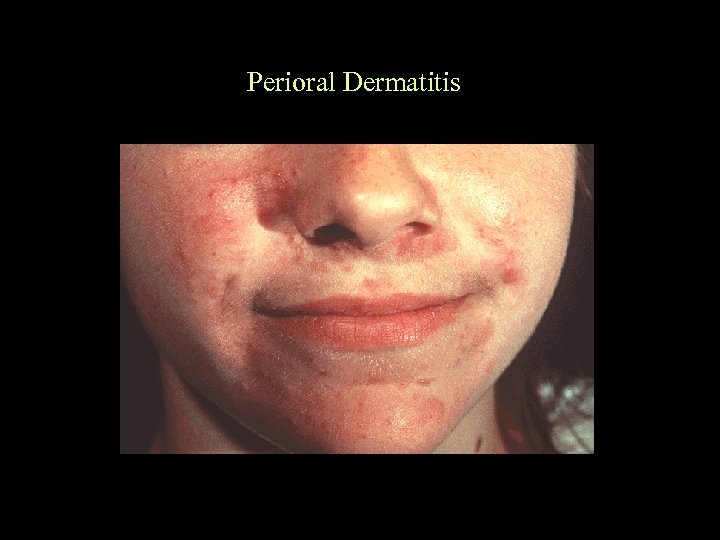
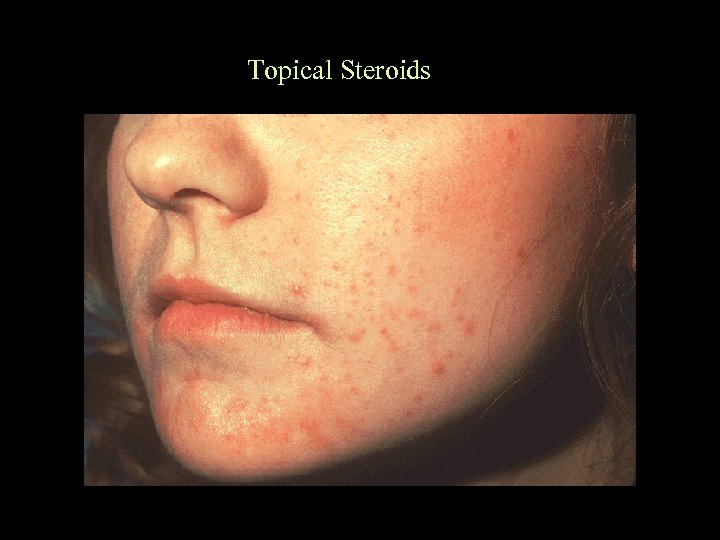
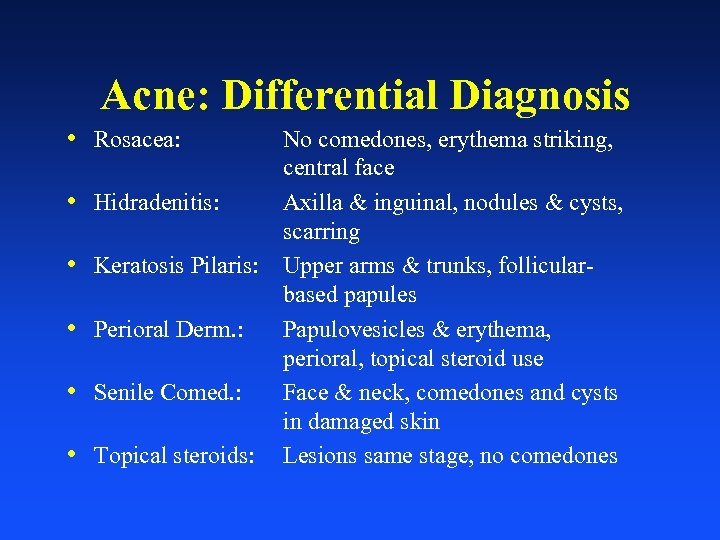 Acne: Differential Diagnosis • Rosacea: • Hidradenitis: • Keratosis Pilaris: • Perioral Derm. : • Senile Comed. : • Topical steroids: No comedones, erythema striking, central face Axilla & inguinal, nodules & cysts, scarring Upper arms & trunks, follicularbased papules Papulovesicles & erythema, perioral, topical steroid use Face & neck, comedones and cysts in damaged skin Lesions same stage, no comedones
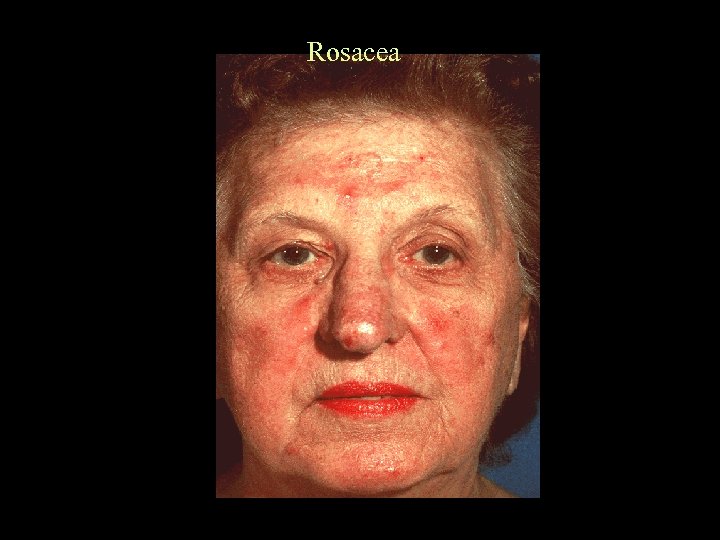 Rosacea
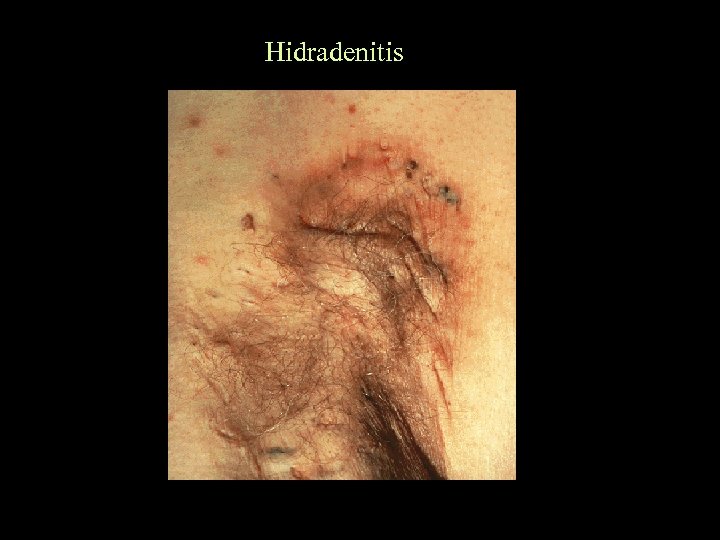 Hidradenitis
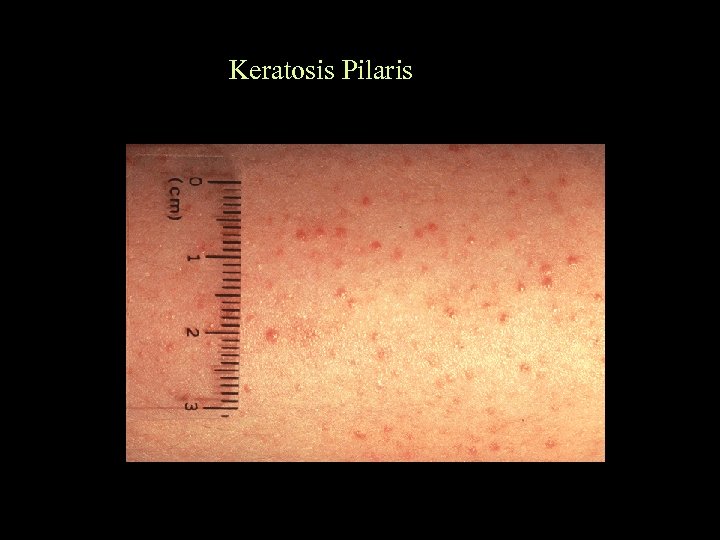 Keratosis Pilaris
 Keratosis Pilaris
 Perioral Dermatitis
 Perioral Dermatitis
 Senile Comedones
 Topical Steroids
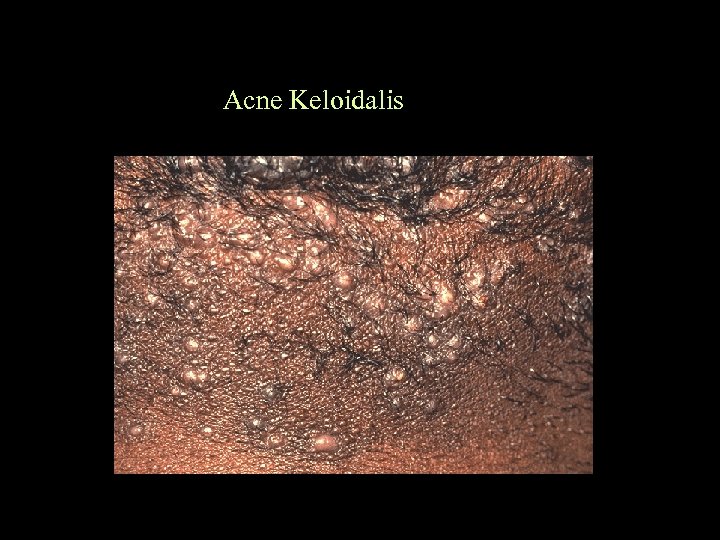 Acne Keloidalis
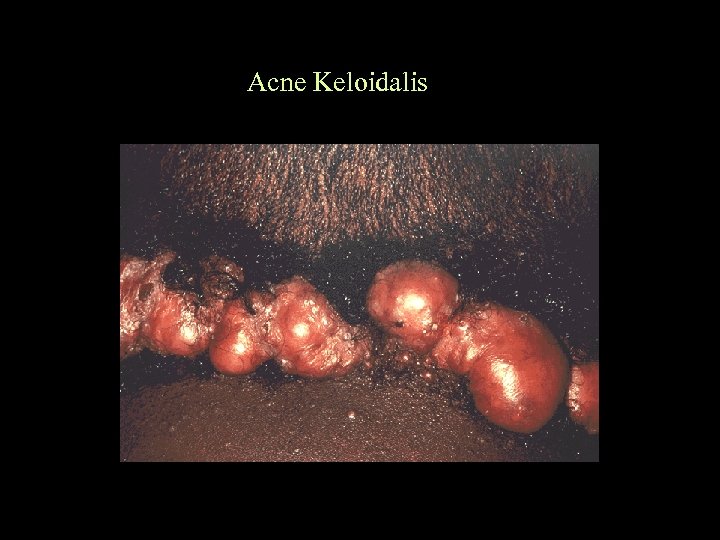 Acne Keloidalis
 Acne: Treatment • Treatment goal is to prevent new lesions/scarring • Treatment will not improve outcomes for 4 -6 weeks • (Acne exacerbated by iodides, bromides, hydantoin, chlorinated hydrocarbons, occluding topical preparations, vigorous washing, and mechanical occlusion)
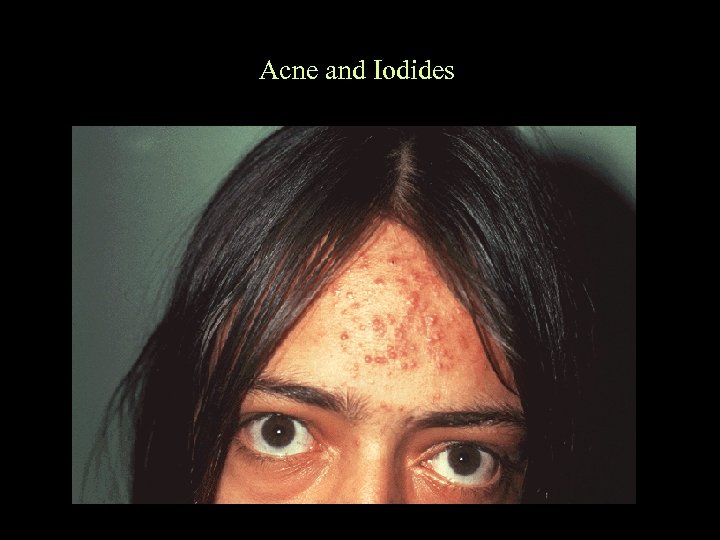 Acne and Iodides
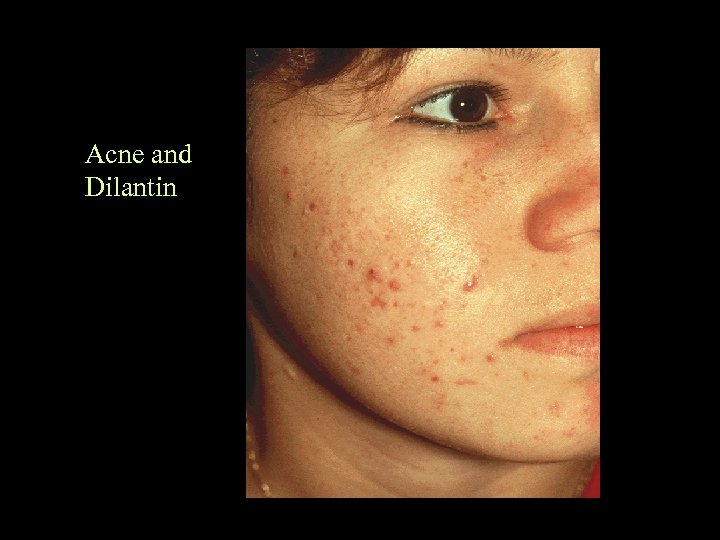 Acne and Dilantin
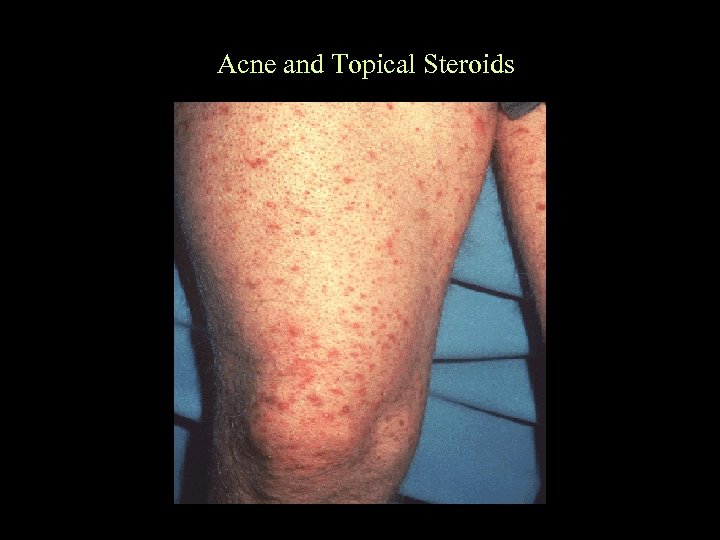 Acne and Topical Steroids
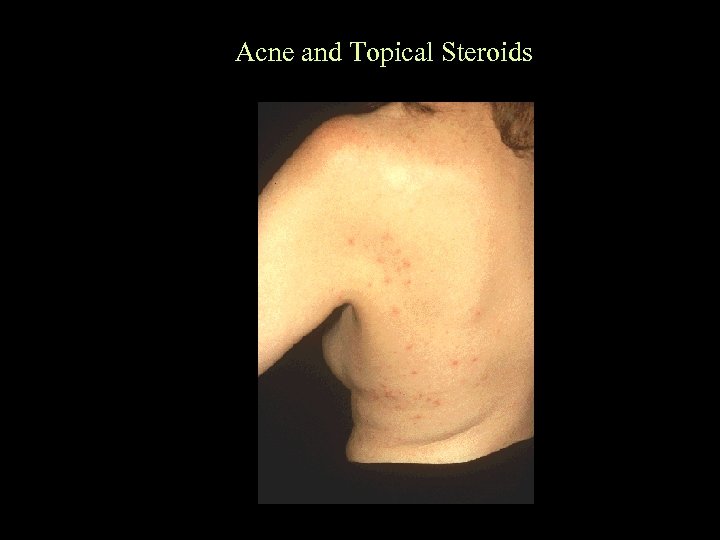 Acne and Topical Steroids
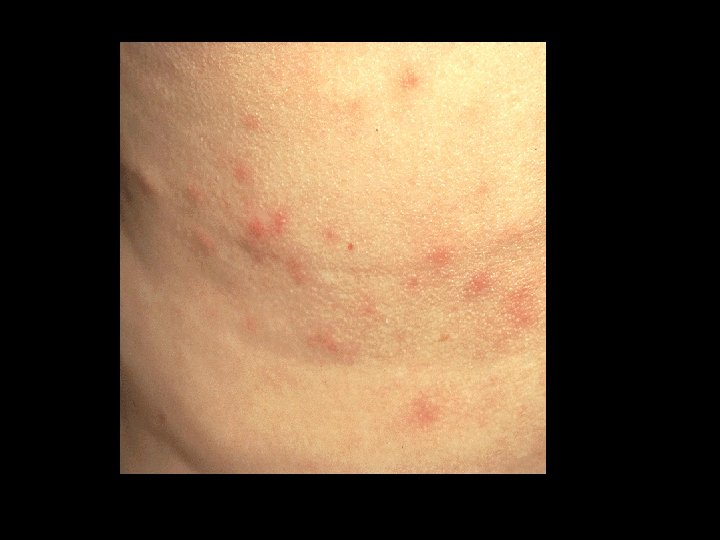
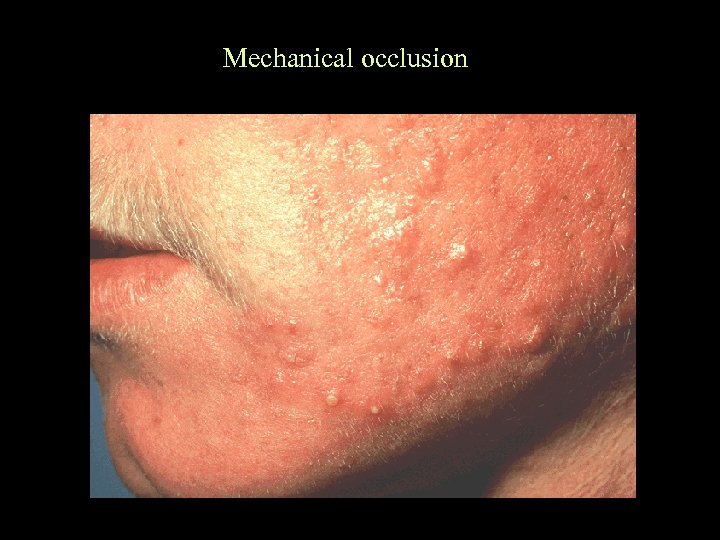 Mechanical occlusion
 Mild acne: • • Apply one agent thinly to entire face If two agents selected, use at separate times Apply after washing with water or mild soap Choices: – Benzoyl peroxide Topical antibiotics – Tretinoin Birth Control Pills – Azelaic acid Salicylic acid • Use for 6 -8 weeks before judging if effective
 Mild acne • Benzoyl peroxide ($) – Antibacterial, drying and peeling actions – Rx: 2. 5 -10% gel/cream/wash – OTC: 2. 5 -10% gel/lotion/cream – Usually start with 2. 5 -5%, thin layer QD -BID
 Mild acne • Benzoyl peroxide – Water based preps are milder and less drying – Alcohol/acetone preps useful in oily skin – Washes and soaps are good for acne on the chest, back and shoulders (5 -10%) – Benzamycin gel- 23. 3 grm- benzoyl peroxide and erythromycin- must be kept refrigerated
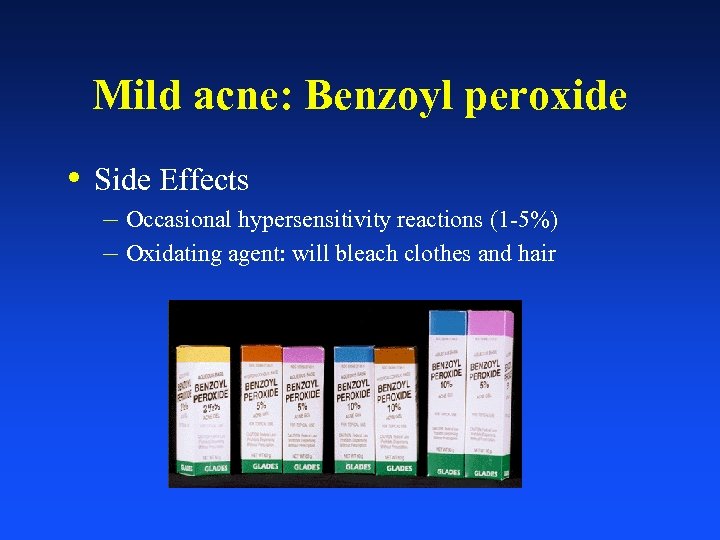 Mild acne: Benzoyl peroxide • Side Effects – Occasional hypersensitivity reactions (1 -5%) – Oxidating agent: will bleach clothes and hair
 Mild acne • Topical antibiotics (all Px) ($$) – Erythromycin 2%- pledgettes, pads, gel (oily skin), solution, ointment (dry skin) – Clindamycin 1%- solution, gel, lotion • (e. g. Cleocin T) – Meclocycline- cream; useful in patient with very dry skin • (e. g. Meclan)
 Mild acne: Topical antibiotics • Sodium sulfacetamide 10%, Sulfur 5%, Sodium thiosulfate 10% – Numerous keratolytic/astringent agents – Useful if lotion preparation preferred and other topical – – antibiotics not working or tolerated Sulfacet R- tinted (can cover redness) Novacet- untinted • Bacterial resistance may develop after 6 -12 months of use
 Mild acne: Topical Retinoids • • Especially good for comedonal or papular acne Modulates keratinization Use pea size amount to entire face Apply 3 x week for 2 weeks, then nightly Increases photosensitivity Flare reaction frequent Web Sites: http: //www. healthsquare. com/pdrfg/pd/ monos/retin-a. htm
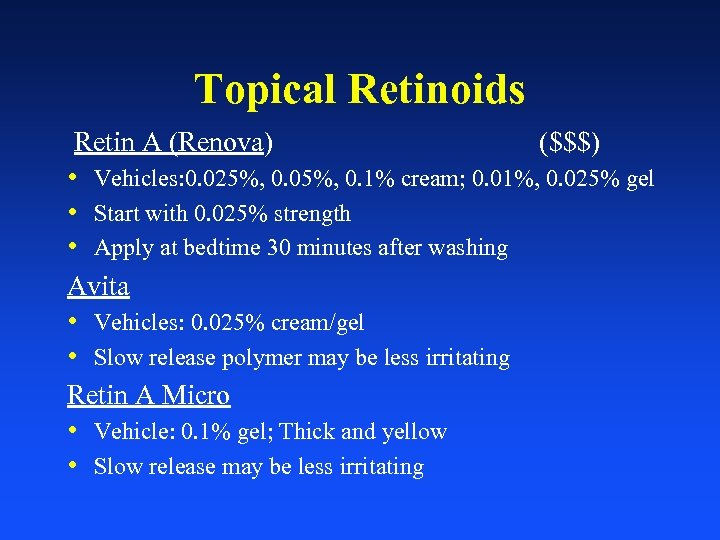 Topical Retinoids Retin A (Renova) ($$$) • Vehicles: 0. 025%, 0. 05%, 0. 1% cream; 0. 01%, 0. 025% gel • Start with 0. 025% strength • Apply at bedtime 30 minutes after washing Avita • Vehicles: 0. 025% cream/gel • Slow release polymer may be less irritating Retin A Micro • Vehicle: 0. 1% gel; Thick and yellow • Slow release may be less irritating
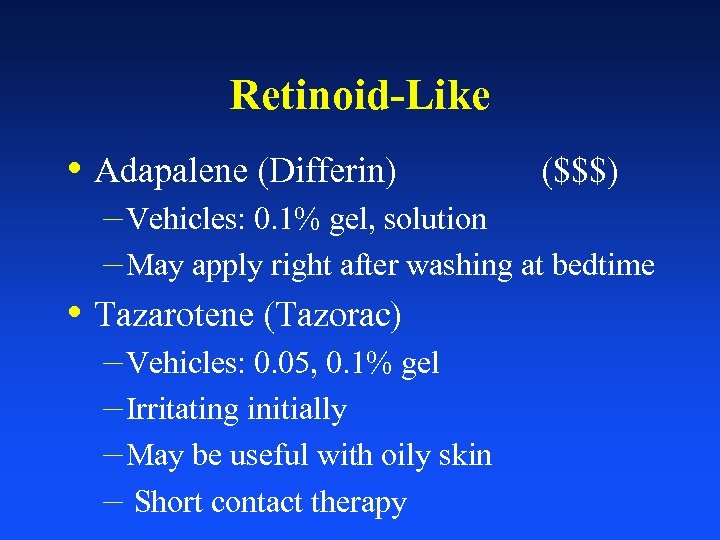 Retinoid-Like • Adapalene (Differin) ($$$) – Vehicles: 0. 1% gel, solution – May apply right after washing at bedtime • Tazarotene (Tazorac) – Vehicles: 0. 05, 0. 1% gel – Irritating initially – May be useful with oily skin – Short contact therapy
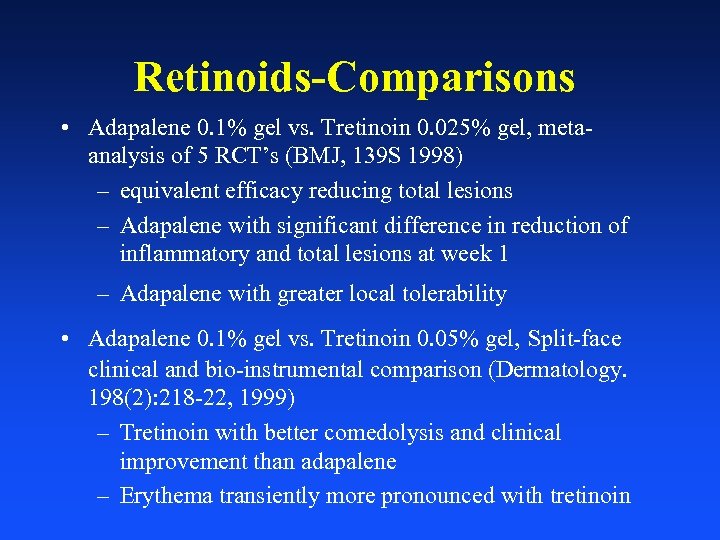 Retinoids-Comparisons • Adapalene 0. 1% gel vs. Tretinoin 0. 025% gel, metaanalysis of 5 RCT’s (BMJ, 139 S 1998) – equivalent efficacy reducing total lesions – Adapalene with significant difference in reduction of inflammatory and total lesions at week 1 – Adapalene with greater local tolerability • Adapalene 0. 1% gel vs. Tretinoin 0. 05% gel, Split-face clinical and bio-instrumental comparison (Dermatology. 198(2): 218 -22, 1999) – Tretinoin with better comedolysis and clinical improvement than adapalene – Erythema transiently more pronounced with tretinoin
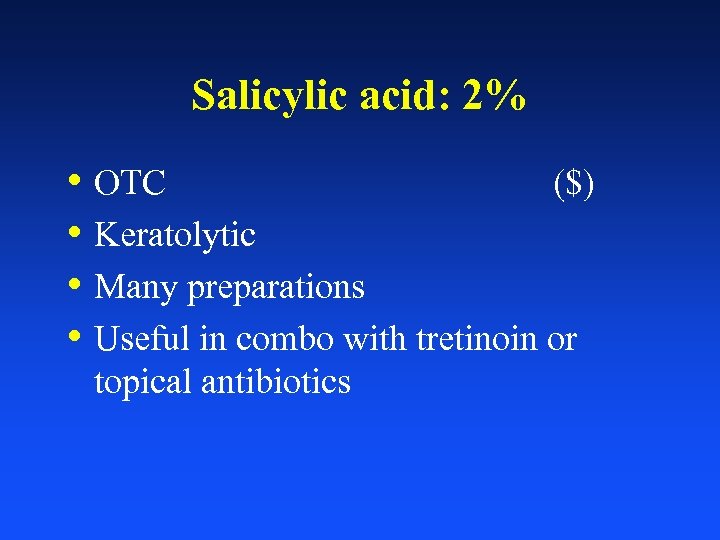 Salicylic acid: 2% • OTC ($) • Keratolytic • Many preparations • Useful in combo with tretinoin or topical antibiotics
 20% Azelaic acid (Px) • Mechanism unknown ($$) • Useful for patients intolerant to tretinoin or benzoyl peroxide • Avoid on broken skin • Use qd-bid, usually in combination with other topicals
 Acne and Birth Control Pills • Lowers hormonal factors exacerbating acne • Use pill with low androgenic potential • Know side effects and contraindications • Acne often improves during pregnancy
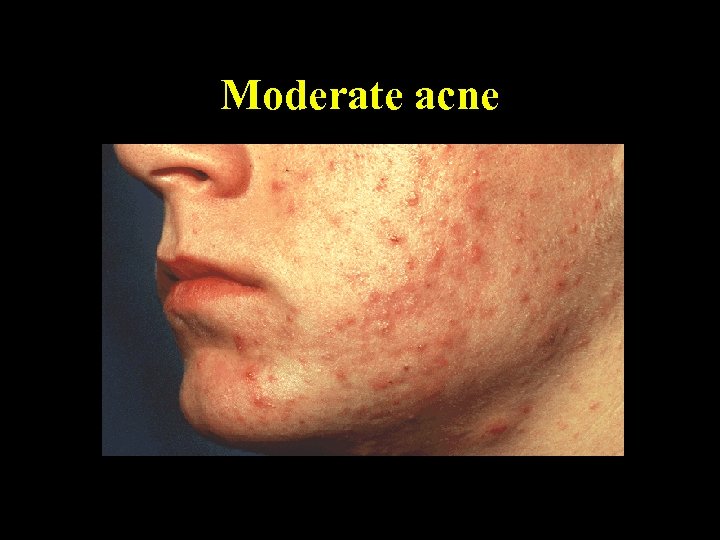 Moderate acne
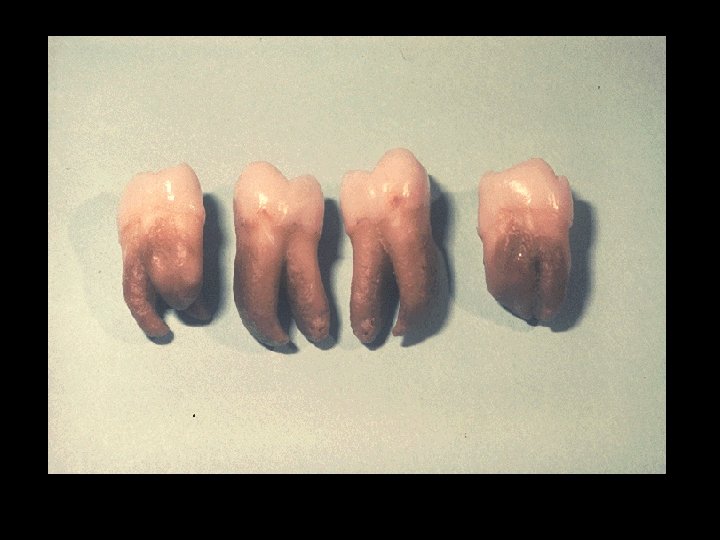
 Moderate acne • Mild treatment + • Add oral antibiotics – Tetracycline- 500 mg bid or doxycycline 50 -100 mg/day – Erythromycin- 500 mg bid – Minocycline- 50 -100 mg/day – Trimethoprim/Sulfamethoxazole 1 DS qd-bid • Comedo removal
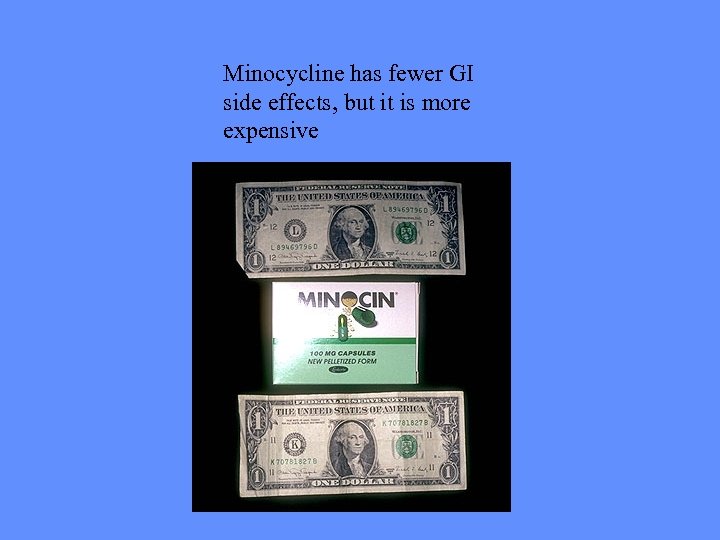 Minocycline has fewer GI side effects, but it is more expensive
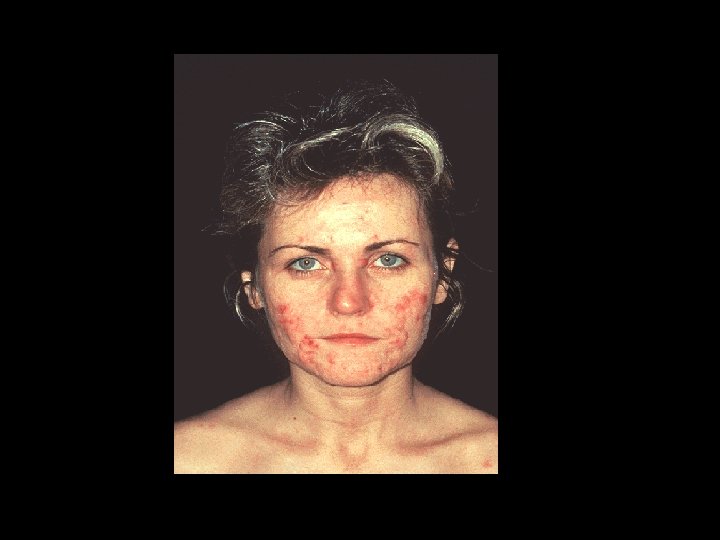
 Severe acne • Moderate regimen X 3 months • Isotretinoin for severe nodulocystic acne • Steroid injections – TAC acetonide 10 mg/ml diluted to 3 mg/ml – Inject 0. 1 ml into fresh cyst • Prednisone rarely • Consultation
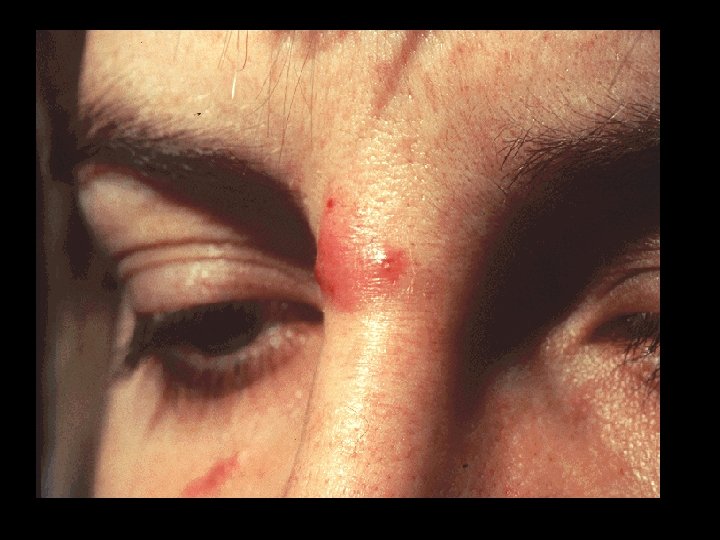
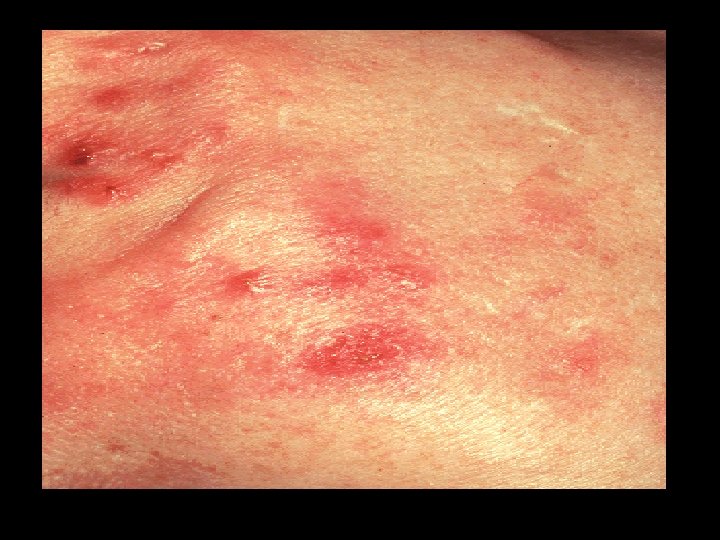
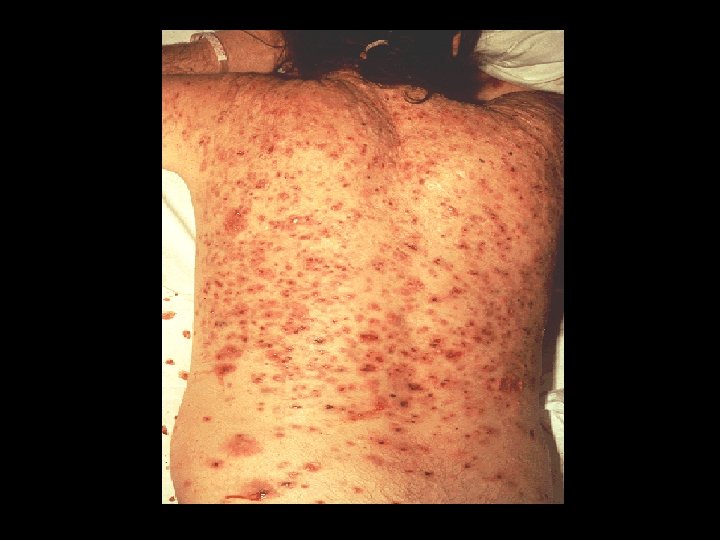
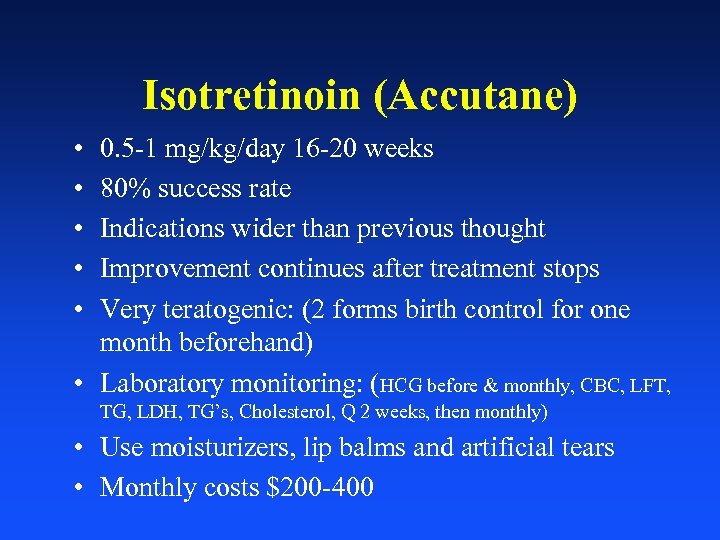 Isotretinoin (Accutane) • • • 0. 5 -1 mg/kg/day 16 -20 weeks 80% success rate Indications wider than previous thought Improvement continues after treatment stops Very teratogenic: (2 forms birth control for one month beforehand) • Laboratory monitoring: (HCG before & monthly, CBC, LFT, TG, LDH, TG’s, Cholesterol, Q 2 weeks, then monthly) • Use moisturizers, lip balms and artificial tears • Monthly costs $200 -400
 Acne: Myths • NO relation to junk foods • NO relation to “hygiene” • NO relation to masturbation or other sexual • activity NO way to make acne go away overnight
 Acne: Truths • • YES acne may worsen premenstrual YES sweating may worsen acne YES humid environments may worsen acne YES stress can exacerbate acne
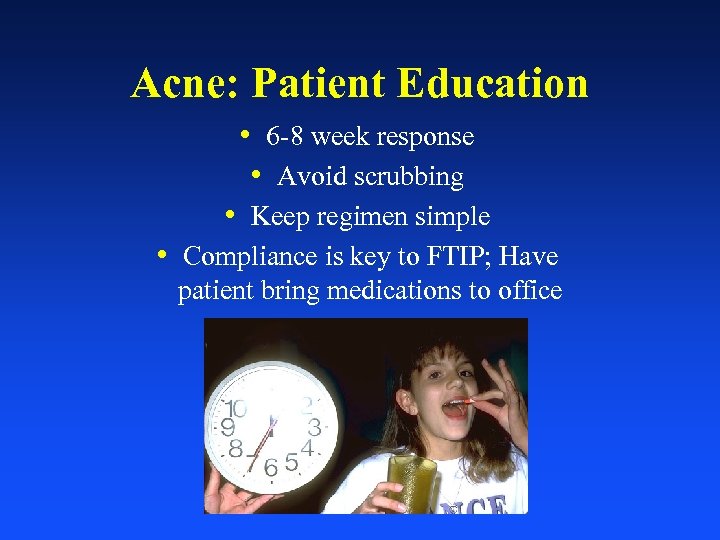 Acne: Patient Education • 6 -8 week response • Avoid scrubbing • Keep regimen simple • Compliance is key to FTIP; Have patient bring medications to office
 Acne: Patient Education • Use water-based makeup • “Oil-free” moisturizers • Web Sites: http: //www. pslgroup. com/ACNE. htm Useful general information for clinicians http: //www. derm-infonet. com/acnenet/toc. html Comprehensive site http: //www. m 2 w 3. com/acne/ Patient support group
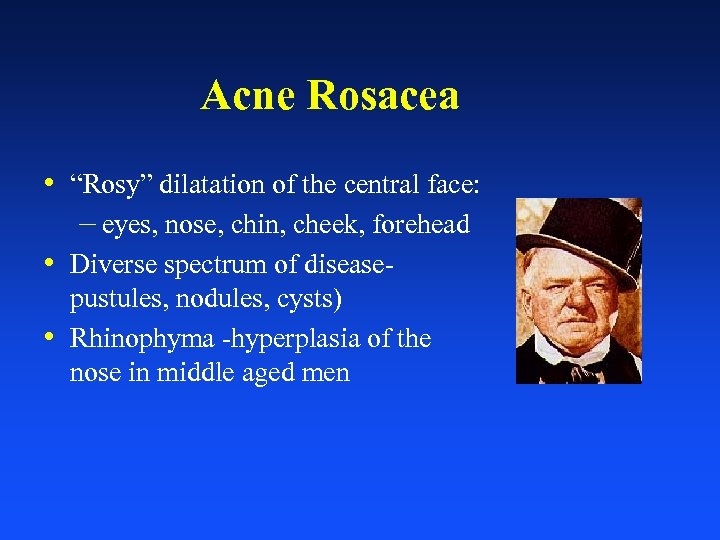 Acne Rosacea • “Rosy” dilatation of the central face: – eyes, nose, chin, cheek, forehead • Diverse spectrum of disease • pustules, nodules, cysts) Rhinophyma -hyperplasia of the nose in middle aged men (papules,
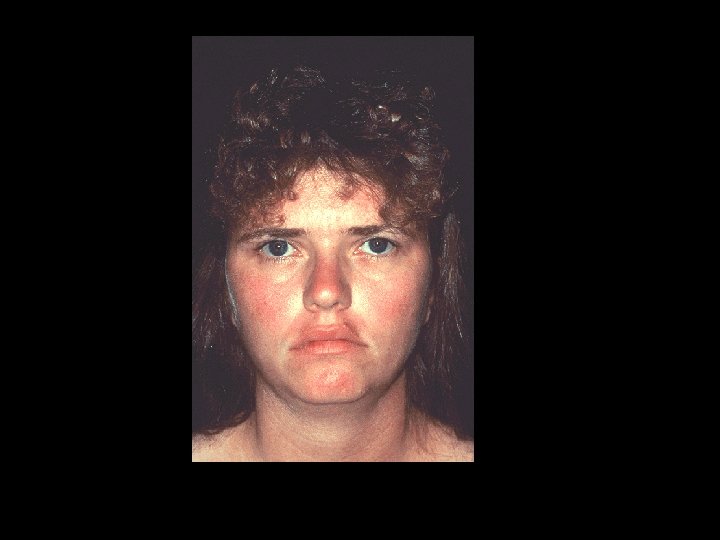
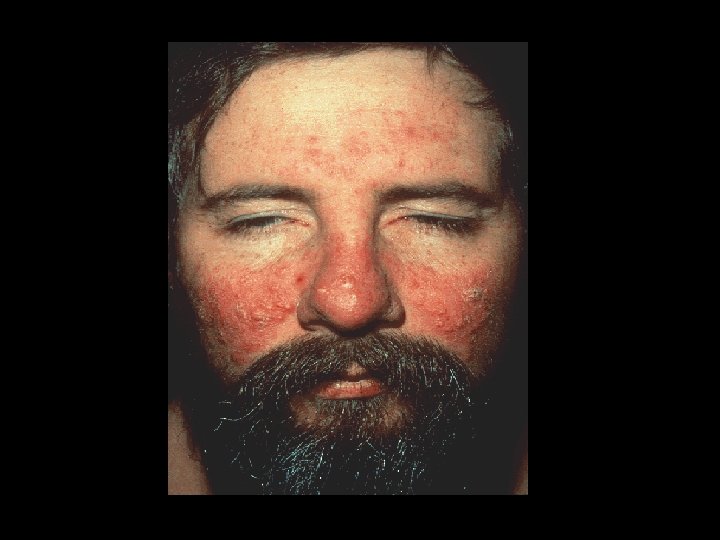
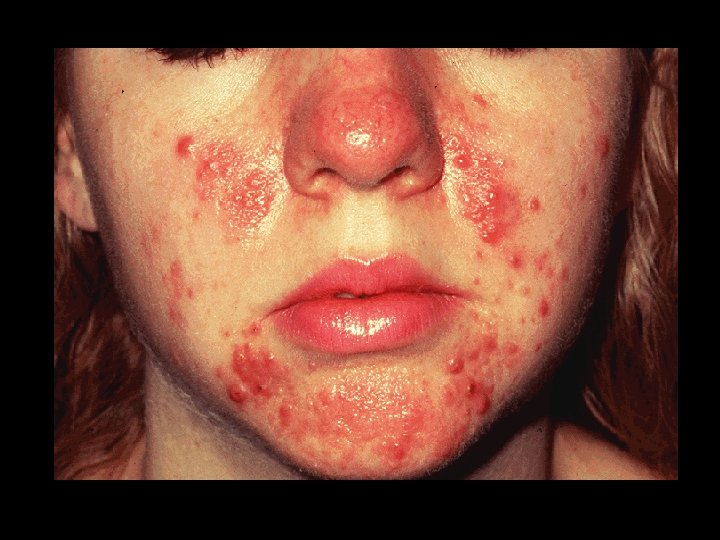
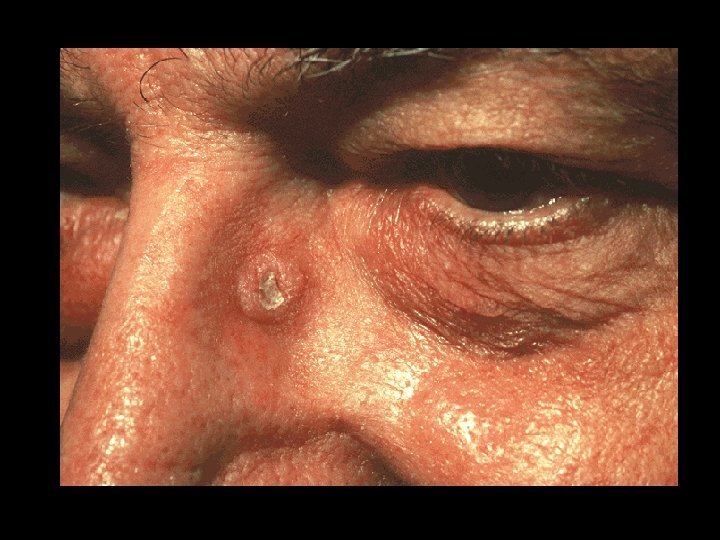
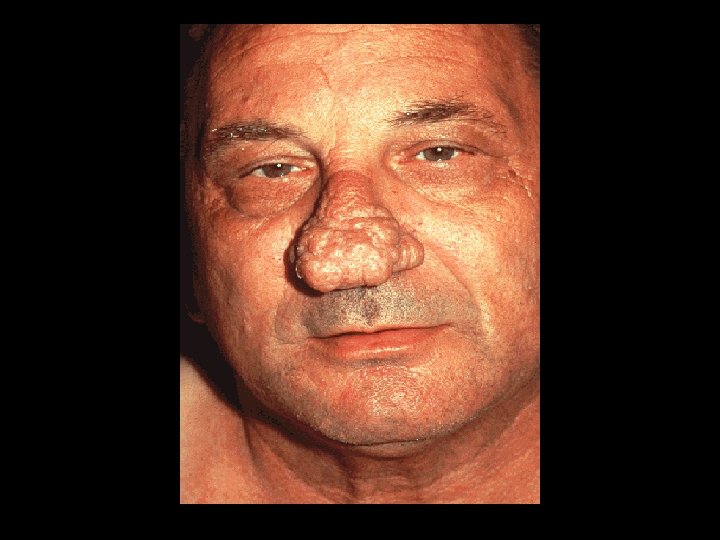
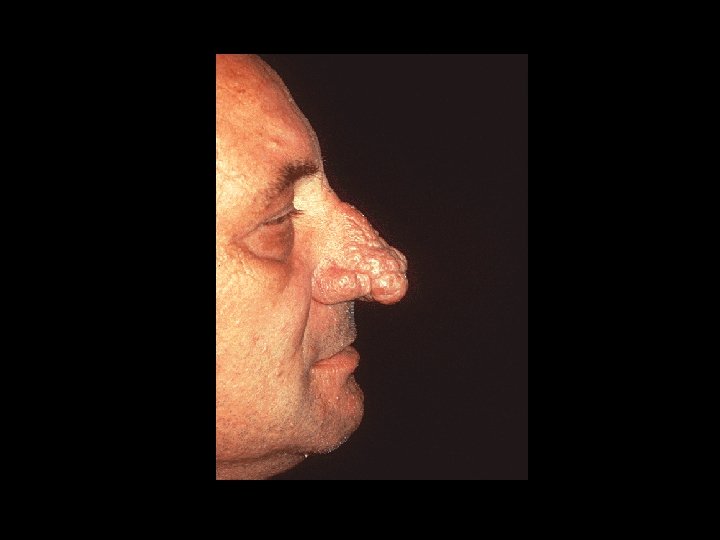
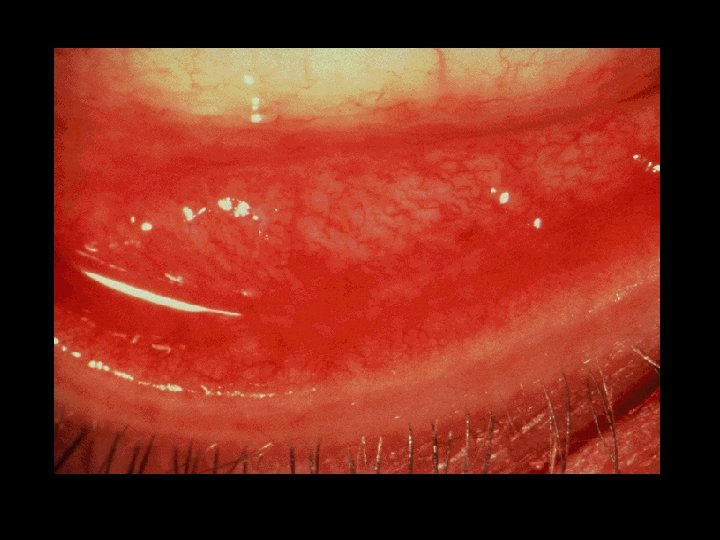
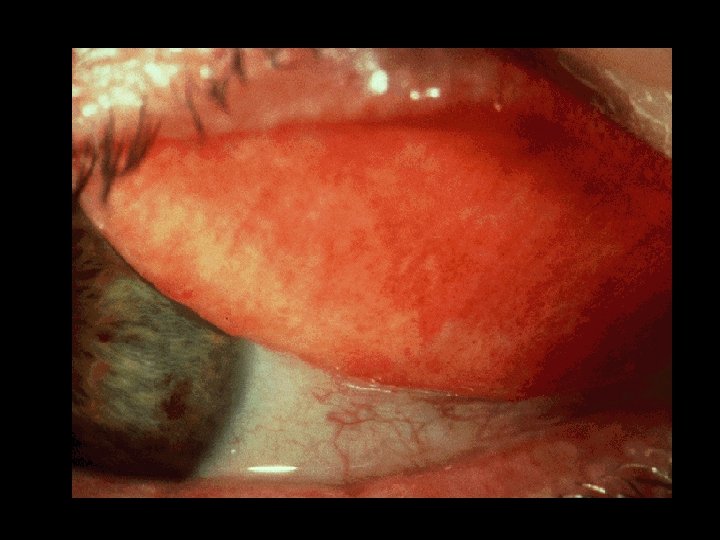
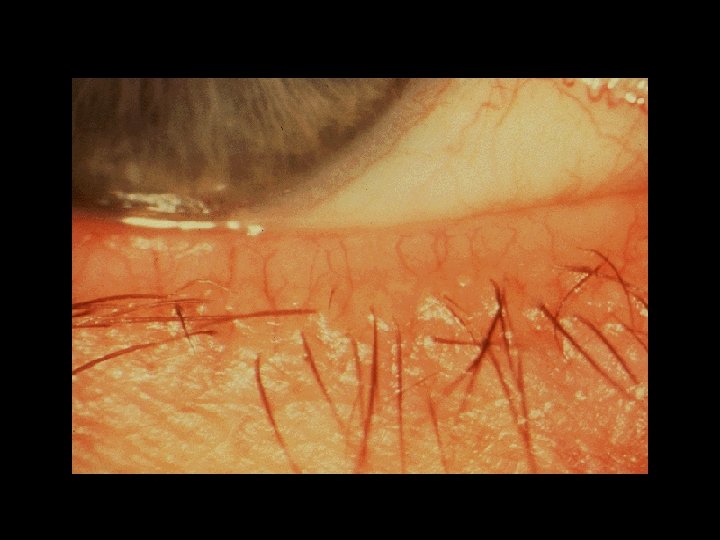
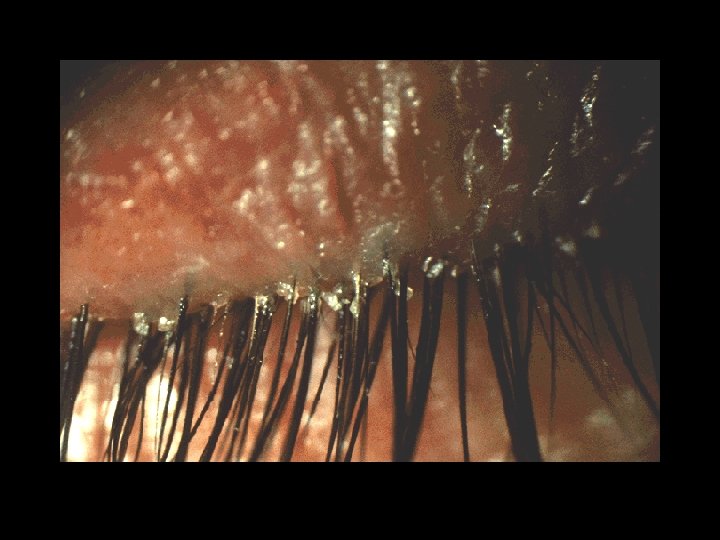
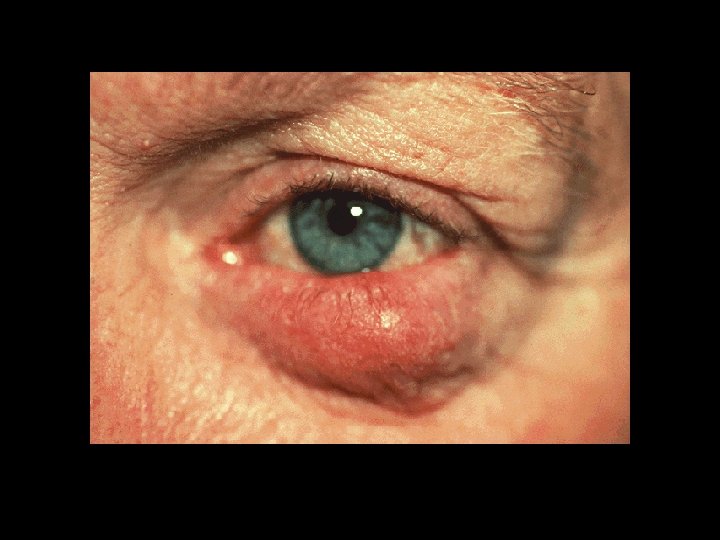
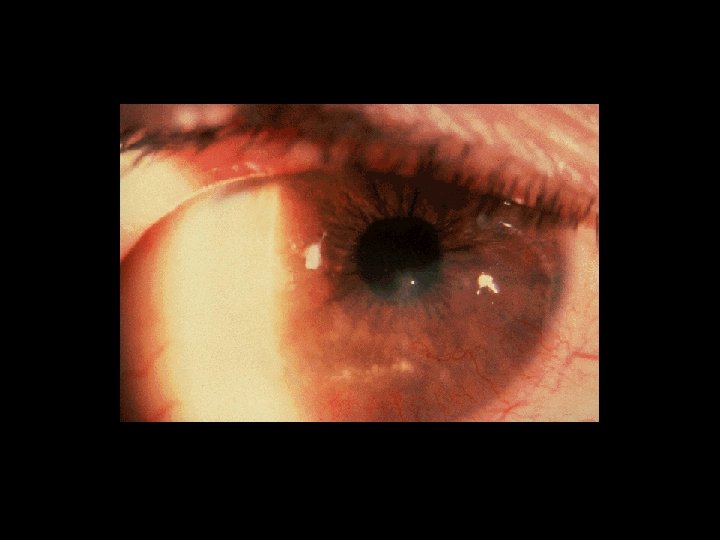
 Acne Rosacea • Look for periodic facial flushing after • • temperature increase, spicy food ingestion or alcohol Absence of comedones Disease is chronic: Treatment goal is control
 Acne Rosacea: Differential Diagnosis • Acne Vulgaris: • Seb. dermatitis: • Lupus: • Carcinoid: comedones, younger patient, lack of flushing, less erythema no acneiform lesions no papules and pustules flushing is transient
 Acne Rosacea: Treatment • Topical – Antibiotics, Benzoyl peroxide, Tretinoin • • Oral antibiotics Isotretinoin for severe, recalcitrant cases Referral for surgery, dermabrasion, laser Potent topical steroids often worsen disease
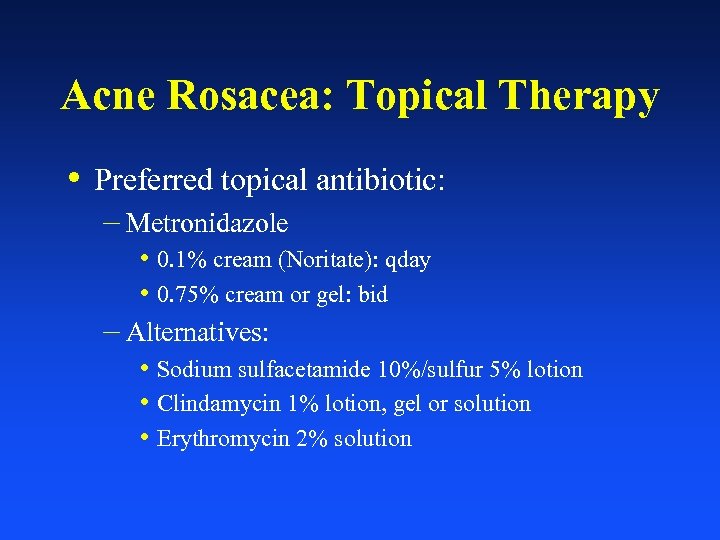 Acne Rosacea: Topical Therapy • Preferred topical antibiotic: – Metronidazole • 0. 1% cream (Noritate): qday • 0. 75% cream or gel: bid – Alternatives: • Sodium sulfacetamide 10%/sulfur 5% lotion • Clindamycin 1% lotion, gel or solution • Erythromycin 2% solution
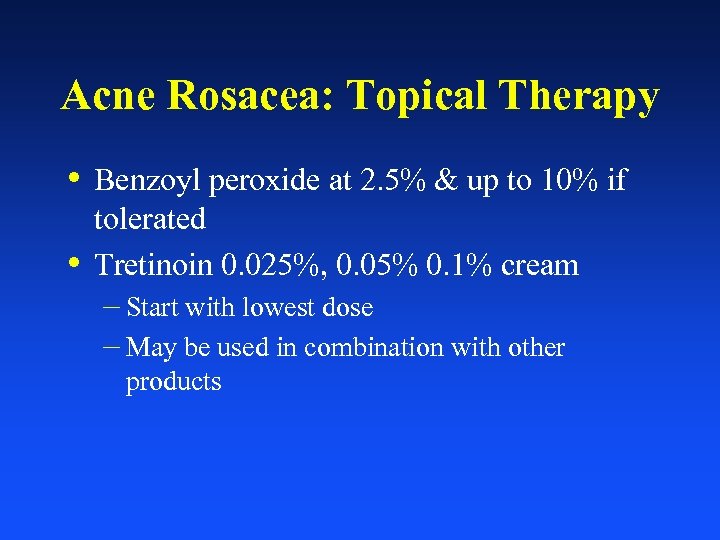 Acne Rosacea: Topical Therapy • Benzoyl peroxide at 2. 5% & up to 10% if • tolerated Tretinoin 0. 025%, 0. 05% 0. 1% cream – Start with lowest dose – May be used in combination with other products
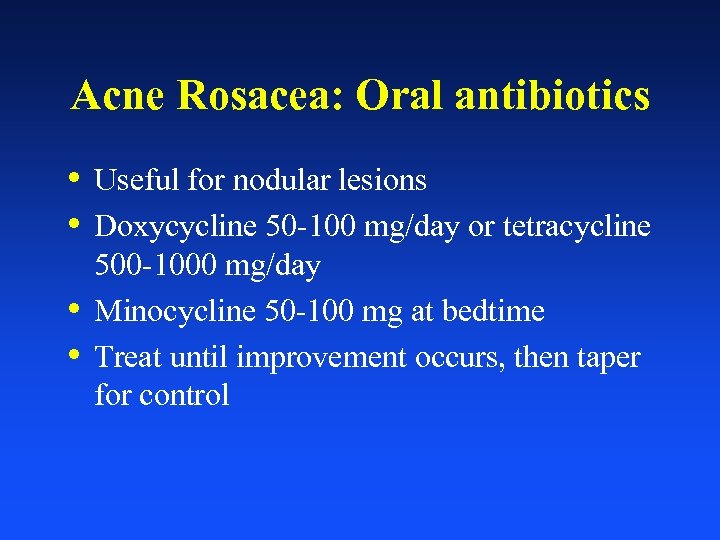 Acne Rosacea: Oral antibiotics • Useful for nodular lesions • Doxycycline 50 -100 mg/day or tetracycline • • 500 -1000 mg/day Minocycline 50 -100 mg at bedtime Treat until improvement occurs, then taper for control
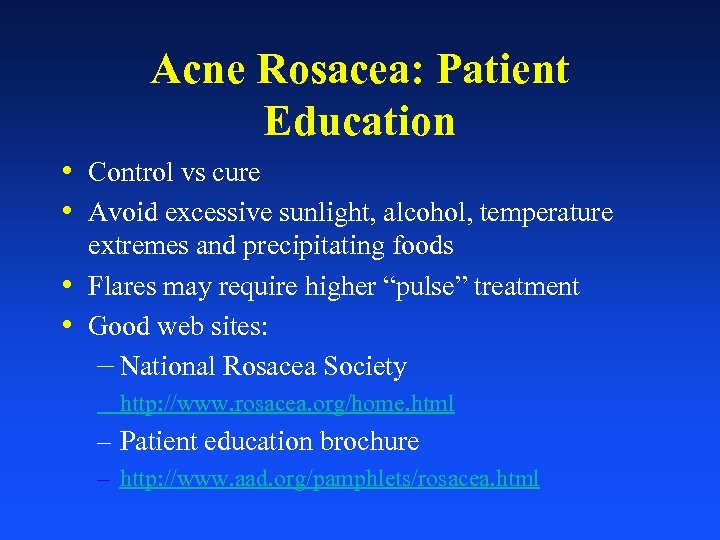 Acne Rosacea: Patient Education • Control vs cure • Avoid excessive sunlight, alcohol, temperature • • extremes and precipitating foods Flares may require higher “pulse” treatment Good web sites: – National Rosacea Society http: //www. rosacea. org/home. html – Patient education brochure – http: //www. aad. org/pamphlets/rosacea. html
 On the Horizon…. • New retinoids • Combination products: retinoids and topical antibiotics • Glycolic acid, salicylic acid peels • Hormonal treatments • Antibiotic alternatives
 Cases • • • 14, Sports PE & whiteheads- incidental 16, with comedones and mild inflammation 16, before the prom 20, with sensitive skin, papular lesions and skin irritation 21, moderate acne on 0. 1% Retina cream and 5% Benz. Peroxide, wanting referral to dermatologist 22, with extensive cystic acne for 5 years
 Conclusion • • Be confident Use 1 -2 agents if at all possible Define expectations Think about acne rosacea in adults