 Скачать презентацию WHAT S IN YOUR BLOOD Facts The average
9fce3a7801dc67f59a8bcca365070a5b.ppt
- Количество слайдов: 35



WHAT’S IN YOUR BLOOD?
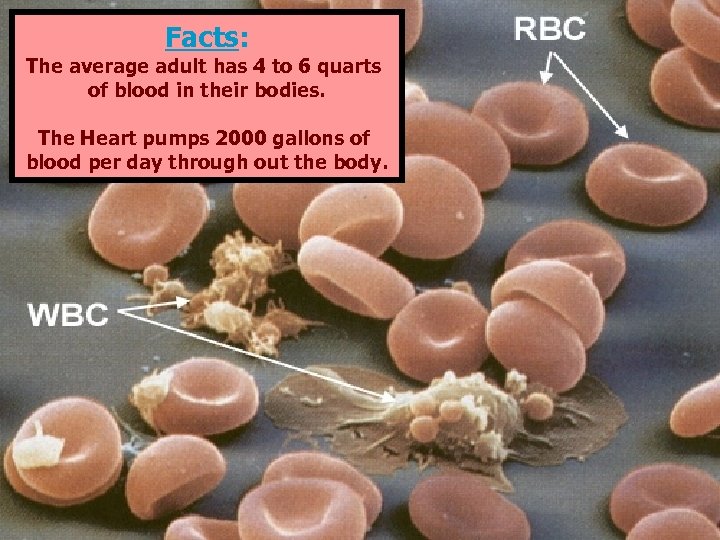
Facts: The average adult has 4 to 6 quarts of blood in their bodies. The Heart pumps 2000 gallons of blood per day through out the body.
Blood Transports: n Oxygen: from lungs to body cells n Carbon Dioxide: from body cells to lungs n Nutrients: from digestive system to body cells n Metabolic & Waste Products: from body cells to the organs of excretion n Heat: from various body parts n Hormones: produced by the endocrine glands
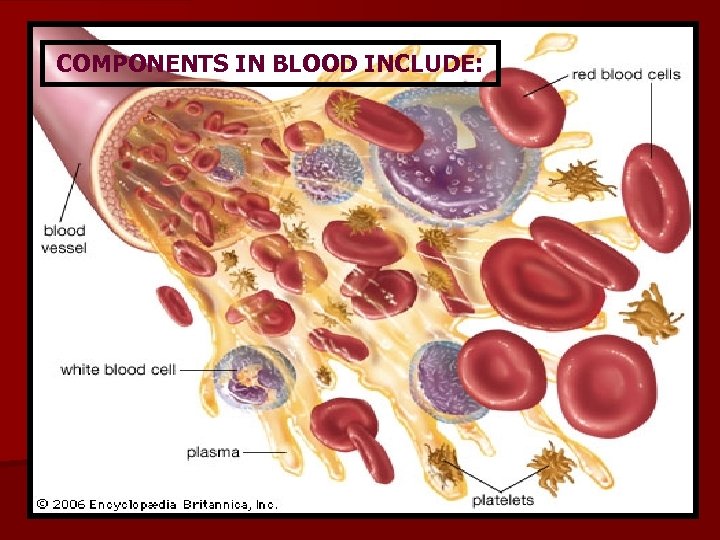
COMPONENTS IN BLOOD INCLUDE:
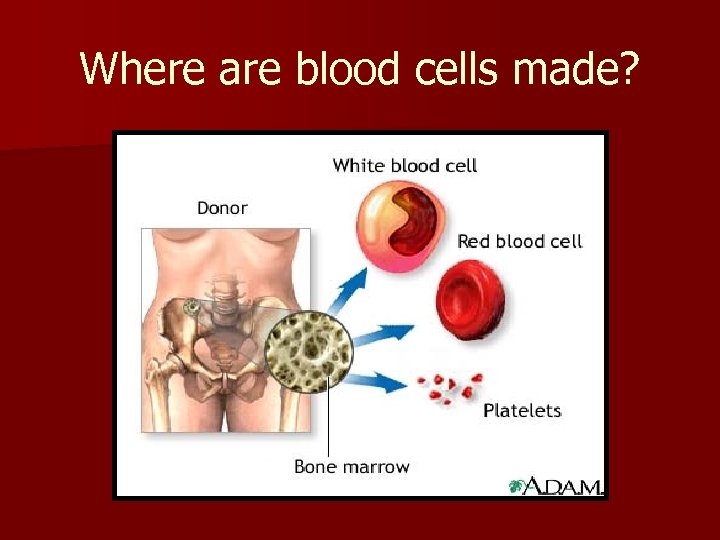
Where are blood cells made?
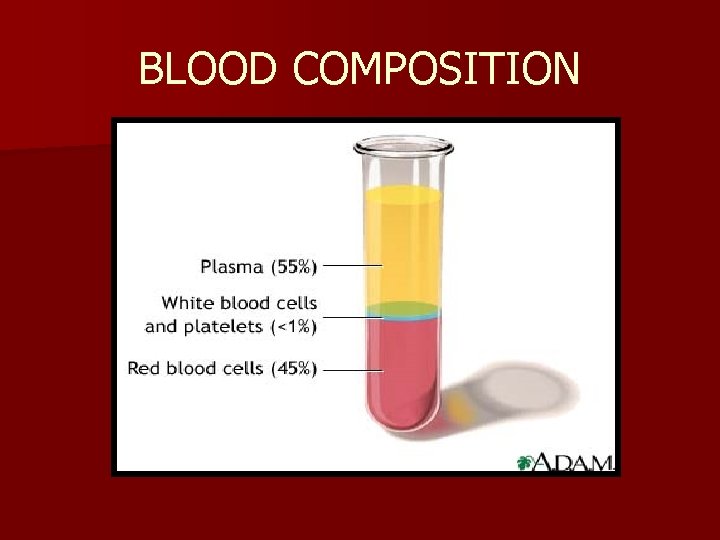
BLOOD COMPOSITION
Plasma n A straw-colored fluid n 90% water n Contains materials responsible for clotting the blood n Also, contains nutrients, gases, hormones, enzymes, and waste products
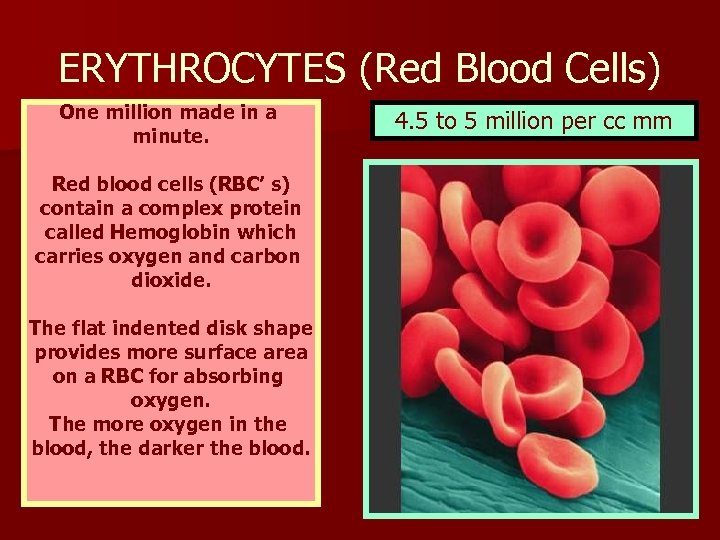
ERYTHROCYTES (Red Blood Cells) One million made in a minute. Red blood cells (RBC’ s) contain a complex protein called Hemoglobin which carries oxygen and carbon dioxide. The flat indented disk shape provides more surface area on a RBC for absorbing oxygen. The more oxygen in the blood, the darker the blood. 4. 5 to 5 million per cc mm
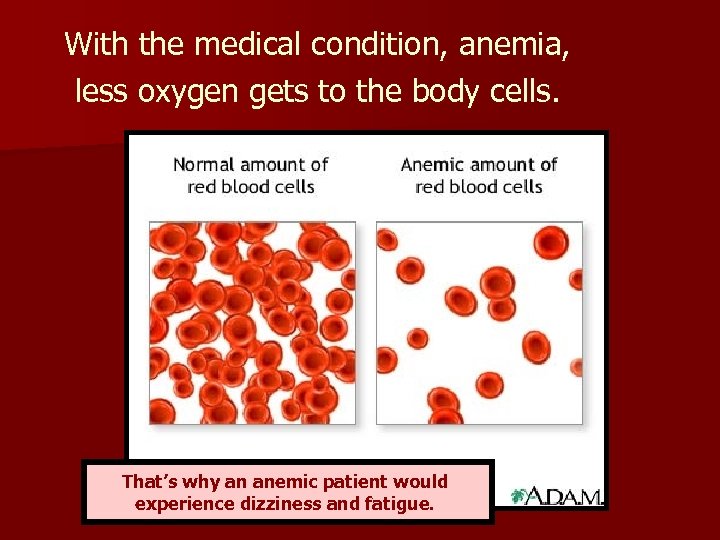
With the medical condition, anemia, less oxygen gets to the body cells. That’s why an anemic patient would experience dizziness and fatigue.
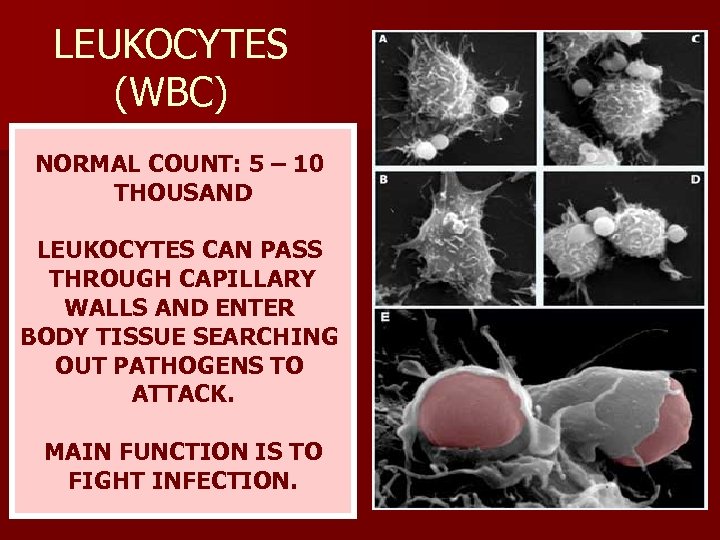
LEUKOCYTES (WBC) NORMAL COUNT: 5 – 10 THOUSAND LEUKOCYTES CAN PASS THROUGH CAPILLARY WALLS AND ENTER BODY TISSUE SEARCHING OUT PATHOGENS TO ATTACK. MAIN FUNCTION IS TO FIGHT INFECTION.
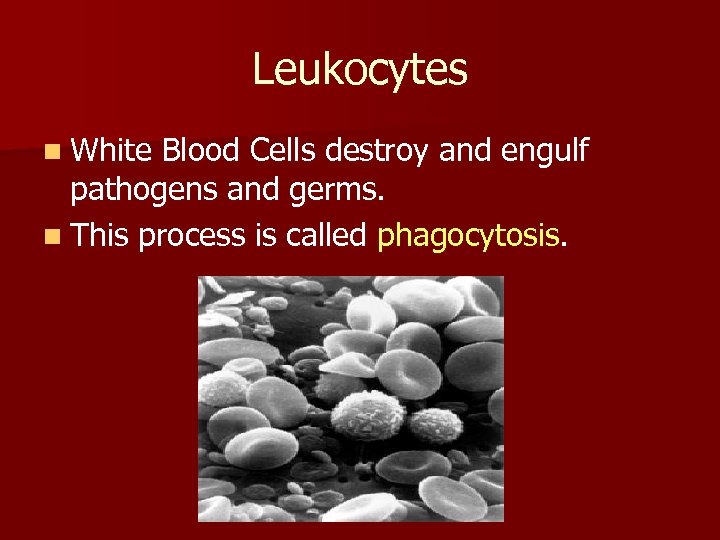
Leukocytes n White Blood Cells destroy and engulf pathogens and germs. n This process is called phagocytosis.
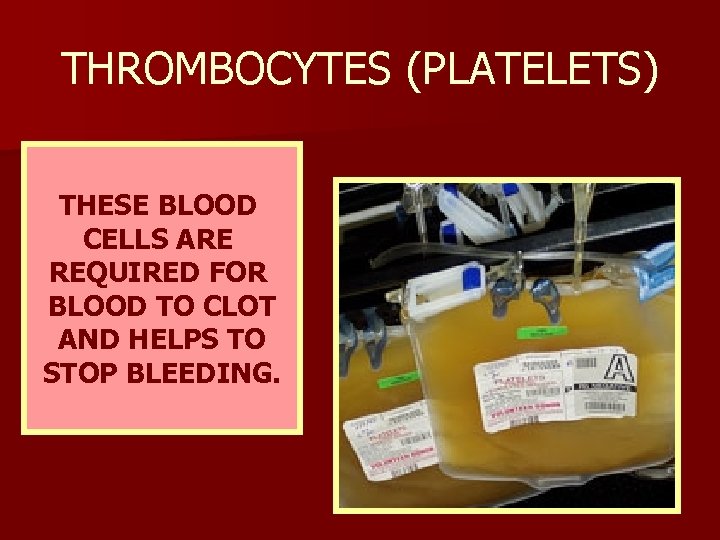
THROMBOCYTES (PLATELETS) THESE BLOOD CELLS ARE REQUIRED FOR BLOOD TO CLOT AND HELPS TO STOP BLEEDING.
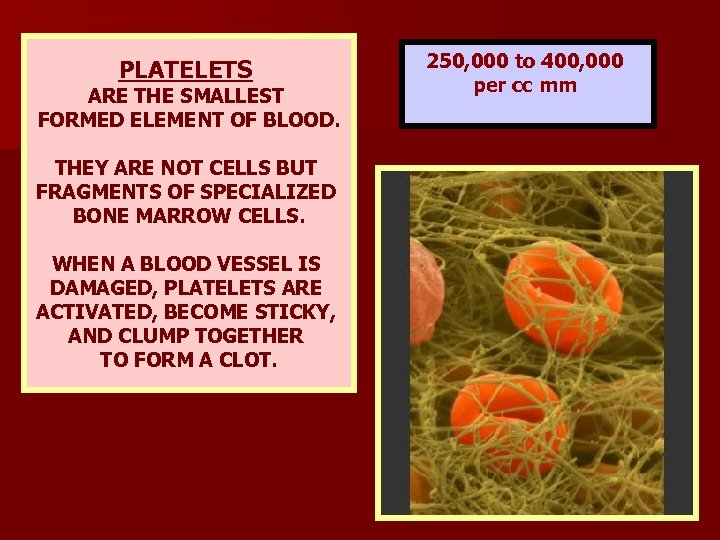
PLATELETS ARE THE SMALLEST FORMED ELEMENT OF BLOOD. THEY ARE NOT CELLS BUT FRAGMENTS OF SPECIALIZED BONE MARROW CELLS. WHEN A BLOOD VESSEL IS DAMAGED, PLATELETS ARE ACTIVATED, BECOME STICKY, AND CLUMP TOGETHER TO FORM A CLOT. 250, 000 to 400, 000 per cc mm
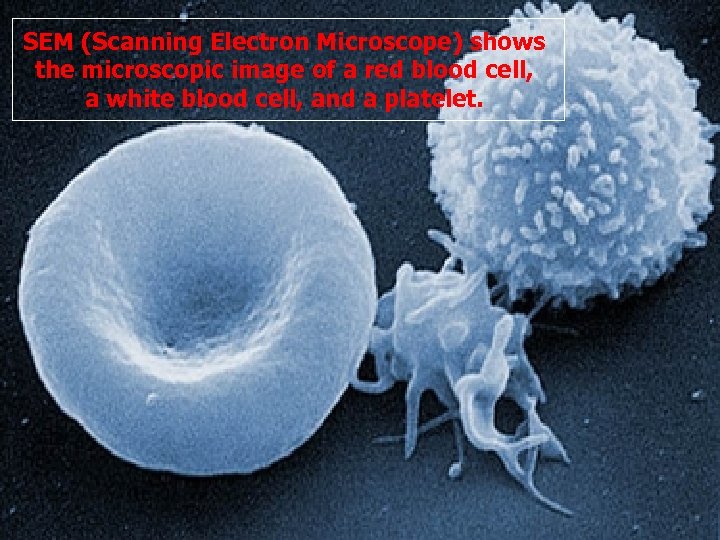
SEM (Scanning Electron Microscope) shows the microscopic image of a red blood cell, a white blood cell, and a platelet.
History of Blood Transfusions Blood transfusions were first attempted around 1600 by transfusing animal blood into humans. This proved disastrous. n Not until the 1900 s were the basic four blood types identified by Karl Landsteiner. n The success of blood transfusions significantly increased with the knowledge of the different blood types and when patients were transfused with their same type of blood. n
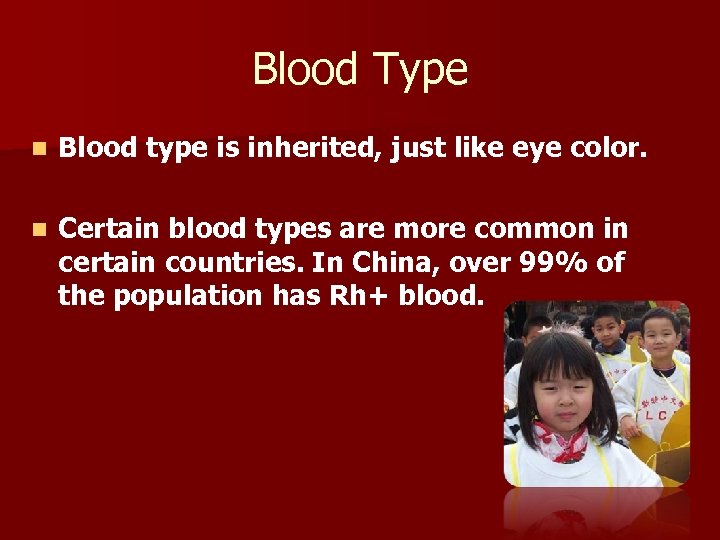
Blood Type n Blood type is inherited, just like eye color. n Certain blood types are more common in certain countries. In China, over 99% of the population has Rh+ blood.
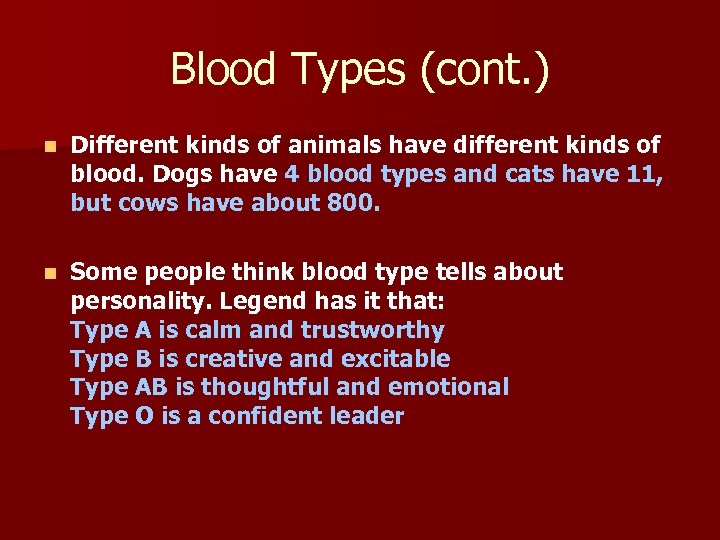
Blood Types (cont. ) n Different kinds of animals have different kinds of blood. Dogs have 4 blood types and cats have 11, but cows have about 800. n Some people think blood type tells about personality. Legend has it that: Type A is calm and trustworthy Type B is creative and excitable Type AB is thoughtful and emotional Type O is a confident leader
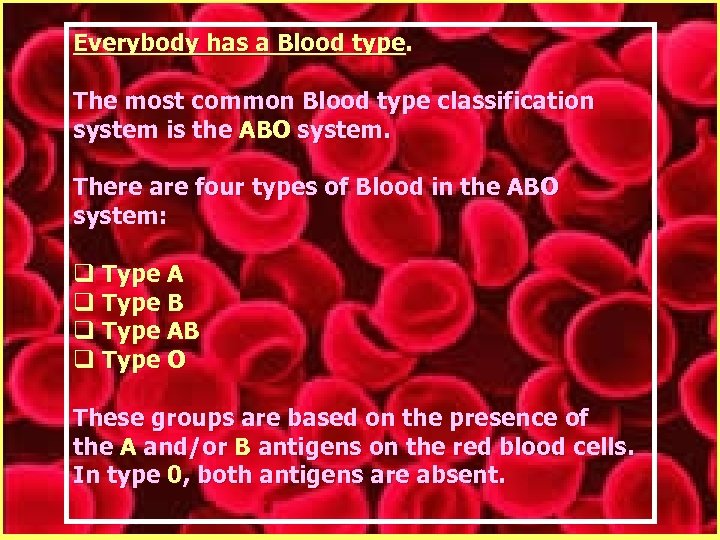
Everybody has a Blood type. The most common Blood type classification system is the ABO system. There are four types of Blood in the ABO system: q Type A q Type B q Type AB q Type O These groups are based on the presence of the A and/or B antigens on the red blood cells. In type 0, both antigens are absent.
Antigen n Antigens are defined as protein substances recognized by the body as foreign, causing the body to produce an antibody to react specifically with it. n Identifies the cell as self or non-self.
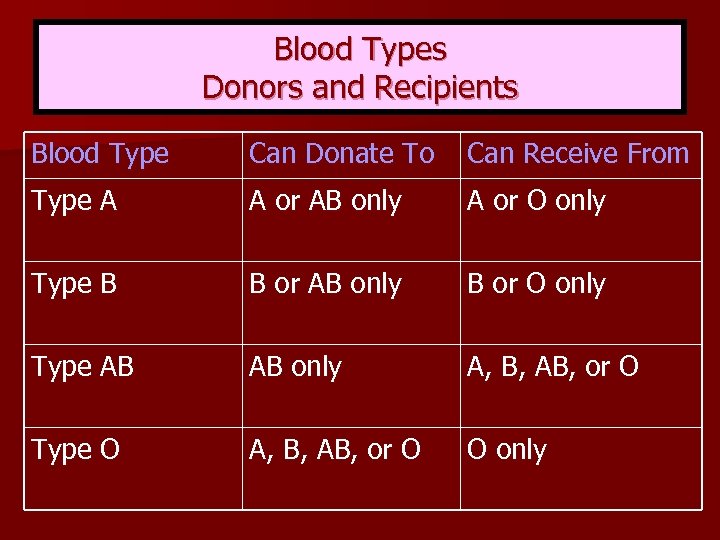
Blood Types Donors and Recipients Blood Type Can Donate To Can Receive From Type A A or AB only A or O only Type B B or AB only B or O only Type AB AB only A, B, AB, or O Type O A, B, AB, or O O only
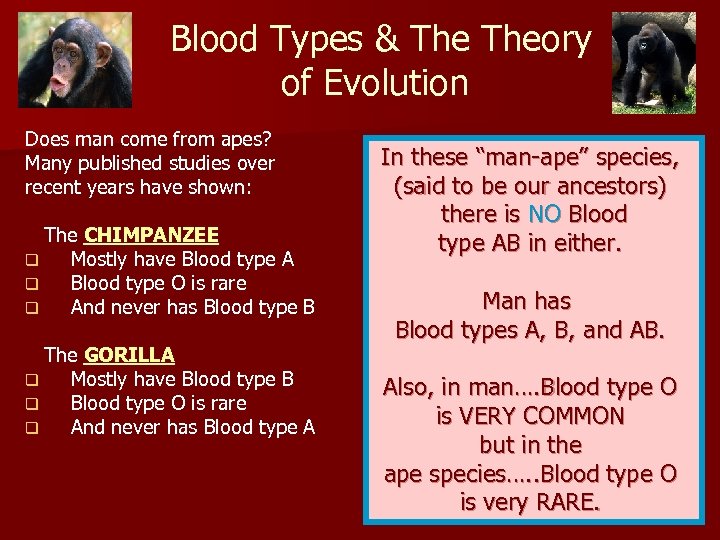
Blood Types & Theory of Evolution Does man come from apes? Many published studies over recent years have shown: The CHIMPANZEE q Mostly have Blood type A q Blood type O is rare q And never has Blood type B The GORILLA q Mostly have Blood type B q Blood type O is rare q And never has Blood type A In these “man-ape” species, (said to be our ancestors) there is NO Blood type AB in either. Man has Blood types A, B, and AB. Also, in man…. Blood type O is VERY COMMON but in the ape species…. . Blood type O is very RARE.
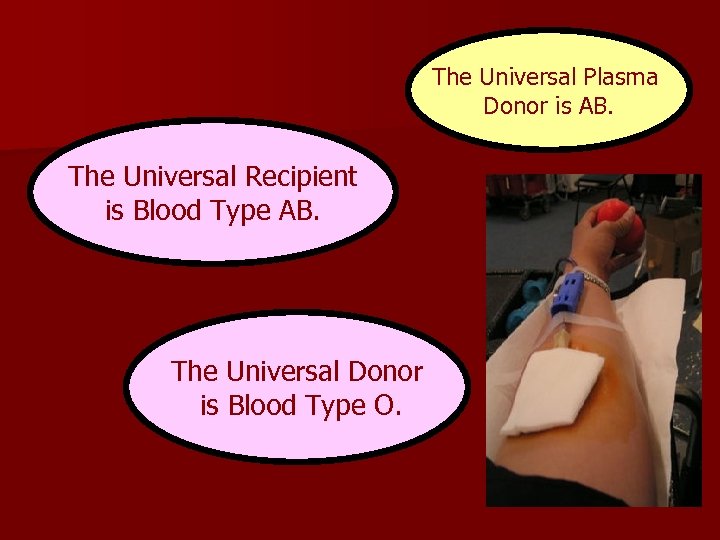
The Universal Plasma Donor is AB. The Universal Recipient is Blood Type AB. The Universal Donor is Blood Type O.
What Determines Blood Type? Your Blood type is established before you are born, by specific genes inherited from your parents. These two inherited genes determine your Blood type by making proteins called agglutinogens which are found on the surface of each red blood cell in your body.
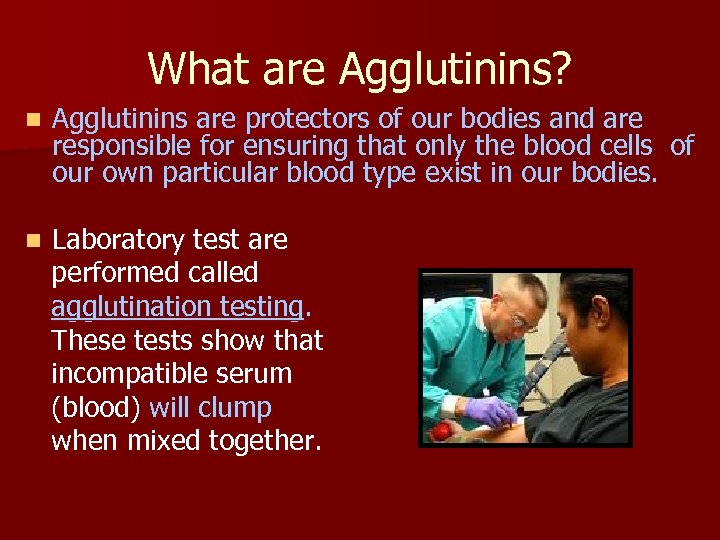
What are Agglutinins? n Agglutinins are protectors of our bodies and are responsible for ensuring that only the blood cells of our own particular blood type exist in our bodies. Laboratory test are performed called agglutination testing. These tests show that incompatible serum (blood) will clump when mixed together. n
Wrong Blood n What effects could occur if the wrong blood is given to a patient? An adverse reaction or even death could occur
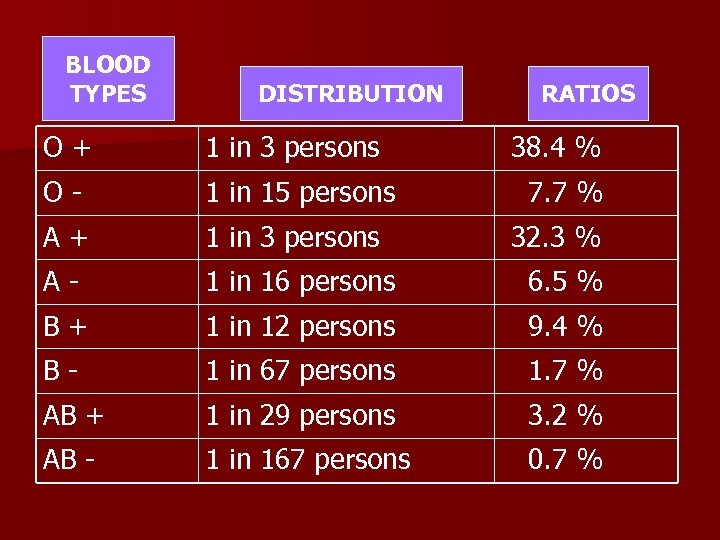
BLOOD TYPES DISTRIBUTION RATIOS O + 1 in 3 persons 38. 4 % O - 1 in 15 persons 7. 7 % A + 1 in 3 persons 32. 3 % A - 1 in 16 persons 6. 5 % B + 1 in 12 persons 9. 4 % B - 1 in 67 persons 1. 7 % AB + 1 in 29 persons 3. 2 % AB - 1 in 167 persons 0. 7 %
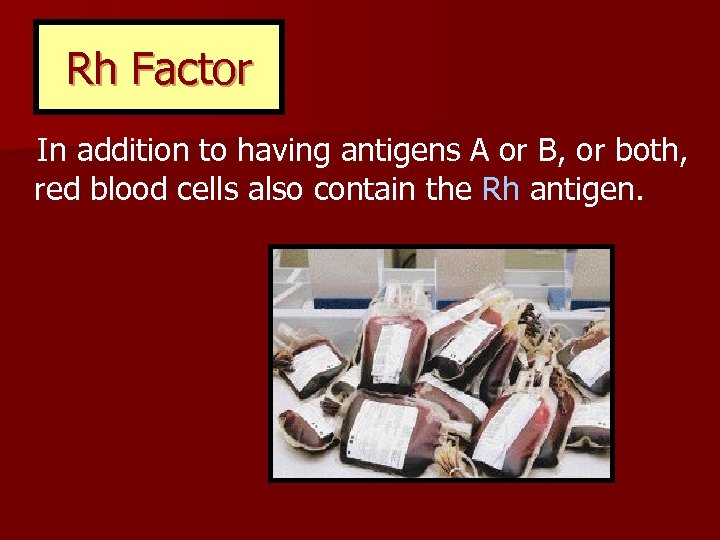
Rh Factor In addition to having antigens A or B, or both, red blood cells also contain the Rh antigen.
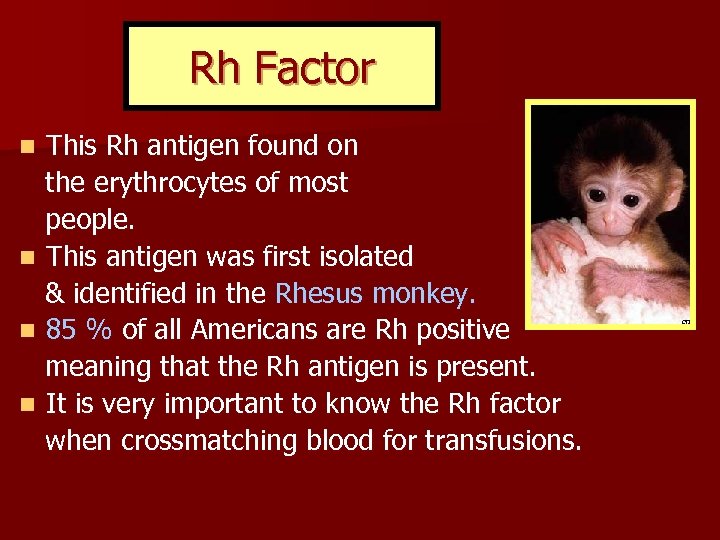
Rh Factor This Rh antigen found on the erythrocytes of most people. n This antigen was first isolated & identified in the Rhesus monkey. n 85 % of all Americans are Rh positive meaning that the Rh antigen is present. n It is very important to know the Rh factor when crossmatching blood for transfusions. n
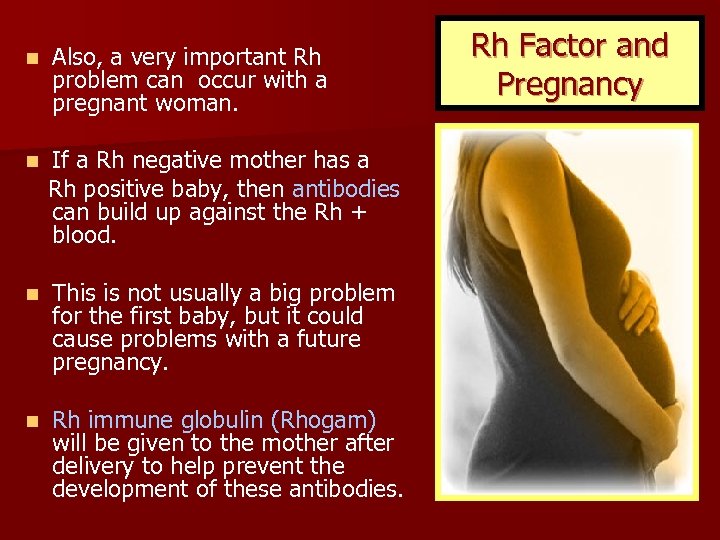
n Also, a very important Rh problem can occur with a pregnant woman. If a Rh negative mother has a Rh positive baby, then antibodies can build up against the Rh + blood. n n This is not usually a big problem for the first baby, but it could cause problems with a future pregnancy. n Rh immune globulin (Rhogam) will be given to the mother after delivery to help prevent the development of these antibodies. Rh Factor and Pregnancy
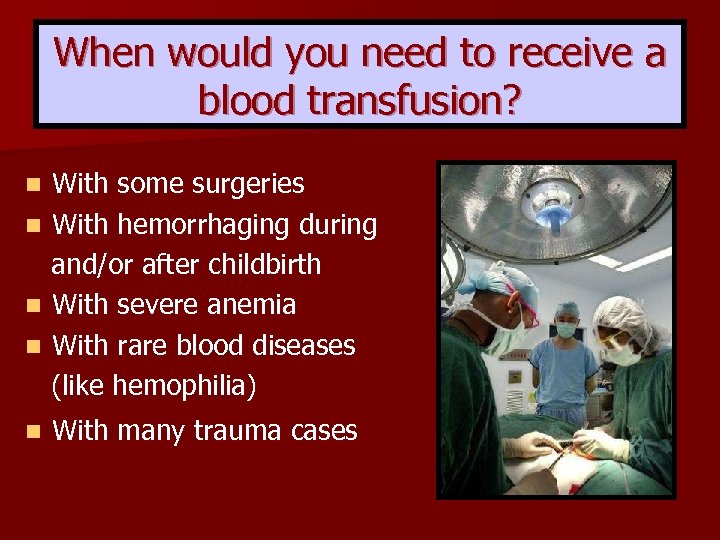
When would you need to receive a blood transfusion? With some surgeries n With hemorrhaging during and/or after childbirth n With severe anemia n With rare blood diseases (like hemophilia) n n With many trauma cases
Most Common Blood Types In Blood banks in the US, the most common types of blood cause the greatest concern. Many people with O+ and A+ do not donate. These people often believe that because they have a common blood type that their blood is not needed…. . but this is untrue. O+ and A+ are used twice as much as any other donor types!
Who Donates Blood in the US? n Median Age: 38 years old n Male: 53% n Female: 47% n Repeat donors: 79. 3% n First-time donors: 20. 7% (Red Cross Donors)
Blood Typing Quiz n Go to the following web site: http: //www. getbodysmart. com/ap/circulator ysystem/quizzes/bloodtyping/quiz. ht ml
Work Cited www. bloodbook. com/type-facts. html n t 3. pacific. edu/teams/M 007305/circulatorysystem. html n www. bio. davidson. edu/courses/Immunology/hyperhuman/Bl ood/cartoonblood. html n www. getbodysmart. com n Diversified Health Occupations, seventh edition by Louise Simmers n Introduction to Medical Terminology by Ann Ehrlich and Carol L. Schroeder n
Скачать презентацию WHAT S IN YOUR BLOOD Facts The average
9fce3a7801dc67f59a8bcca365070a5b.ppt