 Скачать презентацию What neurologists should know about NERVE AGENTS Grand
9fff032ad184f000e1558f26d8a1031d.ppt
- Количество слайдов: 89



What neurologists should know about NERVE AGENTS Grand Rounds Department of Neurology University of Cincinnati College of Medicine 18 November 2015
Jonathan Newmark, M. D. , FAAN COL (ret. ), MC, USA Adjunct Full Professor of Neurology, Uniformed Services University of the Health Sciences Consultant to the Surgeon General of the Army for Chemical Casualty Care, 2002 -2012 MM candidate, composition, College-Conservatory of Music, University of Cincinnati Special Government Employee, Office of Health Affairs, US Department of Homeland Security Department of Neurology, School of Medicine, University of Cincinnati 2
Disclosures § The opinions are my own and not necessarily those of the Army, Department of Defense, nor of the Department of Homeland Security § No disclosures; if I had any, they would be violations of Federal law 3
Resources § National Library of Medicine, Bethesda, Maryland § Chemical Hazards Emergency Medical Management web site: http: //chemm. nlm. nih. gov § US Army Medical Research Institute of Chemical Defense, Aberdeen Proving Ground, Maryland § Chemical Casualty Care Division web site: http: //ccc. apgea. army. mil § Medical Management of Chemical-Biological Casualties course 4
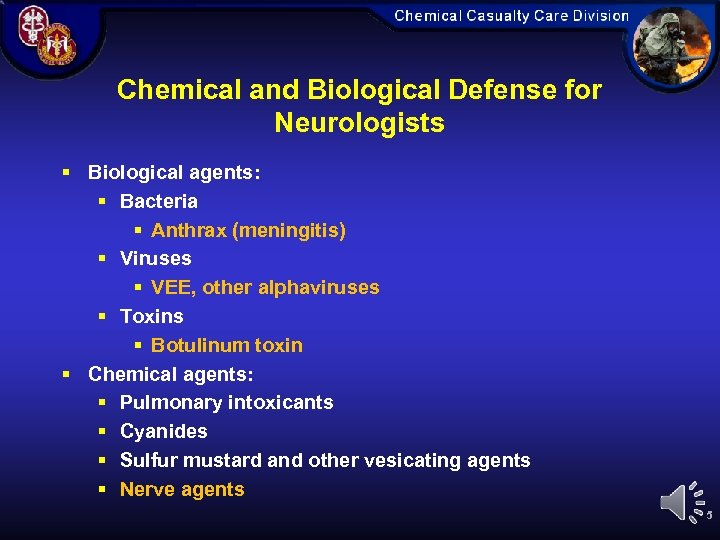
Chemical and Biological Defense for Neurologists § Biological agents: § Bacteria § Anthrax (meningitis) § Viruses § VEE, other alphaviruses § Toxins § Botulinum toxin § Chemical agents: § Pulmonary intoxicants § Cyanides § Sulfur mustard and other vesicating agents § Nerve agents 5
Nerve agent: DEFINITION § A substance that causes biological effects by inhibiting acetylcholinesterase § Acetylcholinesterase, therefore, is the target of nerve agents § Acetylcholine accumulates § Effects are due to excess acetylcholine 6
NERVE AGENTS § GA (tabun) § GB (sarin) § GD (soman) § GF § VX 7
EXAMPLES OF ANTICHOLINESTERASES § Carbamates § § Physostigmine (Antilirium) Neostigmine (Prostigmine) Pyridostigmine (Mestinon) Sevin (insecticide) § Organophosphates § Malathion § Diazinon § Nerve agents § Classical nerve agents: GA, GB, GD, VX 8
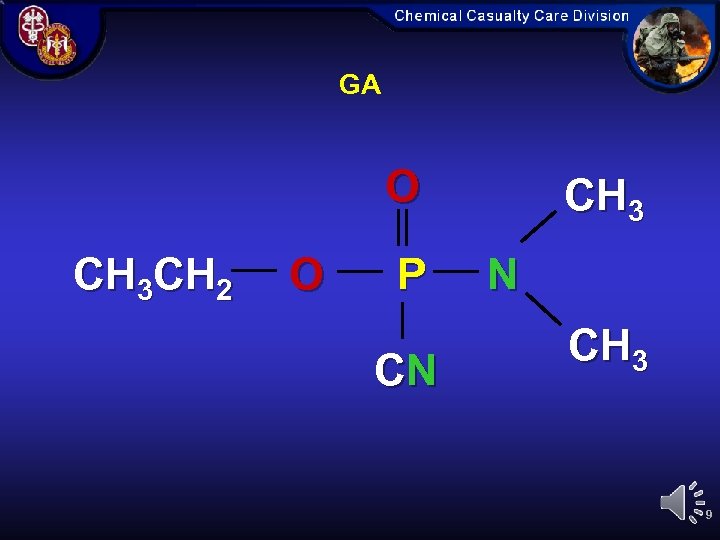
GA O CH 3 CH 2 O P CN CH 3 9
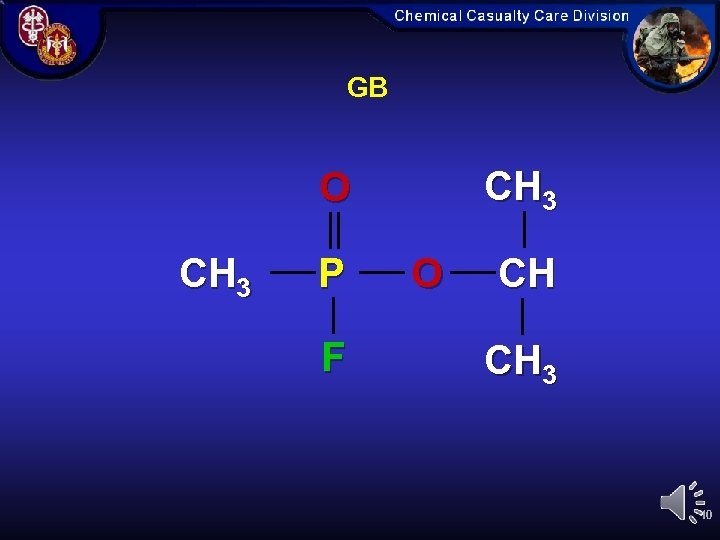
GB CH 3 O CH 3 P F O CH CH 3 10
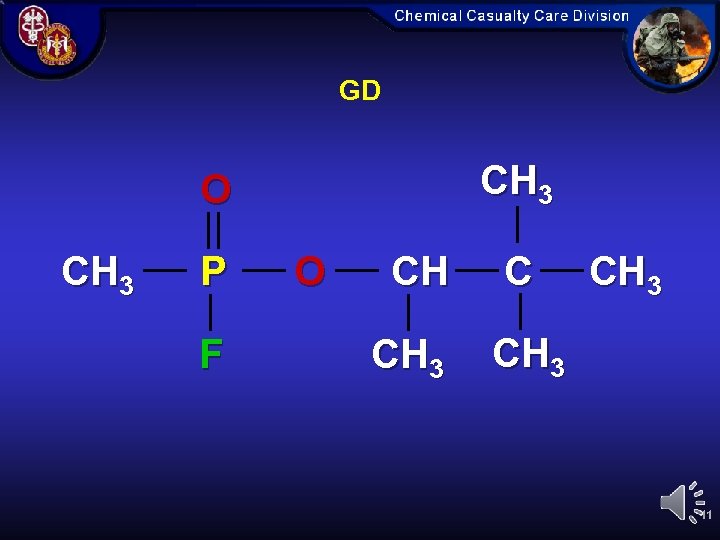
GD CH 3 O CH 3 P F O CH CH 3 11
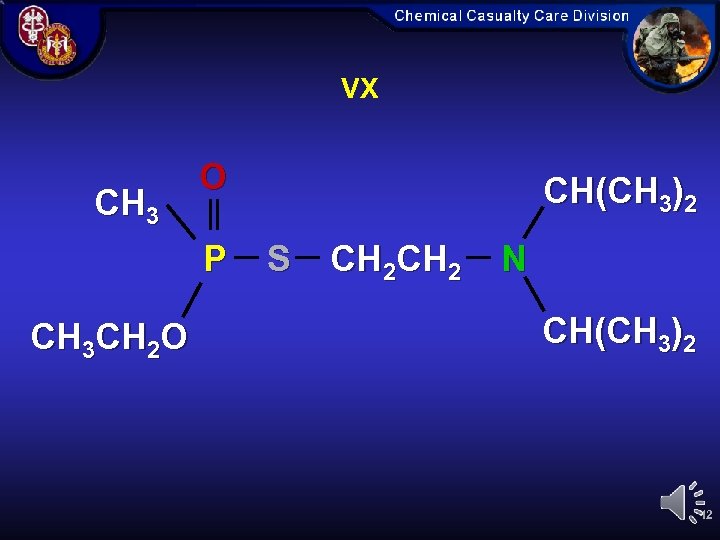
VX CH 3 O P CH 3 CH 2 O CH(CH 3)2 S CH 2 N CH(CH 3)2 12
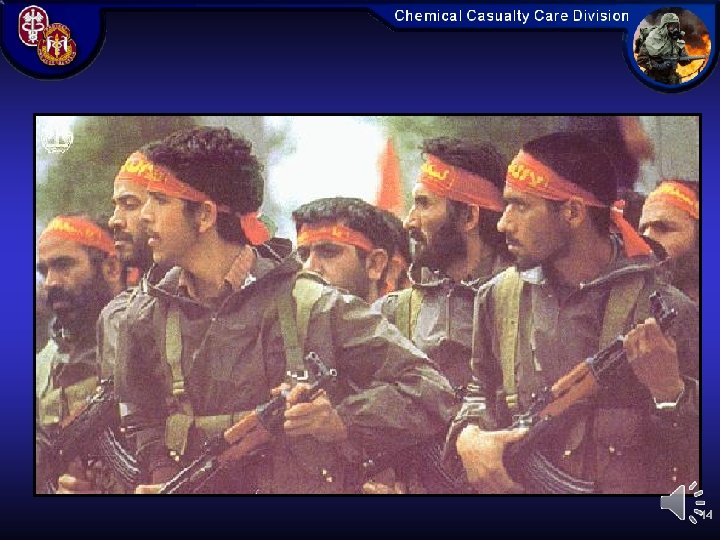
HISTORY § First synthesized by Gerhard Schrader, IG Farben, Germany, 1936 -8 § Weaponized and stockpiled by Germany in WWII but never used § Manufactured and stockpiled in quantity by USA, USSR, Iraq, others § First used on the battlefield by Iraq, 1984 -1987 § First documented US battlefield casualties, Iraq, 2004 13
14
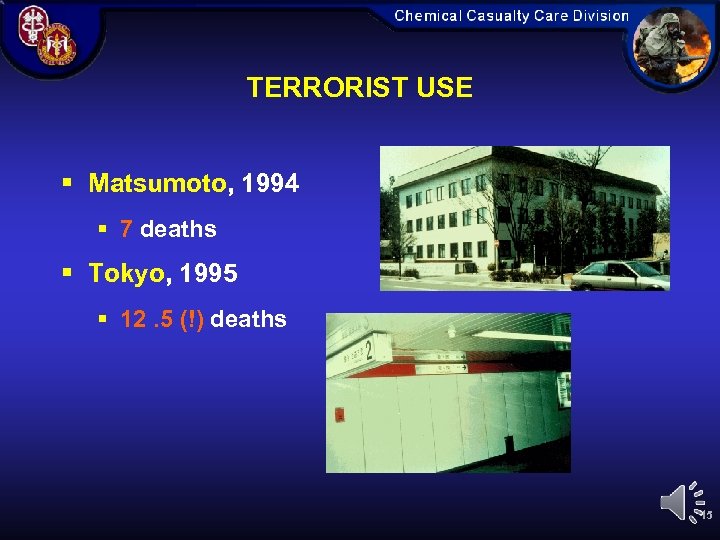
TERRORIST USE § Matsumoto, 1994 § 7 deaths § Tokyo, 1995 § 12. 5 (!) deaths 15
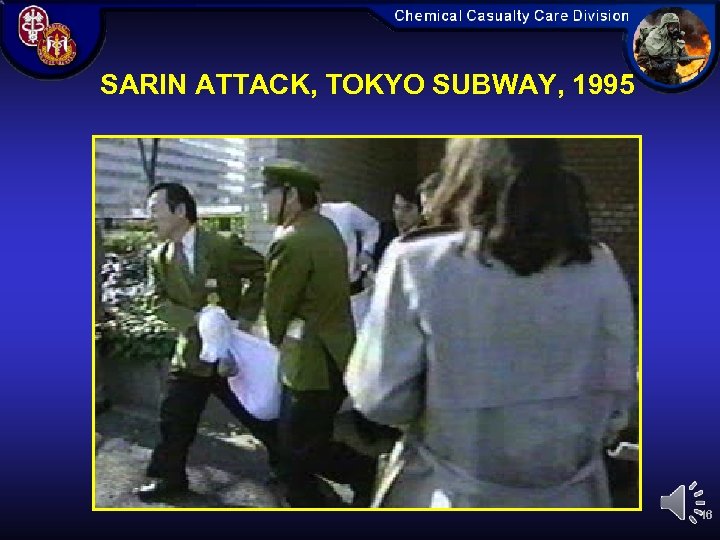
SARIN ATTACK, TOKYO SUBWAY, 1995 16
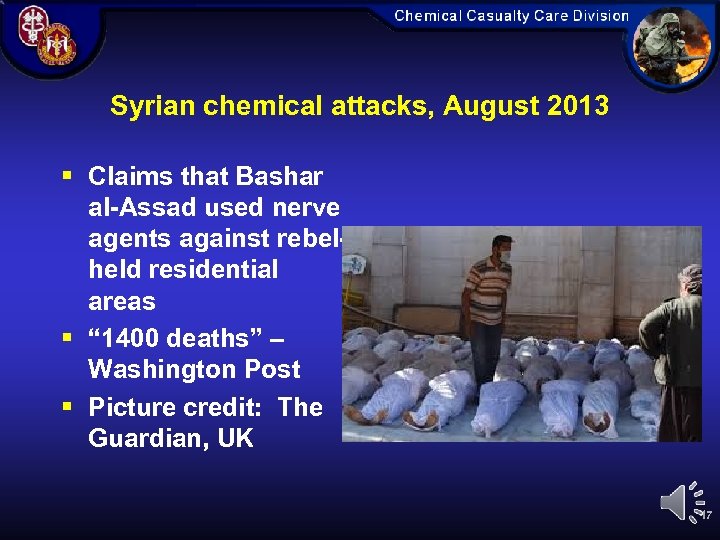
Syrian chemical attacks, August 2013 § Claims that Bashar al-Assad used nerve agents against rebelheld residential areas § “ 1400 deaths” – Washington Post § Picture credit: The Guardian, UK 17
PHYSICAL PROPERTIES § Clear, colorless liquids (when fresh); not “nerve gas” § Tasteless, most are odorless § Freeze/melt <0º C § Boil >150º C § Volatility GB>GD>GA>GF>>>VX § Penetrate skin, clothing 18
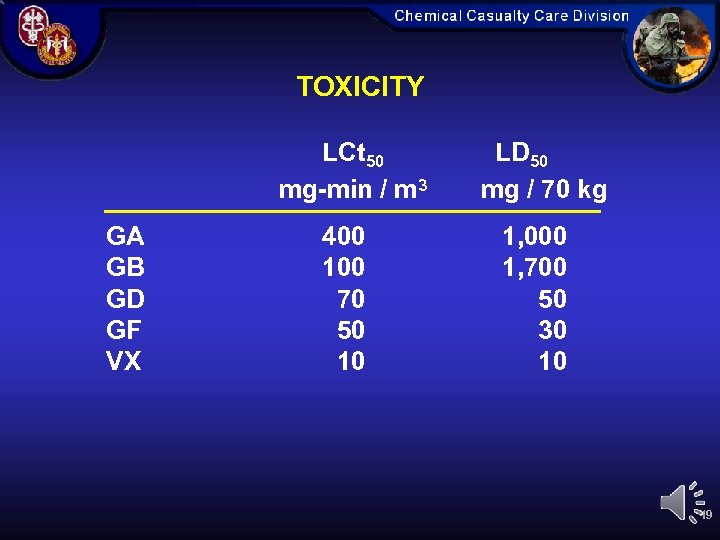
TOXICITY LCt 50 mg-min / m 3 GA GB GD GF VX 400 100 70 50 10 LD 50 mg / 70 kg 1, 000 1, 700 50 30 10 19
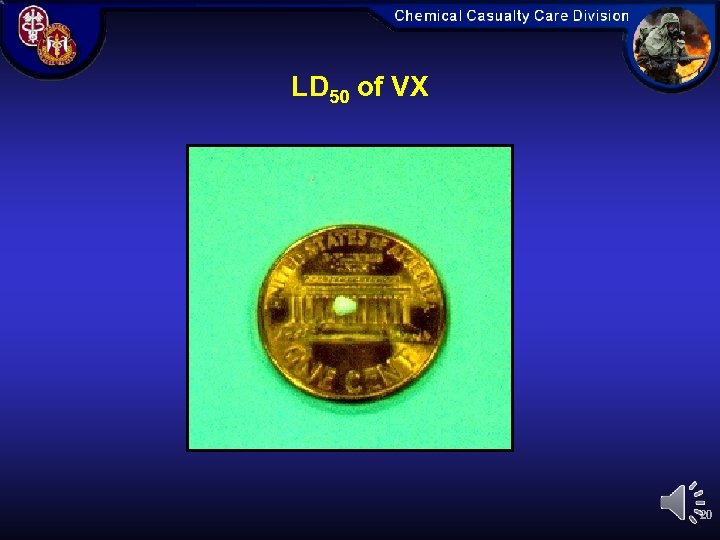
LD 50 of VX 20
NERVE AGENT PATHOPHYSIOLOGY § Target: Synaptic acetylcholinesterase (ACh. E) § Disabling ACh. E causes toxidrome of overstimulation at all cholinergic synapses § This is a form of cholinergic crisis 21
CHOLINESTERASES: CIRCULATING AND NOT § Blood § Acetyl (red cell, erythrocyte, “true”) § Butyryl (plasma, pseudo) § Easy to measure, not clinically relevant. § Tissue acetylcholinesterase (at cholinergic receptor sites) § This is the target of nerve agents! Nerve agents will inhibit ALL of these. 22
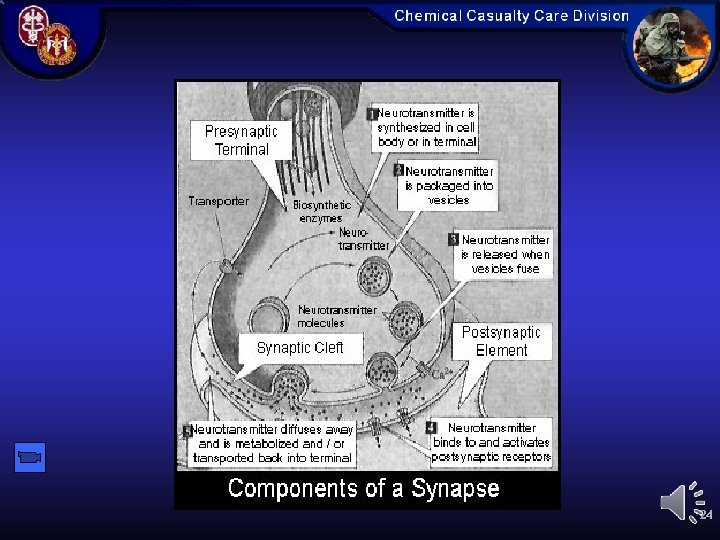
PHYSIOLOGY: NORMAL § Electrical impulse goes down nerve § Impulse causes release of neurotransmitter, acetylcholine § ACh stimulates receptor site on organ § Causes organ to act § ACh is destroyed by ACh. E § No more organ activity 23
24
NEUROTRANSMISSION: NEURON TO NEURON 25
IMPULSE TERMINATION: THE ROLE OF ACh. E 26
PHYSIOLOGY: NERVE AGENTS § Enzyme (ACh. E) is inhibited § Does not destroy ACh § Excess ACh continues to stimulate organ § Organ overstimulation 27
EXPOSURE TO NERVE AGENT 28
EFFECTS ON STRIATED (SKELETAL) MUSCLE 29
EFFECTS ON SMOOTH AND CARDIAC MUSCLE 30
EFFECTS ON EXOCRINE GLANDS 31
TWO MAJOR TYPES OF CHOLINERGIC RECEPTORS § Muscarinic § Smooth muscles § Exocrine glands § Cranial nerves (vagus) § Nicotinic § Skeletal muscles § Preganglionic nerves § Both § CNS (brain and spinal cord) – roughly 9/1 muscarinic/nicotinic 32
CHOLINERGIC MUSCARINIC EFFECTS § Smooth muscles § Airways - constrict § GI tract - constrict § Pupils - constrict § Glands § Eyes, nose, mouth, sweat, airways, GI § Heart, bradycardia (vagal) 33
CHOLINERGIC NICOTINIC EFFECTS § Skeletal muscles § Fasciculations, twitching, fatigue, flaccid paralysis § Note that flaccid paralysis is NEVER the first sign! § Pre-ganglionic § Tachycardia, hypertension 34
CHOLINERGIC NICOTINIC EFFECTS 35
HEART RATE § Muscarinic (vagal) decreases § Nicotinic (ganglionic) increases § May be high, low, or normal 36
CNS § Acutely, large exposure § Loss of consciousness § Seizures § Apnea (central, due to inhibition of brain center) § Death 37
CNS § Acutely, small exposure: neurobehavioral syndrome § § § May follow any exposure; not dose-dependent Poorly understood; few well-studied patients May last 3 -6 weeks (some claim longer) Can be minimal Nonspecific in nature: § § Slowness in thinking and decision making Sleep disturbances Poor concentration Emotional problems NB: This may be indistinguishable from post -traumatic stress disorder (PTSD) 38
VAPOR § Small exposure § Eyes: Miosis; injection; dim, blurred vision; pain; maybe nausea, vomiting (from miosis alone) § Nose: Rhinorrhea § Mouth: Salivation § Airways: Shortness of breath 39
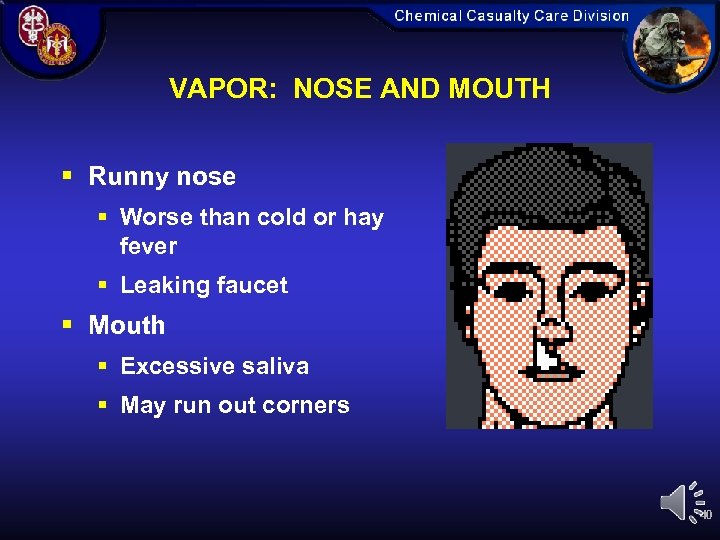
VAPOR: NOSE AND MOUTH § Runny nose § Worse than cold or hay fever § Leaking faucet § Mouth § Excessive saliva § May run out corners 40
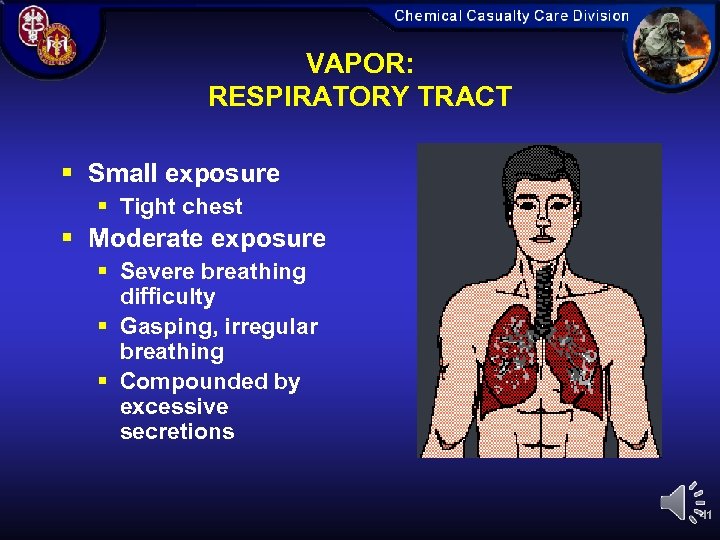
VAPOR: RESPIRATORY TRACT § Small exposure § Tight chest § Moderate exposure § Severe breathing difficulty § Gasping, irregular breathing § Compounded by excessive secretions 41
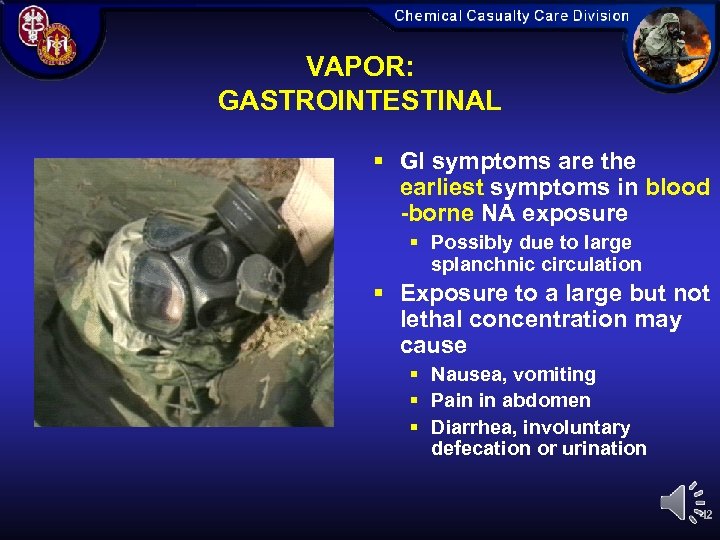
VAPOR: GASTROINTESTINAL § GI symptoms are the earliest symptoms in blood -borne NA exposure § Possibly due to large splanchnic circulation § Exposure to a large but not lethal concentration may cause § Nausea, vomiting § Pain in abdomen § Diarrhea, involuntary defecation or urination 42
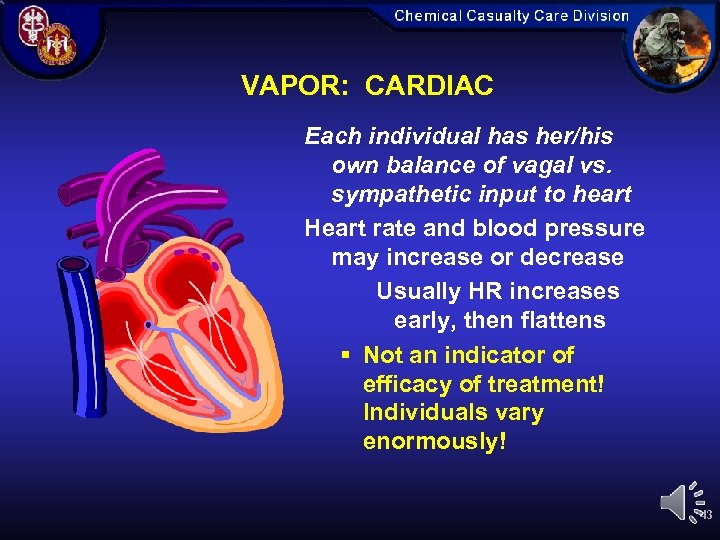
VAPOR: CARDIAC Each individual has her/his own balance of vagal vs. sympathetic input to heart Heart rate and blood pressure may increase or decrease Usually HR increases early, then flattens § Not an indicator of efficacy of treatment! Individuals vary enormously! 43
VAPOR: CNS (BRAIN) § Once nerve agent gets to the brain, symptoms include: § Seizures § Coma § Central apnea (brain doesn’t tell the lungs to breathe) § Flaccid paralysis § Death 44
VAPOR § Onset of effects: seconds to minutes § After removal from vapor § Effects do not worsen § May improve § No late-onset effects 45
VAPOR § Large exposure can go through all the preceding stages almost immediately, so first signs and symptoms may be: § Loss of consciousness § Seizures § Apnea § Flaccid paralysis § Death 46
LIQUID ON SKIN § Small droplet: local effects § Sweating, fasciculations § Medium droplet: systemic effects § NOTE: TAKES A LOT LONGER TO GO SYSTEMIC than does vapor § GI will be first system involved § Large droplet: CNS and lungs (also other organs, but those are not life-threatening): § Respiratory failure, loss of consciousness, seizures, apnea, flaccid paralysis, death 47
LIQUID ON SKIN § Onset of effects § Small, medium drop § As long as 18 hours § Large, lethal drop § Usually <30 minutes Factors affecting this: location on skin, temperature, moisture 48
LIQUID ON SKIN § Effects may occur despite initial decontamination § Effects may worsen § This is a major difference between vapor poisoning and liquid-on-skin poisoning 49
MIOSIS § Almost always after vapor § After liquid on skin: § Small: no § Moderate: maybe § Severe: definitely 50
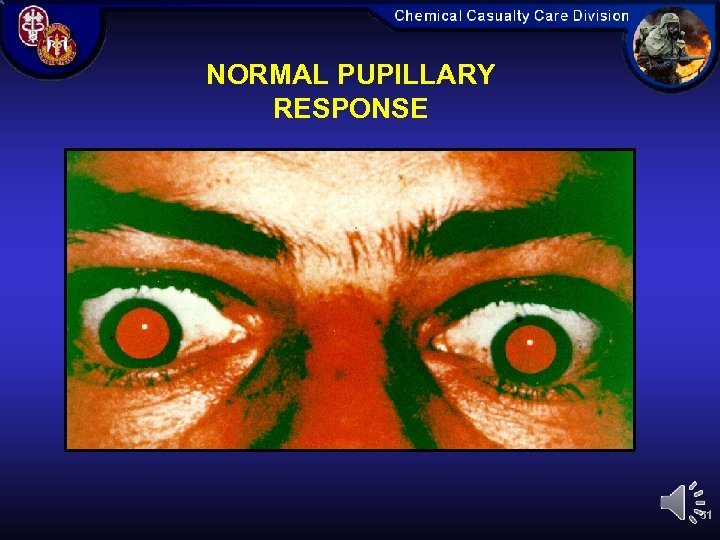
NORMAL PUPILLARY RESPONSE 51
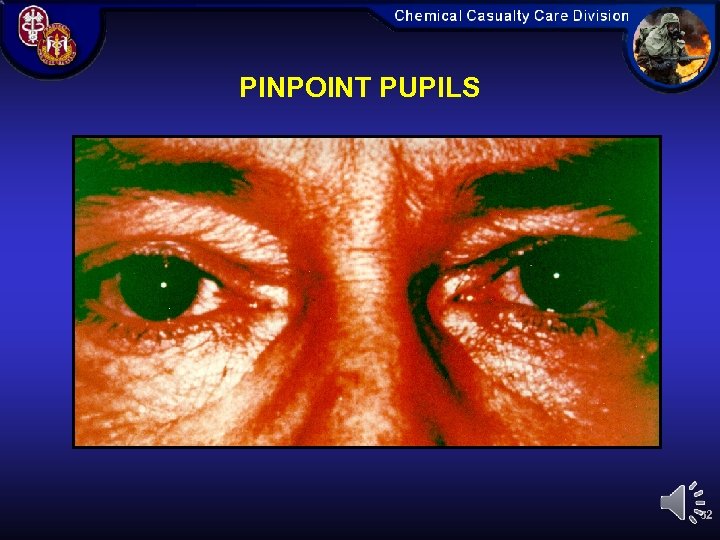
PINPOINT PUPILS 52
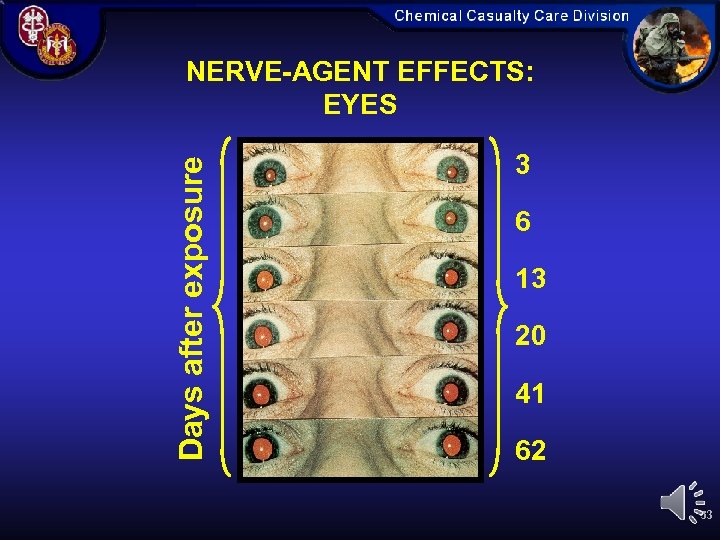
Days after exposure NERVE-AGENT EFFECTS: EYES 3 6 13 20 41 62 53
MANAGEMENT § ABCs § Drugs § Decontamination § Supportive § Not necessarily in that order 54
MANAGEMENT § Most important § Protect self § Protective gear § Decontaminate casualty § Protect medical facility § Decontaminate casualty 55
SKIN DECONTAMINATION § Early is best, within 1 to 2 minutes § Little benefit after 30 minutes § Physical removal is best § Forceful flush with water § Stick, dirt, cloth, M 291 There is a use for MRE bread! § Solutions (hypochlorite, etc. ) § Detoxify, but only after many minutes PRINCIPLE: NO KNOWN DECONTAMINANT TRUMPS PHYSICAL REMOVAL ON SKIN! 59
VENTILATION § Possibly less need after pyridostigmine § None forward of battalion aid station § Very high airway resistance until atropine is given § Therefore, give atropine FIRST, then try to ventilate 60
ANTIDOTES § Strategy ONE: Too much acetylcholine § Block excess acetylcholine § Antidote = atropine § Strategy TWO: Enzyme inhibited § Reactivate enzyme § Antidote = oxime (2 -PAM Cl) 61
ATROPINE § Cholinergic blocking drug = anticholinergic § Blocks excess acetylcholine § Clinical effects at muscarinic sites § Dries secretions § Reduces smooth muscle constriction § This may be lifesaving! 62
ATROPINE AT RECEPTORS 63
ACh AND ATROPINE AT RECEPTORS 64
ATROPINE § Smaller autoinjector (2 mg / 0. 7 ml) of Mark I kit § Starting dose 2 mg or 6 mg (1 -3 autoinjectors) § More: 2 mg every 5 to 10 minutes § Until § Secretions drying § Ventilation improved § Usual dose in severe casualty: 15 to 20 mg § 1000 s of mgs in insecticide poisonings due to lipid solubility of insecticides 65
ATROPINE § Will NOT benefit § Skeletal muscle effects § Miosis, unless used topically § Use will cause blurred vision for 24 hours 66
ACTION OF ATROPINE ON SMOOTH MUSCLE 67
EFFECTS OF ATROPINE ON EXOCRINE GLANDS 68
STOPPING ATROPINE § Endpoints § Reduction in secretions (muscarinic effects) § Reduction in chest tightness (muscarinic effects) § Patient able to breathe comfortably on his/her own § Do not titrate to § Heart rate (variable; not an indicator of severity of exposure) § Miosis (may persist for up to 6 weeks despite atropine) § Twitching or fasciculations (nicotinic effects) 69
OXIMES § React with the complex formed by the combination of nerve agent and ACh. E § Result of reaction is: § Normal, catalytic ACh. E § Nerve agent broken into two harmless fragments which the body rapidly breaks down 70
How oxime (2 -PAM Cl) works 71
OXIMES § Effects at nicotinic sites § Increase skeletal muscle strength § No additional clinical effects at muscarinic sites 72
OXIMES § Remove agent from enzyme unless aging has occurred § Aging = a reaction in which agent-enzyme bound complex changes § Oximes cannot reactivate enzyme after “aged” § Aging T 1/2 = GD 2 min GB 3 to 4 hours (so we may ignore aging clinically) Others longer (so we may ignore aging clinically) 73
INTRODUCTION OF 2 -PAM Cl AFTER AGING 74
OXIMES § Other countries have different ones § United Kingdom: P 2 S § Germany, much of Europe, Iran: obidoxime (Toxigonin) § Israel: TMB 4 § Japan: 2 -PAM Iodide § Canada: HI-6 (not yet approved by Health Canada) § Next generation American oxime may be MMB-4 (not yet approved in USA) 75
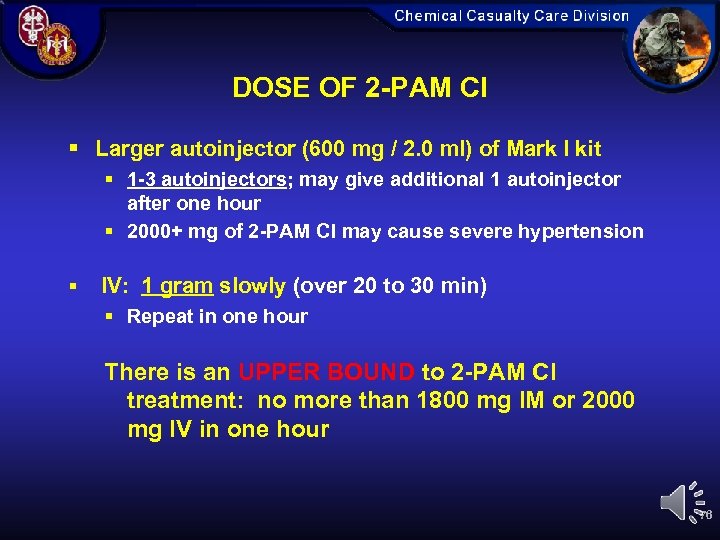
DOSE OF 2 -PAM Cl § Larger autoinjector (600 mg / 2. 0 ml) of Mark I kit § 1 -3 autoinjectors; may give additional 1 autoinjector after one hour § 2000+ mg of 2 -PAM Cl may cause severe hypertension § IV: 1 gram slowly (over 20 to 30 min) § Repeat in one hour There is an UPPER BOUND to 2 -PAM Cl treatment: no more than 1800 mg IM or 2000 mg IV in one hour 76
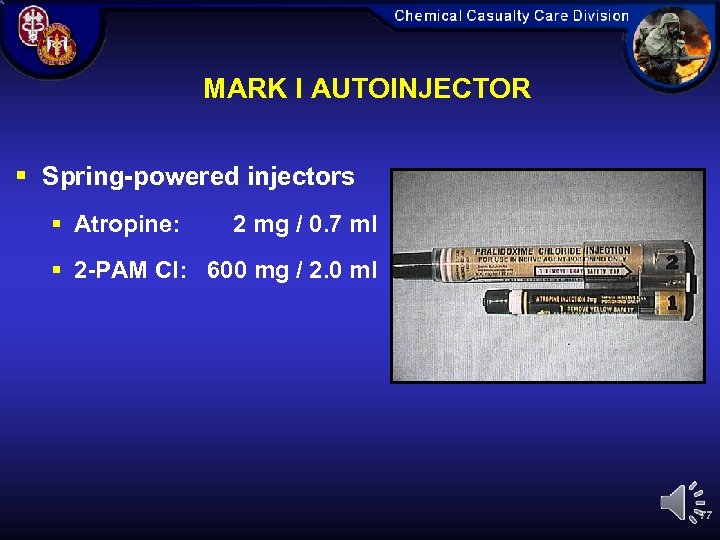
MARK I AUTOINJECTOR § Spring-powered injectors § Atropine: 2 mg / 0. 7 ml § 2 -PAM Cl: 600 mg / 2. 0 ml 77
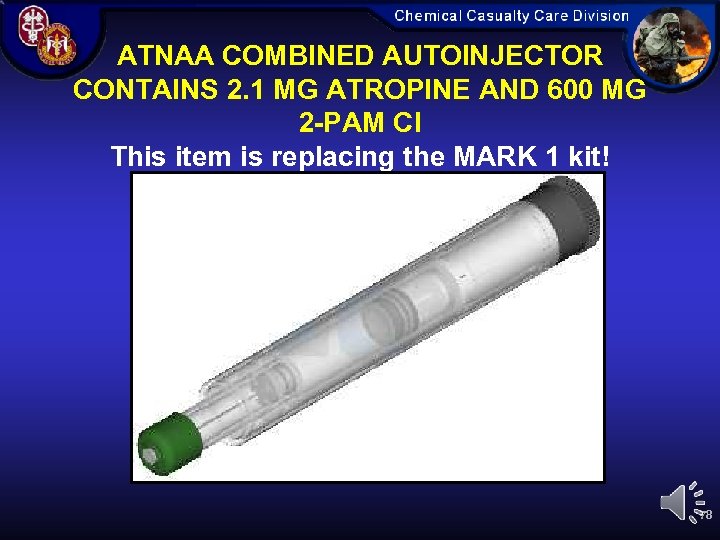
ATNAA COMBINED AUTOINJECTOR CONTAINS 2. 1 MG ATROPINE AND 600 MG 2 -PAM Cl This item is replacing the MARK 1 kit! 78
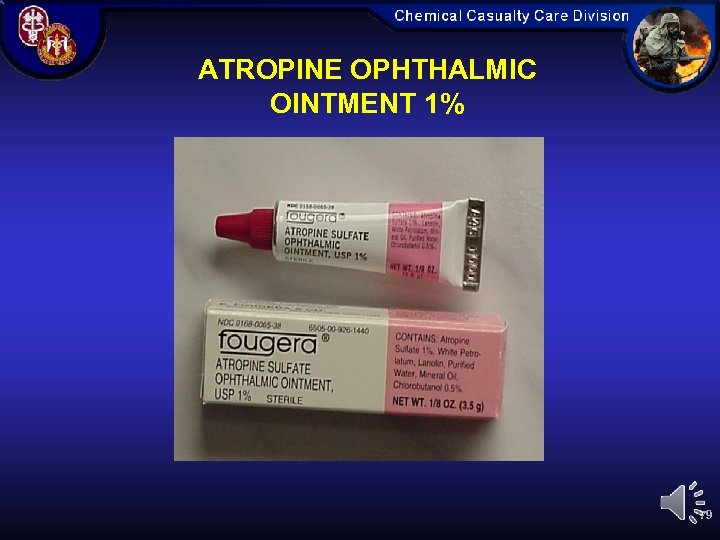
ATROPINE OPHTHALMIC OINTMENT 1% 79
SEIZURES § Without pyridostigmine § Not prolonged § Anticonvulsant seldom necessary § Prolonged after pyridostigmine (at least in animals) § Possible brain damage from prolonged seizures § Anticonvulsant needed (diazepam) § Give diazepam to any severe casualty § Dose: 10 mg im (CANA) § In a seizing casualty 10 mg won’t be enough. The combat medic/corpsman carries more. § Next generation anticonvulsant = midazolam 80
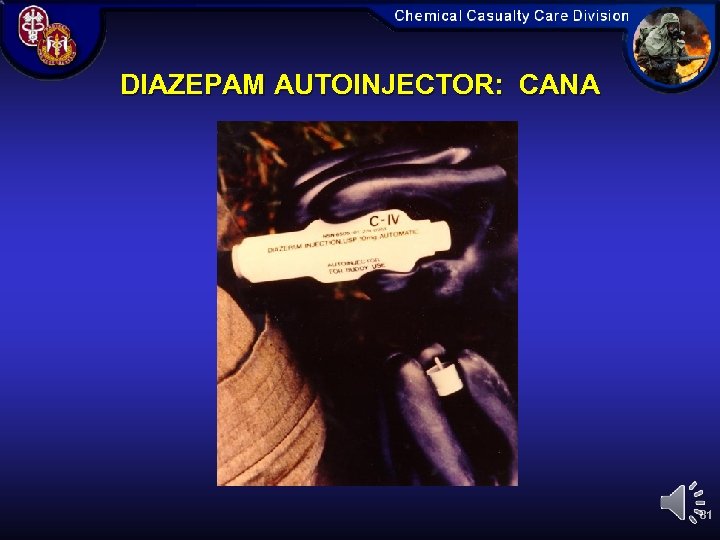
DIAZEPAM AUTOINJECTOR: CANA 81
ARRHYTHMIAS § Initial, transient from agent, atropine § Terminal after hypoxia § Ventricular fibrillation if atropine given IV with hypoxia 82
RECOVERY § Severe casualty: § Without complications, conscious, breathing, in 2 to 3 hours § IMPLICATION: A severe nerve agent casualty is a high priority for TREATMENT but is not a high priority for EVACUATION immediately. You should win the clinical battle for the patient’s life at YOUR echelon of care. 83
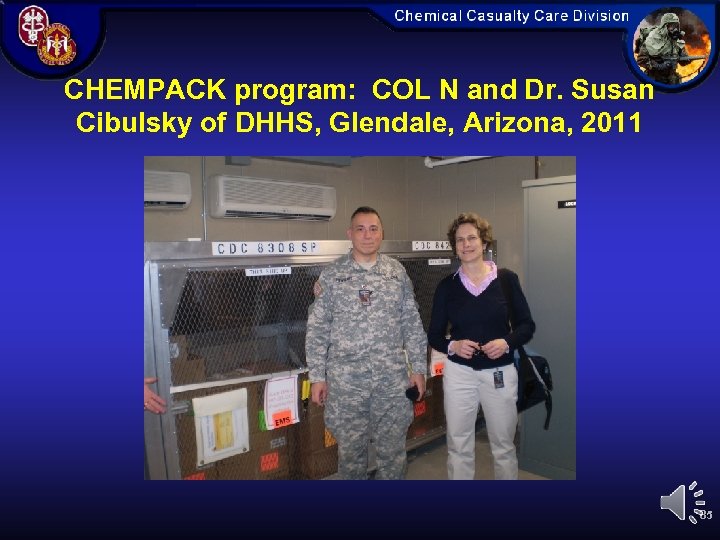
CHEMPACK program: COL N and Dr. Susan Cibulsky of DHHS, Glendale, Arizona, 2011 85
PYRIDOSTIGMINE: SUMMARY § Pre-exposure or “pretreatment” § Not a substitute for post-exposure treatment § “Hides” or protects a fraction of ACh. E (creates a “reserve force”) § Increases the amount of nerve agent a person can be exposed to and survive; i. e. , converts a lethal dose into a potentially survivable dose with antidotes § Causes predictable profiles of side effects § Does not interfere with military function 107
PYRIDOSTIGMINE: REGULATORY STATUS § Fully approved for pretreatment for soman ONLY by the Food and Drug Administration FEB 2003 § FIRST DRUG EVER APPROVED USING THE ANIMAL RULE! § This means no IND or informed consent is necessary if the commander orders it to be used § Decision to use PB against potential nerve agent attack is driven by intelligence § I advised CENTCOM (7 MAR 03) that if the agent is not known, assume soman is possible and issue and order troops to take PB 108
Upcoming and ongoing developments in nerve agent treatment § § § § Replacement of MARK 1 by ATNAA Midazolam as a substitute for diazepam (AAS) MMB-4 as a substitute for 2 -PAM Cl (INATS) Bioscavengers Post-marketing studies on pyridostigmine Seizure monitor for the field Neuroprotectant for nerve agent poisoning survivors 109
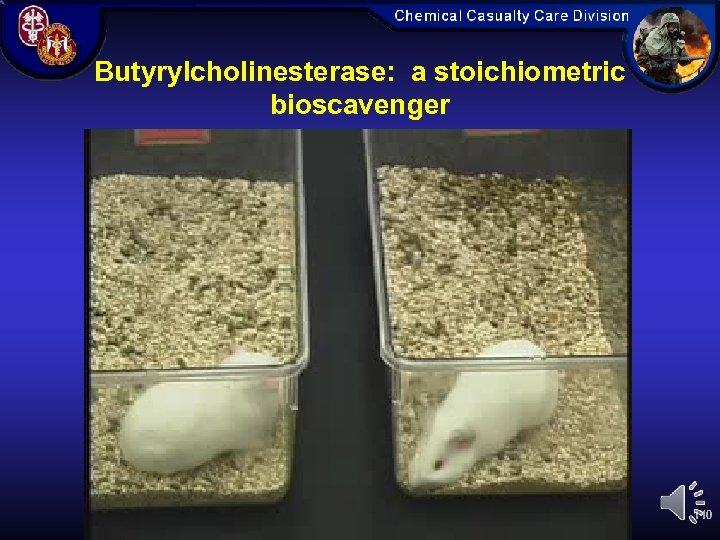
Butyrylcholinesterase: a stoichiometric bioscavenger 110
111
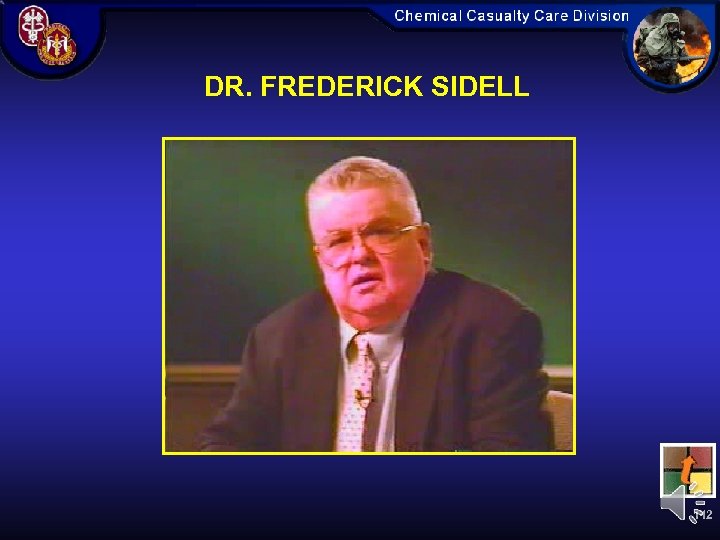
DR. FREDERICK SIDELL 112
Resources § National Library of Medicine, Bethesda, Maryland § Chemical Hazards Emergency Medical Management web site: http: //chemm. nlm. nih. gov § US Army Medical Research Institute of Chemical Defense, Aberdeen Proving Ground, Maryland § Chemical Casualty Care Division web site: http: //ccc. apgea. army. mil § Medical Management of Chemical-Biological Casualties course 113
SUMMARY ANY QUESTIONS? 114
Скачать презентацию What neurologists should know about NERVE AGENTS Grand
9fff032ad184f000e1558f26d8a1031d.ppt