Скачать презентацию WHAT MAKES A GOOD PRESENTATION Linguistics Faculty Institute
Seminar_students_1.ppt
- Количество слайдов: 32
 WHAT MAKES A GOOD PRESENTATION? Linguistics Faculty Institute of Telecommunication Systems Developed by O. Nazarenko
 Steps on How to Outline a Presentation (PREPARING) Analyze your Audience Define Objectives Create Introduction Outline Body Design the Conclusion Create Note Cards Overcome Anxiety through Rehearsal Estimate the Amount of Time
 OBJECTIVES (GOALS) DELIVERING - Making a start - Structuring Voice & - Language - Body language - Question & Answer session VISUAL AIDS -Design - Colour -Text -Fonts - Charts & Graphs - Animation
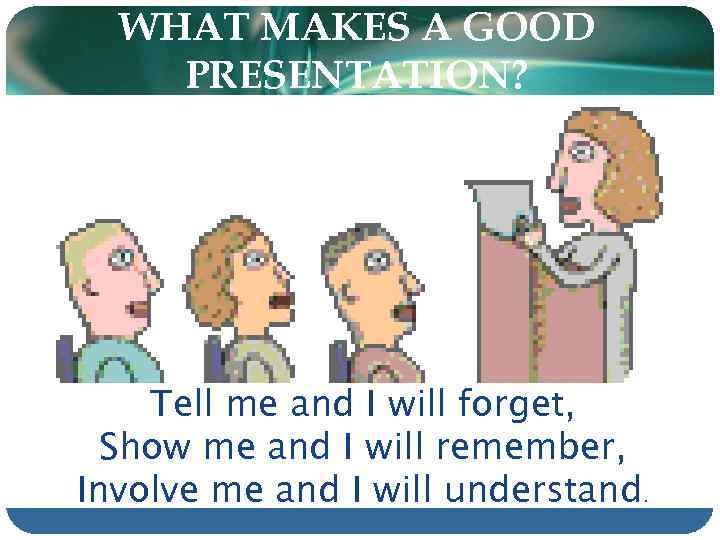 WHAT MAKES A GOOD PRESENTATION? Tell me and I will forget, Show me and I will remember, Involve me and I will understand.
 MAKING a START Giving a plan Introducing a topic Introducing yourself Greeting
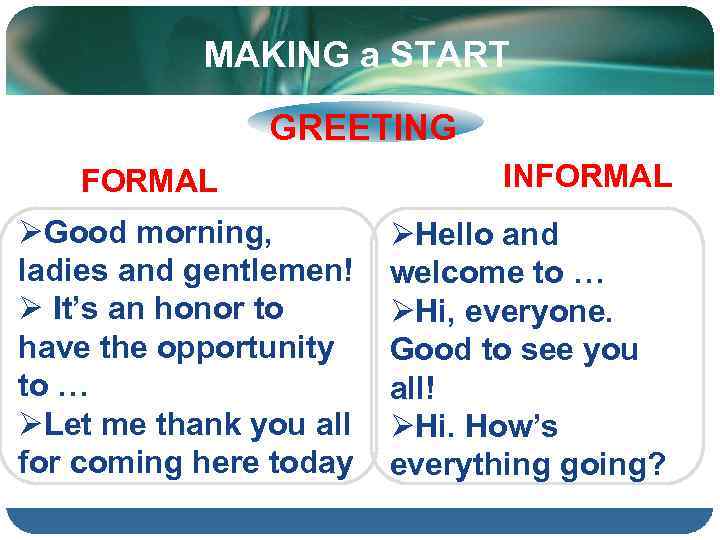 MAKING a START GREETING FORMAL ØGood morning, ladies and gentlemen! Ø It’s an honor to have the opportunity to … ØLet me thank you all for coming here today INFORMAL ØHello and welcome to … ØHi, everyone. Good to see you all! ØHi. How’s everything going?
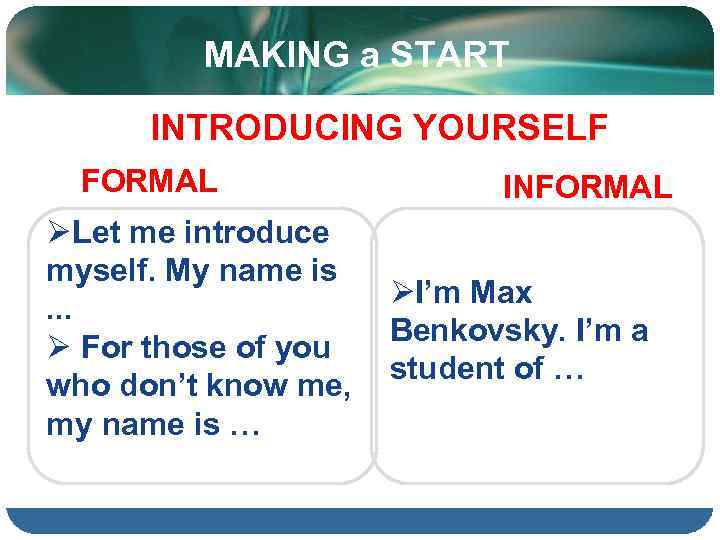 MAKING a START INTRODUCING YOURSELF FORMAL ØLet me introduce myself. My name is. . . Ø For those of you who don’t know me, my name is … INFORMAL ØI’m Max Benkovsky. I’m a student of …
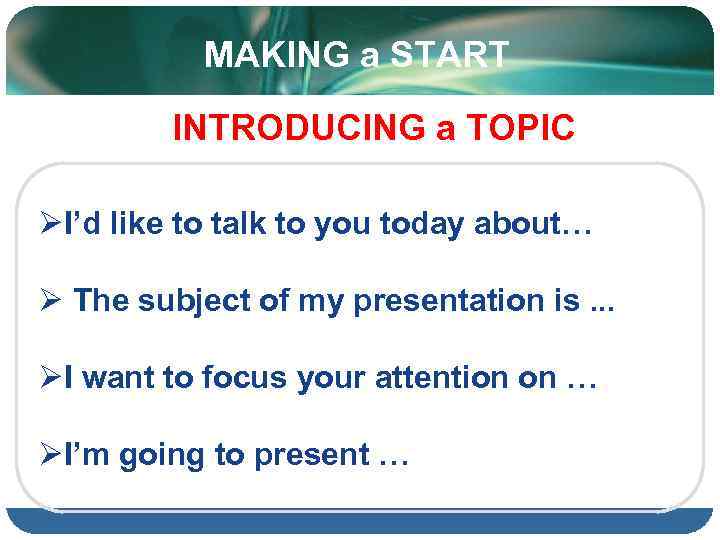 MAKING a START INTRODUCING a TOPIC ØI’d like to talk to you today about… Ø The subject of my presentation is. . . ØI want to focus your attention on … ØI’m going to present …
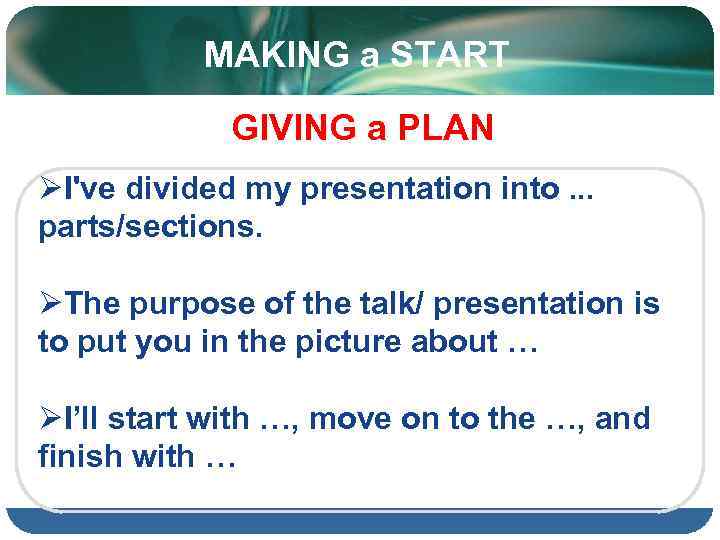 MAKING a START GIVING a PLAN ØI've divided my presentation into. . . parts/sections. ØThe purpose of the talk/ presentation is to put you in the picture about … ØI’ll start with …, move on to the …, and finish with …
 MAKING a START Getting the Audience’s Attention ØAsk a question Ø Start with an interesting fact ØTell them a story or anecdote ØGive them a problem to think about ØUse a quotation
 STRUCTURING
 INTRODUCTORY PART INTRODUCING OUTLINE
 INTRODUCTORY PART INTRODUCING - Greet the Audience - Introduce yourself (name, position/ function) OUTLINE - State your topic (importance) - Describe the structure of your talk (how long)
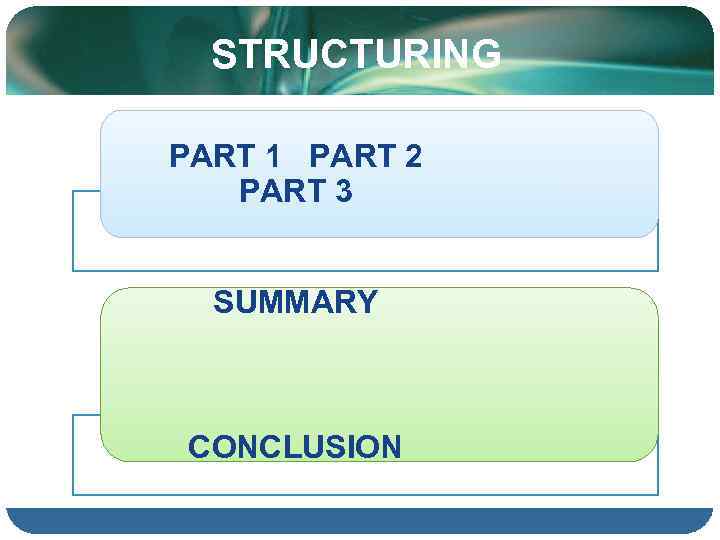 STRUCTURING PART 1 PART 2 PART 3 SUMMARY CONCLUSION
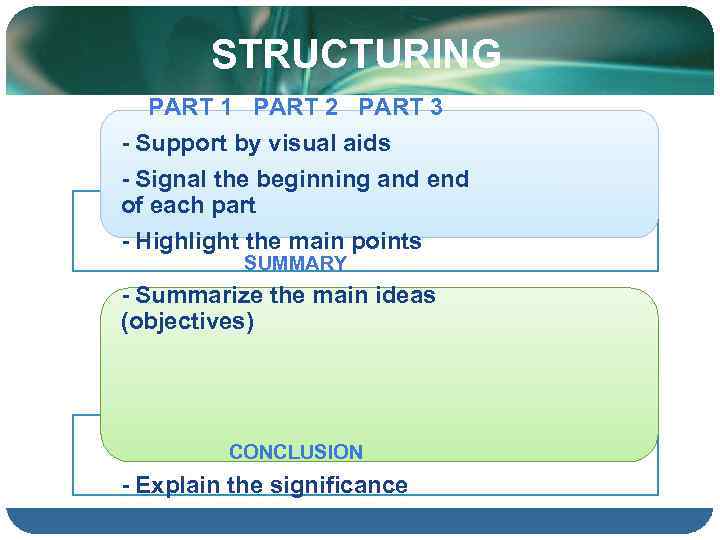 STRUCTURING PART 1 PART 2 PART 3 - Support by visual aids - Signal the beginning and end of each part - Highlight the main points SUMMARY - Summarize the main ideas (objectives) CONCLUSION - Explain the significance
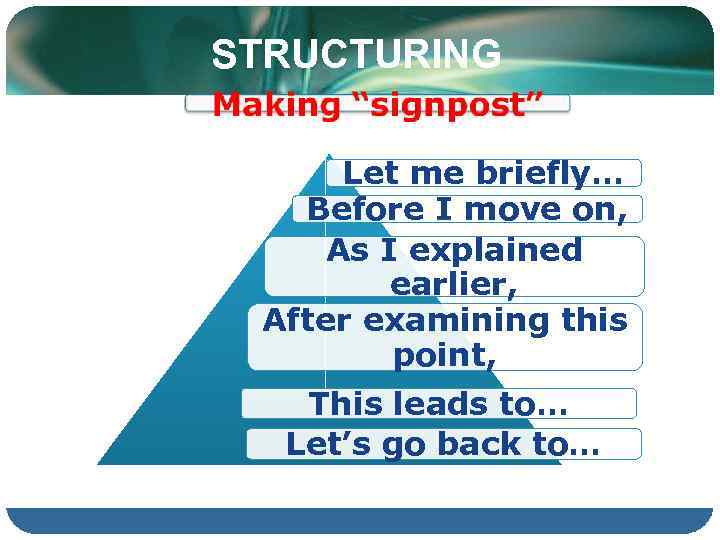 STRUCTURING Let me briefly… Before I move on, As I explained earlier, After examining this point, This leads to… Let’s go back to…

 Voice and Language
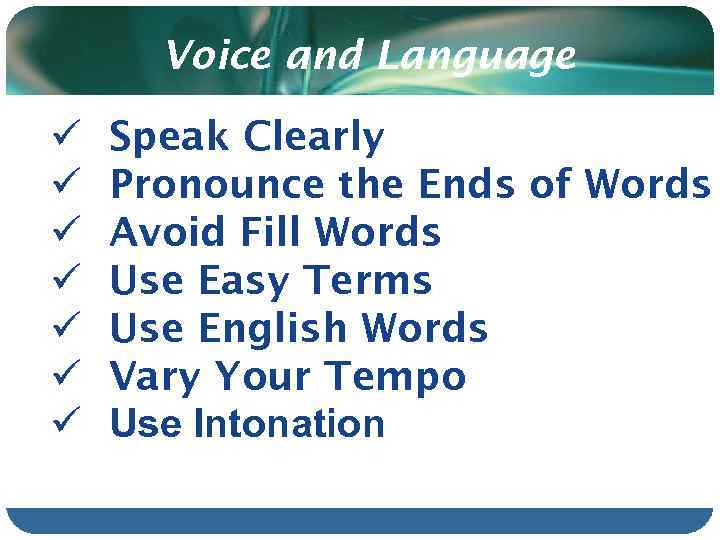 Voice and Language ü ü ü ü Speak Clearly Pronounce the Ends of Words Avoid Fill Words Use Easy Terms Use English Words Vary Your Tempo Use Intonation
 BODY LANGUAGE
 BODY LANGUAGE 1. Eye Contact
 BODY LANGUAGE Eye contact ØRule of thumb for eye contact is 1 -3 seconds person ØDon't let your eyes dart around the room
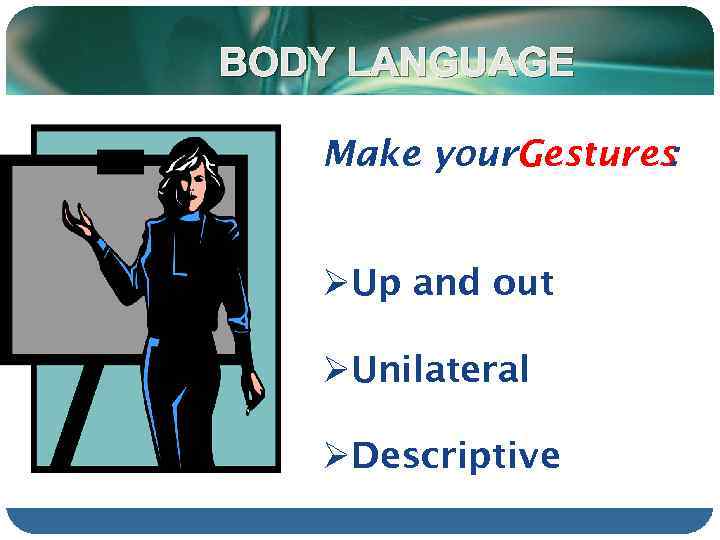 BODY LANGUAGE Make your. Gestures : ØUp and out ØUnilateral ØDescriptive
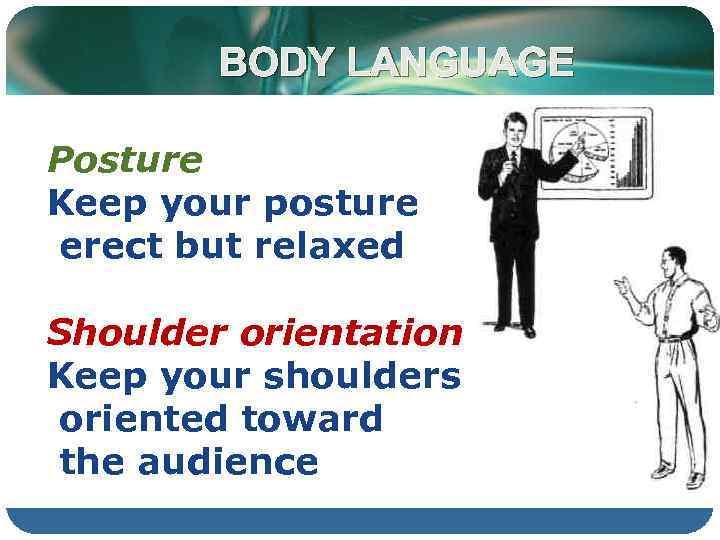 BODY LANGUAGE Posture Keep your posture erect but relaxed Shoulder orientation Keep your shoulders oriented toward the audience
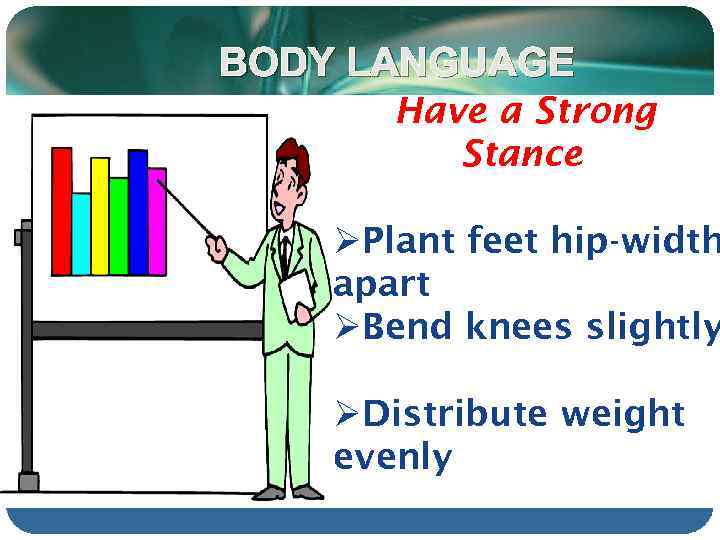 BODY LANGUAGE Have a Strong Stance ØPlant feet hip-width apart ØBend knees slightly ØDistribute weight evenly
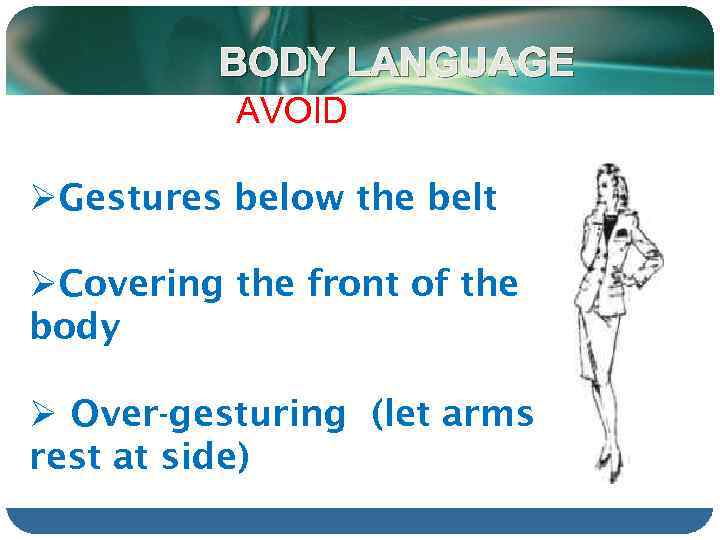 BODY LANGUAGE AVOID ØGestures below the belt ØCovering the front of the body Ø Over-gesturing (let arms rest at side)
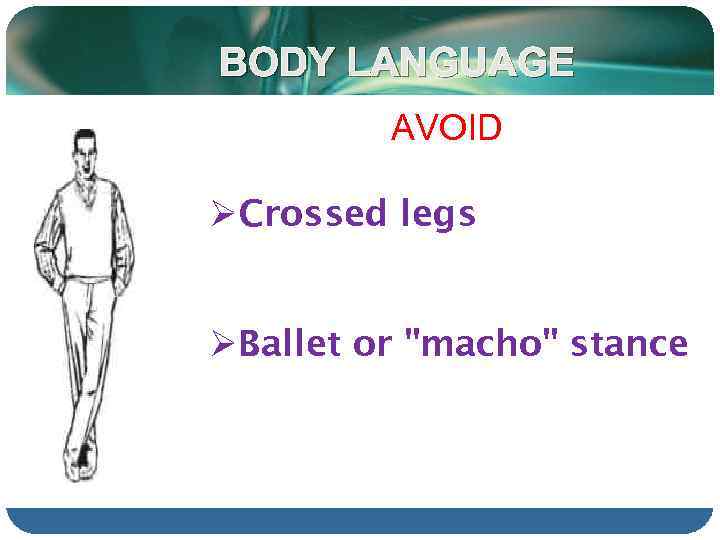 BODY LANGUAGE AVOID ØCrossed legs ØBallet or "macho" stance
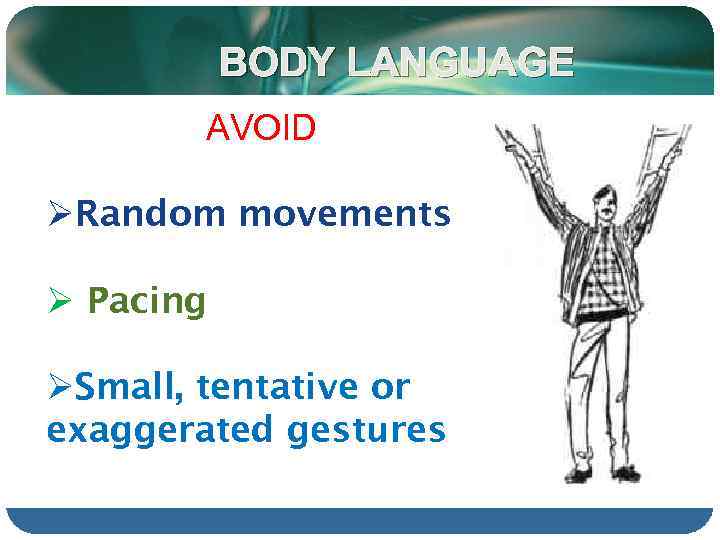 BODY LANGUAGE AVOID ØRandom movements Ø Pacing ØSmall, tentative or exaggerated gestures
 Question & Answer Sessions ØBe Prepared ØListen ØPause ØCredit & Rephrase ØRespond
 SUMMING UP -Making a start -Structuring -Voice & Language -Body language - Question & Answer session