


 Скачать презентацию what kinds of dangerous usually follow the natural
Лычагин.pptx
- Количество слайдов: 9
 what kinds of dangerous usually follow the natural disasters? Nikita Lychagin , 8 b
 Goals • Discover what kinds of dangerous usually follow the natural disasters?
 Tasks • Learn more about the natural disasters. • Learn more about the consequences of natural disasters.
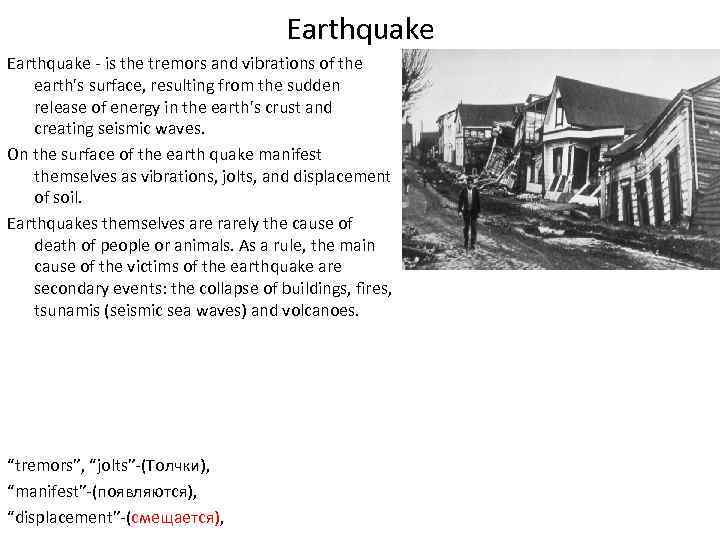 Earthquake - is the tremors and vibrations of the earth's surface, resulting from the sudden release of energy in the earth's crust and creating seismic waves. On the surface of the earth quake manifest themselves as vibrations, jolts, and displacement of soil. Earthquakes themselves are rarely the cause of death of people or animals. As a rule, the main cause of the victims of the earthquake are secondary events: the collapse of buildings, fires, tsunamis (seismic sea waves) and volcanoes. “tremors”, “jolts”-(Толчки), “manifest”-(появляются), “displacement”-(смещается),
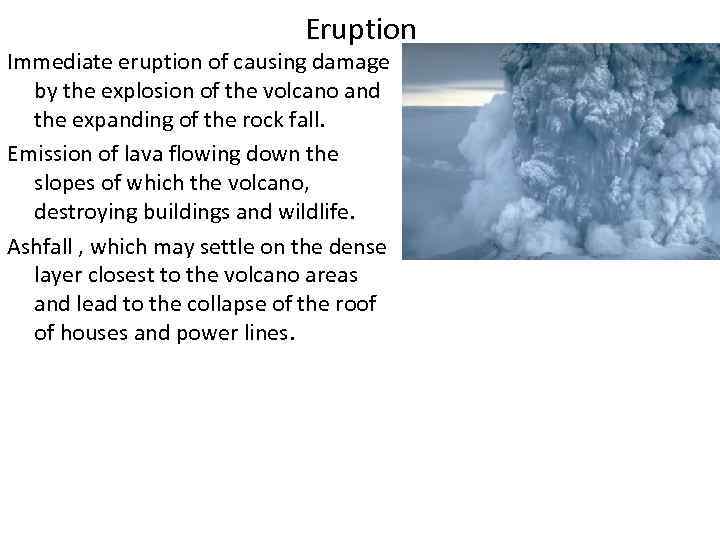 Eruption Immediate eruption of causing damage by the explosion of the volcano and the expanding of the rock fall. Emission of lava flowing down the slopes of which the volcano, destroying buildings and wildlife. Ashfall , which may settle on the dense layer closest to the volcano areas and lead to the collapse of the roof of houses and power lines.
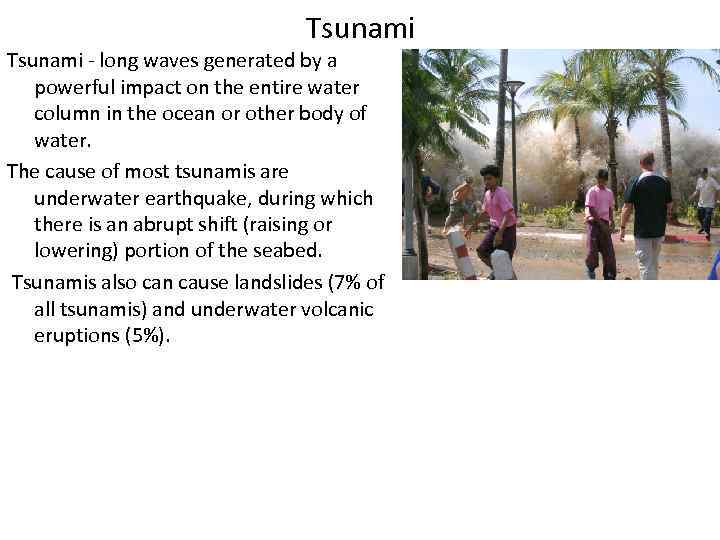 Tsunami - long waves generated by a powerful impact on the entire water column in the ocean or other body of water. The cause of most tsunamis are underwater earthquake, during which there is an abrupt shift (raising or lowering) portion of the seabed. Tsunamis also can cause landslides (7% of all tsunamis) and underwater volcanic eruptions (5%).
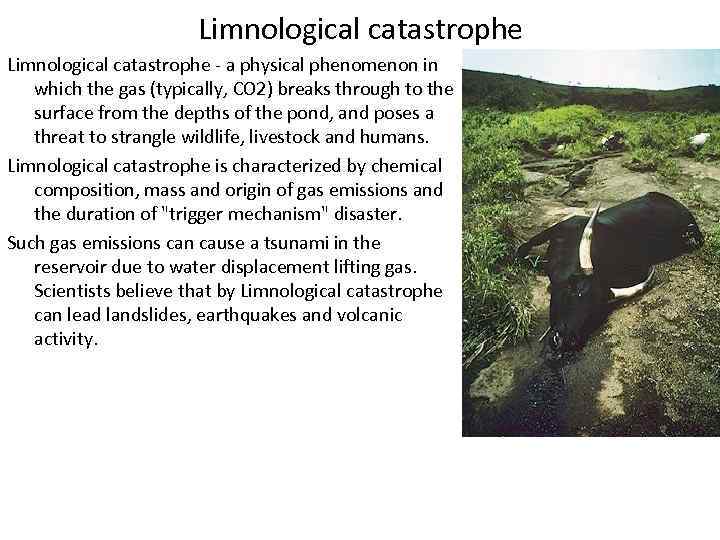 Limnological catastrophe - a physical phenomenon in which the gas (typically, CO 2) breaks through to the surface from the depths of the pond, and poses a threat to strangle wildlife, livestock and humans. Limnological catastrophe is characterized by chemical composition, mass and origin of gas emissions and the duration of "trigger mechanism" disaster. Such gas emissions can cause a tsunami in the reservoir due to water displacement lifting gas. Scientists believe that by Limnological catastrophe can lead landslides, earthquakes and volcanic activity.
 conclusion Natural disasters are dangerous to the people around them, cities and animals!
 Links • https: //ru. wikipedia. org/wiki/Стихийное_бедствие#/media/File: Val divia_after_earthquake, _1960. jpg • https: //ru. wikipedia. org/wiki/Стихийное_бедствие#/media/File: MS H 80_eruption_mount_st_helens_plume_05 -18 -80. jpg • https: //ru. wikipedia. org/wiki/Стихийное_бедствие#/media/File: 200 4 -tsunami_balanced. jpg • https: //ru. wikipedia. org/wiki/Стихийное_бедствие#/media/File: Co w_killed_by_Lake_Nyos_gasses. jpg