


 Скачать презентацию What is WSPR Steve Nichols G 0 KYA
ebe481ff0099a55b46feeac51f7d0be9.ppt
- Количество слайдов: 39
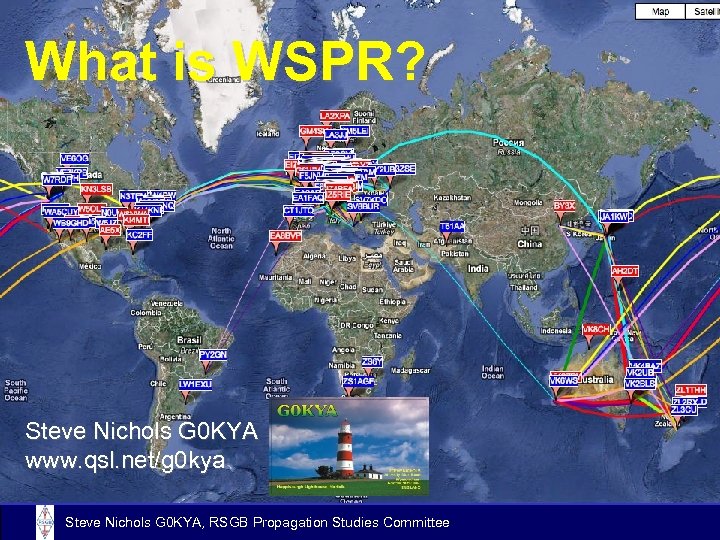 What is WSPR? Steve Nichols G 0 KYA www. qsl. net/g 0 kya Steve Nichols G 0 KYA, RSGB Propagation Studies Committee
 What is WSPR? • The Weak Signal Propagation Reporter • An automated system designed for sending and receiving low-power transmissions to test propagation paths on the MF and HF bands. • The program can decode signals with S/N as low as -28 d. B Steve Nichols G 0 KYA, RSGB Propagation Studies Committee
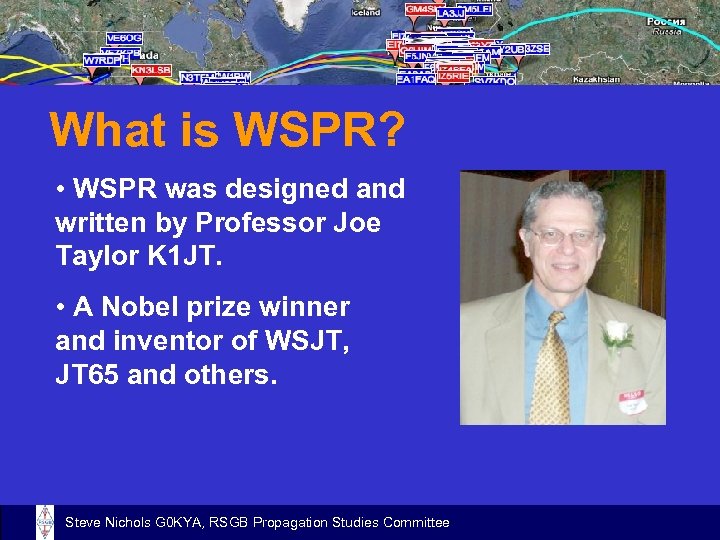 What is WSPR? • WSPR was designed and written by Professor Joe Taylor K 1 JT. • A Nobel prize winner and inventor of WSJT, JT 65 and others. Steve Nichols G 0 KYA, RSGB Propagation Studies Committee
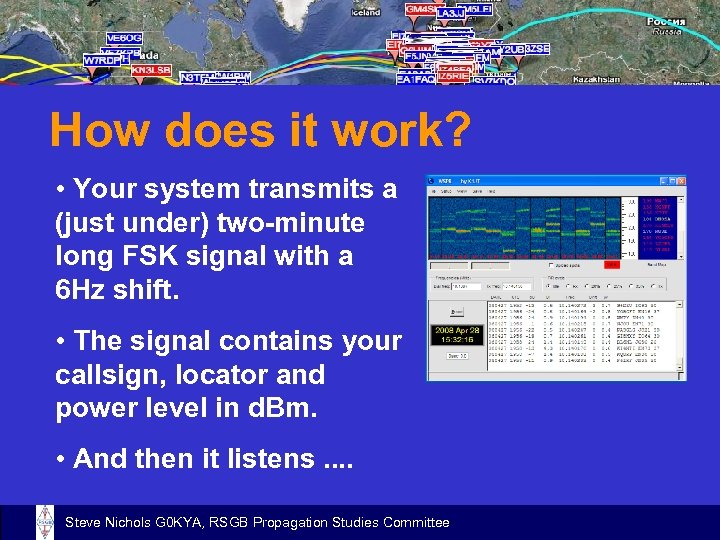 How does it work? • Your system transmits a (just under) two-minute long FSK signal with a 6 Hz shift. • The signal contains your callsign, locator and power level in d. Bm. • And then it listens. . Steve Nichols G 0 KYA, RSGB Propagation Studies Committee
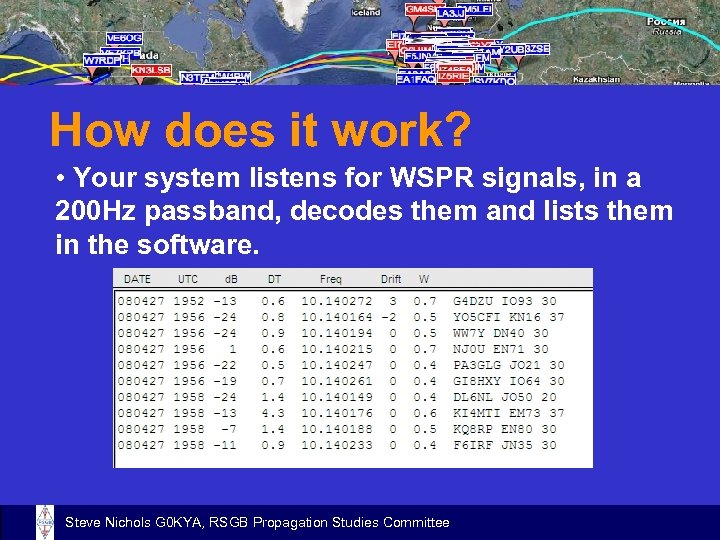 How does it work? • Your system listens for WSPR signals, in a 200 Hz passband, decodes them and lists them in the software. Steve Nichols G 0 KYA, RSGB Propagation Studies Committee
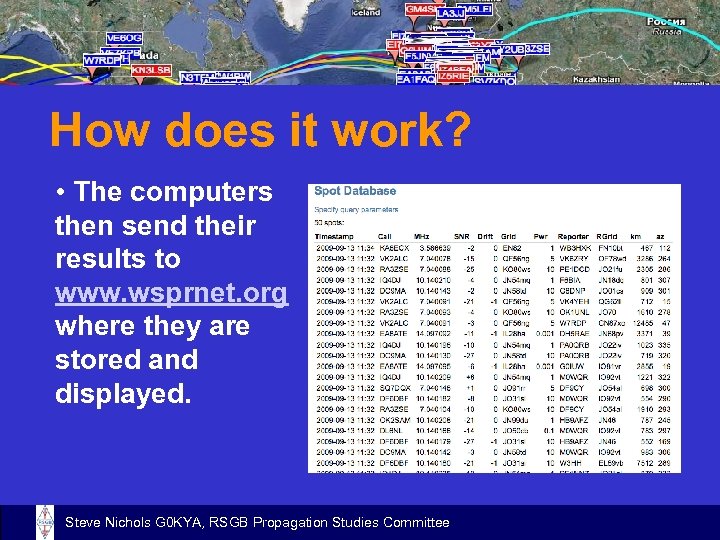 How does it work? • The computers then send their results to www. wsprnet. org where they are stored and displayed. Steve Nichols G 0 KYA, RSGB Propagation Studies Committee
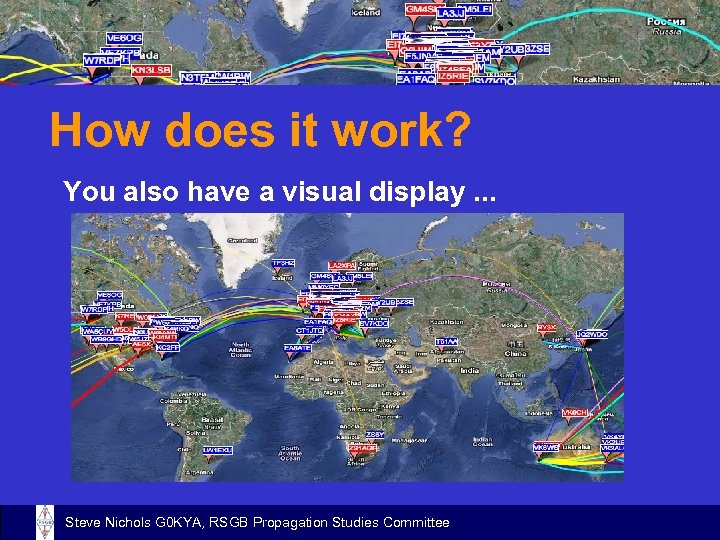 How does it work? You also have a visual display. . . Steve Nichols G 0 KYA, RSGB Propagation Studies Committee
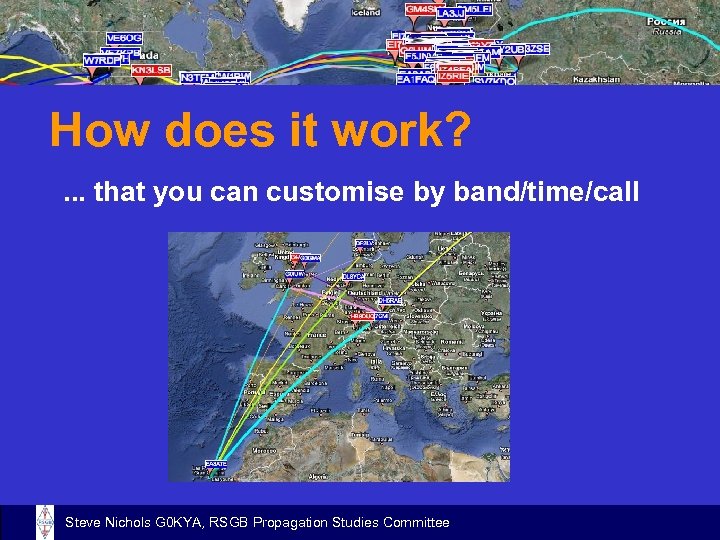 How does it work? . . . that you can customise by band/time/call Steve Nichols G 0 KYA, RSGB Propagation Studies Committee
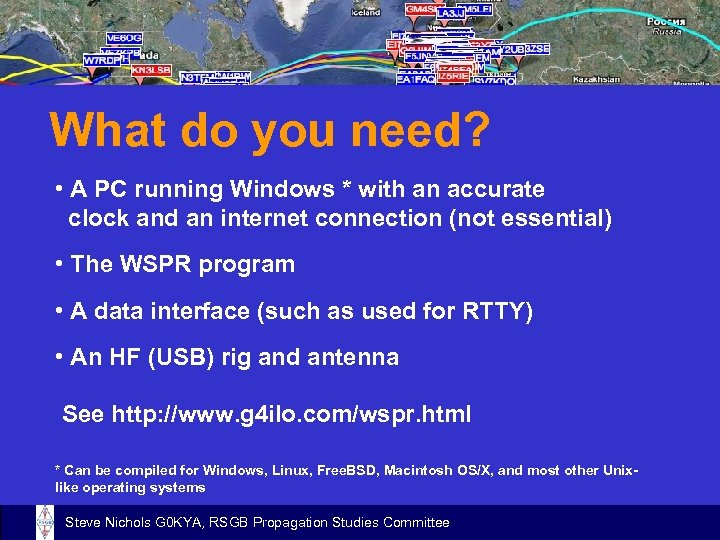 What do you need? • A PC running Windows * with an accurate clock and an internet connection (not essential) • The WSPR program • A data interface (such as used for RTTY) • An HF (USB) rig and antenna See http: //www. g 4 ilo. com/wspr. html * Can be compiled for Windows, Linux, Free. BSD, Macintosh OS/X, and most other Unixlike operating systems Steve Nichols G 0 KYA, RSGB Propagation Studies Committee
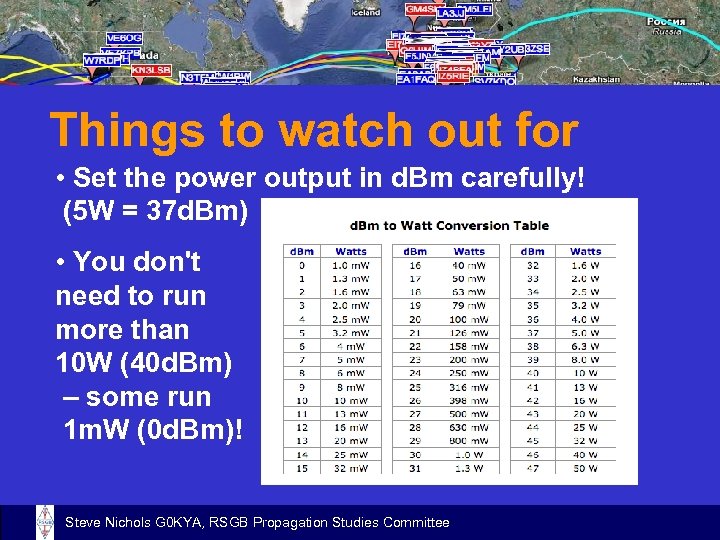 Things to watch out for • Set the power output in d. Bm carefully! (5 W = 37 d. Bm) • You don't need to run more than 10 W (40 d. Bm) – some run 1 m. W (0 d. Bm)! Steve Nichols G 0 KYA, RSGB Propagation Studies Committee
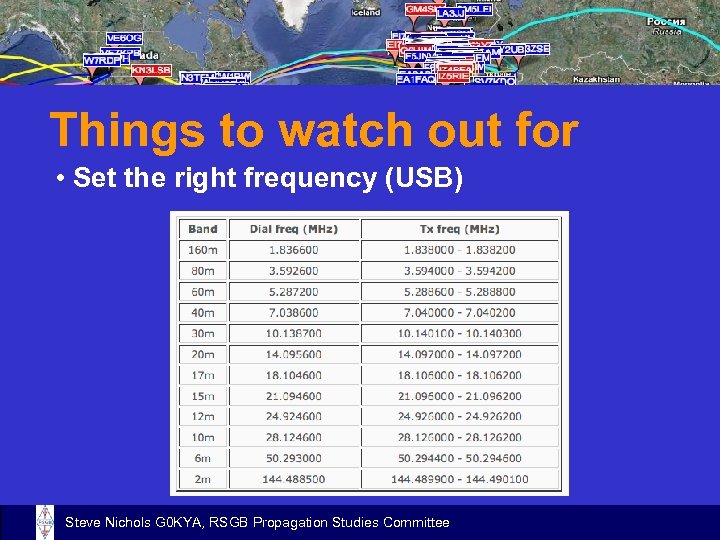 Things to watch out for • Set the right frequency (USB) Steve Nichols G 0 KYA, RSGB Propagation Studies Committee
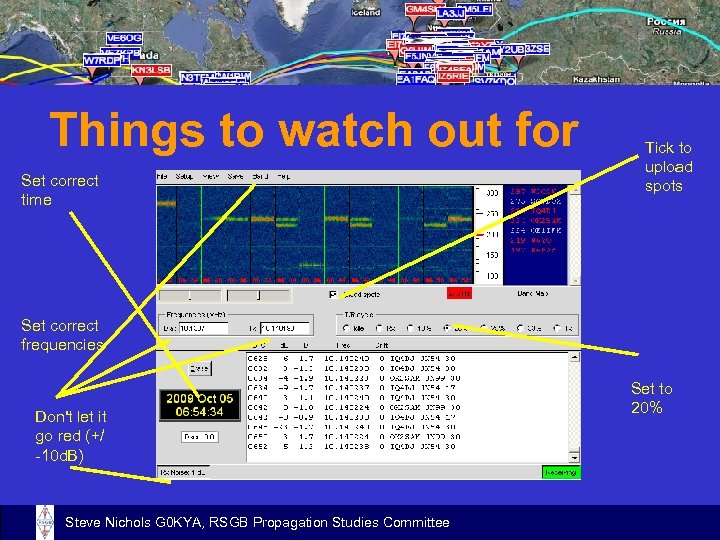 Things to watch out for Set correct time Tick to upload spots Set correct frequencies Don't let it go red (+/ -10 d. B) Steve Nichols G 0 KYA, RSGB Propagation Studies Committee Set to 20%
 WSPR QSO mode Joe Taylor: “There is a 'WSPR QSO mode' in WSJT. This mode has not become popular, I think in large part because the data rate is too slow and the 50 -bit messages too constrained. ” WSPR QSO should operate near the normal JT 65 QSO frequencies - 14. 076500 MHz Steve Nichols G 0 KYA, RSGB Propagation Studies Committee
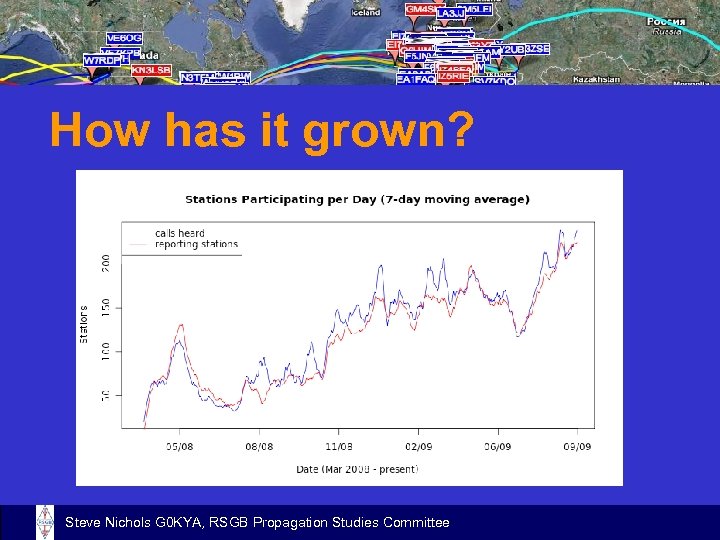 How has it grown? Steve Nichols G 0 KYA, RSGB Propagation Studies Committee
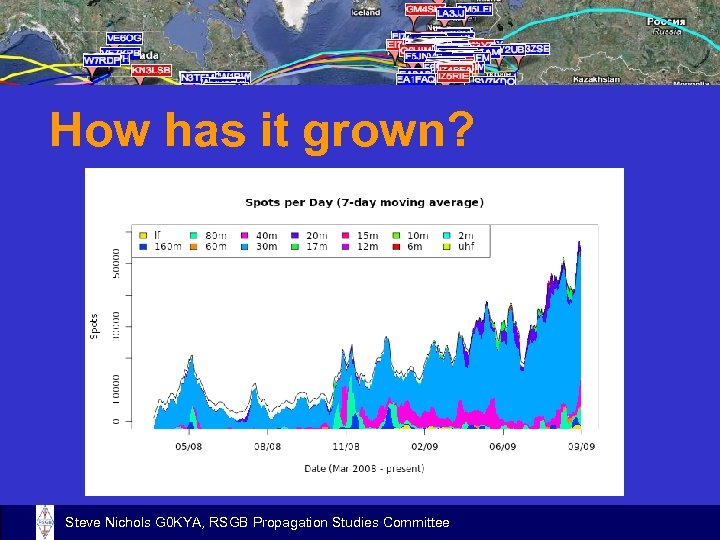 How has it grown? Steve Nichols G 0 KYA, RSGB Propagation Studies Committee
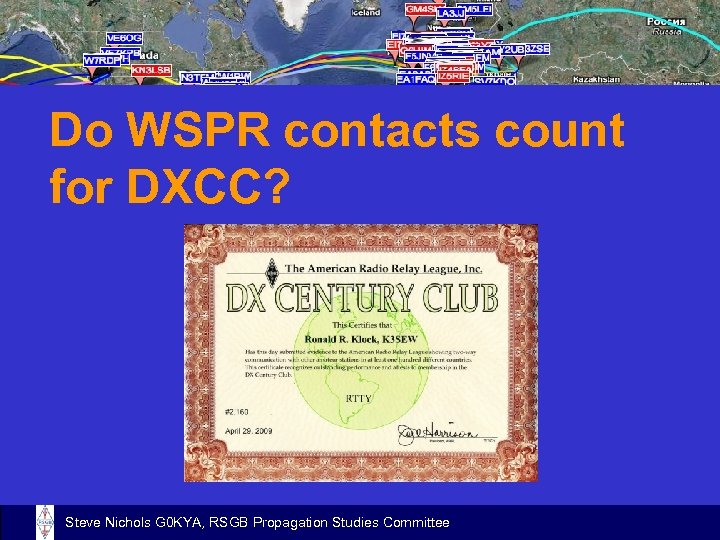 Do WSPR contacts count for DXCC? Steve Nichols G 0 KYA, RSGB Propagation Studies Committee
 Do WSPR contacts count for DXCC? Bill Moore NC 1 L, ARRL Awards Branch Manager: “From what I read it appears that this is just another digital mode and for DXCC it would count as RTTY. ” Steve Nichols G 0 KYA, RSGB Propagation Studies Committee
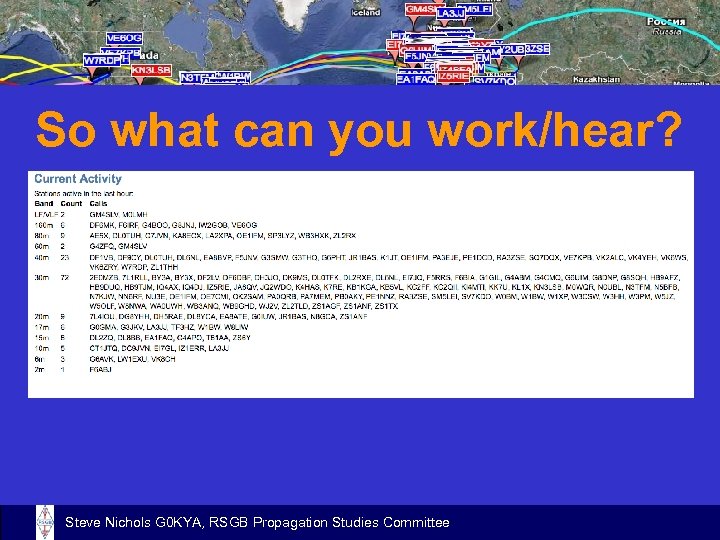 So what can you work/hear? Steve Nichols G 0 KYA, RSGB Propagation Studies Committee
 So what can you work/hear? Steve Nichols G 0 KYA, RSGB Propagation Studies Committee
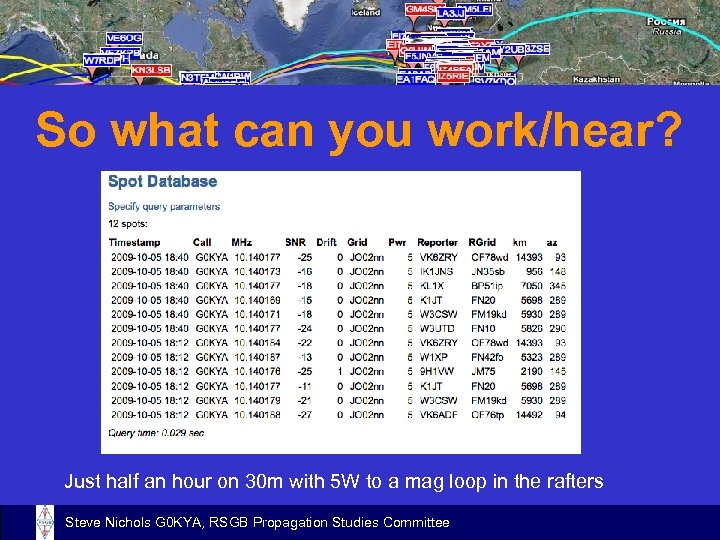 So what can you work/hear? Just half an hour on 30 m with 5 W to a mag loop in the rafters Steve Nichols G 0 KYA, RSGB Propagation Studies Committee
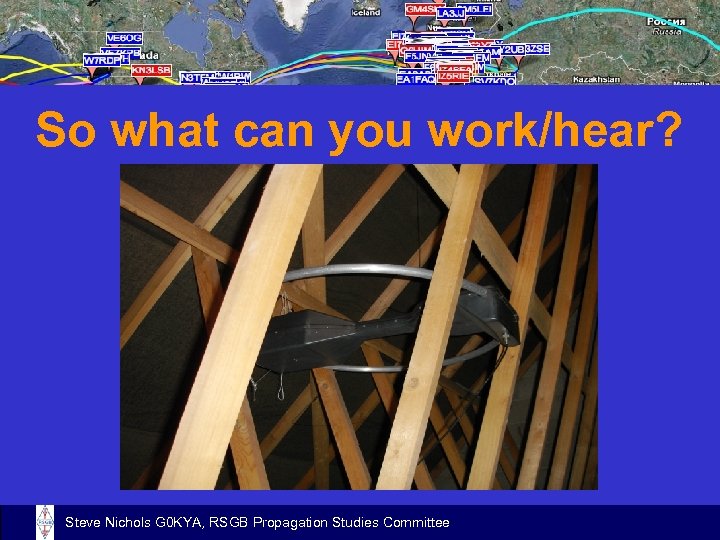
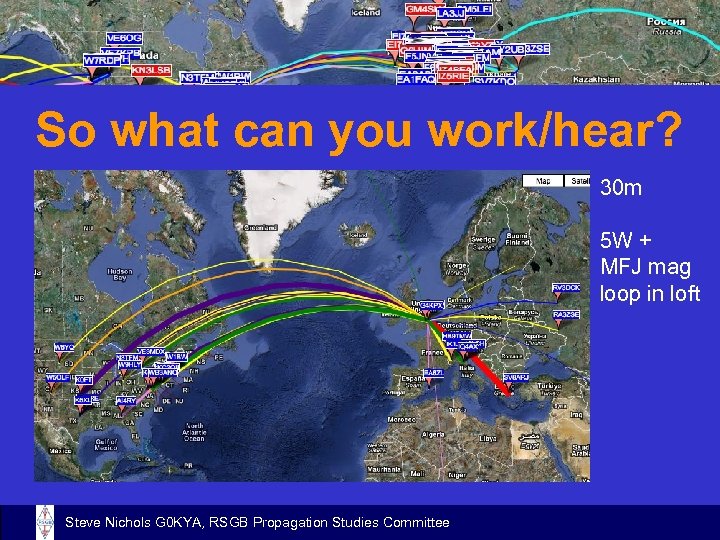 So what can you work/hear? 30 m 5 W + MFJ mag loop in loft Steve Nichols G 0 KYA, RSGB Propagation Studies Committee
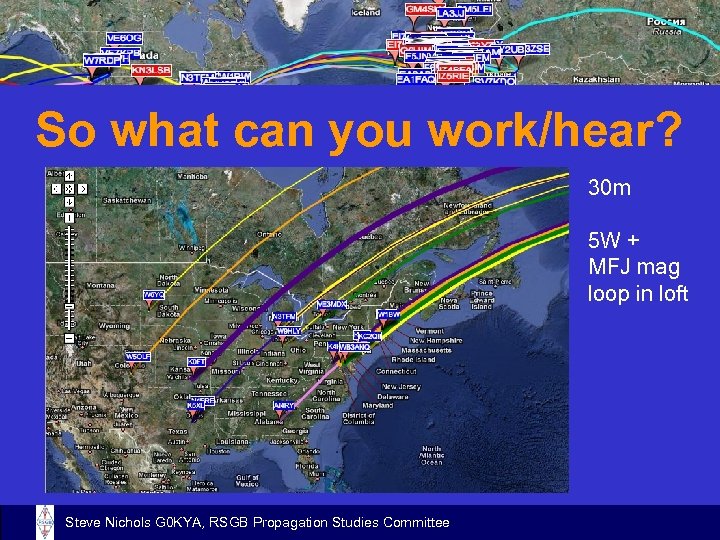 So what can you work/hear? 30 m 5 W + MFJ mag loop in loft Steve Nichols G 0 KYA, RSGB Propagation Studies Committee
 Can it “hear” better than CW? “WSPR is about 11 d. B better than ear-andbrain CW. “For most operators, the difference is more like 15 d. B. " Steve Nichols G 0 KYA, RSGB Propagation Studies Committee
 What can you do with WSPR? • Look for fleeting/rare propagation paths eg Sporadic E on 10 m • Test antennas • Do long-term propagation research • Have fun! Steve Nichols G 0 KYA, RSGB Propagation Studies Committee
 What are the downsides? • Not enough stations on – often only 2 -5 on 10 m • People don't put in the correct locators/power levels • People “come and go” making long-term research difficult • Data format not conducive to graphing • WSPR reports signal to noise ratio, not signal strength. Steve Nichols G 0 KYA, RSGB Propagation Studies Committee
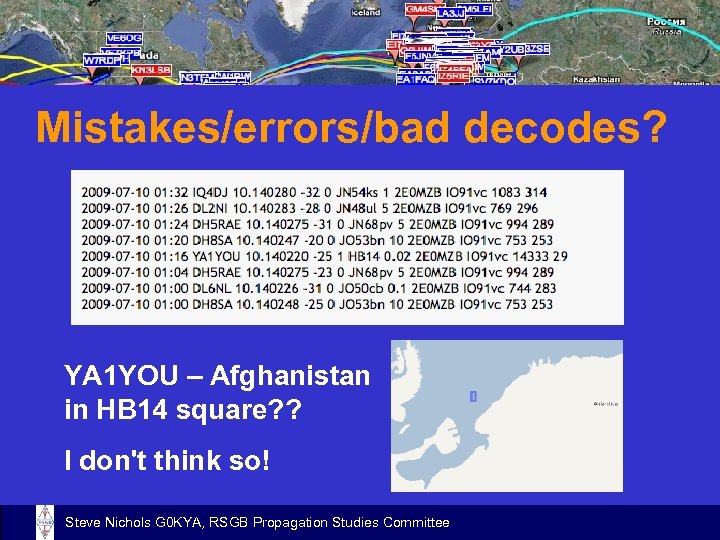 Mistakes/errors/bad decodes? YA 1 YOU – Afghanistan in HB 14 square? ? I don't think so! Steve Nichols G 0 KYA, RSGB Propagation Studies Committee
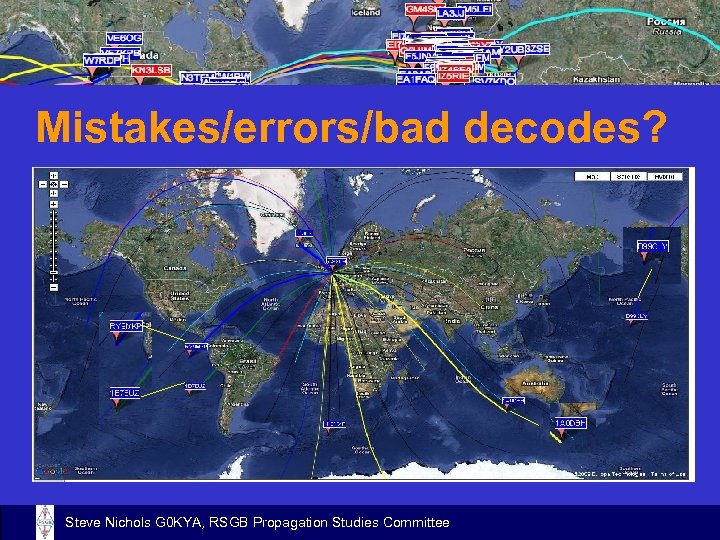 Mistakes/errors/bad decodes? Steve Nichols G 0 KYA, RSGB Propagation Studies Committee
 Mistakes/errors/bad decodes? WSPR may be prone to bad decodes on slow machines c 400 -500 MHz processor. Local QRM/noisy environments can cause bad decodes that PASS the forward error correction tests. Steve Nichols G 0 KYA, RSGB Propagation Studies Committee
 User error Reporting captures as being on one band when they are actually on another. “I was in a rush this morning, and in my haste I started WSPR without checking the band. All my spots for 30 m on 2 -3 Oct are invalid. I was TX'ing and RX'ing on 40 m. ” Steve Nichols G 0 KYA, RSGB Propagation Studies Committee
 Antenna tests – USA (Stu Philips) Conclusion: The vertical dipole (right) generates longer distance spots in more time periods than the inverted L. Steve Nichols G 0 KYA, RSGB Propagation Studies Committee
 VOACAP v Reality – F 6 IRF Steve Nichols G 0 KYA, RSGB Propagation Studies Committee
 Is propagation bilateral? – F 6 IRF • K 1 JT hears F 6 IRF, but not the other way (look at maximums) – see http: //f 6 irf. blogspot. com Steve Nichols G 0 KYA, RSGB Propagation Studies Committee
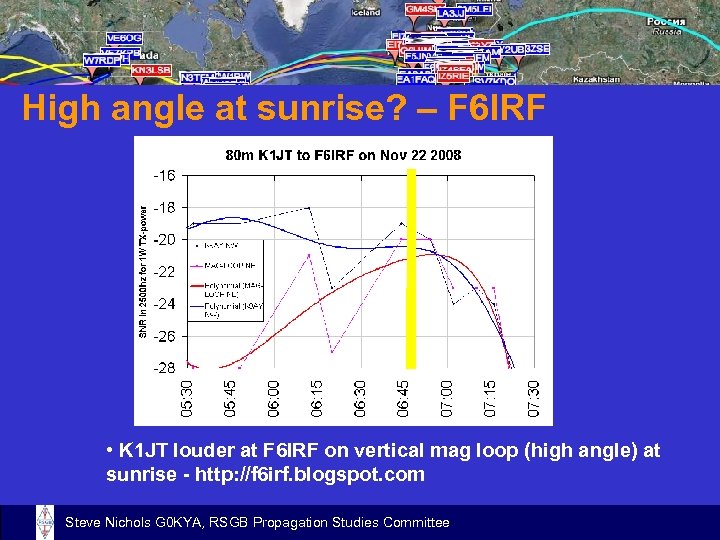 High angle at sunrise? – F 6 IRF • K 1 JT louder at F 6 IRF on vertical mag loop (high angle) at sunrise - http: //f 6 irf. blogspot. com Steve Nichols G 0 KYA, RSGB Propagation Studies Committee
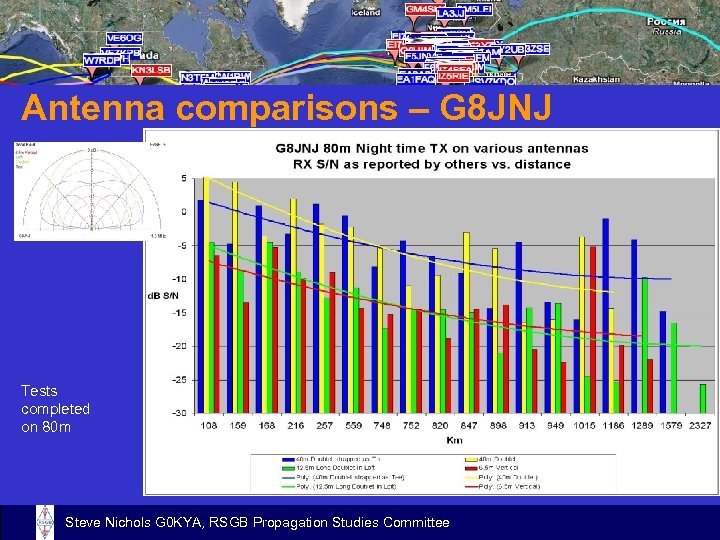 Antenna comparisons – G 8 JNJ Tests completed on 80 m Steve Nichols G 0 KYA, RSGB Propagation Studies Committee
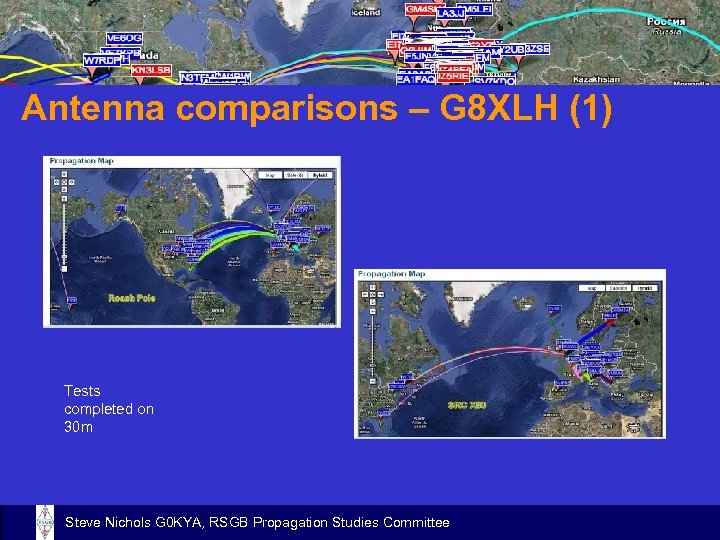 Antenna comparisons – G 8 XLH (1) Tests completed on 30 m Steve Nichols G 0 KYA, RSGB Propagation Studies Committee
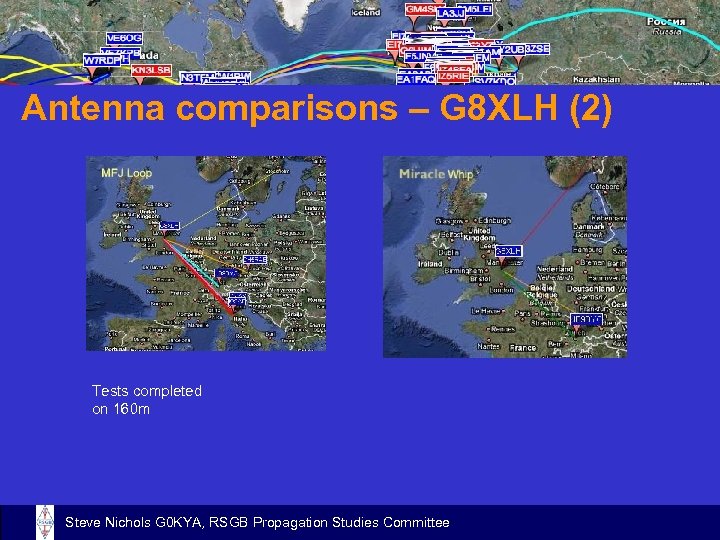 Antenna comparisons – G 8 XLH (2) Tests completed on 160 m Steve Nichols G 0 KYA, RSGB Propagation Studies Committee
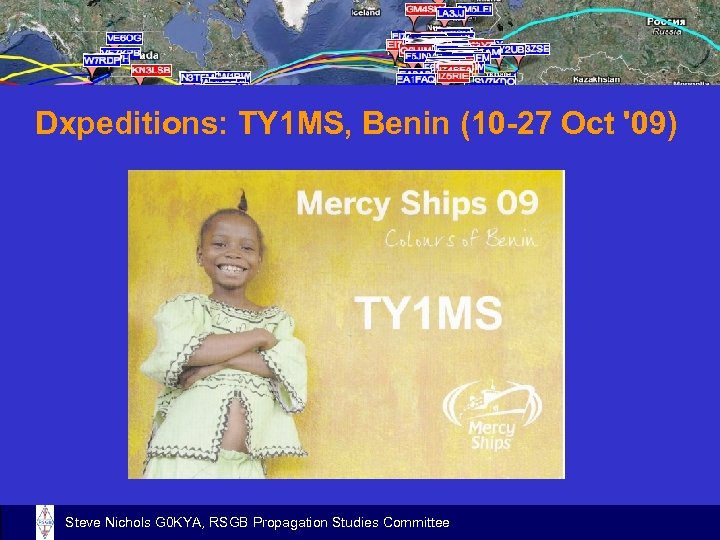 Dxpeditions: TY 1 MS, Benin (10 -27 Oct '09) Steve Nichols G 0 KYA, RSGB Propagation Studies Committee
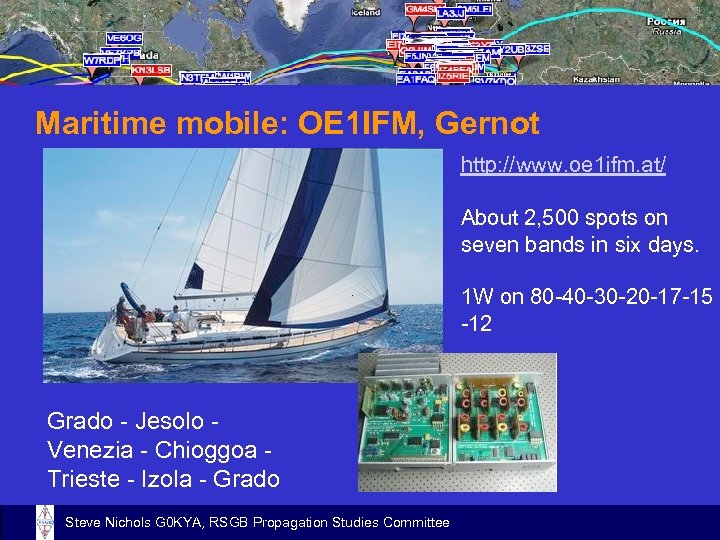 Maritime mobile: OE 1 IFM, Gernot http: //www. oe 1 ifm. at/ About 2, 500 spots on seven bands in six days. 1 W on 80 -40 -30 -20 -17 -15 -12 Grado - Jesolo - Venezia - Chioggoa - Trieste - Izola - Grado Steve Nichols G 0 KYA, RSGB Propagation Studies Committee
 Conclusion: • WSPR is a useful tool – probably unsurpassed for QRP contacts • As a QSO “chat mode” it is no match for SSB/CW/PSK 31/RTTY • The spot database is useful, but don't believe all you see • It needs more users • Will it take over from “real radio” - no! • Find out more at www. wsprnet. org and http: //www. physics. princeton. edu/pulsar/K 1 JT/ Steve Nichols G 0 KYA, RSGB Propagation Studies Committee