


 Скачать презентацию What is the Role of Peritoneal Dialysis in
6e87c2e49f24f330624341ee895eb9a9.ppt
- Количество слайдов: 41
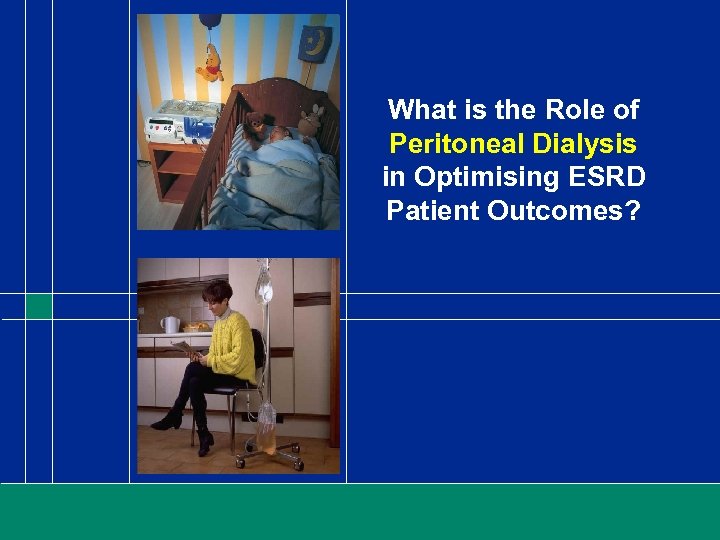 What is the Role of Peritoneal Dialysis in Optimising ESRD Patient Outcomes?
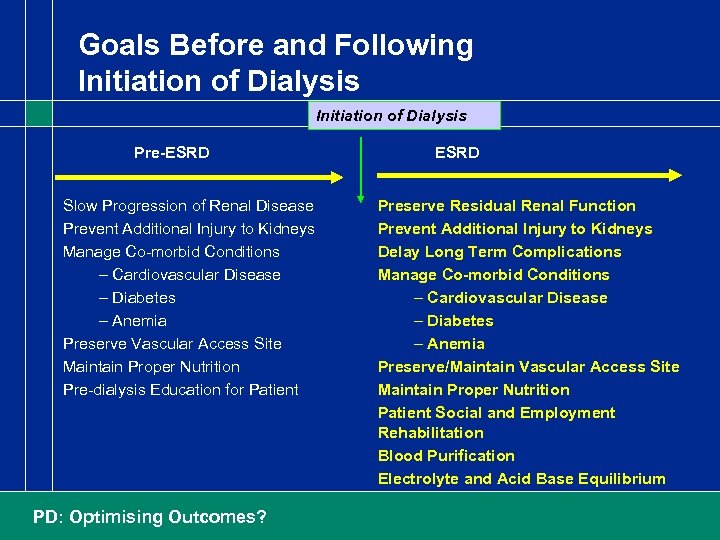 Goals Before and Following Initiation of Dialysis Pre-ESRD Slow Progression of Renal Disease Prevent Additional Injury to Kidneys Manage Co-morbid Conditions – Cardiovascular Disease – Diabetes – Anemia Preserve Vascular Access Site Maintain Proper Nutrition Pre-dialysis Education for Patient PD: Optimising Outcomes? ESRD Preserve Residual Renal Function Prevent Additional Injury to Kidneys Delay Long Term Complications Manage Co-morbid Conditions – Cardiovascular Disease – Diabetes – Anemia Preserve/Maintain Vascular Access Site Maintain Proper Nutrition Patient Social and Employment Rehabilitation Blood Purification Electrolyte and Acid Base Equilibrium
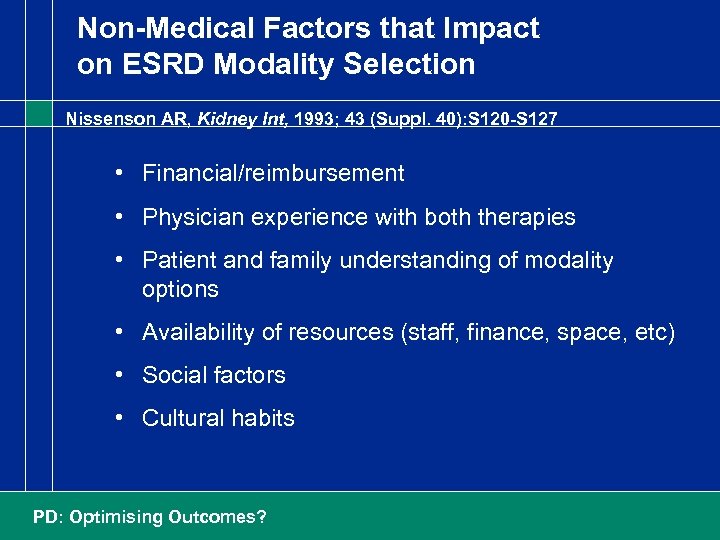 Non-Medical Factors that Impact on ESRD Modality Selection Nissenson AR, Kidney Int, 1993; 43 (Suppl. 40): S 120 -S 127 • Financial/reimbursement • Physician experience with both therapies • Patient and family understanding of modality options • Availability of resources (staff, finance, space, etc) • Social factors • Cultural habits PD: Optimising Outcomes?
 Modality Selection and Distribution Where Do We Want To Be? PD: Optimising Outcomes?
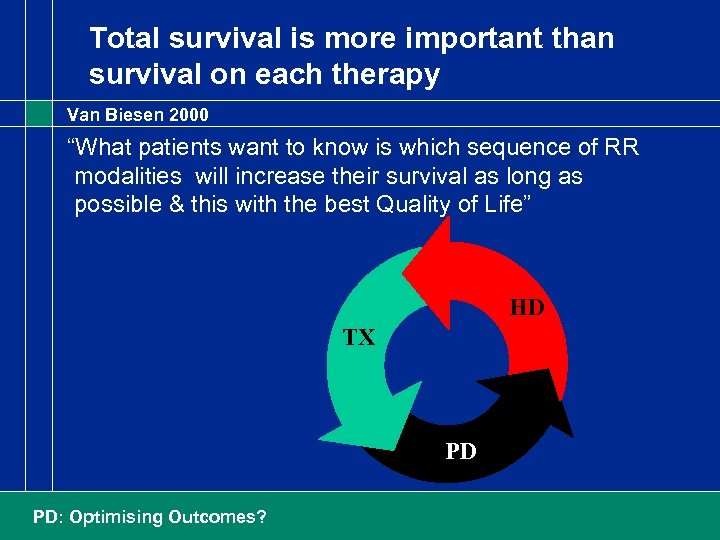 Total survival is more important than survival on each therapy Van Biesen 2000 “What patients want to know is which sequence of RR modalities will increase their survival as long as possible & this with the best Quality of Life” HD TX PD PD: Optimising Outcomes?
 Integrated Care Approach Lameire N, et al, Seminar of Uro-Nephrology, (1999) “Start renal replacement therapy in ESRD patients with PD, transfer them to HD when problems with PD occur, and transplant them when the possibility exists” PD: Optimising Outcomes?
 Integrated care concept: • Patient survival and quality of life are two very important factors in the selection of a dialysis modality • The majority of studies have compared the two modalities as « competitors » rather than as « complementary » techniques • Since every RRT has a technical « drop-out » , it is very likely that a patient will need several modalities during his lifetime and transfer from one technique to another will often be needed. PD: Optimising Outcomes?
 Integrated Therapy - questions • Does the physician believe that all RRT modalities should be made available to each patient ? • Should the patient have a free choice? • Does each RRT modality have a role to play during the lifetime of a patient with renal failure ? PD: Optimising Outcomes?
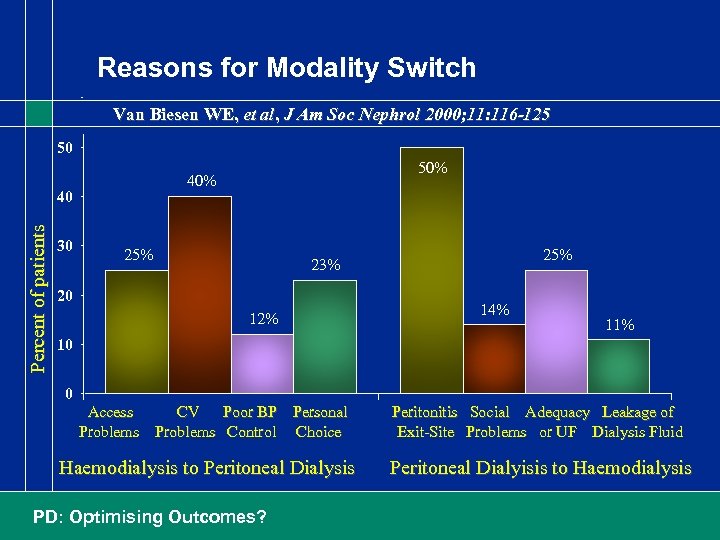 Reasons for Modality Switch Van Biesen WE, et al, J Am Soc Nephrol 2000; 11: 116 -125 50 Percent of patients 40 30 50% 40% 25% 23% 20 12% 14% 11% 10 0 Access CV Poor BP Personal Problems Control Choice Haemodialysis to Peritoneal Dialysis PD: Optimising Outcomes? Peritonitis Social Adequacy Leakage of Exit-Site Problems or UF Dialysis Fluid Peritoneal Dialyisis to Haemodialysis
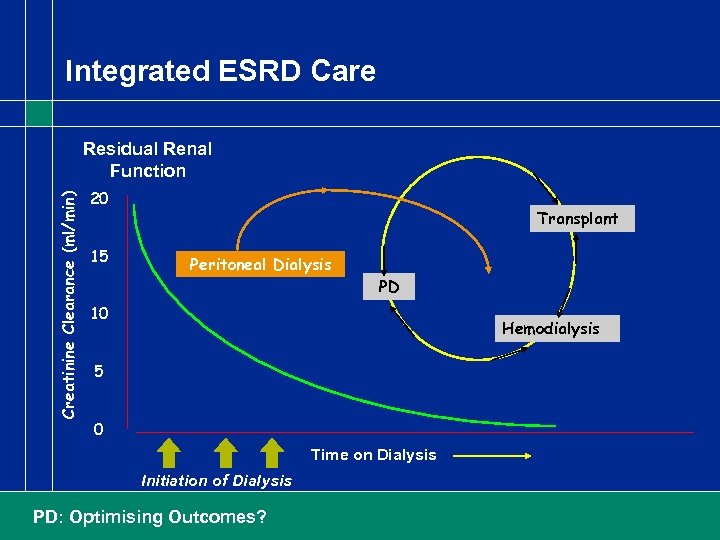 Integrated ESRD Care Creatinine Clearance (ml/min) Residual Renal Function 20 15 Transplant Peritoneal Dialysis PD 10 Hemodialysis 5 0 Time on Dialysis Initiation of Dialysis PD: Optimising Outcomes?
 Challenges for PD • Can PD stand on an equal footing with HD? • If PD is to be used for RRT, it must give equivalent results both for mortality and morbidity as does HD PD: Optimising Outcomes?
 Where is PD today? • Similar survival to HD • PD is treatment of choice for children • Peritonitis and exit-site infection rates have been reduced • Clearance targets can be achieved • Lower costs than HD • Good treatment prior to transplantation PD: Optimising Outcomes?
 PD as the Initial Form of Renal Replacement Therapy • • Better initial survival Preserves residual renal function Effective blood pressure and volume control PD Transplant: reduced risk of early acute renal failure Reduced risk of being infected by a blood borne virus Delays the use of HD blood access sites Quality of life PD: Optimising Outcomes?
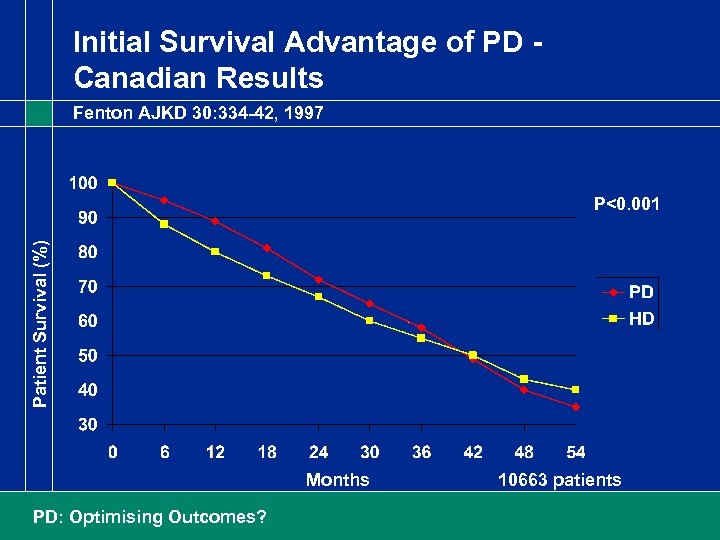 Initial Survival Advantage of PD Canadian Results Fenton AJKD 30: 334 -42, 1997 Patient Survival (%) P<0. 001 Months PD: Optimising Outcomes? 10663 patients
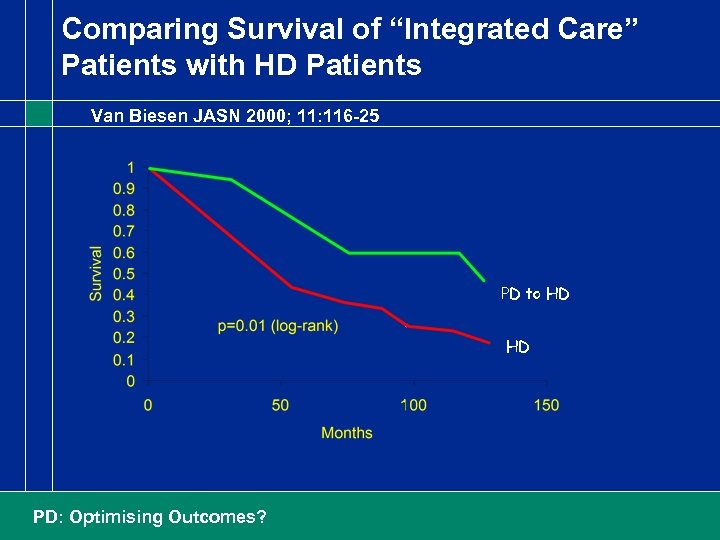 Comparing Survival of “Integrated Care” Patients with HD Patients Van Biesen JASN 2000; 11: 116 -25 PD to HD HD PD: Optimising Outcomes?
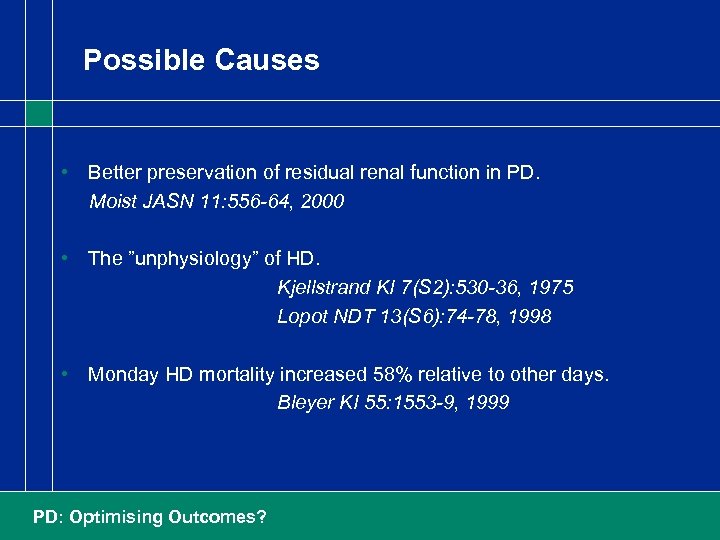 Possible Causes • Better preservation of residual renal function in PD. Moist JASN 11: 556 -64, 2000 • The ”unphysiology” of HD. Kjellstrand KI 7(S 2): 530 -36, 1975 Lopot NDT 13(S 6): 74 -78, 1998 • Monday HD mortality increased 58% relative to other days. Bleyer KI 55: 1553 -9, 1999 PD: Optimising Outcomes?
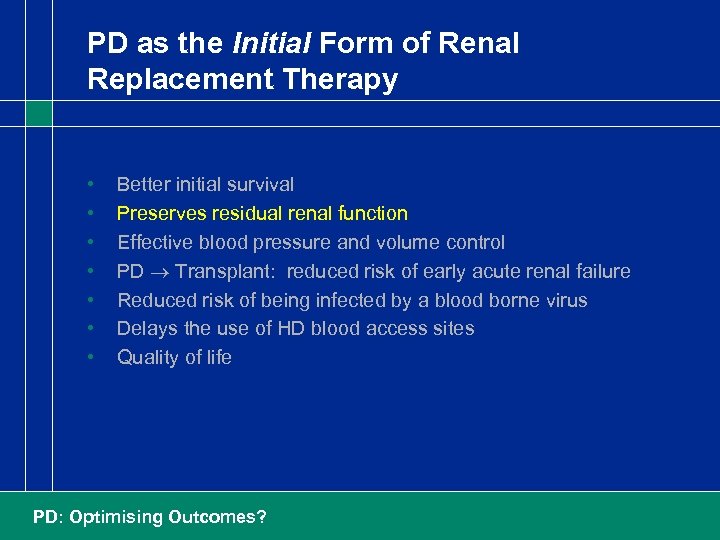 PD as the Initial Form of Renal Replacement Therapy • • Better initial survival Preserves residual renal function Effective blood pressure and volume control PD Transplant: reduced risk of early acute renal failure Reduced risk of being infected by a blood borne virus Delays the use of HD blood access sites Quality of life PD: Optimising Outcomes?
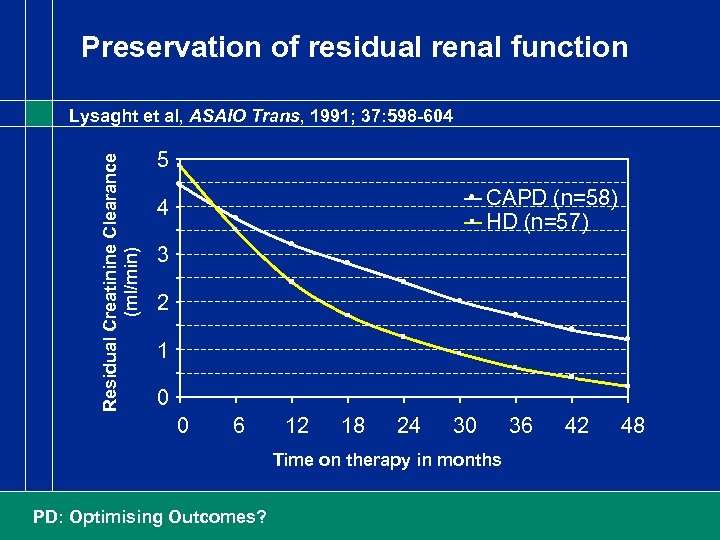 Preservation of residual renal function Residual Creatinine Clearance (ml/min) Lysaght et al, ASAIO Trans, 1991; 37: 598 -604 5 CAPD (n=58) HD (n=57) 4 3 2 1 0 0 6 12 18 24 30 Time on therapy in months PD: Optimising Outcomes? 36 42 48
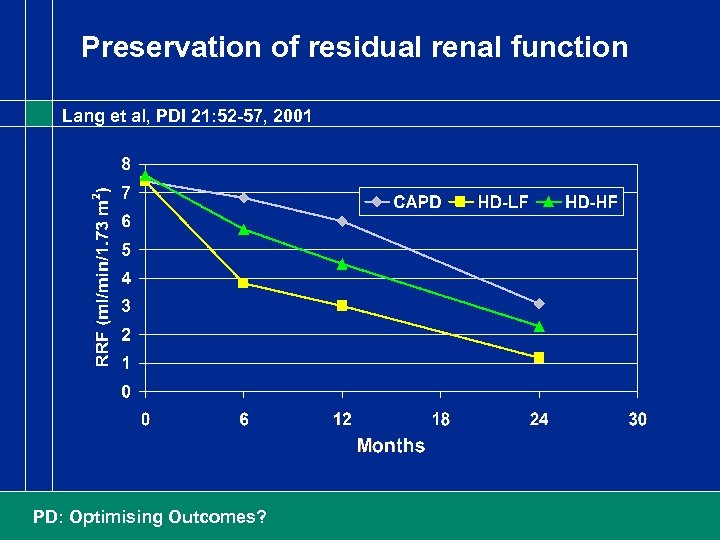 Preservation of residual renal function Lang et al, PDI 21: 52 -57, 2001 PD: Optimising Outcomes?
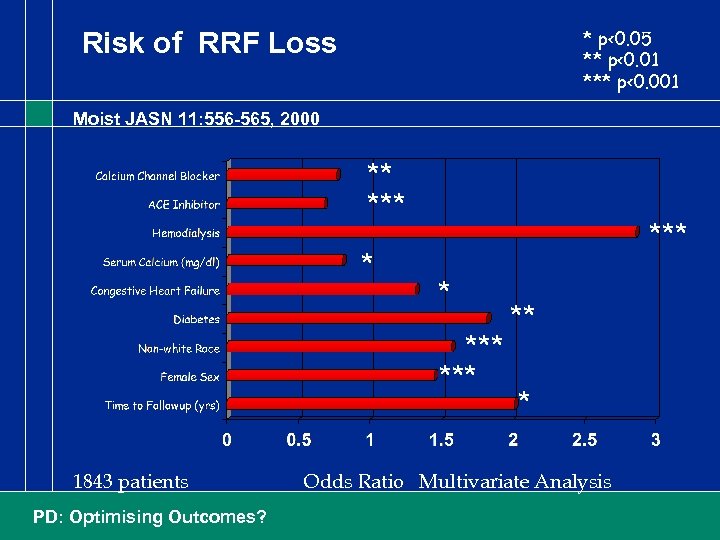 * p<0. 05 ** p<0. 01 *** p<0. 001 Risk of RRF Loss Moist JASN 11: 556 -565, 2000 ** * *** *** 1843 patients PD: Optimising Outcomes? ** * Odds Ratio Multivariate Analysis
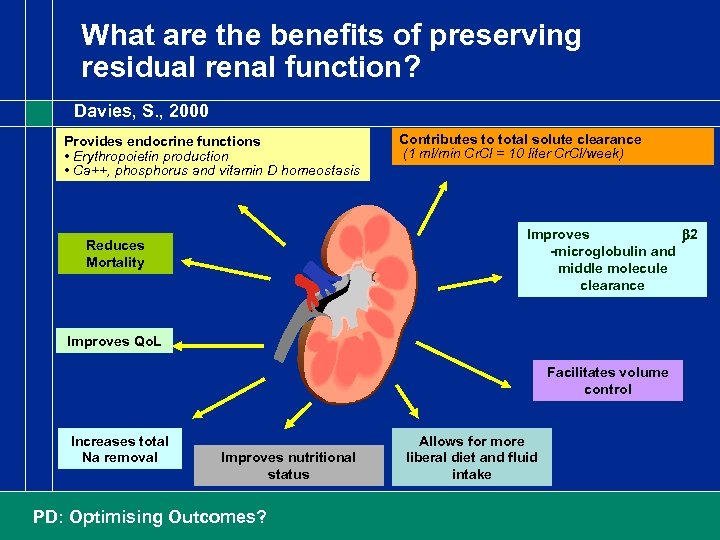 What are the benefits of preserving residual renal function? Davies, S. , 2000 Provides endocrine functions • Erythropoietin production • Ca++, phosphorus and vitamin D homeostasis Contributes to total solute clearance (1 ml/min Cr. Cl = 10 liter Cr. Cl/week) Improves 2 -microglobulin and middle molecule clearance Reduces Mortality Improves Qo. L Facilitates volume control Increases total Na removal Improves nutritional status PD: Optimising Outcomes? Allows for more liberal diet and fluid intake
 Causes of RRF Preservation in PD • Avoidance of Dehydration • HD: production of inflammatory mediators by blood contact Mc. Carthy JASN 4: 367, 1993 Lysaght ASAIO Trans 37: 598 -604, 1991 • Better clearance of middle molecules, lipophilic and proteinbound toxins. PD: Optimising Outcomes?
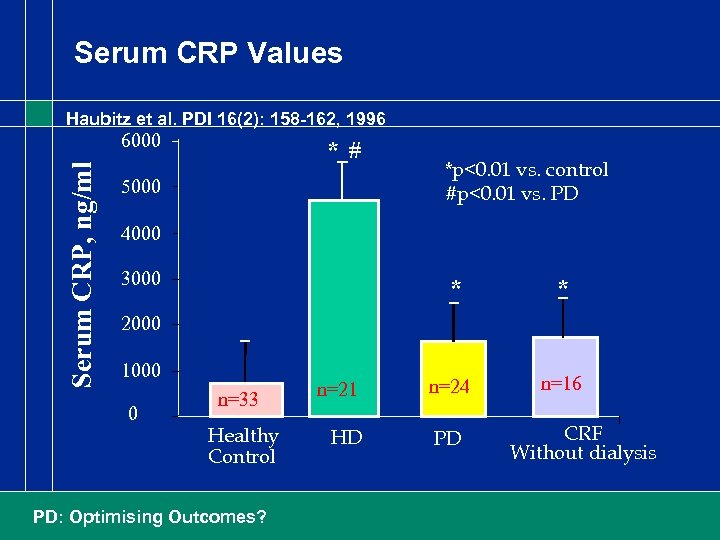 Serum CRP Values Haubitz et al. PDI 16(2): 158 -162, 1996 Serum CRP, ng/ml 6000 *# 5000 *p<0. 01 vs. control #p<0. 01 vs. PD 4000 3000 * * 2000 1000 0 n=33 Healthy Control PD: Optimising Outcomes? n=21 HD n=24 PD n=16 CRF Without dialysis
 PD as the Initial Form of Renal Replacement Therapy • Better initial survival • Preserves residual renal function • Effective blood pressure and volume control • PD • Reduced risk of being infected by a blood borne virus • Delays the use of HD blood access sites • Quality of life Transplant: reduced risk of early acute renal failure PD: Optimising Outcomes?
 Difference in BP Control by Dialysis Modality Mailloux AJKD 1998; 32(S 3), S 120 -S 141 • The prevalence of hypertension in HD patients is approximately 80% vs. approximately 50% in PD patients. • “Hypertension is not optimally controlled in HD and PD, but is better controlled in PD than HD” • “Lower blood pressure in PD patients is attributed to the more successful achievement of dry weight by slower ultrafiltration” NKF Taskforce on CV Disease PD: Optimising Outcomes?
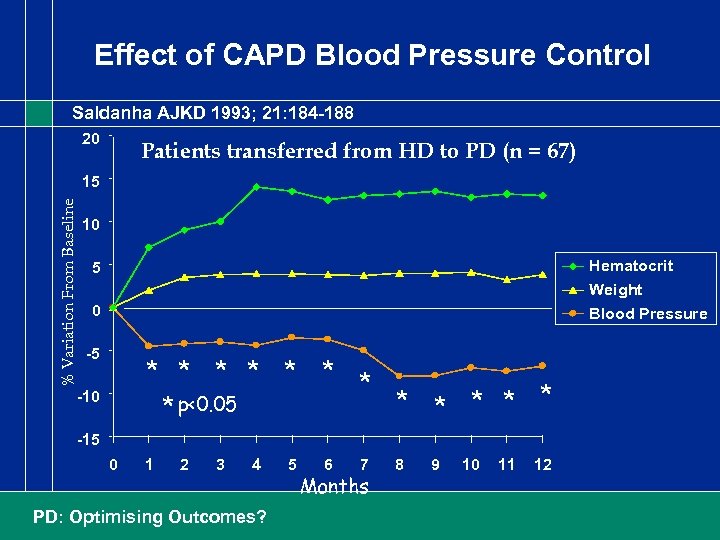 Effect of CAPD Blood Pressure Control Saldanha AJKD 1993; 21: 184 -188 20 Patients transferred from HD to PD (n = 67) % Variation From Baseline 15 10 Hematocrit Weight Blood Pressure 5 0 -5 * * * p<0. 05 -10 * 1 5 * * 8 9 * * * -15 0 2 3 4 PD: Optimising Outcomes? 6 7 Months 10 11 12
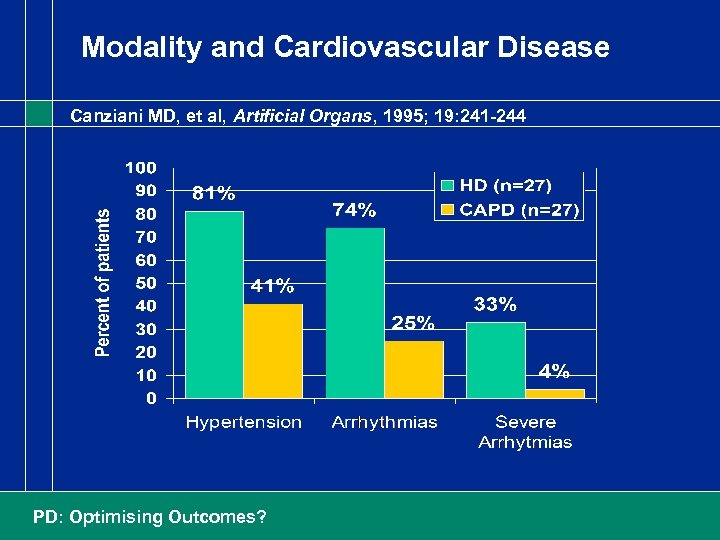 Modality and Cardiovascular Disease Canziani MD, et al, Artificial Organs, 1995; 19: 241 -244 PD: Optimising Outcomes?
 PD as the Initial Form of Renal Replacement Therapy • Better initial survival • Preserves residual renal function • Effective blood pressure and volume control • PD • Reduced risk of being infected by a blood borne virus • Delays the use of HD blood access sites • Quality of life Transplant: reduced risk of early acute renal failure PD: Optimising Outcomes?
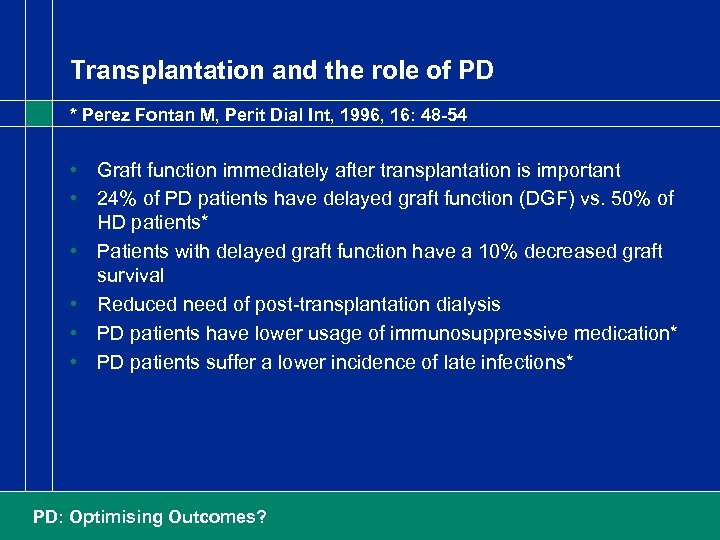 Transplantation and the role of PD * Perez Fontan M, Perit Dial Int, 1996, 16: 48 -54 • Graft function immediately after transplantation is important • 24% of PD patients have delayed graft function (DGF) vs. 50% of HD patients* • Patients with delayed graft function have a 10% decreased graft survival • Reduced need of post-transplantation dialysis • PD patients have lower usage of immunosuppressive medication* • PD patients suffer a lower incidence of late infections* PD: Optimising Outcomes?
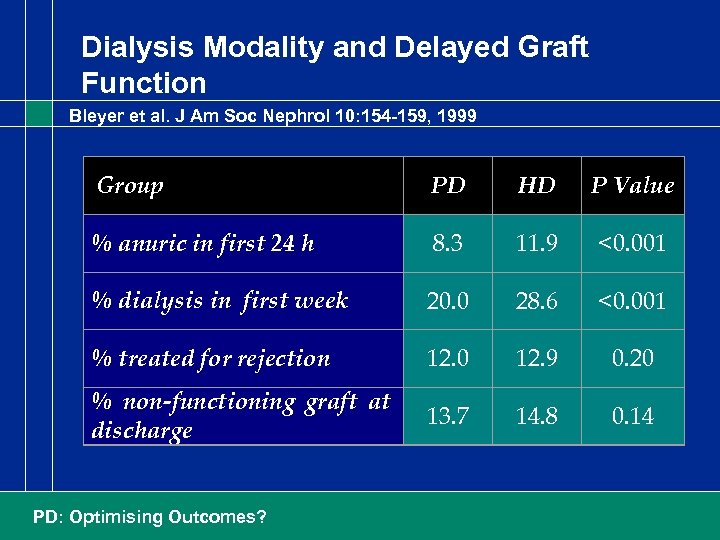 Dialysis Modality and Delayed Graft Function Bleyer et al. J Am Soc Nephrol 10: 154 -159, 1999 Group PD HD P Value % anuric in first 24 h 8. 3 11. 9 <0. 001 % dialysis in first week 20. 0 28. 6 <0. 001 % treated for rejection 12. 0 12. 9 0. 20 % non-functioning graft at discharge 13. 7 14. 8 0. 14 PD: Optimising Outcomes?
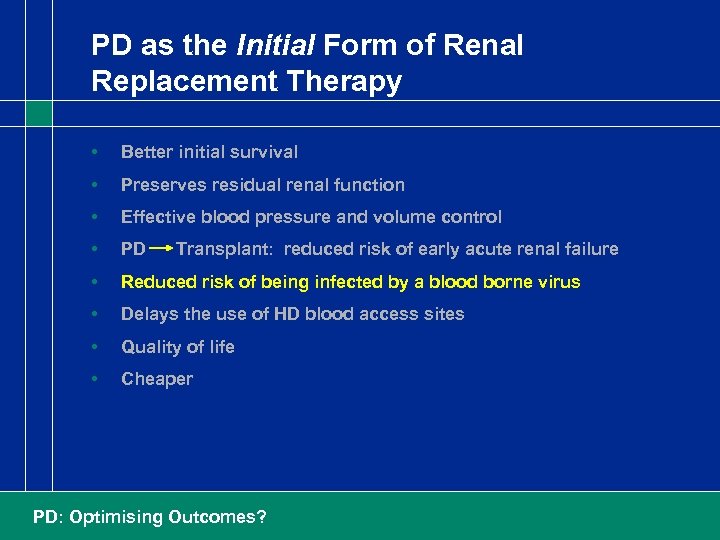 PD as the Initial Form of Renal Replacement Therapy • Better initial survival • Preserves residual renal function • Effective blood pressure and volume control • PD • Reduced risk of being infected by a blood borne virus • Delays the use of HD blood access sites • Quality of life • Cheaper Transplant: reduced risk of early acute renal failure PD: Optimising Outcomes?
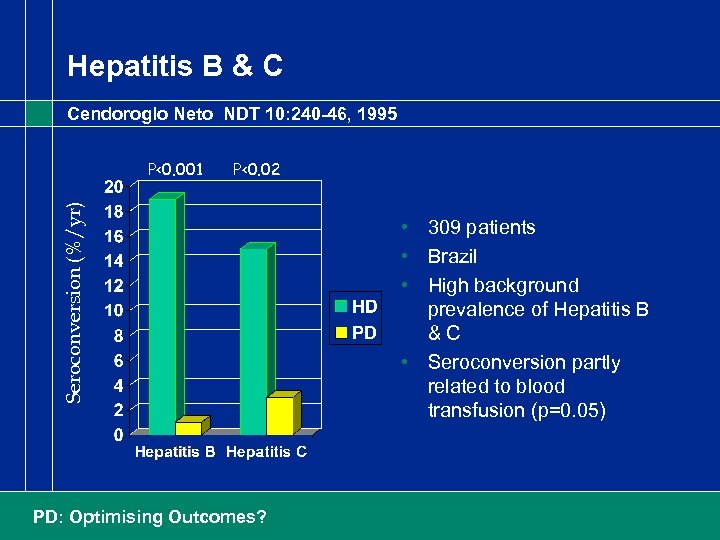 Hepatitis B & C Cendoroglo Neto NDT 10: 240 -46, 1995 P<0. 02 Seroconversion (%/yr) P<0. 001 PD: Optimising Outcomes? • 309 patients • Brazil • High background prevalence of Hepatitis B & C • Seroconversion partly related to blood transfusion (p=0. 05)
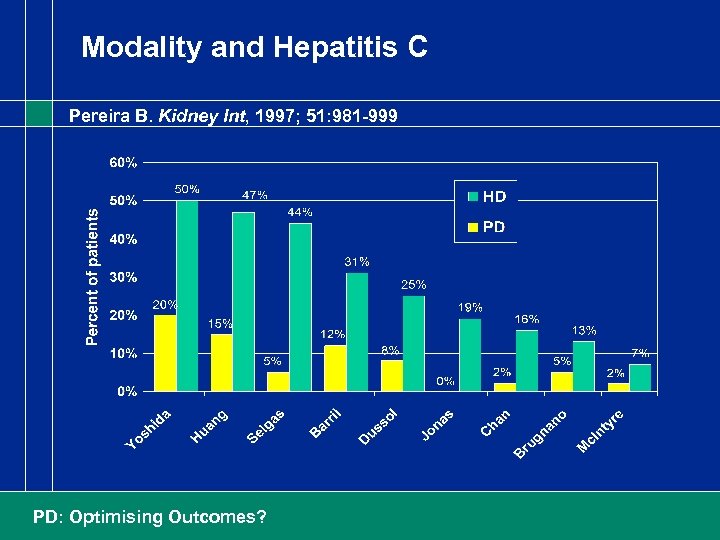 Modality and Hepatitis C Pereira B. Kidney Int, 1997; 51: 981 -999 PD: Optimising Outcomes?
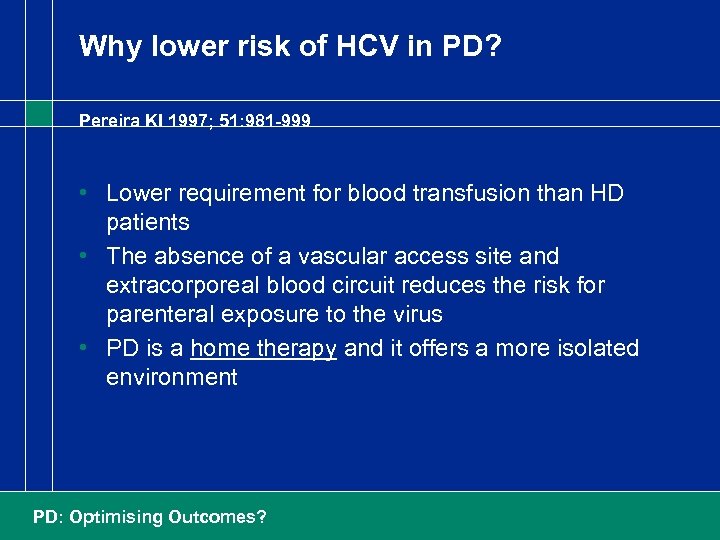 Why lower risk of HCV in PD? Pereira KI 1997; 51: 981 -999 • Lower requirement for blood transfusion than HD patients • The absence of a vascular access site and extracorporeal blood circuit reduces the risk for parenteral exposure to the virus • PD is a home therapy and it offers a more isolated environment PD: Optimising Outcomes?
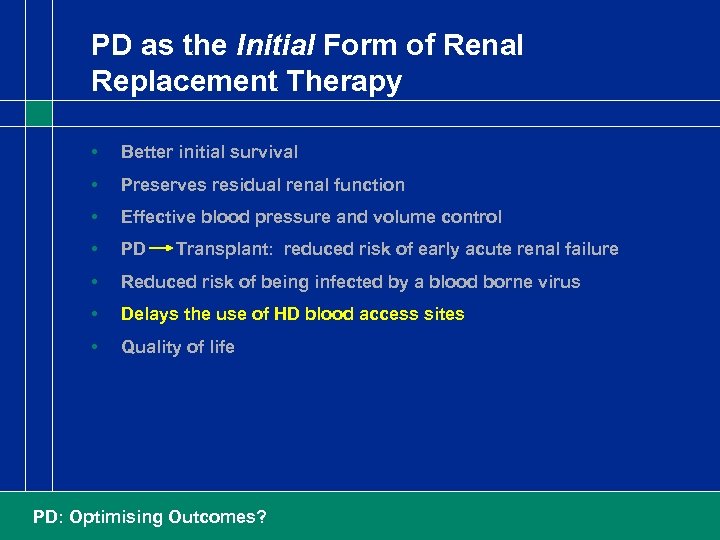 PD as the Initial Form of Renal Replacement Therapy • Better initial survival • Preserves residual renal function • Effective blood pressure and volume control • PD • Reduced risk of being infected by a blood borne virus • Delays the use of HD blood access sites • Quality of life Transplant: reduced risk of early acute renal failure PD: Optimising Outcomes?
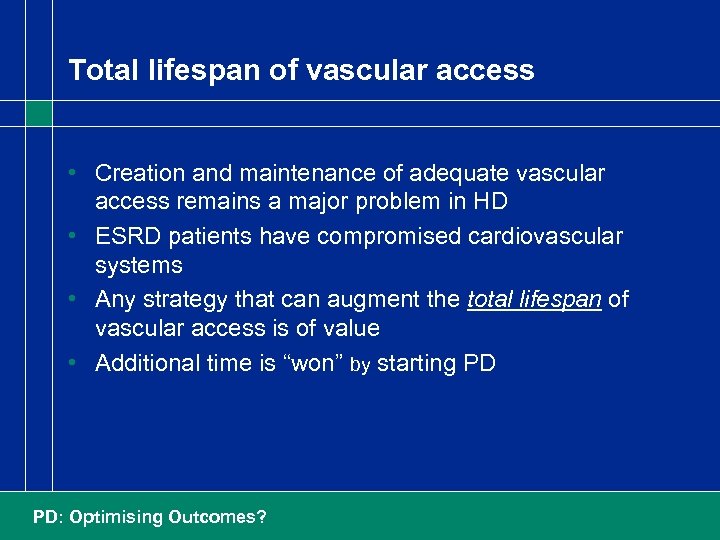 Total lifespan of vascular access • Creation and maintenance of adequate vascular access remains a major problem in HD • ESRD patients have compromised cardiovascular systems • Any strategy that can augment the total lifespan of vascular access is of value • Additional time is “won” by starting PD PD: Optimising Outcomes?
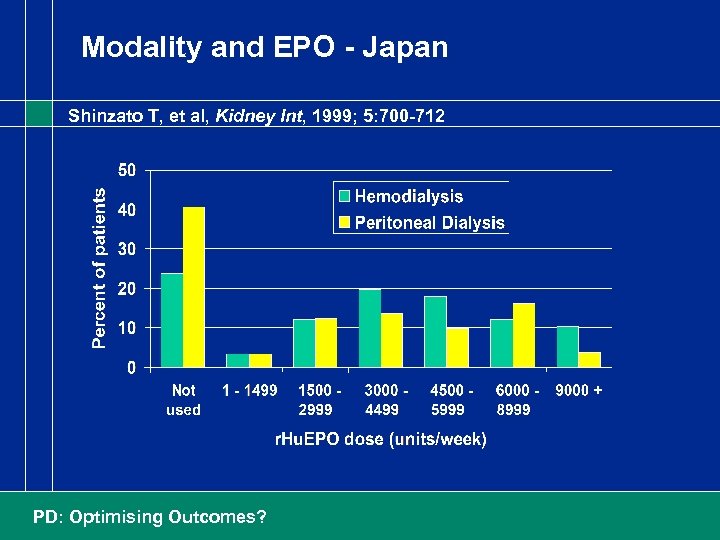 Modality and EPO - Japan Shinzato T, et al, Kidney Int, 1999; 5: 700 -712 PD: Optimising Outcomes?
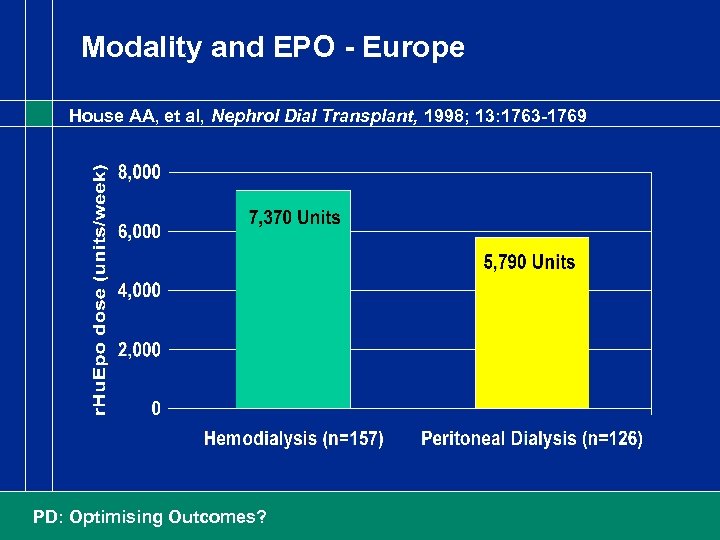 Modality and EPO - Europe House AA, et al, Nephrol Dial Transplant, 1998; 13: 1763 -1769 PD: Optimising Outcomes?
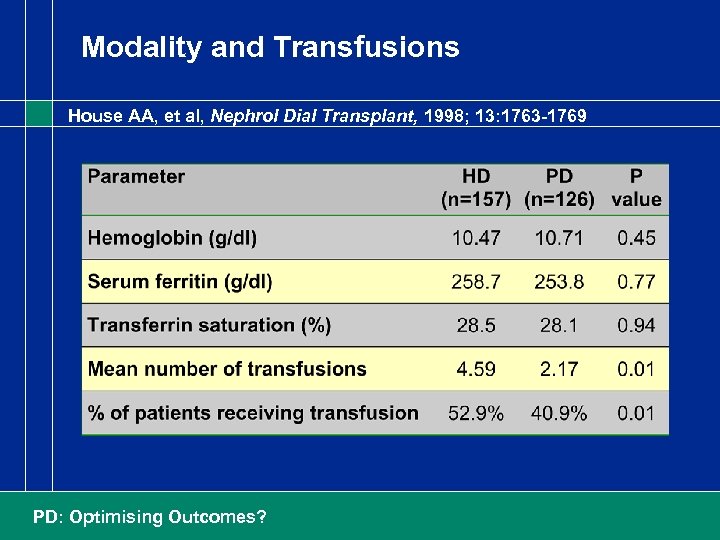 Modality and Transfusions House AA, et al, Nephrol Dial Transplant, 1998; 13: 1763 -1769 PD: Optimising Outcomes?
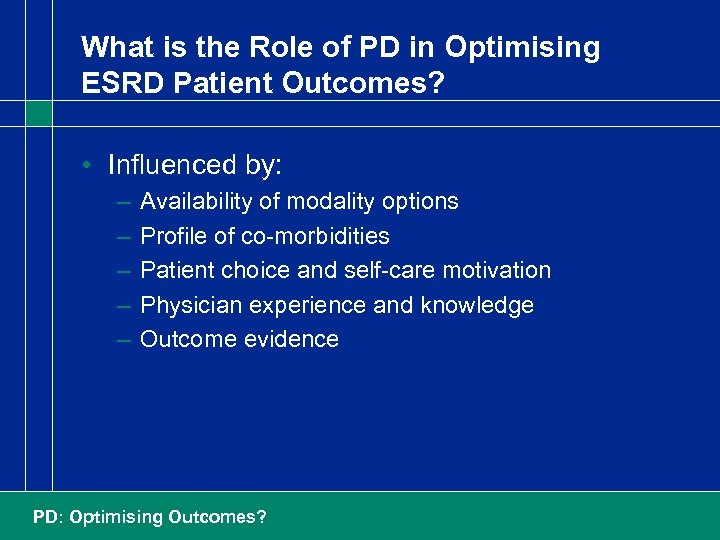 What is the Role of PD in Optimising ESRD Patient Outcomes? • Influenced by: – – – Availability of modality options Profile of co-morbidities Patient choice and self-care motivation Physician experience and knowledge Outcome evidence PD: Optimising Outcomes?
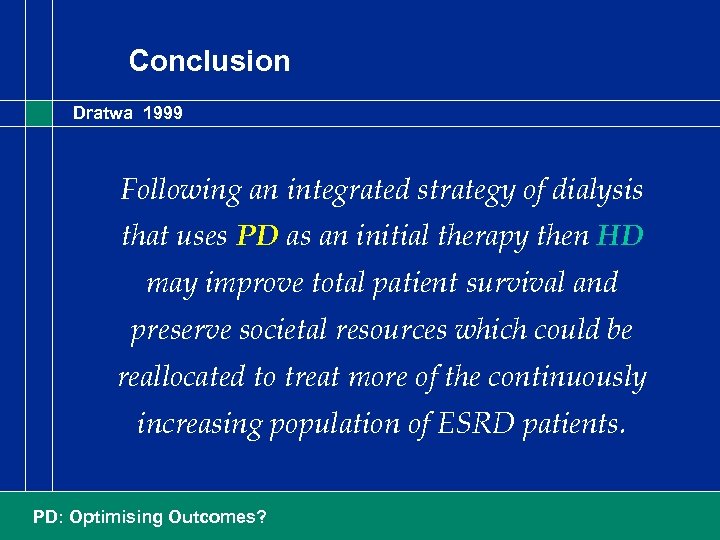 Conclusion Dratwa 1999 Following an integrated strategy of dialysis that uses PD as an initial therapy then HD may improve total patient survival and preserve societal resources which could be reallocated to treat more of the continuously increasing population of ESRD patients. PD: Optimising Outcomes?