Скачать презентацию What Is Retelling Why Use Retelling Retelling Tips
d1a7d9e87440f142c7cb9eb59ea81016.ppt
- Количество слайдов: 17
 What Is Retelling? Why Use Retelling? Retelling Tips Use the Strategy Practice the Strategy
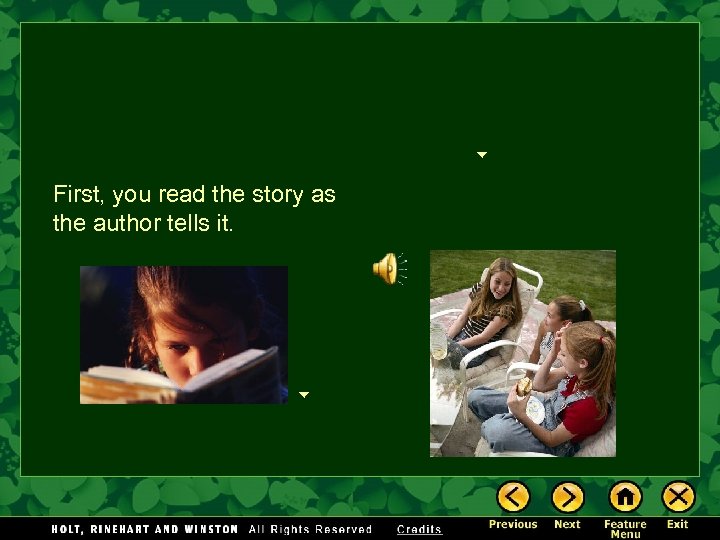 First, you read the story as the author tells it.
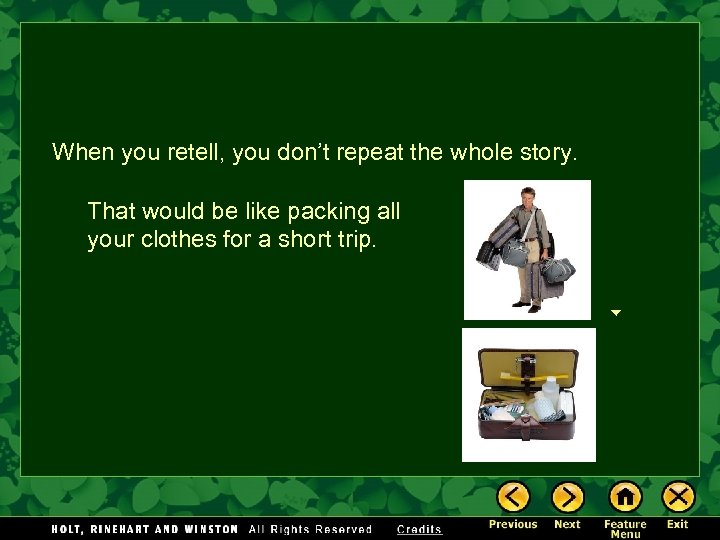 When you retell, you don’t repeat the whole story. That would be like packing all your clothes for a short trip.
 Is this a good retelling of “The Three Little Pigs? ” Some pigs built some houses, and a wolf came to blow down their houses but couldn’t. It’s a story called “The Three Little Pigs. ” It doesn’t try to tell the whole story—which is good. However, this retelling does not provide enough important information.
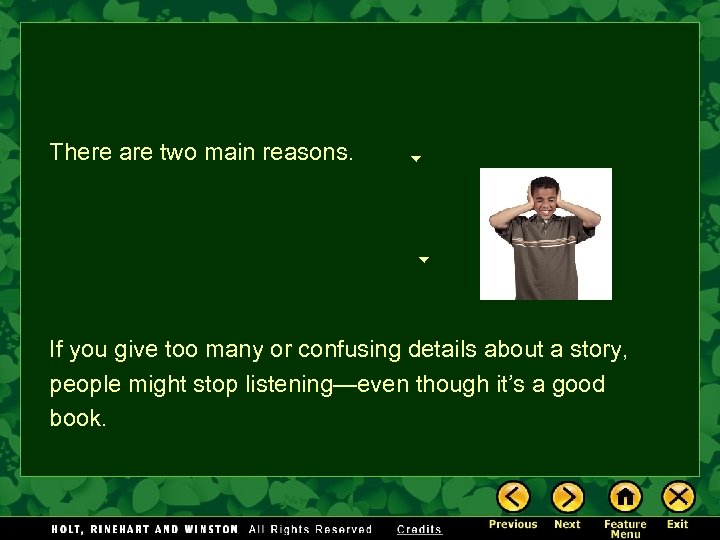 There are two main reasons. If you give too many or confusing details about a story, people might stop listening—even though it’s a good book.
 There are two main reasons. 2. Retelling helps you understand complicated stories. When you retell, you strip the story down to its bones—the basic facts.
 Start by stating the title and author. This is the story of “The Three Little Pigs. ” No one knows who first told this story. Explain who the characters are. The main characters are three pigs and a wolf.
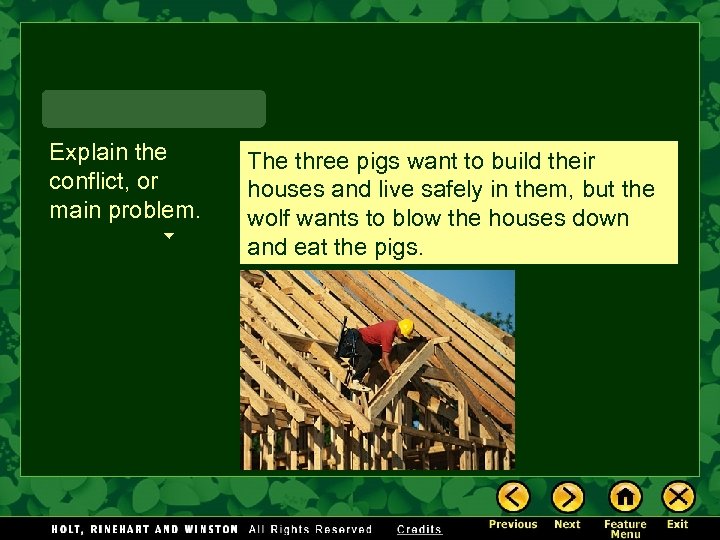 Explain the conflict, or main problem. The three pigs want to build their houses and live safely in them, but the wolf wants to blow the houses down and eat the pigs.
 Name the main events, keeping them in order. The three pigs each build a house. The first builds a house of hay, the second a house of sticks, and the third a house of bricks. First, the wolf blows down the hay house. Then, he blows down the stick house. Finally, he tries to blow down the brick house, but the house is too strong.
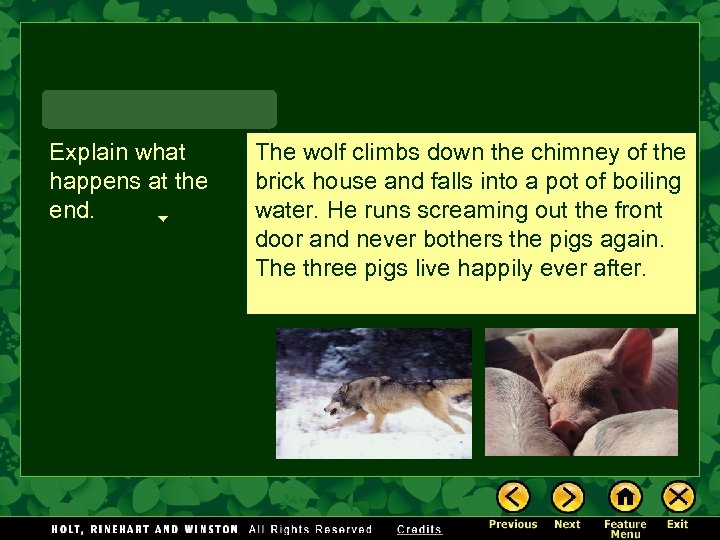 Explain what happens at the end. The wolf climbs down the chimney of the brick house and falls into a pot of boiling water. He runs screaming out the front door and never bothers the pigs again. The three pigs live happily ever after.
 Tell what you liked or didn’t like about the story. I liked this story’s happy ending; the wolf gets what he deserves. I didn’t like that the wolf goes hungry and looks like the villain.
 As you read “The Wise Old Woman, ” stop at each openbook sign and think about what you have just read. Stop and think. Answer the question. These questions will help you learn how to use retelling as a reading strategy.
 Here’s how one student started a retelling of “The Wise Old Woman. ” The title of this story is “The Wise Old Woman. ” It is a traditional Japanese tale that has been retold by Yoshiko Uchida. It takes place in a small Japanese village a long time ago. The main characters are the cruel young lord, a young farmer, his mother, and Lord Higa. What parts of the “retelling summary” are included in this paragraph?
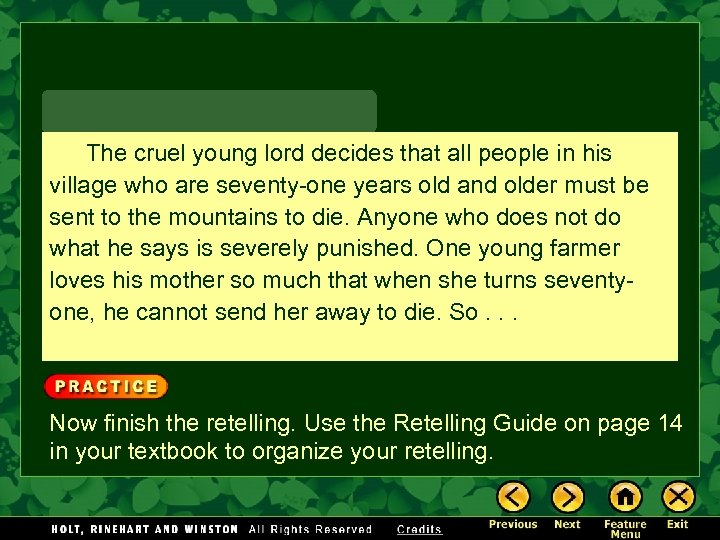 The cruel young lord decides that all people in his village who are seventy-one years old and older must be sent to the mountains to die. Anyone who does not do what he says is severely punished. One young farmer loves his mother so much that when she turns seventyone, he cannot send her away to die. So. . . Now finish the retelling. Use the Retelling Guide on page 14 in your textbook to organize your retelling.