


 Скачать презентацию What Is Perfect Competition What Is Perfect
c68b8833cdd01ef54d993a1854338ca6.ppt
- Количество слайдов: 64

 What Is Perfect Competition?
 What Is Perfect Competition?
 What Is Perfect Competition?
 What Is Perfect Competition?
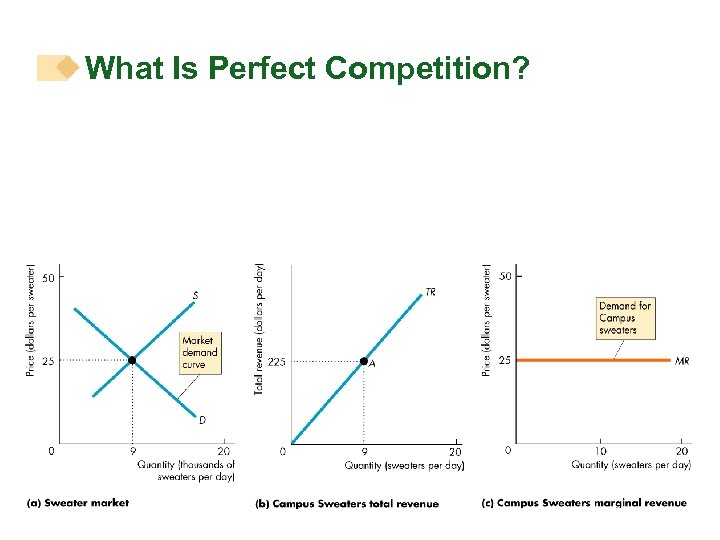
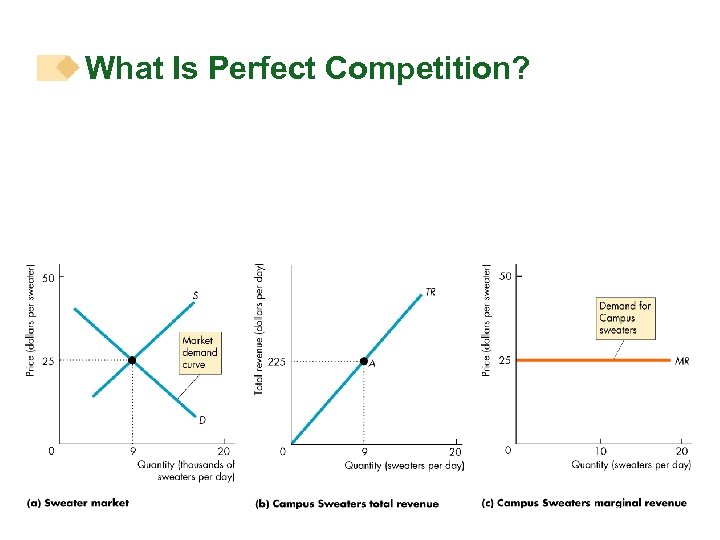
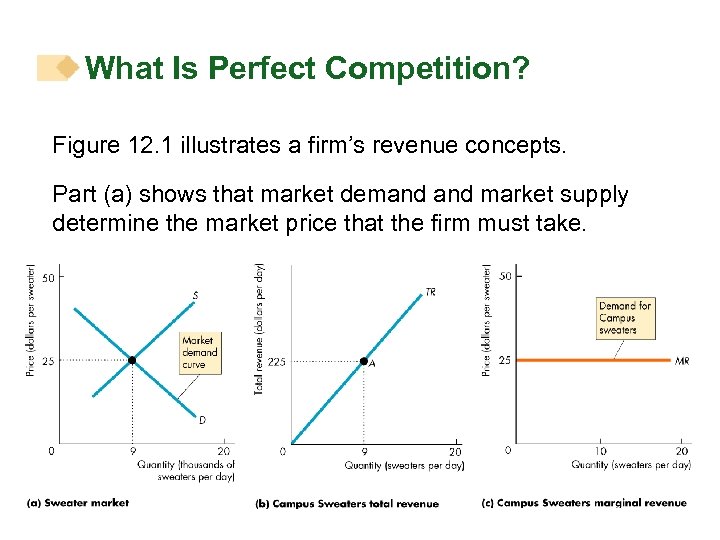 What Is Perfect Competition? Figure 12. 1 illustrates a firm’s revenue concepts. Part (a) shows that market demand market supply determine the market price that the firm must take.
 What Is Perfect Competition?
 What Is Perfect Competition?
 What Is Perfect Competition? The demand for a firm’s product is perfectly elastic because one firm’s sweater is a perfect substitute for the sweater of another firm. The market demand is not perfectly elastic because a sweater is a substitute for some other good.
 What Is Perfect Competition? A perfectly competitive firm’s goal is to make maximum economic profit, given the constraints it faces. So the firm must decide: 1. How to produce at minimum cost 2. What quantity to produce 3. Whether to enter or exit a market We start by looking at the firm’s output decision.
 The Firm’s Output Decision
 The Firm’s Output Decision
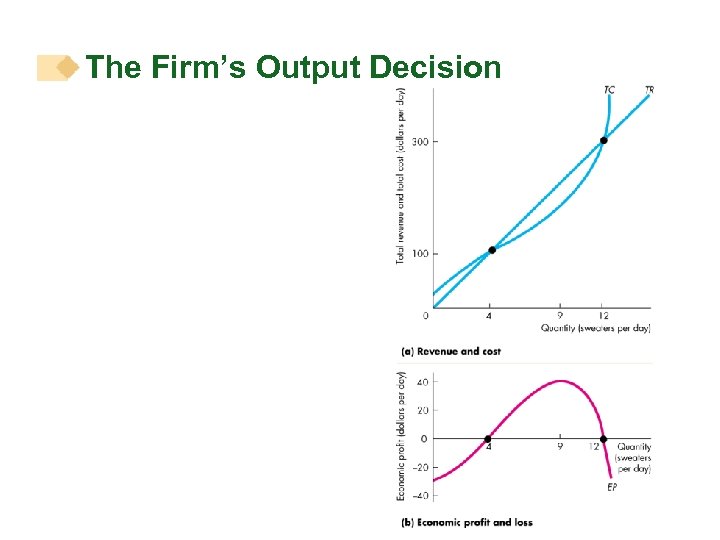
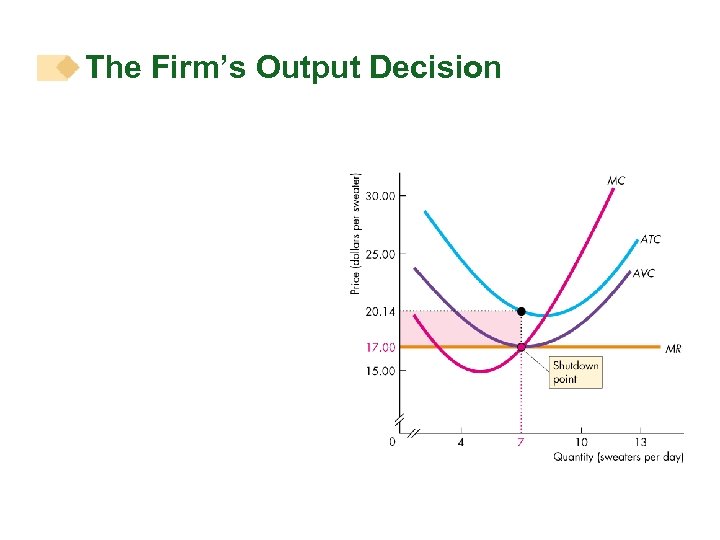
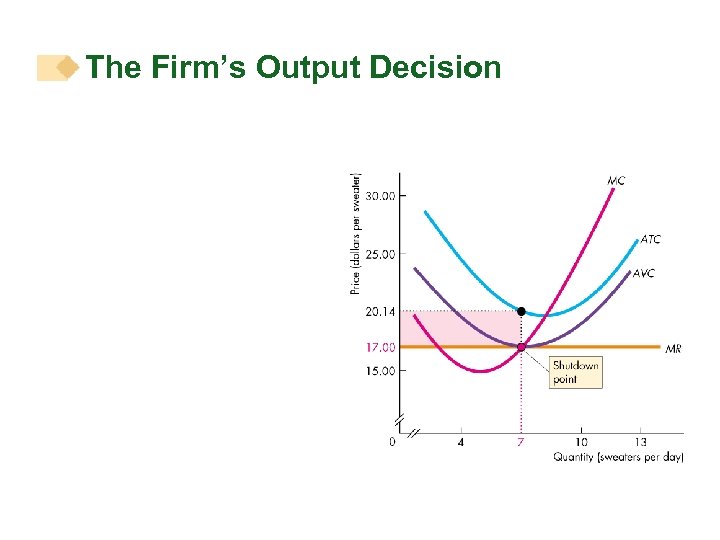
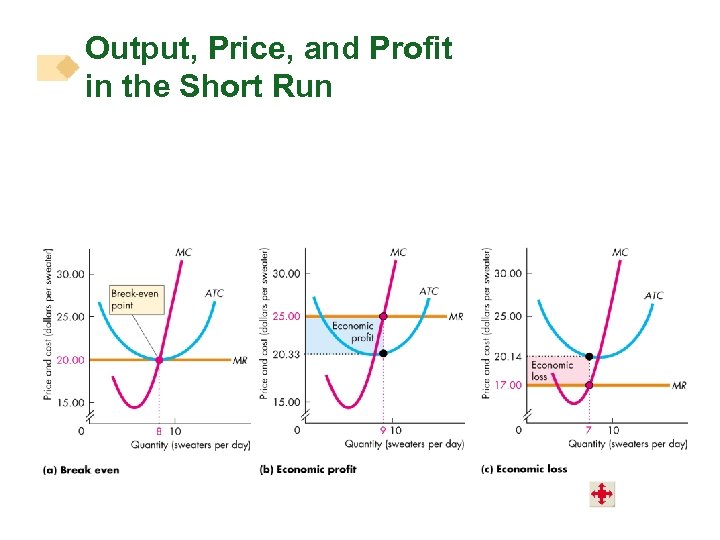
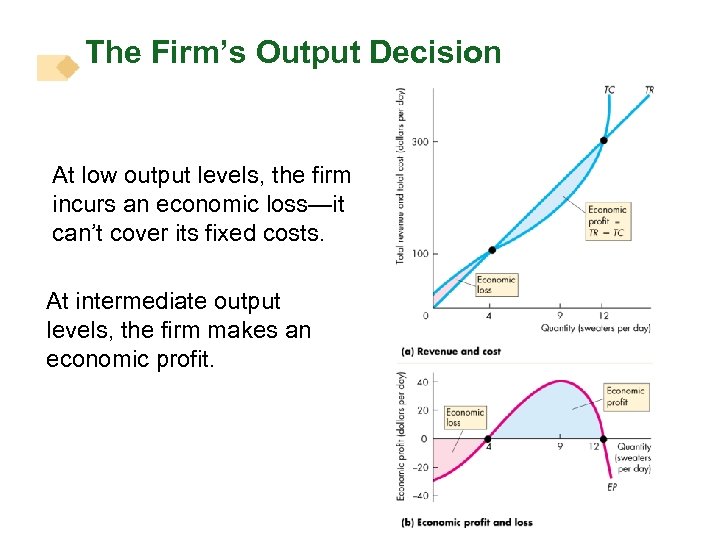 The Firm’s Output Decision At low output levels, the firm incurs an economic loss—it can’t cover its fixed costs. At intermediate output levels, the firm makes an economic profit.
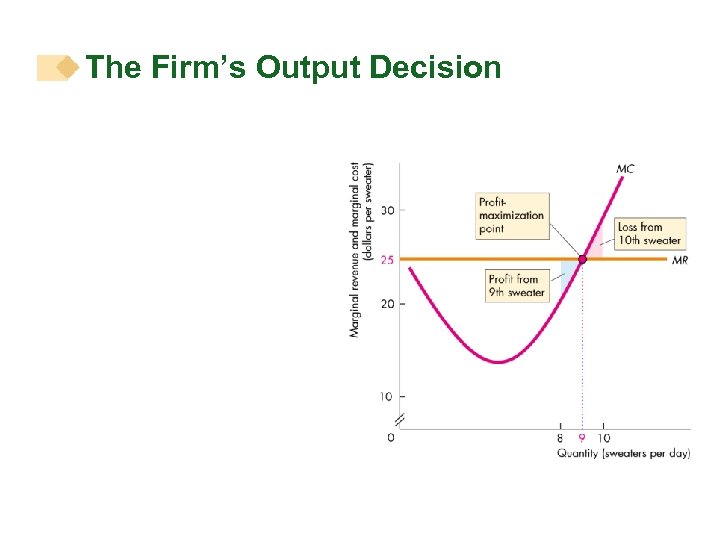
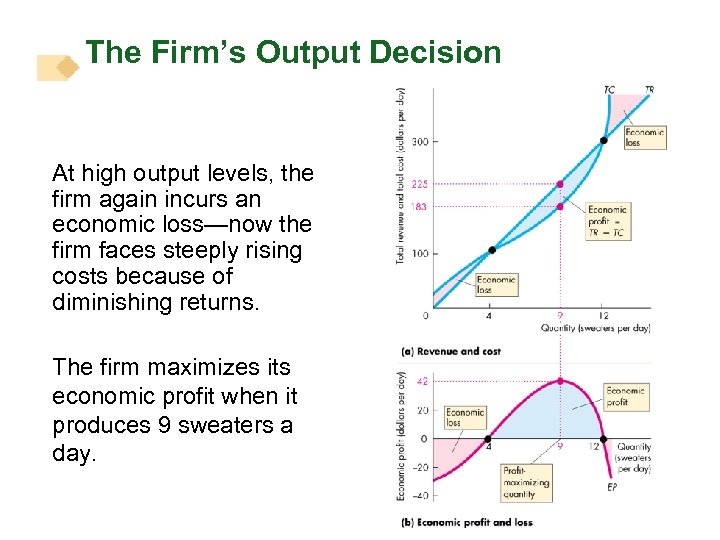 The Firm’s Output Decision At high output levels, the firm again incurs an economic loss—now the firm faces steeply rising costs because of diminishing returns. The firm maximizes its economic profit when it produces 9 sweaters a day.
 The Firm’s Output Decision
 The Firm’s Output Decision
 The Firm’s Output Decision
 The Firm’s Output Decision
 The Firm’s Output Decision
 The Firm’s Output Decision
 The Firm’s Output Decision
 The Firm’s Output Decision
 The Firm’s Decision
 The Firm’s Decisions
 Output, Price, and Profit in the Short Run
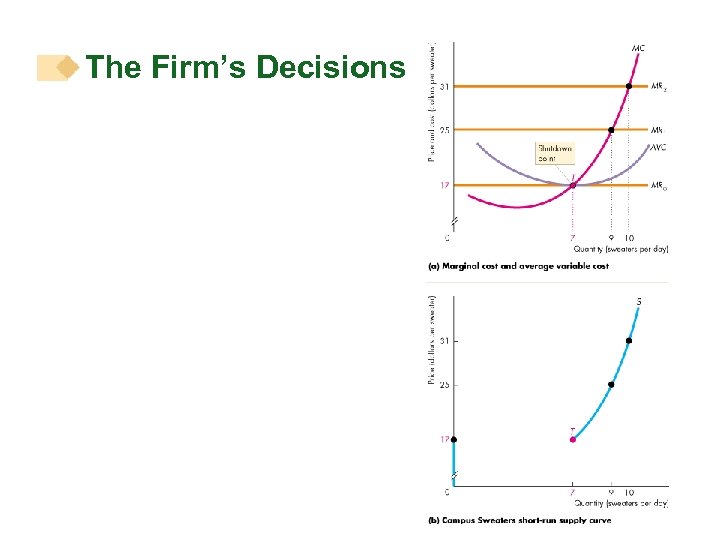
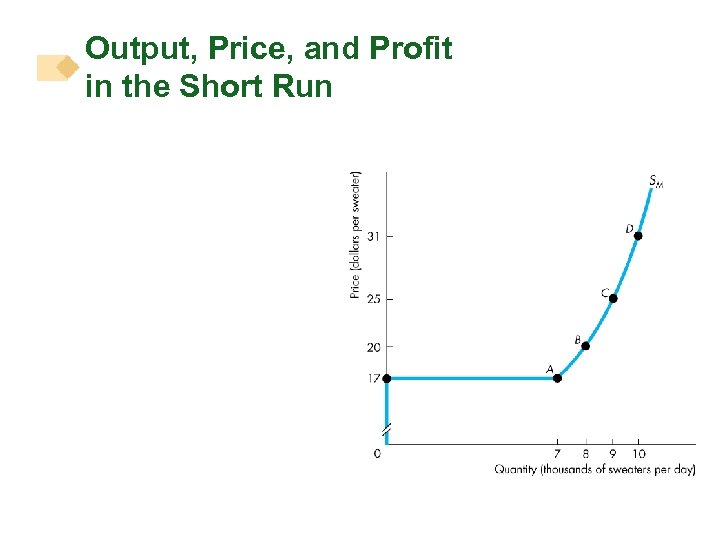
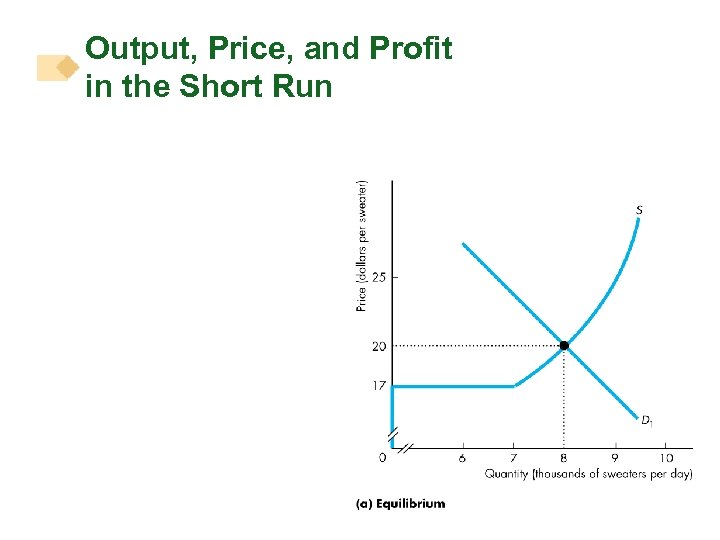
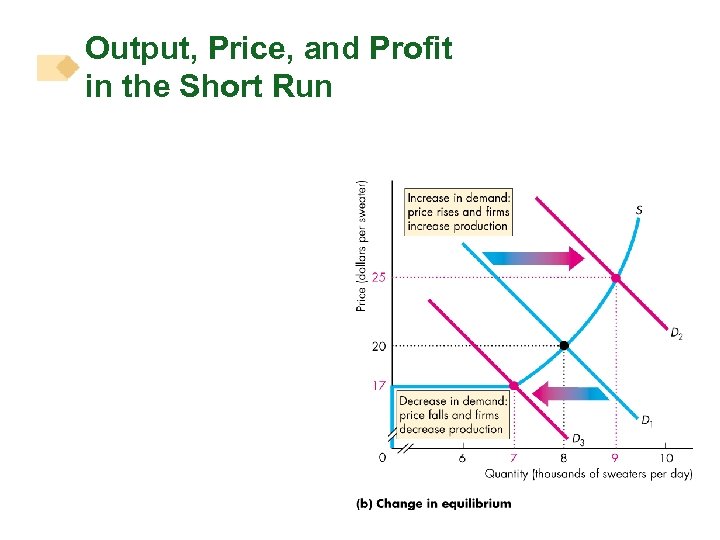
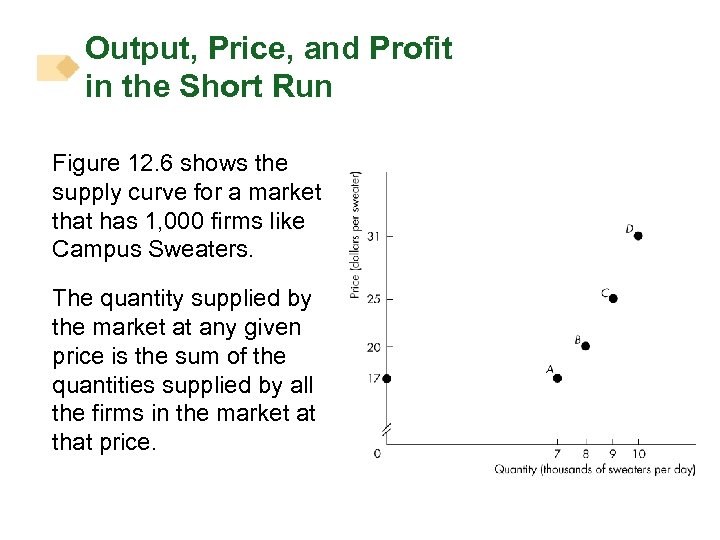 Output, Price, and Profit in the Short Run Figure 12. 6 shows the supply curve for a market that has 1, 000 firms like Campus Sweaters. The quantity supplied by the market at any given price is the sum of the quantities supplied by all the firms in the market at that price.
 Output, Price, and Profit in the Short Run
 Output, Price, and Profit in the Short Run
 Output, Price, and Profit in the Short Run
 Output, Price, and Profit in the Short Run
 Output, Price, and Profit in the Short Run
 Output, Price, and Profit in the Short Run
 Output, Price, and Profit in the Short Run
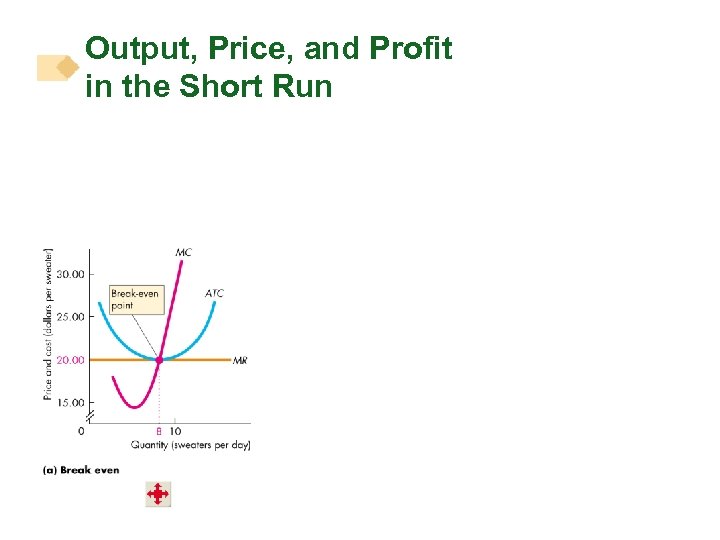
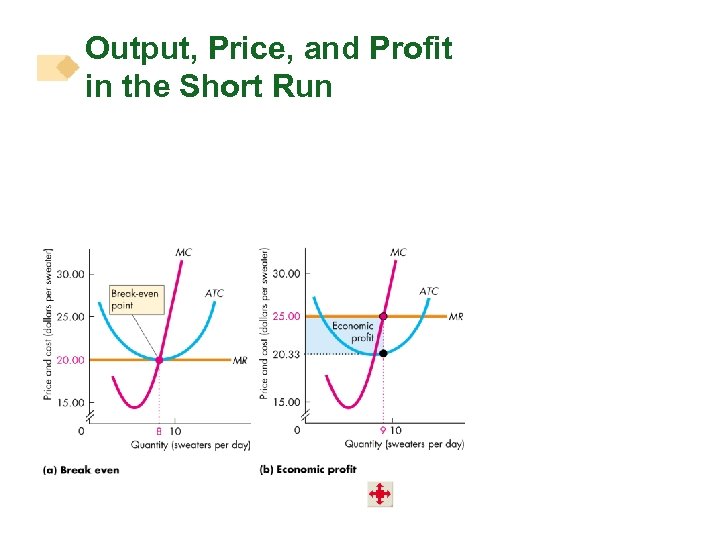
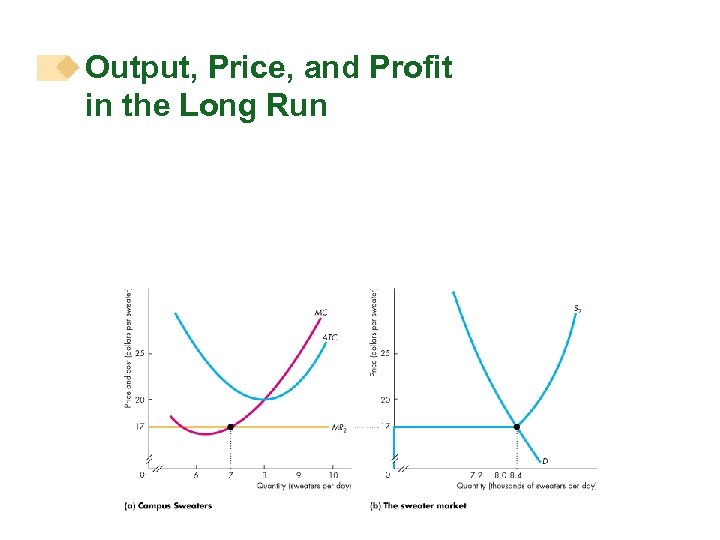
 Output, Price, and Profit in the Long Run In short-run equilibrium, a firm may make an economic profit, break even, or incur an economic loss. Only one of them is a long-run equilibrium because firms can enter or exit the market.
 Output, Price, and Profit in the Long Run
 Output, Price, and Profit in the Long Run
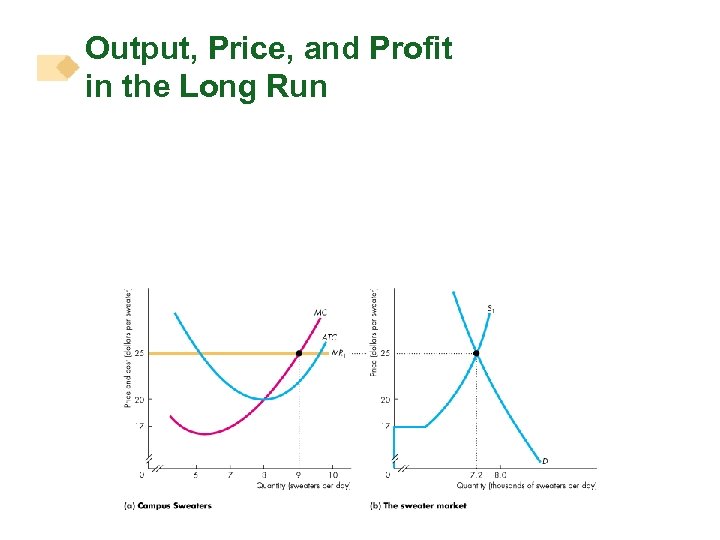
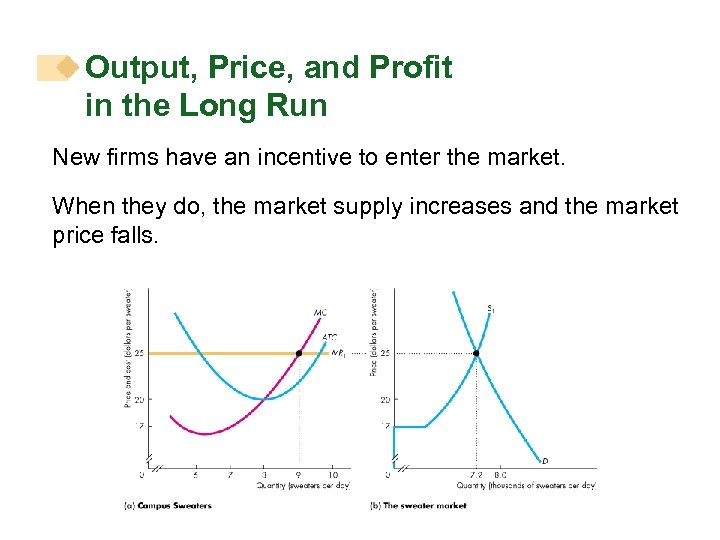 Output, Price, and Profit in the Long Run New firms have an incentive to enter the market. When they do, the market supply increases and the market price falls.
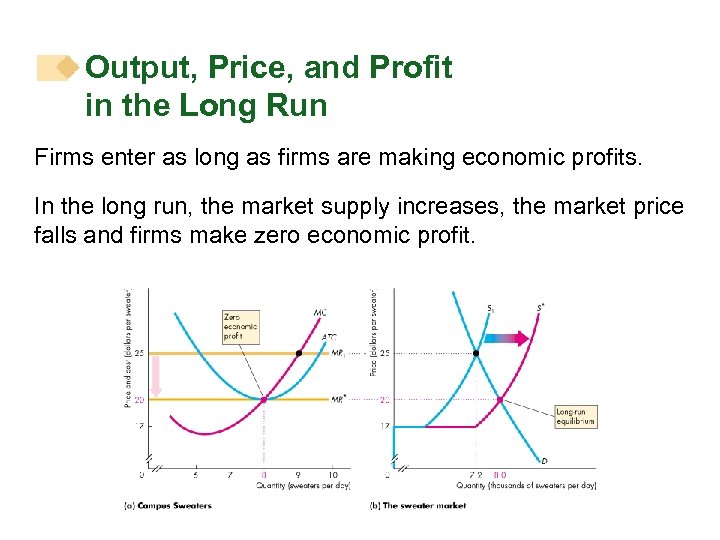 Output, Price, and Profit in the Long Run Firms enter as long as firms are making economic profits. In the long run, the market supply increases, the market price falls and firms make zero economic profit.
 Output, Price, and Profit in the Long Run
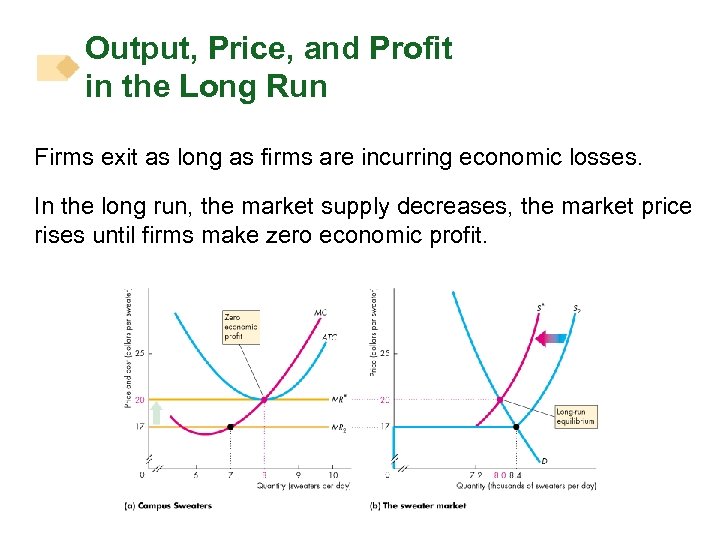 Output, Price, and Profit in the Long Run Firms exit as long as firms are incurring economic losses. In the long run, the market supply decreases, the market price rises until firms make zero economic profit.
 Changing Tastes and Advancing Technology
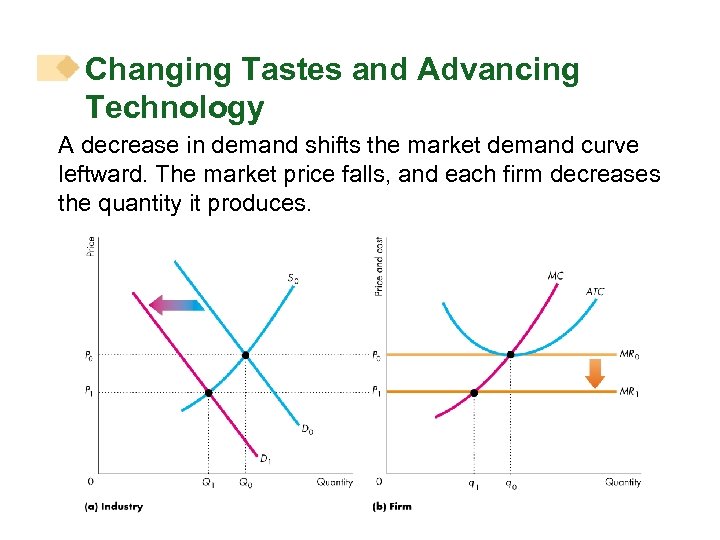 Changing Tastes and Advancing Technology A decrease in demand shifts the market demand curve leftward. The market price falls, and each firm decreases the quantity it produces.
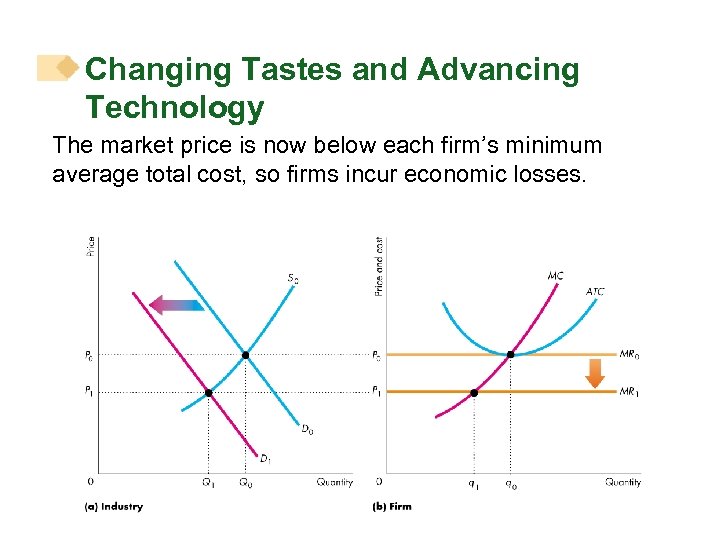 Changing Tastes and Advancing Technology The market price is now below each firm’s minimum average total cost, so firms incur economic losses.
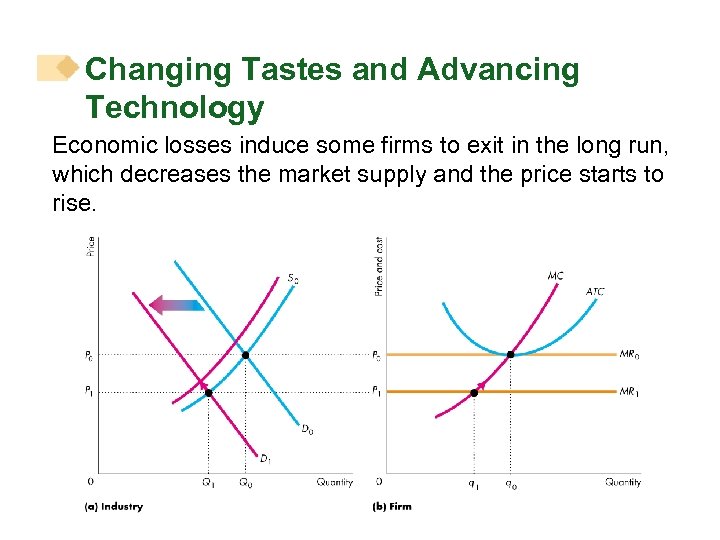 Changing Tastes and Advancing Technology Economic losses induce some firms to exit in the long run, which decreases the market supply and the price starts to rise.
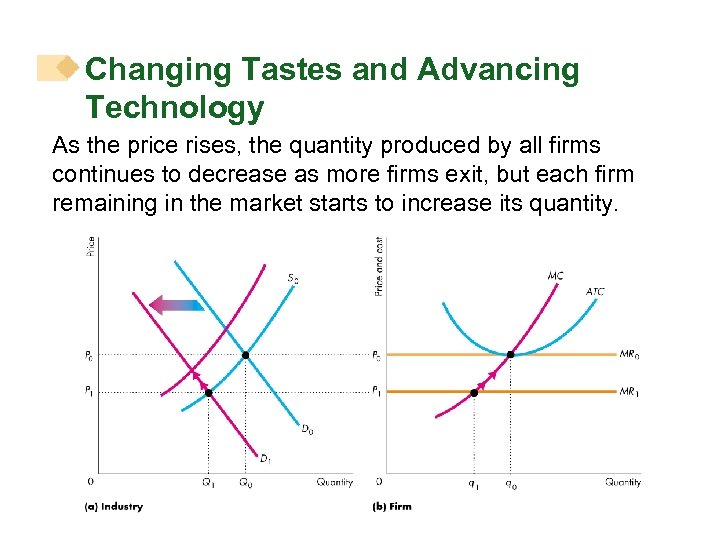 Changing Tastes and Advancing Technology As the price rises, the quantity produced by all firms continues to decrease as more firms exit, but each firm remaining in the market starts to increase its quantity.
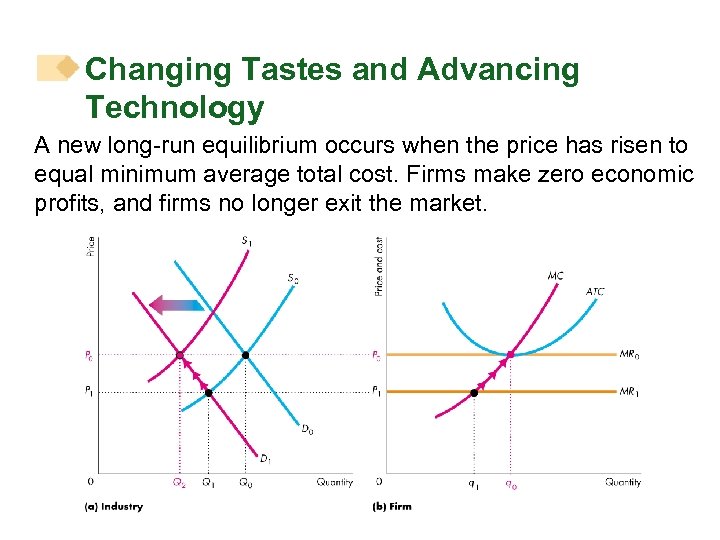 Changing Tastes and Advancing Technology A new long-run equilibrium occurs when the price has risen to equal minimum average total cost. Firms make zero economic profits, and firms no longer exit the market.
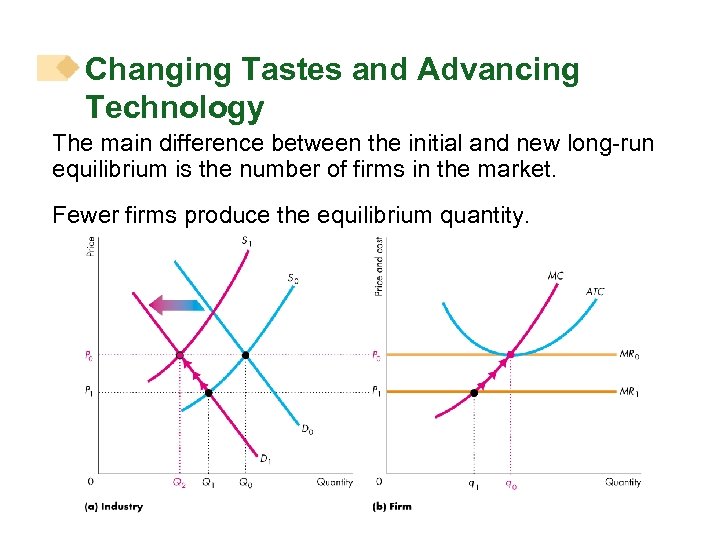 Changing Tastes and Advancing Technology The main difference between the initial and new long-run equilibrium is the number of firms in the market. Fewer firms produce the equilibrium quantity.
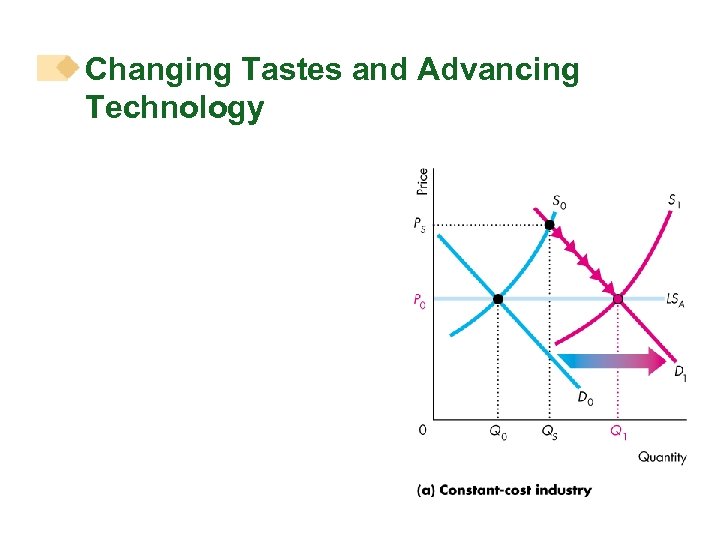
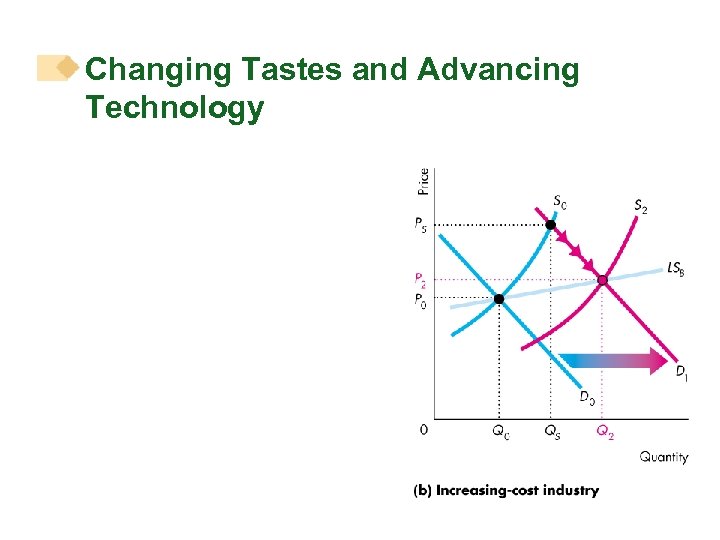
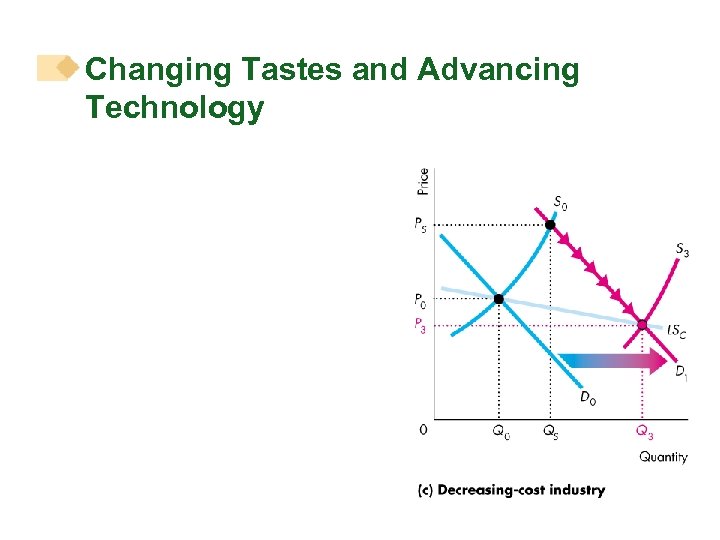
 Changing Tastes and Advancing Technology A permanent increase in demand has the opposite effects to those just described and shown in Figure 12. 10. A permanent increase in demand shifts the demand curve rightward. The price rises and the quantity increases. Economic profit induces entry, which increases short-run supply and shifts the short-run market supply curve rightward. As the market supply increases, the price falls and the market quantity continues to increase.
 Changing Tastes and Advancing Technology With a falling price, each firm decreases its output as it moves along its marginal cost curve (supply curve). A new long-run equilibrium occurs when the price has fallen to equal minimum average total cost. Firms make zero economic profit, and firms have no incentive to enter the market. The main difference between the initial and new long-run equilibrium is the number of firms. In the new equilibrium, a larger number of firms produce the equilibrium quantity.
 Changing Tastes and Advancing Technology
 Changing Tastes and Advancing Technology
 Changing Tastes and Advancing Technology
 Changing Tastes and Advancing Technology
 Changing Tastes and Advancing Technology
 Changing Tastes and Advancing Technology
 Changing Tastes and Advancing Technology New-technology firms enter and old-technology firms either exit or adopt the new technology. Industry supply increases and the industry supply curve shifts rightward. The price falls and the quantity increases. Eventually, a new long-run equilibrium emerges in which all firms use the new technology, the price equals minimum average total cost, and each firm makes zero economic profit.
 Competition and Efficiency
 Competition and Efficiency
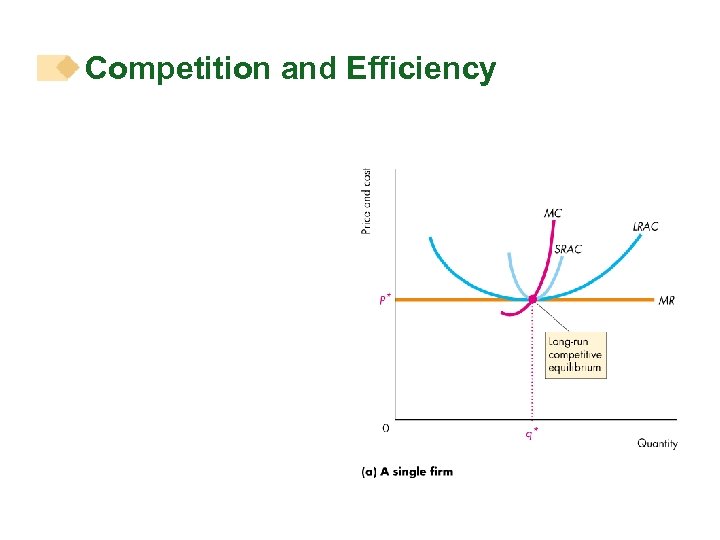
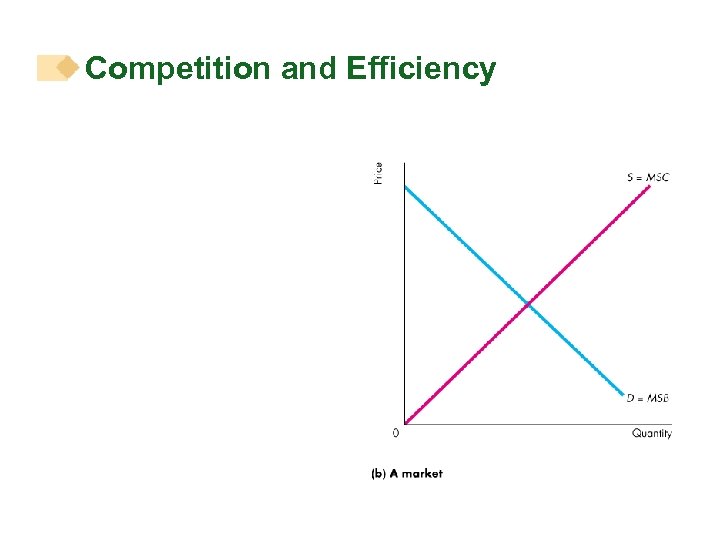
 Competition and Efficiency A competitive firm’s supply curve shows how the profitmaximizing quantity changes as the price of a good changes. So firms get the most value out of their resources at all points along their supply curves. With no external cost, the market supply curve is the marginal social cost curve.
 Competition and Efficiency
 Competition and Efficiency
 Competition and Efficiency
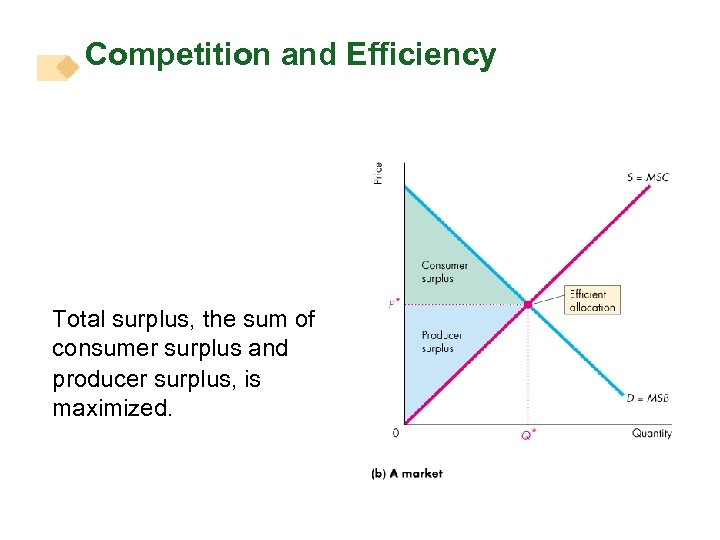 Competition and Efficiency Total surplus, the sum of consumer surplus and producer surplus, is maximized.