


 Скачать презентацию What is organelle What function of this organelle
Stages of the energy metabolism.pptx
- Количество слайдов: 24
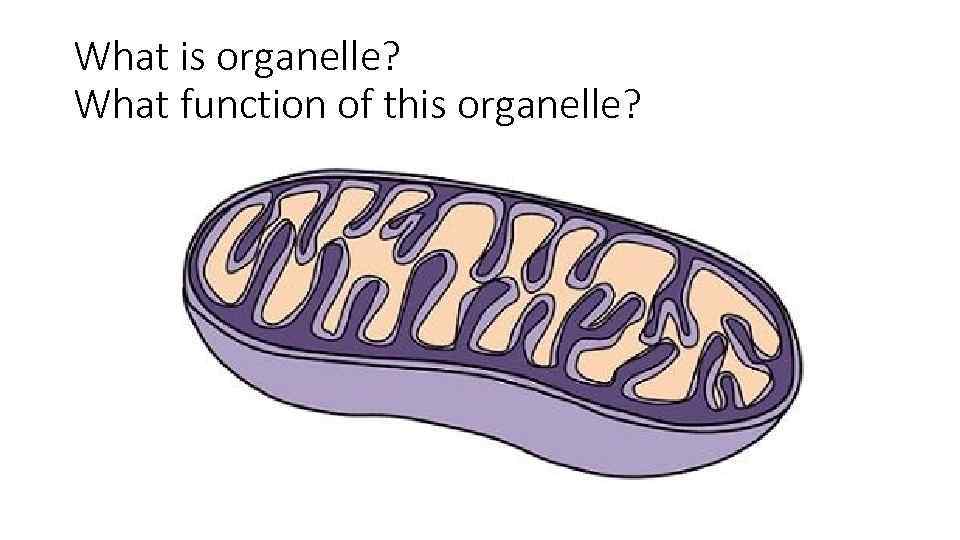 What is organelle? What function of this organelle?
 The stages of energy metabolism
 Learning objective • to describe the stages of energy metabolism
 Success criteria 1. Knows the stages of an energetic exchange 2. Describes the stages of an energetic exchange 3. Explains each stage of an energetic exchange
 Terminology Digestion and hydrolysis, catabolic reactions, anaerobic respiration, ATP, ADP and Pi, substrate, glucose, pyruvate, pyruvic acid, degradation, oxidation, glycolysis, organic molecules, Krebs cycle, ETC, protons, cytoplasm, nutrients, oxygen, water, carbon dioxide, energy requiring, energy producing.
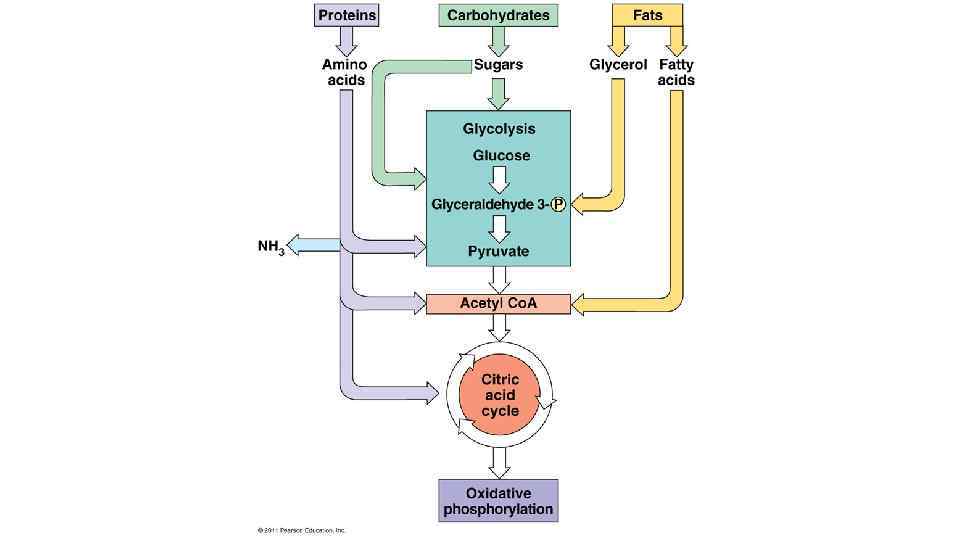
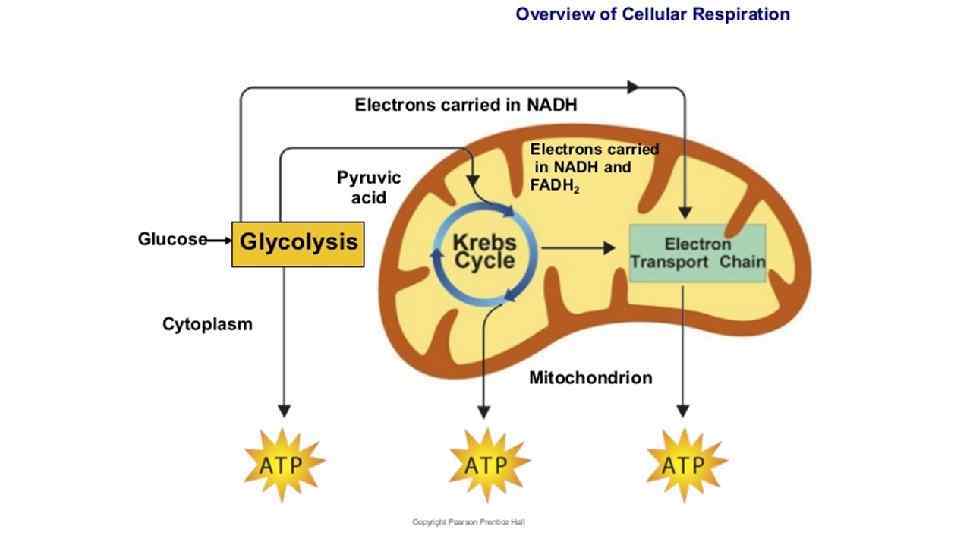
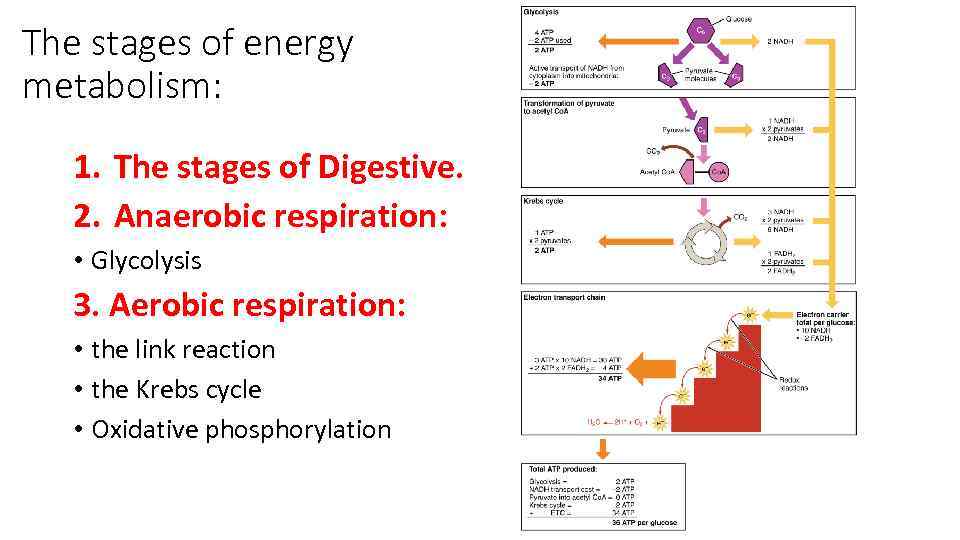 The stages of energy metabolism: 1. The stages of Digestive. 2. Anaerobic respiration: • Glycolysis 3. Aerobic respiration: • the link reaction • the Krebs cycle • Oxidative phosphorylation
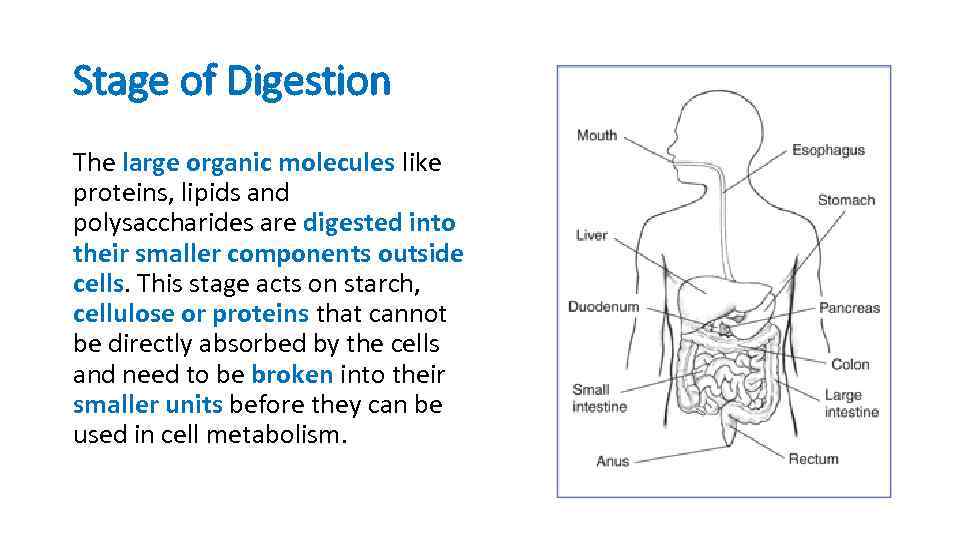 Stage of Digestion The large organic molecules like proteins, lipids and polysaccharides are digested into their smaller components outside cells. This stage acts on starch, cellulose or proteins that cannot be directly absorbed by the cells and need to be broken into their smaller units before they can be used in cell metabolism.
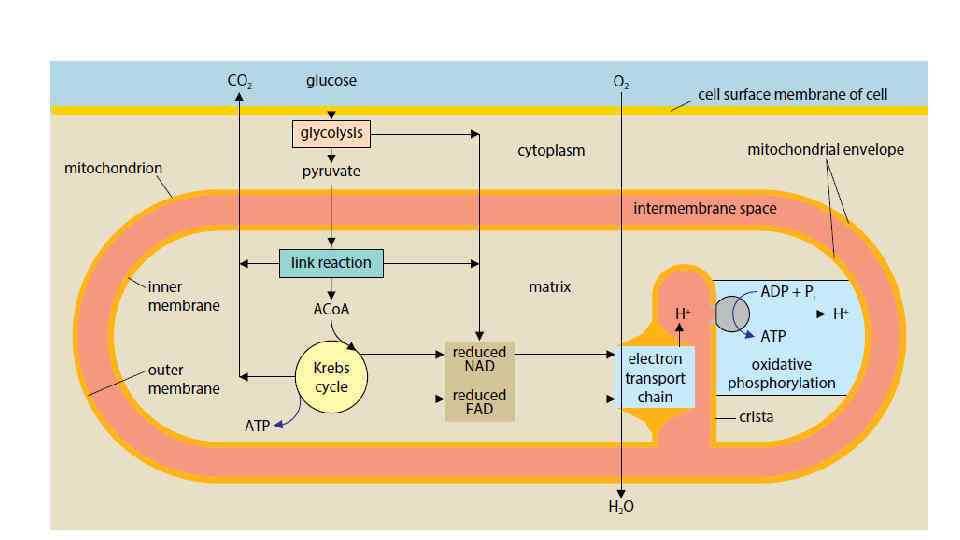
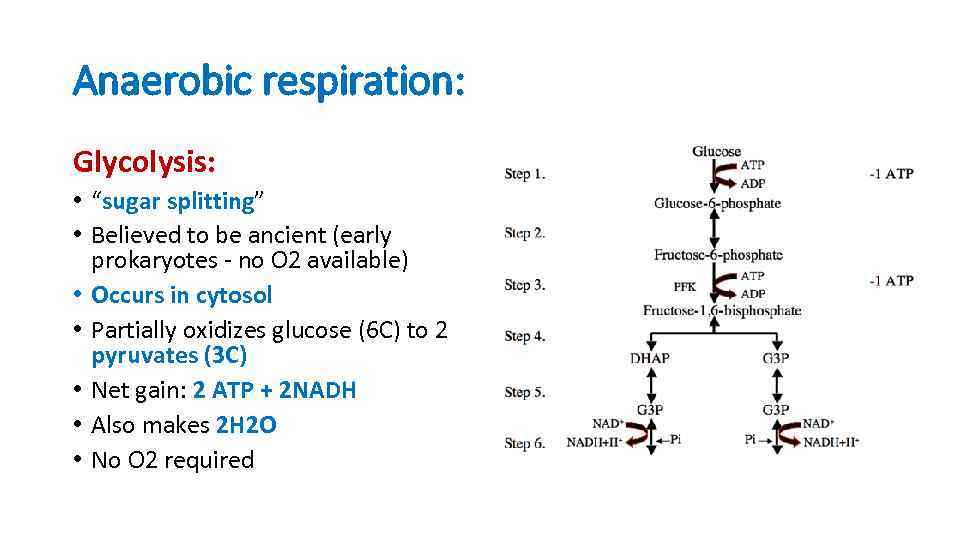 Anaerobic respiration: Glycolysis: • “sugar splitting” • Believed to be ancient (early prokaryotes - no O 2 available) • Occurs in cytosol • Partially oxidizes glucose (6 C) to 2 pyruvates (3 C) • Net gain: 2 ATP + 2 NADH • Also makes 2 H 2 O • No O 2 required
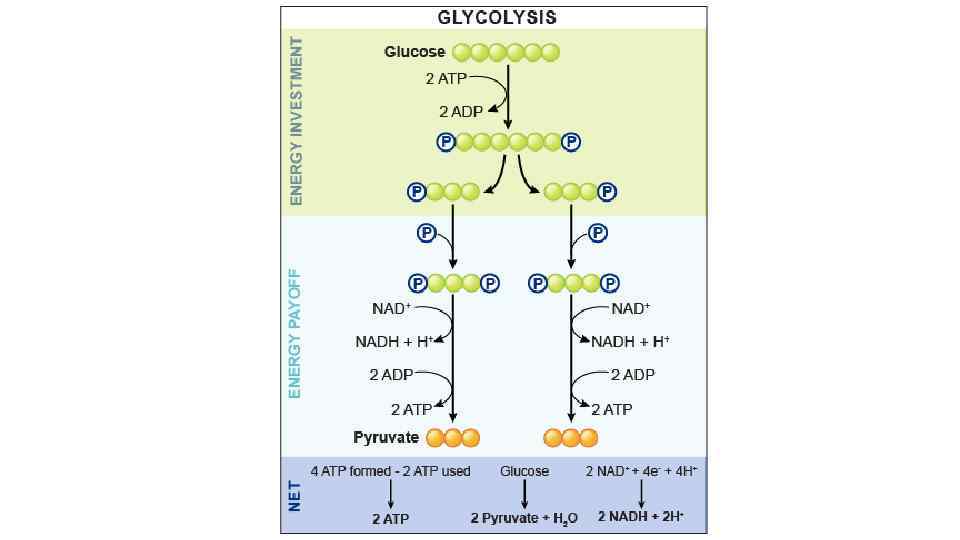
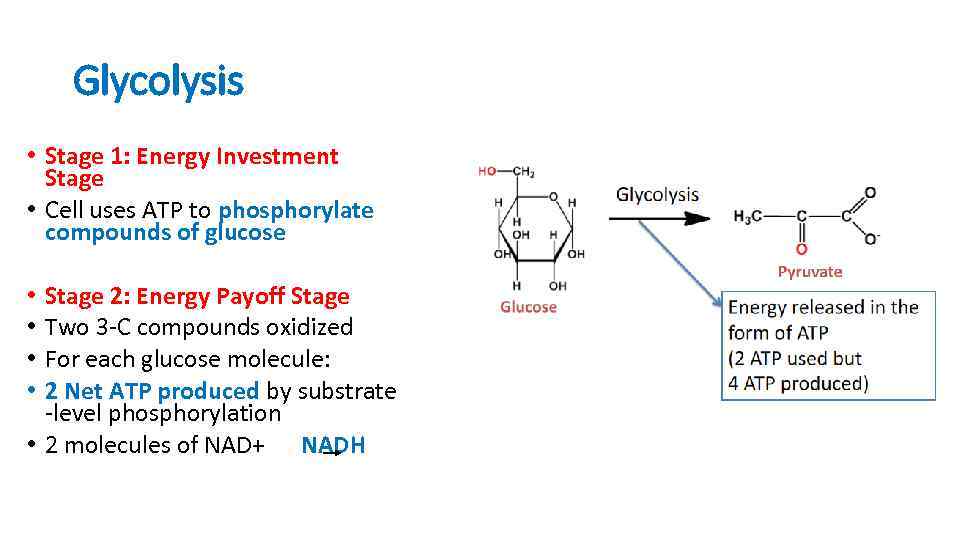 Glycolysis • Stage 1: Energy Investment Stage • Cell uses ATP to phosphorylate compounds of glucose Stage 2: Energy Payoff Stage Two 3 -C compounds oxidized For each glucose molecule: 2 Net ATP produced by substrate -level phosphorylation • 2 molecules of NAD+ NADH • •
 Each group fills its posters on the energy stages of metabolism. • Success criteria: • Correctly write the stages of energy metabolism. • Describe each stage • Show the start and end products of each stage • Draw charts of each phase of energy metabolism
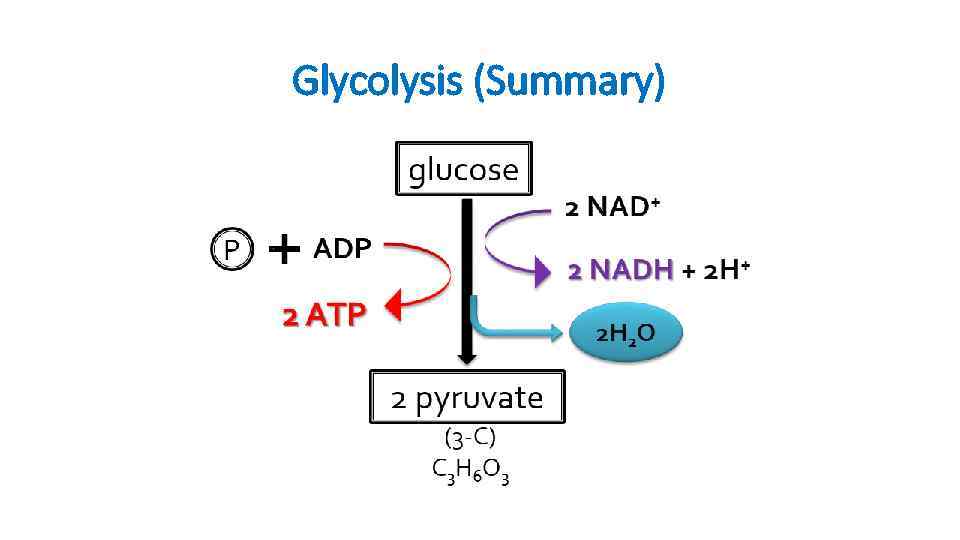 Glycolysis (Summary)
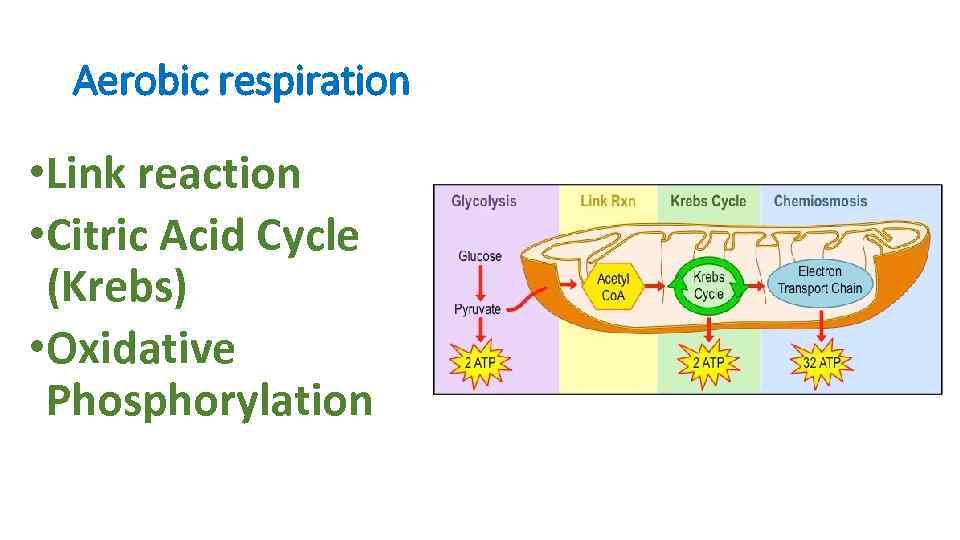 Aerobic respiration • Link reaction • Citric Acid Cycle (Krebs) • Oxidative Phosphorylation
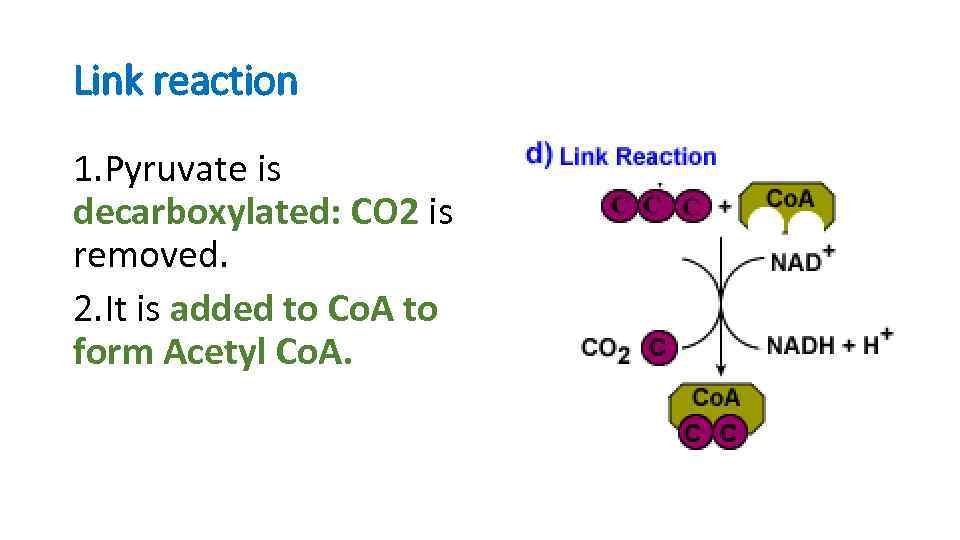 Link reaction 1. Pyruvate is decarboxylated: CO 2 is removed. 2. It is added to Co. A to form Acetyl Co. A.
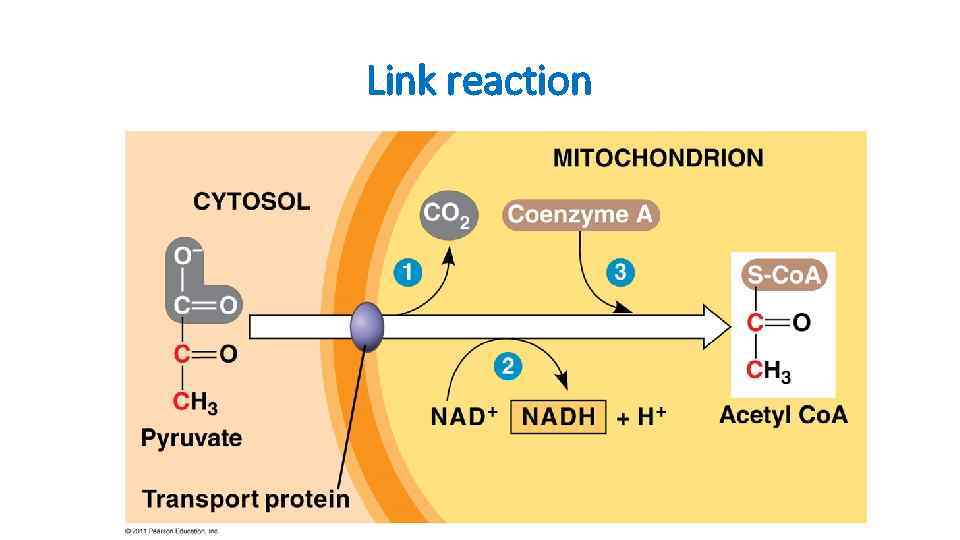 Link reaction
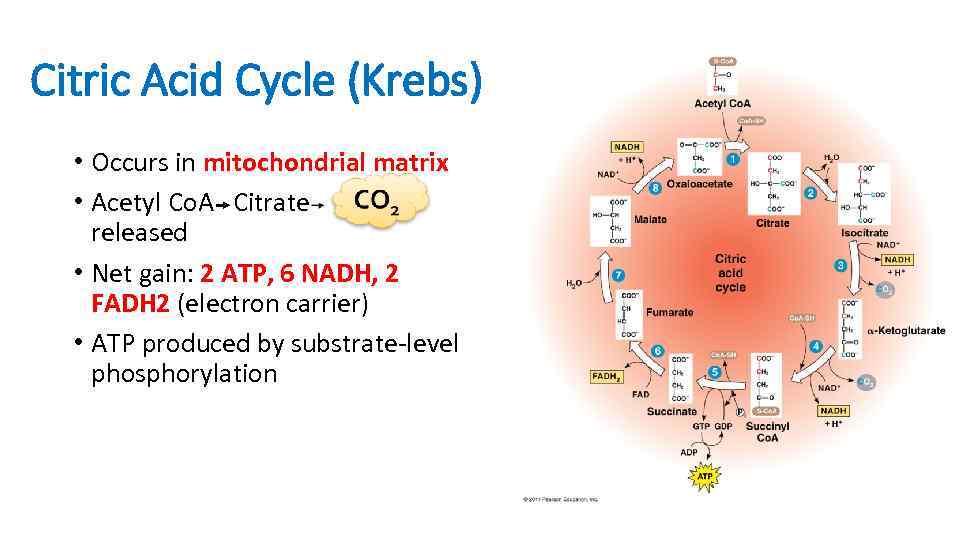 Citric Acid Cycle (Krebs) • Occurs in mitochondrial matrix • Acetyl Co. A Citrate released • Net gain: 2 ATP, 6 NADH, 2 FADH 2 (electron carrier) • ATP produced by substrate-level phosphorylation
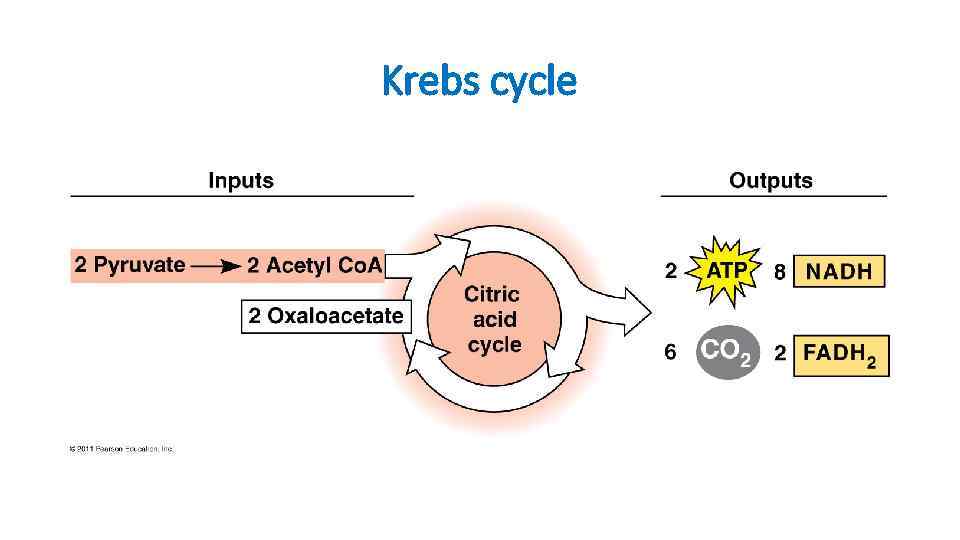 Krebs cycle
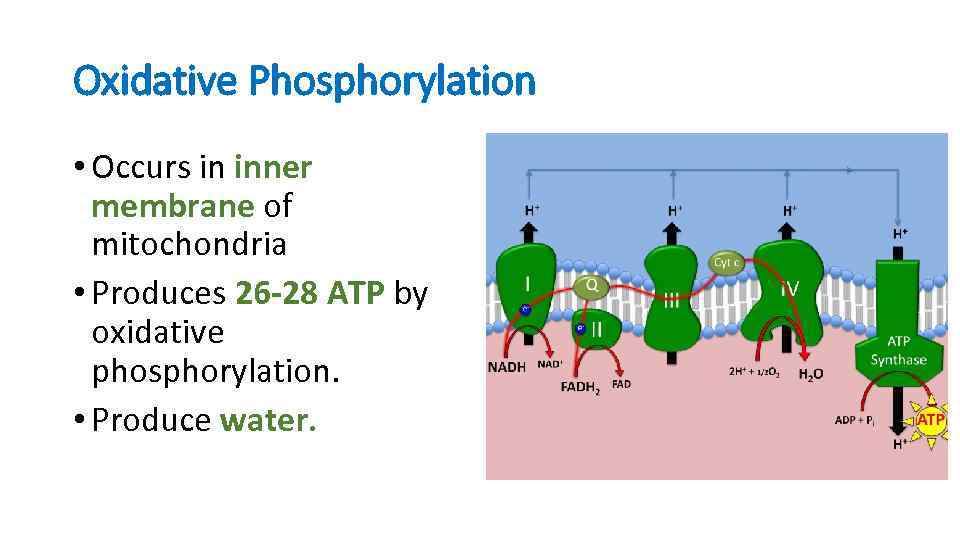 Oxidative Phosphorylation • Occurs in inner membrane of mitochondria • Produces 26 -28 ATP by oxidative phosphorylation. • Produce water.
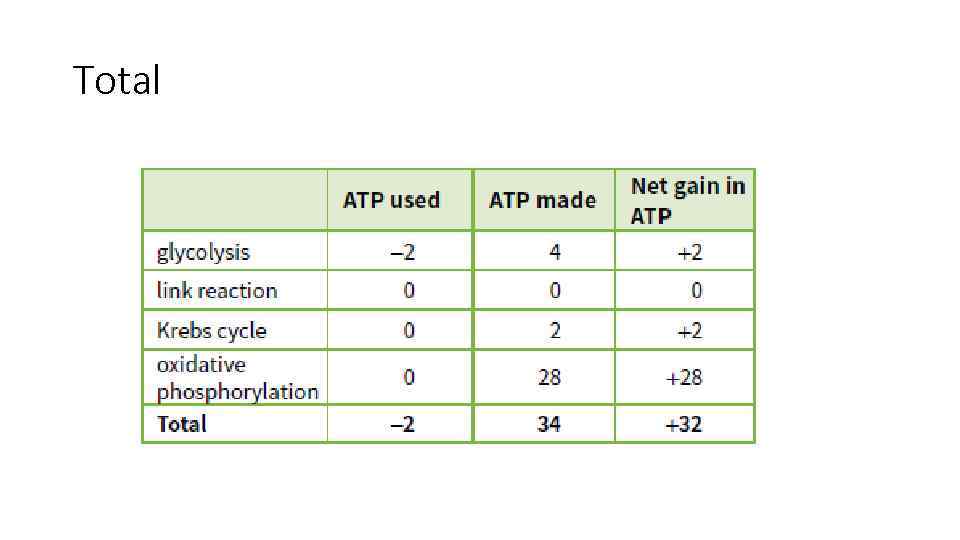 Total
Total
 Success criteria 1. Knows the stages of an energetic exchange 2. Describes the stages of an energetic exchange 3. Explains each stage of an energetic exchange
 Reflection: • I learned, learned • it remains unclear • above what is necessary to work