


 Скачать презентацию What is Microinsurance Access to Insurance for
0451cd6ab32dba30f565b9b63bbb51ec.ppt
- Количество слайдов: 27
 What is Microinsurance? Access to Insurance for the Poor May 2007 Rio de Janeiro, Brazil Craig Churchill International Labour Organization
 What is the ILO? • Specialized UN agency created in 1919 • Promotes social justice and human and labour rights • Forum for governments to engage with employers and workers organizations (tripartite structure) • Formulates international labour standards (Conventions and Recommendations) • Provides assistance to member states and social partners in implementing standards
 ILO’s interest in microinsurance The ILO is concerned about: • The promotion of decent work: more and better jobs • The availability of social protection for workers and their families • The impact of financial polices on social justice, i. e. toward more inclusive financial markets
 The ILO: A microinsurance microcosm In the ILO, and elsewhere, microinsurance can be seen from two complementary perspectives… 1) A way of extending social protection to excluded populations 2) A new market for the insurance industry
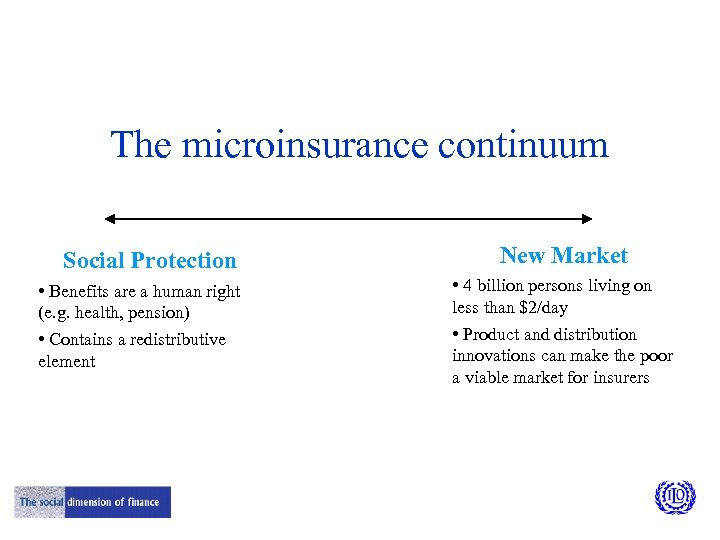 The microinsurance continuum Social Protection • Benefits are a human right (e. g. health, pension) • Contains a redistributive element New Market • 4 billion persons living on less than $2/day • Product and distribution innovations can make the poor a viable market for insurers
 What is microinsurance?
 Microinsurance is… “…the protection of low-income people against specific perils in exchange for regular premium payments proportionate to the likelihood and cost of the risk involved” ~ Draft Donor Guidelines, CGAP Working Group (2003) “…not a specific product or product line. It is also not limited to a specific provider type. Microinsurance is the provision of cover to a specific market segment, i. e. low-income persons. ” ~ IAIS Issues Paper (2007)
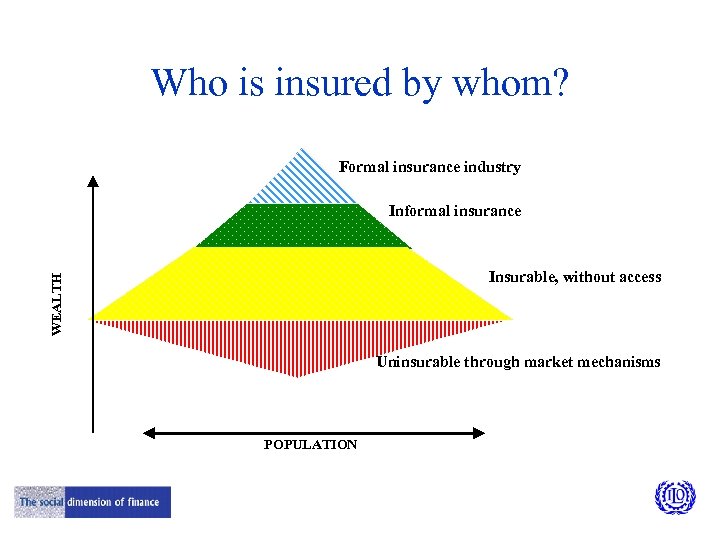 Who is insured by whom? Formal insurance industry Informal insurance WEALTH Insurable, without access Uninsurable through market mechanisms POPULATION
 Characteristics of the insurable poor • • Vulnerable to risks Often work in the informal economy Irregular cash flows Manage risks through myriad of informal means, including social networks • Limited familiarity with formal insurance • May not trust insurance companies
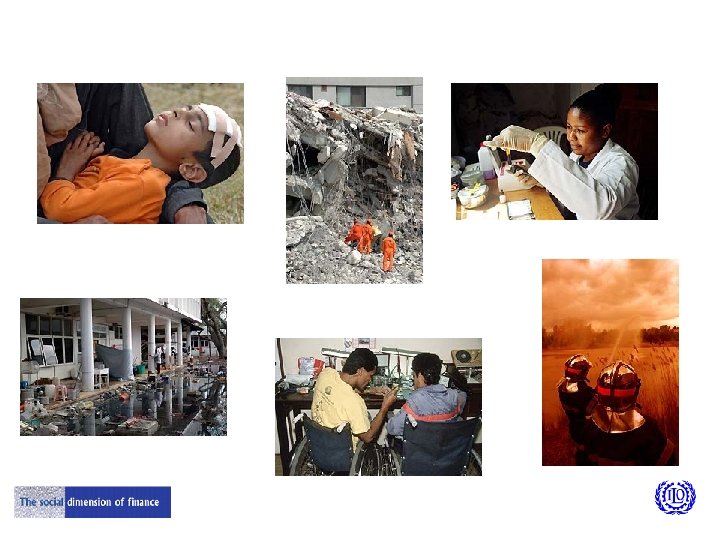
 To what risks and economic stresses are low-income persons vulnerable?
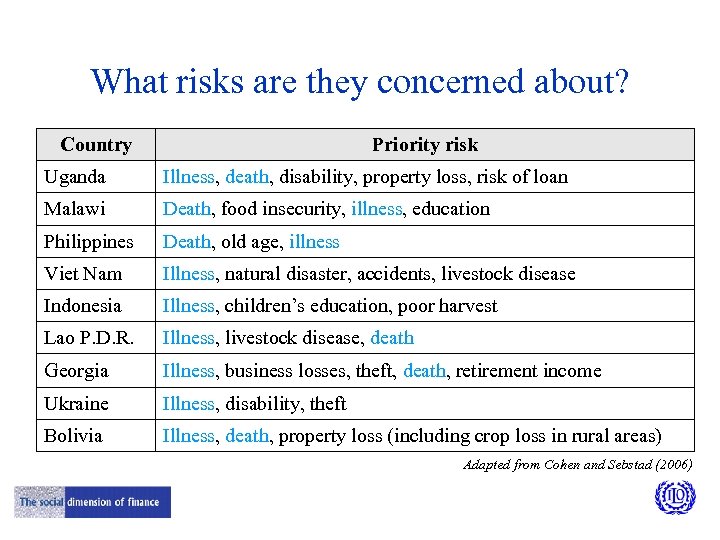
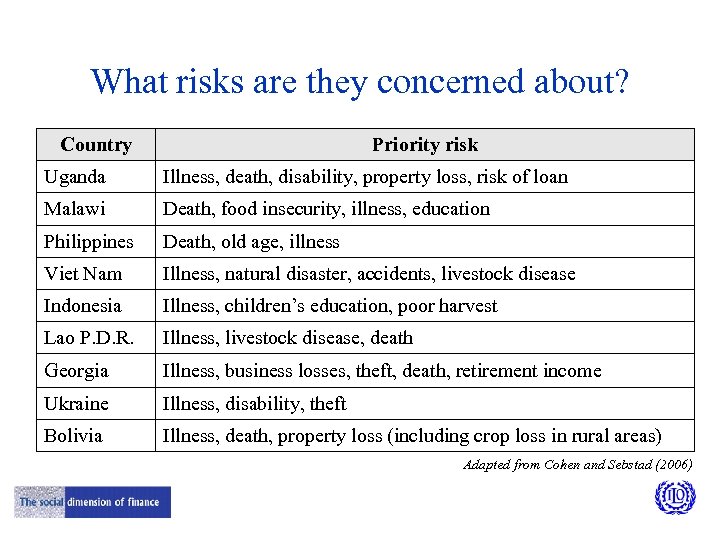 What risks are they concerned about? Country Priority risk Uganda Illness, death, disability, property loss, risk of loan Malawi Death, food insecurity, illness, education Philippines Death, old age, illness Viet Nam Illness, natural disaster, accidents, livestock disease Indonesia Illness, children’s education, poor harvest Lao P. D. R. Illness, livestock disease, death Georgia Illness, business losses, theft, death, retirement income Ukraine Illness, disability, theft Bolivia Illness, death, property loss (including crop loss in rural areas) Adapted from Cohen and Sebstad (2006)
 What risks are they concerned about? Country Priority risk Uganda Illness, death, disability, property loss, risk of loan Malawi Death, food insecurity, illness, education Philippines Death, old age, illness Viet Nam Illness, natural disaster, accidents, livestock disease Indonesia Illness, children’s education, poor harvest Lao P. D. R. Illness, livestock disease, death Georgia Illness, business losses, theft, death, retirement income Ukraine Illness, disability, theft Bolivia Illness, death, property loss (including crop loss in rural areas) Adapted from Cohen and Sebstad (2006)
 How is insurance delivered to the poor?
 Microinsurance delivery channels • Partnerships between insurers and distribution agents like cooperatives and MFIs (e. g. Zurich Bolivia and Banco. Sol) • Self-insuring MFIs that assume the risk of offering insurance to their clients (e. g. Spandana, India) • Informal mutual assistance schemes (e. g. burial societies, South Africa) • Healthcare providers offering health care schemes (e. g. Nkoranza Community Health Insurance Plan, Ghana) Continued…
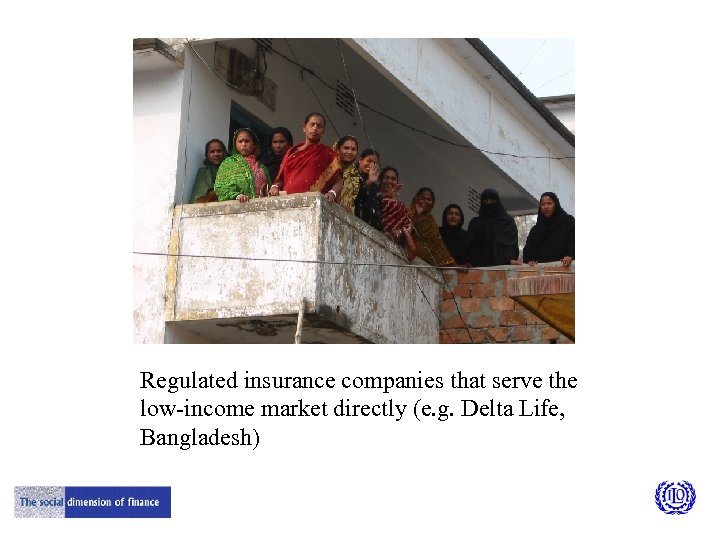 Regulated insurance companies that serve the low-income market directly (e. g. Delta Life, Bangladesh)
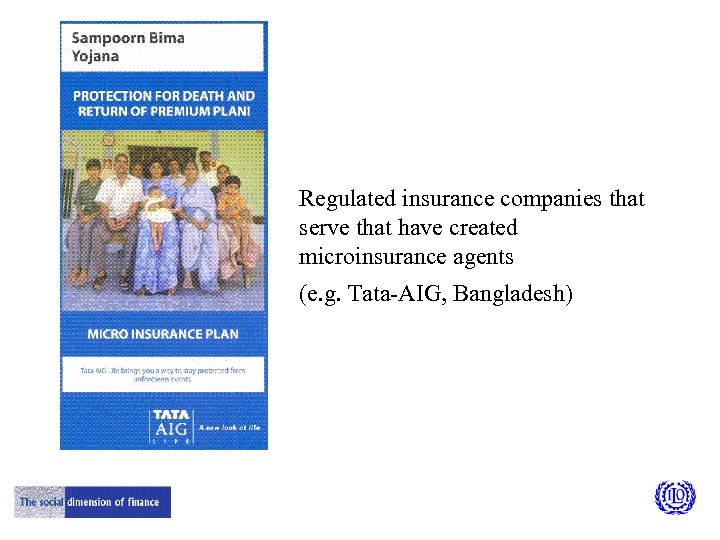 Regulated insurance companies that serve that have created microinsurance agents (e. g. Tata-AIG, Bangladesh)
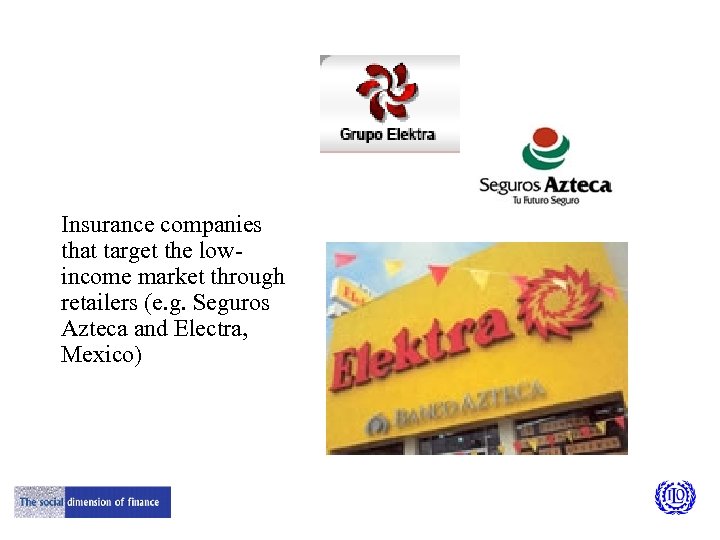 Insurance companies that target the lowincome market through retailers (e. g. Seguros Azteca and Electra, Mexico)
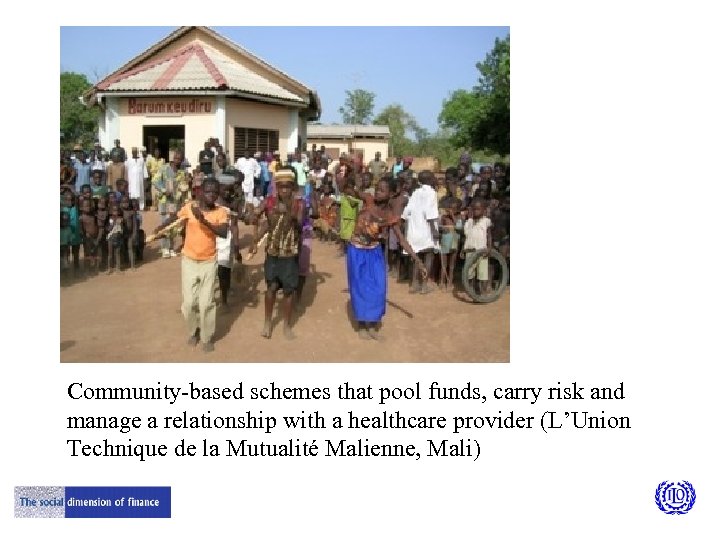 Community-based schemes that pool funds, carry risk and manage a relationship with a healthcare provider (L’Union Technique de la Mutualité Malienne, Mali)
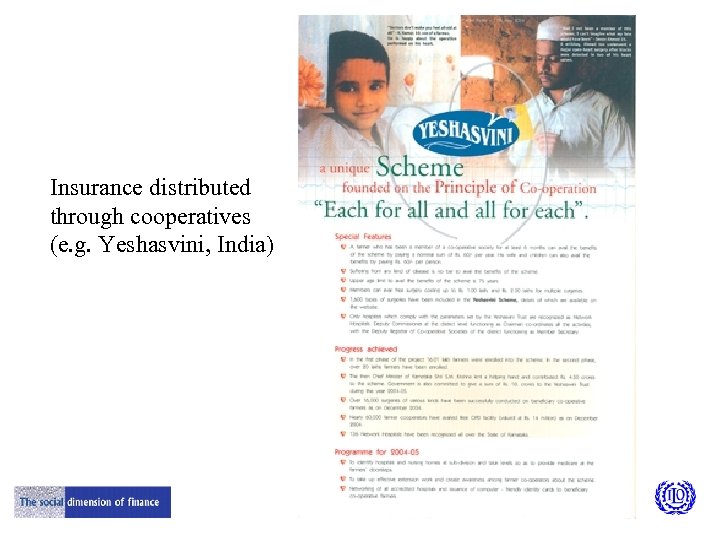 Insurance distributed through cooperatives (e. g. Yeshasvini, India)
 Mutual insurance companies created by credit union/cooperative federations (e. g. TUW SKOK, Poland; La Equidad, Colombia)
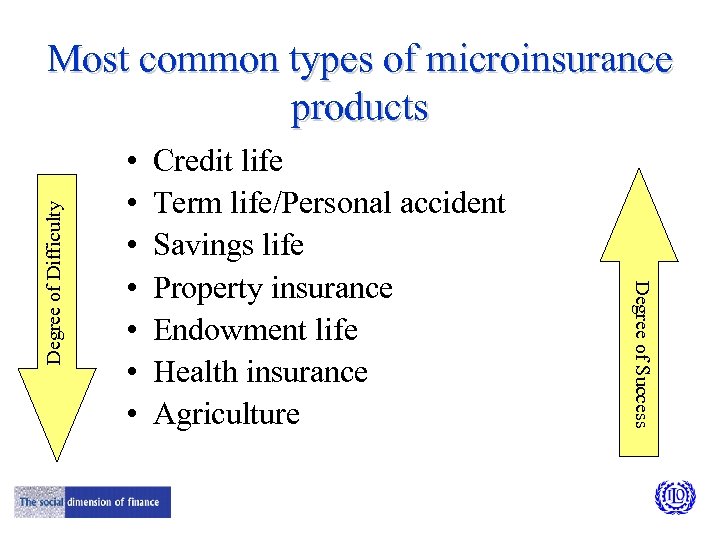 • • Credit life Term life/Personal accident Savings life Property insurance Endowment life Health insurance Agriculture Degree of Success Degree of Difficulty Most common types of microinsurance products
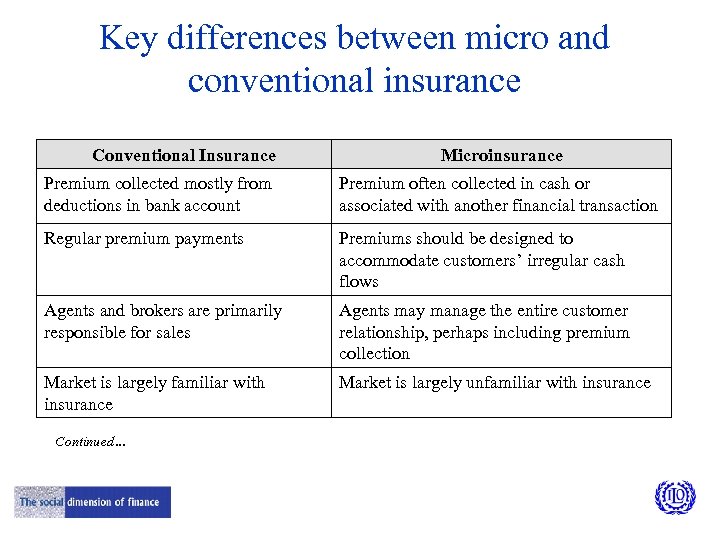 Key differences between micro and conventional insurance Conventional Insurance Microinsurance Premium collected mostly from deductions in bank account Premium often collected in cash or associated with another financial transaction Regular premium payments Premiums should be designed to accommodate customers’ irregular cash flows Agents and brokers are primarily responsible for sales Agents may manage the entire customer relationship, perhaps including premium collection Market is largely familiar with insurance Market is largely unfamiliar with insurance Continued…
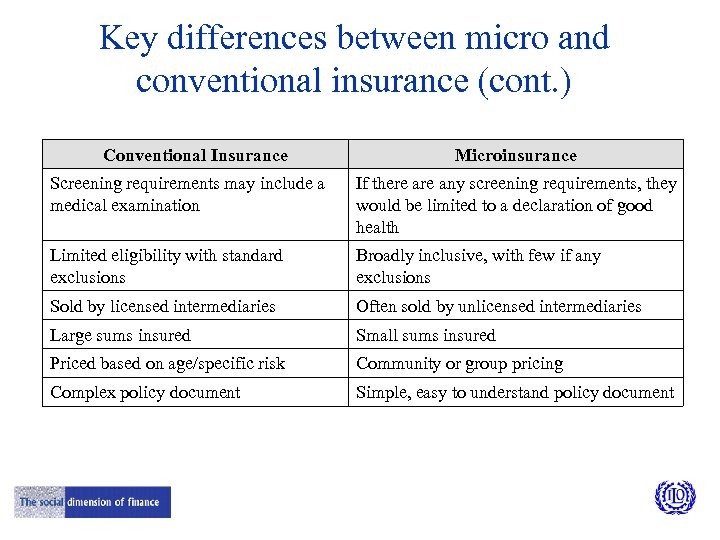 Key differences between micro and conventional insurance (cont. ) Conventional Insurance Microinsurance Screening requirements may include a medical examination If there any screening requirements, they would be limited to a declaration of good health Limited eligibility with standard exclusions Broadly inclusive, with few if any exclusions Sold by licensed intermediaries Often sold by unlicensed intermediaries Large sums insured Small sums insured Priced based on age/specific risk Community or group pricing Complex policy document Simple, easy to understand policy document
 Key stakeholders in the development of microinsurance • • • Potential and current policyholders Actual and potential delivery channels Risk carriers Industry associations, networks Insurance infrastructure: training, technical assistance, research, data warehousing… • Policymakers, regulators and supervisors • Donors and development agencies
 Concluding Thought The challenge for all of these stakeholders is to… Create a culture of insurance among low-income persons
 Thank you! Craig Churchill churchill@ilo. org Tel +41 22 799 6242