 Скачать презентацию What is Bunkering Bunkering Filling ships
723178affdf42cfc6f745077e0755285.ppt
- Количество слайдов: 16



What is Bunkering? • Bunkering – Filling ships and barges with fuel used to power ships • Bunker – Gets its name from the containers on ships and in ports that it is stored in – In the days of steam they were coal bunkers but now they are bunker-fuel tanks • Bunker fuel – Technically any type of fuel oil used aboard ships
Fuel Bunkering Market • Bunker Fuel Brokers – Work as independent agents brokering fuel between two parties • Shore Supplier (terminal) – Might sell fuel to the barge company or directly to ship • Barge/Bunkering Company – Transfers fuel to the ship owners – May or may not own oil • Ship Owners – Purchases fuel from barge owner or shore supplier
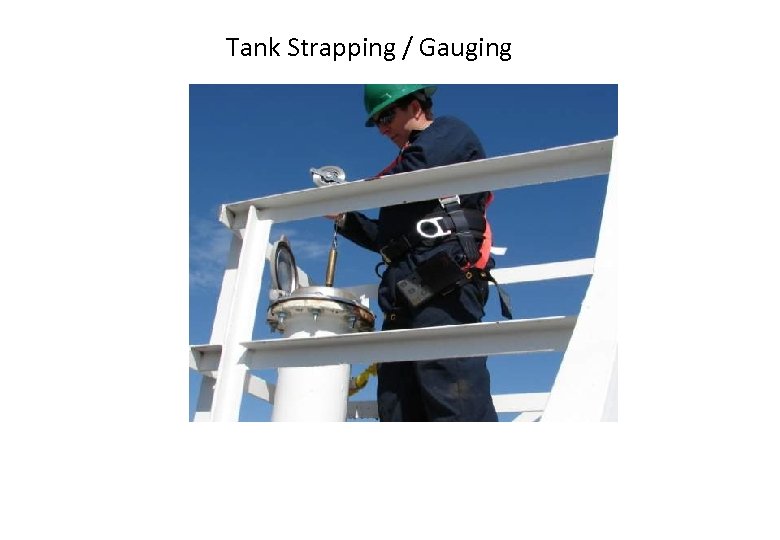
Tank Strapping / Gauging
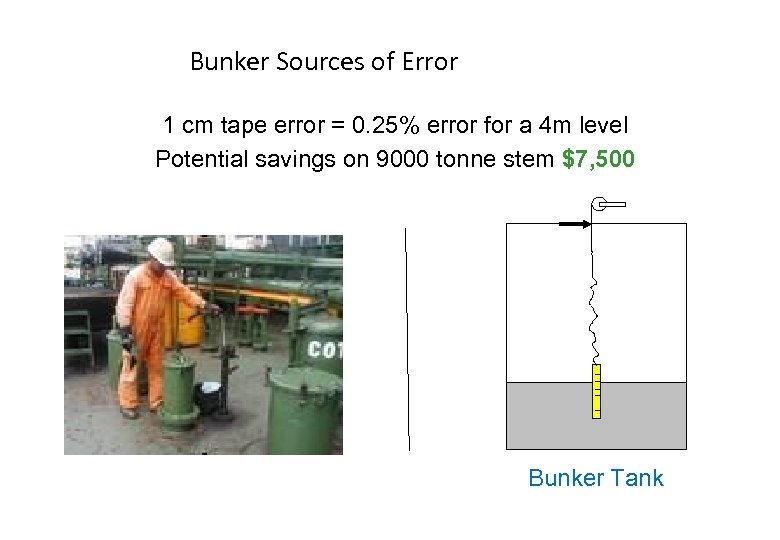
Bunker Sources of Error 1 cm tape error = 0. 25% error for a 4 m level Potential savings on 9000 tonne stem $7, 500 Bunker Tank
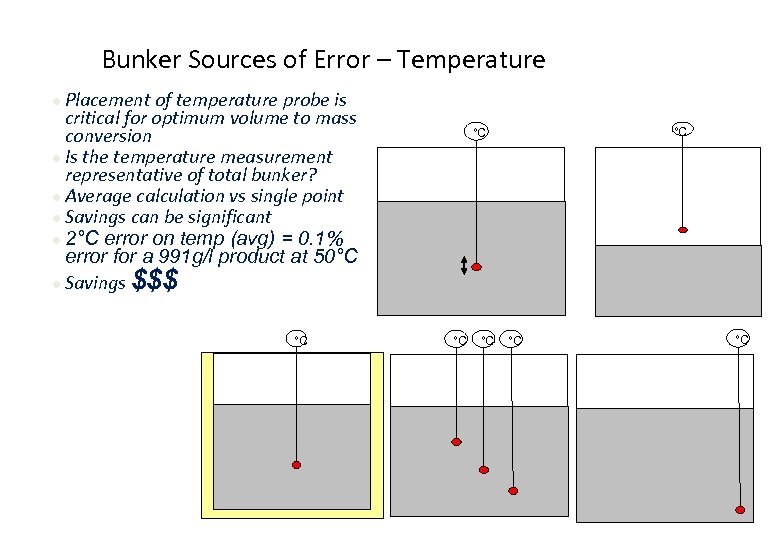
Bunker Sources of Error – Temperature Placement of temperature probe is critical for optimum volume to mass conversion l Is the temperature measurement representative of total bunker? l Average calculation vs single point l Savings can be significant l 2°C error on temp (avg) = 0. 1% error for a 991 g/l product at 50°C l Savings $$$ l °C °C
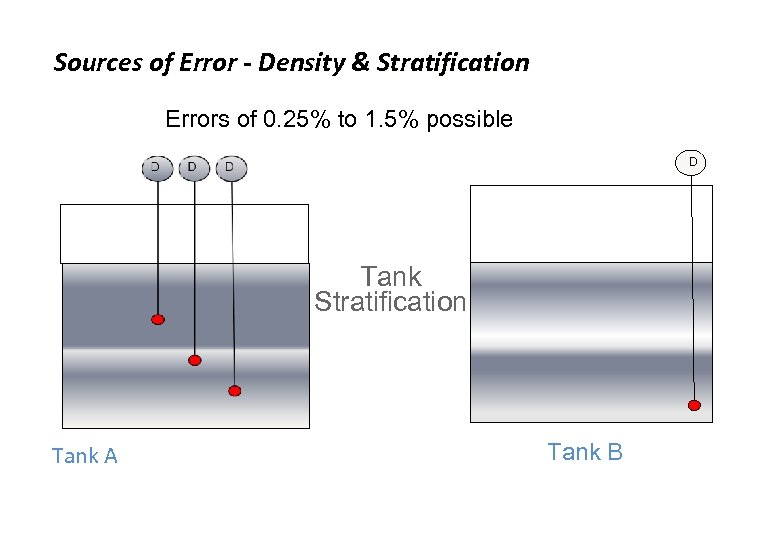
Sources of Error - Density & Stratification Errors of 0. 25% to 1. 5% possible D Tank Stratification Tank A Tank B
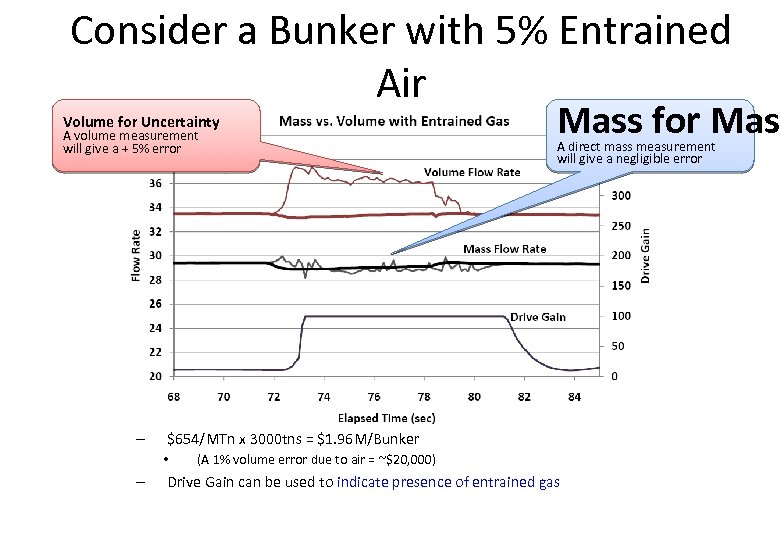
Consider a Bunker with 5% Entrained Air Volume for Uncertainty A volume measurement will give a + 5% error – A direct mass measurement will give a negligible error $654/MTn x 3000 tns = $1. 96 M/Bunker • – Mass for Mas (A 1% volume error due to air = ~$20, 000) Drive Gain can be used to indicate presence of entrained gas
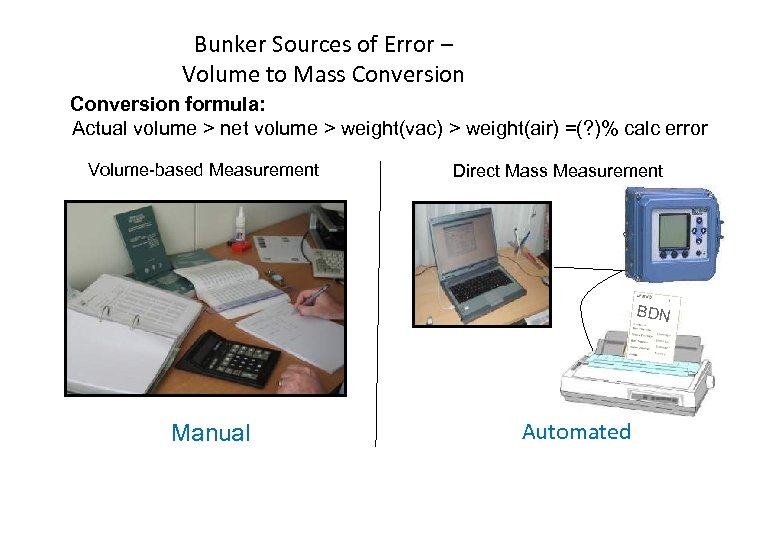
Bunker Sources of Error – Volume to Mass Conversion formula: Actual volume > net volume > weight(vac) > weight(air) =(? )% calc error Volume-based Measurement Direct Mass Measurement BDN Manual Automated
Custody Transfer Processes • Custody transfer is simply an agreement between two Parties: Buyer and Seller However, the Bunkering process is not so simple
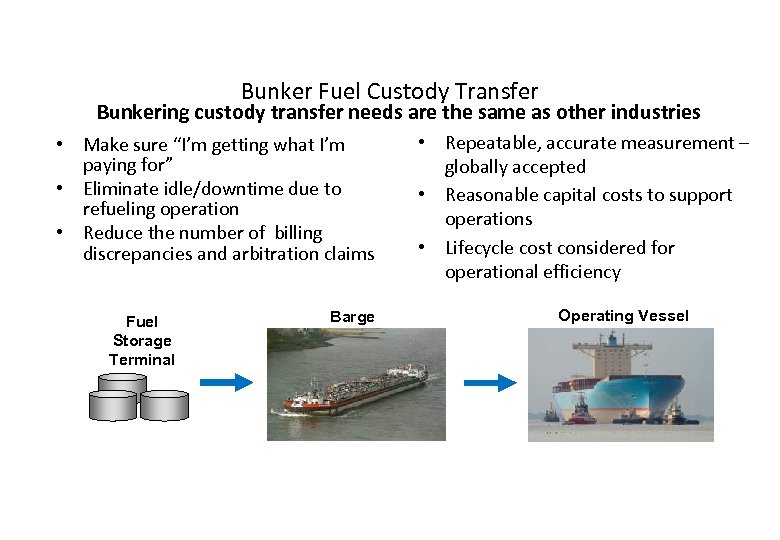
Bunker Fuel Custody Transfer Bunkering custody transfer needs are the same as other industries • Make sure “I’m getting what I’m paying for” • Eliminate idle/downtime due to refueling operation • Reduce the number of billing discrepancies and arbitration claims Fuel Storage Terminal Barge • Repeatable, accurate measurement – globally accepted • Reasonable capital costs to support operations • Lifecycle cost considered for operational efficiency Operating Vessel
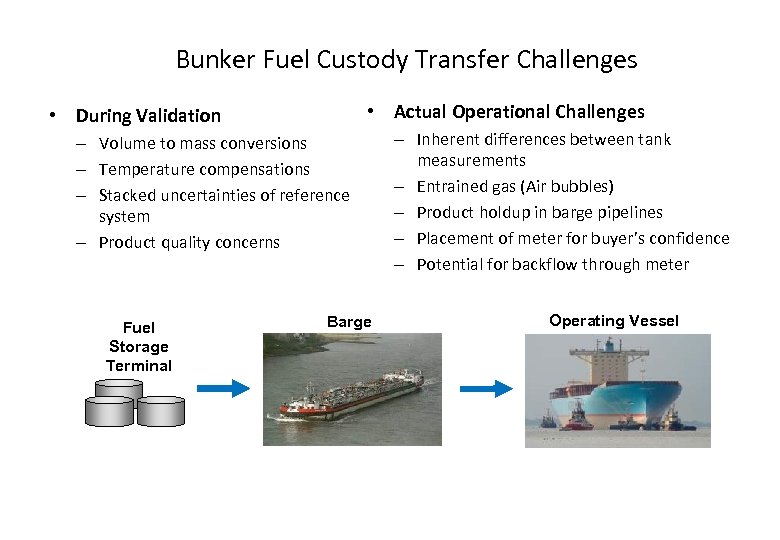
Bunker Fuel Custody Transfer Challenges • Actual Operational Challenges • During Validation – Volume to mass conversions – Temperature compensations – Stacked uncertainties of reference system – Product quality concerns Fuel Storage Terminal Barge – Inherent differences between tank measurements – Entrained gas (Air bubbles) – Product holdup in barge pipelines – Placement of meter for buyer’s confidence – Potential for backflow through meter Operating Vessel
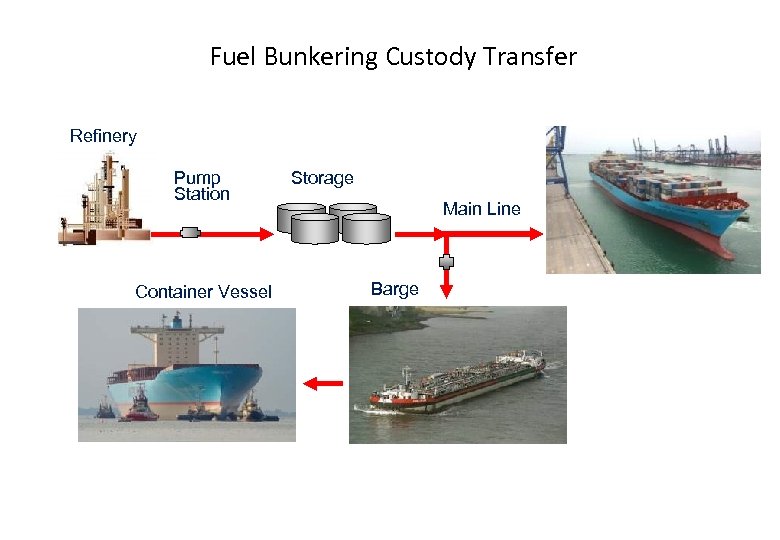
Fuel Bunkering Custody Transfer Refinery Pump Station Container Vessel Storage Main Line Barge
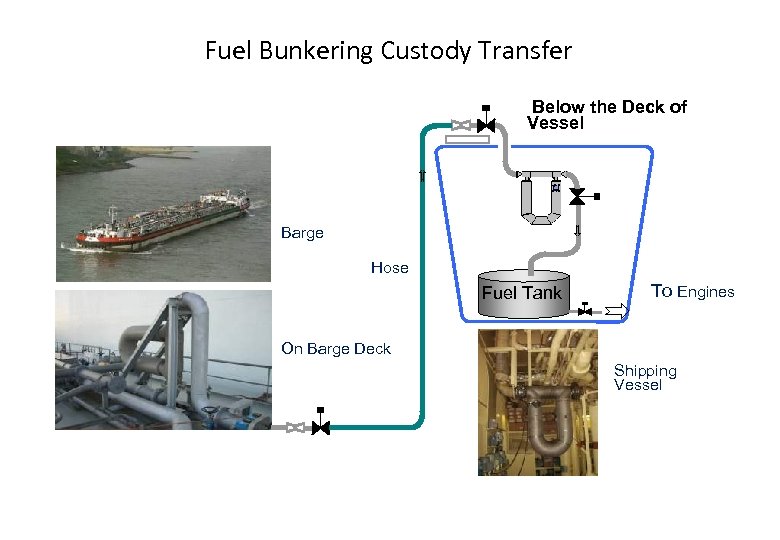
Fuel Bunkering Custody Transfer Below the Deck of Vessel Barge Hose Fuel Tank To Engines On Barge Deck Shipping Vessel
 Скачать презентацию What is Bunkering Bunkering Filling ships
723178affdf42cfc6f745077e0755285.ppt