


 Скачать презентацию What Is a Palliative Care Consult Service More
af40f7363d51778e8f601a5d40086aee.ppt
- Количество слайдов: 24
 What Is a Palliative Care Consult Service? More importantly – What can it do for you?
 Palliative Care Consulting • • • Making the Case Services Rendered Staffing A Note of Caution The Role Of Acute Care Hospitals In Caring For the Dying
 Why Palliative Care? • The sickest people congregate in hospitals • These people often feel a loss of control in their medical travails • Often they experience profound suffering • The people who care for them often experience tremendous burden, burnout • Hospitals and accreditation organizations recognize these struggles, want to do better
 What Do Patients with Serious Illness Want? • Pain and symptom control • Avoid inappropriate prolongation of the dying process • Achieve a sense of control • Relieve burdens on family • Strengthen relationships with loved ones Singer et al. JAMA 1999; 281(2): 163 -168.
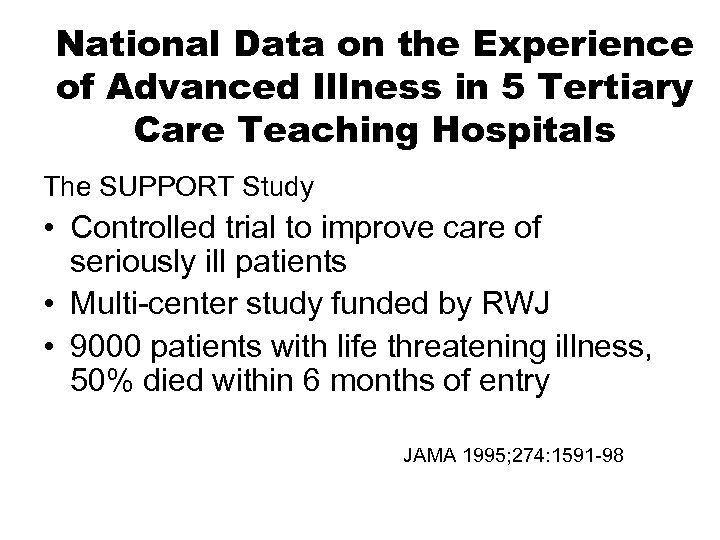 National Data on the Experience of Advanced Illness in 5 Tertiary Care Teaching Hospitals The SUPPORT Study • Controlled trial to improve care of seriously ill patients • Multi-center study funded by RWJ • 9000 patients with life threatening illness, 50% died within 6 months of entry JAMA 1995; 274: 1591 -98
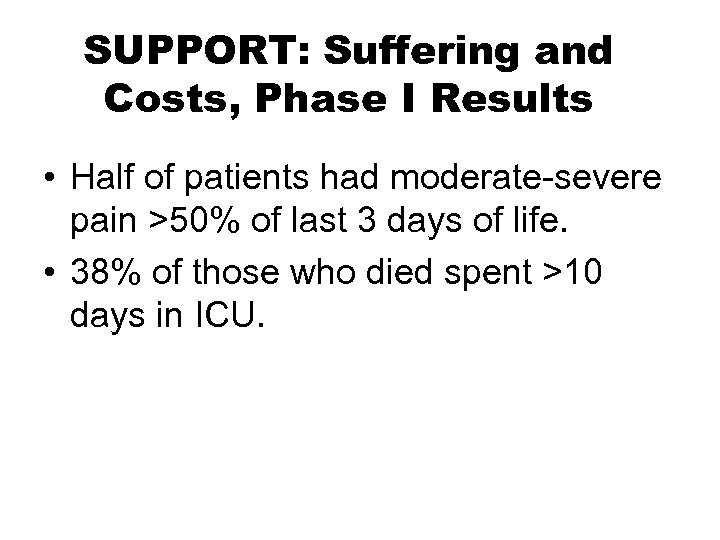 SUPPORT: Suffering and Costs, Phase I Results • Half of patients had moderate-severe pain >50% of last 3 days of life. • 38% of those who died spent >10 days in ICU.
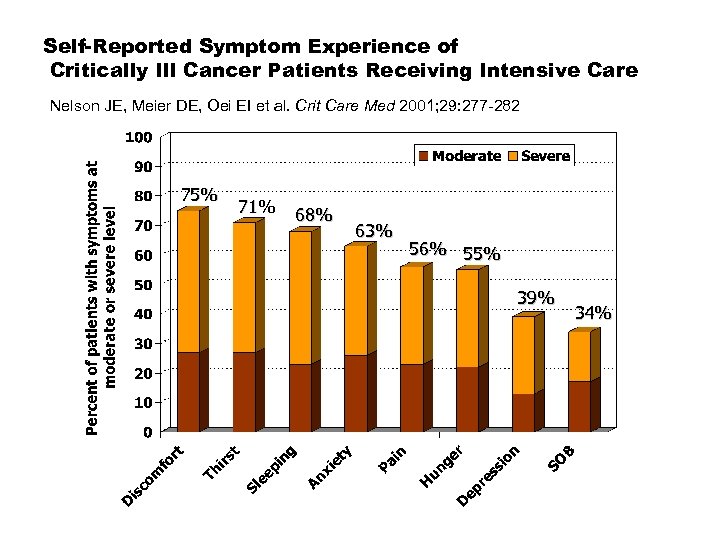 Self-Reported Symptom Experience of Critically Ill Cancer Patients Receiving Intensive Care Nelson JE, Meier DE, Oei EI et al. Crit Care Med 2001; 29: 277 -282 75% 71% 68% 63% 56% 55% 39% 34%
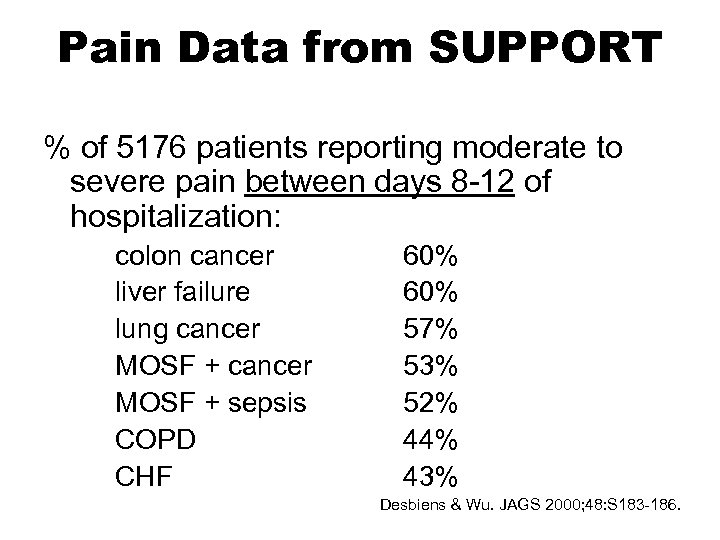 Pain Data from SUPPORT % of 5176 patients reporting moderate to severe pain between days 8 -12 of hospitalization: colon cancer liver failure lung cancer MOSF + sepsis COPD CHF 60% 57% 53% 52% 44% 43% Desbiens & Wu. JAGS 2000; 48: S 183 -186.
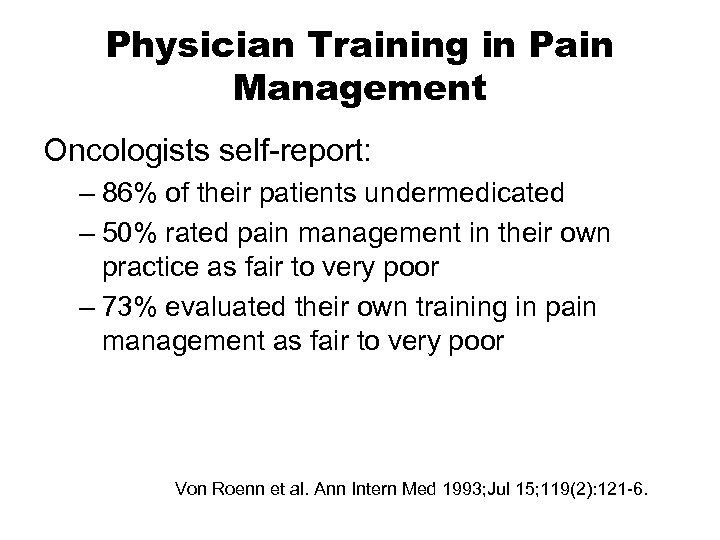 Physician Training in Pain Management Oncologists self-report: – 86% of their patients undermedicated – 50% rated pain management in their own practice as fair to very poor – 73% evaluated their own training in pain management as fair to very poor Von Roenn et al. Ann Intern Med 1993; Jul 15; 119(2): 121 -6.
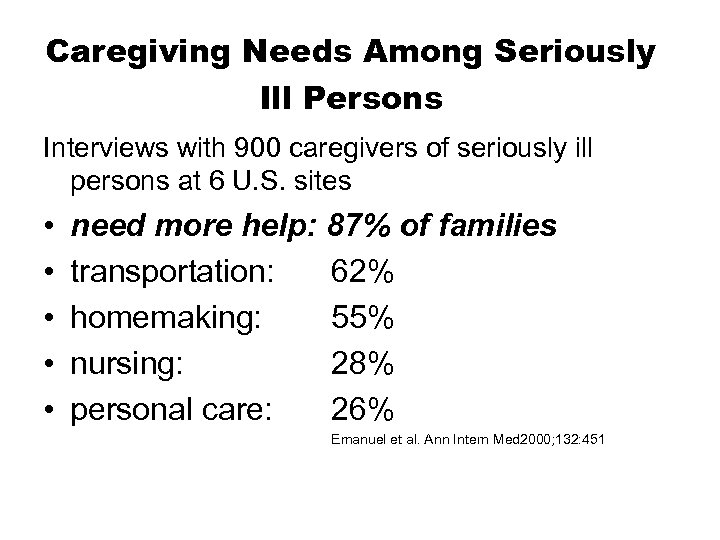 Caregiving Needs Among Seriously Ill Persons Interviews with 900 caregivers of seriously ill persons at 6 U. S. sites • • • need more help: 87% of families transportation: 62% homemaking: 55% nursing: 28% personal care: 26% Emanuel et al. Ann Intern Med 2000; 132: 451
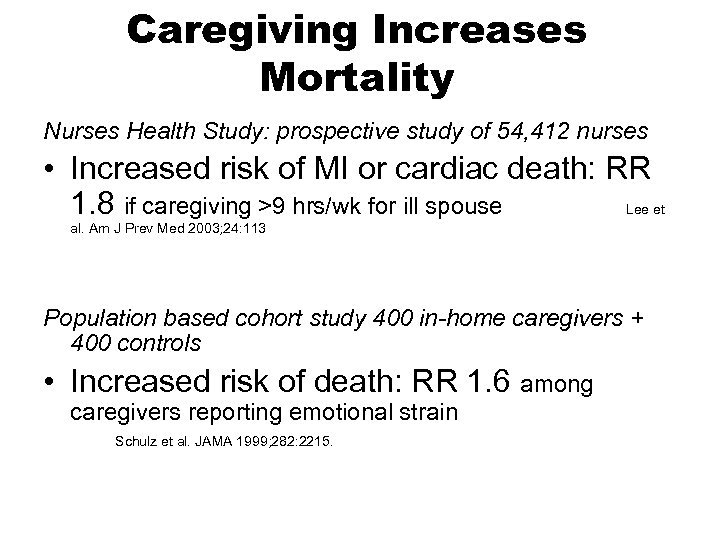 Caregiving Increases Mortality Nurses Health Study: prospective study of 54, 412 nurses • Increased risk of MI or cardiac death: RR 1. 8 if caregiving >9 hrs/wk for ill spouse Lee et al. Am J Prev Med 2003; 24: 113 Population based cohort study 400 in-home caregivers + 400 controls • Increased risk of death: RR 1. 6 among caregivers reporting emotional strain Schulz et al. JAMA 1999; 282: 2215.
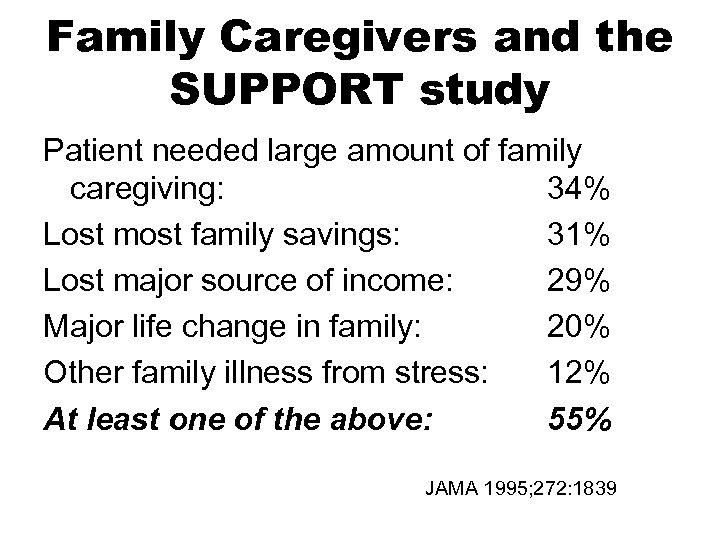 Family Caregivers and the SUPPORT study Patient needed large amount of family caregiving: 34% Lost most family savings: 31% Lost major source of income: 29% Major life change in family: 20% Other family illness from stress: 12% At least one of the above: 55% JAMA 1995; 272: 1839
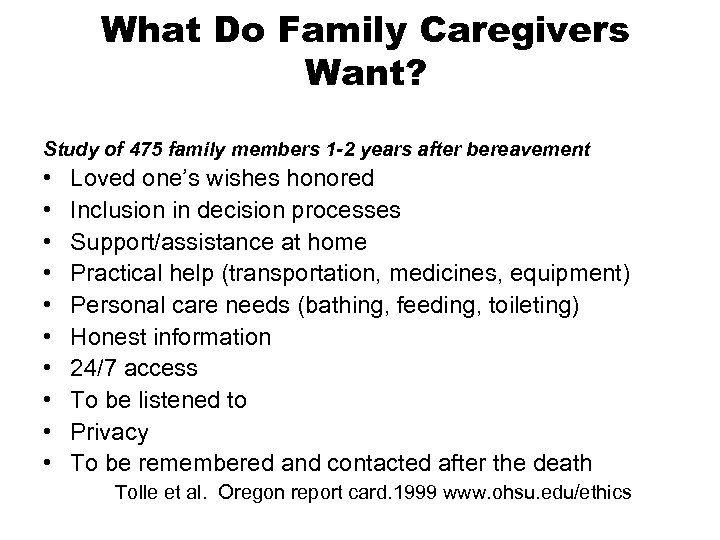 What Do Family Caregivers Want? Study of 475 family members 1 -2 years after bereavement • • • Loved one’s wishes honored Inclusion in decision processes Support/assistance at home Practical help (transportation, medicines, equipment) Personal care needs (bathing, feeding, toileting) Honest information 24/7 access To be listened to Privacy To be remembered and contacted after the death Tolle et al. Oregon report card. 1999 www. ohsu. edu/ethics
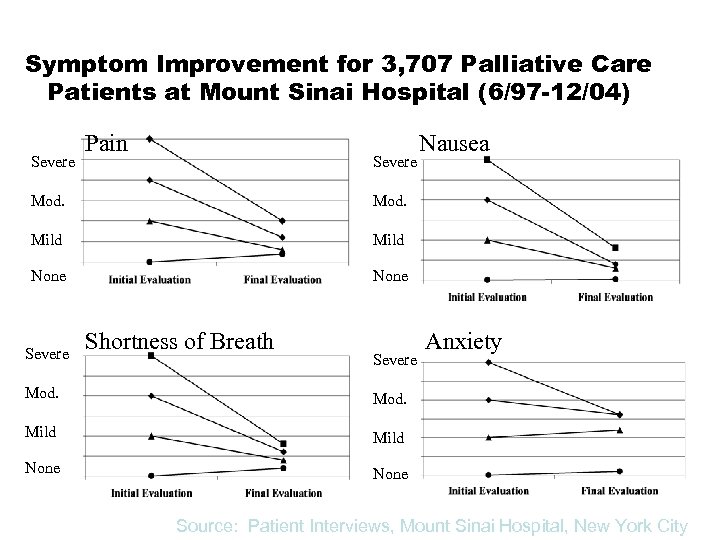 Symptom Improvement for 3, 707 Palliative Care Patients at Mount Sinai Hospital (6/97 -12/04) Severe Pain Severe Mod. Mild None Nausea None Severe Shortness of Breath Severe Mod. Mild None Anxiety None Source: Patient Interviews, Mount Sinai Hospital, New York City
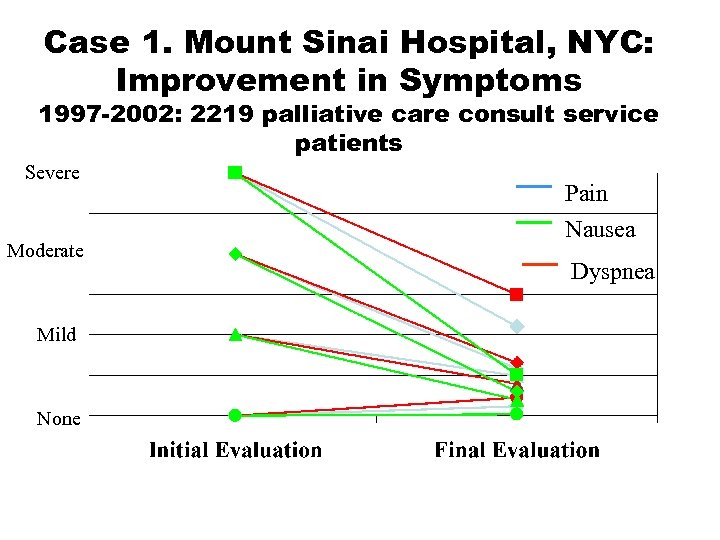 Case 1. Mount Sinai Hospital, NYC: Improvement in Symptoms 1997 -2002: 2219 palliative care consult service patients Severe Moderate Mild None Pain Nausea Dyspnea
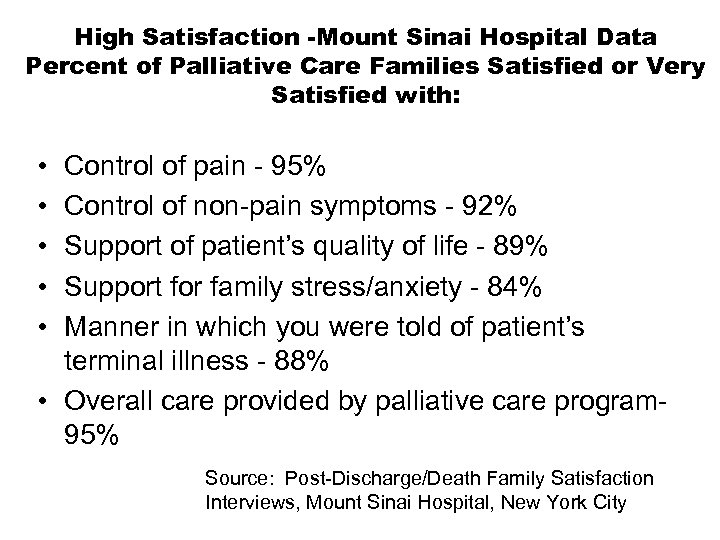 High Satisfaction -Mount Sinai Hospital Data Percent of Palliative Care Families Satisfied or Very Satisfied with: • • • Control of pain - 95% Control of non-pain symptoms - 92% Support of patient’s quality of life - 89% Support for family stress/anxiety - 84% Manner in which you were told of patient’s terminal illness - 88% • Overall care provided by palliative care program 95% Source: Post-Discharge/Death Family Satisfaction Interviews, Mount Sinai Hospital, New York City
 What Does All this Mean from the Patient Perspective? For patients, palliative care is a key to: – – – relieve symptom distress navigate a complex and confusing medical system understand the plan of care help coordinate and control care options allow simultaneous palliation of suffering along with continued disease modifying treatments (no requirement to give up curative care) – provide practical and emotional support for exhausted family caregivers
 The Clinician Perspective For clinicians, palliative care is a key tool to: • Save time by helping to handle repeated, intensive patient-family communications, coordination of care across settings, comprehensive discharge planning • Bedside management of pain and distress of highly symptomatic and complex cases, 24/7, thus supporting the treatment plan of the primary physician • Promote patient and family satisfaction with the clinician’s quality of care
 The Hospital Perspective For hospitals, palliative care is a key tool to: – effectively treat the growing number of people with complex advanced illness – provide service excellence, patient-centered care – increase patient and family satisfaction – improve staff satisfaction and retention – meet JCAHO quality standards – ration the use of hospital resources – increase bed/ICU capacity, reduce costs
 Summary • Palliative care improves quality of care for our sickest and most vulnerable patients and families. • Palliative care improves the ability of physicians to deliver high quality care to this difficult patient population • Palliative care saves the hospital time and money while improving overall patient satisfaction
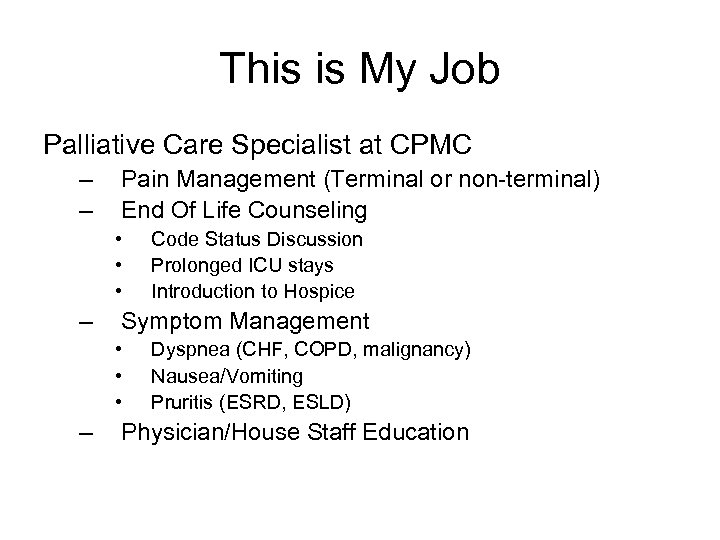 This is My Job Palliative Care Specialist at CPMC – – Pain Management (Terminal or non-terminal) End Of Life Counseling • • • – Symptom Management • • • – Code Status Discussion Prolonged ICU stays Introduction to Hospice Dyspnea (CHF, COPD, malignancy) Nausea/Vomiting Pruritis (ESRD, ESLD) Physician/House Staff Education
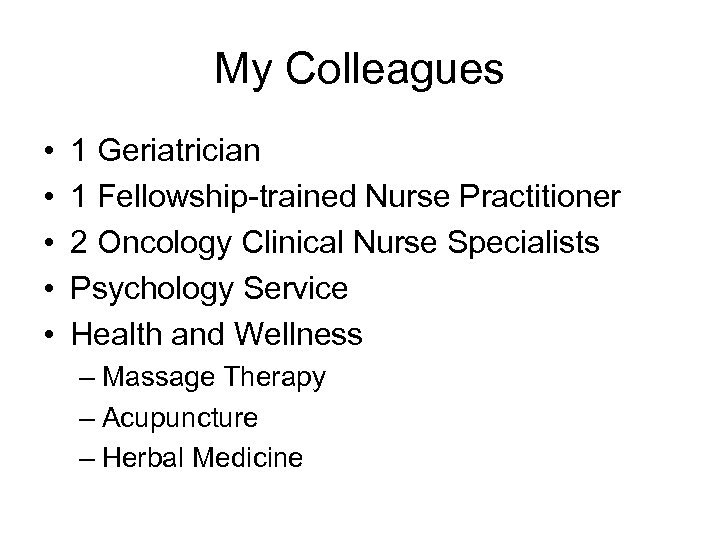 My Colleagues • • • 1 Geriatrician 1 Fellowship-trained Nurse Practitioner 2 Oncology Clinical Nurse Specialists Psychology Service Health and Wellness – Massage Therapy – Acupuncture – Herbal Medicine
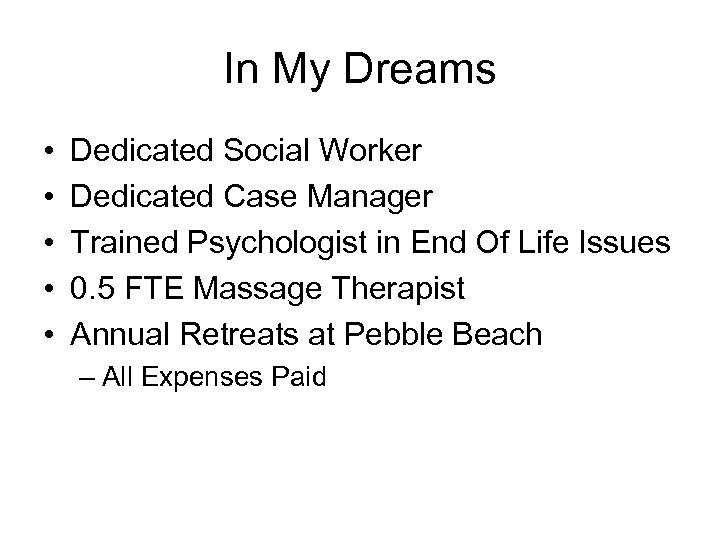 In My Dreams • • • Dedicated Social Worker Dedicated Case Manager Trained Psychologist in End Of Life Issues 0. 5 FTE Massage Therapist Annual Retreats at Pebble Beach – All Expenses Paid
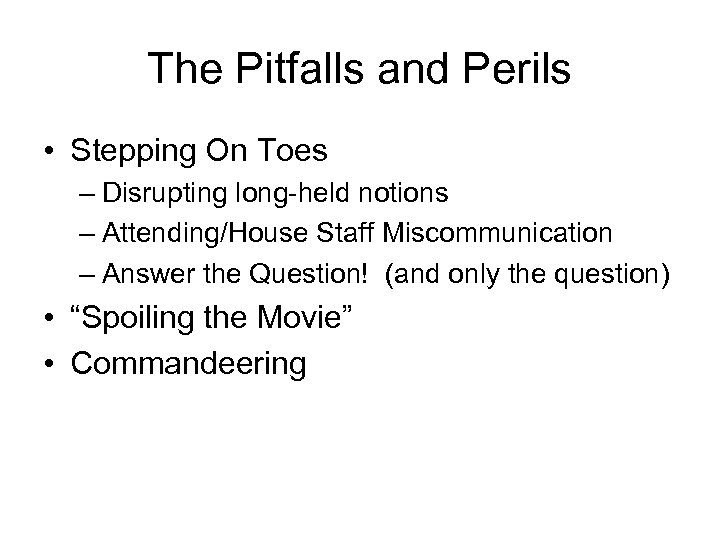 The Pitfalls and Perils • Stepping On Toes – Disrupting long-held notions – Attending/House Staff Miscommunication – Answer the Question! (and only the question) • “Spoiling the Movie” • Commandeering