Скачать презентацию What happened next The lessons
81cc06960e48ad3ad3458ae5c2f43f62.ppt
- Количество слайдов: 197




 What happened next. . .
 The lessons from this:

 Imagine a world without anaesthesia. . .

 Without anaesthesia. . .

 But what is anaesthesia?
 The other triad of anaesthesia
 Anaesthesia can be:
 But wait. . . there’s more:



 Perioperative system includes:
 But why?
 The Pre-anaesthetic Consultation


 ASA Physical Status
 Relevance of this?
 Perioperative management
 Diabetic patient for vascular surgery
 History






 Safety Initiatives in Anaesthesia
 Principles of Safety

 Monitoring in anaesthesia
 Pulse oximetry
 Electrocardiogram

 Capnography
 Oxygen monitoring

 Temperature monitoring



 Other monitors

 Patient with polycystic ovaries for laparoscopic cystotomies as day case procedure
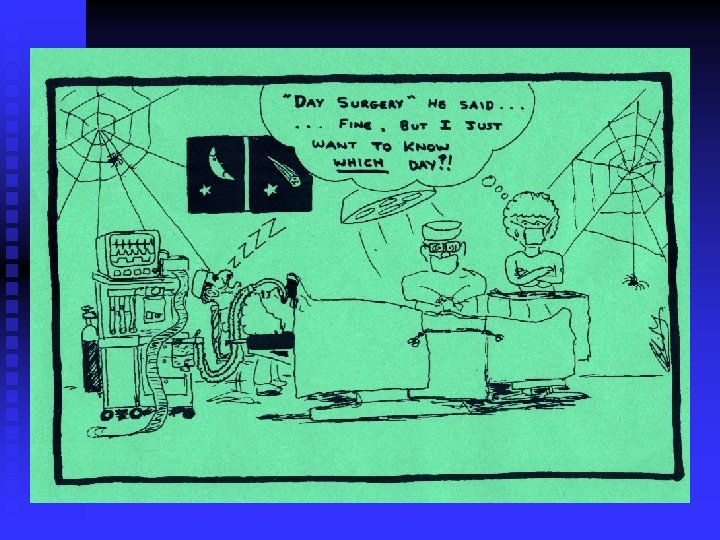
 History

 Anaesthetic issues






 Remember:








 Classification of drugs used for anaesthesia







 General features of IV agents
 Propofol
 Other IV agents











 Why use paralysing drugs at all?
 Properties of NMBDs
 “Sux” versus the NDNMBDs
 Nondepolarising relaxants
 Side effects of suxamethonium
 Problems with nondepolarisers
 Paralysis obviously mandates controlled ventilation
 The Physiology of Controlled Ventilation
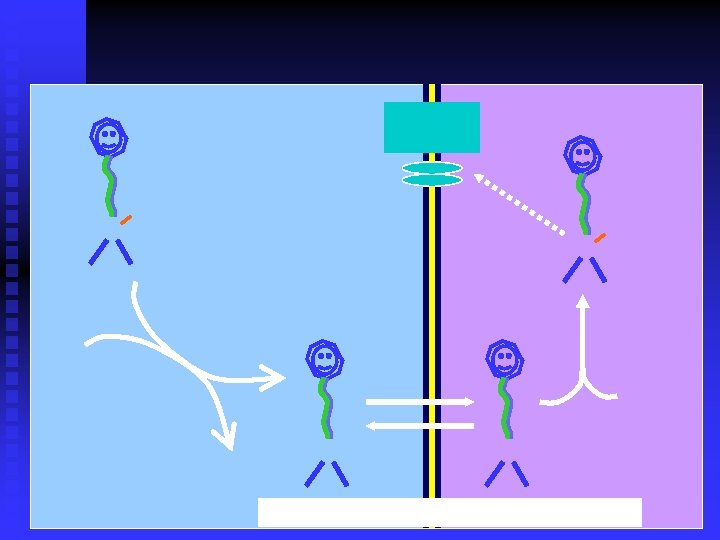
 Pharmacology 5: Local anaesthetic agents




 Adjuvant agents used with LAs








 History
 Issues
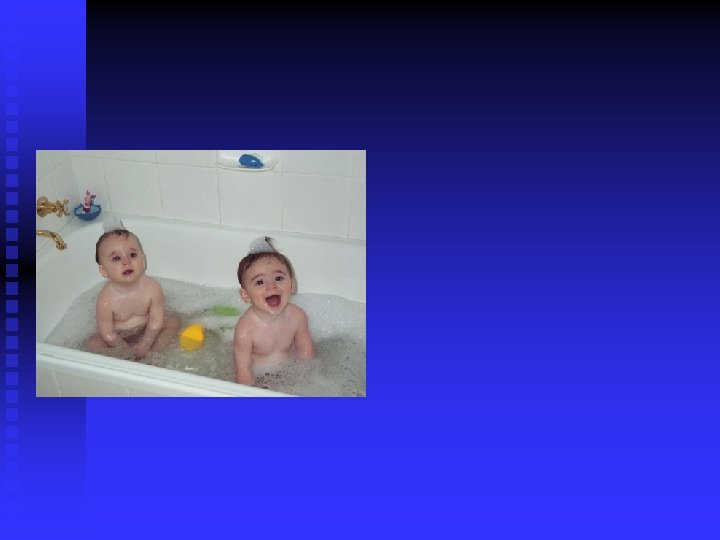
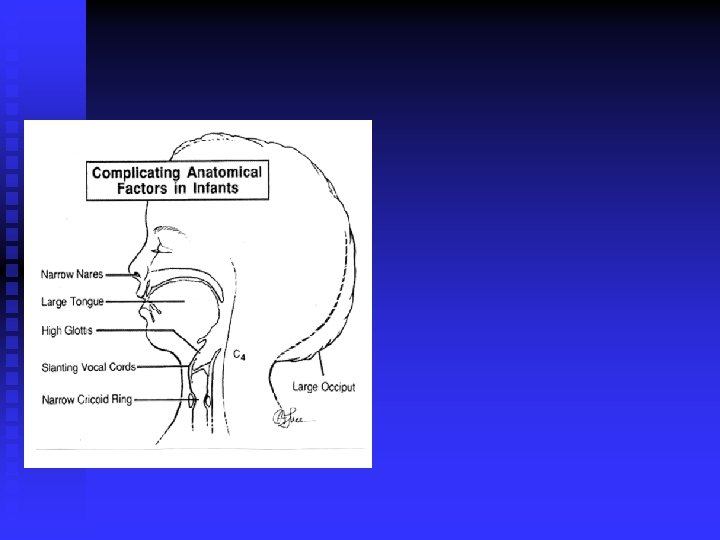
 Adult-Paediatric Differences








 History
 Issues
 Principles
 Differences in Pregnancy
 Drugs & the Placenta
 Scenarios
 Analgesic options






 Lung separation techniques:





 Special considerations in neurosurgical anaesthesia:
 Anaesthetic Emergencies
 A: Emergency Anaesthesia
 Considerations in Emergency Anaesthesia
 Anaesthetic management
 Emergency Anaesthesia: Maintenance

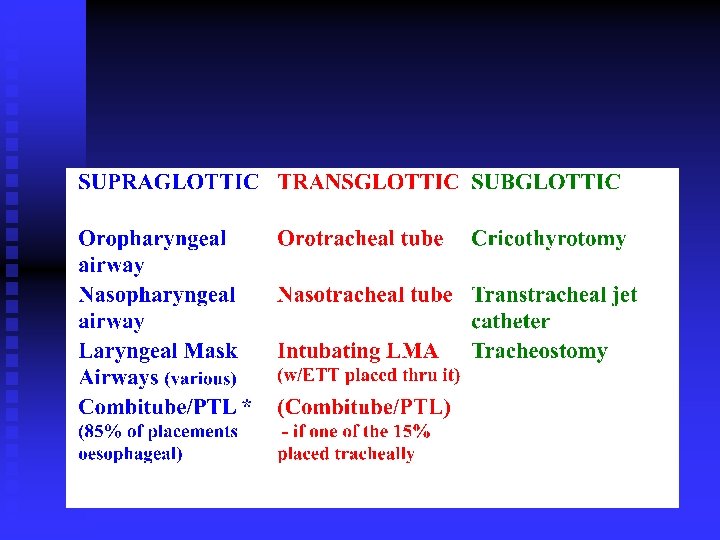
 Airway Management I

 Airway Management II

 Airway Management III

 Airway Management IV

 Respiratory Management I

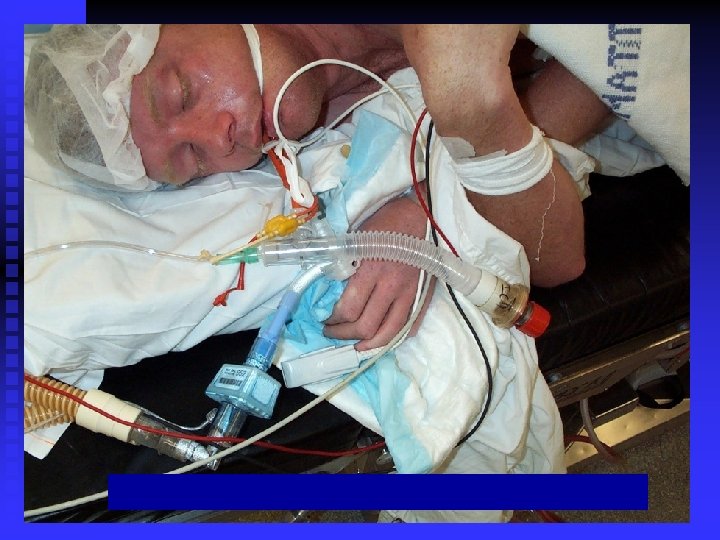
 Respiratory Management II

 Circulatory management



 Hypothermia in Trauma


 Recreational drugs
 The geriatric trauma patient

 The Pregnant Patient
 B: Anaesthetic Emergencies & Complications


 Anaesthetic Risk In Perspective