 Скачать презентацию What Constitutes a Quality Commissioning Job Agenda
b2260c08aadc8f1eeac43e42ed0696c1.ppt
- Количество слайдов: 43



What Constitutes a Quality Commissioning Job?
Agenda • Preconstruction Services – Brian Toevs, PE • Construction Services – Rusty Ross, PE, LEEDTM, Cx. A • Client Relationship – Mark Leafstedt, PE CCP Cx. A
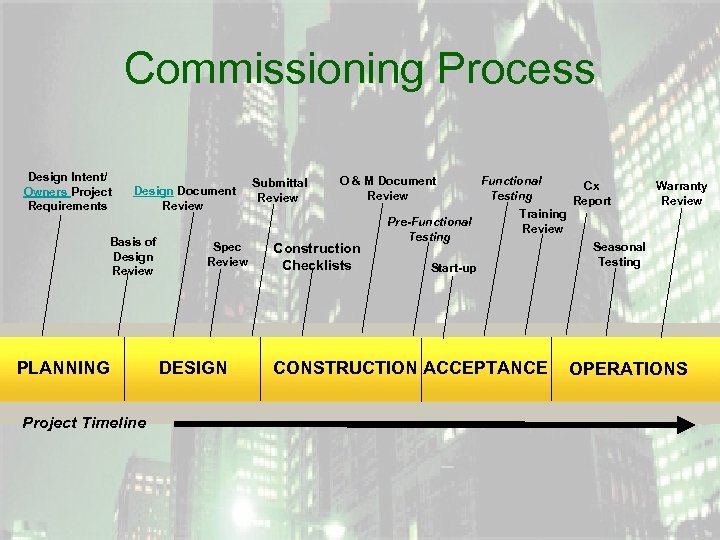
Commissioning Process Design Intent/ Owners Project Requirements Design Document Review Basis of Design Review PLANNING Project Timeline Spec Review DESIGN Submittal Review O & M Document Review Construction Checklists Pre-Functional Testing Cx Report Warranty Review Training Review Start-up CONSTRUCTION ACCEPTANCE Seasonal Testing OPERATIONS
Owner’s Requirements • Owners need help defining their needs We can help • Get in early - During Predesign • Attend meetings during Schematic Phase • Attend more than one meeting • Be an active member of the team • Write the OPR for the owner
Owner’s Requirements • Help the Architect write the OPR • Initiate 1 st draft of the Basis of Design Then turn it over to the designers • Be Proactive, Invite your self to the party OR • Better yet - have your own party
Owner’s Requirements Have a “Core Values” party • Participants should Include: – Owner – User Group Members and Leaders – Maintenance staff – Architect / Engineer – Contractors / CM • Plan for ½ to full day, for the exercise
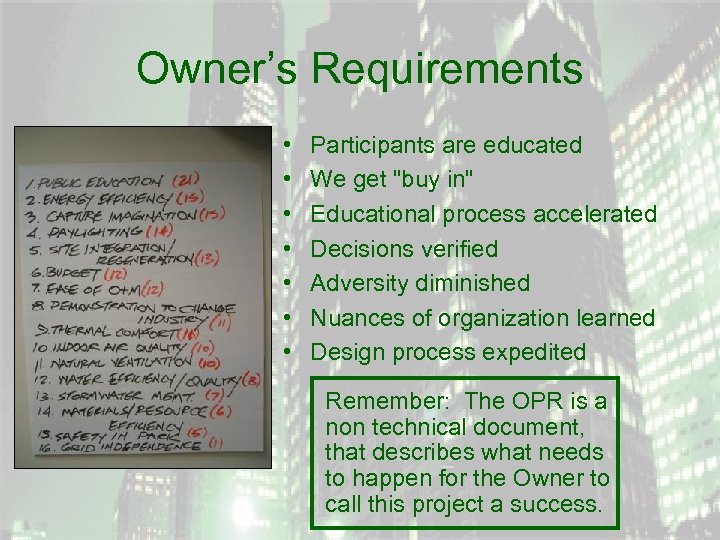
Owner’s Requirements • • Participants are educated We get "buy in" Educational process accelerated Decisions verified Adversity diminished Nuances of organization learned Design process expedited Remember: The OPR is a non technical document, that describes what needs to happen for the Owner to call this project a success.
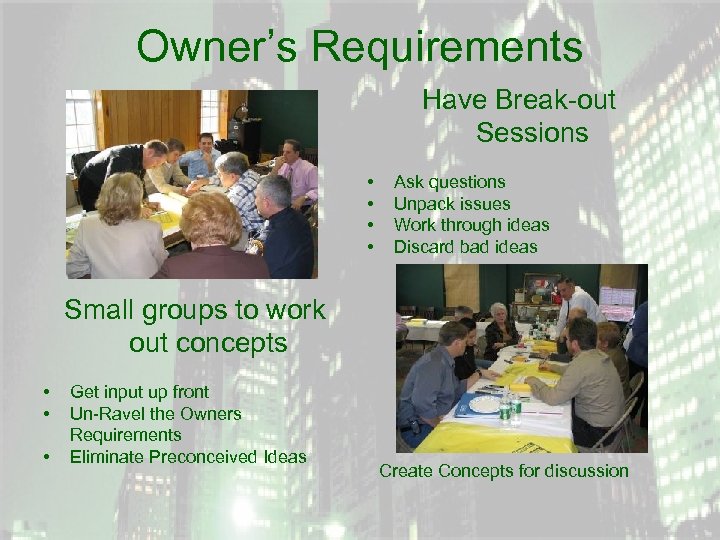
Owner’s Requirements Have Break-out Sessions • • Ask questions Unpack issues Work through ideas Discard bad ideas Small groups to work out concepts • • • Get input up front Un-Ravel the Owners Requirements Eliminate Preconceived Ideas Create Concepts for discussion
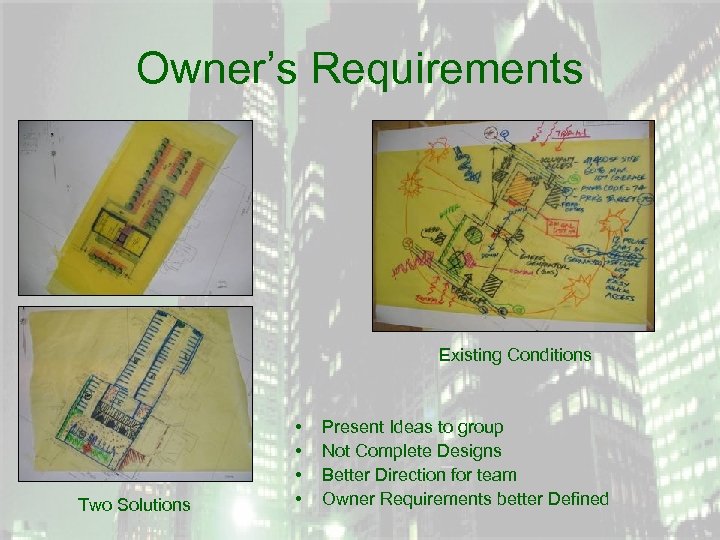
Owner’s Requirements Existing Conditions Two Solutions • • Present Ideas to group Not Complete Designs Better Direction for team Owner Requirements better Defined
Design Review • Minimum-Review Systems Commissioned • Best Practice Review Should Include: – Mechanical – Electrical – Architectural – Specifications – Coordination among trades
Design Review • To do a good HVAC review you have to look at the Architecture • Many HVAC problems are Architectural Problems • High performance buildings are failing: – Designing smaller HVAC systems – Normal Architectural Detailing
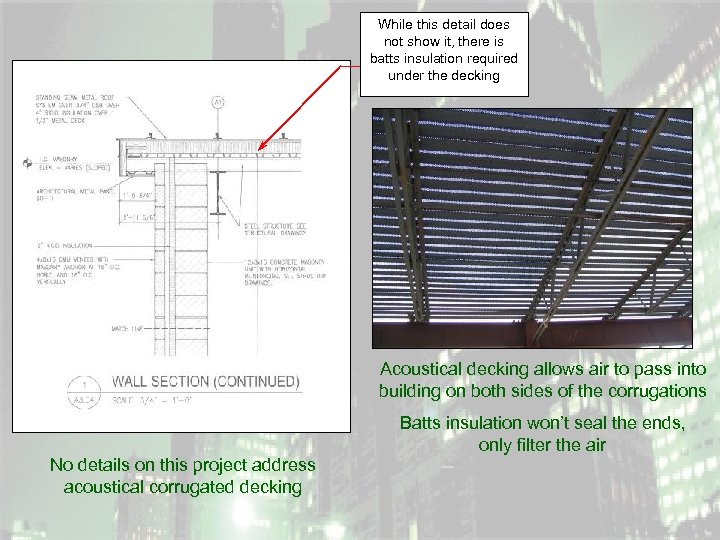
While this detail does not show it, there is batts insulation required under the decking Acoustical decking allows air to pass into building on both sides of the corrugations Batts insulation won’t seal the ends, only filter the air No details on this project address acoustical corrugated decking
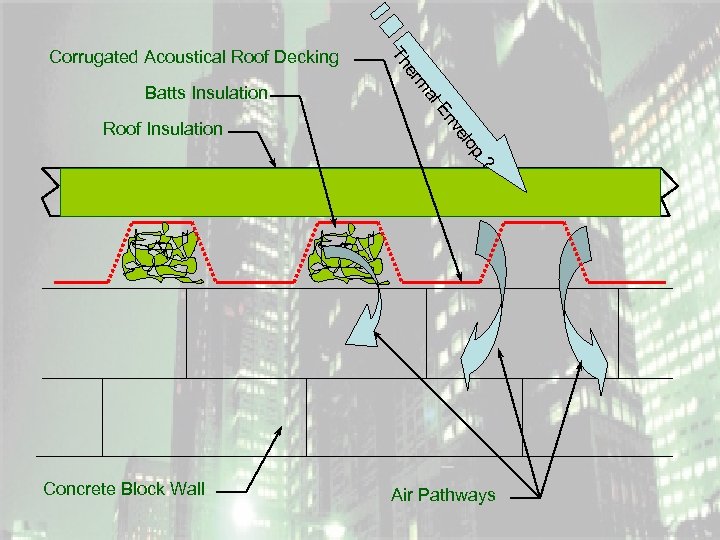
Th Corrugated Acoustical Roof Decking er al En ve Roof Insulation m Batts Insulation lop ? Concrete Block Wall Air Pathways
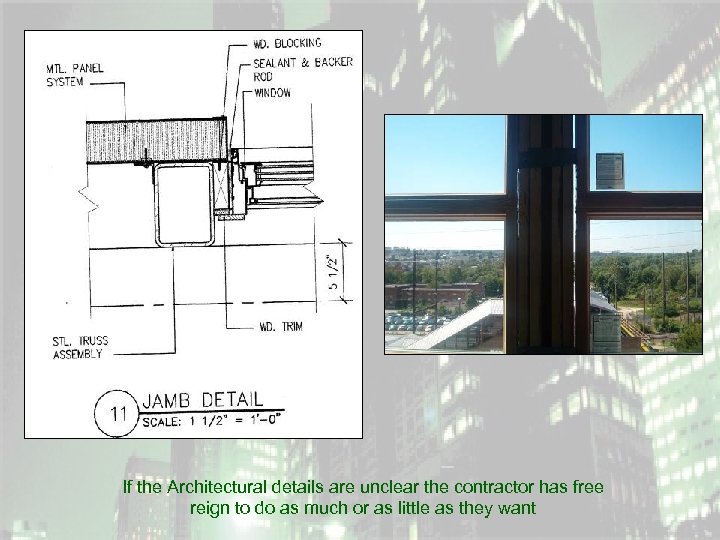
If the Architectural details are unclear the contractor has free reign to do as much or as little as they want
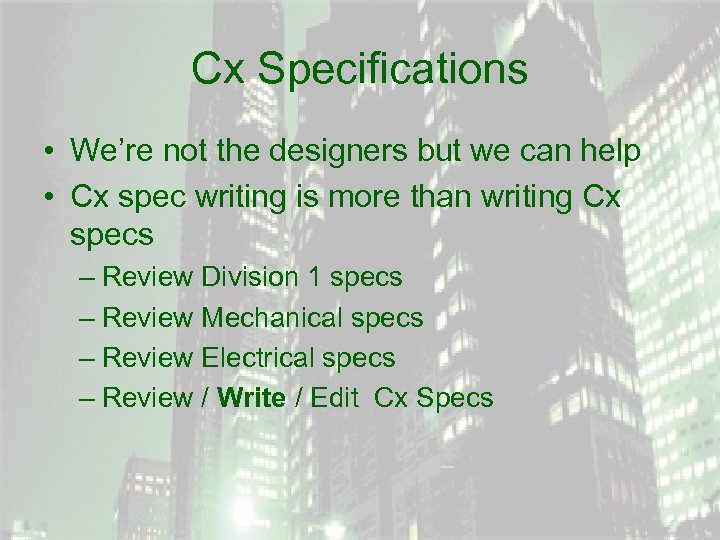
Cx Specifications • We’re not the designers but we can help • Cx spec writing is more than writing Cx specs – Review Division 1 specs – Review Mechanical specs – Review Electrical specs – Review / Write / Edit Cx Specs
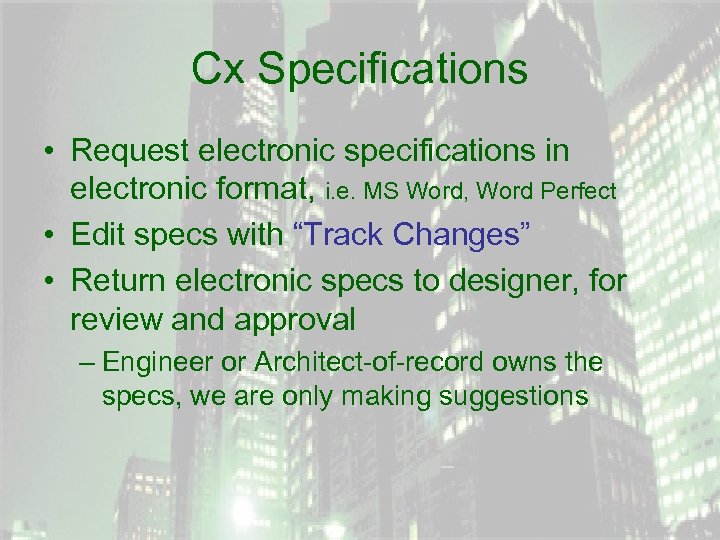
Cx Specifications • Request electronic specifications in electronic format, i. e. MS Word, Word Perfect • Edit specs with “Track Changes” • Return electronic specs to designer, for review and approval – Engineer or Architect-of-record owns the specs, we are only making suggestions
Cx Specifications • Review Division 1 specs: – Review submittal requirements • Add submittal requirements for Commissioning • Review O&M Requirements, modify submittal date to be just after submittal approval – Review payment application requirements • Tie payment application to completion of checklist tracking form – Review substantial completion requirements • Tie Cx completion to substantial completion – Write Division 1 Cx Requirements Spec
Cx Specifications • Review Mechanical Specs: – Edit general requirements to reference Cx – Edit Controls specs • Review quality assurance requirements to be more Cx friendly • Tighten-up contractor qualifications – – List specific individuals assigned to project Temporary programming / global commands Trending requirements / memory availability instrument calibrations
Cx Specifications • Review Mechanical Specs: – Edit TAB Specs • Review quality assurance requirements to be more Cx friendly • Tighten-up contractor qualifications – List specific individuals assigned to project – Write the Mechanical Cx requirements spec – Develop SVC sheets and checklist tracking form – Write the Mechanical testing requirements
Bidding • Cx Plan needs to be specific enough to provide guidance but open enough for updating • Cx Plan should mirror the spec requirements • Keep it short, 15 to 20 pages plus diagrams • Define flow of Cx Process, documentation, et cetera. Use Flow diagrams
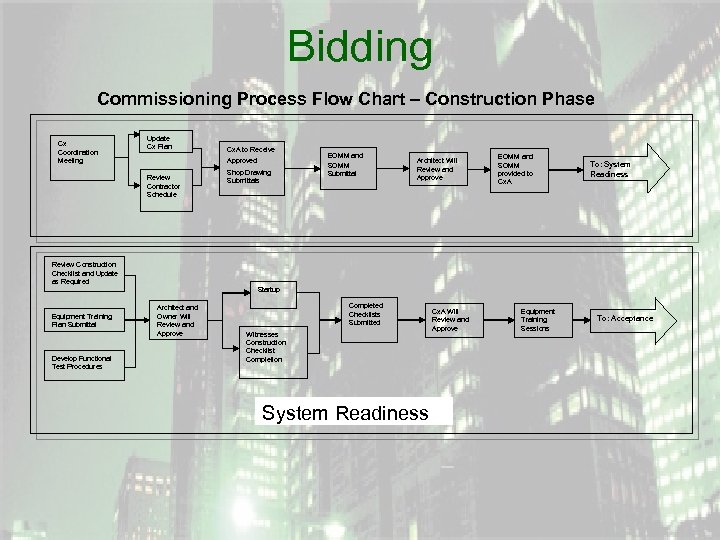
Bidding Commissioning Process Flow Chart – Construction Phase Cx Coordination Meeting Update Cx Plan Cx. A to Receive Approved Review Contractor Schedule Shop Drawing Submittals EOMM and SOMM Submittal Architect Will Review and Approve EOMM and SOMM provided to Cx. A To: System Readiness Review Construction Checklist and Update as Required Startup Equipment Training Plan Submittal Develop Functional Test Procedures Architect and Owner Will Review and Approve Completed Checklists Submitted Witnesses Construction Checklist Completion System Readiness Cx. A Will Review and Approve Equipment Training Sessions To: Acceptance
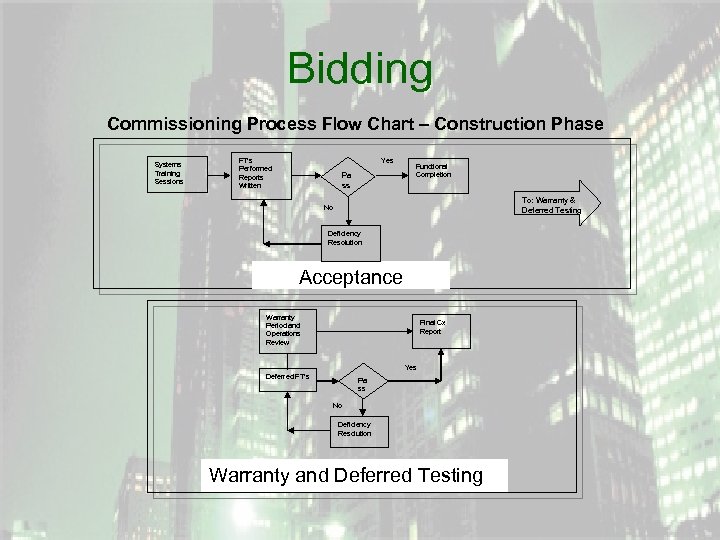
Bidding Commissioning Process Flow Chart – Construction Phase Systems Training Sessions FT’s Performed Reports Written Yes Pa ss Functional Completion To: Warranty & Deferred Testing No Deficiency Resolution Acceptance Warranty Period and Operations Review Final Cx Report Yes Deferred FT’s Pa ss No Deficiency Resolution Warranty and Deferred Testing
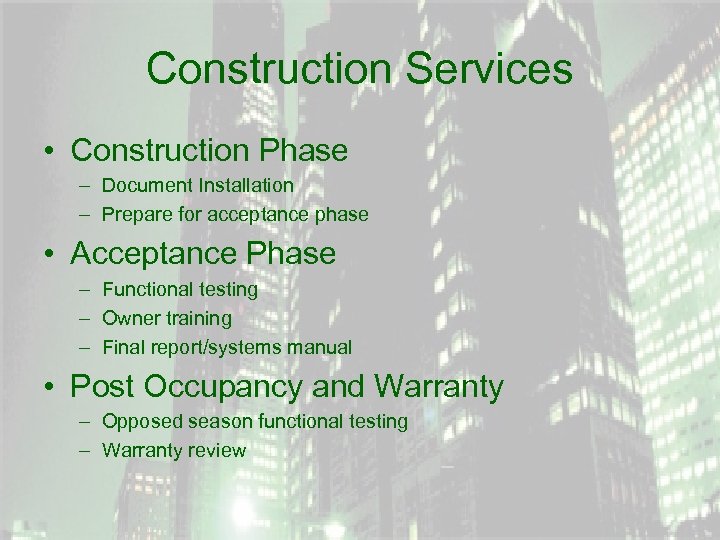
Construction Services • Construction Phase – Document Installation – Prepare for acceptance phase • Acceptance Phase – Functional testing – Owner training – Final report/systems manual • Post Occupancy and Warranty – Opposed season functional testing – Warranty review
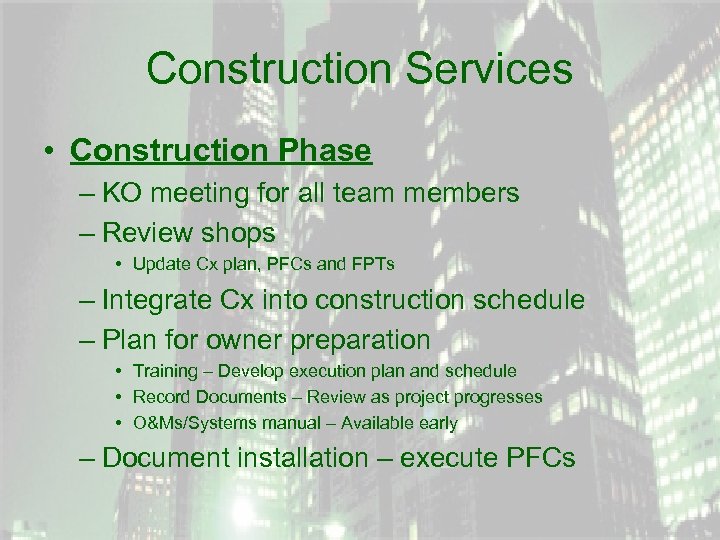
Construction Services • Construction Phase – KO meeting for all team members – Review shops • Update Cx plan, PFCs and FPTs – Integrate Cx into construction schedule – Plan for owner preparation • Training – Develop execution plan and schedule • Record Documents – Review as project progresses • O&Ms/Systems manual – Available early – Document installation – execute PFCs
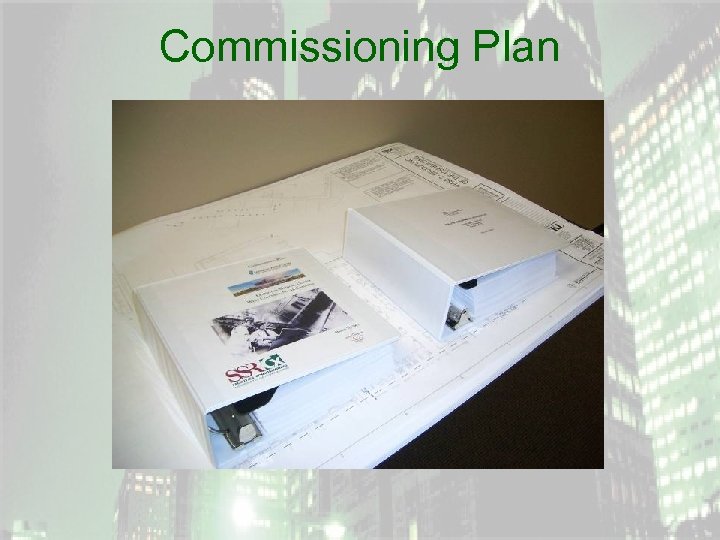
Commissioning Plan
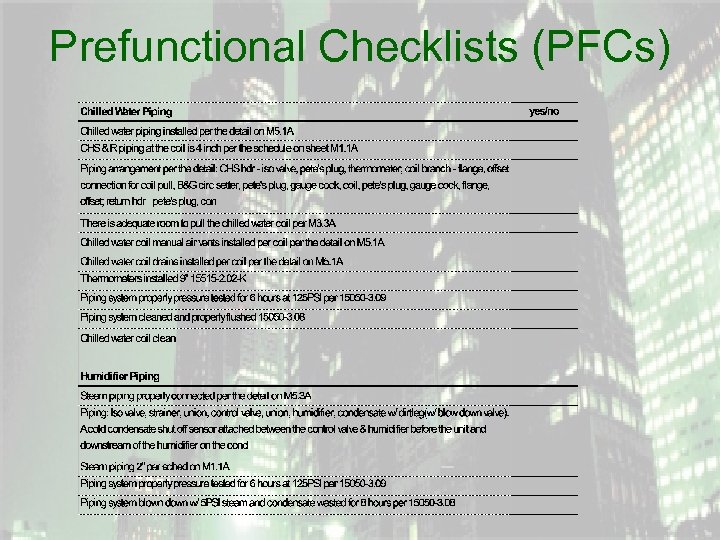
Prefunctional Checklists (PFCs)
Master Deficiency List
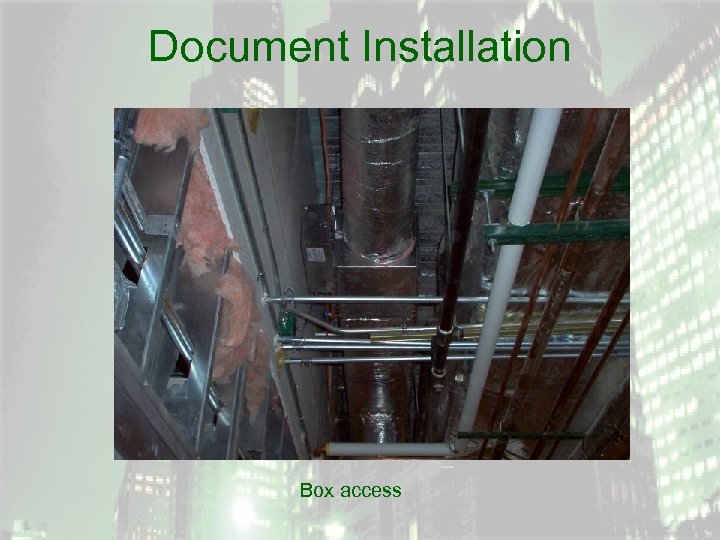
Document Installation Box access
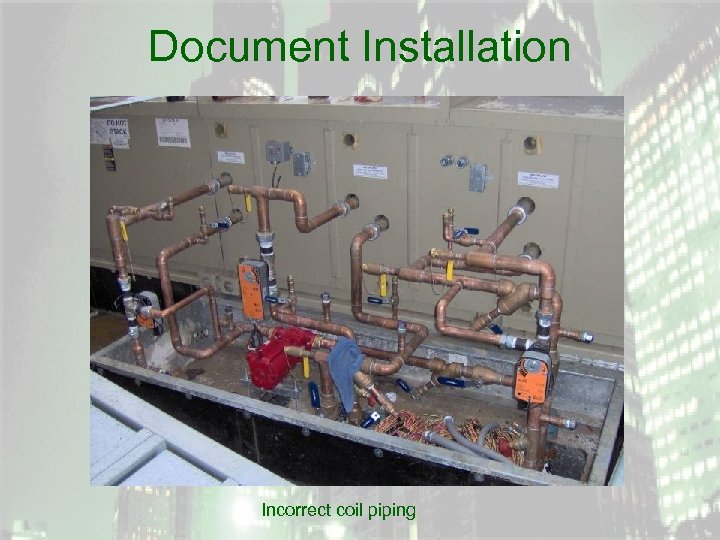
Document Installation Incorrect coil piping
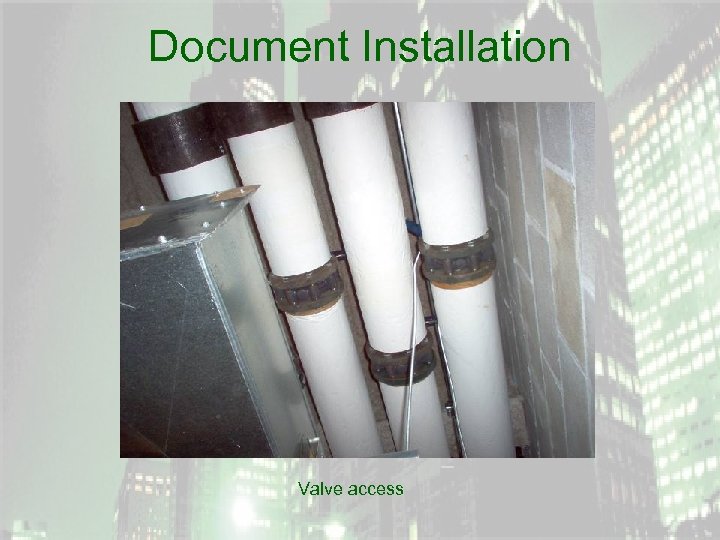
Document Installation Valve access
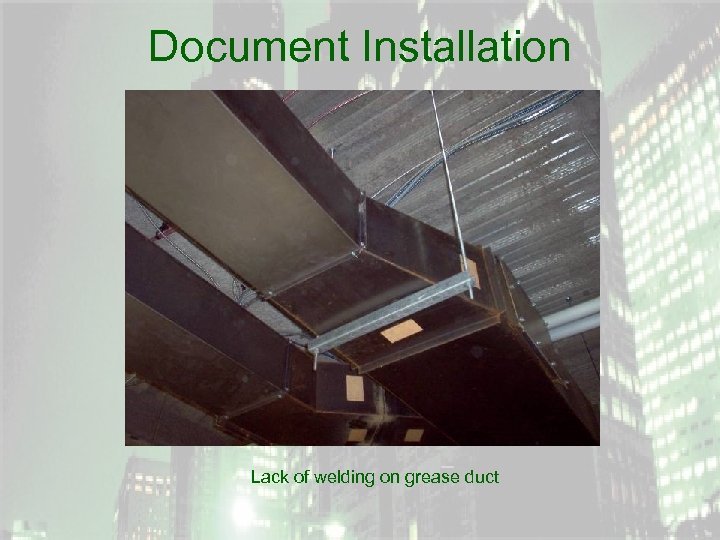
Document Installation Lack of welding on grease duct
Construction Services • Acceptance Phase – Start-up – Functional testing • • Verify controls Simple to complex Single to integrated Coordinate w/ subs – controls, T&B – Owner training • Execute and monitor • Systems training – Final report/systems manual
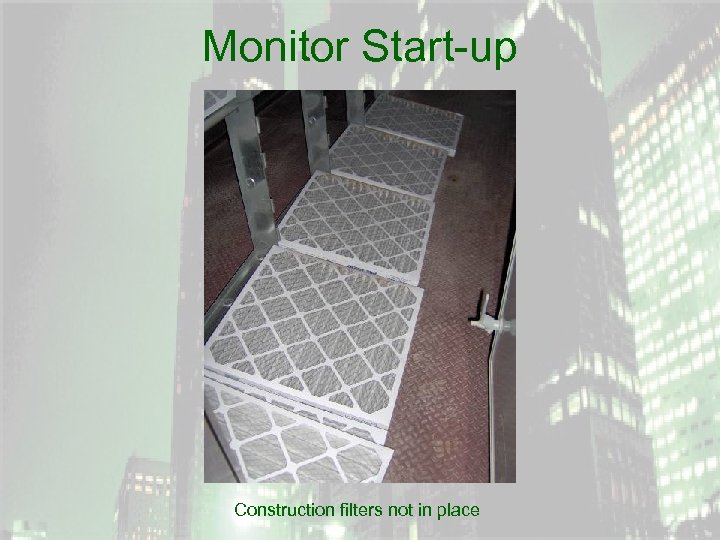
Monitor Start-up Construction filters not in place
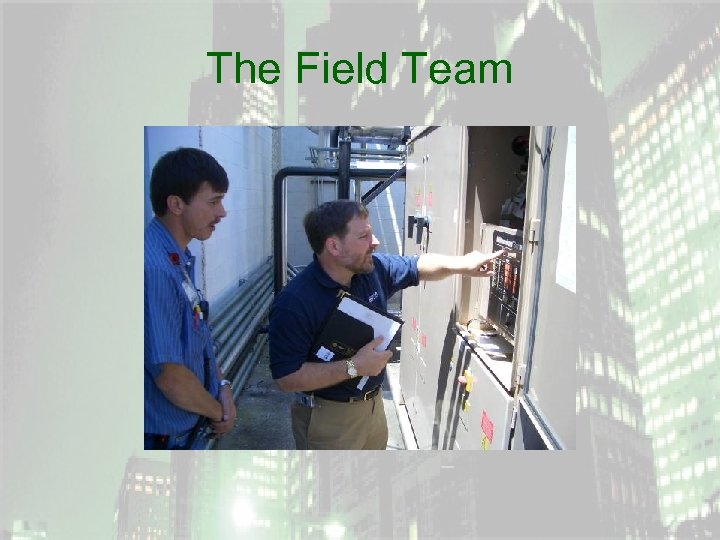
The Field Team
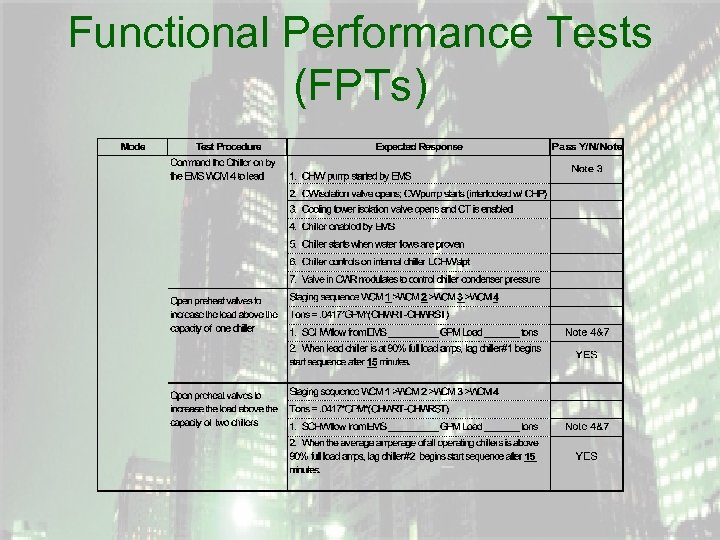
Functional Performance Tests (FPTs)
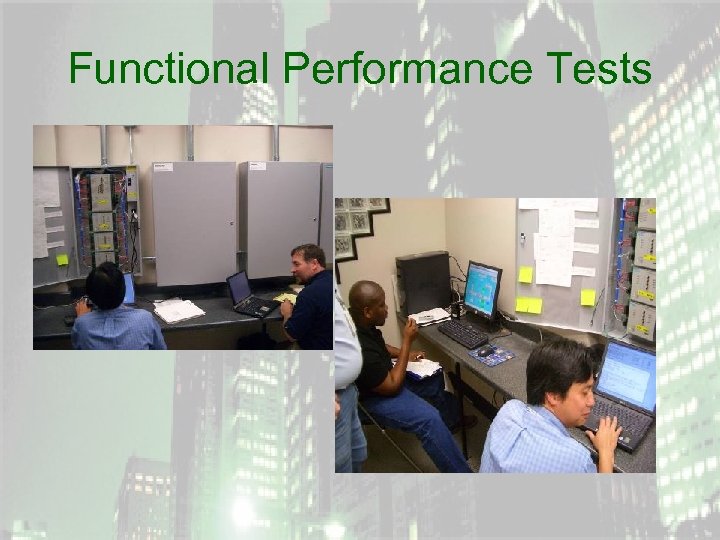
Functional Performance Tests
Construction Services • Post Occupancy and Warranty – Opposed season functional testing • Peak summer • Peak winter – Warranty review • Review building performance w/ owner & O&M staff • Note any deficiencies • Plan of action
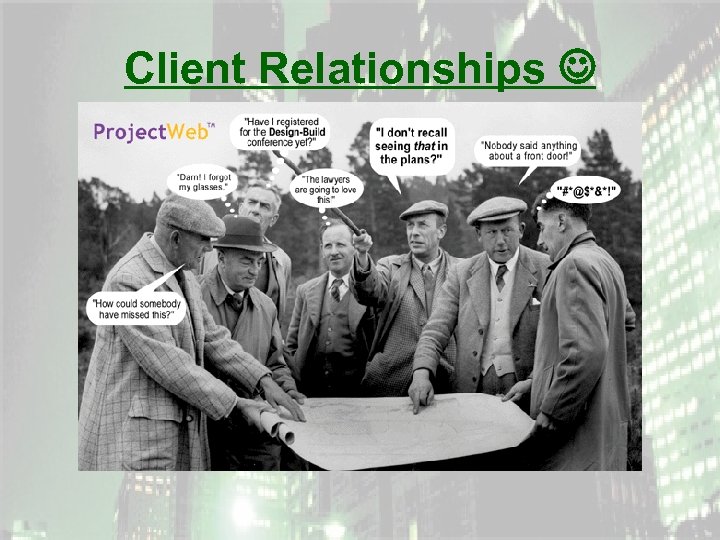
Client Relationships
Client Relationships • WHO ARE THE CLIENTS? – Owner? General Contractor? A/E Consultants? . . . Yes – Does the client always hold the Cx contract? • WHAT KIND OF CLIENTS? – – Participative or Non-Involved? Demanding or Relaxed? Sophisticated or Not? Clear on Cx Expectations or Not? • HOW DO YOU HANDLE DIFFERENCES?
Client Relationships • IMPORTANCE OF COMMUNICATION – – – – Enlistment of an advocate Prevent surprises Build a cooperative environment Reduce misunderstandings Speed resolution Must be clear, concise, factual, non-blaming Professional use of all forms: • Verbal or written • Cx documents
Client Relationships • WHY DO WE DOCUMENT? – – Communication Set Expectations Record and track events and results Legacy • WHAT MAKES OUR DOCUMENTATION DIFFERENT? – Independent Perspective – Detail – Resolution oriented rather than blame oriented
Client Relationships • WHAT DEFICIENCIES DO YOU BRING TO THE CLIENT? – All? Cost impact ones? Design ones? Construction ones? Long Term ones? – Are all logged issues actually deficiencies? • HOW DO WE GET RESOLUTION? – – Participate or pull away? Resolve during or after discovery? Get Client involved? Can we reduce the number or deficiencies or time it takes to resolve them?
Client Relationships • SUMMARY – Communicate – Be Professional – Listen – Communicate – Document – Participate – Communicate
Скачать презентацию What Constitutes a Quality Commissioning Job Agenda
b2260c08aadc8f1eeac43e42ed0696c1.ppt