


 Скачать презентацию What are virtual researchers up to VREs and
511bb1d3053482c1c3530a7a2c3e7f73.ppt
- Количество слайдов: 34
 What are virtual researchers up to? VREs and their users Lynn Silipigni Connaway, Ph. D. Senior Research Scientist OCLC Research Cambridge University November 23, 2009
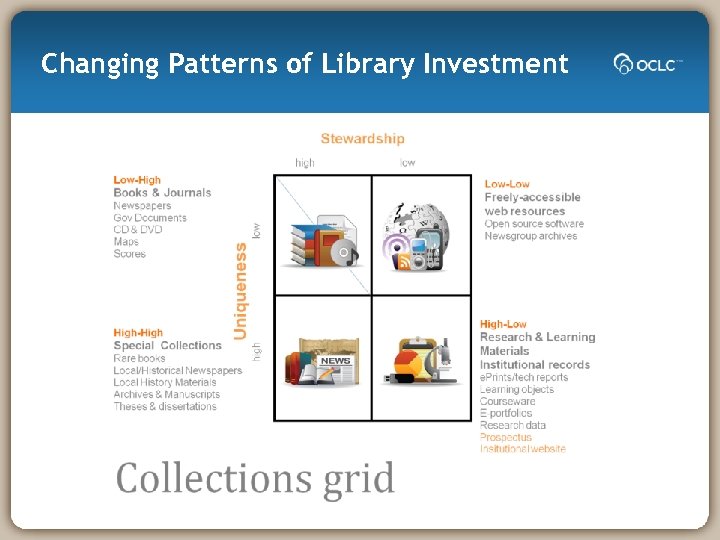 Changing Patterns of Library Investment
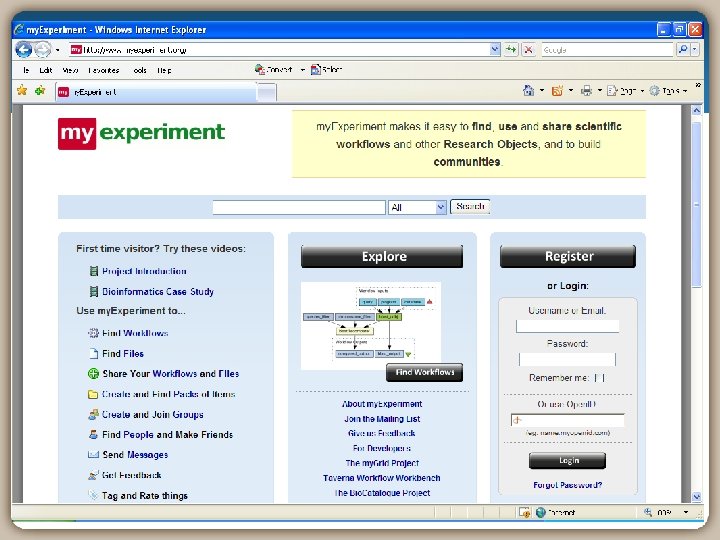
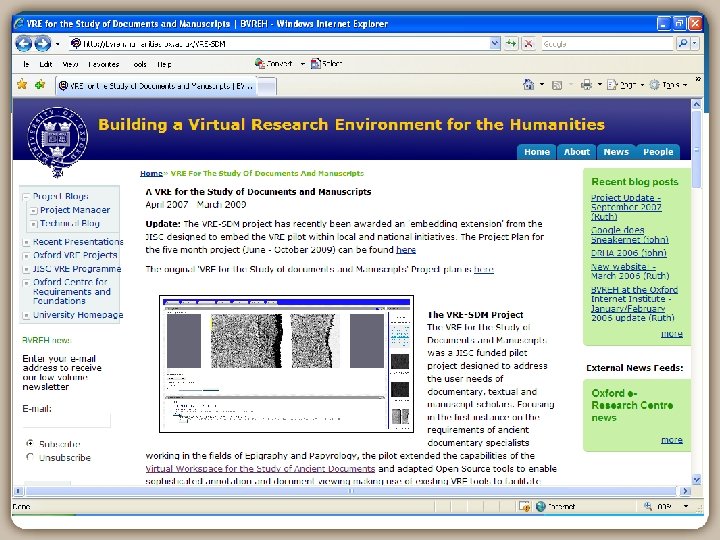
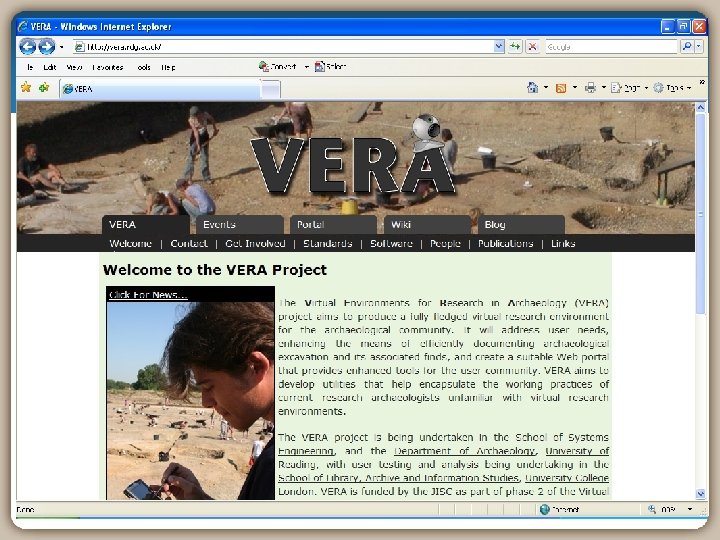
 Research Goals • Evaluate JISC-funded virtual research environment (VRE) and digital repository projects • Goal to develop products and technologies • Develop portrait of virtual researcher
 Project Managers’ Perceptions • Scientists more apt to already use digital repository or VRE systems • Those in other disciplines less inclined to use • Need evidence of benefits
 Project Managers’ Perceptions • Attitudes toward adoption vary • Age • Discipline • Years of Experience
 Project Managers’ Perceptions • Critical factors • Ease of use • Embed into workflows • Difficult to accomplish • Reluctant to use new technologies • Time consuming to learn • Do not know they exist
 Project Managers’ Perceptions • Concern about privacy • Want to limit shared data • Different levels of access • Need to create a safe environment for researchers
 Project Managers’ Perceptions • Very little knowledge of repositories • Need for advocacy, promotion, publicity and marketing
 Project Managers’ Perceptions • Need to identify benefits • Access • Easier dissemination • Broader exposure – greater impact • Greater workflow efficiency
 Common Themes: Digital Repository Projects • Lack understanding • Copyright issues • Publisher and publication agreements • Dissemination agreements • Need for better document management
 Common Themes: Digital Repository Projects • Distrust open web • Need accurate metadata • Want safe environment • Need better feedback from users to developers
 Common Themes: VRE Projects • Language used by developers and researchers at the different academic levels is different
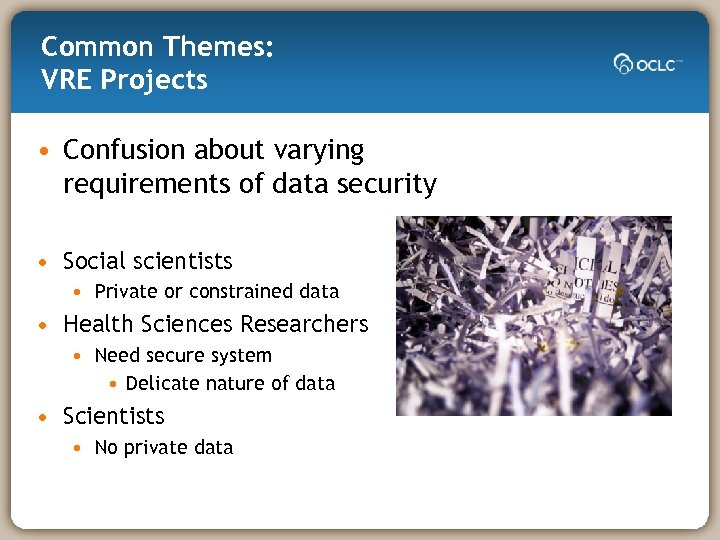 Common Themes: VRE Projects • Confusion about varying requirements of data security • Social scientists • Private or constrained data • Health Sciences Researchers • Need secure system • Delicate nature of data • Scientists • No private data
 Common Themes: VRE Projects Bioinformatics Researchers • No concerns with sharing • Open professional culture
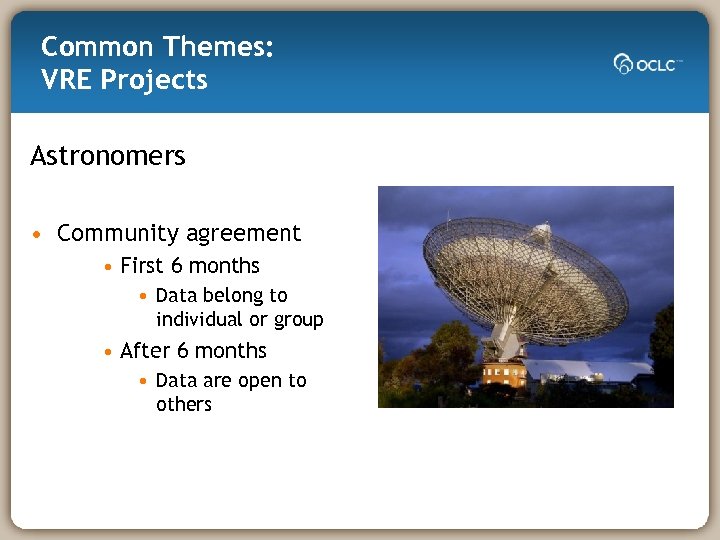 Common Themes: VRE Projects Astronomers • Community agreement • First 6 months • Data belong to individual or group • After 6 months • Data are open to others
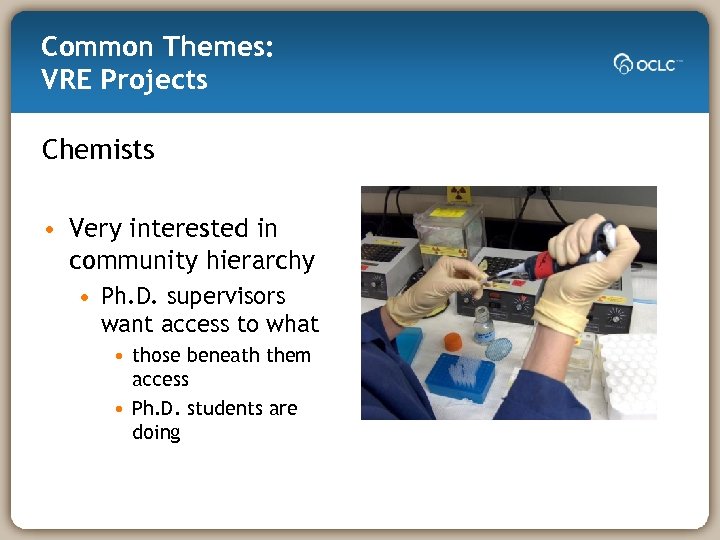 Common Themes: VRE Projects Chemists • Very interested in community hierarchy • Ph. D. supervisors want access to what • those beneath them access • Ph. D. students are doing
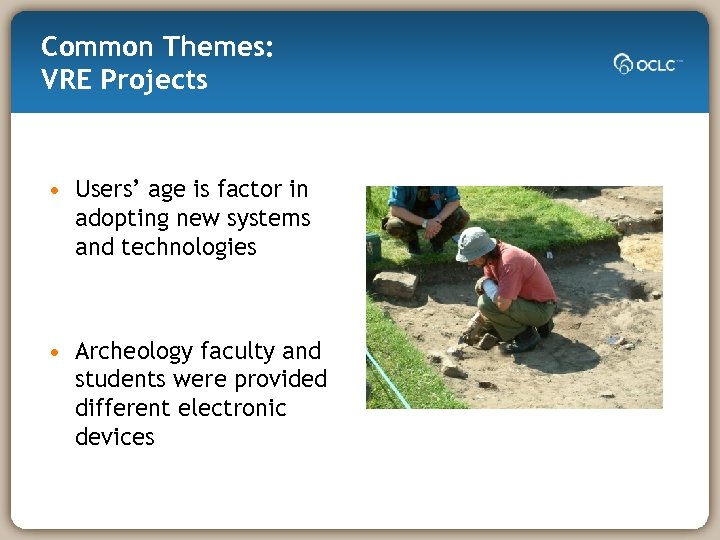 Common Themes: VRE Projects • Users’ age is factor in adopting new systems and technologies • Archeology faculty and students were provided different electronic devices
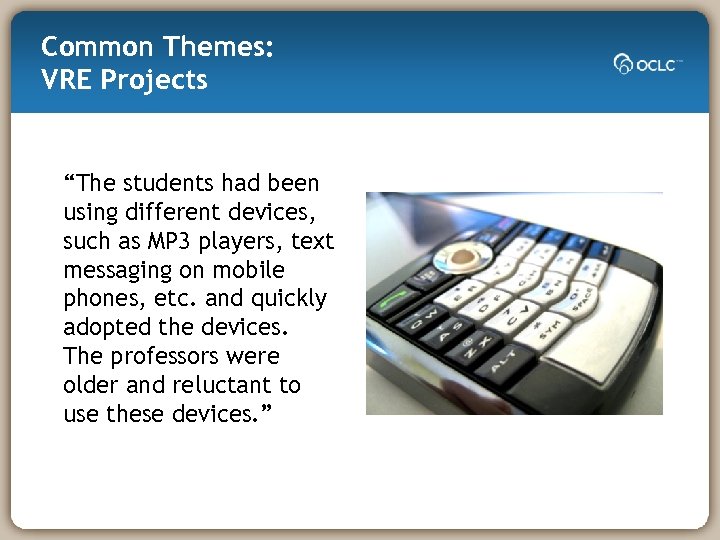 Common Themes: VRE Projects “The students had been using different devices, such as MP 3 players, text messaging on mobile phones, etc. and quickly adopted the devices. The professors were older and reluctant to use these devices. ”
 Common Themes: VRE Projects Twittering during meetings was very popular with computer scientists
 Common Themes: VRE Projects Initial difficulty engaging some scholars in VRE chat sessions, blogs, social networks
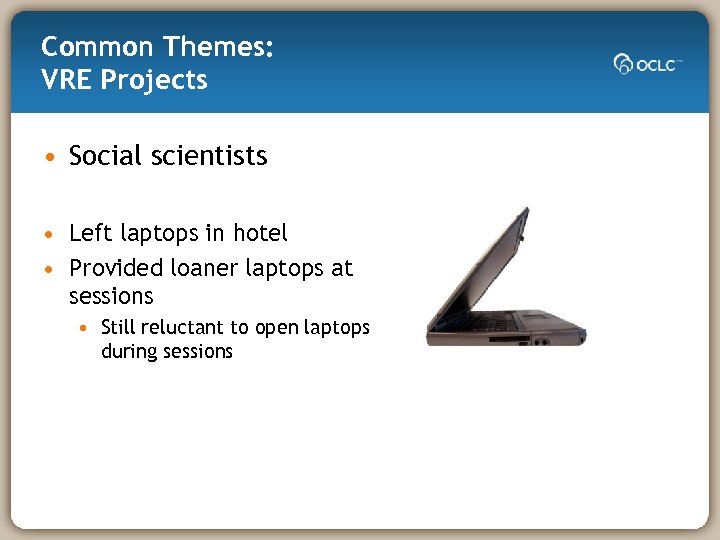 Common Themes: VRE Projects • Social scientists • Left laptops in hotel • Provided loaner laptops at sessions • Still reluctant to open laptops during sessions
 Common Themes: VRE Projects • Use different language • Express things in different ways • Still able to discuss between different groups
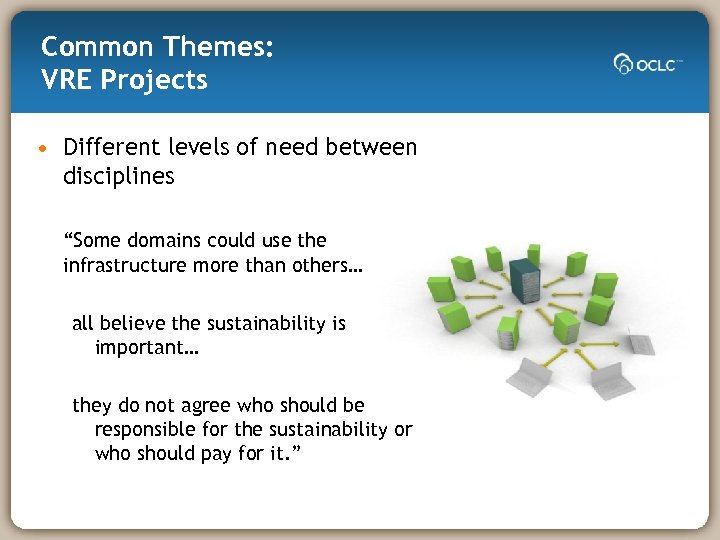 Common Themes: VRE Projects • Different levels of need between disciplines “Some domains could use the infrastructure more than others… all believe the sustainability is important… they do not agree who should be responsible for the sustainability or who should pay for it. ”
 Common Themes: VRE Projects Time constraints for different types of people involved in project were very different
 Conclusions • Attitudes vary • Demographics • Age • Discipline • No time to learn or add processes to current workflows • Technology • Needs to be easy to use • Embedded in workflows
 Conclusions • Systems need to allow for varying levels of sharing • • • Thoughts Ideas Data Reports Formal Papers
 Conclusions • Not all disciplines and researchers want to share all with everyone • Privacy and copyright important and misunderstood
 Conclusions • Institutional buy-in • Promote systems • Simplify workflows • Wide dissemination of work
 Effective VREs and Digital Repositories • Scholars • Know about services and systems • Aware of benefits; therefore, • Use services and systems • Librarians • Involved in policy development • Lead creation and maintenance of metadata
 Questions & Discussion Lynn Silipigni Connaway, Ph. D. connawal@oclc. org Special thanks to Karen Disbrow and Timothy J. Dickey