 Скачать презентацию What are nouns objects names of uns are
a4825ec27e804b7210a87eda5c28a2a3.ppt
- Количество слайдов: 30




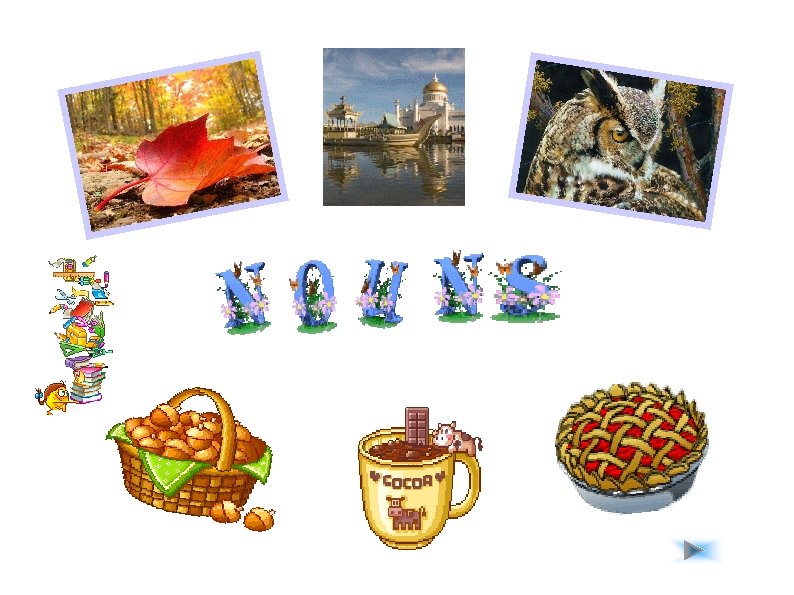
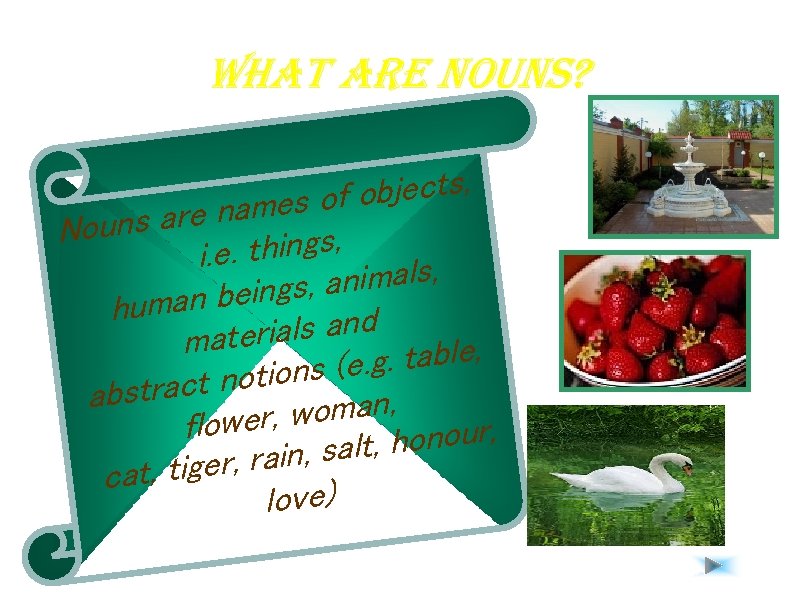
What are nouns? objects, names of uns are No things, i. e. animals, n beings, huma erials and mat. g. table, otions (e bstract n a woman, flower, honour, rain, salt, at, tiger, c love)
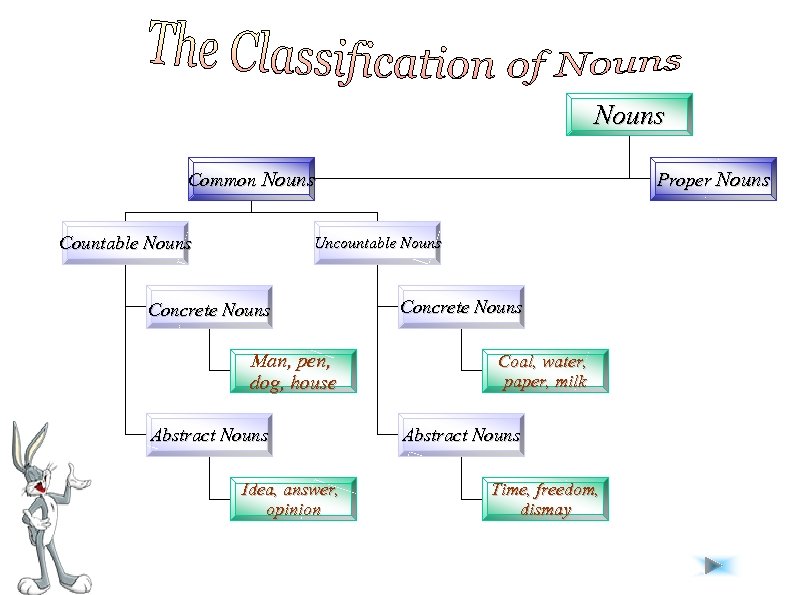
Nouns Common Nouns Countable Nouns Proper Nouns Uncountable Nouns Concrete Nouns Man, pen, dog, house Abstract Nouns Idea, answer, opinion Concrete Nouns Coal, water, paper, milk Abstract Nouns Time, freedom, dismay
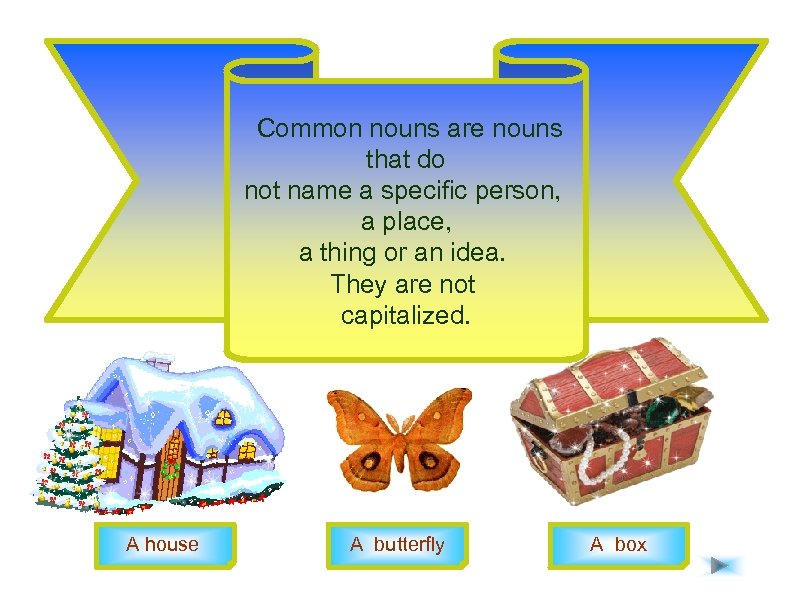
Common nouns are nouns that do not name a specific person, a place, a thing or an idea. They are not capitalized. A house A butterfly A box
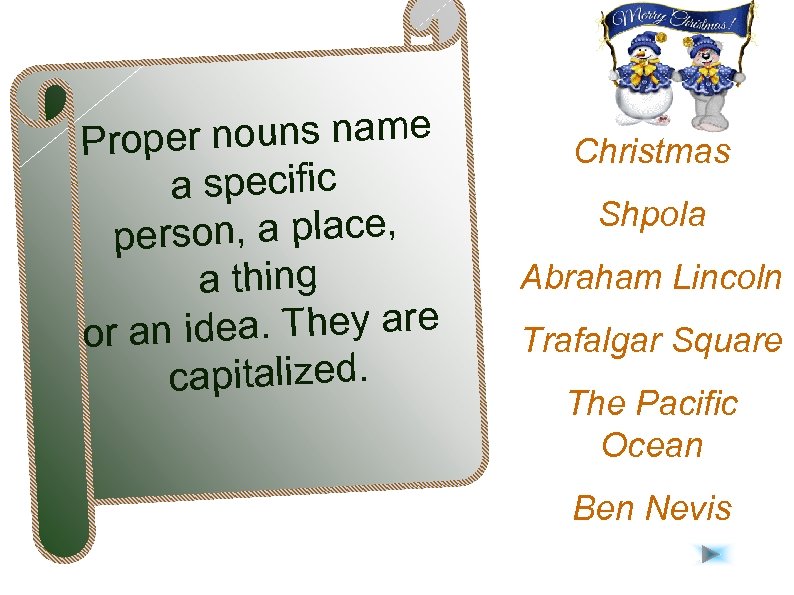
er nouns name Prop a specific rson, a place, pe a thing idea. They are or an capitalized. Christmas Shpola Abraham Lincoln Trafalgar Square The Pacific Ocean Ben Nevis
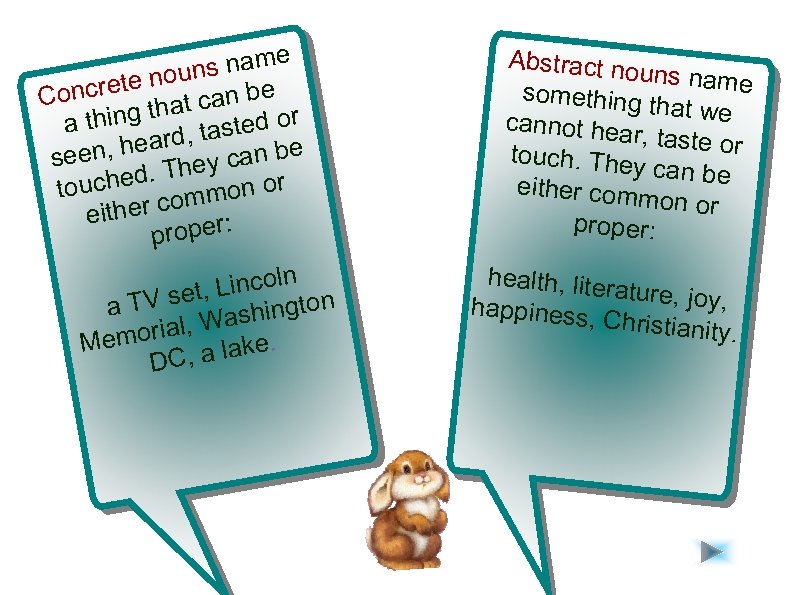
e ns nam u rete no an be Conc g that c ted or a thin ard, tas e seen, h They can be uched. to mon or her com : eit proper ln , Linco TV set shington a rial, Wa. Memo , a lake DC Abstract no uns name something that we cannot hea r, taste or touch. They can be either comm on or proper: health, liter ature, joy, happiness, Christianity.
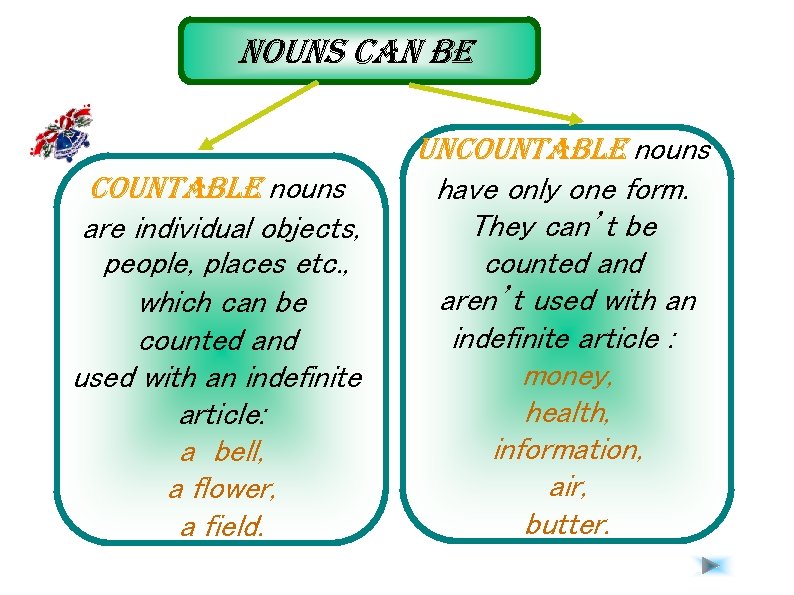
nouns can be countable nouns are individual objects, people, places etc. , which can be counted and used with an indefinite article: a bell, a flower, a field. uncountable nouns have only one form. They can’t be counted and aren’t used with an indefinite article : money, health, information, air, butter.
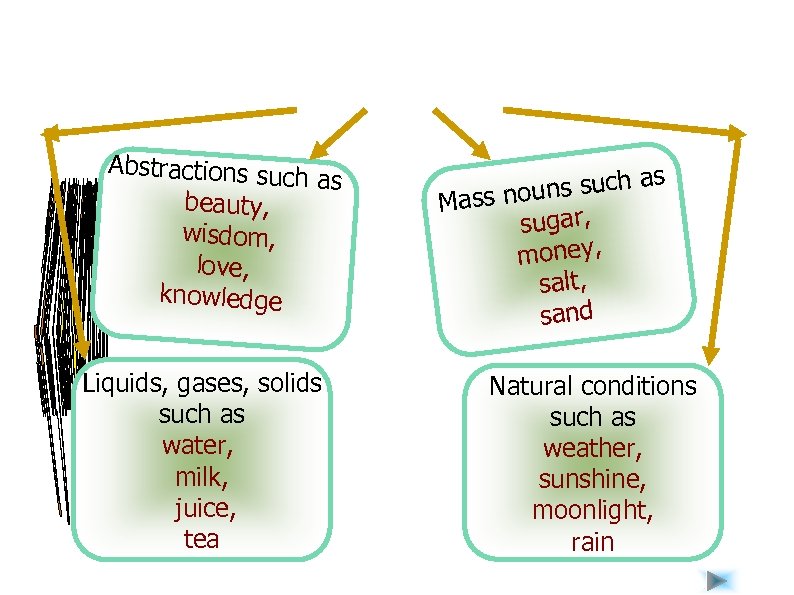
Abstractions such as beauty, wisdom, love, knowledge Liquids, gases, solids such as water, milk, juice, tea s ns such a Mass nou sugar, money, salt, sand Natural conditions such as weather, sunshine, moonlight, rain
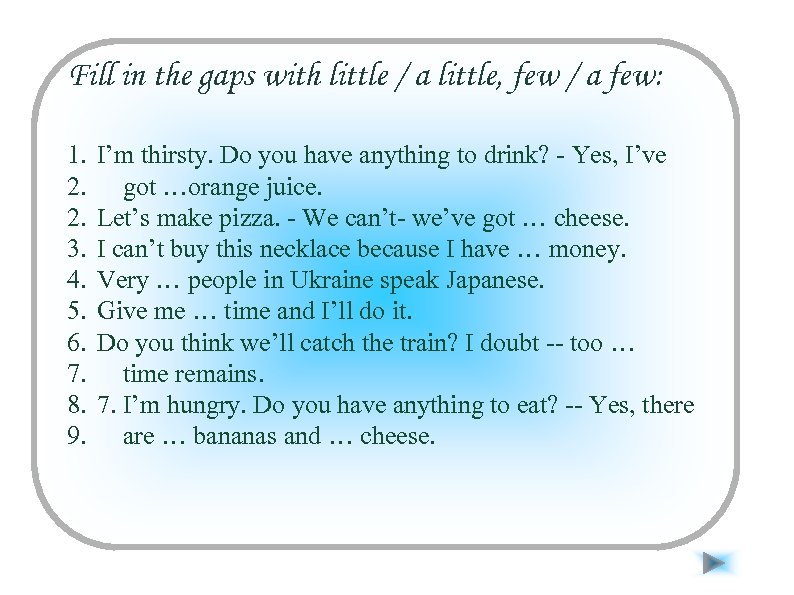
Fill in the gaps with little / a little, few / a few: 1. 2. 2. 3. 4. 5. 6. 7. 8. 9. I’m thirsty. Do you have anything to drink? - Yes, I’ve got …orange juice. Let’s make pizza. - We can’t- we’ve got … cheese. I can’t buy this necklace because I have … money. Very … people in Ukraine speak Japanese. Give me … time and I’ll do it. Do you think we’ll catch the train? I doubt -- too … time remains. 7. I’m hungry. Do you have anything to eat? -- Yes, there are … bananas and … cheese.
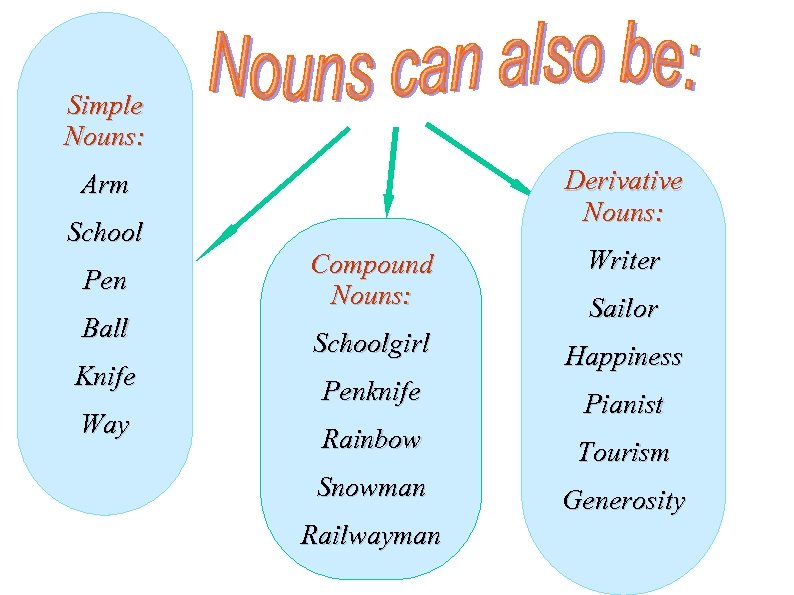
Simple Nouns: Derivative Nouns: Arm School Pen Ball Knife Way Compound Nouns: Writer Schoolgirl Happiness Penknife Pianist Rainbow Tourism Snowman Generosity Railwayman Sailor
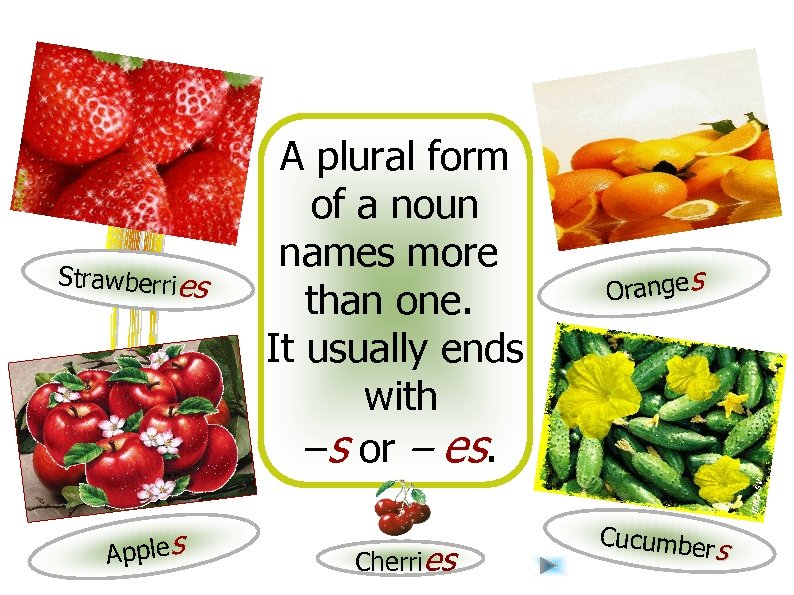
Strawberries Apples A plural form of a noun names more than one. It usually ends with –s or – es. Cherries Oranges Cucumber s
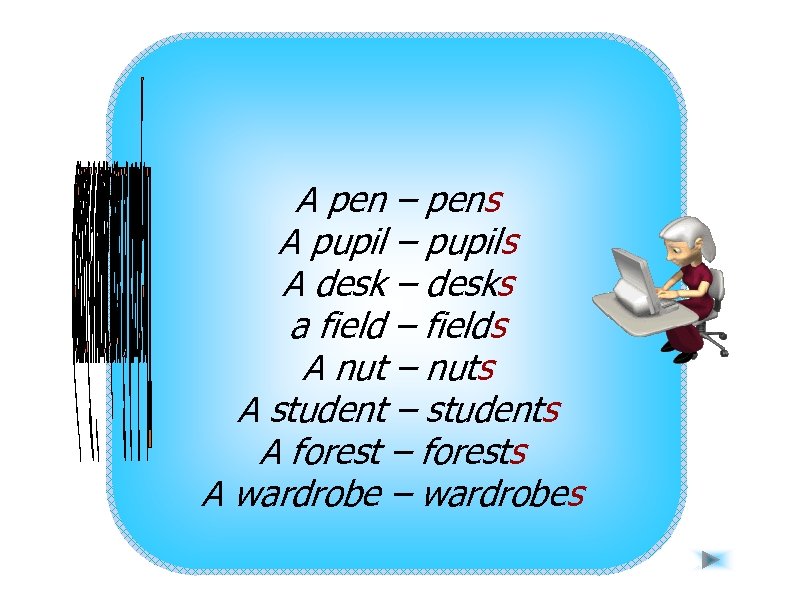
A pen – pens A pupil – pupils A desk – desks a field – fields A nut – nuts A student – students A forest – forests A wardrobe – wardrobes
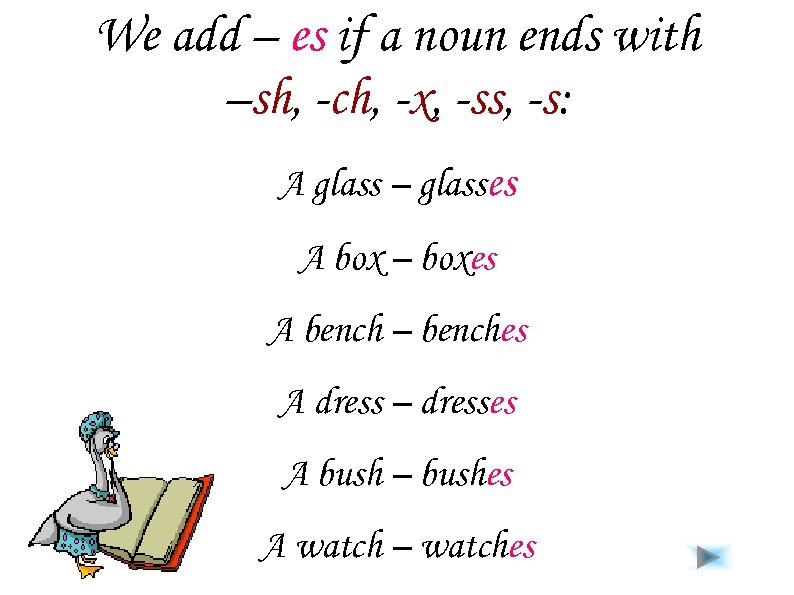
We add – es if a noun ends with –sh, -ch, -x, -ss, -s: A glass – glasses A box – boxes A bench – benches A dress – dresses A bush – bushes A watch – watches
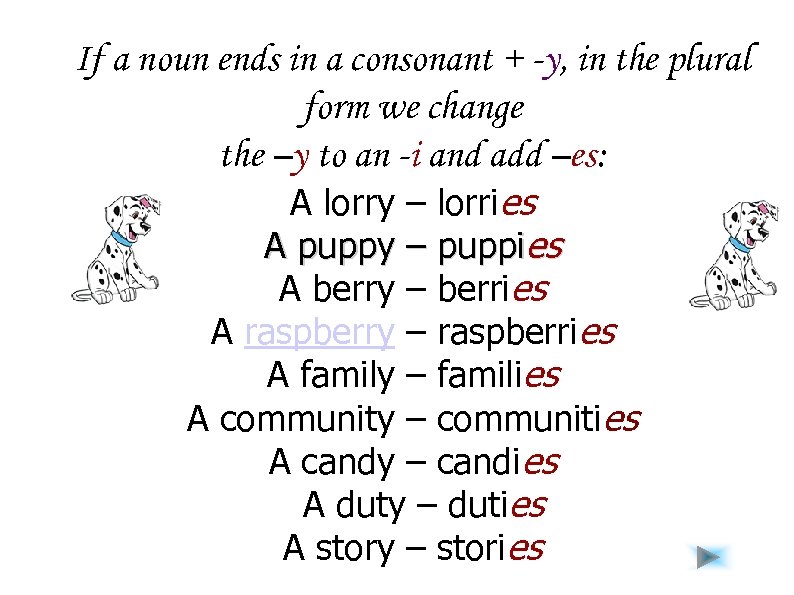
If a noun ends in a consonant + -y, in the plural form we change the –y to an -i and add –es: A lorry – lorries A puppy – puppies A berry – berries A raspberry – raspberries A family – families A community – communities A candy – candies A duty – duties A story – stories
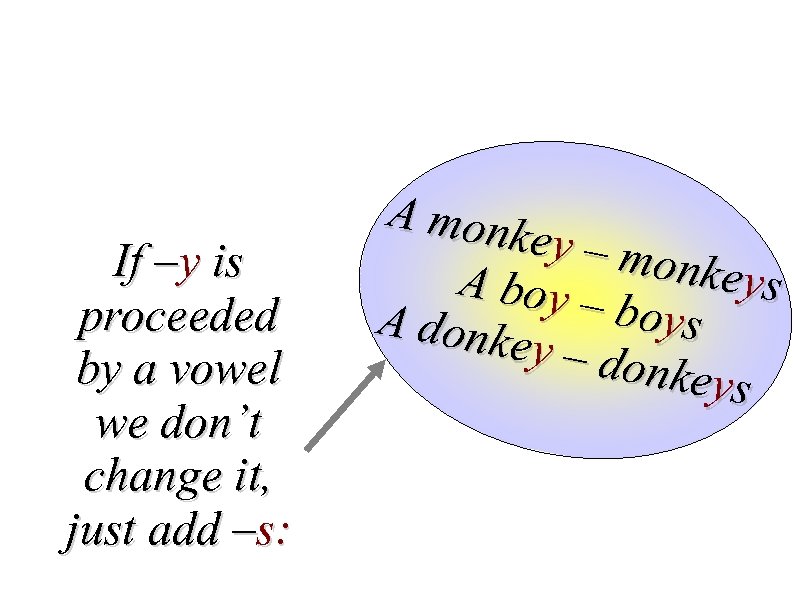
If –y is proceeded by a vowel we don’t change it, just add –s: A monk ey – mo nkeys A boy – boys A donk ey – do nkeys
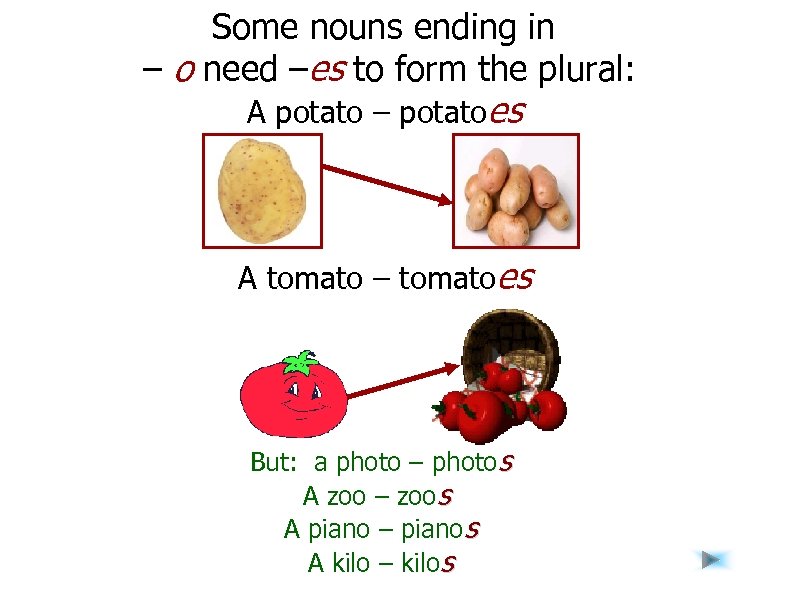
Some nouns ending in – o need –es to form the plural: A potato – potatoes A tomato – tomatoes But: a photo – photos A zoo – zoos A piano – pianos A kilo – kilos
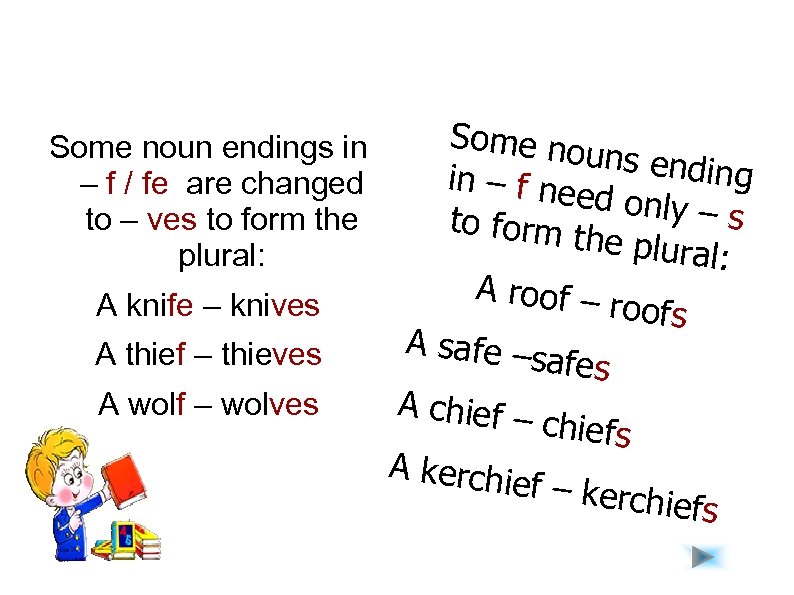
Some noun endings in – f / fe are changed to – ves to form the plural: A knife – knives A thief – thieves A wolf – wolves Some no uns endi ng in – f ne ed only – s to form t he plura l: A roof – roofs A safe –s afes A chief – chiefs A kerchie f – kerch iefs
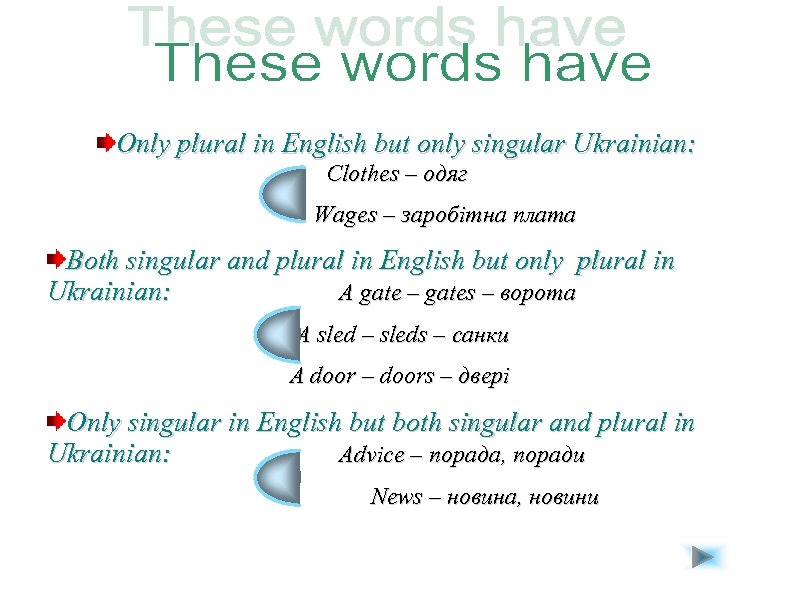
Only plural in English but only singular Ukrainian: Clothes – одяг Wages – заробітна плата Both singular and plural in English but only plural in Ukrainian: A gate – gates – ворота A sled – sleds – санки A door – doors – двері Only singular in English but both singular and plural in Ukrainian: Advice – порада, поради News – новина, новини
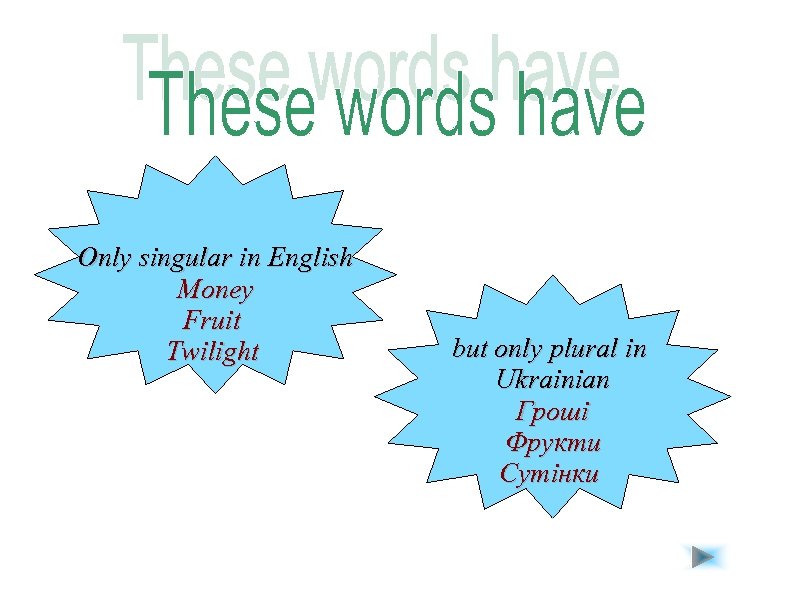
Only singular in English Money Fruit Twilight but only plural in Ukrainian Гроші Фрукти Сутінки
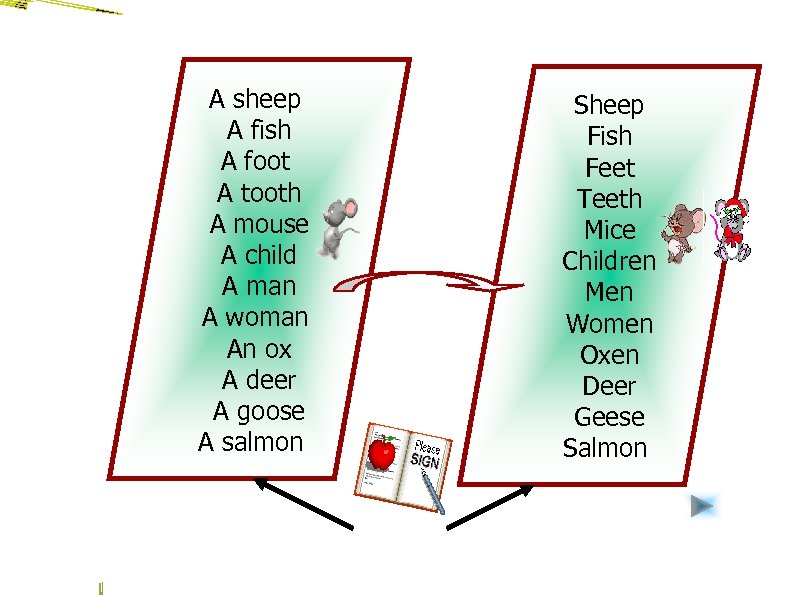
A sheep A fish A foot A tooth A mouse A child A man A woman An ox A deer A goose A salmon Sheep Fish Feet Teeth Mice Children Men Women Oxen Deer Geese Salmon
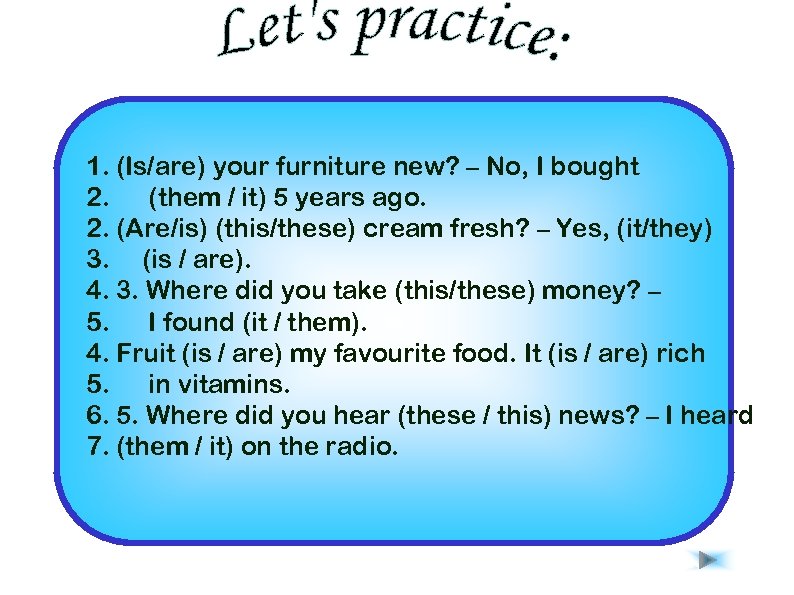
1. (Is/are) your furniture new? – No, I bought 2. (them / it) 5 years ago. 2. (Are/is) (this/these) cream fresh? – Yes, (it/they) 3. (is / are). 4. 3. Where did you take (this/these) money? – 5. I found (it / them). 4. Fruit (is / are) my favourite food. It (is / are) rich 5. in vitamins. 6. 5. Where did you hear (these / this) news? – I heard 7. (them / it) on the radio.
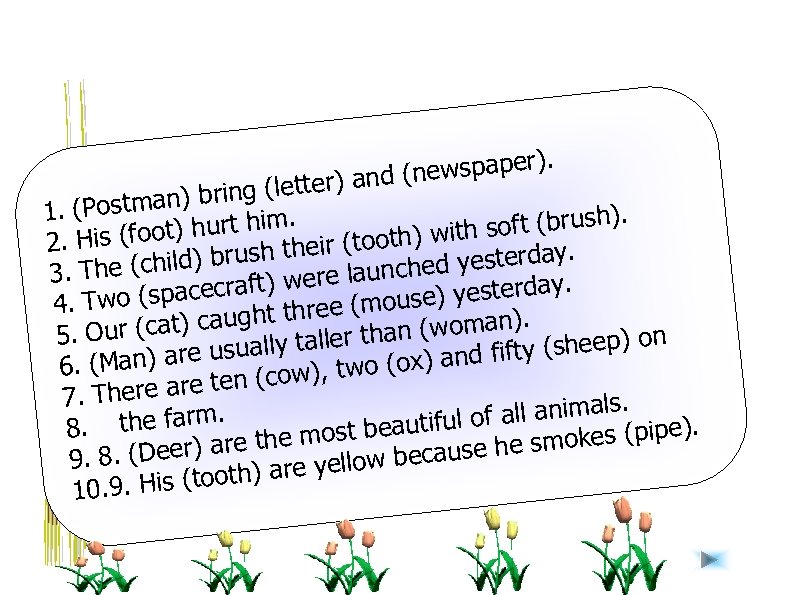
r). (newspape (letter) and ing ostman) br 1. (P urt him. oft (brush). h s. His (foot) tooth) with 2 ( brush their ild) yesterday. d 3. The (ch ere launche pacecraft) w yesterday. ) 4. Two (s ree (mouse th cat) caught (woman). r( n 5. Ou on lly taller tha sua ty (sheep) u fif. (Man) are o (ox) and 6 tw ten (cow), e 7. There ar. all animals. m 8. the far beautiful of kes (pipe). e most o th (Deer) are cause he sm be 9. 8. are yellow ). His (tooth 10. 9
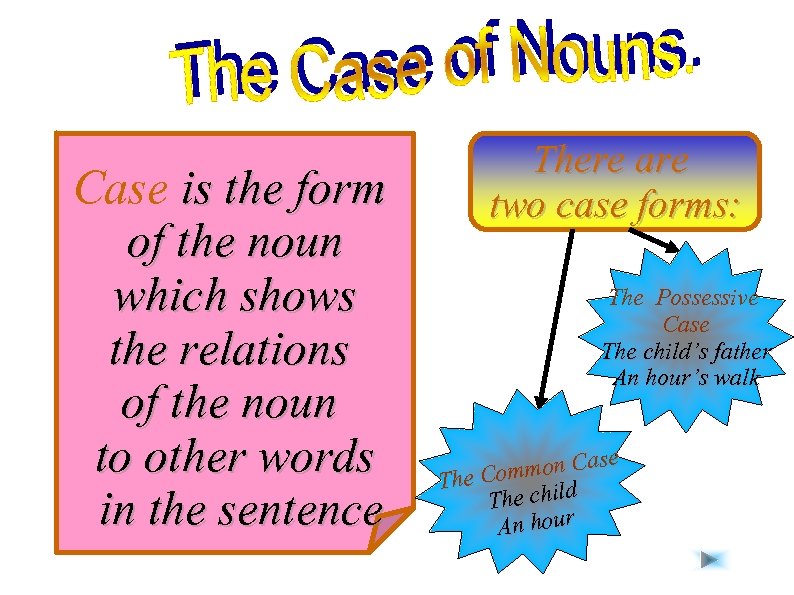
Case is the form of the noun which shows the relations of the noun to other words in the sentence There are two case forms: The Possessive Case The child’s father An hour’s walk se mmon Ca The Co The child An hour
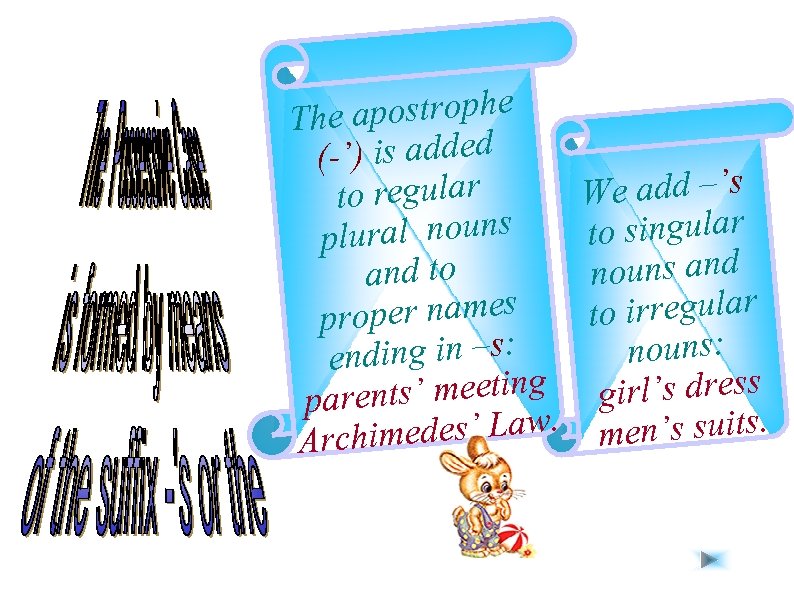
apostrophe The ’) is added (to regular ural nouns pl and to oper names pr ding in –s: en nts’ meeting pare des’ Law. Archime We add –’s to singular nouns and to irregular nouns: girl’s dress men’s suits.
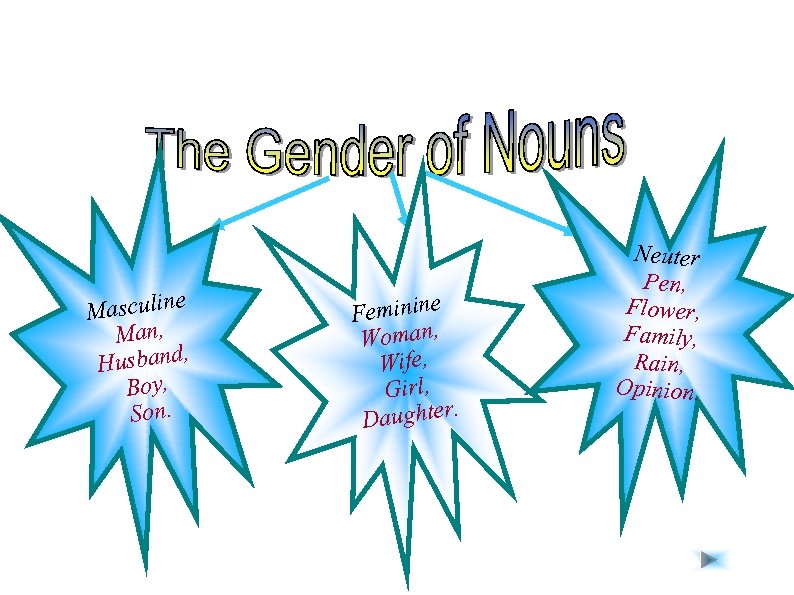
asculine M Man, , Husband Boy, Son. Feminine Woman, Wife, Girl, aughter. D Neuter Pen, Flower, Family, Rain, Opinion.
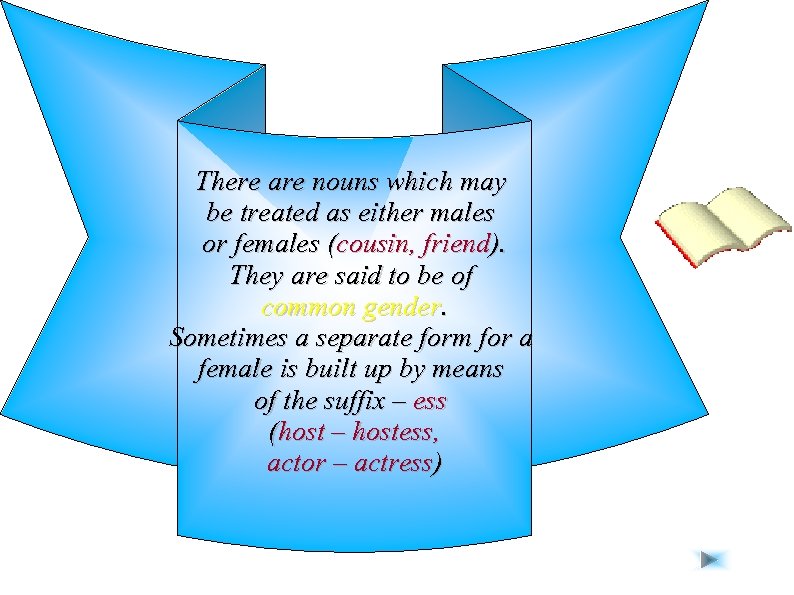
There are nouns which may be treated as either males or females (cousin, friend). They are said to be of common gender. Sometimes a separate form for a female is built up by means of the suffix – ess (host – hostess, actor – actress)
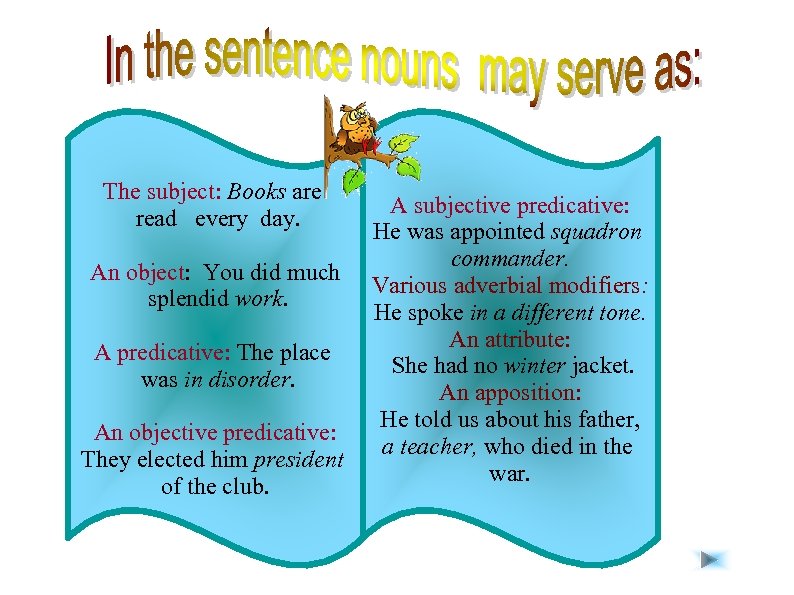
The subject: Books are read every day. An object: You did much splendid work. A predicative: The place was in disorder. An objective predicative: They elected him president of the club. A subjective predicative: He was appointed squadron commander. Various adverbial modifiers: He spoke in a different tone. An attribute: She had no winter jacket. An apposition: He told us about his father, a teacher, who died in the war.
Gordon E. M. , Kry lova I. P. “ A Grammar of P resent-Day Englis h” M. I. Dubrovin “En glish for Everybod y” The Internet Pazyuk L. K. “Eng lish Grammar”
 Скачать презентацию What are nouns objects names of uns are
a4825ec27e804b7210a87eda5c28a2a3.ppt