


 Скачать презентацию WFOT 2006 Sydney Australia Can Internationally Comparative Methods
83103a2ab185a9644259200d10b32106.ppt
- Количество слайдов: 22
 WFOT 2006: Sydney, Australia Can Internationally Comparative Methods Enrich Understandings of Occupation? Food Preparation in Elderly Kentucky, New Zealand & Thai Women Soisuda Vittayakorn & Phuanjai Rattakorn Chiang Mai University Anne Shordike & Doris Pierce Eastern Kentucky University Clare Hocking & Valerie Wright St. Clair Auckland University of Technology
 Background o The first question is whether it is possible to compare across cultures o This question/issue has also been raised in occupational science and occupational therapy
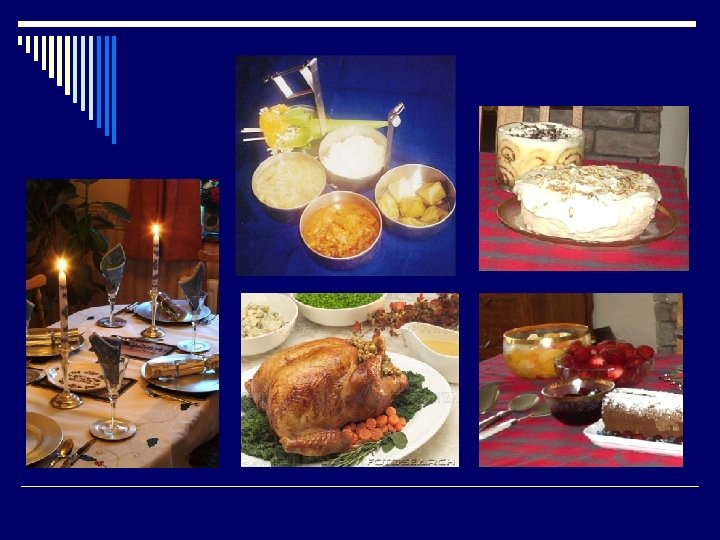
 Overview of the Study o Purpose: 1. 2. To describe the experience and meaning to elder women of preparing annual celebratory foods for Christmas (in Appalachian Kentucky USA and urban Auckland, New Zealand) and Songkran - Thai New Year (in Chiangmai, Thailand) To develop trustworthy methods for looking at occupations across cultures
 Overview of the Study History of the study § § § 1999 - 2006 Began with separate cultural analyses, then decided to do analysis comparing and contrasting across cultures Methodology meetings were held for team members from all sites: Stockholm, 2002; Chiang Mai, 2005; Kentucky 2005 and Sydney 2006
 Differing Epistemologies o Positivism Reality is out there, singular, measurable § Physics, chemistry, cross-cultural psychology § Theories/instruments adapted for use in other cultures, use back-translation § Commonly used in OT across cultures o Constructivism § Reality is individually constructed and perceived § Anthropology, indigenous psychology § Theories/instruments cannot cross cultures § Iwama’s (2003) critique §
 The Derived Etic Approach (Berry, 1989) o Etic (from phonetics) perspective: Broad, scientific systems of explanation o Emic (from phoneme) perspective: Personal, that of locals (Pike 1967) o Emic and etic are both “right, ” but different o Derived Etic: Method to compare emic interpretations to derive etic interpretations o Generalization limited to cultures of emic groups, but suggests concepts that might cross cultures o Closest to cultural psychology
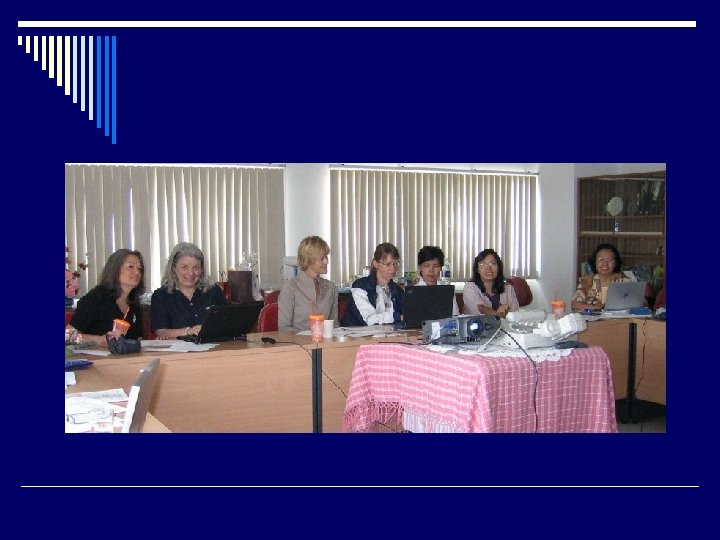
 Derived Etic Method o The use of emic teams to collect and analyze local data, and to collaborate in the comparative (etic) analysis of that data within a multi-site research team o Requires diligent attention to equal voice and interpretive influence by all emic teams in comparative analysis o Produces trustworthy comparative analyses across cultures
 Unfolding Derived Etic Method 1. 2. 3. 4. 5. Determine the question & develop data gathering method Multiple ethical approvals / IRBs Local, emic team researchers collect data (3 focus groups in each country) Emic teams transcribe, translate & initially analyze their data Build understanding of emic findings across emic teams, resisting urge to compare between sites
 Derived Etic Method 6. Team members independently review data from all sites and propose codes 7. Team discussion to agree on and define codes (Tradition, Time, Change, Social, Place, Food and objects, Congruence) 8. Code data from all sites against codes (Ethnograph, two coders fully code data) 9. Determine sequence to work through codes
 Derived Etic Method 10. Emic teams create an emic memo for first code & summarize key points (example, 3 memos on tradition from 3 sites) 11. Etic (collaborative) team discusses memos until shared understanding is achieved
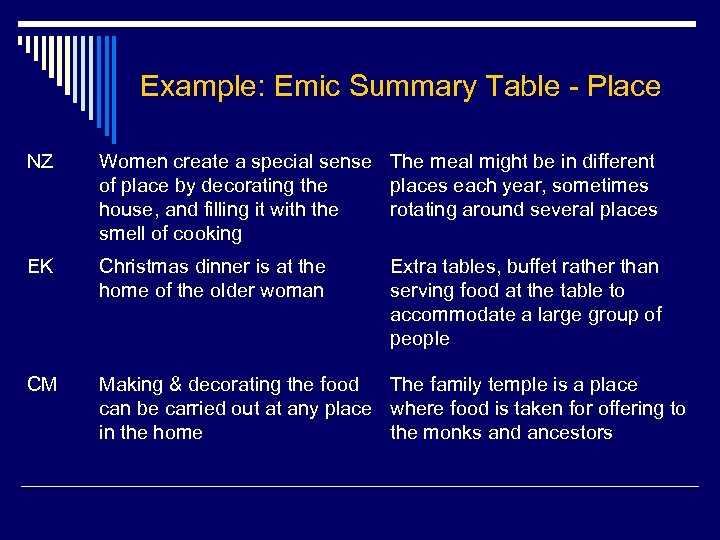 Example: Emic Summary Table - Place NZ Women create a special sense The meal might be in different of place by decorating the places each year, sometimes house, and filling it with the rotating around several places smell of cooking EK Christmas dinner is at the home of the older woman CM Making & decorating the food The family temple is a place can be carried out at any place where food is taken for offering to in the home the monks and ancestors Extra tables, buffet rather than serving food at the table to accommodate a large group of people
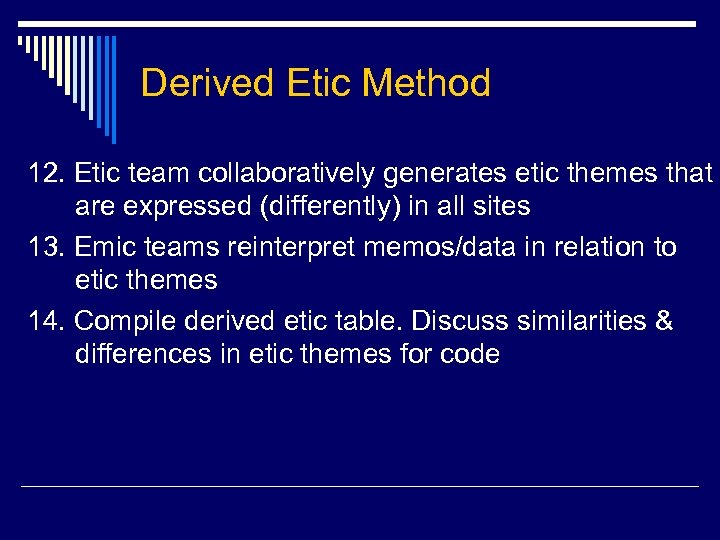 Derived Etic Method 12. Etic team collaboratively generates etic themes that are expressed (differently) in all sites 13. Emic teams reinterpret memos/data in relation to etic themes 14. Compile derived etic table. Discuss similarities & differences in etic themes for code
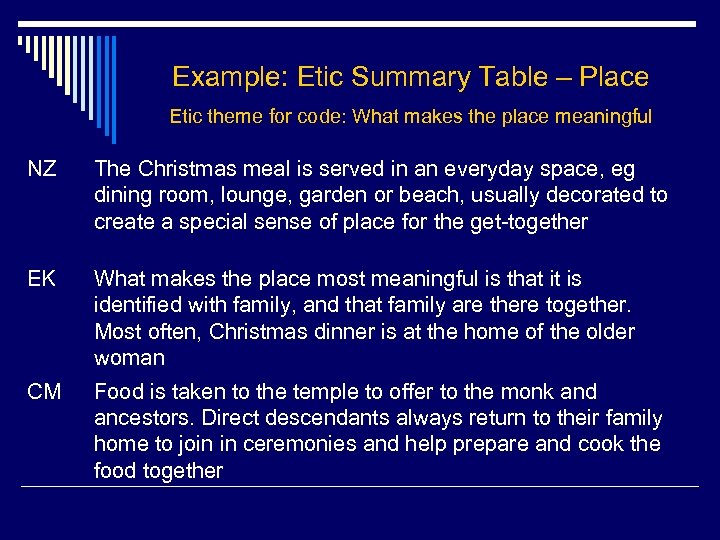 Example: Etic Summary Table – Place Etic theme for code: What makes the place meaningful NZ The Christmas meal is served in an everyday space, eg dining room, lounge, garden or beach, usually decorated to create a special sense of place for the get-together EK What makes the place most meaningful is that it is identified with family, and that family are there together. Most often, Christmas dinner is at the home of the older woman CM Food is taken to the temple to offer to the monk and ancestors. Direct descendants always return to their family home to join in ceremonies and help prepare and cook the food together
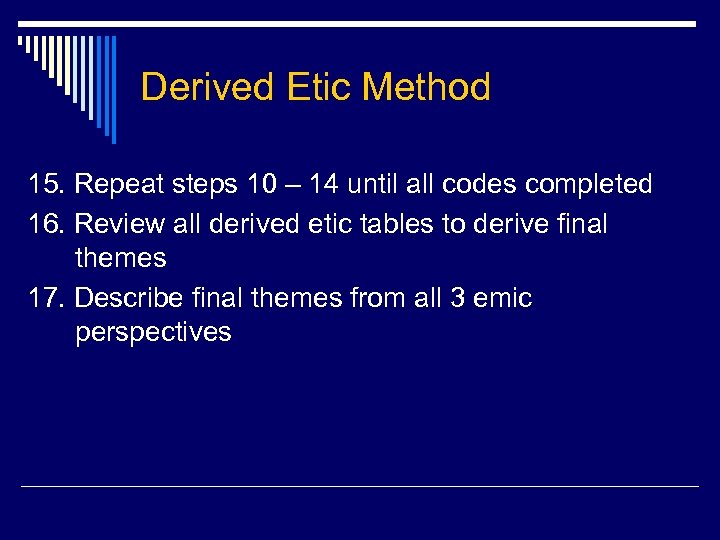 Derived Etic Method 15. Repeat steps 10 – 14 until all codes completed 16. Review all derived etic tables to derive final themes 17. Describe final themes from all 3 emic perspectives
 Overarching Themes of the Study o Older women’s leadership & identity in Christmas and Songkran food preparation o Diversity of the occupation across cultures o Older women creating family over time o Meaning of food preparation traditions o Dealing with cultural change in & through valued food-centered occupations o Expressing regional identity
 Challenges & Benefits of International Multi-Site Research o Challenges: Multiple IRBs/ethics approvals, coordinating/discussing, language, support for all participants, large quantity of data, travel needed, breaking new ground o Benefits: Theoretical complexity, high contrast in data, international perspectives, freshness of discoveries, new methods, multiple publications, travel justified
 Technological Supports o Face to face communication was the best method to work o o o together Videoconferencing has helped International telephone conferencing problematic Web site provided access to all data, tables, presentations, publications Ethnograph was used for coding Computer & data projector very helpful for full team analysis E-mail communication has been helpful
 Deepening Occupational Science & Occupational Therapy through the Derived Etic Method o Respects, describes, and helps us to understand cultural differences: in occupations and in clients o Provides a trustworthy method for collaboratively looking across cultures o Tests/refines theories of occupation and therapy o Contributes to interdisciplinary understandings of cultural differences through occupational descriptions across cultures
 Deepening Occupational Science & Occupational Therapy through the Derived Etic Method Next Step … o See our poster on findings – on display on Friday o Welcoming new international collaborations using the Derived Etic Method o Extend to different occupations … perhaps a sports activity (football or soccer? ), a creative occupation (needle work? ), a family occupation (fishing) o Contact us if you are interested in initiating your own study
 Contact Us o Soisuda@chiangmai. ac. th o Phuanjai@chiangmai. ac. th o Wanni@chiangmai. ac. th o Anne. Shordike@eku. edu o Doris. Pierce@eku. edu o Clare. Hocking@aut. ac. nz o Valerie. Wright-St. Clair@aut. ac. nz