


 Скачать презентацию West Virginia State Auditor Civics Education Seen Through
7735a94a0e2b669d08b72d197050843a.ppt
- Количество слайдов: 28
 West Virginia State Auditor Civics Education Seen Through a 21 st Century Lens July 27, 2006 Presented by: Justin Southern, Communications Director James Rutledge, Investor Education Specialist
 Securities Regulation • 1844 – Joint Stock Companies Act (UK) – First law to require companies to offer a prospectus • 1911 – Kansas passed “Blue Sky” law • 1929 – Individual states adopt “Uniform Securities Act” • 1931 – WV Legislature passes the act – Chapter 32 of W. V. S. C. – West Virginia State Auditor as Commissioner of Securities, ex-officio – Predates creation of SEC (1934)
 Why teach investor education? • According to a June 2006 survey by the Center for Retirement Studies at Boston College: – Only 20% of Americans are eligible for a pension (80% must fend for themselves) – 43% of Americans will not have enough saved to maintain their standard of living in retirement – 25% have never enrolled in their company offered 401(k) – 45% cash out of their 401(k) when they change jobs
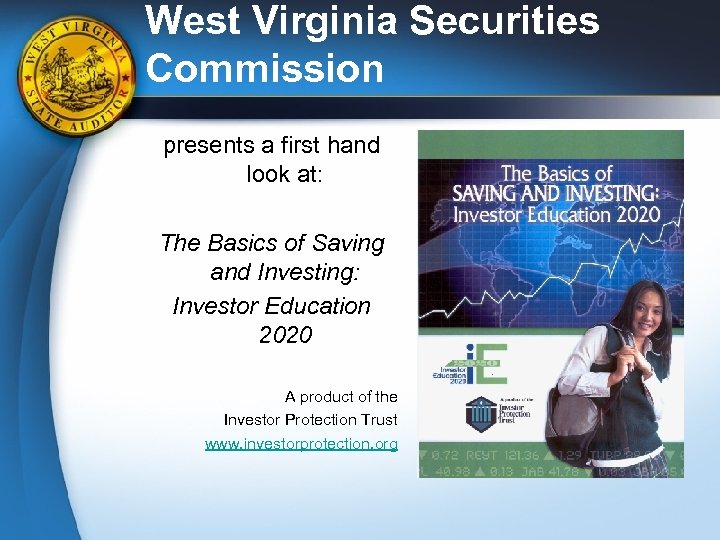 West Virginia Securities Commission presents a first hand look at: The Basics of Saving and Investing: Investor Education 2020 A product of the Investor Protection Trust www. investorprotection. org
 About IPT • Created in 1993 • Provides “independent and objective investor education” • More than 40, 000 high school teachers use IPT publications • Over 350 teacher trainings completed • 3 rd teaching tool offered – #2 “FL 2010” is 2 nd most accessed publication from the Jump$tart Coalition’s clearinghouse website – Focuses solely on Investor Education • Funded by securities enforcement actions • All trustees are state securities regulators
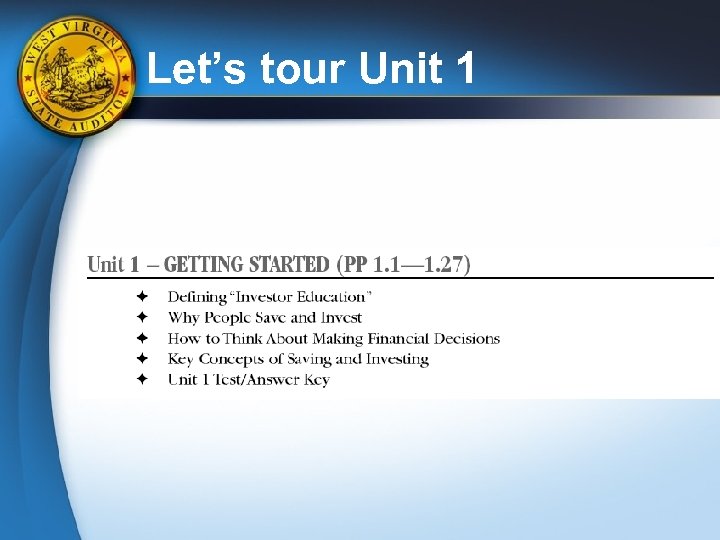
 Unit 1 – Getting Started • Defining “Investor Education” • Why people save and invest • How to think about making financial decisions • Key concepts of saving and investing • Unit 1 test / answer key
 Let’s tour Unit 1
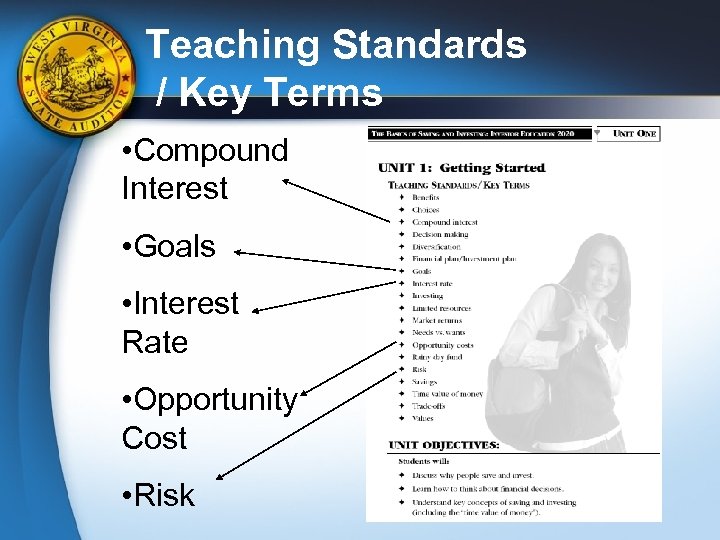 Teaching Standards / Key Terms • Compound Interest • Goals • Interest Rate • Opportunity Cost • Risk
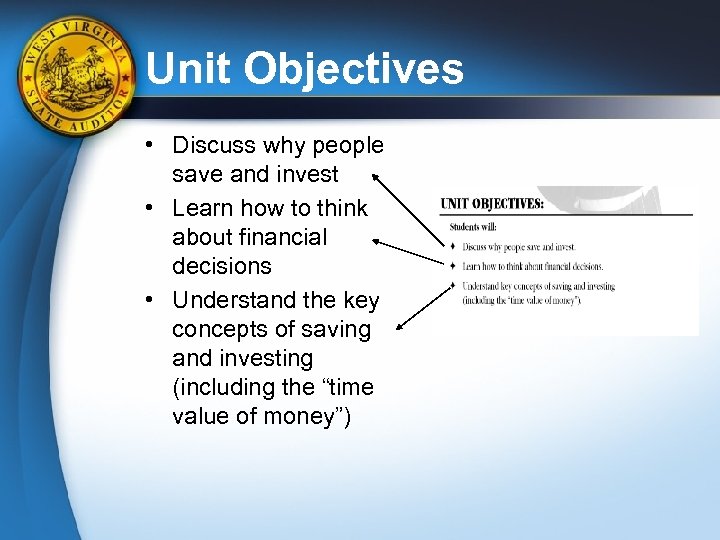 Unit Objectives • Discuss why people save and invest • Learn how to think about financial decisions • Understand the key concepts of saving and investing (including the “time value of money”)
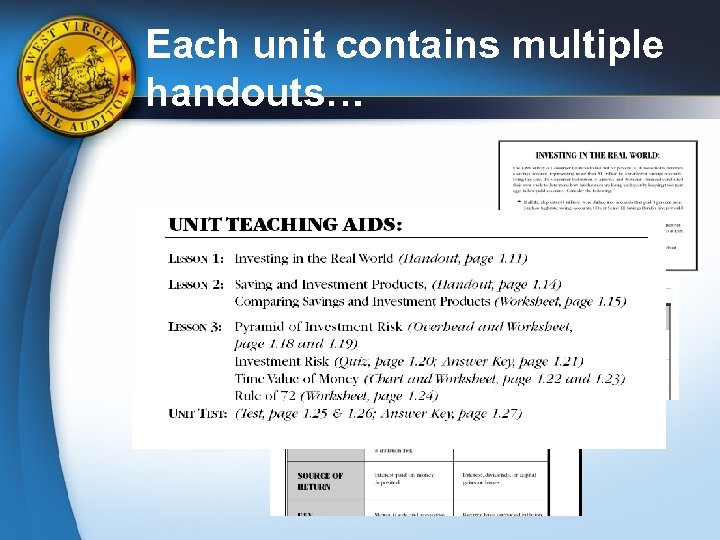 Each unit contains multiple handouts…
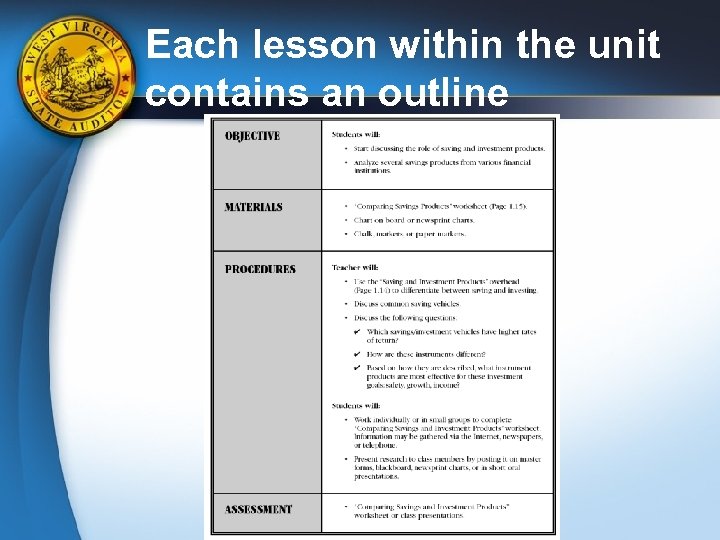 Each lesson within the unit contains an outline
 Unit 1 – Lesson 1 • Why people save and invest – Preparing for a career, often by going to college – Saving for a major purchase or expense – Building up a “rainy day” fund – Developing a personal finance/investment plan – Starting a saving and investing program
 Unit 1 – Lesson 2 • How to think about making financial decisions – 1. Problem (Kathy wants to buy a car) – 2. Gather information (Internet, etc. ) – 3. Consider Alternatives (bus, lease) – 4. Make a decision (buys used but reliable two year old car) – 5. Modify plans if needed (moves to city – sells car)
 Lesson covers macro/ micro economic terms • • Needs Wants Choices Costs Benefits Trade-Offs Opportunity Costs
 Unit 1 – Lesson 3 • Key Concepts of Saving and Investing – 1. Pay yourself first – 2. Set goals that inspire success (short, medium and long term) – 3. Don’t take unnecessary risks – 4. Put time to work for you – 5. Diversify!
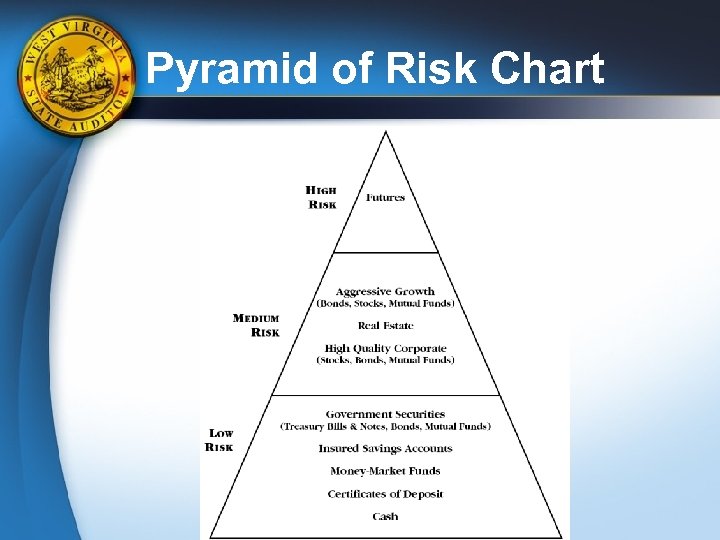 Pyramid of Risk Chart
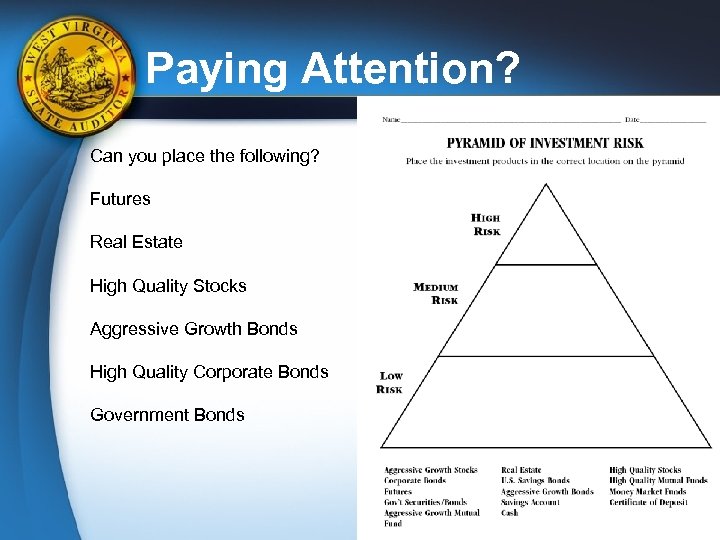 Paying Attention? Can you place the following? Futures Real Estate High Quality Stocks Aggressive Growth Bonds High Quality Corporate Bonds Government Bonds
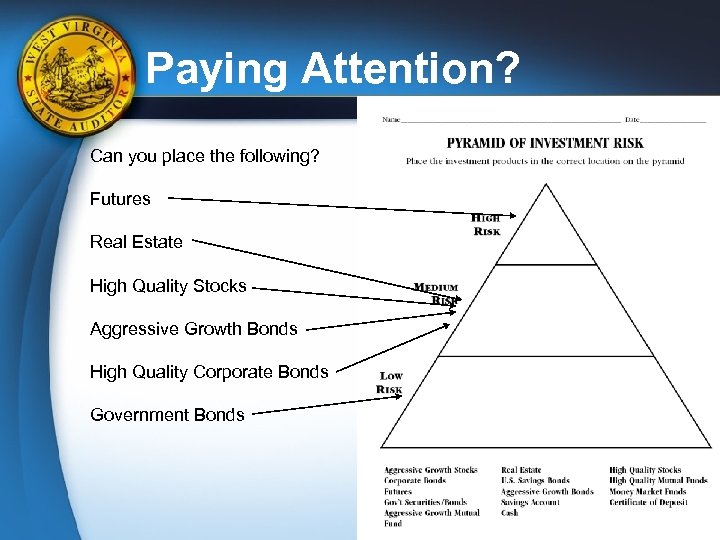 Paying Attention? Can you place the following? Futures Real Estate High Quality Stocks Aggressive Growth Bonds High Quality Corporate Bonds Government Bonds
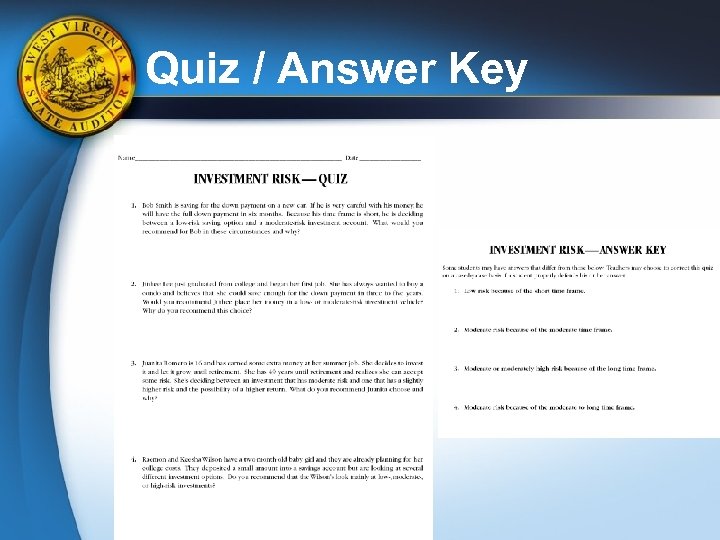 Quiz / Answer Key
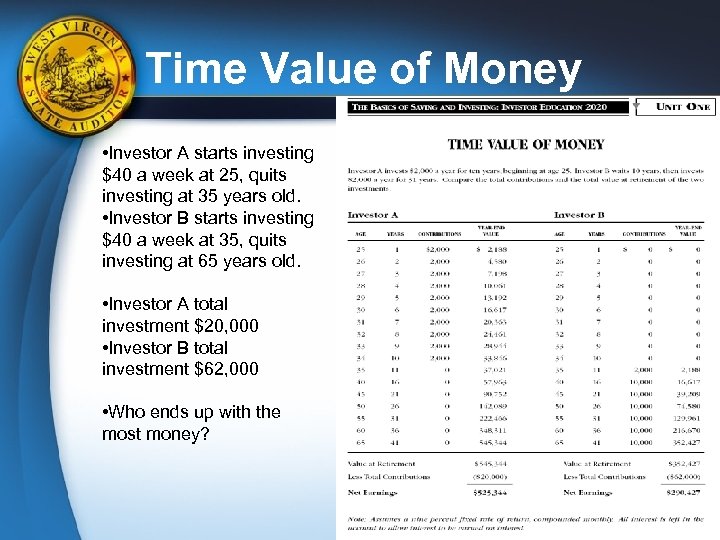 Time Value of Money • Investor A starts investing $40 a week at 25, quits investing at 35 years old. • Investor B starts investing $40 a week at 35, quits investing at 65 years old. • Investor A total investment $20, 000 • Investor B total investment $62, 000 • Who ends up with the most money?
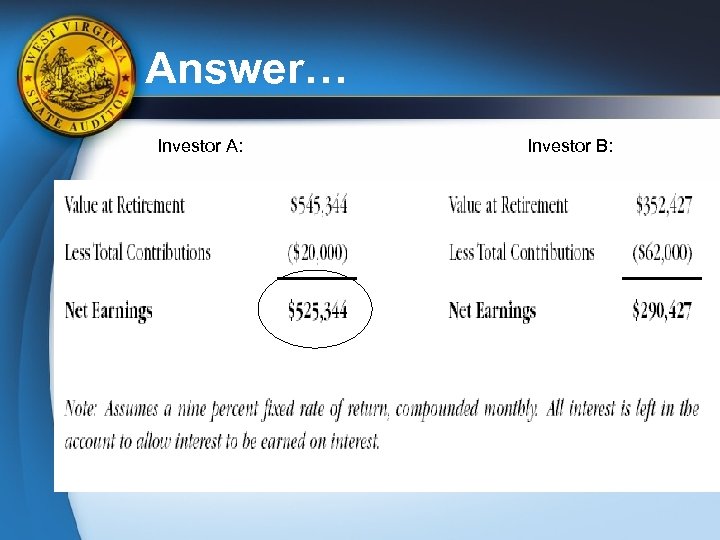 Answer… Investor A: Investor B:
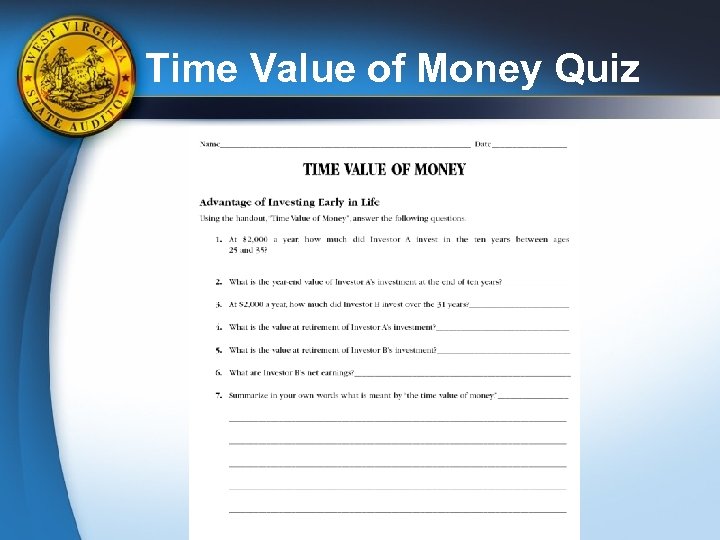 Time Value of Money Quiz
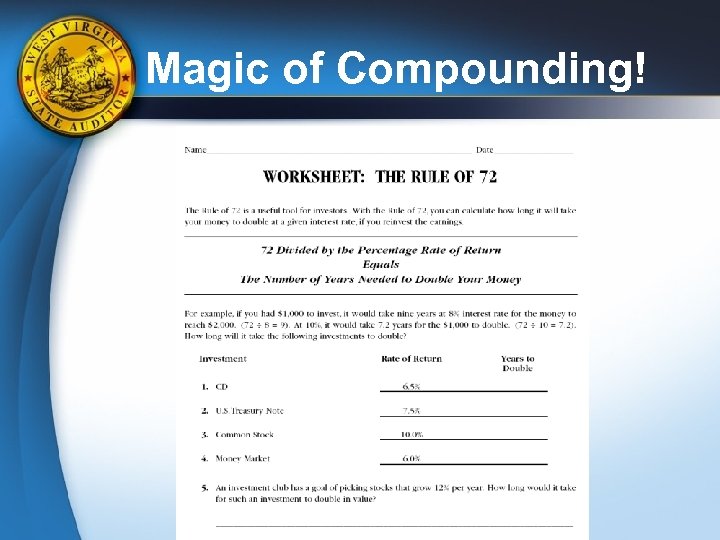 Magic of Compounding!
 Unit 2 – Introduction to Financial Markets • Understanding risk and reward • How financial markets work • Savings, stocks, bonds, mutual funds and other investments • Regulation of financial markets • Unit 2 test / answer key
 Unit 3 – Making a Financial / Investment Plan • Introduction to financial planning / investing concepts • Framing a plan to meet students’ financial goals • Selecting financial professionals • Unit 3 test / answer key
 Unit 4 – Investment Fraud • Introduction to investment scams • How telemarketing fraud works: Inside a “Boiler Room” • Teach your students to become “Victim Proof”: Self-defense tips against fraud • How regulators protect investors • Unit 4 test / answer key
 Appendix • • • Resources Materials Organizations Agencies Glossary of terms
 Contact us – and Thanks! Justin Southern or James Rutledge West Virginia State Auditor’s Office State Capitol Building 1, Room W 100 Charleston, WV 25305 304 -558 -2251 or 877 -982 -9148 justin. southern@wvsao. gov James. rutledge@wvsao. gov www. wvsao. gov