


 Скачать презентацию Wendy Fanaselle MS RS Food and Drug Administration
e9da8a2fb861e90b3eca7092a01b7254.ppt
- Количество слайдов: 31
 Wendy Fanaselle MS, RS Food and Drug Administration Center for Food Safety and Applied Nutrition Division of Cooperative Programs Retail Food Protection Branch
 Food Security Information available on the web: n Food safety and terrorism: www. cfsan. fda. Gov/~dms/fsterr. Html n Bioterrorism: www. fda. Gov/oc/opacom/hottopics/bioterrorism. html n www. foodsafety. gov: “Countering Bioterrorism and other threats to the food supply”: www. foodsafety. Gov/~fsg/bioterr. html
 Food Security Preventive Measures Guidance www. cfsan. fda. gov/~dms/secguid. html v AID to operators of food establishments v Firms that produce, process, store, repack, relabel, distribute, or transport food or ingredients v Firms that prepare or distribute food at retail v IDENTIFIES preventive measures to minimize the risk that food under their control will be subject to tampering or criminal or terrorist actions
 Food Security Preventive Measures Guidance v RECOMMENDS review of current procedures and improvements as needed v ENCOURAGES the commitment of management and employees to be successful v ACKNOWLEDGES not all preventive measures are appropriate for every operation v SUPPORTS use of operational risk management to prioritize improvements
 Food Establishment Operations Management of Food Security procedures • • Assign responsibility to qualified individual(s) Encourage all staff to be alert Investigation of suspicious activity • • Investigate suspicious activity Alert local law enforcement
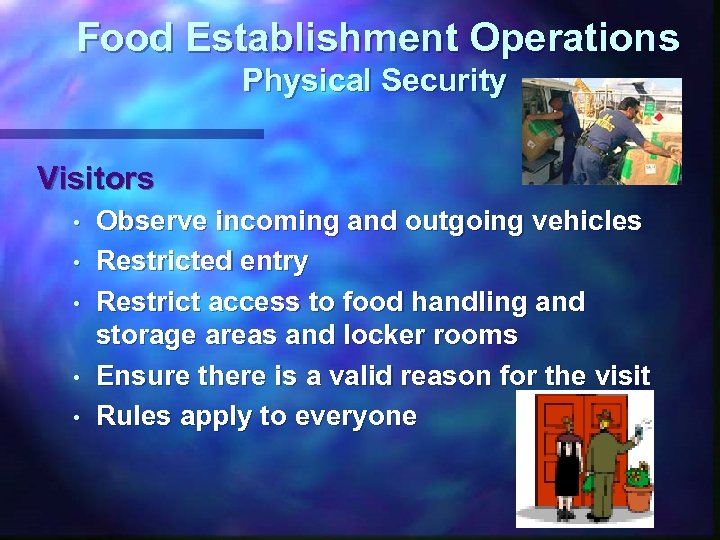 Food Establishment Operations Physical Security Visitors • • • Observe incoming and outgoing vehicles Restricted entry Restrict access to food handling and storage areas and locker rooms Ensure there is a valid reason for the visit Rules apply to everyone
 Food Establishment Operations Employees Pre-hiring screening • • Work references Check of immigration status Criminal background checks Apply to all employees
 Food Establishment Operations Employees Training • • • Provide food security training to new employees Provide periodic reminders Ensure employee buy-in
 Food Establishment Operations Raw Materials and Packaging Suppliers • • • Use known sources Ensure suppliers/transporters practice security measures and audit for compliance Authenticate labeling and packaging configuration in advance of receipt of shipment
 Food Establishment Operations Raw Materials and Packaging Suppliers • Inspect incoming products for signs of tampering or counterfeiting • Report evidence of tampering or counterfeiting
 Food Establishment Operations Raw Materials and Packaging Suppliers Reconcile the amount received with the amount ordered and the amount invoiced • Supervise off-loading of products •
 Food Code Represents FDA’s Best Advice for: Uniform system of regulation; n Safe food service through researched and recommended practices; n Food is properly protected, unadulterated, and honestly presented. n
 Intent of the Food Code n Provide guidance / tools to prevent Foodborne illness n Uniform standards n 3, 000 local regulatory food agencies n Implementation supported by other program elements
 Major Food Safety Subject Areas n Personnel n Food n Equipment, facilities, related supplies n Compliance & enforcement
 5 Identified Major Risk Factors n Poor personal hygiene n Improper holding temperatures n Inadequate cooking: n Such as undercooking raw shell eggs n Contaminated equipment n Food from unsafe sources
 Food Code 5 Key Interventions 1. Demonstration of knowledge 2. Employee health 3. Time / temperature 4. Hands a vehicle of contamination 5. Consumer advisory
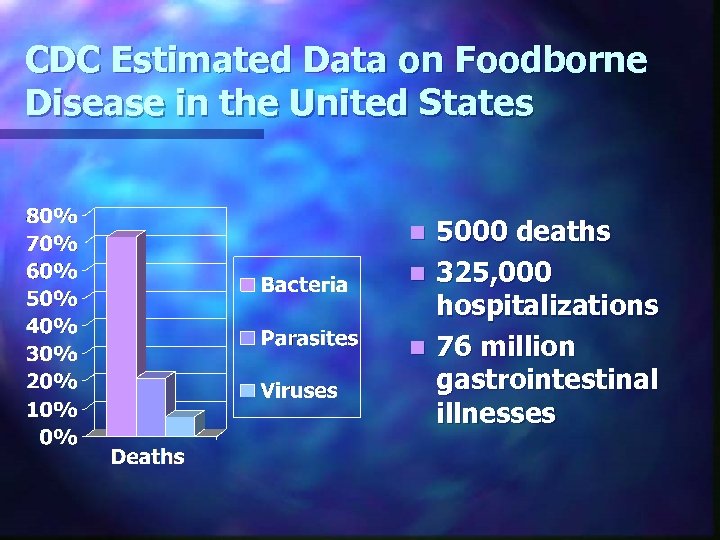 CDC Estimated Data on Foodborne Disease in the United States 5000 deaths n 325, 000 hospitalizations n 76 million gastrointestinal illnesses n
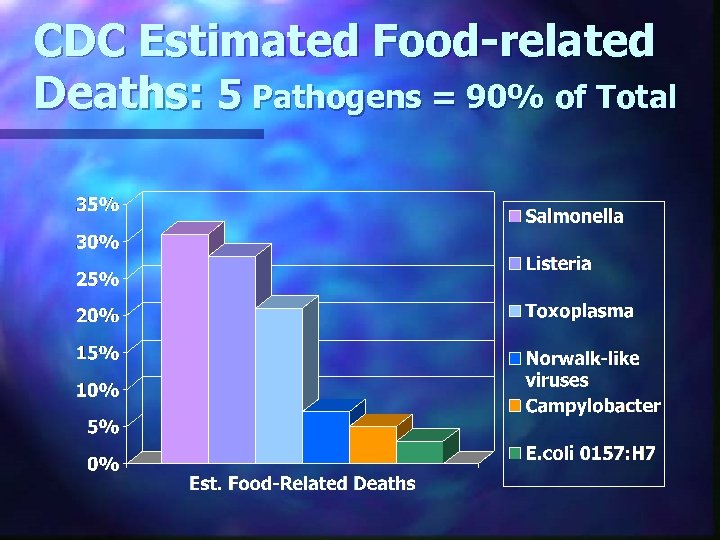 CDC Estimated Food-related Deaths: 5 Pathogens = 90% of Total
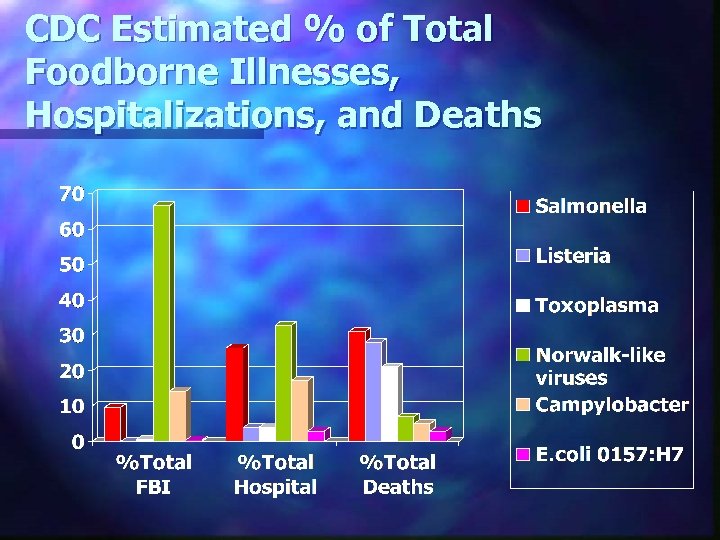 CDC Estimated % of Total Foodborne Illnesses, Hospitalizations, and Deaths
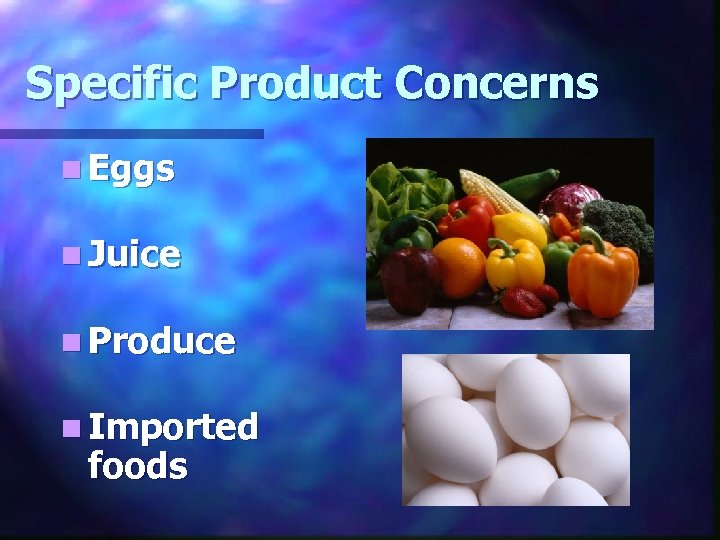 Specific Product Concerns n Eggs n Juice n Produce n Imported foods
 Imported Foods n 1/2 of all fish & shellfish imported n 1/3 of all fresh fruit n 12% of all vegetables GAO study: only 1. 7% of 2. 7 million shipments are inspected by FDA
 Highly Susceptible Population n Juice n Sprouts n Eggs
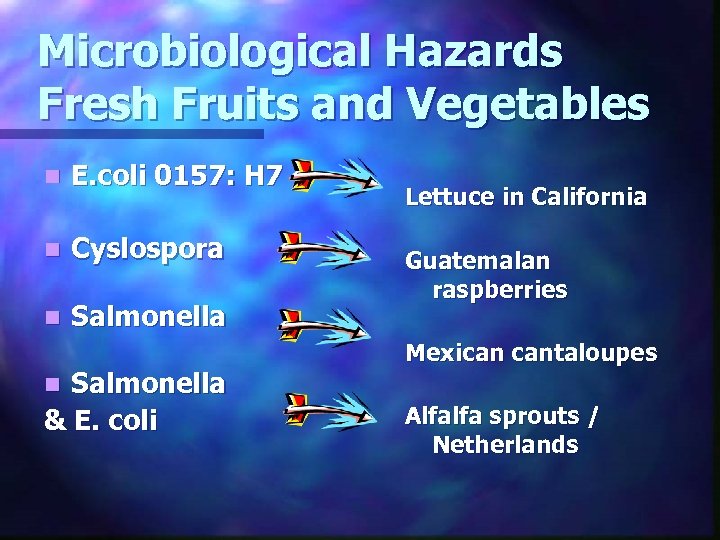 Microbiological Hazards Fresh Fruits and Vegetables n E. coli 0157: H 7 n Cyslospora n Salmonella & E. coli Lettuce in California Guatemalan raspberries Mexican cantaloupes n Alfalfa sprouts / Netherlands
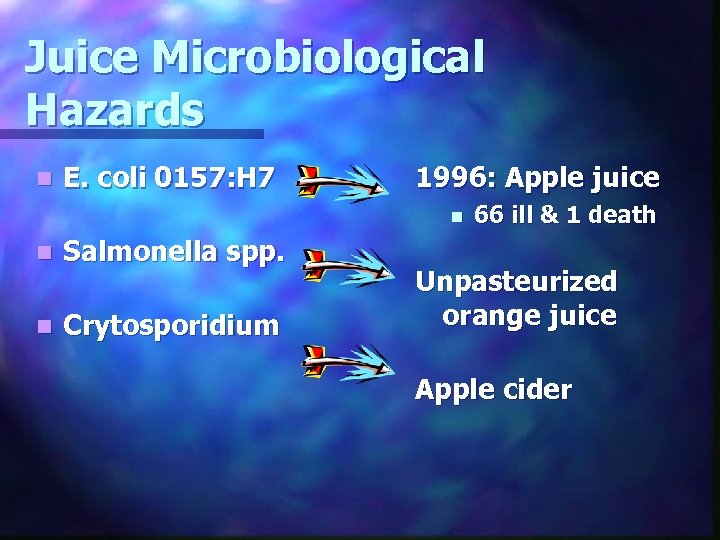 Juice Microbiological Hazards n E. coli 0157: H 7 1996: Apple juice n n Salmonella spp. n Crytosporidium 66 ill & 1 death Unpasteurized orange juice Apple cider
 Juice Microbiological Hazards n Bacillus n Vibrio cholera Orange juice Frozen coconut milk n Maryland
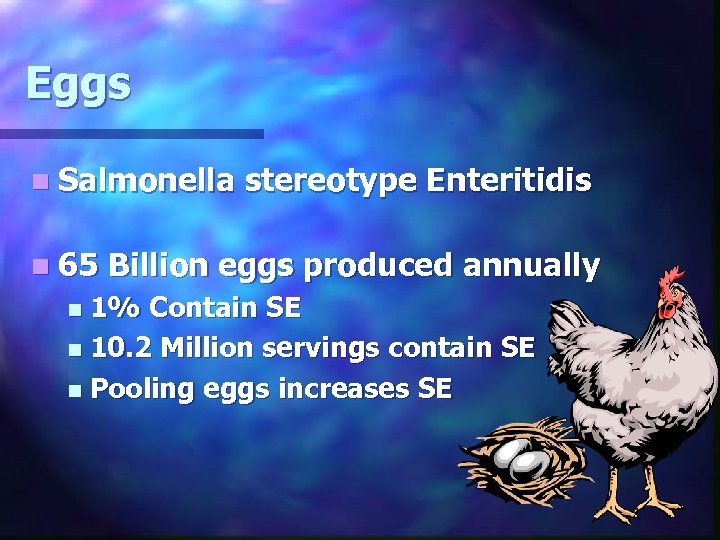 Eggs n Salmonella n 65 stereotype Enteritidis Billion eggs produced annually 1% Contain SE n 10. 2 Million servings contain SE n Pooling eggs increases SE n
 Eggs – Salmonella Enteritidis n 2. 4 million persons exposed / year n 661, 000 n 390 see physician die from SE
 Highly Susceptible Populations n HSP are 10 fold more susceptible to SE n Pooling eggs = highest incidence of SE n Most SE outbreaks occur in institutions n Nursing homes
 Part 3 -8 Specialized Topics Highly susceptible populations: n n n Use of pasteurized packaged juice required Raw seed sprouts prohibited Use of pasteurized eggs Allowance for restricted use of shell eggs Time as a public health control prohibited
 FOOD SECURITY PREVENTIVE MEASURES GUIDANCE Emergency Point of Contact FDA 24 hour contact: (301) 443 -1240 Or LOCAL FDA District Office: listed at FDA’s website (www. fda. gov)
 For Further Information . . . Center for Food Safety & Applied Nutrition Division of Cooperative Programs Retail Food Protection Team 5100 Paintbranch Parkway (HFS-627) College Park, MD 20740 WWW. CFSAN. FDA. Gov