


 Скачать презентацию Wellness in the Workplace What Do Health
bd140f0cca72d434236d46e73a1435cf.ppt
- Количество слайдов: 12
 Wellness in the Workplace
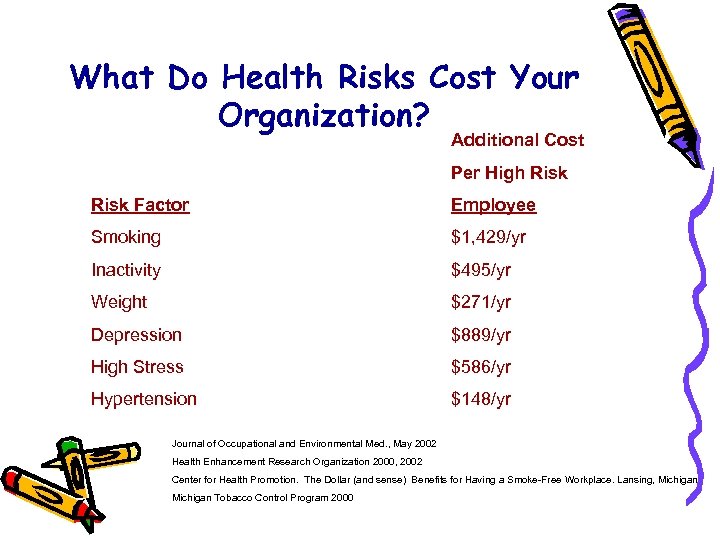 What Do Health Risks Cost Your Organization? Additional Cost Per High Risk Factor Employee Smoking $1, 429/yr Inactivity $495/yr Weight $271/yr Depression $889/yr High Stress $586/yr Hypertension $148/yr Journal of Occupational and Environmental Med. , May 2002 Health Enhancement Research Organization 2000, 2002 Center for Health Promotion. The Dollar (and sense) Benefits for Having a Smoke-Free Workplace. Lansing, Michigan Tobacco Control Program 2000
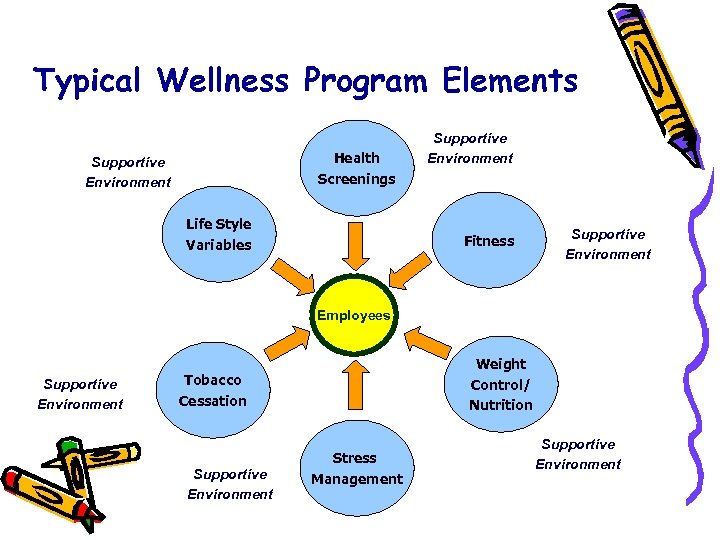 Typical Wellness Program Elements Health Screenings Supportive Environment Life Style Variables Supportive Environment Fitness Supportive Environment Employees Supportive Environment Weight Control/ Nutrition Tobacco Cessation Supportive Environment Stress Management Supportive Environment
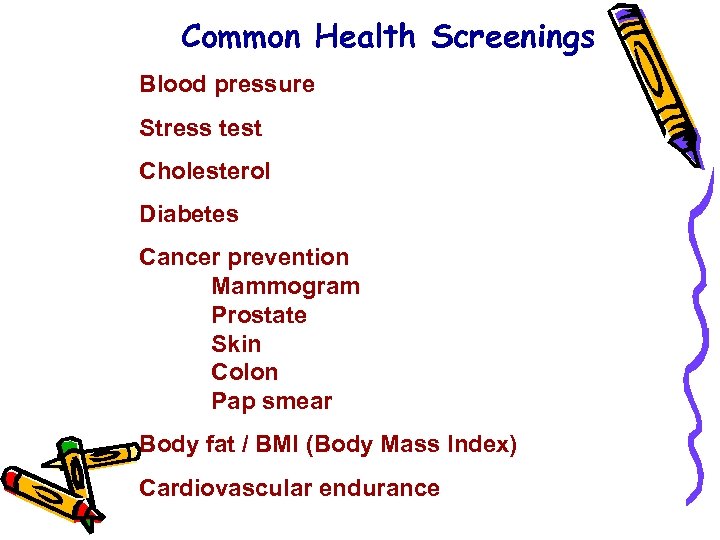 Common Health Screenings Blood pressure Stress test Cholesterol Diabetes Cancer prevention Mammogram Prostate Skin Colon Pap smear Body fat / BMI (Body Mass Index) Cardiovascular endurance
 Activities You May Consider at Your Company • • Walking Program Strength Training Cardio Programs (running, step, aerobics, etc. ) Recreational Programs (softball, basketball, volleyball) • Yoga/Tai Chi • Stretching/Flexibility • Posture
 Stress Reduction Tactics • Organize support groups among employees. • Sponsor stress management classes during the workday. • Offer onsite counseling for employees. • Offer an employee assistance program that includes both counseling and referral. • Offer onsite yoga or meditation classes. • Create a quiet room, where an employee can go to regroup away from daily pressure.
 Smoking Cessation: Where You Can Start • • • Reimbursement for Tobacco cessation tools Limit smoking areas in the workplace Present onsite Tobacco cessation sessions Create a “buddy” program Offer lung capacity tests
 Basic Steps to a Successful Program • • Management support = Buy in Employee involvement = Participation Assessing needs & wants = Gather information Planning = Set goals & objectives Communication = Spread the message Implementation = Rolling program out Continuous improvement = Evaluate & measure
 Barriers • • • Low participation or low adherence Program fails to save $$ Level of management and supervisory support Starting too big Degree of wellness-friendly work environment
 Wellness Programs: What Works? The programs that work: • • Regarded as strategic investments Comprehensive in scope On-going & part of the culture Focused on specific and measurable goals The ones that do not: • • Overly ambitious at the outset “Flavor-of-the-month” programming Stop at health education or awareness events One-shot or one-component programming (health fair, flu shots) • Participation is required
 The Bottom Line. . . • • Value added to your organization Healthy people cost less Healthy people are more productive Healthy people add more to the bottom line!