 Скачать презентацию Wellbeing in Kings County Results from the GPI
5a1a57aea8df5b44564ff5f1d8518057.ppt
- Количество слайдов: 55



Wellbeing in Kings County Results from the GPI Community Survey Mike Pennock Martha Pennock Ron Colman
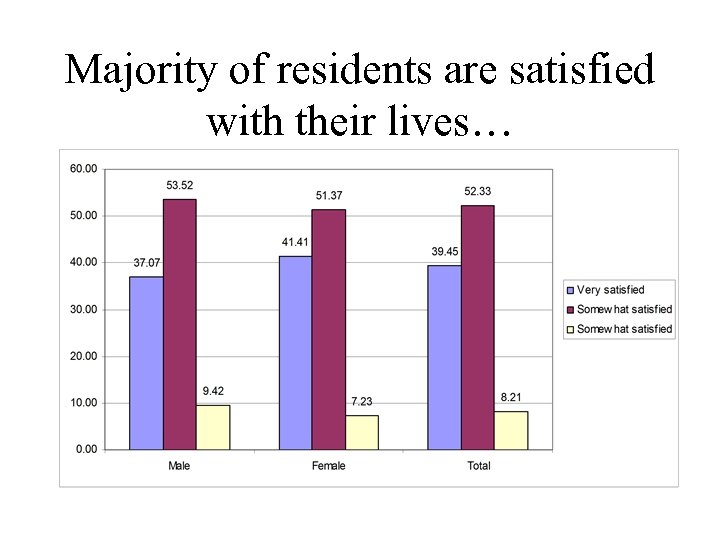
Majority of residents are satisfied with their lives…
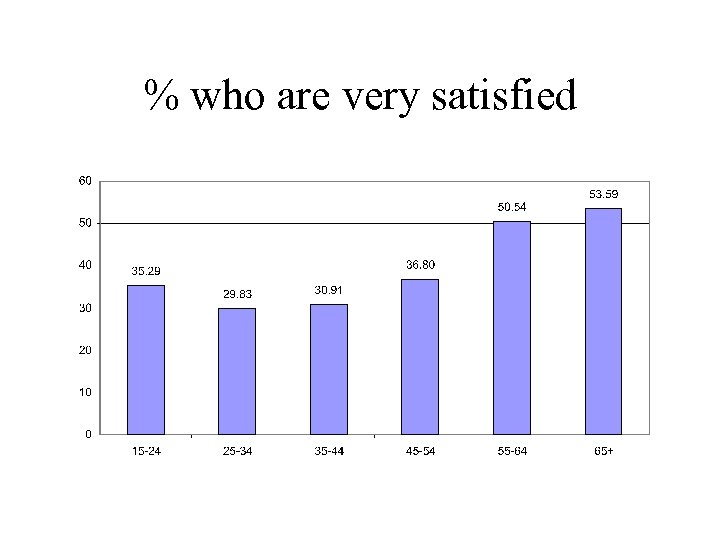
% who are very satisfied
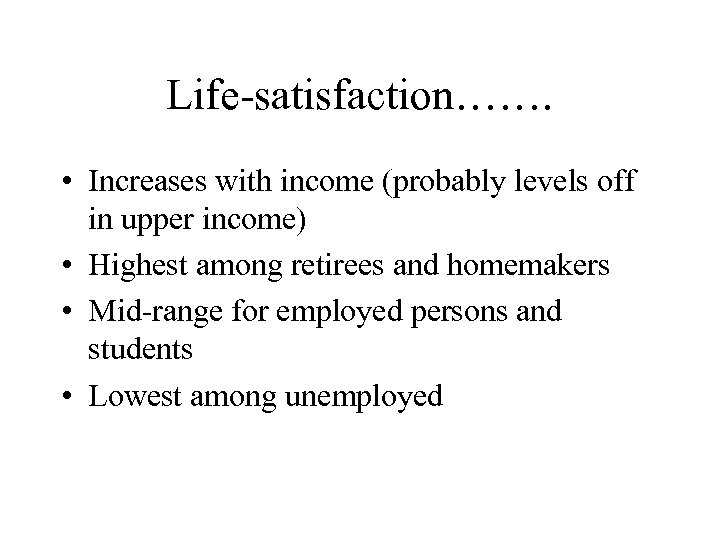
Life-satisfaction……. • Increases with income (probably levels off in upper income) • Highest among retirees and homemakers • Mid-range for employed persons and students • Lowest among unemployed
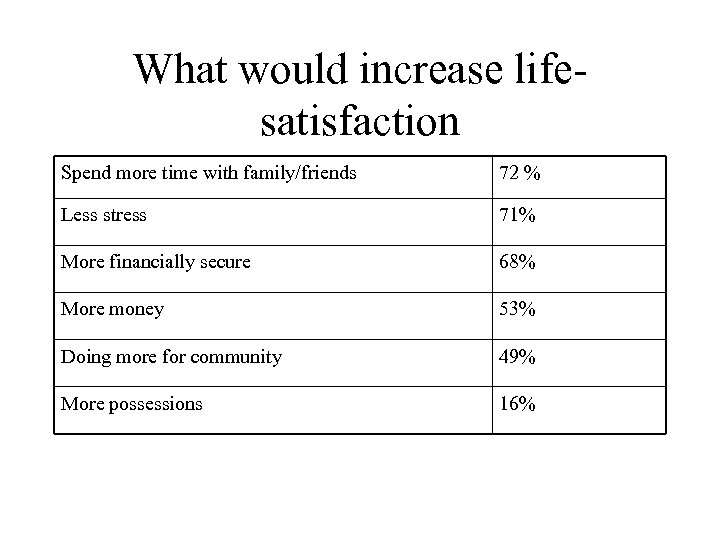
What would increase lifesatisfaction Spend more time with family/friends 72 % Less stress 71% More financially secure 68% More money 53% Doing more for community 49% More possessions 16%
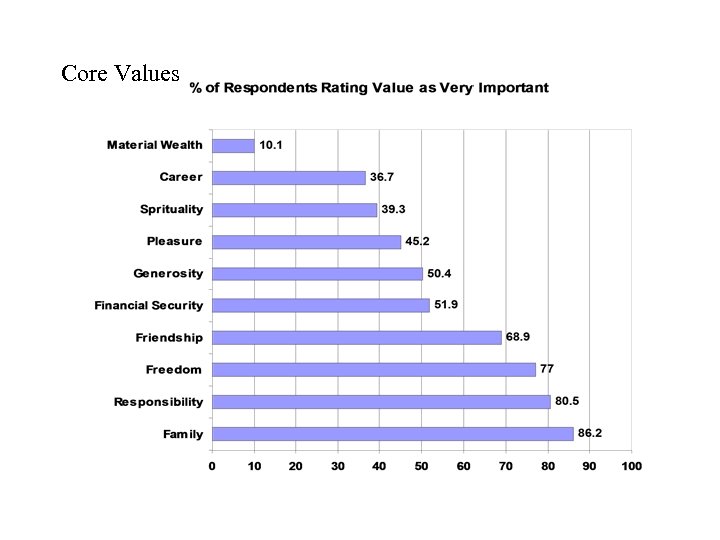
Core Values
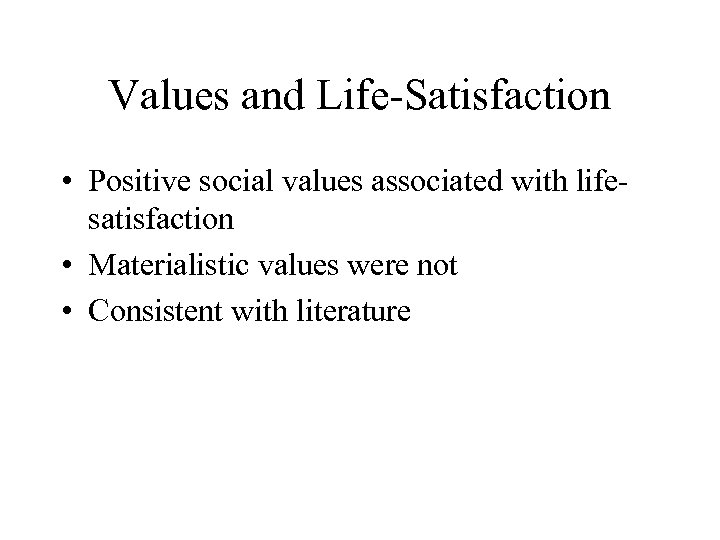
Values and Life-Satisfaction • Positive social values associated with lifesatisfaction • Materialistic values were not • Consistent with literature
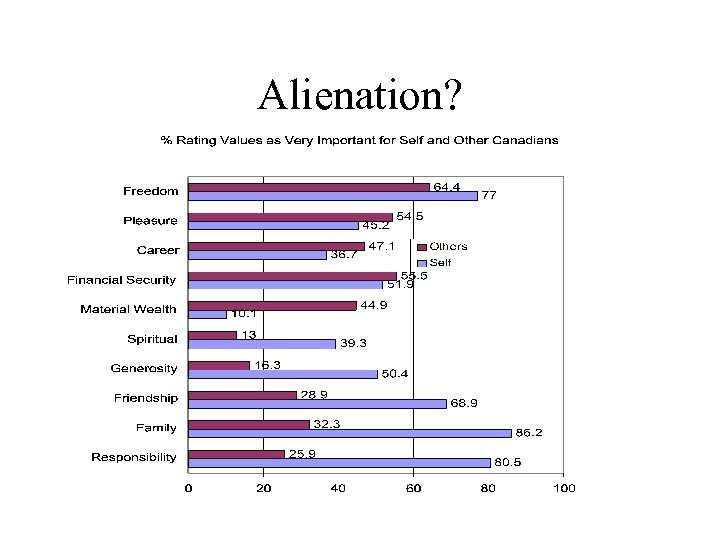
Alienation?
Spirituality • 60%- spiritual values played an important role • Higher in females (65%) than males (55%) • Increases with age from 37% among youngest to 79% among over 65
Unemployment • 12. 7% higher than corresponding NS and can rates • Highest among youngest (42%). Lowest among 35 -44 (8. 5%)
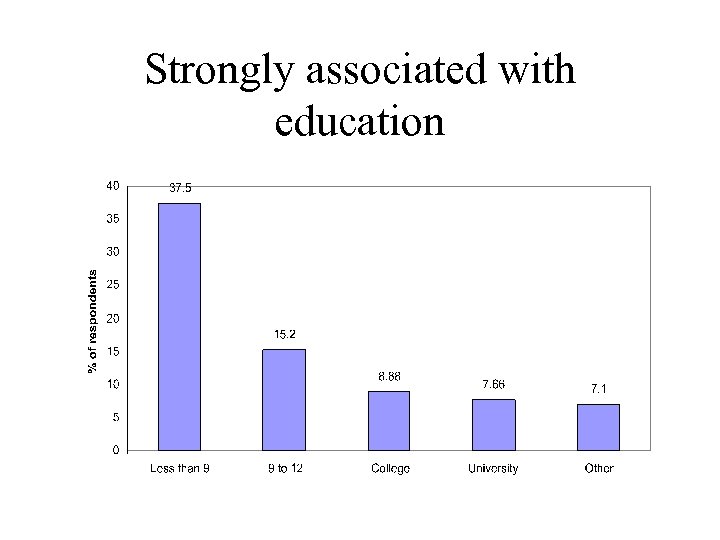
Strongly associated with education
Unemployed • 52% of unemployed were long-term (25 weeks+) • 16% were pessimistic about finding work • Both higher among males
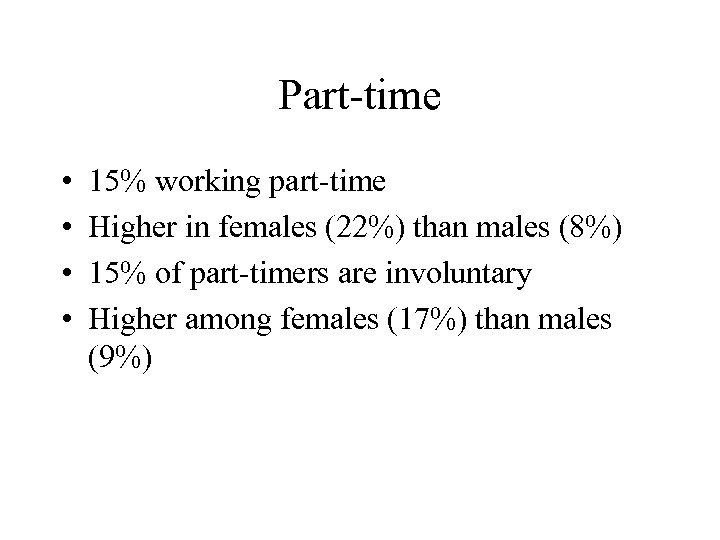
Part-time • • 15% working part-time Higher in females (22%) than males (8%) 15% of part-timers are involuntary Higher among females (17%) than males (9%)
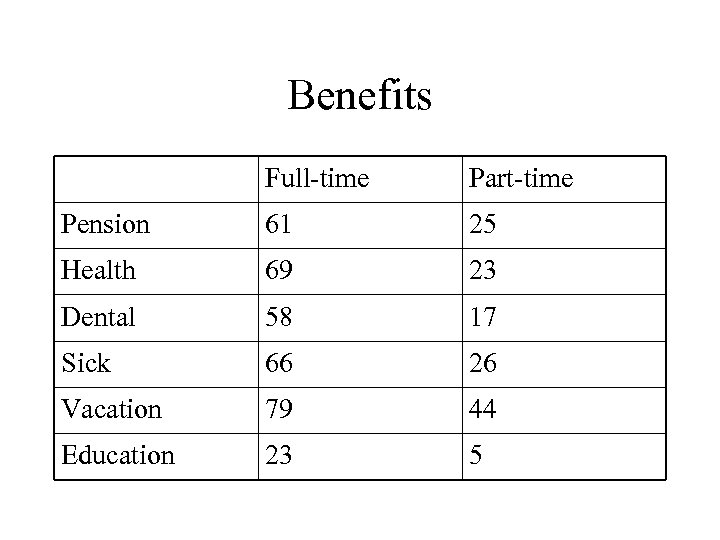
Benefits Full-time Part-time Pension 61 25 Health 69 23 Dental 58 17 Sick 66 26 Vacation 79 44 Education 23 5
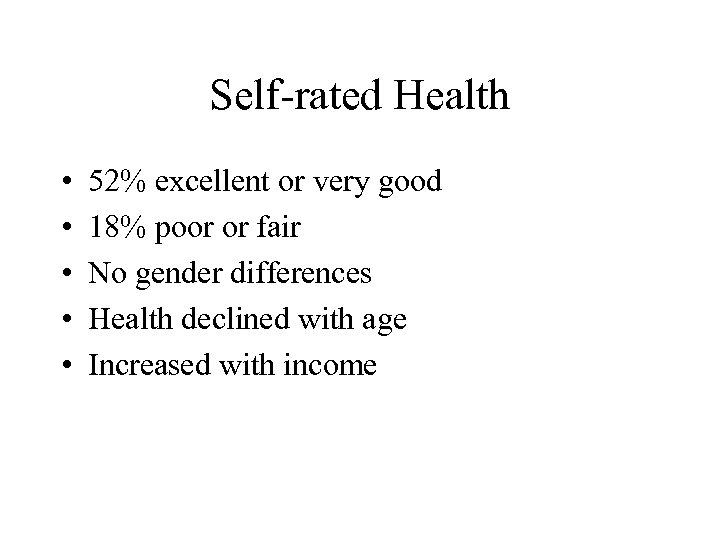
Self-rated Health • • • 52% excellent or very good 18% poor or fair No gender differences Health declined with age Increased with income
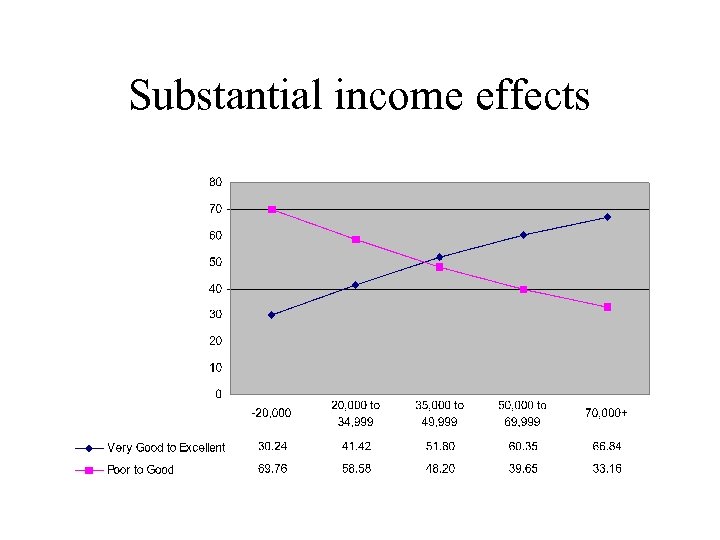
Substantial income effects
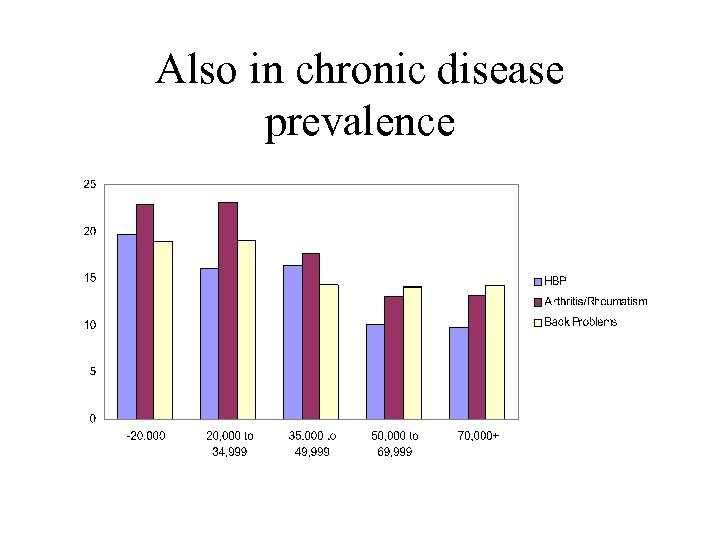
Also in chronic disease prevalence
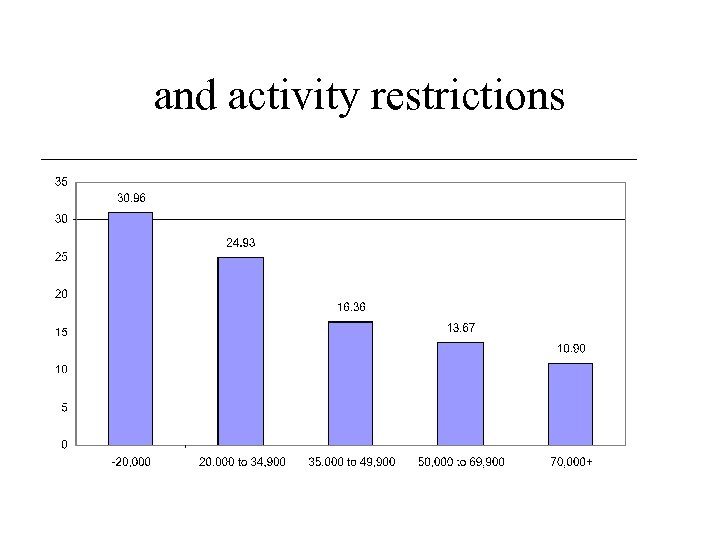
and activity restrictions
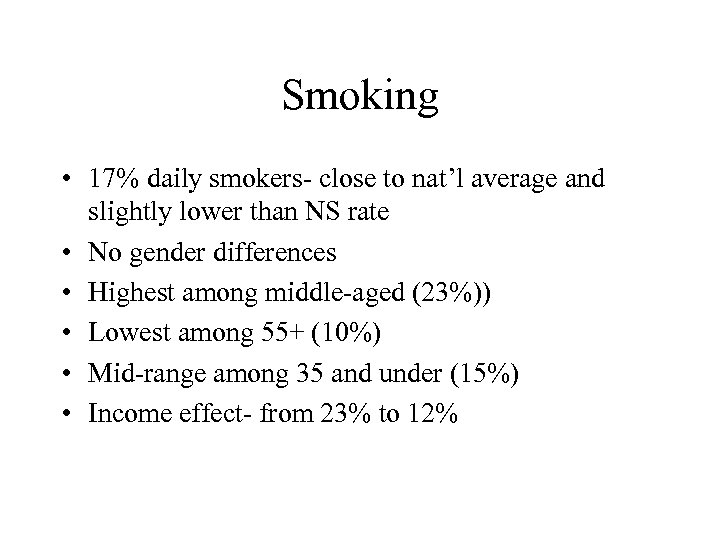
Smoking • 17% daily smokers- close to nat’l average and slightly lower than NS rate • No gender differences • Highest among middle-aged (23%)) • Lowest among 55+ (10%) • Mid-range among 35 and under (15%) • Income effect- from 23% to 12%
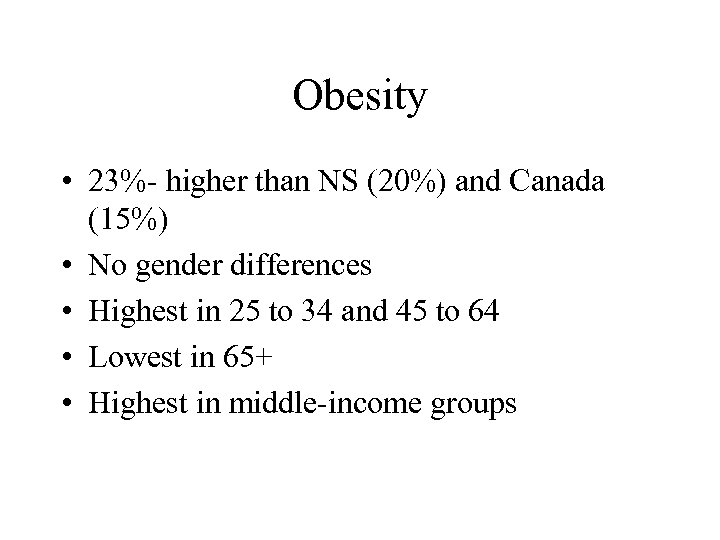
Obesity • 23%- higher than NS (20%) and Canada (15%) • No gender differences • Highest in 25 to 34 and 45 to 64 • Lowest in 65+ • Highest in middle-income groups
Sedentary Lifestyle • 19% with no gender differences • No age effect • U-shaped curve with age (highest in low income (21%) and highest income (22%)
Physical activities at least 5 X per week • 43% • Males slightly higher (45%) than females (41%) • U-shaped with age- lowest among middleaged • No income effect (positive)
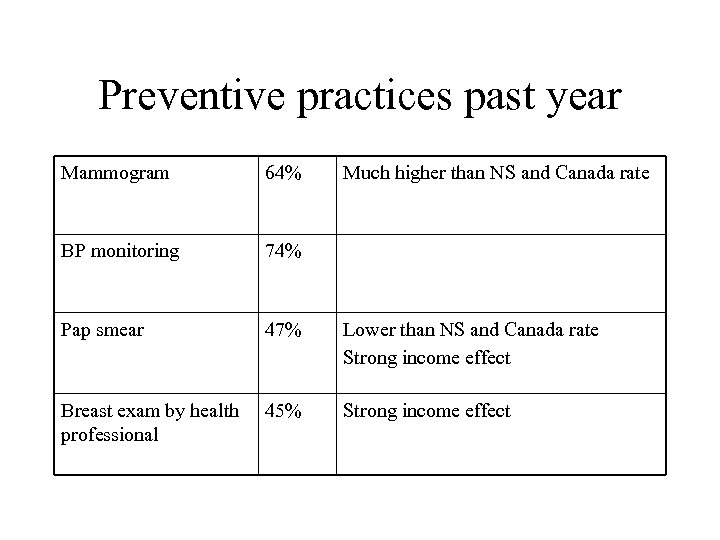
Preventive practices past year Mammogram 64% Much higher than NS and Canada rate BP monitoring 74% Pap smear 47% Lower than NS and Canada rate Strong income effect Breast exam by health professional 45% Strong income effect
Mental Health Strong Age Effects
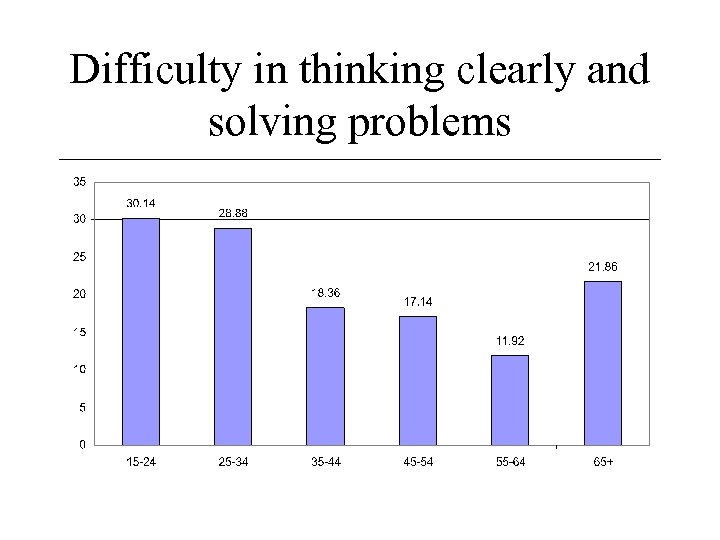
Difficulty in thinking clearly and solving problems
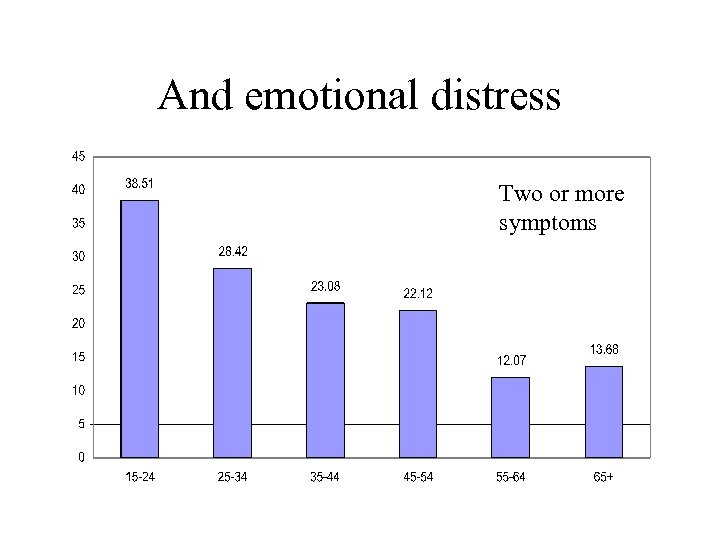
And emotional distress Two or more symptoms
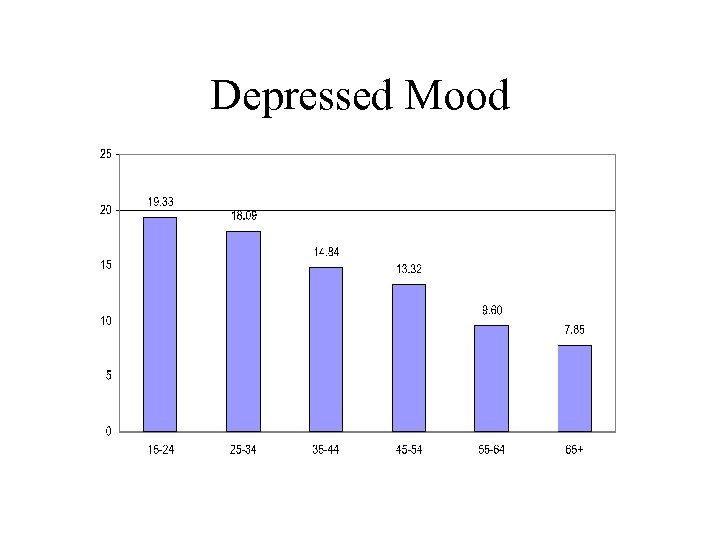
Depressed Mood
Also, Strong income effects on all measures Gender effect on depressed mood but not others
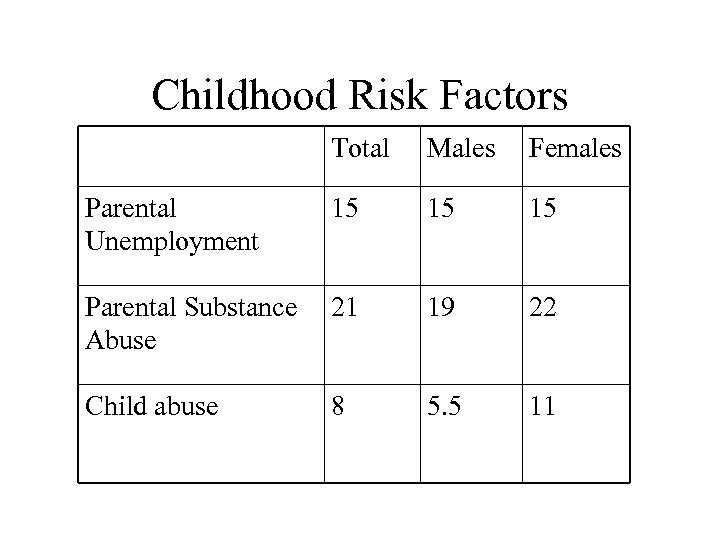
Childhood Risk Factors Total Males Females Parental Unemployment 15 15 15 Parental Substance Abuse 21 19 22 Child abuse 8 5. 5 11
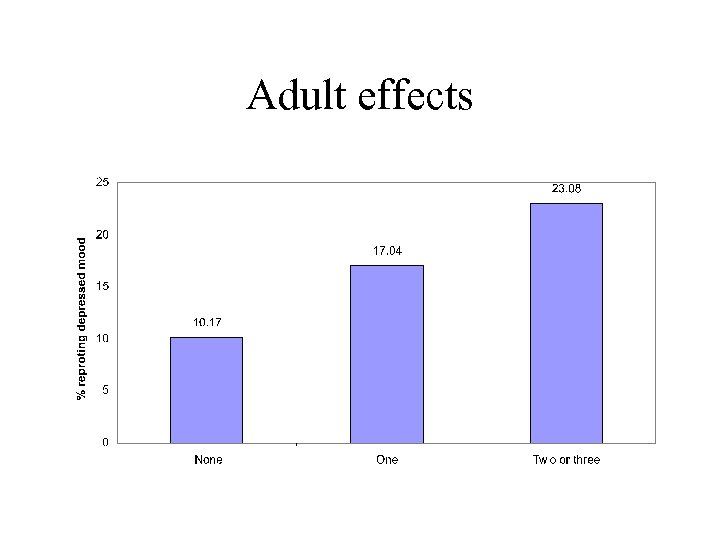
Adult effects
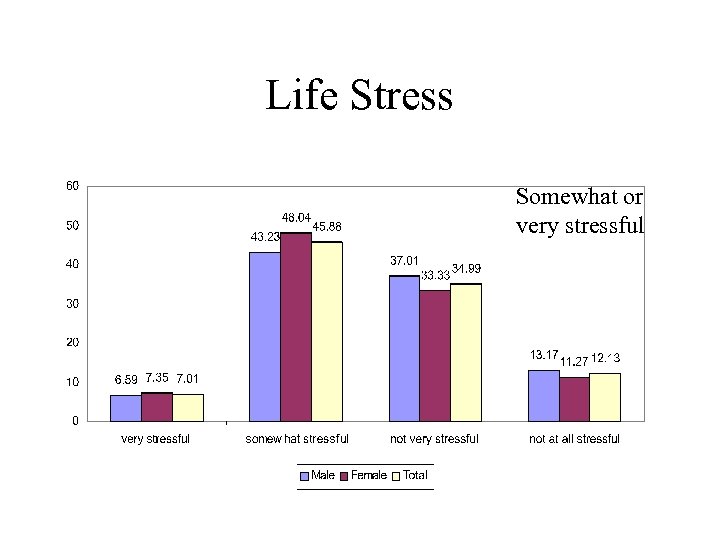
Life Stress Somewhat or very stressful
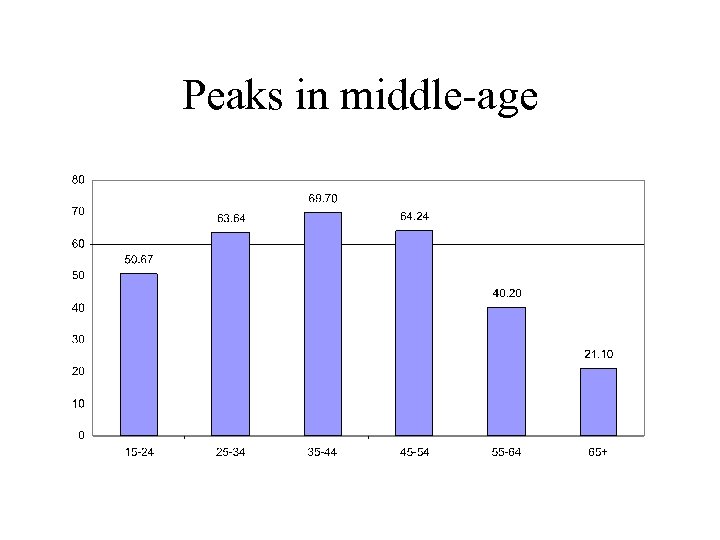
Peaks in middle-age
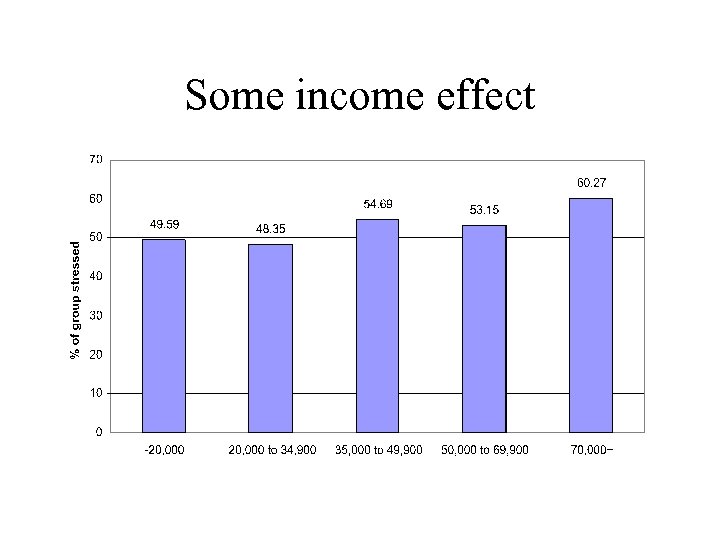
Some income effect
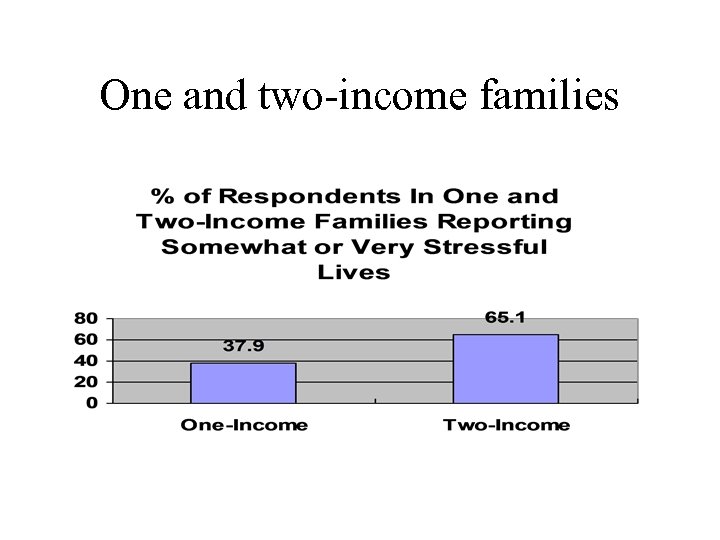
One and two-income families
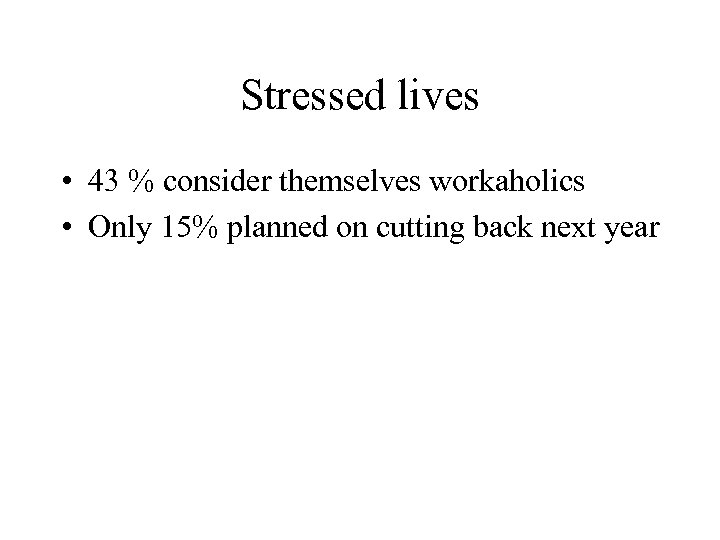
Stressed lives • 43 % consider themselves workaholics • Only 15% planned on cutting back next year
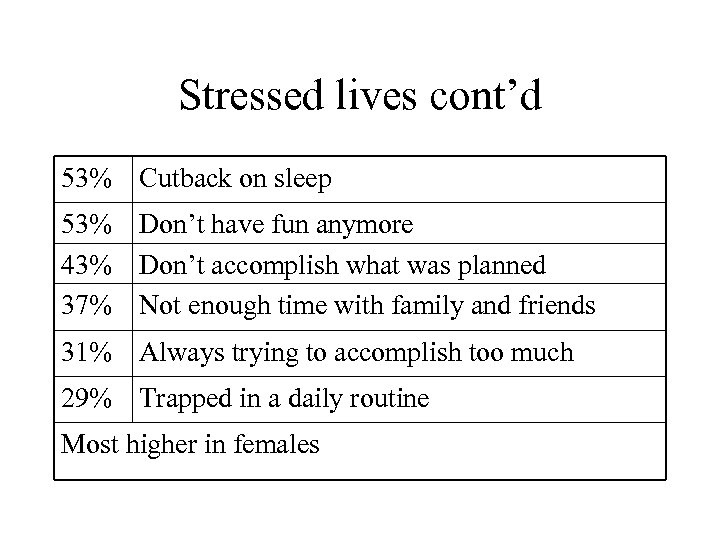
Stressed lives cont’d 53% Cutback on sleep 53% Don’t have fun anymore 43% Don’t accomplish what was planned 37% Not enough time with family and friends 31% Always trying to accomplish too much 29% Trapped in a daily routine Most higher in females
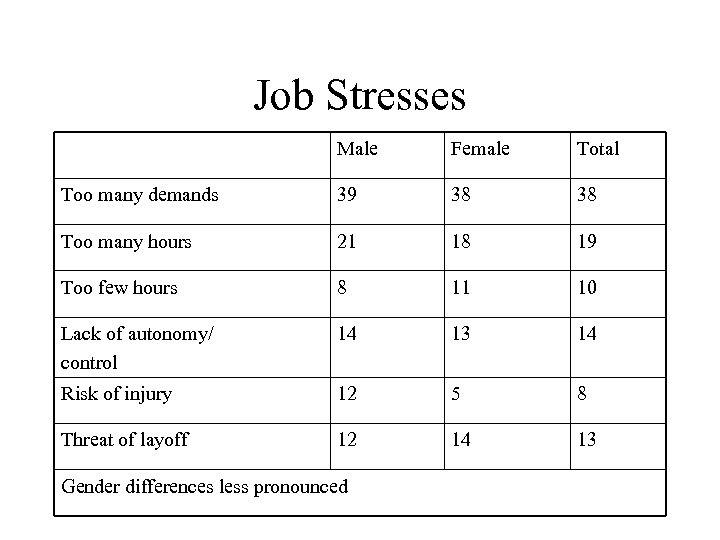
Job Stresses Male Female Total Too many demands 39 38 38 Too many hours 21 18 19 Too few hours 8 11 10 Lack of autonomy/ control 14 13 14 Risk of injury 12 5 8 Threat of layoff 12 14 13 Gender differences less pronounced
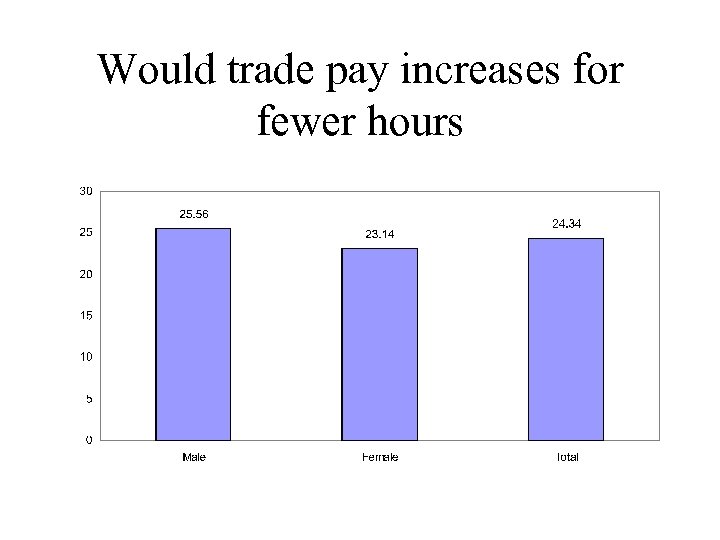
Would trade pay increases for fewer hours
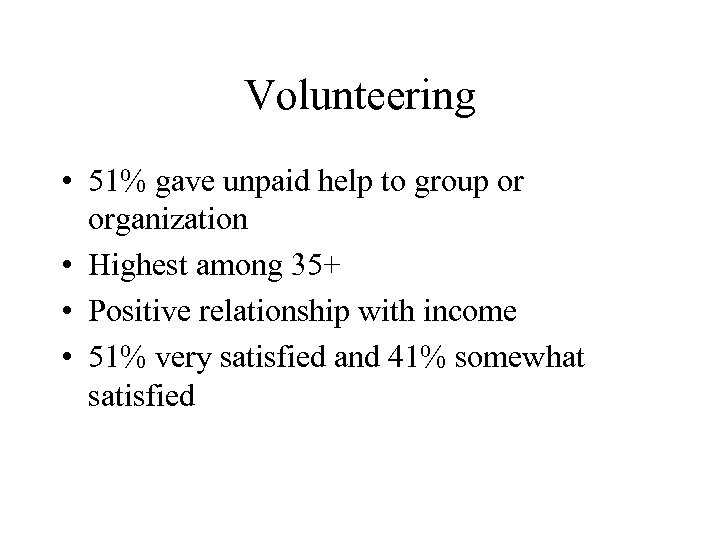
Volunteering • 51% gave unpaid help to group or organization • Highest among 35+ • Positive relationship with income • 51% very satisfied and 41% somewhat satisfied
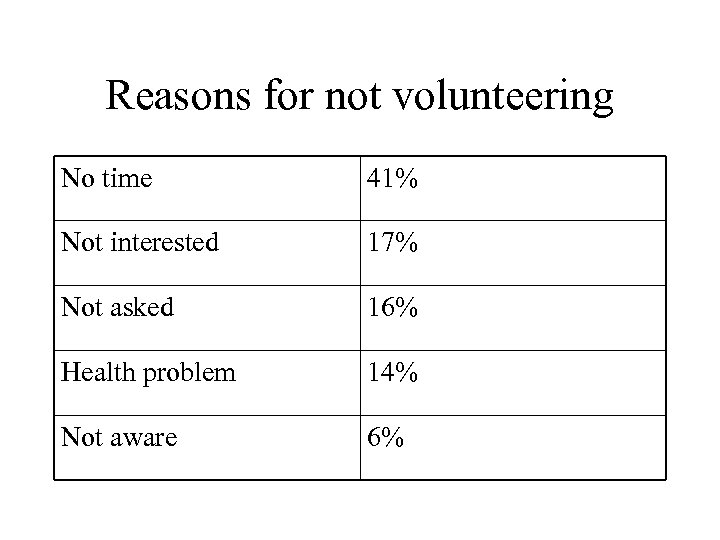
Reasons for not volunteering No time 41% Not interested 17% Not asked 16% Health problem 14% Not aware 6%
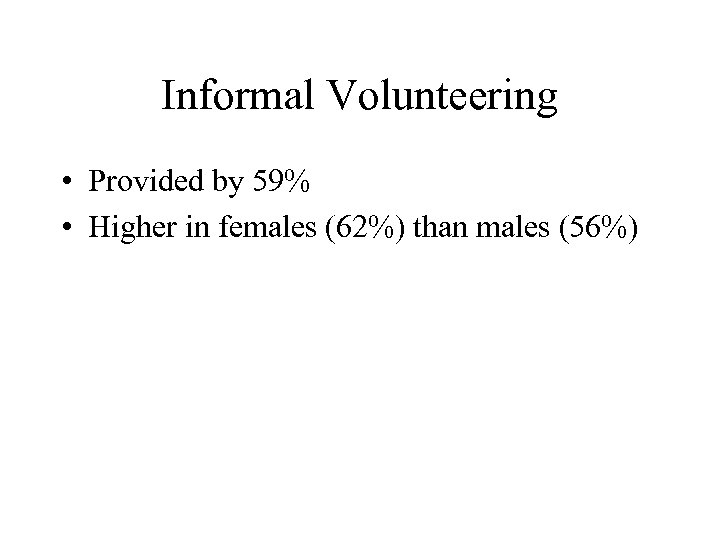
Informal Volunteering • Provided by 59% • Higher in females (62%) than males (56%)
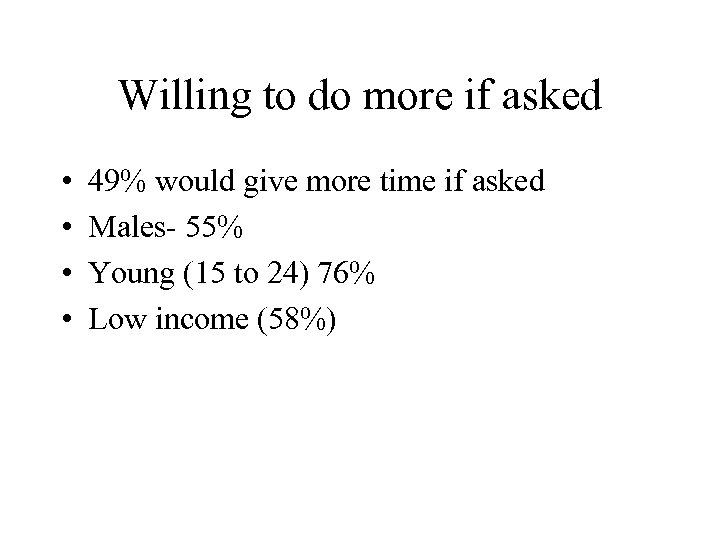
Willing to do more if asked • • 49% would give more time if asked Males- 55% Young (15 to 24) 76% Low income (58%)
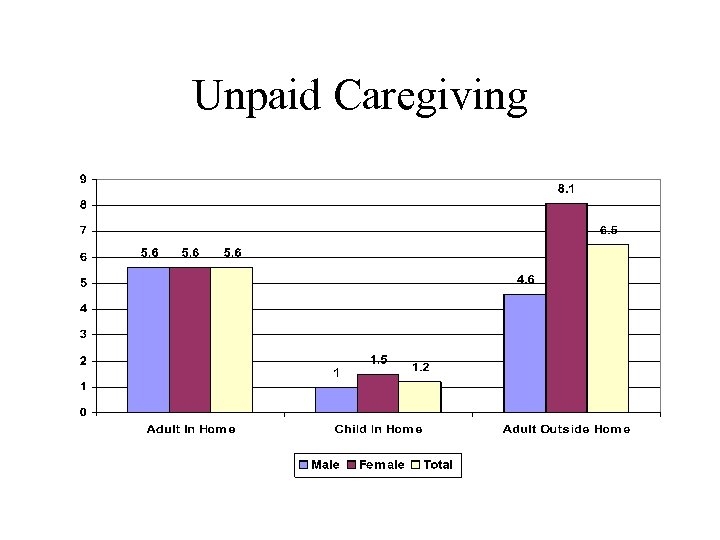
Unpaid Caregiving
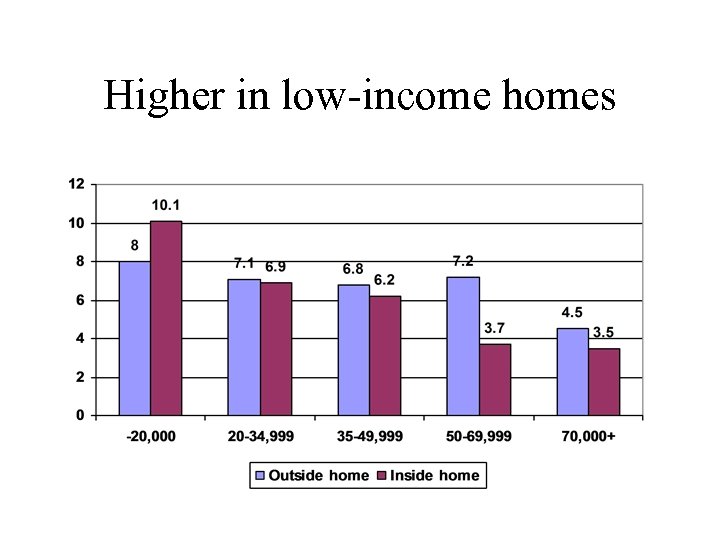
Higher in low-income homes
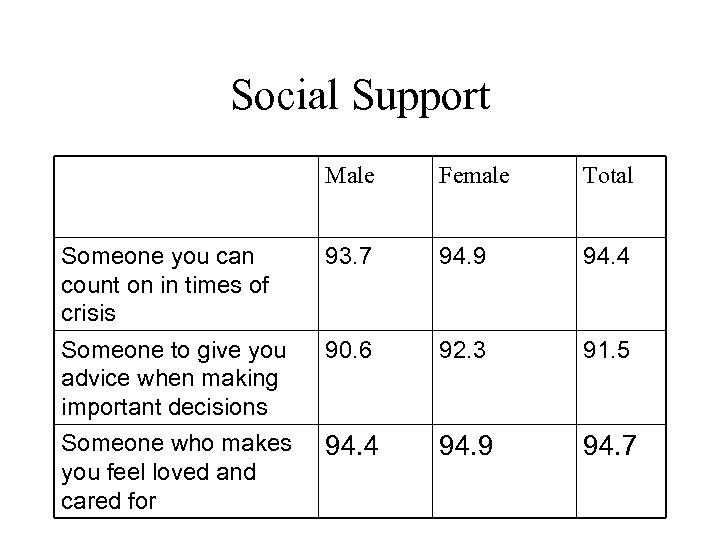
Social Support Male Female Total Someone you can count on in times of crisis 93. 7 94. 9 94. 4 Someone to give you advice when making important decisions 90. 6 92. 3 91. 5 Someone who makes you feel loved and cared for 94. 4 94. 9 94. 7
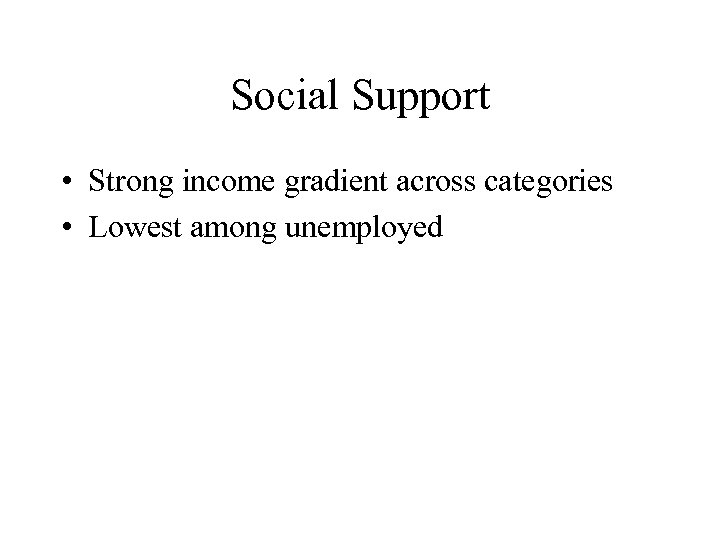
Social Support • Strong income gradient across categories • Lowest among unemployed
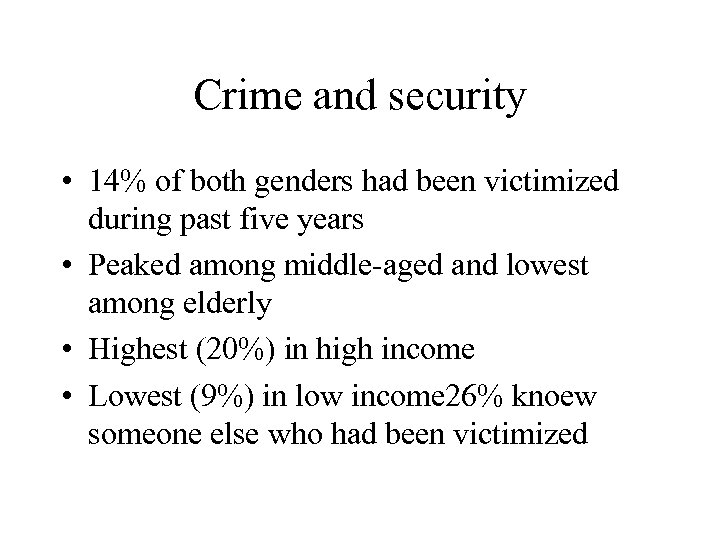
Crime and security • 14% of both genders had been victimized during past five years • Peaked among middle-aged and lowest among elderly • Highest (20%) in high income • Lowest (9%) in low income 26% knoew someone else who had been victimized
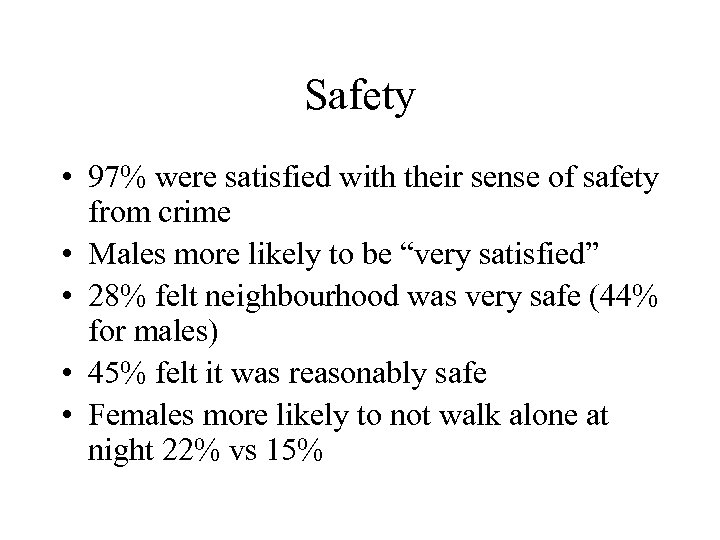
Safety • 97% were satisfied with their sense of safety from crime • Males more likely to be “very satisfied” • 28% felt neighbourhood was very safe (44% for males) • 45% felt it was reasonably safe • Females more likely to not walk alone at night 22% vs 15%
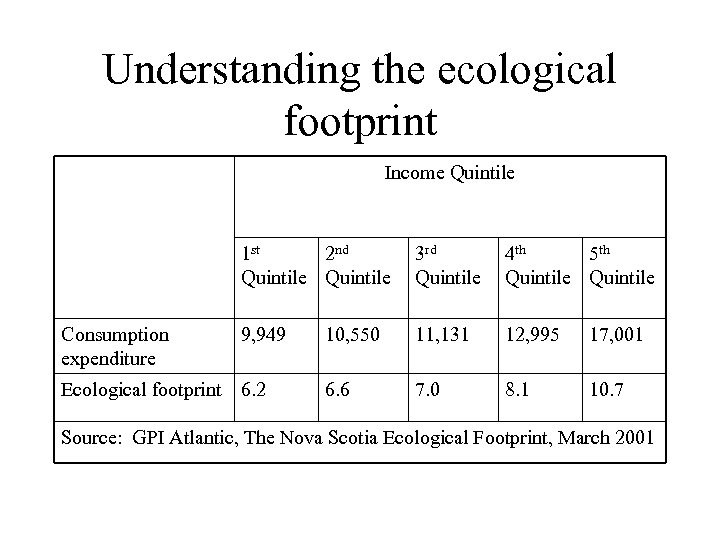
Understanding the ecological footprint Income Quintile 1 st 2 nd Quintile Consumption expenditure 3 rd Quintile 4 th 5 th Quintile 9, 949 10, 550 11, 131 12, 995 17, 001 6. 6 7. 0 8. 1 10. 7 Ecological footprint 6. 2 Source: GPI Atlantic, The Nova Scotia Ecological Footprint, March 2001
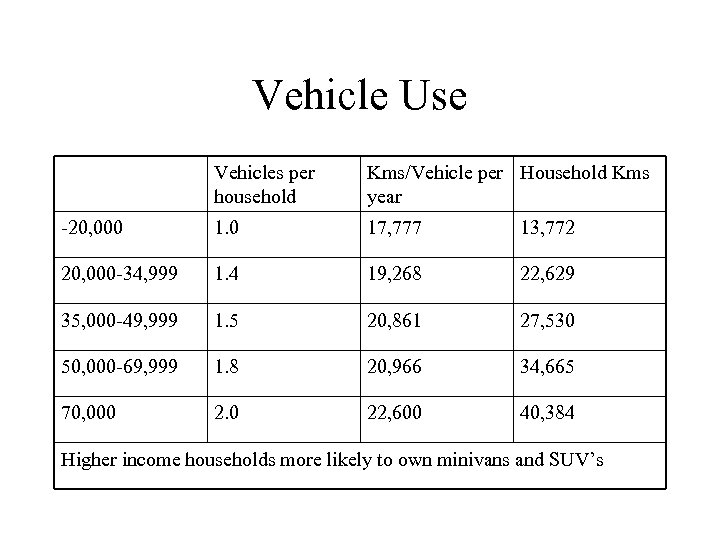
Vehicle Use Vehicles per household Kms/Vehicle per Household Kms year -20, 000 1. 0 17, 777 13, 772 20, 000 -34, 999 1. 4 19, 268 22, 629 35, 000 -49, 999 1. 5 20, 861 27, 530 50, 000 -69, 999 1. 8 20, 966 34, 665 70, 000 2. 0 22, 600 40, 384 Higher income households more likely to own minivans and SUV’s
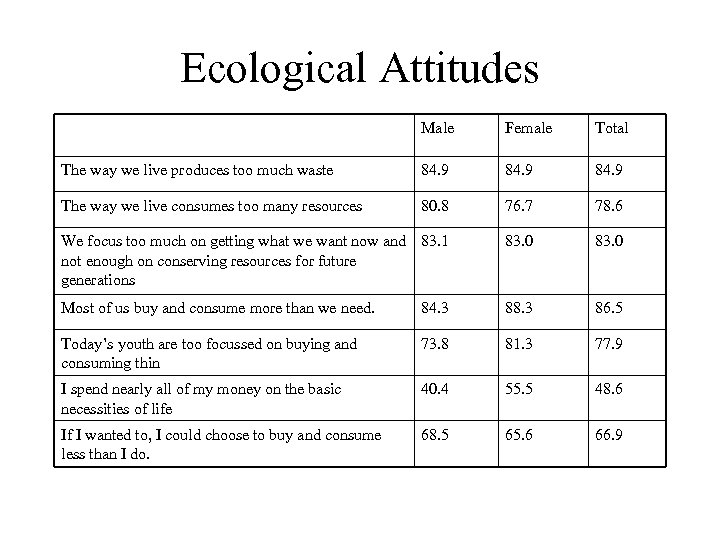
Ecological Attitudes Male Female Total The way we live produces too much waste 84. 9 The way we live consumes too many resources 80. 8 76. 7 78. 6 We focus too much on getting what we want now and 83. 1 not enough on conserving resources for future generations 83. 0 Most of us buy and consume more than we need. 84. 3 88. 3 86. 5 Today’s youth are too focussed on buying and consuming thin 73. 8 81. 3 77. 9 I spend nearly all of my money on the basic necessities of life 40. 4 55. 5 48. 6 If I wanted to, I could choose to buy and consume less than I do. 68. 5 65. 6 66. 9
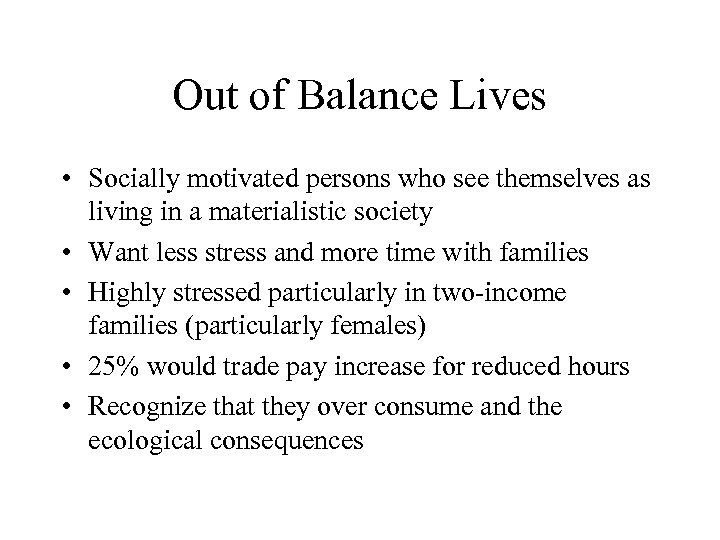
Out of Balance Lives • Socially motivated persons who see themselves as living in a materialistic society • Want less stress and more time with families • Highly stressed particularly in two-income families (particularly females) • 25% would trade pay increase for reduced hours • Recognize that they over consume and the ecological consequences
Continuing Inequities • Lower income households have poorer mental and physical health, and disabilities • Lowest levels of social support • Higher levels of care-giving
Health Challenges • Higher rates of obesity • Don’t forget the young – Mental health issues
The Good • • • High levels of health and wellbeing High levels of social support High levels of safety Strong volunteerism Strong ecological commitment
Скачать презентацию Wellbeing in Kings County Results from the GPI
5a1a57aea8df5b44564ff5f1d8518057.ppt