


 Скачать презентацию Welcome Yearly Overview General Expectations
09bc72fce51758a41da18d012580ac54.ppt
- Количество слайдов: 56
 Welcome! • Yearly Overview • General Expectations • Behaviour system • Literacy • Numeracy • Modern Foreign Languages • Homework
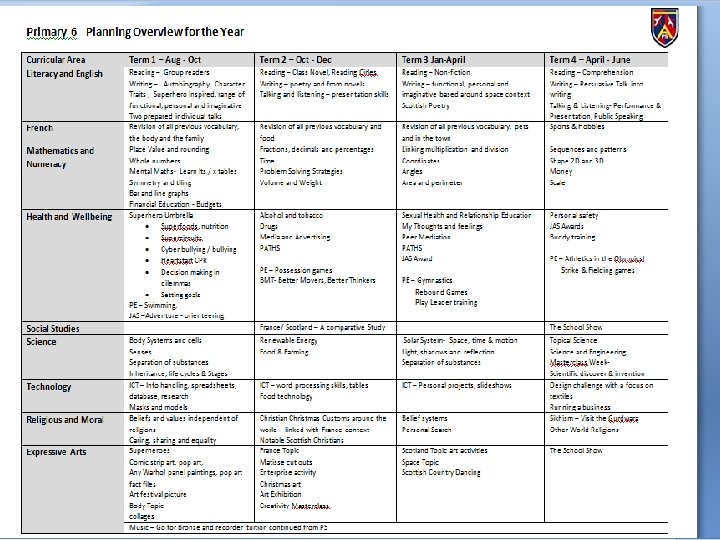 • Insert yearly overview
 Being Prepared § Stationery Supplies – Pencils (pre-sharpened) Ruler, rubber, sharpener Coloured pens/pencils (no Sharpies please) Waterproof wallet § Footwear Indoor shoes to protect carpet § P. E. Kit Training Shoes, shorts, leggings or joggers (no denim) Jewellery Removed (earrings prior to school) Water bottle
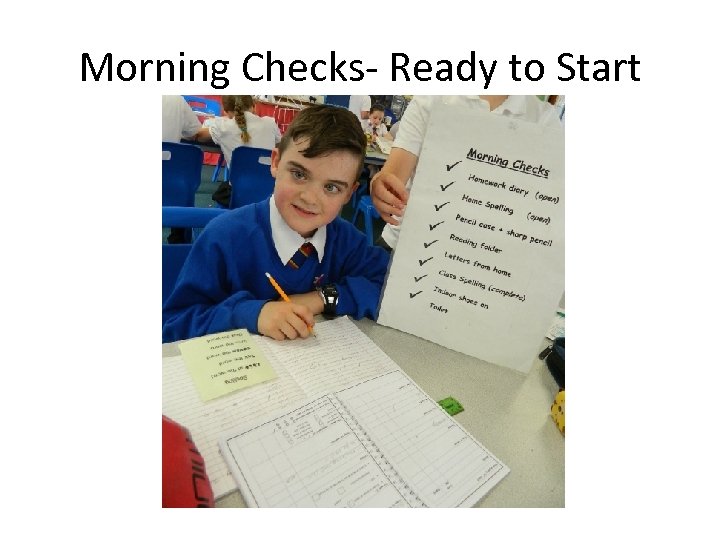 Morning Checks- Ready to Start
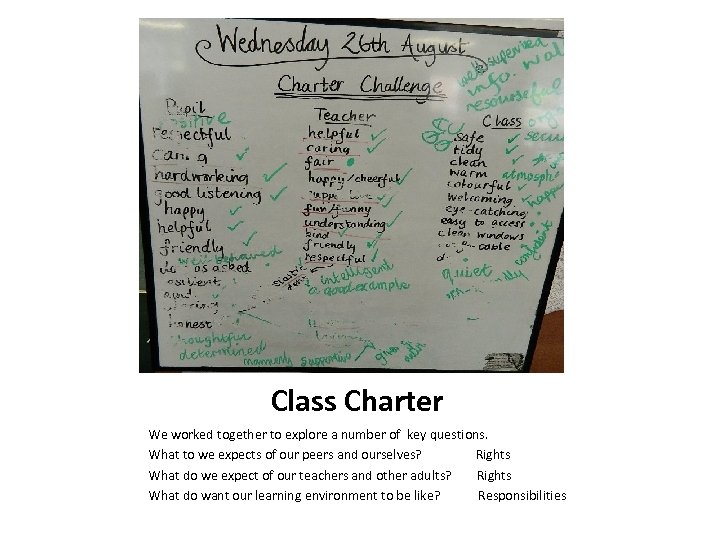 Class Charter We worked together to explore a number of key questions. What to we expects of our peers and ourselves? Rights What do we expect of our teachers and other adults? Rights What do want our learning environment to be like? Responsibilities
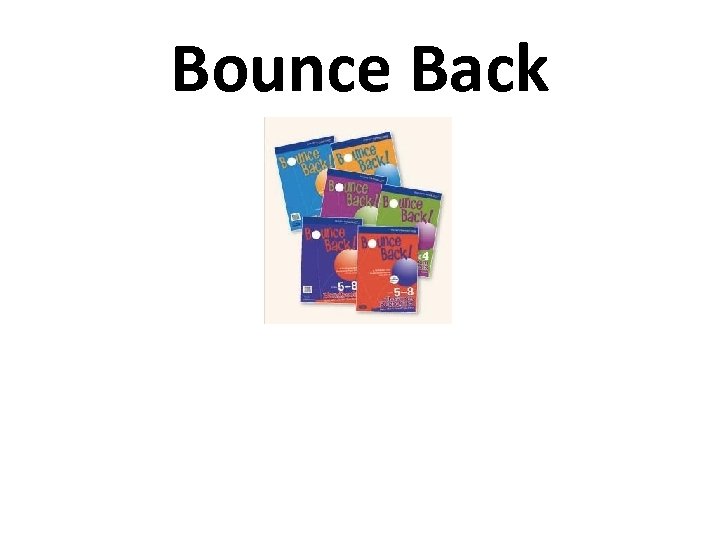 Bounce Back
 Bounce Back

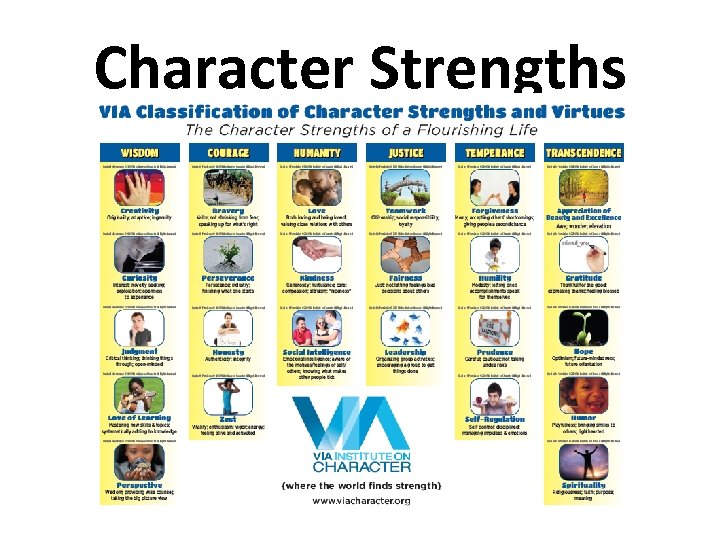 Character Strengths
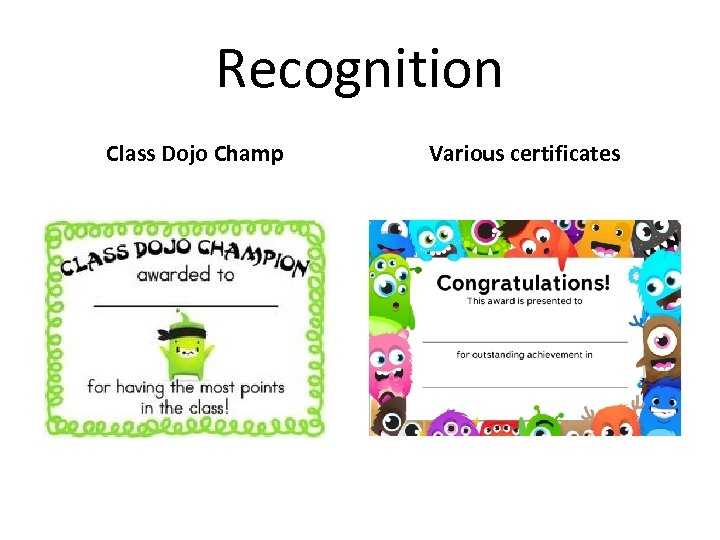
 Class Dojo
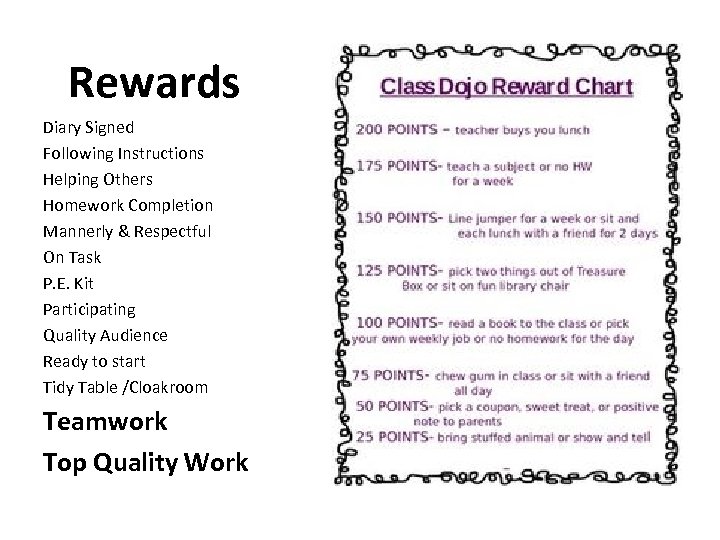 Rewards Diary Signed Following Instructions Helping Others Homework Completion Mannerly & Respectful On Task P. E. Kit Participating Quality Audience Ready to start Tidy Table /Cloakroom Teamwork Top Quality Work
 Recognition Class Dojo Champ Various certificates
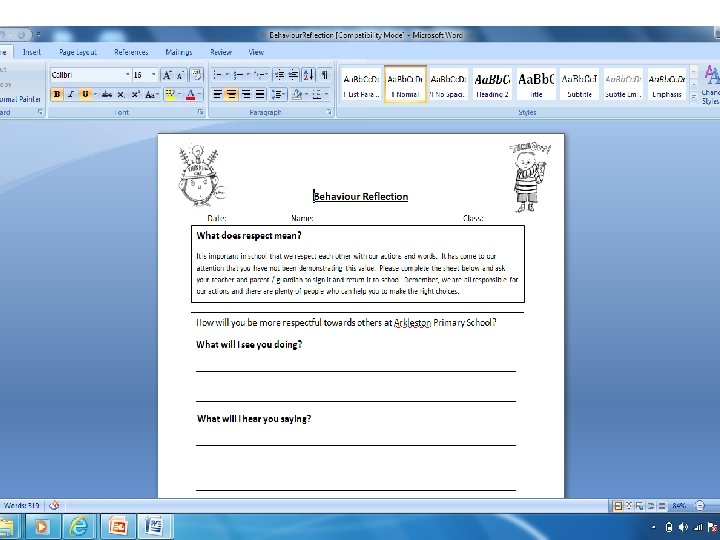
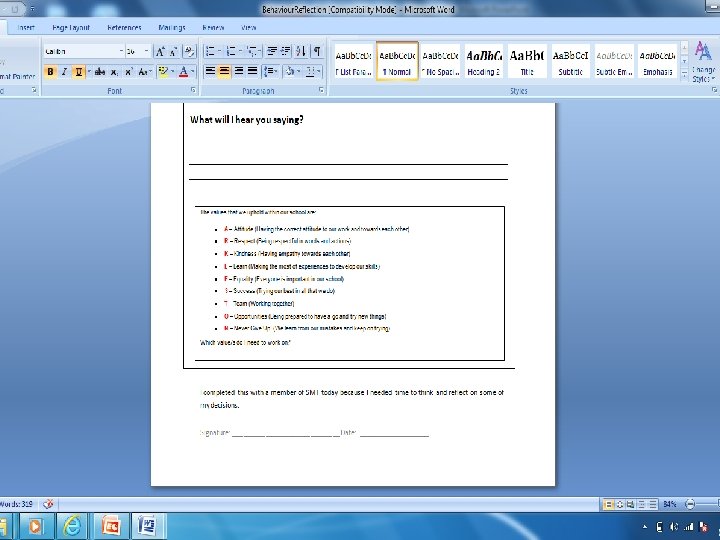
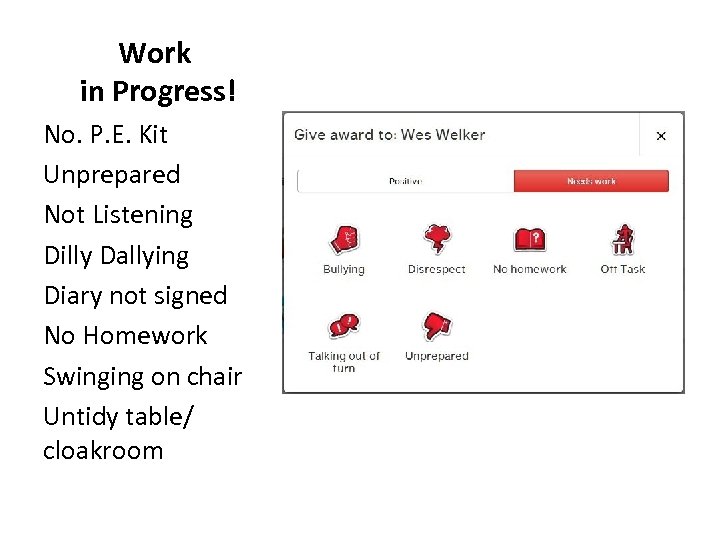 Work in Progress! No. P. E. Kit Unprepared Not Listening Dilly Dallying Diary not signed No Homework Swinging on chair Untidy table/ cloakroom
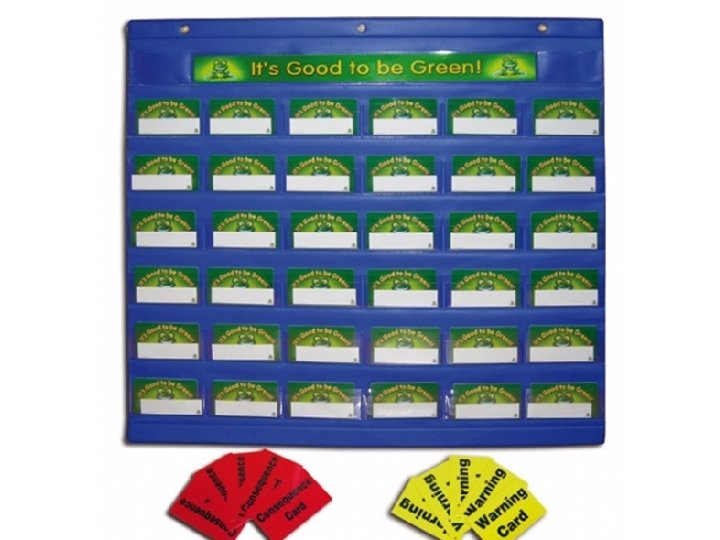
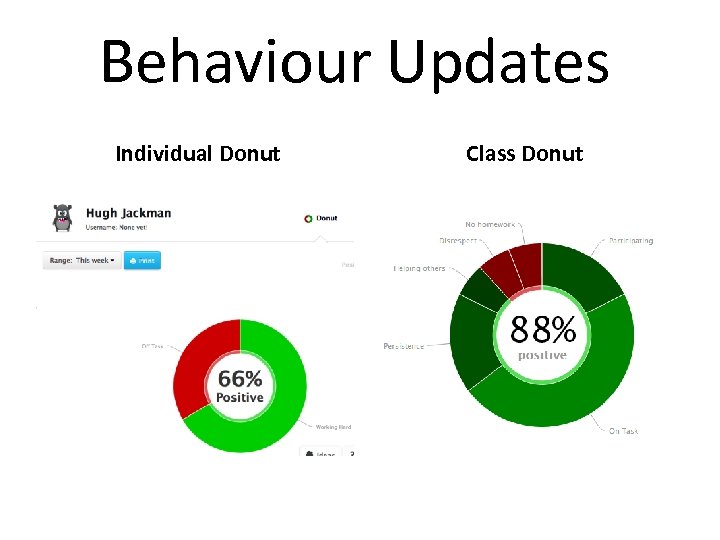 Behaviour Updates Individual Donut Class Donut
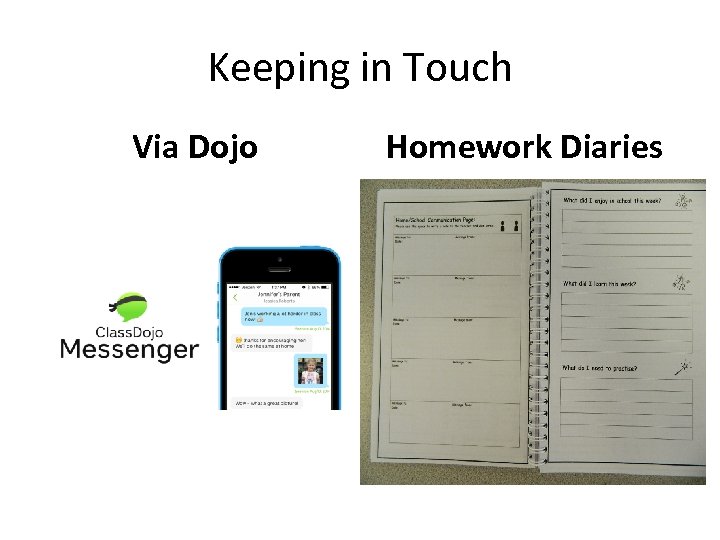 Keeping in Touch Via Dojo Homework Diaries
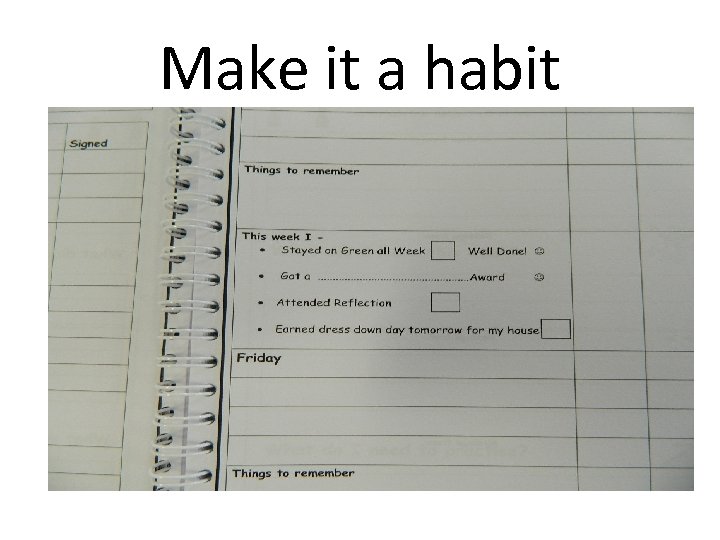 Make it a habit
 Sparky Arky Time

 Big Maths @Arkleston http: //www. youtube. com/watch? v=p. Ep. UC 2 tfep. Q
 What is Big Maths? It is a daily sequential programme of mental maths provision with a strong emphasis on learned facts and developing the mental agility to do something with these facts. It develops core skills in one clear method. All are taught in the same way, repeatedly, to embed these fundamental skills. Big Maths highlights how small steps of progress with core numeracy follow on logically from one to the next.
 Why should we use Big Maths at Arkleston ? • Clear progression from year to year • Common methods taught and language used throughout the school • Build on prior learning and ensure children are secure in their knowledge • Objectives are clearly matched to National Curriculum objectives • Clear links with Cf. E so evidence can be gathered easily to inform planning/assessment • Improve mental maths skills and general numeracy across the school
 CLIC Big Maths is based upon the principle that there are 4 core skills that lie at the heart of numeracy. These core skills form the platform for virtually all other maths skills and are affectionately known as CLIC …. Counting Learn Its It’s Nothing New Calculations
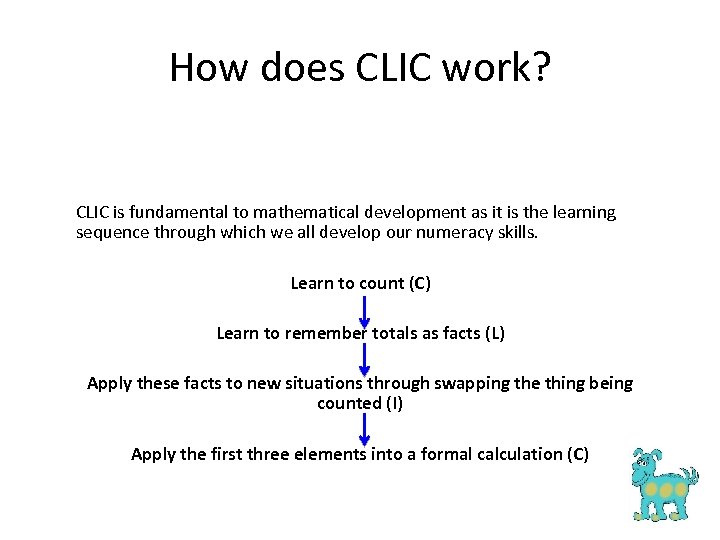 How does CLIC work? CLIC is fundamental to mathematical development as it is the learning sequence through which we all develop our numeracy skills. Learn to count (C) Learn to remember totals as facts (L) Apply these facts to new situations through swapping the thing being counted (I) Apply the first three elements into a formal calculation (C)
 A daily dose CLIC is a sequential programme of daily basic skills for numeracy. By implementing this programme we can ensure that all children have a constant, daily drive to up-level their numeracy. The frequency and focus of this programme is essential in order for children to make progress.
 How much should we have? • The programme involves teaching the four different elements for five minutes each and replaces the start of each lesson. • The main part of the maths lesson will follow the Big Maths session.
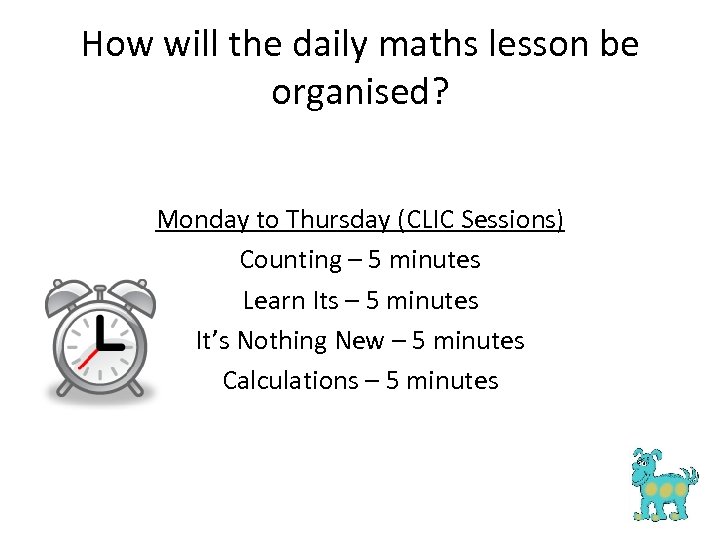 How will the daily maths lesson be organised? Monday to Thursday (CLIC Sessions) Counting – 5 minutes Learn Its – 5 minutes It’s Nothing New – 5 minutes Calculations – 5 minutes
 What will happen on Friday? Fridays will be our Challenge session Big Maths Beat That – timed challenge where children answer ‘Learn Its’ questions. The aim is to beat their previous score. Teach a focus area from the CLIC test. Work on individual skills so that the children will be able to apply this to their termly CLIC test. It is essential to revisit previous focus areas in order to consolidate learning. CLIC test – A termly assessment used to identify areas to work on and progress made
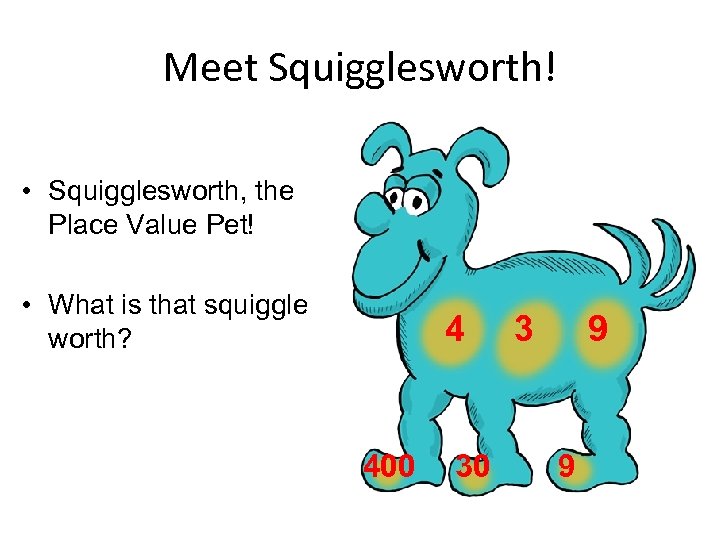 Meet Squigglesworth! • Squigglesworth, the Place Value Pet! • What is that squiggle worth? 4 400 30 3 9 9
 Mully! • Mully helps children to put numbers in order
 Count Fourways Learning to count out loud in four particular ways rapidly advances a child’s numeracy. The four ways are: counting in 10 s, 5 s, 2 s and 25 s. Use Pim principle to show children how to swap 2 s for 20 s, or 200 s or 0. 2 s. Children are also coached to count in ones and therefore 10 s, 100, 0. 1 s etc. As well as in 5 s. So they can count in 50 s, 500 s, 0. 5 s etc. Lastly in 25 s, allowing children to count in 250 s, 2. 5 s, 0. 25 s etc.
 What is Big Maths? It is a daily sequential programme of mental maths provision with a strong emphasis on learned facts and developing the mental agility to do something with these facts. It develops core skills in one clear method. All are taught in the same way, repeatedly, to embed these fundamental skills. Big Maths highlights how small steps of progress with core numeracy follow on logically from one to the next.
 It’s Nothing New Some of the key elements of this aspect of CLIC are: – Adding with Pim – Jigsaw Numbers – Coin Multiplication – Smile Multiplication – Count Fourways
 It’s Nothing New ‘It’s Nothing New’ is the ‘Glue’ of CLIC. For each ‘It’s Nothing New’ step the teacher makes the learner conscious of two currently held ideas. They will then overlap these ideas and reveal how a third ‘new’ ideas must be true. The message that there is ‘no new maths’ is a critical part of making children conscious of the learning process and helps build their maths confidence. The ‘It’s Nothing New’ session is typically a whole class session that uses mainly talk and Big Thought Boards (whiteboards). The teacher nudges forward with new concepts, taking the whole class with them as they go.
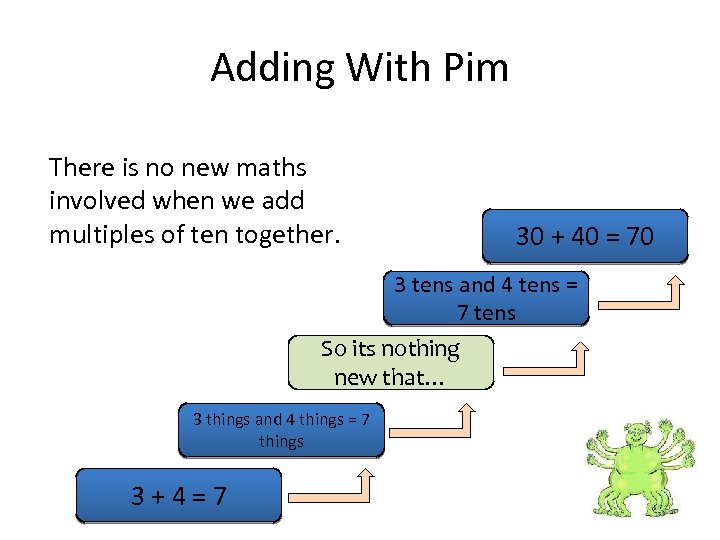 Adding With Pim There is no new maths involved when we add multiples of ten together. 30 + 40 = 70 3 tens and 4 tens = 7 tens So its nothing new that… 3 things and 4 things = 7 things 3+4=7
 How can I support my child? Help your child to practice their ‘Learn Its’ at home. These will either be inserted into their diaries at the back. Each week your child will be introduced to 2 or 3 new facts. Ask your child to tell you about Big Maths. Praise! Celebrate the successes. Visit the publishers website: http: //www. andrelleducation. co. uk/courses/numera cy/big-maths/
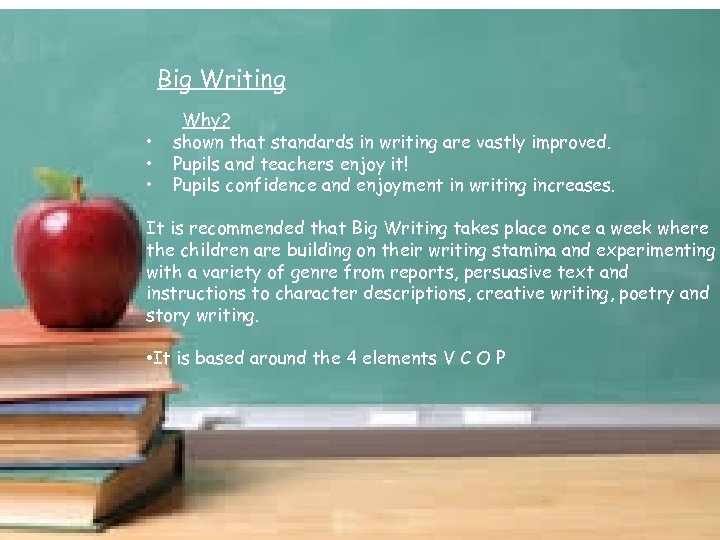 Why Big Write? Big Writing • Research has shown that standards in writing are vastly improved. Why? • teachers enjoy it! • Pupils and shown that standards in writing are vastly improved. • Pupils and teachers enjoy it! • Pupils confidence and enjoyment in writing increases. • Pupils confidence and enjoyment in writing increases. It is recommended Writing takes place once a week • It is recommended that Bigtakes place once a week where the children are on their writing stamina and experimenting the children are building on theirstamina and experimenting with a of genre from reports, persuasive text and with a variety of genre from persuasive text and instructions to character descriptions, creative writing, poetry and story writing. • It is based around the 4 V C O P • It is based around the 4 elements V C O P

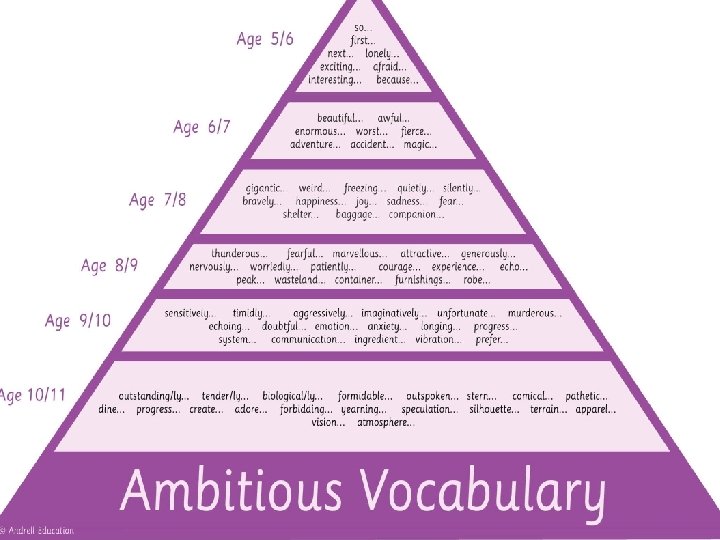
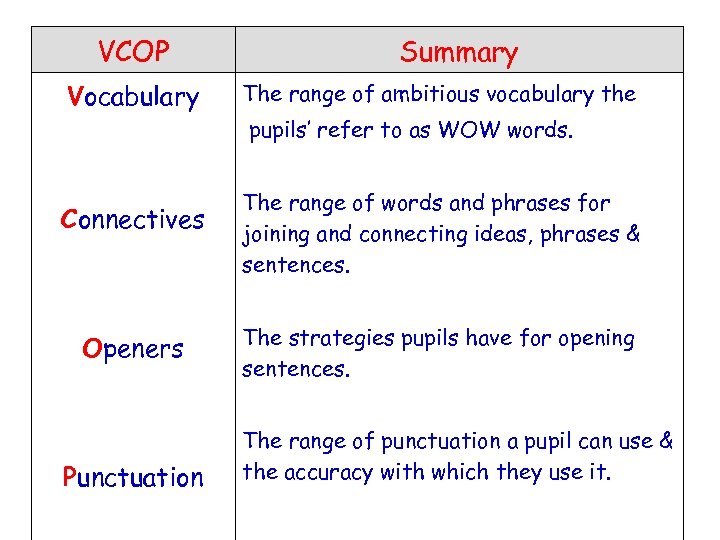 VCOP Vocabulary Summary The range of ambitious vocabulary the pupils’ refer to as WOW words. Connectives Openers Punctuation The range of words and phrases for joining and connecting ideas, phrases & sentences. The strategies pupils have for opening sentences. The range of punctuation a pupil can use & the accuracy with which they use it.
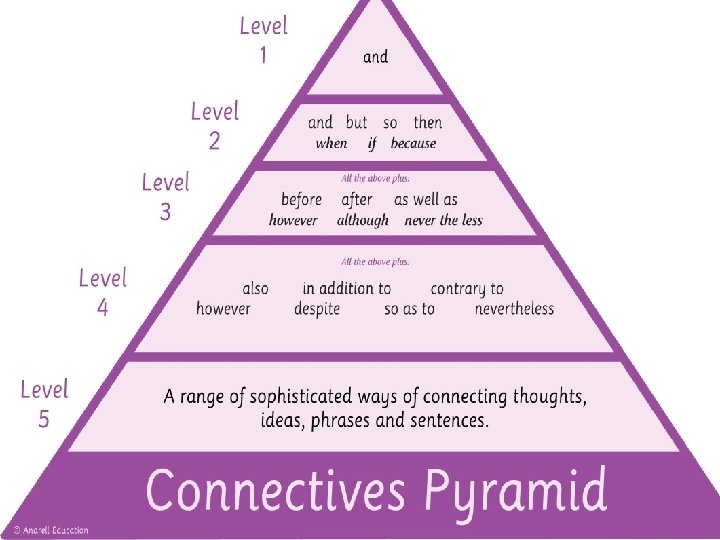
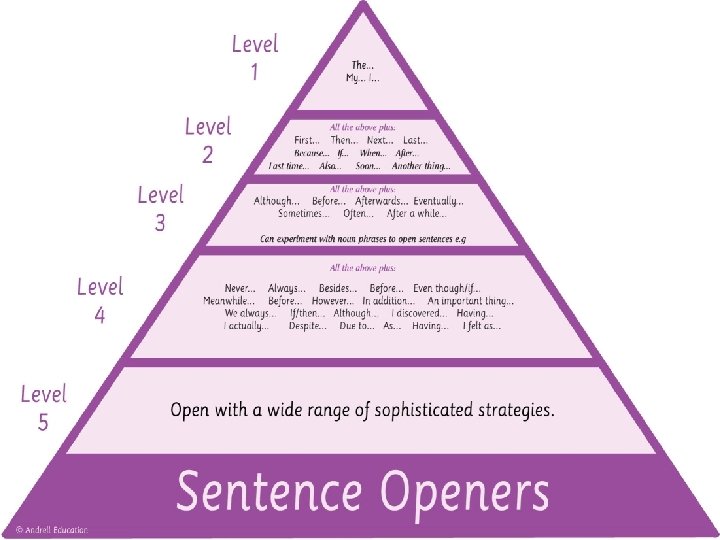
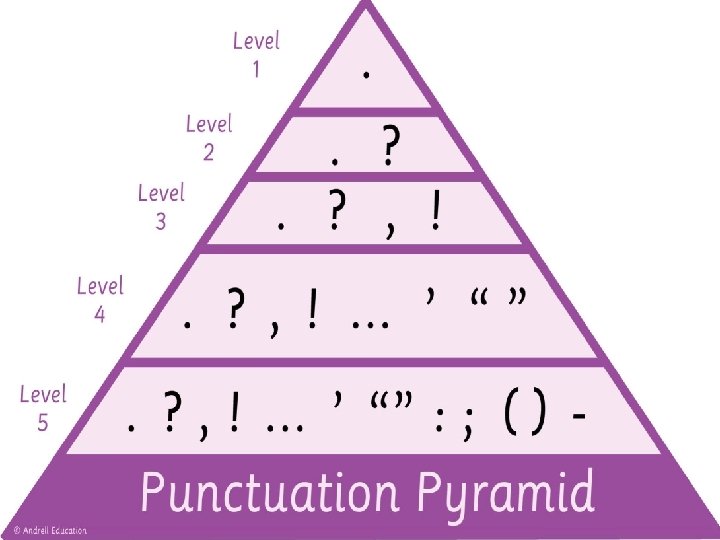
 The dog is big. The dog likes a bone. The dog can bark. I like the dog. My dog is big and brown and very scruffy. He likes to eat bones but he likes sausages best. My dog can bark loudly and he can run very fast. I like my cat and my dog but I like my dog best. I have two pets a dog, and a cat. I like them both but I like my dog best! He is large, rusty brown and very scruffy. Have you seen him? He looks very funny. My dog likes eating bones and biscuits, but best of all he likes eating sausages. When my dog barks it is so loud that I cover my ears. Also my dog runs very fast. People often ask me about my pets and although I have two, I have to say I like my dog best. That large, rusty brown ragamuffin looks so very amusing that he makes me laugh. Have you seen him? He mainly dines on biscuits and bones, however he prefers meat and he enjoys sausages most of all. When my scruffy, old friend barks it is as loud as Concorde, crashing through the sound barrier. We all have to cover our ears for protection.
 Up-levelling A man walked quickly down the castle steps. He walked as fast as possible to the forest as if he did not want to be seen. Harry recognised him. It was Snape. Where was he going? A hooded figure came swiftly down the front steps of the castle. Clearly not wanting to be seen, it walked as fast as possible towards the ‘Forbidden Forest’. Harry’s victory faded from his mind as he watched. He recognised the figure’s prowling walk. Snape, sneaking into the forest while everyone else was at dinner – what was going on?
 How can you as parents help? • • • Read to your child no matter what age. • Look at a picture or photo together. Use it to tell a story. Think of a title for your story. What would the opening 10 words be? • Encourage your child to spot WOW words and perhaps write them down in a book at home or on a piece of paper. • Encourage your child to borrow words or phrases which they like from books, magazines and television programs. Encourage your child to READ. Encourage your child to TALK. Ask them to describe everything and anything. Take it in turns to tell a story. One person starts it, the other says what happens next etc… AEK 2012


 Language Learning in Scotland • Government document published in May 2012 • Set out 35 recommendations to radically alter Language delivery across Scottish schools • Main impact on Primary schools to implement one language from P 1 -7 (nursery if suitable) • Second language introduced no later than P 5 • Increased funding from Scottish Government • Full implementation by 2020
 Arkleston Progress • We are part of the second group of pilot schools and have recently received additional funding to buy resources to support our implementation of L 2. • 14 members of staff have undertaken French training, either previously or through the recent initiative and French is now being delivered to all stages of the school using the Renfrewshire Skills Framework. • Last October two teachers from Lyon visited the school and formed links which we hope to continue and develop further.
 Arkleston plans Plans for future. . • Continue to develop French programme in P 1 -P 7. • Work with local cluster schools to decide on 2 nd Foreign Language. • Participate in staff training and begin implementation of 2 nd Foreign Language in P 5 -7. • Participate in Renfrewshire Languages week with a focus on French culture and an opportunity for a group of pupils to meet with groups from other local primary schools for a French picnic. • Continue to work with cluster schools on transition between P 7 and S 1.
 Homework • Literacy Spelling Reading Talking and Listening • Numeracy Mental Maths booklets Learn-its • Topic • My merit