


 Скачать презентацию Welcome to the Year 3 Information Evening
f623afb9b1ec38256b131280ba2f0b1f.ppt
- Количество слайдов: 24
 Welcome to the Year 3 Information Evening
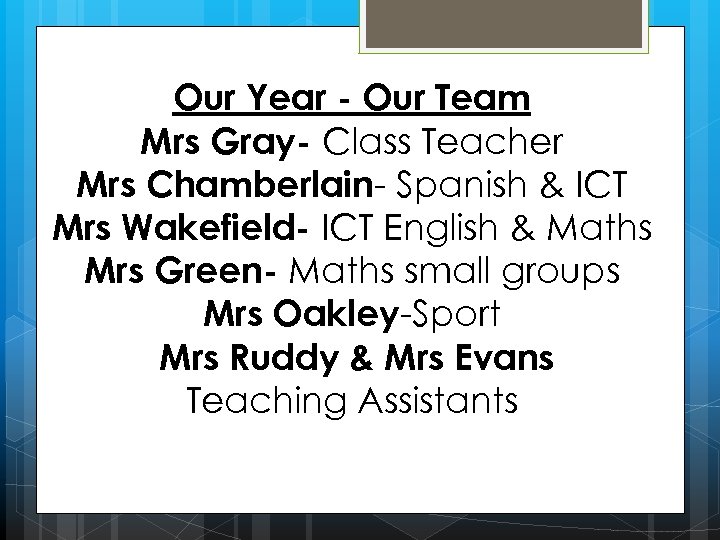 Our Year - Our Team Mrs Gray- Class Teacher Mrs Chamberlain- Spanish & ICT Mrs Wakefield- ICT English & Maths Mrs Green- Maths small groups Mrs Oakley-Sport Mrs Ruddy & Mrs Evans Teaching Assistants
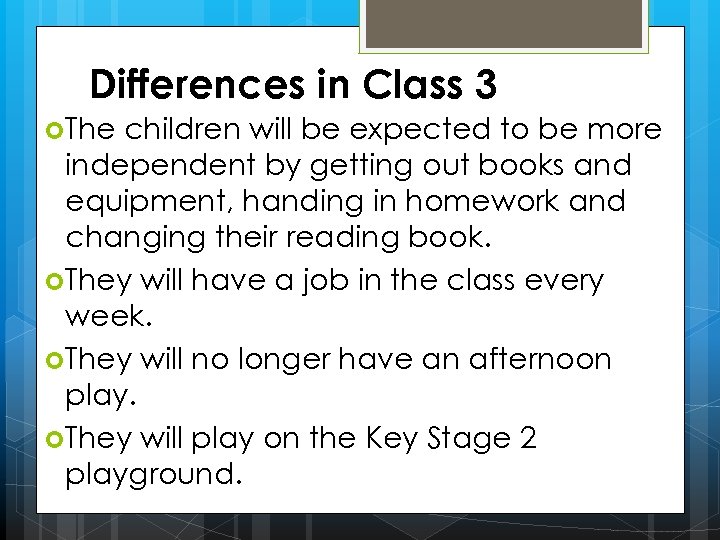 Differences in Class 3 The children will be expected to be more independent by getting out books and equipment, handing in homework and changing their reading book. They will have a job in the class every week. They will no longer have an afternoon play. They will play on the Key Stage 2 playground.
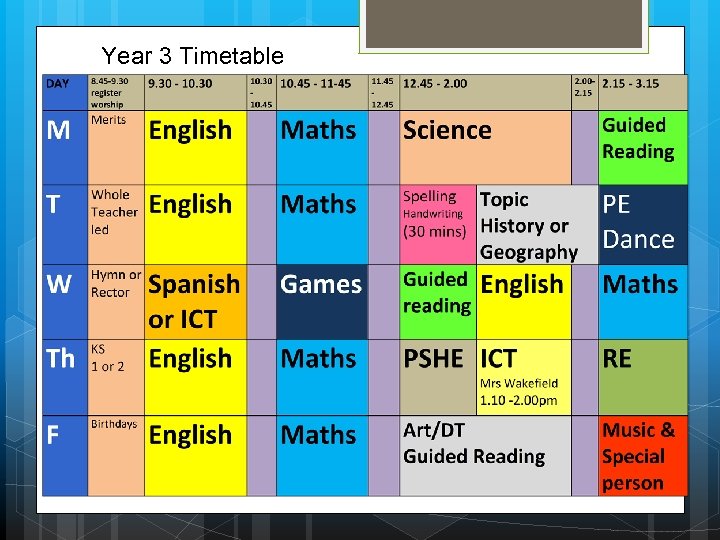 Year 3 Timetable
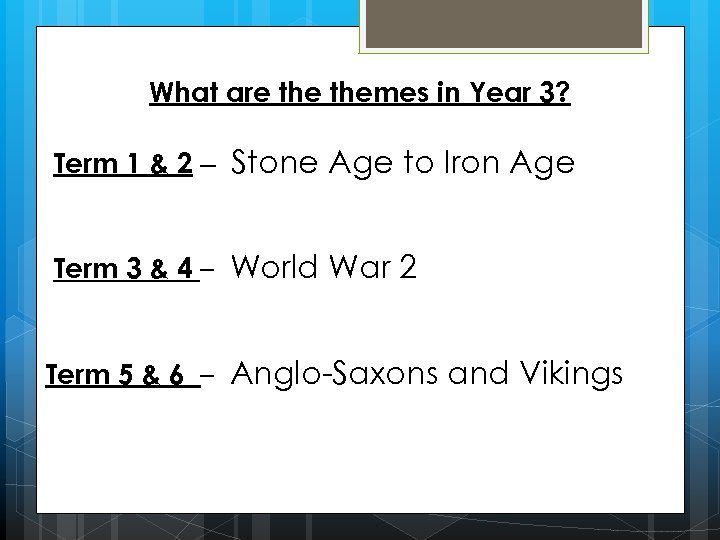 What are themes in Year 3? Term 1 & 2 – Stone Age to Iron Age Term 3 & 4 – World War 2 Term 5 & 6 – Anglo-Saxons and Vikings
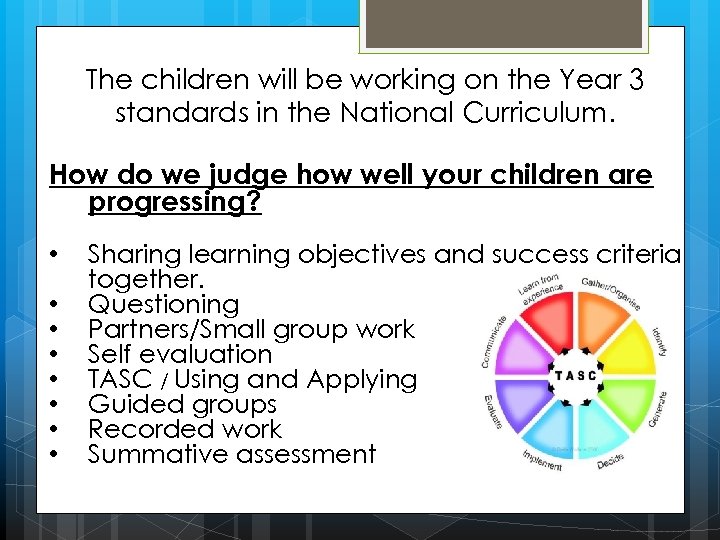 The children will be working on the Year 3 standards in the National Curriculum. How do we judge how well your children are progressing? • • Sharing learning objectives and success criteria together. Questioning Partners/Small group work Self evaluation TASC / Using and Applying Guided groups Recorded work Summative assessment
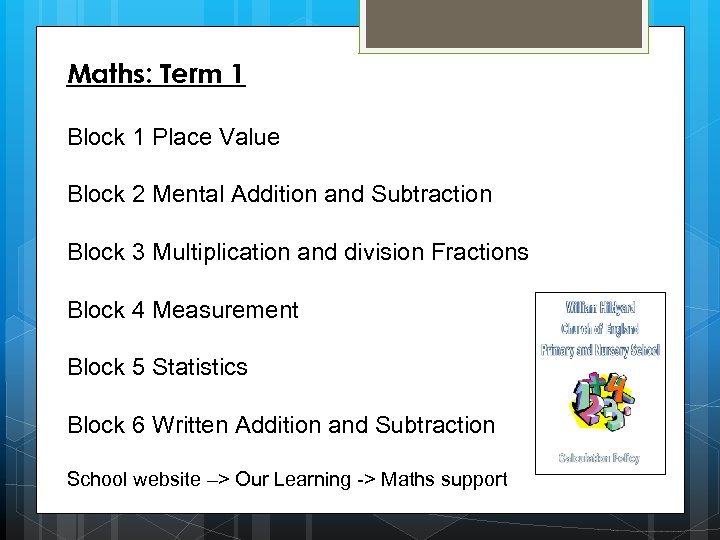 Maths: Term 1 Block 1 Place Value Block 2 Mental Addition and Subtraction Block 3 Multiplication and division Fractions Block 4 Measurement Block 5 Statistics Block 6 Written Addition and Subtraction School website –> Our Learning -> Maths support
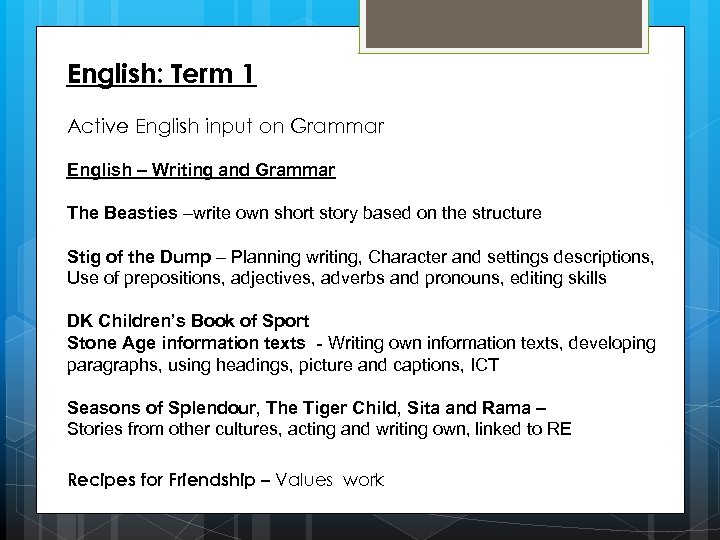 English: Term 1 Active English input on Grammar English – Writing and Grammar The Beasties –write own short story based on the structure Stig of the Dump – Planning writing, Character and settings descriptions, Use of prepositions, adjectives, adverbs and pronouns, editing skills DK Children’s Book of Sport Stone Age information texts - Writing own information texts, developing paragraphs, using headings, picture and captions, ICT Seasons of Splendour, The Tiger Child, Sita and Rama – Stories from other cultures, acting and writing own, linked to RE Recipes for Friendship – Values work
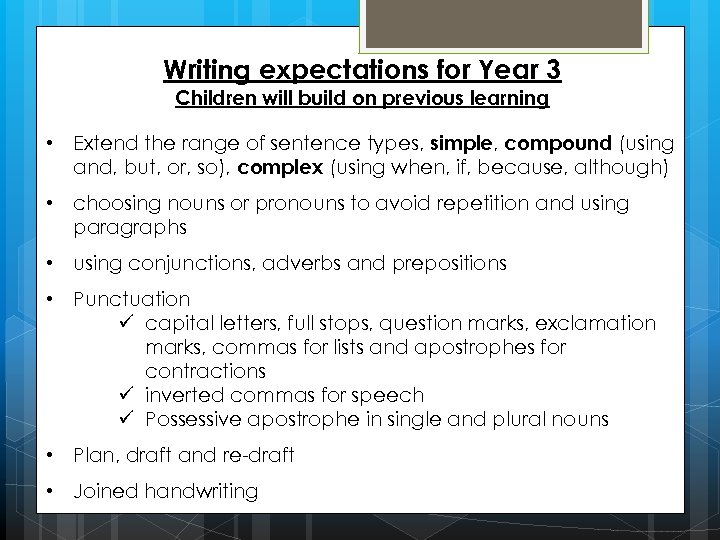 Writing expectations for Year 3 Children will build on previous learning • Extend the range of sentence types, simple, compound (using and, but, or, so), complex (using when, if, because, although) • choosing nouns or pronouns to avoid repetition and using paragraphs • using conjunctions, adverbs and prepositions • Punctuation ü capital letters, full stops, question marks, exclamation marks, commas for lists and apostrophes for contractions ü inverted commas for speech ü Possessive apostrophe in single and plural nouns • Plan, draft and re-draft • Joined handwriting
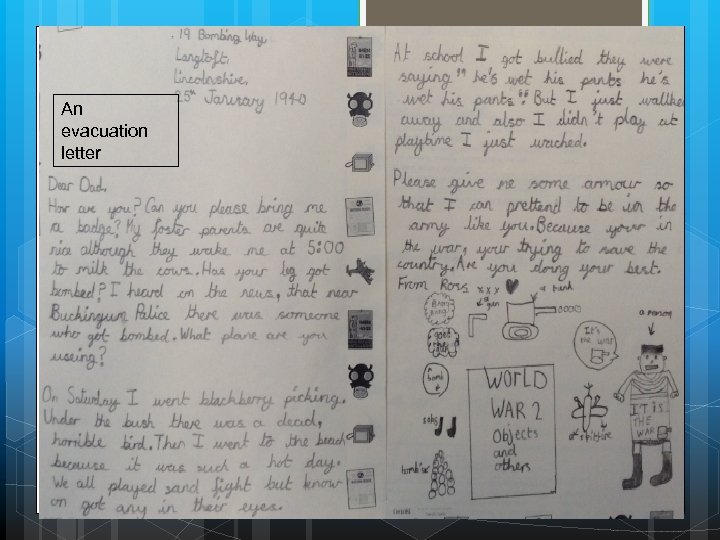 An evacuation letter
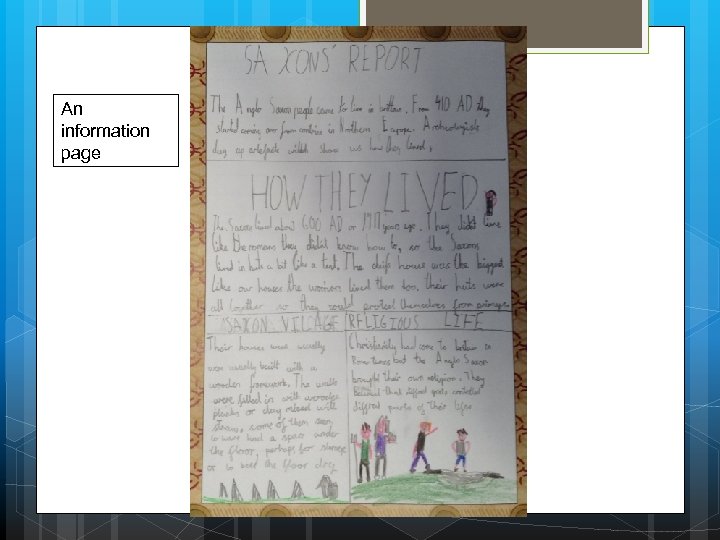 An information page
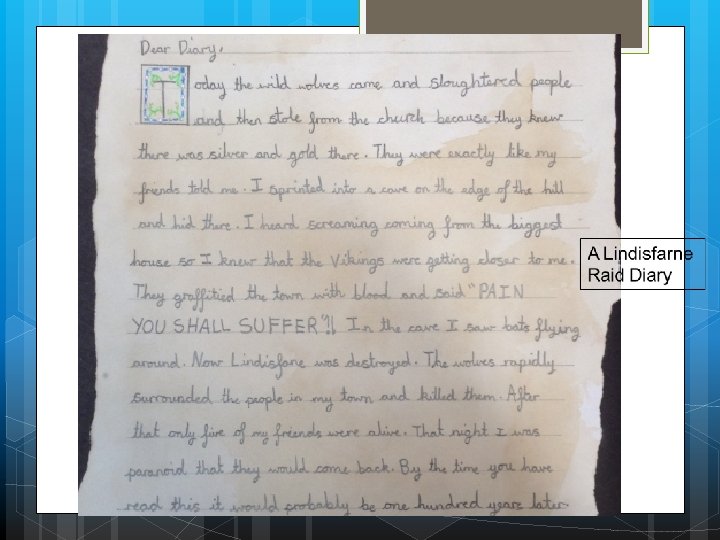
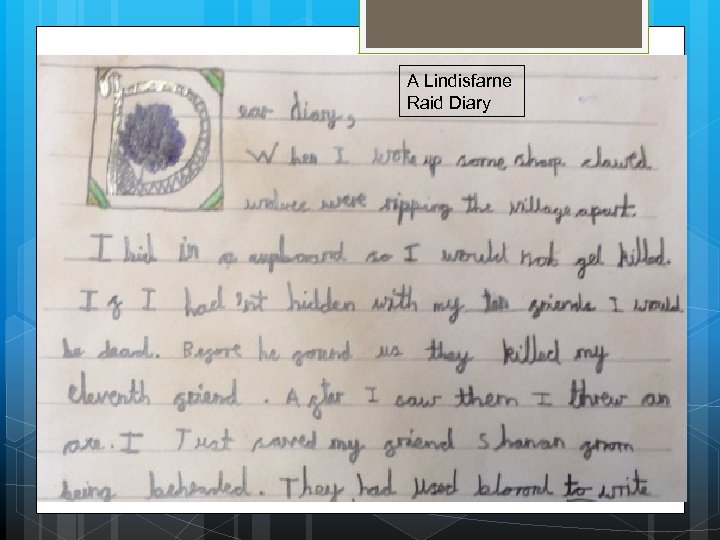 A Lindisfarne Raid Diary
 Spelling expectations for Year 3 • The learning of spelling is a very important part of our expectations. • Spellings will follow Letters and Sounds phonic work where there are gaps in use. • Children will follow Year 3 guidelines to include word families, prefixes and suffixes and then the Year 3 &4 lists • Spelling homework will be set every week. • Spellings will be put on Spelling City online. Games and tests help make the learning fun. A link is on the school website in Year 3, spelling. • Each week classes will choose a speller of the week who will be awarded a certificate in our merit worship.
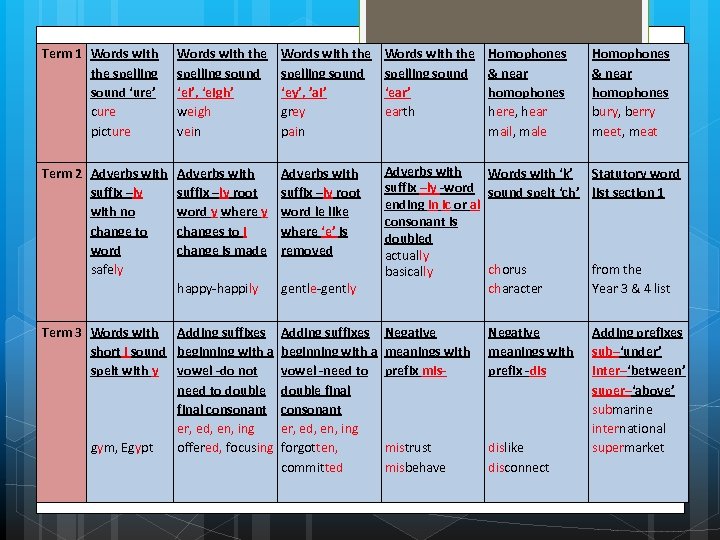 Term 1 Words with the spelling sound ‘ure’ cure picture Words with the spelling sound ‘ei’, ‘eigh’ weigh vein Words with the spelling sound ‘ey’, ’ai’ grey pain Words with the spelling sound ‘ear’ earth Homophones & near homophones here, hear mail, male Homophones & near homophones bury, berry meet, meat Term 2 Adverbs with suffix –ly with no change to word safely Adverbs with suffix –ly root word y where y changes to i change is made happy-happily Adverbs with suffix –ly root word le like where ‘e’ is removed gentle-gently Adverbs with suffix –ly -word ending in ic or al consonant is doubled actually basically Words with ‘k’ sound spelt ‘ch’ chorus character Statutory word list section 1 from the Year 3 & 4 list Term 3 Words with short i sound spelt with y gym, Egypt Adding suffixes Negative beginning with a meanings with vowel -do not vowel -need to prefix misneed to double final consonant er, ed, en, ing offered, focusing forgotten, mistrust committed misbehave Negative meanings with prefix -dis dislike disconnect Adding prefixes sub–‘under’ inter–‘between’ super–‘above’ submarine international supermarket
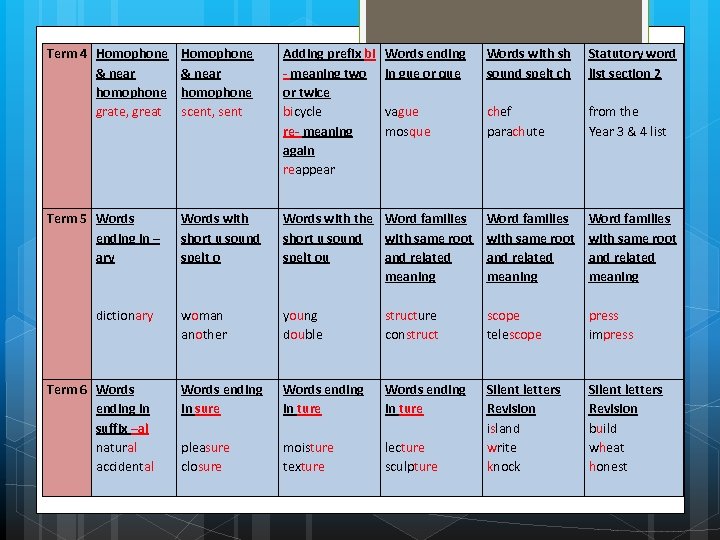 Term 4 Homophone & near homophone grate, great Homophone & near homophone scent, sent Adding prefix bi - meaning two or twice bicycle re- meaning again reappear Words ending in gue or que vague mosque Words with sh sound spelt ch chef parachute Statutory word list section 2 from the Year 3 & 4 list Term 5 Words ending in – ary dictionary Words with short u sound spelt o woman another Words with the short u sound spelt ou young double Word families with same root and related meaning structure construct Word families with same root and related meaning scope telescope Word families with same root and related meaning press impress Term 6 Words ending in suffix –al natural accidental Words ending in sure pleasure closure Words ending in ture moisture texture Words ending in ture lecture sculpture Silent letters Revision island write knock Silent letters Revision build wheat honest
 Reading expectations for Year 3 • using dictionaries to check the meaning of words • discussing words and phrases of interest • read and perform poems and plays and recognising some different forms of poetry • checking that the text makes sense to them, discussing the meaning of words in context • asking questions to improve their understanding • inferring characters' feelings, thoughts and motives from their actions and predicting what might happen next • identifying the language, structure, and presentation of text
 Science Rocks, Soils & Fossils Food Light Plants Forces and Magnetism Science investigations will be undertaken on a regular basis. Children will develop skills by: • posing scientific questions, • predicting outcomes, • devising fair tests, • testing, • recording results • drawing conclusions.
 Homework will be given out on a Friday which will consist of Spellings (8 -10 in Year 3) every week and a Maths or English task. This will be handed in the following Thursday. Reading books should be read daily. They can be changed on Monday, Thursday and Friday Times tables should be learnt The amount of time that we ask pupils to spend on their homework in Year 3 equates to approximately 1 ½ hours per week.
 What’s happening? 25/9/17 Caythorpe Residential meeting Harvest Festival at St Guthlac’s 03/10/17 04/10/17 11/10/17 12/10/17 10/11/17 01/12/17 08/12/17 14/12/17 & Parents’ Evenings Individual Photos Remembrance Service Christmas Fair Bring Grandparents to School Nativity Service at St Guthlac’s
 What can you do to help your child? Listening to your child read and questioning them about what they have read. Times tables need to be learned – part of the SATs at Year 6 Provide a quiet place and encouragement for homework to be completed. Use Maths in everyday situations, ask your child to tell you the time, what will it be in …? Encourage your child to be involved with money when shopping, using the right amount of coins etc.
 Useful Information • PE is on Wednesday with Mrs Oakley. Children will need trainers and track suit bottoms on this day and on Tuesday with Mrs Gray. • Swimming will be on Wednesday afternoons in Terms 2, 4, and 6. • Please ensure that hair is tied back and earrings removed on these days. • Forest schools will continue. This is a valuable learning experience for children. Further information will be sent out in due course. • Children need to bring their water bottles containing water every day. • Please keep big bags to a minimum as we do not have room to store things that do not fit in their lockers. • Instruments can be stored in the classroom cupboard on lesson days, but do take them home.
 Remember the school website for additional information. www. williamhildyard. lincs. sch. uk
 We look forward to an exciting term ahead! Thank you for your time.