


 Скачать презентацию Welcome to the Molecular Medicine course Registration
5a19e726ecbe2a875075865601e7a15d.ppt
- Количество слайдов: 39
 Welcome to the Molecular Medicine course!
 Registration • • General information Over-arching goals Roll call Course contents Information about KS library Coffee Course evaluation HT 2011 Study design - research application + presentations • Seminar assignment • Final examination • Molecular Medicine - from bed to bench
 Course leader: Rachel Fisher 08 -517 732 45 rachel. fisher@ki. se Deputy course leader: Ewa Ehrenborg 08 -517 761 91 ewa. ehrenborg@ki. se Teaching assistant: Louisa Cheung 08 -517 732 21 louisa. cheung@ki. se Department of Medicine, Center for Molecular Medicine, Karolinska University Hospital, L 8: 02 Course administrator: Eva Mac. Donald Department of Medicine, Unit for Internal Medicine, Karolinska University Hospital, A 3: 02 08 -517 716 33 eva. macdonald@ki. se Office hours daily 8. 00 am - 3. 00 pm
 Over-arching goals • To integrate previously gained knowledge • To stimulate team work • To analyse, evaluate and interpret raw data • To design a study and write a research application • To provide “real life” experience
 Roll call
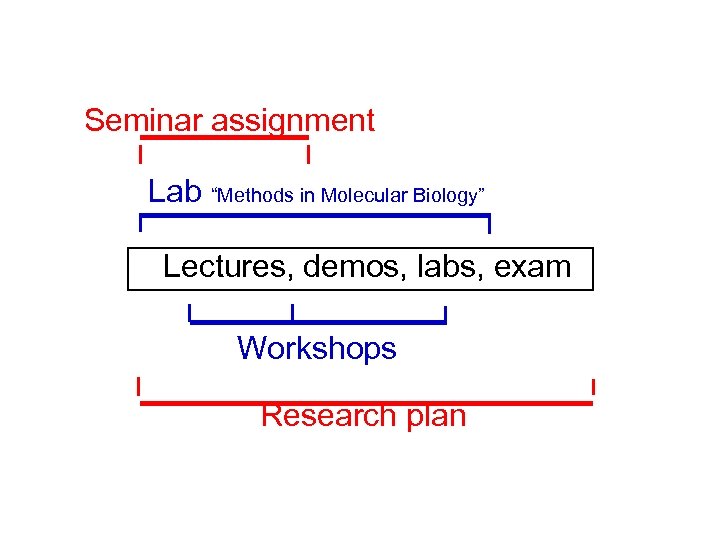
 Course set up • • • Lectures usually 9 am – 3 pm (check venue!) Labs/demonstrations/seminars usually in groups Time scheduled for group work Seminar assignment Presentation of group work (research application) at end of course • Revision time • Final written examination: 15 th January
 Course contents (15 hp/ECTS) Specific areas • Circulation, ischemia, metabolic syndrome, diabetes • Respiration, asthma, allergy • Endocrinology • Gastroenterology • Pathology • Clinical immunology / Clinical chemistry Assignments etc. • Molecular biology lab • Research application • Seminar assignment • Workshops • Revision
 Course literature • Text books from previous courses: physiology, pharmacology, biochemistry, molecular genetics, immunology • Articles and links on the web page • Lecture summary points (from lecturers)
 Information about KS library Marie Källberg
 Seminar assignment Lab “Methods in Molecular Biology” Lectures, demos, labs, exam Workshops Research plan
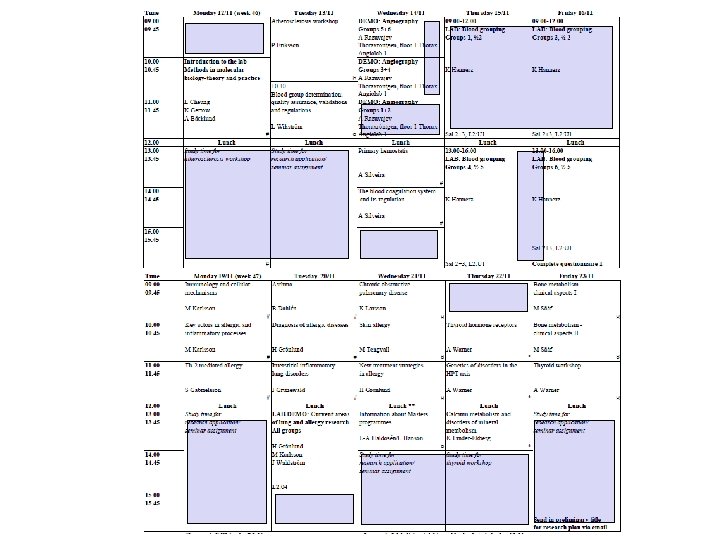
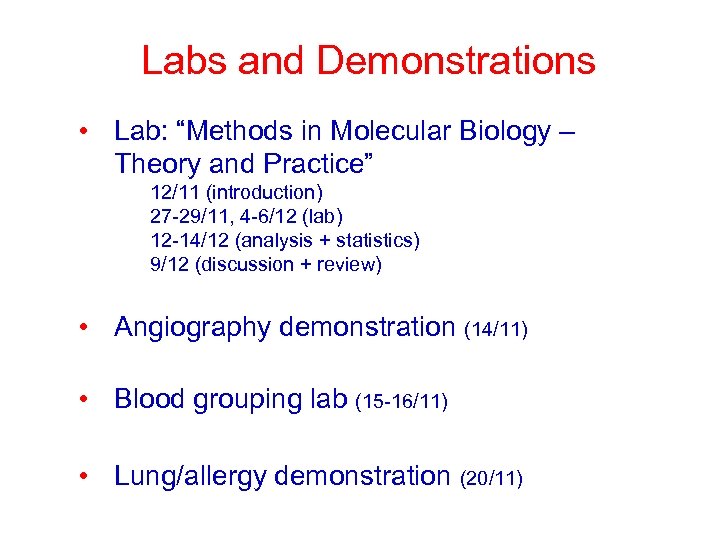 Labs and Demonstrations • Lab: “Methods in Molecular Biology – Theory and Practice” 12/11 (introduction) 27 -29/11, 4 -6/12 (lab) 12 -14/12 (analysis + statistics) 9/12 (discussion + review) • Angiography demonstration (14/11) • Blood grouping lab (15 -16/11) • Lung/allergy demonstration (20/11)
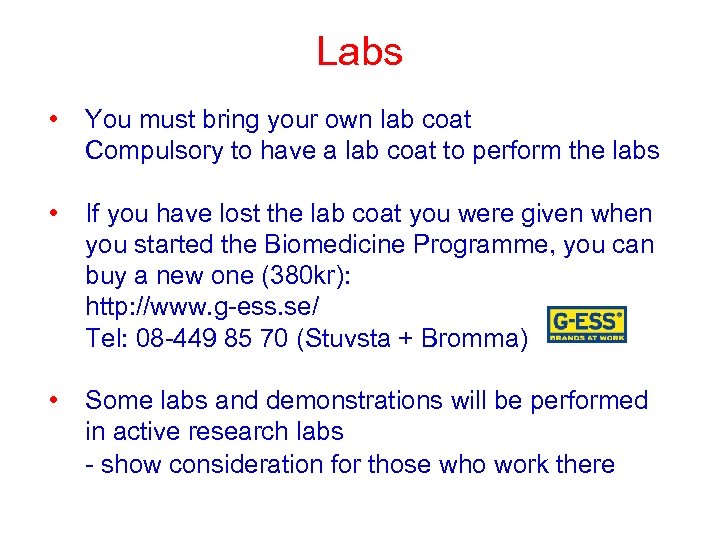 Labs • You must bring your own lab coat Compulsory to have a lab coat to perform the labs • If you have lost the lab coat you were given when you started the Biomedicine Programme, you can buy a new one (380 kr): http: //www. g-ess. se/ Tel: 08 -449 85 70 (Stuvsta + Bromma) • Some labs and demonstrations will be performed in active research labs - show consideration for those who work there
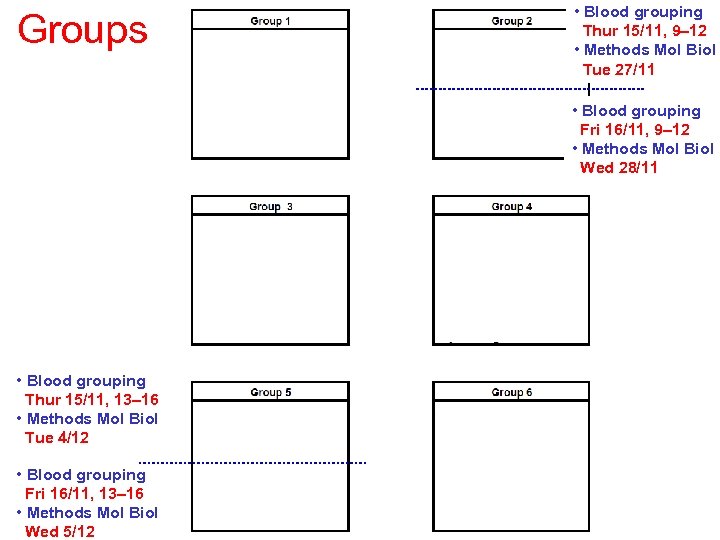 Groups • Blood grouping Thur 15/11, 9– 12 • Methods Mol Biol Tue 27/11 • Blood grouping Fri 16/11, 9– 12 • Methods Mol Biol Wed 28/11 • Blood grouping Thur 15/11, 13– 16 • Methods Mol Biol Tue 4/12 • Blood grouping Fri 16/11, 13– 16 • Methods Mol Biol Wed 5/12
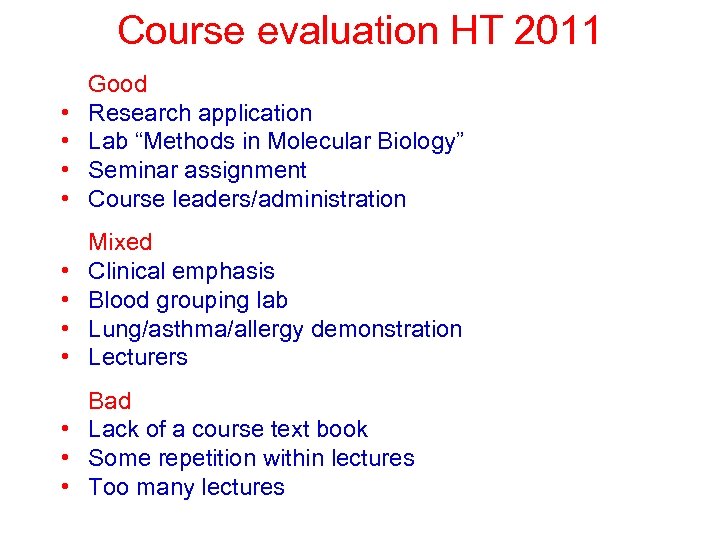 Course evaluation HT 2011 • • Good Research application Lab “Methods in Molecular Biology” Seminar assignment Course leaders/administration • • Mixed Clinical emphasis Blood grouping lab Lung/asthma/allergy demonstration Lecturers Bad • Lack of a course text book • Some repetition within lectures • Too many lectures
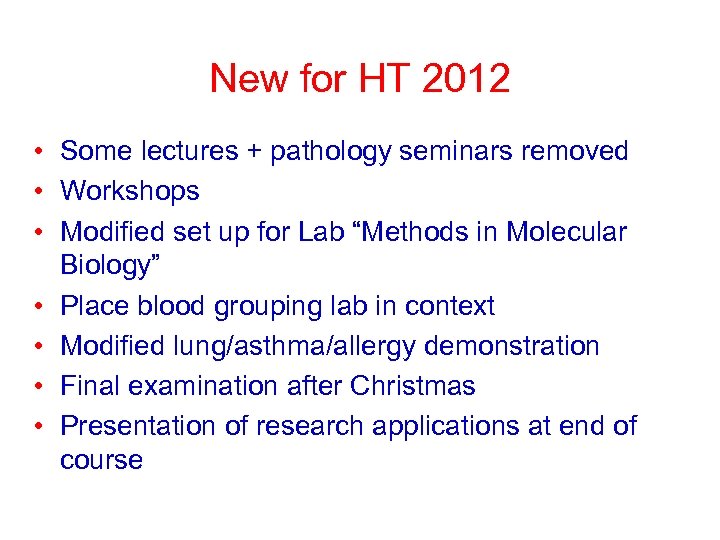 New for HT 2012 • Some lectures + pathology seminars removed • Workshops • Modified set up for Lab “Methods in Molecular Biology” • Place blood grouping lab in context • Modified lung/asthma/allergy demonstration • Final examination after Christmas • Presentation of research applications at end of course
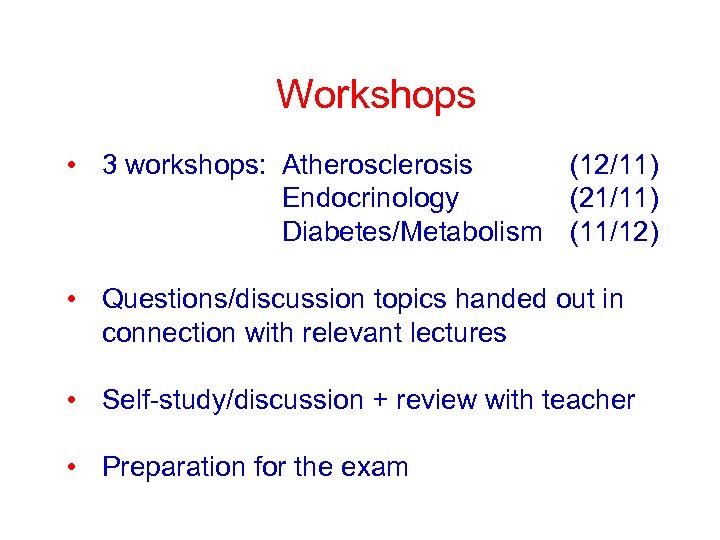 Workshops • 3 workshops: Atherosclerosis (12/11) Endocrinology (21/11) Diabetes/Metabolism (11/12) • Questions/discussion topics handed out in connection with relevant lectures • Self-study/discussion + review with teacher • Preparation for the exam
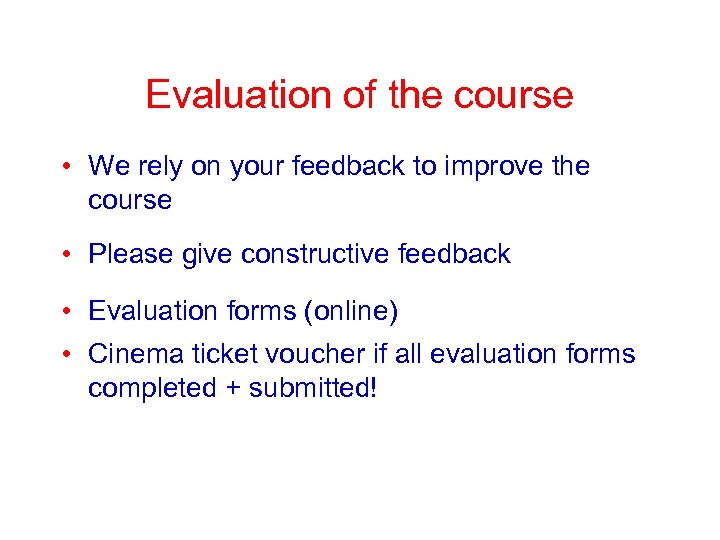 Evaluation of the course • We rely on your feedback to improve the course • Please give constructive feedback • Evaluation forms (online) • Cinema ticket voucher if all evaluation forms completed + submitted!
 Course councils • With class representatives Wednesday 21 st November, 12 noon • With whole class Thursday 17 th January, 3 pm Who are the class representatives?
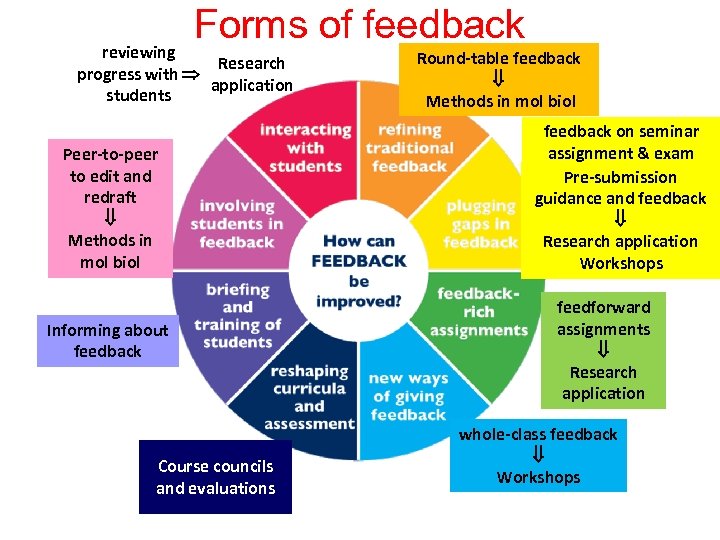 Forms of feedback reviewing Research progress with application students Peer-to-peer to edit and redraft Methods in mol biol Informing about feedback Course councils and evaluations Round-table feedback Methods in mol biol feedback on seminar assignment & exam Pre-submission guidance and feedback Research application Workshops feedforward assignments Research application whole-class feedback Workshops
 Course language • All literature in English • Lectures in English • All assignments may be written in either English or Swedish
 Research application • Group assignment • Choose a specific issue to focus on • Design a research project • Write a research application • Present the project orally • Answer questions • Team work • Realistic exercise
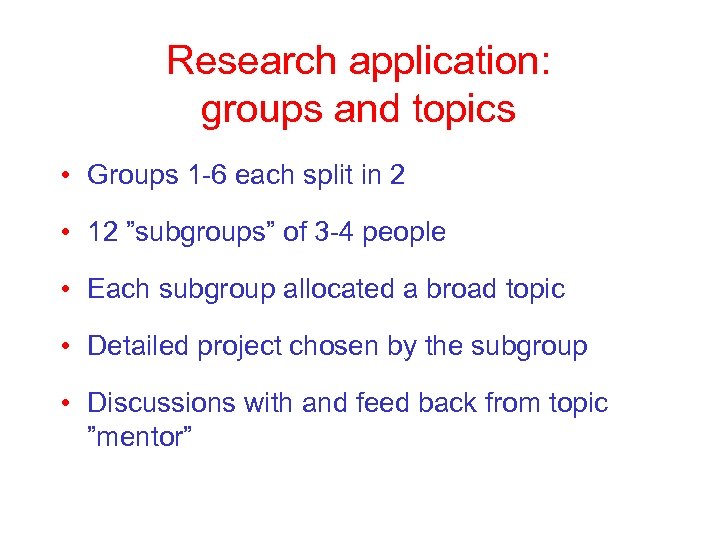 Research application: groups and topics • Groups 1 -6 each split in 2 • 12 ”subgroups” of 3 -4 people • Each subgroup allocated a broad topic • Detailed project chosen by the subgroup • Discussions with and feed back from topic ”mentor”
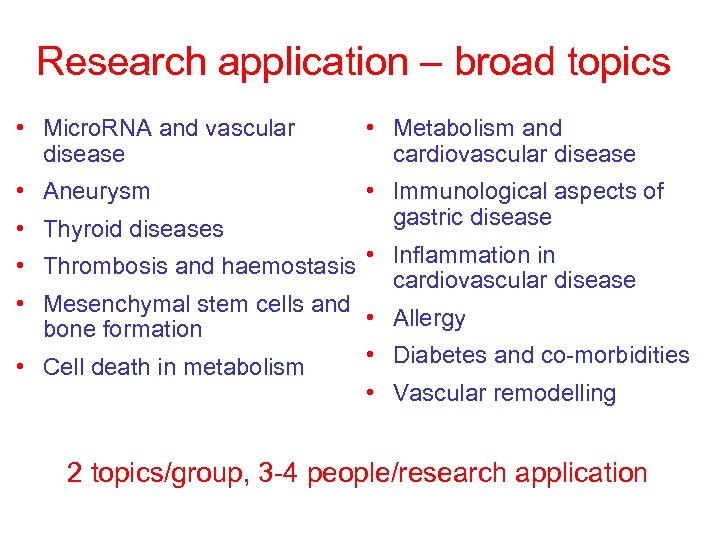 Research application – broad topics • Micro. RNA and vascular disease • Metabolism and cardiovascular disease • Aneurysm • Immunological aspects of gastric disease • Thyroid diseases • Thrombosis and haemostasis • Inflammation in cardiovascular disease • Mesenchymal stem cells and • Allergy bone formation • Diabetes and co-morbidities • Cell death in metabolism • Vascular remodelling 2 topics/group, 3 -4 people/research application
 Research application topic lottery
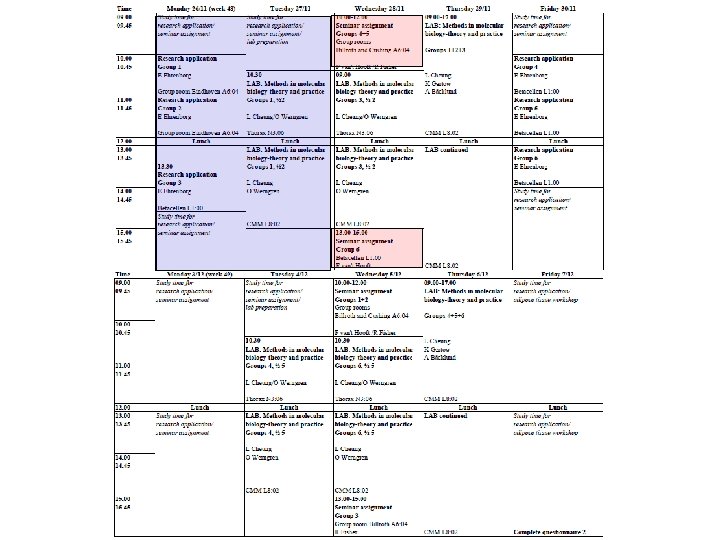
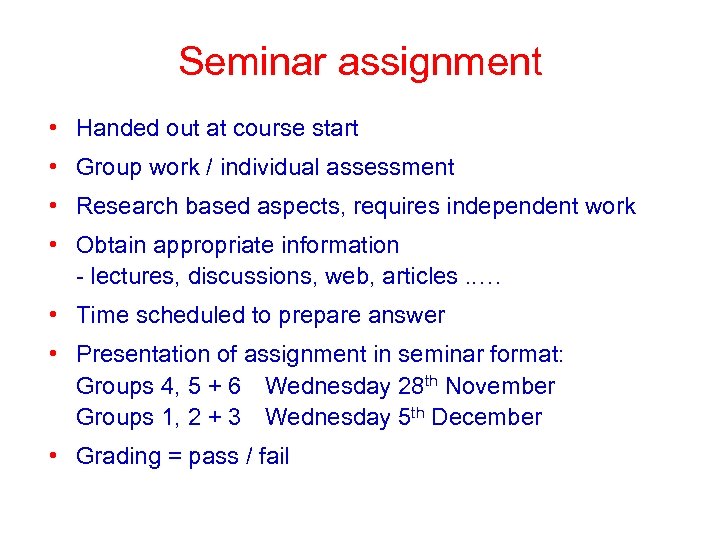 Seminar assignment • Handed out at course start • Group work / individual assessment • Research based aspects, requires independent work • Obtain appropriate information - lectures, discussions, web, articles. . … • Time scheduled to prepare answer • Presentation of assignment in seminar format: Groups 4, 5 + 6 Wednesday 28 th November Groups 1, 2 + 3 Wednesday 5 th December • Grading = pass / fail
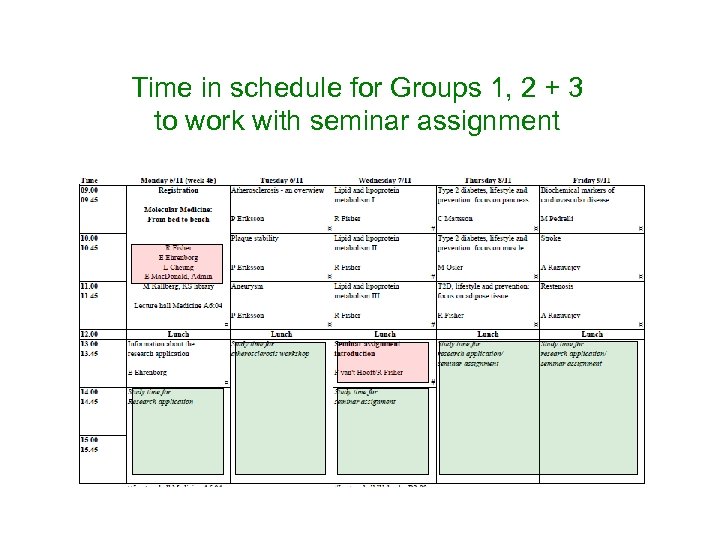 Time in schedule for Groups 1, 2 + 3 to work with seminar assignment
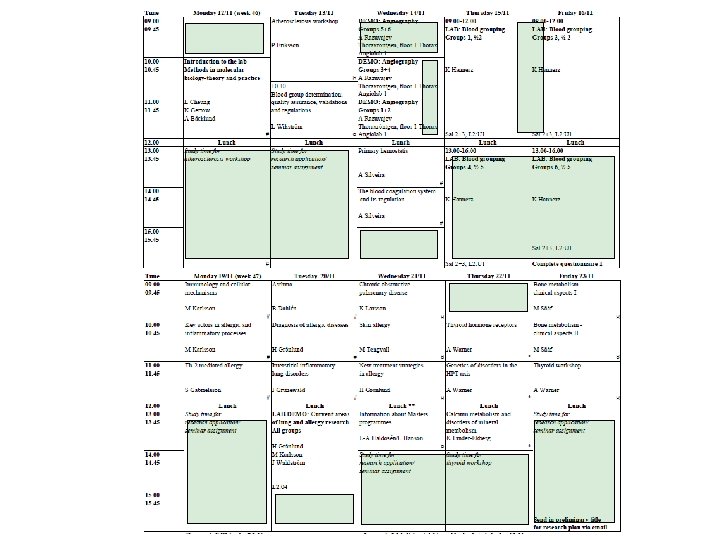
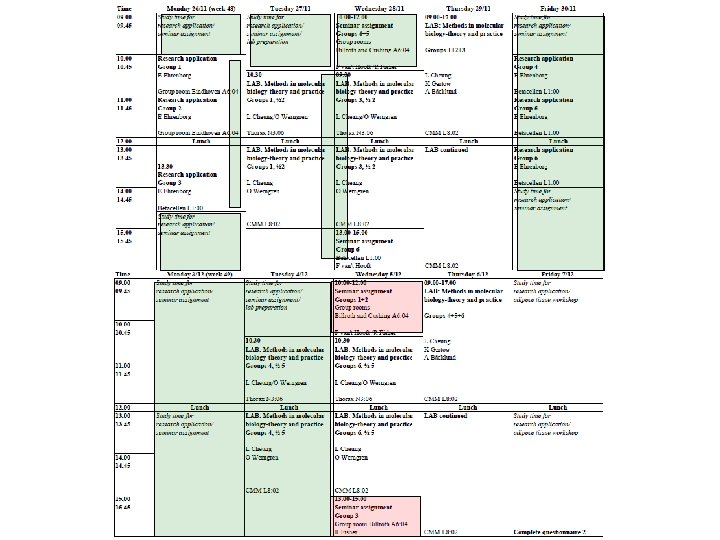
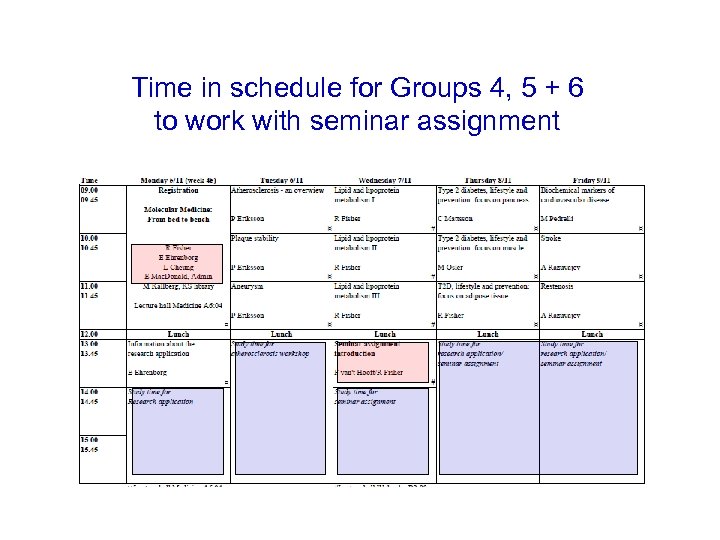 Time in schedule for Groups 4, 5 + 6 to work with seminar assignment
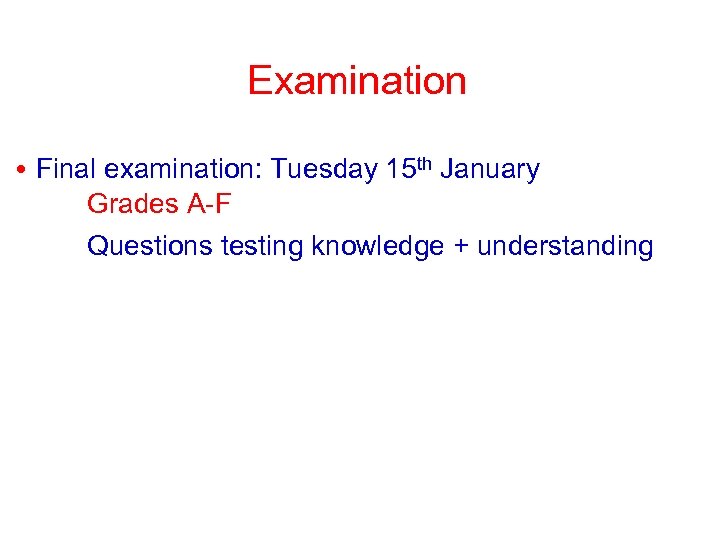 Examination • Final examination: Tuesday 15 th January Grades A-F Questions testing knowledge + understanding
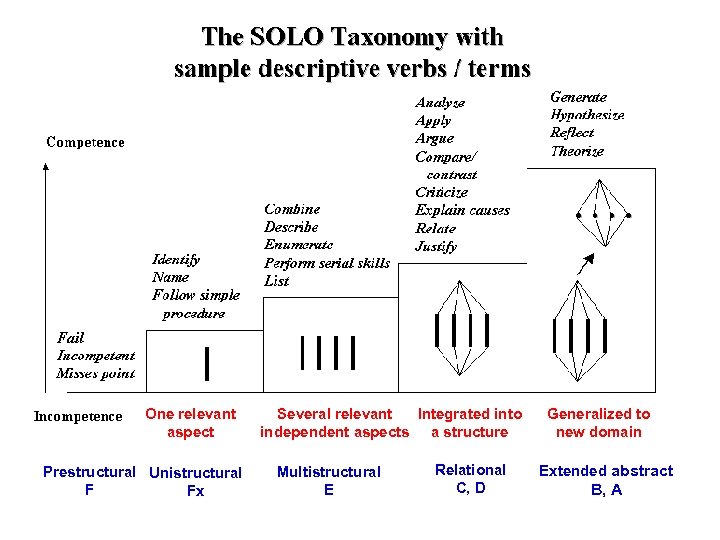
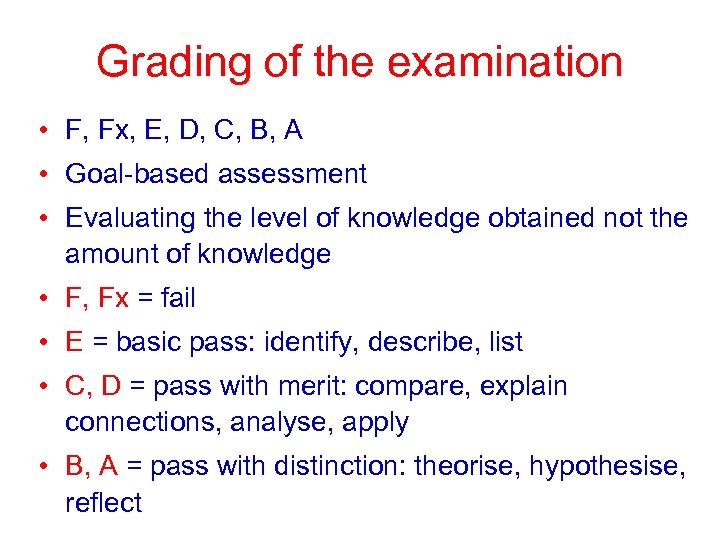 Grading of the examination • F, Fx, E, D, C, B, A • Goal-based assessment • Evaluating the level of knowledge obtained not the amount of knowledge • F, Fx = fail • E = basic pass: identify, describe, list • C, D = pass with merit: compare, explain connections, analyse, apply • B, A = pass with distinction: theorise, hypothesise, reflect
 One relevant aspect Prestructural Unistructural F Fx Several relevant Integrated into independent aspects a structure Multistructural E Relational C, D Generalized to new domain Extended abstract B, A
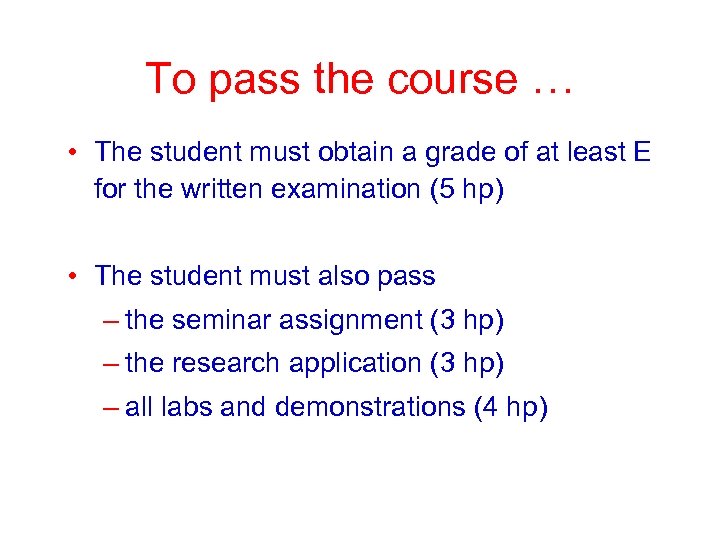 To pass the course … • The student must obtain a grade of at least E for the written examination (5 hp) • The student must also pass – the seminar assignment (3 hp) – the research application (3 hp) – all labs and demonstrations (4 hp)
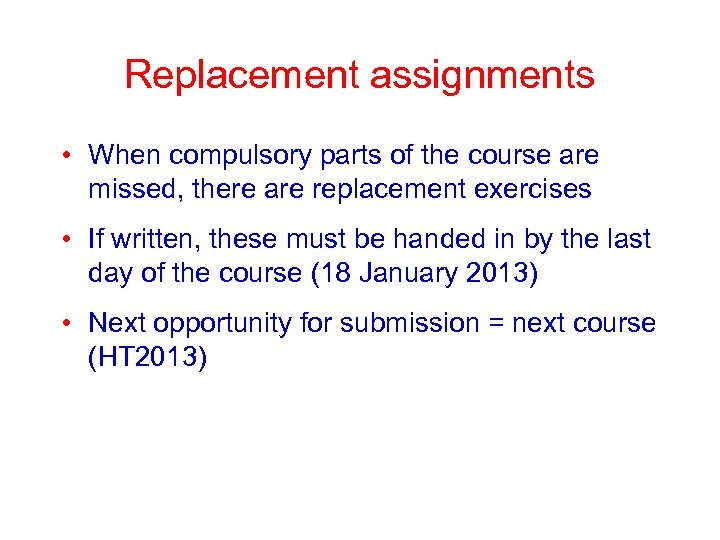 Replacement assignments • When compulsory parts of the course are missed, there are replacement exercises • If written, these must be handed in by the last day of the course (18 January 2013) • Next opportunity for submission = next course (HT 2013)
 Information about Masters Programme • Wednesday 21 st November, 1 pm Lars-Arne Haldosén Lena Hansson
 Molecular Medicine: from bed to bench • Important clinical contact • Translational research • Cross-disciplinary • “From bench to bed and back again”
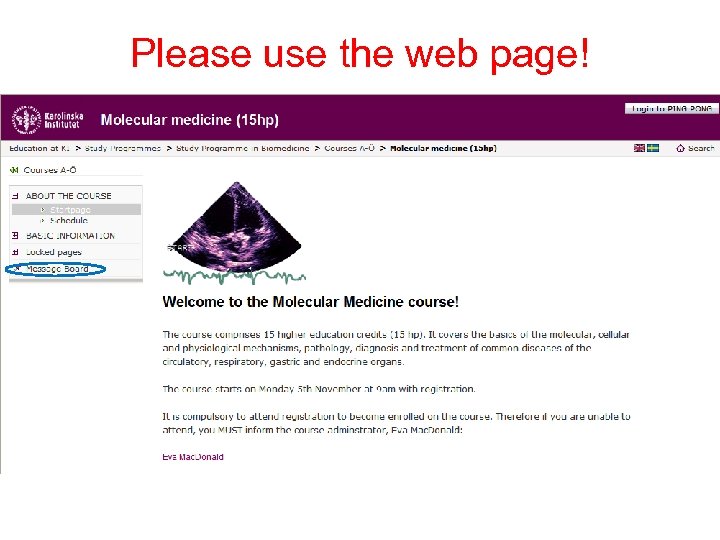 Please use the web page!