


 Скачать презентацию Welcome to the CLU-IN Internet Seminar Session 2
1b7853e47e63ce5ad7c5c60850435381.ppt
- Количество слайдов: 88
 Welcome to the CLU-IN Internet Seminar Session 2 of 3: Your Role in Green Remediation Implementation and Case Studies in Green Remediation - This Year's Models and Tools (The 2010 NARPM Green Remediation Session Follow-on Webinars) Sponsored by: US EPA Engineering Forum Delivered: January 11, 2011, 1: 00 PM - 3: 15 PM, EST (18: 00 -20: 15 GMT) Instructors: Hilary Thornton, Patricia Overmeyer, Rusty Harris-Bishop, Beth Sheldrake, Stephanie Vaughn, Bradley, Martin Zeleznik Moderator: Clint Sperry Visit the Clean Up Information Network online at www. cluin. org 1
 Housekeeping • Please mute your phone lines, Do NOT put this call on hold – Press *6 to mute your line, #6 to unmute your line at anytime – This is a two hour webinar with no scheduled breaks – We intend to offer time for Q&A near the end of each hour, but you may submit questions at any time using the question submission button in your browser – Turn off any pop-up blockers • Move through slides using # links on left or buttons Download slides as PPT or PDF Go to slide 1 Move back 1 slide Move forward 1 slide • • Go to last slide Go to seminar homepage Submit comment or question Report technical problems This event is being recorded Archives accessed for free http: //cluin. org/live/archive/ 2
 Overview • The purpose of this webinar series is to enhance the audience’s understanding of the current status of Green Remediation at EPA through a mix of presentations on GR Policy and real-world case studies. • Each of the 2 -hour webinar sessions (there a series of 3) includes approximately one hour of policy presentations, followed by one hour of case studies. Each of the 3 webinars contains different material. January 11, 2010 GR Webinar Session 2 of 3 3
 Overview (cont. ) • Participants will contribute by submitting questions (either by telephone during one of the Q&A sessions near the end of each hour, or online at any time). January 11, 2010 GR Webinar Session 2 of 3 4
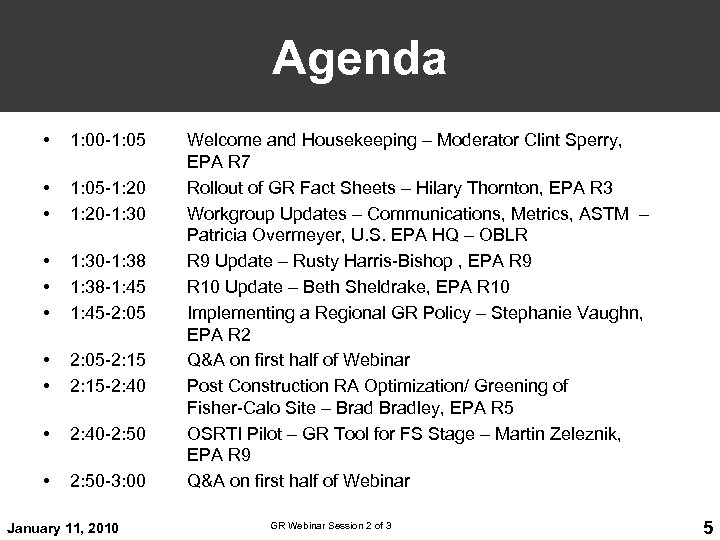 Agenda • 1: 00 -1: 05 • • 1: 05 -1: 20 -1: 30 • • • 1: 30 -1: 38 -1: 45 1: 45 -2: 05 • • 2: 05 -2: 15 2: 15 -2: 40 • 2: 40 -2: 50 • 2: 50 -3: 00 January 11, 2010 Welcome and Housekeeping – Moderator Clint Sperry, EPA R 7 Rollout of GR Fact Sheets – Hilary Thornton, EPA R 3 Workgroup Updates – Communications, Metrics, ASTM – Patricia Overmeyer, U. S. EPA HQ – OBLR R 9 Update – Rusty Harris-Bishop , EPA R 9 R 10 Update – Beth Sheldrake, EPA R 10 Implementing a Regional GR Policy – Stephanie Vaughn, EPA R 2 Q&A on first half of Webinar Post Construction RA Optimization/ Greening of Fisher-Calo Site – Bradley, EPA R 5 OSRTI Pilot – GR Tool for FS Stage – Martin Zeleznik, EPA R 9 Q&A on first half of Webinar GR Webinar Session 2 of 3 5
 Updated January 2011 Green Remediation: the Adolescent Is Maturing ! OSRTI’s * New * GR Fact Sheets on Specific Remedies and Key Issues Hilary Thornton, Region 3 6
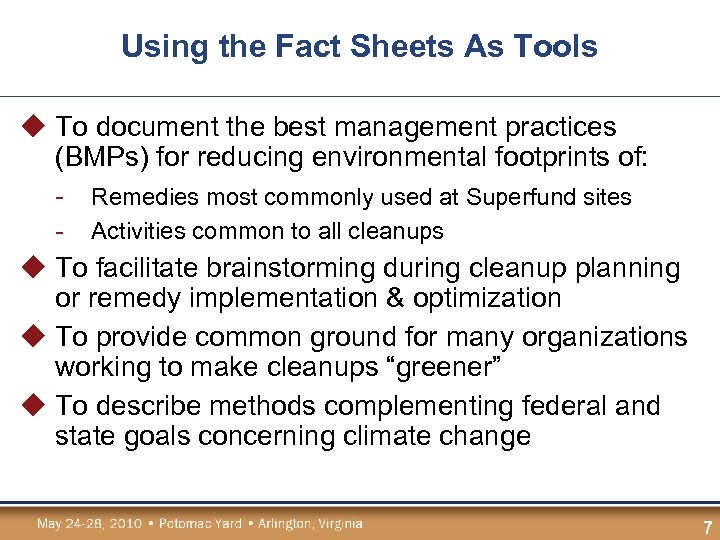 Using the Fact Sheets As Tools u To document the best management practices (BMPs) for reducing environmental footprints of: - Remedies most commonly used at Superfund sites - Activities common to all cleanups u To facilitate brainstorming during cleanup planning or remedy implementation & optimization u To provide common ground for many organizations working to make cleanups “greener” u To describe methods complementing federal and state goals concerning climate change 7
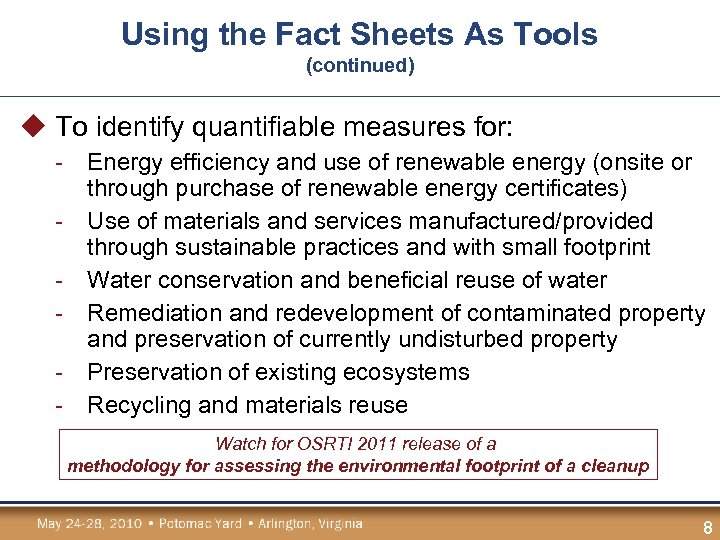 Using the Fact Sheets As Tools (continued) u To identify quantifiable measures for: - Energy efficiency and use of renewable energy (onsite or through purchase of renewable energy certificates) - Use of materials and services manufactured/provided through sustainable practices and with small footprint - Water conservation and beneficial reuse of water - Remediation and redevelopment of contaminated property and preservation of currently undisturbed property - Preservation of existing ecosystems - Recycling and materials reuse Watch for OSRTI 2011 release of a methodology for assessing the environmental footprint of a cleanup 8
 Topics of Recent Releases u Bioremediation (March 2010) u Soil Vapor Extraction & Air Sparging (March 2010) u Clean Fuel & Emission Technologies for Site Cleanup (August 2010) u Earlier releases: - Incorporating Sustainable Practices into Site Remediation (an introduction) Excavation and Surface Restoration Site Investigation Pump and Treat Technologies 9
 Sample BMPs: Site Investigation u Integrate site characterization with remedial plans and site reuse u Minimize field mobilization and in-person meetings u Use remote and direct sensing tools and real-time data collection methods u Deploy DPT for well drilling when possible 10
 Sample BMPs: Site Investigation (continued) u Use low-flow sampling devices and test kits u Institute environmentally friendly and local purchasing strategies for products and services u Establish paperless data sharing strategies 11
 Sample BMPs: P&T Technologies u Optimize, optimize u Find opportunities for using renewable energy u Use closed-loop systems and reuse treated water u Consider modular designs for extraction systems 12
 Sample BMPs: P&T Technologies (continued) u Pump in pulsed mode and off-peak utility times u Use other technologies in source or fringe areas u Plan options for switching or augmenting with polishing technologies at defined thresholds u Eliminate treatment train components becoming marginally effective as conditions change 13
 Sample BMPs: Bioremediation u Thoroughly characterize subsurface conditions and use good models u Field test the delivery methods to assure proper dispersion, and consider gravity feed u Use industrial or agricultural waste products as microbial stimulation agents 14
 Sample BMPs: Bioremediation (continued) u Employ groundwater recirculation processes u Deliver any high-volume products by rail u Reclaim water from other onsite activities for use in injection slurries or as chase water 15
 Sample BMPs: SVE & Air Sparging u Use vacuum pumps and blowers (including multiple low-flow blowers) that can accommodate changes u Select equipment motors with variable frequency drives that automatically meet energy demands u Determine air flow rates that can meet objectives while minimizing energy consumption 16
 Sample BMPs: SVE & Air Sparging (continued) u Regenerate adsorbtive media such as GAC filters u Minimize noise by using centrifugal blowers, exhaust mufflers, and soundproofing material u Automate systems with equipment such as electronic pressure transducers and data loggers 17
 Fact Sheet Development Process u Draft circulation to OSWER and other Agency program offices u Regional distribution through Superfund GR Regional Coordinators and workgroups such as GRRR Team u Distribution to external groups such as FRTR, ITRC, and ASTSWMO u Technical input from the Engineering Forum Green Remediation Subcommittee Get involved and add your own ideas ! 18
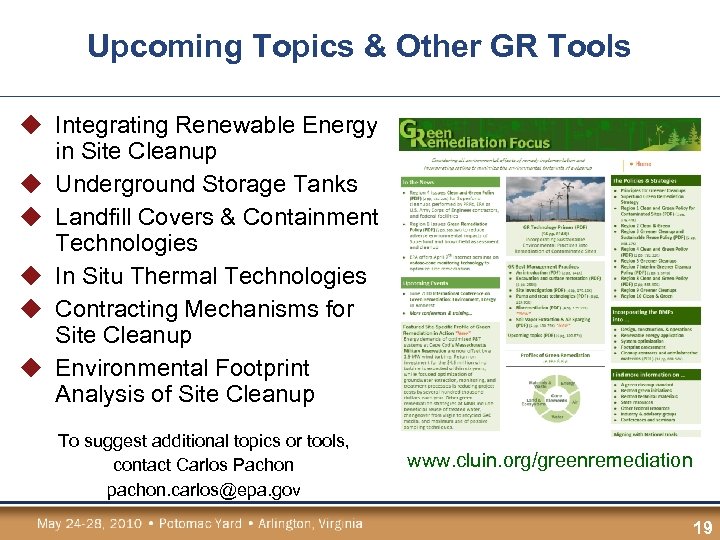 Upcoming Topics & Other GR Tools u Integrating Renewable Energy in Site Cleanup u Underground Storage Tanks u Landfill Covers & Containment Technologies u In Situ Thermal Technologies u Contracting Mechanisms for Site Cleanup u Environmental Footprint Analysis of Site Cleanup To suggest additional topics or tools, contact Carlos Pachon pachon. carlos@epa. gov www. cluin. org/greenremediation 19
 Brownfields Update Patricia Overmeyer • Promoting greener cleanups and reducing the carbon footprint of cleanups is important to EPA’s brownfields program. – However, no federal brownfields cleanup standards – OBLR will work with ASTSWMO to encourage greener cleanup principles in state response programs • Working with ASTM to develop standard guide for implementing greener cleanups 20
 REGION 9 GREENER CLEANUPS 21 Rusty Harris-Bishop, Green Remediation Coordinator, EPA Region 9
 Greener Cleanups Policy Signed September 2009 Applies to Superfund and Waste Division Cleanup programs NPL sites Removals UST/LUSTs RCRA Corrective Action sites Brownfields 22
 Status of Greener Cleanups RPMs have a high awareness of regional policy Varying levels of what can be accomplished Large focus on renewable energy Less aware of green elements available in different phases of program One OSC planning to implement one of the greenest removal action in the country Brownfields program has sustainability contact RCRA piloting footprint analysis protocol 23
 Goals for 2011 Evaluate sites for renewable energy Fund-lead sites generate RE or purchase RECs As part of remedy As part of site re-use Standard that clean diesel technologies are used on all fund-lead projects How to implement/document Require for all sites? Education of all staff on policy/elements/ opportunities Have every project evaluated for green elements 24
 Challenges to Implementation How do we implement policy, and in what phases of projects? What technical resources are available to assist project managers in assessing green options? How do we pay for greener options that may cost more, i. e. , renewable energy to provide power for cleanup? Where does climate change fit into nine criteria analysis? 25
 EPA Green Remediation Webinar Going Clean and Green in Region 10 January 11, 2011 Beth Sheldrake, Manager, Superfund Program 26
 EPA Green Remediation Webinar Regional Demographics • Smallest region in the country by staff, largest by land mass • Superfund – 105 NPL sites, approximately 35 active; many large mining and sediment sites • RCRA – 90 sites on Corrective Action Baseline; 3 of 4 states authorized for RCRA implementation • Brownfields – Approx. 60 -70 grantees funded with $25 -$30 M annually; large growth in response program grants from Alaskan Native Villages (not eligible for competitive grants) • UST – Only 1 of 4 states has full delegation; EPA conducts/oversees 4 to 8 cleanups annually in Indian country; States conduct/oversee approx. 220 annually 27
 EPA Green Remediation Webinar GR Awareness in Region 10 • Regional Clean and Green Policy signed in August 2009 by Directors of the Superfund, Brownfields, RCRA, and UST programs • Contractor presentations, webinars, and outreach during regular project manager meetings and trainings • Internet and intranet sites available as clearing houses for resources • Brownfields program focusing on creating awareness among state partners, grantees, and contractors and engaging in dialogue as they evaluate different cleanup alternatives and designs • Superfund Green Team available for one-on-one project consultations 28
 EPA Green Remediation Webinar R 10 Clean and Green Policy • Goal - Enhance the environmental benefits of federal cleanup programs by promoting technologies and practices that are sustainable • Establishes “points of departure” that all cleanups must either meet or provide site specific reasons why not • Policy does not fundamentally change how and why cleanup decisions are made, but how they are implemented 29
 EPA Green Remediation Webinar R 10 “Points of Departure” • 100% use of renewable energy • Use of clean fuels, diesel emissions controls and retrofits, and emission reduction strategies • Water conservation • Use of reused or recycled materials • Recycling and reuse of materials from site • Environmentally preferable purchasing • Green concrete • Methane capture from landfills • Use of EMS practices for all projects 30
 EPA Green Remediation Webinar GR Implementation Challenges • Overwhelmed project managers, GR perceived as “just one more thing to do” • Educating program staff and partners on how to identify opportunities for GR within the cleanup process • Lack of direct control over LUST cleanups • Lack of systematic way to collect and track data showing environmental benefits • Lack of standard language in model AOCs and CDs and concerns from legal counsel regarding enforceability of GR requirements • Responsible parties trying to use GR to justify less comprehensive remedy 31
 EPA Green Remediation Webinar Region 10 Success Stories • GR remediation language included in all Superfund contracts and Interagency Agreements • Measures taken must be reported for each remedial alternative evaluated at RCRA corrective action sites managed by EPA RCRA staff • Brownfields program evaluation of solar power for vapor treatment system (results pending) • All Superfund grants to States for capacity building (“Core” grants) include green remediation task • Site specific GR procurement strategies developed for construction-related projects • Use a minimum of ultra low sulfur diesel in virtually all off-road engines used in cleanups; biofuels used where available • Engine filter retrofits on all regional diesel vehicles and use of biofuels for boats 32
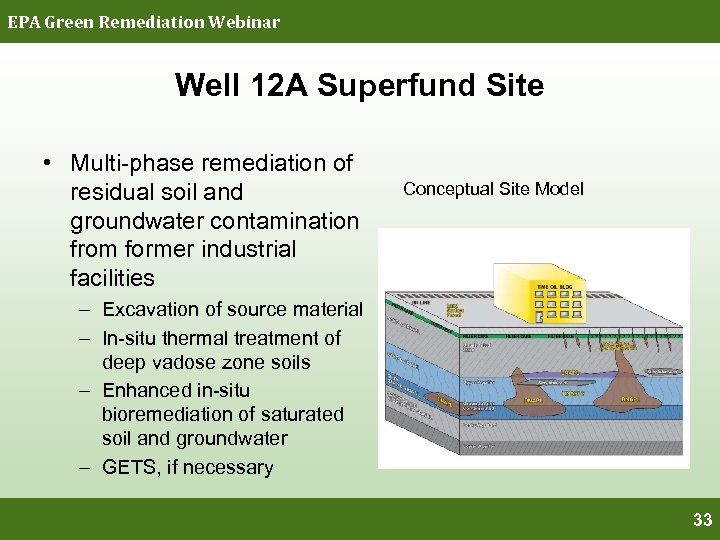 EPA Green Remediation Webinar Well 12 A Superfund Site • Multi-phase remediation of residual soil and groundwater contamination from former industrial facilities Conceptual Site Model – Excavation of source material – In-situ thermal treatment of deep vadose zone soils – Enhanced in-situ bioremediation of saturated soil and groundwater – GETS, if necessary 33
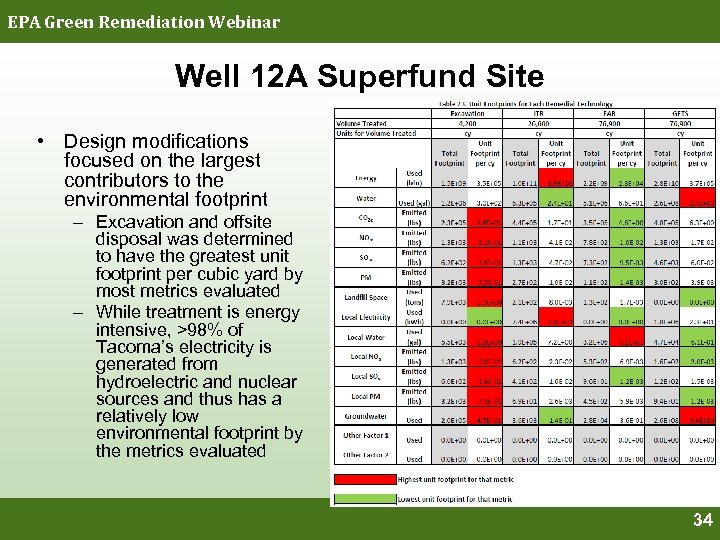 EPA Green Remediation Webinar Well 12 A Superfund Site • Design modifications focused on the largest contributors to the environmental footprint – Excavation and offsite disposal was determined to have the greatest unit footprint per cubic yard by most metrics evaluated – While treatment is energy intensive, >98% of Tacoma’s electricity is generated from hydroelectric and nuclear sources and thus has a relatively low environmental footprint by the metrics evaluated 34
 EPA Green Remediation Webinar Well 12 A Modifications • Specified preference for local borrow sources and disposal facilities • Concrete to be segregated and recycled locally ~3 miles from site • Soil to be pre-characterized for disposal at nearest subtitle C landfill to minimize transportation • If treatment is required prior to disposal, the selected facility generates energy from the treatment process which goes back into the grid and is sold to the City of Seattle • Transportation analysis to determine greenest transport method to disposal facility considering rail, truck, and combination methods • No idling policy for all vehicles and equipment • Require use of cleaner engines, cleaner fuel, and cleaner diesel emissions control technology on all diesel equipment > 50 hp • Contractor required to track emissions reduced associated with using cleaner diesel equipment and fuels 35
 EPA Green Remediation Webinar Region 10 Points of Contact • Superfund – Beth Sheldrake and Sean Sheldrake, sheldrake. beth@epa. gov, sheldrake. sean@epa. gov • RCRA – Christy Brown, brown. christy@epa. gov • Brownfields – Brooks Stanfield, stanfield. brooks@epa. gov • UST – Rob Rau, rau. rob@epa. gov 36
 Implementing a Regional Green Remediation Policy Strategies, Lessons Learned, and New Ideas Stephanie Vaughn, RPM Region 2 37
 Region 2 Clean and Green Policy § Signed March 17, 2009 § Updated March 11, 2010 § Applies to all Superfund, RCRA, and Brownfields work § Applies to both Fund and PRP lead sites § Includes “Touchstone Practices” that must be implemented at all sites 38
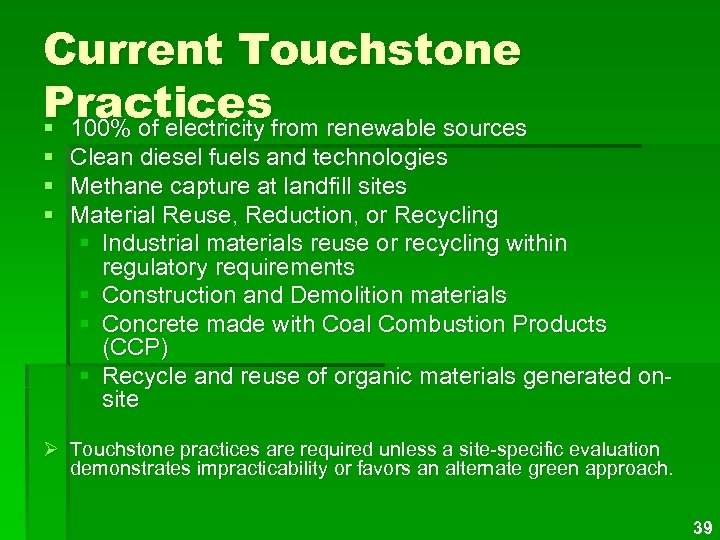 Current Touchstone Practices § 100% of electricity from renewable sources § Clean diesel fuels and technologies § Methane capture at landfill sites § Material Reuse, Reduction, or Recycling § Industrial materials reuse or recycling within regulatory requirements § Construction and Demolition materials § Concrete made with Coal Combustion Products (CCP) § Recycle and reuse of organic materials generated onsite Ø Touchstone practices are required unless a site-specific evaluation demonstrates impracticability or favors an alternate green approach. 39
 Implementation Questions § Technical Questions § How do we do this? § Can (or should) a practice be applied at my site? § Policy Questions § How do we make our contractors follow the policy? § Can we require PRPs to follow policy? § What impact will implementation of these policies have on our budget? § How do we measure results? 40
 Workgroup Formation Five subcommittees: § Policy/Legal § Technical § Training/Outreach § Contracting § Measurement/Evaluation Ø Workgroup comprised of individuals from almost every division to allow for cross-divisional knowledge exchange. 41
 Policy and Legal Decisions § We are requiring incorporation of GR language into all new RODs and PRP Orders/Agreements § We are requesting that PRPs working under orders issued prior to the policy, comply with the policy § Letters sent to PRPs § Will update Touchstone Practices regularly Key Distinction ØImplementation versus Remedy Selection 42
 ROD Language Consistent with EPA Region 2’s Clean and Green policy, EPA will evaluate the use of sustainable technologies and practices with respect to the remedial alternative selected for the Site. § Placed at the end of the Selected Remedy section. § Additional language can be placed in Description of Selected Remedy section. § Has been placed in all RODs signed since implementation of policy (about 17). 43
 Enforcement Agreement Language Tasks to identify how the RD and the RA will be implemented using the principles in EPA Region 2's Clean and Green Policy. § Language placed in the Remedial Design Activities section of the Statement of Work for a Consent Decree § Similar language has been placed in at least 3 AOCs, 4 CDs, and 4 UAOs § Inclusion of language has not held up finalization of any enforcement agreement 44
 Contracts § Interagency Agreements § Put language in Terms and Conditions section of the agreement § It's binding on the USACE, not the USACE's contractor § The USACE is modifying their specifications or task orders to include GR requirements § RACs Contracts § Language placed in SOW § May be added to contract during next renewal round § Language has also been placed in site assessment contracts and is being developed for removal action and other contracts 45
 Technical and Outreach § Creating region-specific how-to primers for project managers § Already have Clean Diesel and Renewable Energy § Conducting regional training § Concurrent with release of primers § Created Site Assessment, RI/FS, and RD/RA GR “Idea” Checklists 46
 Metrics § GOAL: Use of 100% renewable sources of energy § Data Needed: § Kilowatt-hours (k. Wh) of electricity used § Zip code of site § Environmental Metrics: § Information will be entered into EPA's Power Profiler (http: //www. epa. gov/cleanenergy/energyand-you/how-clean. html) § Report on pounds of CO 2, NOx, and SOx avoided 47
 Goal: Use of clean diesel fuels and technologies § Data Needed: § Number of vehicles in fleet § Vehicle/Equipment Type, Sector, Application, Horsepower Rating and Model Year § Fuel Type and Annual Fuel Usage § Usage Rate (hours/vehicle/year) § Number of Vehicles in Fleet to be Retrofitted § Retrofit Technology Type and Model Year § Environmental Metrics: § Information will be entered into EPA's Diesel Emissions Quantifier (DEQ, http: //cfpub. epa. gov/quantifier/view/index. cfm) § Report on mass of air pollutants reduced (CO 2, NOx, PM, HC, CO) Ø EPA Region 2's Mobile Source Team is helping run the DEQ. They also plan to track the emission reduction estimates through the National Clean Diesel Campaign Database. 48
 Goal: Recovery of methane from landfills § Data Needed: § Metric tons methane captured for reuse or flared § Environmental Metric: § Metric tons of methane x 21 = metric tons of CO 2 avoided § The information may also be entered into EPA's Landfill Gas Energy Benefits Calculator (http: //www. epa. gov/lmop/res/calc. htm) to determine the direct, avoided, and total greenhouse gas reductions, as well as environmental and energy benefits from methane capture. 49
 Goal: Maximize the amount of materials reduced, reused or recycled § Data Needed § Tons and Type of material reduced, reused, or recycled § Environmental Metrics § The tons of material reduced through purchase or use of items with recycled content will be entered into EPA's Re. Con Tool (http: //www. epa. gov/climatechange/wycd/waste/calculators/Re. Con _home. html) § The tons of material reused or recycled will be entered into EPA's Waste Reduction Model (Wa. RM, http: //epa. gov/climatechange/wycd/waste/calculators/Warm. Form. html ) 50
 Data Collection and Measurement § Using existing EPA calculators to measure results § Received funding to develop a database to track metrics § Have only limited results so far…. once the database is finalized, we will be better able to collect data from all sites 51
 Verified Results So Far… Purchase of Renewable Energy § As of June 2010, all 21 active Corps-managed superfund sites are purchasing renewable energy credits. § Average annual cost per site for purchasing offsets -- $6, 000 Ø Impact of less than 1% to total remedial cost § Verified offsets of 1, 166 metric tons of CO 2 already Ø This is equivalent to taking 223 cars off the road annually 52
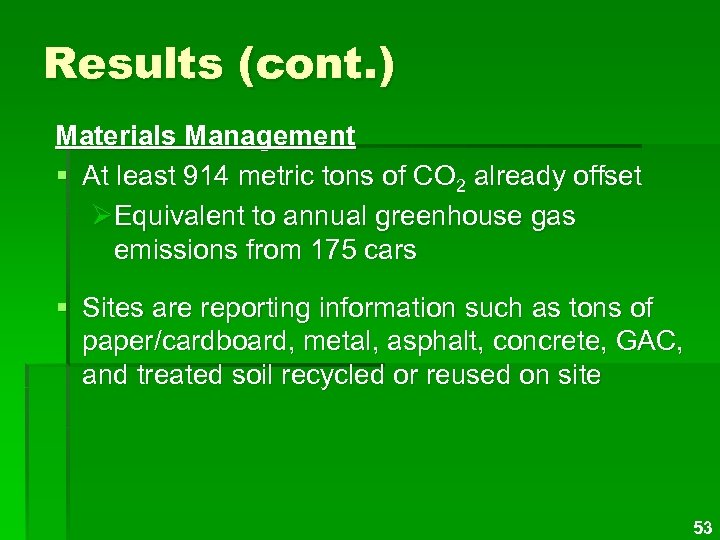 Results (cont. ) Materials Management § At least 914 metric tons of CO 2 already offset ØEquivalent to annual greenhouse gas emissions from 175 cars § Sites are reporting information such as tons of paper/cardboard, metal, asphalt, concrete, GAC, and treated soil recycled or reused on site 53
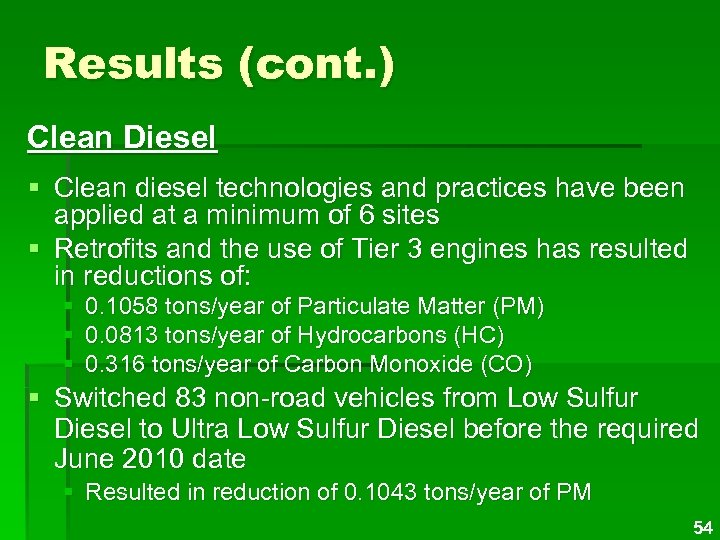 Results (cont. ) Clean Diesel § Clean diesel technologies and practices have been applied at a minimum of 6 sites § Retrofits and the use of Tier 3 engines has resulted in reductions of: § § § 0. 1058 tons/year of Particulate Matter (PM) 0. 0813 tons/year of Hydrocarbons (HC) 0. 316 tons/year of Carbon Monoxide (CO) § Switched 83 non-road vehicles from Low Sulfur Diesel to Ultra Low Sulfur Diesel before the required June 2010 date § Resulted in reduction of 0. 1043 tons/year of PM 54
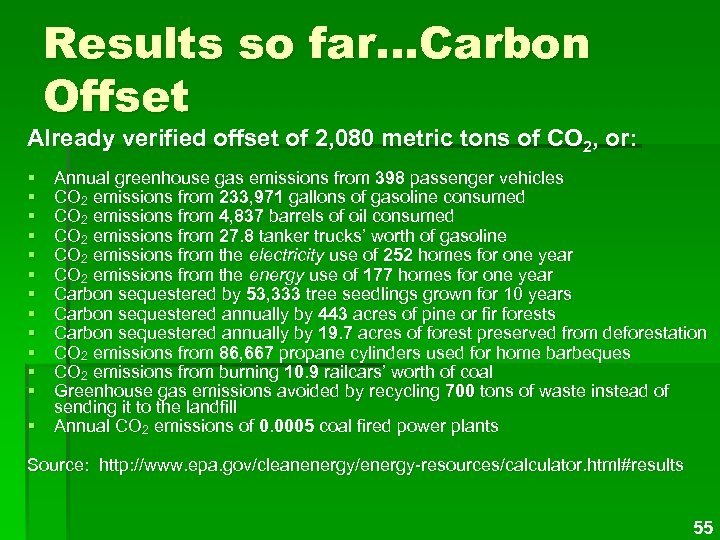 Results so far…Carbon Offset Already verified offset of 2, 080 metric tons of CO 2, or: § § § Annual greenhouse gas emissions from 398 passenger vehicles CO 2 emissions from 233, 971 gallons of gasoline consumed CO 2 emissions from 4, 837 barrels of oil consumed CO 2 emissions from 27. 8 tanker trucks’ worth of gasoline CO 2 emissions from the electricity use of 252 homes for one year CO 2 emissions from the energy use of 177 homes for one year Carbon sequestered by 53, 333 tree seedlings grown for 10 years Carbon sequestered annually by 443 acres of pine or fir forests Carbon sequestered annually by 19. 7 acres of forest preserved from deforestation CO 2 emissions from 86, 667 propane cylinders used for home barbeques CO 2 emissions from burning 10. 9 railcars’ worth of coal Greenhouse gas emissions avoided by recycling 700 tons of waste instead of sending it to the landfill § Annual CO 2 emissions of 0. 0005 coal fired power plants Source: http: //www. epa. gov/cleanenergy/energy-resources/calculator. html#results 55
 Next Steps… § Evaluate New Potential Touchstones § Energy. Star Products and Energy Efficiency § Environmentally Preferable Purchasing § Onsite Renewables § Sustainable Site Design § Finalize and Deploy Database § Acknowledge Leaders 56
 For further information…. § You can find the Clean and Green Policy at: http: //www. epa. gov/region 02/superfund/green_ remediation/policy. html. Clean and Green Policy § Questions? § Stephanie Vaughn, RPM, Region 2 vaughn. stephanie@epa. gov, 212 -637 -3914 § Kristin Giacalone, RPM, Region 2, giacalone. kristin@epa. gov, 212 -637 -4407 57
 POST CONSTRUCTION RA OPTIMIZATION/GREENING OF FISHER-CALO SITE Presented by Bradley Region 5 Superfund Greener Cleanup Coordinator 58
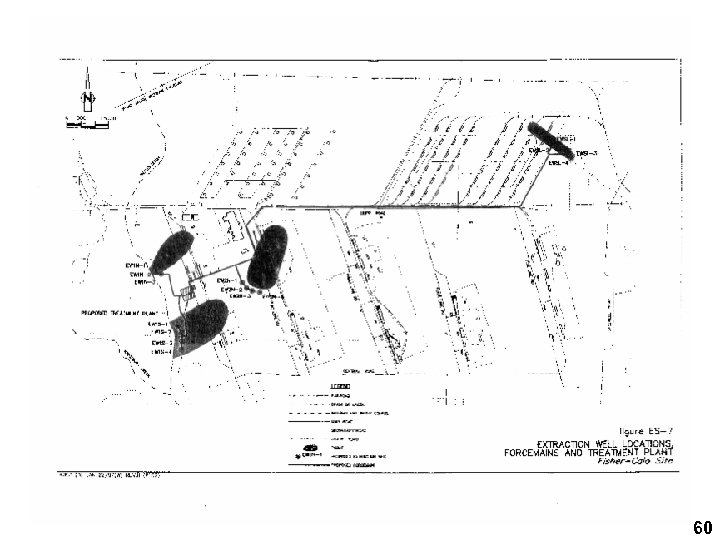
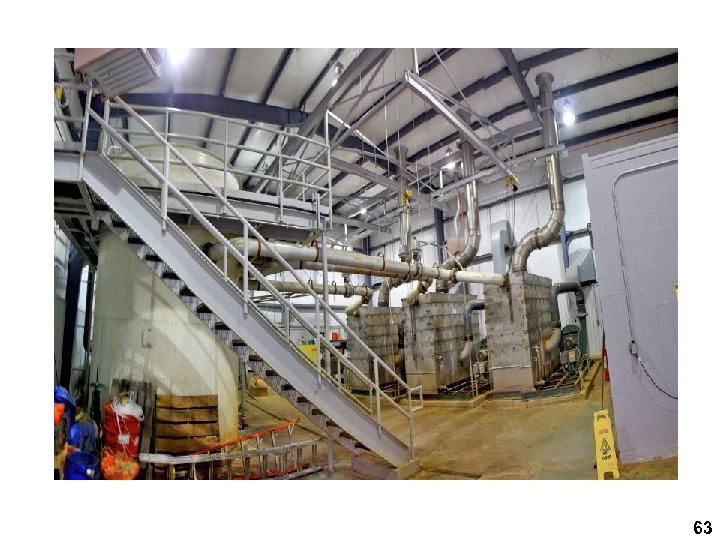
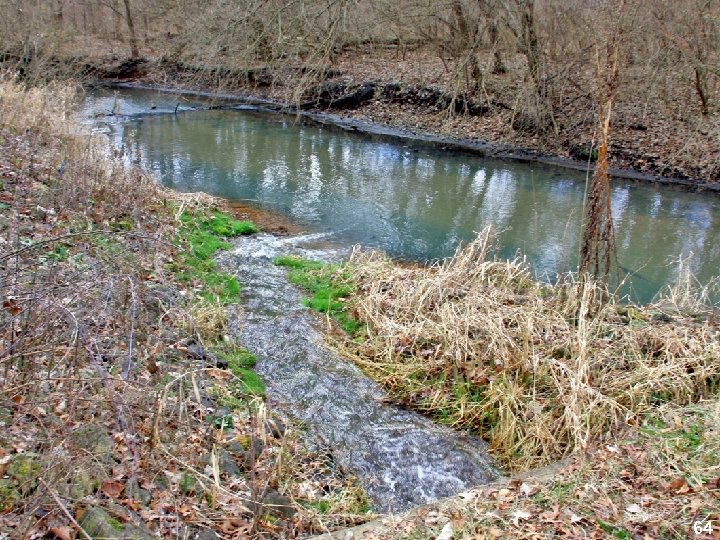
 Fisher-Calo Superfund Site§ located in Kingsbury, Indiana § Former solvent recycling facility § Buried drums of VOCs- extensive ground water contamination § Ground water containment system started up a little more that 10 years ago 59
 60
60
 Fisher-Calo Pilot Study § Funded by OSWER in 2009 as part of greener cleanup pilot studies § First evaluate, using modified LCA, feasibility of optimization and applying green cleanup measures § Second, propose suggested modification to PRPs 61
 • PRPs to construct/modify system based on suggestions • Data collection to establish change in energy consumption, GHG emissions, water conservation, etc • PRPs have comprehensive energy usage data for past 10 years of system operation 62
 63
63
 64
64
 CURRENT STATUS • All initial site data have been gathered • Coordination with Region 9 has been established- note Romic Site in Palo Alto, CA • Analysis of various green measures and system optimization under way 65
 NEXT STEPS • • Finish Analysis Present recommendations to PRPs modify system- possible glitch Data gathering for post-modification energy usage, GHG emissions, etc • If money left, analyze utility of modified LCA used for pilot project 66
 QUESTIONS? Bradley bradley. brad@epa. gov 312 -886 -4742 67
 NARPM Green Remediation Session OTSRI Pilot Study Updates A GR Tool for the FS Stage Martin Zeleznik, Region 9 68
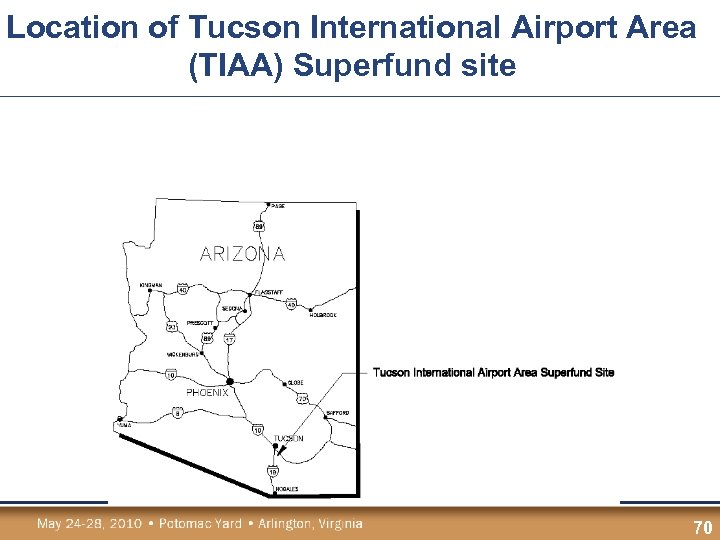
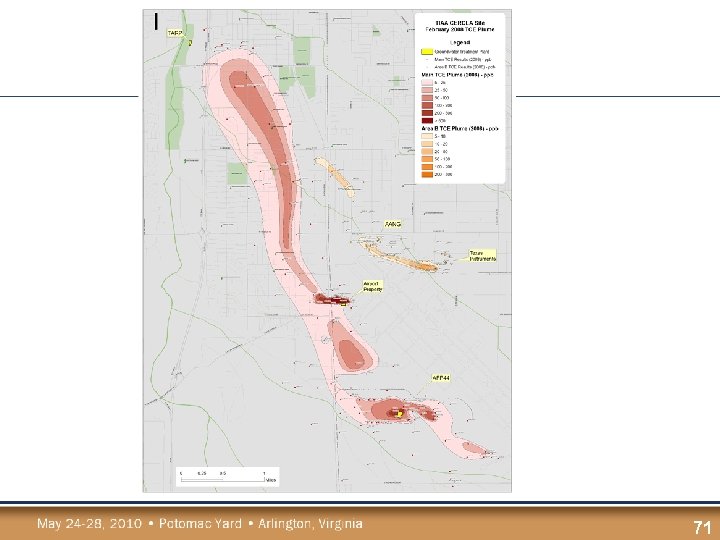
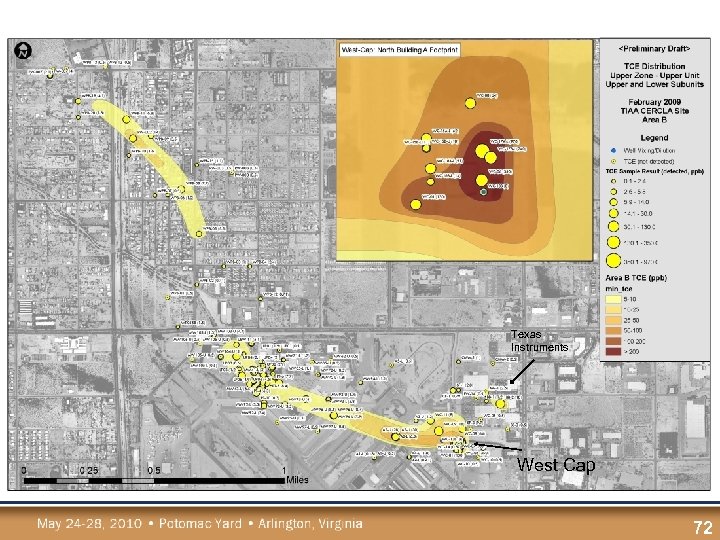
 Using a Footprint Analysis with the development of a Focused FS u West Cap is a fund lead OU at the Tucson International Airport Area Superfund site u Current remedy is P&T but circumstances developed that led us to consider In-Situ Chemical Oxidation (ISCO) as a remedial alternative u New GR tool under development is applied to this specific site for footprint analysis u Both Footprint Analysis and Focused FS were being developed concurrently § This talk is truly a work in progress 69
 Location of Tucson International Airport Area (TIAA) Superfund site 70
 71
71
 Texas Instruments West Cap 72
 Shared Treatment Plant for Texas Instruments and West Cap u Texas Instruments used treated water for manufacturing process as opposed to treating municipal drinking water u Cost sharing of treatment plant between EPA and Texas Instruments negotiated on an annual basis § win – win situation u In 2007, Texas Instruments decided to close down manufacturing operations § Ironically EPA and State were already in discussions on possibility on doing In-Situ Chemical Oxidation Treatability Study at West Cap OU 73
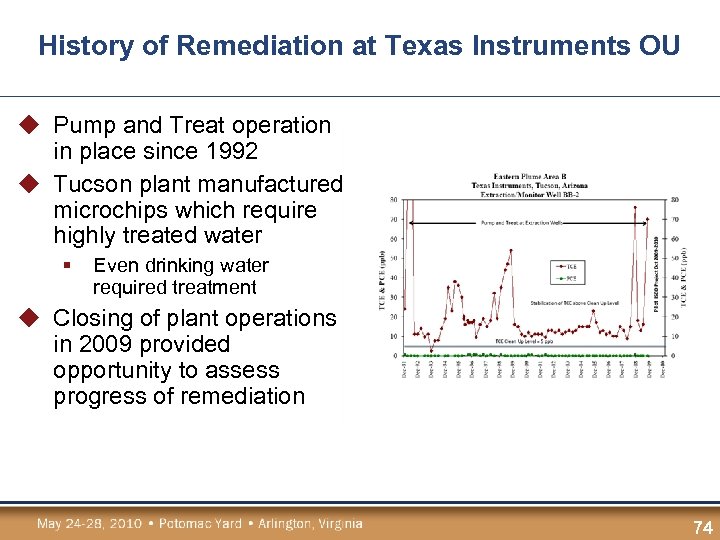 History of Remediation at Texas Instruments OU u Pump and Treat operation in place since 1992 u Tucson plant manufactured microchips which require highly treated water § Even drinking water required treatment u Closing of plant operations in 2009 provided opportunity to assess progress of remediation 74
 Going down the path with Potassium Permanganate for choice of ISCO u Several OUs at TIAA have tested with KP for ISCO with positive results u Community is familiar with tests of KP and comfortable with its application § Local High school students did chem lab experiments with KP and TCE at community meeting 75
 The GR Pilot Study – Calculating the Footprint of P&T vs ISCO u Footprint Tool was initially developed for ROMIC study (also Region 9 study) u Spreadsheet tool developed that allows the use of basic data to provide preliminary quantitative comparison of footprint of 2 proposed remedies § Goal is to use as comparative tool between remedies § Normal CERCLA process not affected – this is a supportive tool 76
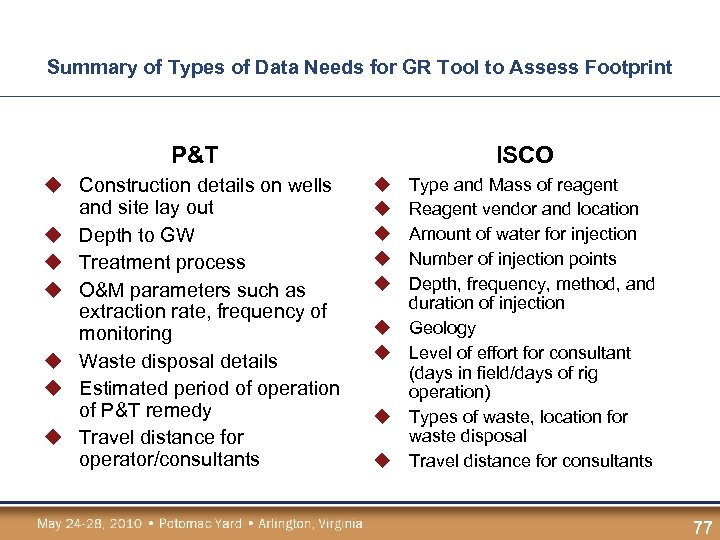 Summary of Types of Data Needs for GR Tool to Assess Footprint P&T u Construction details on wells and site lay out u Depth to GW u Treatment process u O&M parameters such as extraction rate, frequency of monitoring u Waste disposal details u Estimated period of operation of P&T remedy u Travel distance for operator/consultants ISCO u u u u u Type and Mass of reagent Reagent vendor and location Amount of water for injection Number of injection points Depth, frequency, method, and duration of injection Geology Level of effort for consultant (days in field/days of rig operation) Types of waste, location for waste disposal Travel distance for consultants 77
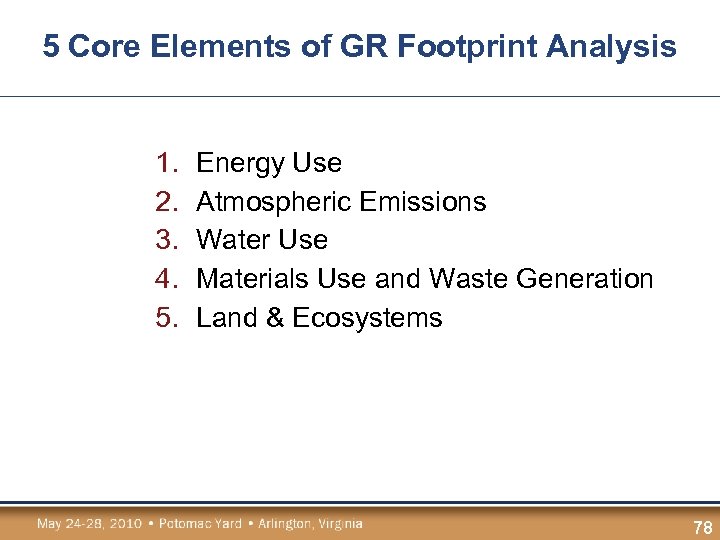 5 Core Elements of GR Footprint Analysis 1. 2. 3. 4. 5. Energy Use Atmospheric Emissions Water Use Materials Use and Waste Generation Land & Ecosystems 78
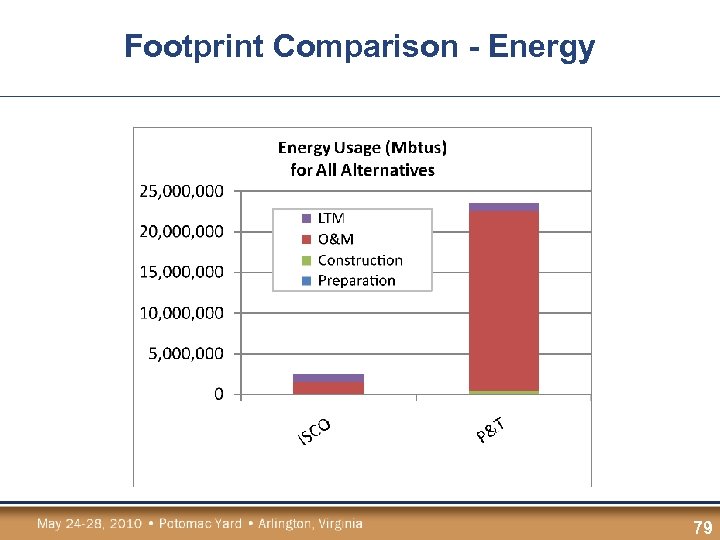 Footprint Comparison - Energy 79
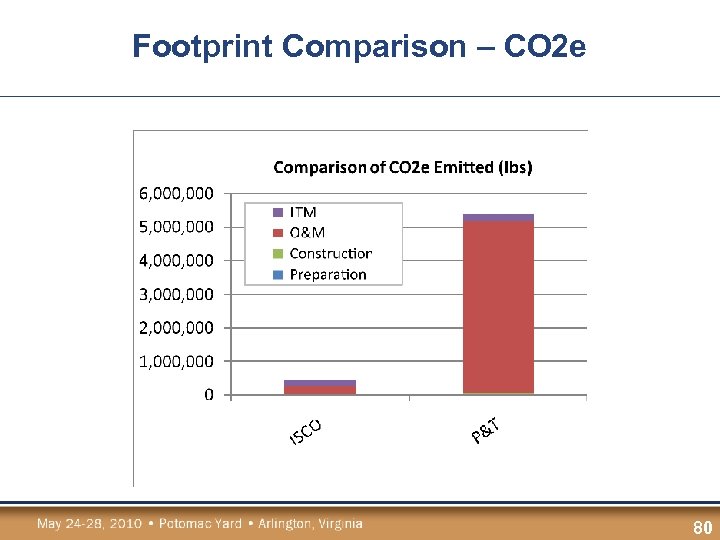 Footprint Comparison – CO 2 e 80
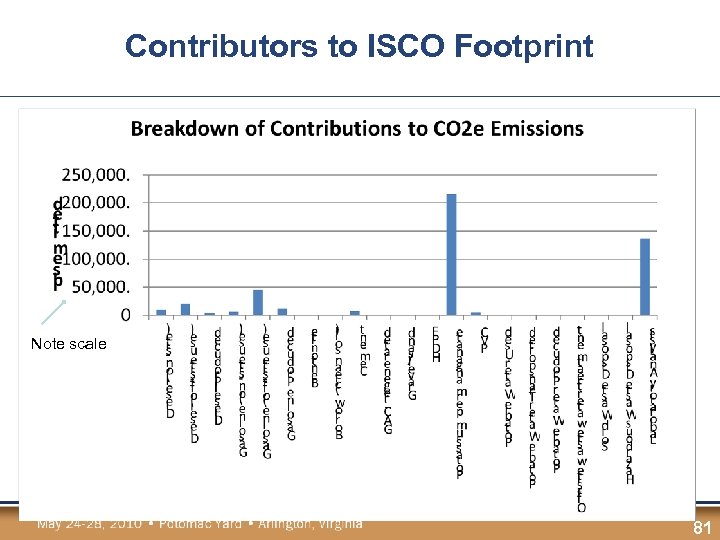 Contributors to ISCO Footprint Note scale 81
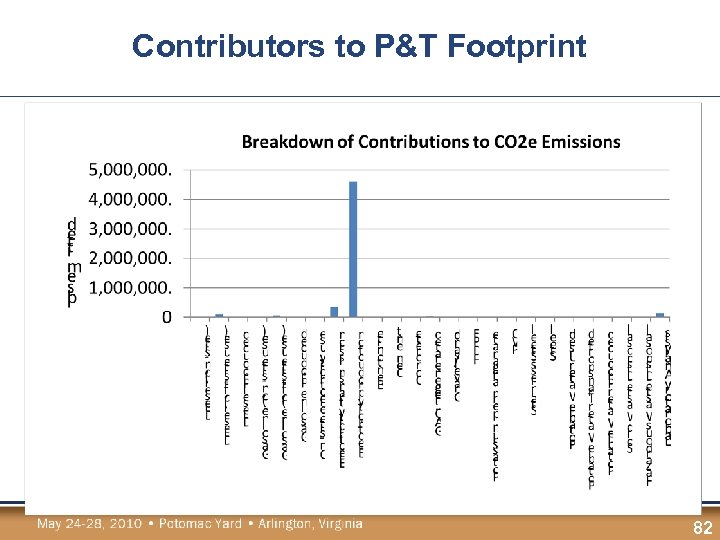 Contributors to P&T Footprint 82
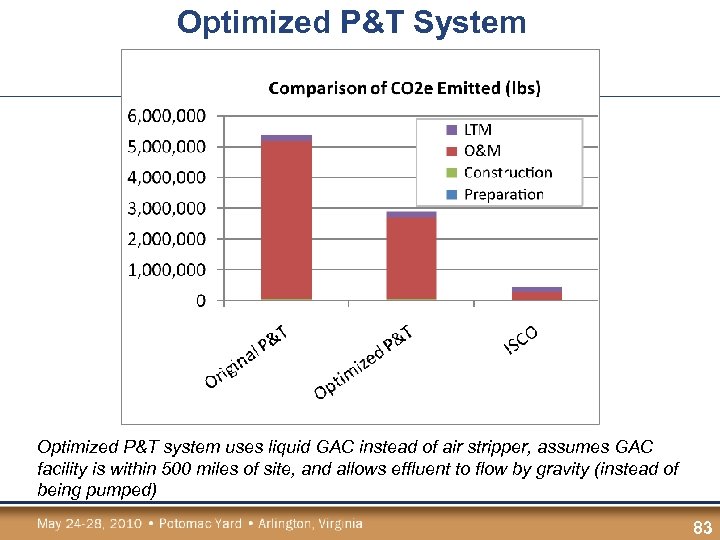 Optimized P&T System Optimized P&T system uses liquid GAC instead of air stripper, assumes GAC facility is within 500 miles of site, and allows effluent to flow by gravity (instead of being pumped) 83
 Other Footprint Parameters u Water footprint is very minor § P&T remedy reinjects extracted water § Monitoring involves removing little water § Potable water only used in grout for well installation u Waste generation is relatively small § Primarily limited to drill cuttings § GAC regenerated § Permanganate manufacturing not well documented (waste volumes may be higher than indicated) u Affects on ecosystem are insignificant relative to airport traffic 84
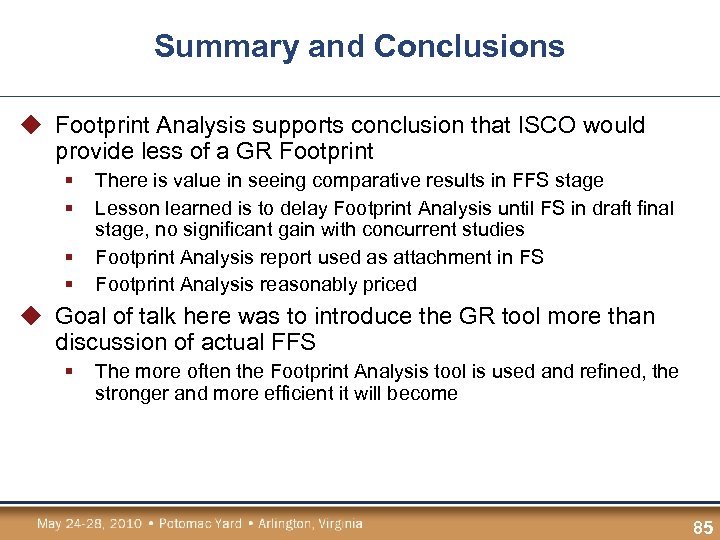 Summary and Conclusions u Footprint Analysis supports conclusion that ISCO would provide less of a GR Footprint § § There is value in seeing comparative results in FFS stage Lesson learned is to delay Footprint Analysis until FS in draft final stage, no significant gain with concurrent studies Footprint Analysis report used as attachment in FS Footprint Analysis reasonably priced u Goal of talk here was to introduce the GR tool more than discussion of actual FFS § The more often the Footprint Analysis tool is used and refined, the stronger and more efficient it will become 85
 Questions? 86
 Thank you for your time! If you have additional questions or comments, please contact Session Moderator Clint Sperry sperry. clint@epa. gov January 11, 2010 GR Webinar Session 2 of 3 87
 Resources & Feedback • To view a complete list of resources for this seminar, please visit the Additional Resources • Please complete the Feedback Form to help ensure events like this are offered in the future Need confirmation of your participation today? Fill out the feedback form and check box for confirmation email. January 11, 2010 GR Webinar Session 2 of 3 88