 Скачать презентацию Welcome to Starry Monday at Otterbein Astronomy Lecture
4621f77af1082466acfec53455be84d9.ppt
- Количество слайдов: 65



Welcome to Starry Monday at Otterbein Astronomy Lecture Series -every first Monday of the month. February 5, 2007 Dr. Uwe Trittmann
Today’s Topics • Exoplanets – Orbiting Other Suns • The Night Sky in February
On the Web • To learn more about astronomy and physics at Otterbein, please visit – http: //www. otterbein. edu/dept/PHYS/weitkamp. a sp (Observatory) – http: //www. otterbein. edu/dept/PHYS/ (Physics Dept. )
Exoplanets • What are exoplanets? • What kind of exo-solar systems do we expect to find? • How do we find exoplanets? • What do they teach us? • Outlook: Is there life around other suns?
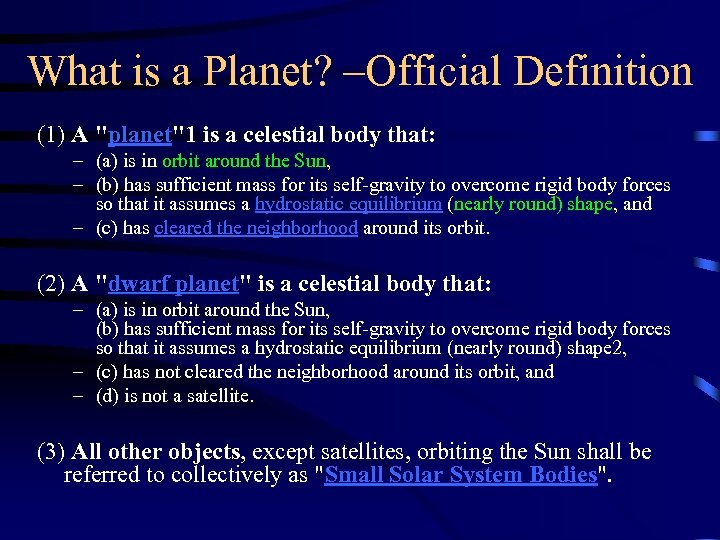
What is a Planet? –Official Definition (1) A "planet"1 is a celestial body that: – (a) is in orbit around the Sun, – (b) has sufficient mass for its self-gravity to overcome rigid body forces so that it assumes a hydrostatic equilibrium (nearly round) shape, and – (c) has cleared the neighborhood around its orbit. (2) A "dwarf planet" is a celestial body that: – (a) is in orbit around the Sun, (b) has sufficient mass for its self-gravity to overcome rigid body forces so that it assumes a hydrostatic equilibrium (nearly round) shape 2, – (c) has not cleared the neighborhood around its orbit, and – (d) is not a satellite. (3) All other objects, except satellites, orbiting the Sun shall be referred to collectively as "Small Solar System Bodies".
What are Exoplanets? • Planets orbiting a star other than the Sun • As of today, 182 exoplanets known • 19 exo-solar systems with multiple planets discovered
Contents of a generic planetary system around a star • • The host star (Exo-)Planets Natural satellites (moons) Asteroids (dwarf planets) Comets Rings Dust
Contents of our own solar system • Sun • Planets – 9 known (now: 8) – Mercury, Venus, Earth, Mars (“Terrestrials”) – Jupiter, Saturn, Uranus, Neptune (“Jovians”) – Pluto (a Kuiper Belt object? ) • Natural satellites (moons) – over a hundred • Asteroids and Meteoroids – 6 known that are larger than 300 km across – Largest, Ceres, is about 940 km in diameter • Comets • Rings • Dust
Features of our own solar system • • • G 2 star (yellow, temperature 5800 K ) Terrestrial Planets Gap with some dwarf planets Jovian Planets Kuiper Belt (outer dwarf planets)
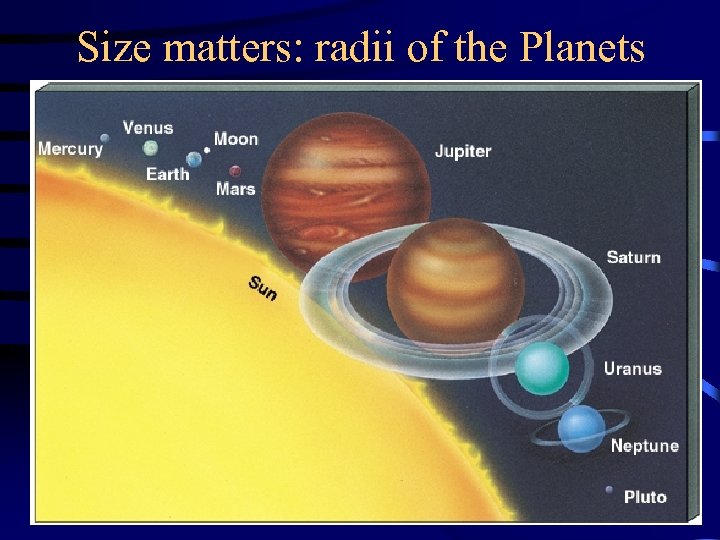
Size matters: radii of the Planets
Typical distances in Solar Systems: The Astronomical Unit • A convenient unit of length for discussing solar systems is the Astronomical Unit (A. U. ) • One A. U. is the average distance between the Earth and Sun – About 1. 5 108 km or 8 light-minutes • Entire solar system is about 80 A. U. across
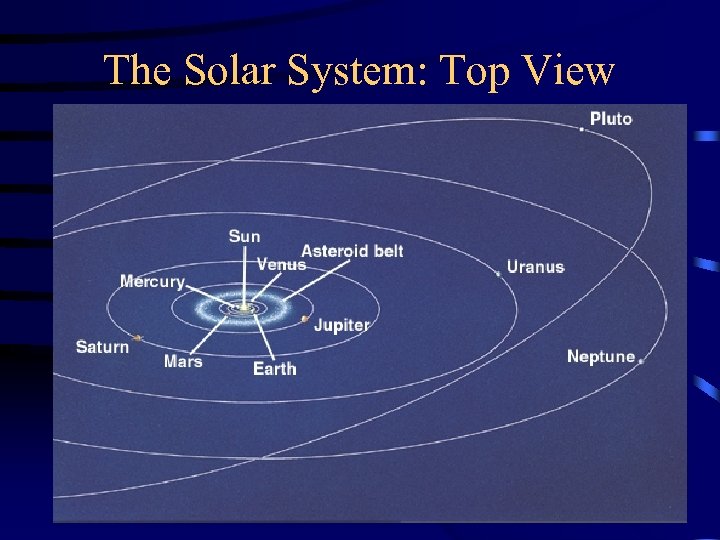
The Solar System: Top View
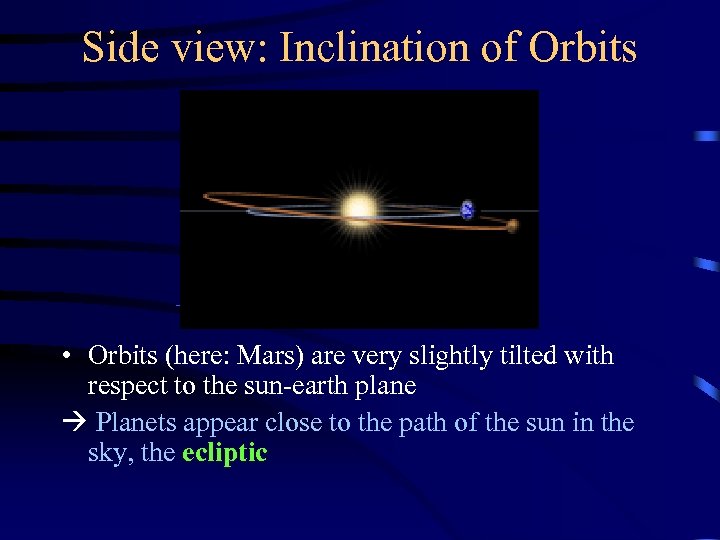
Side view: Inclination of Orbits • Orbits (here: Mars) are very slightly tilted with respect to the sun-earth plane Planets appear close to the path of the sun in the sky, the ecliptic
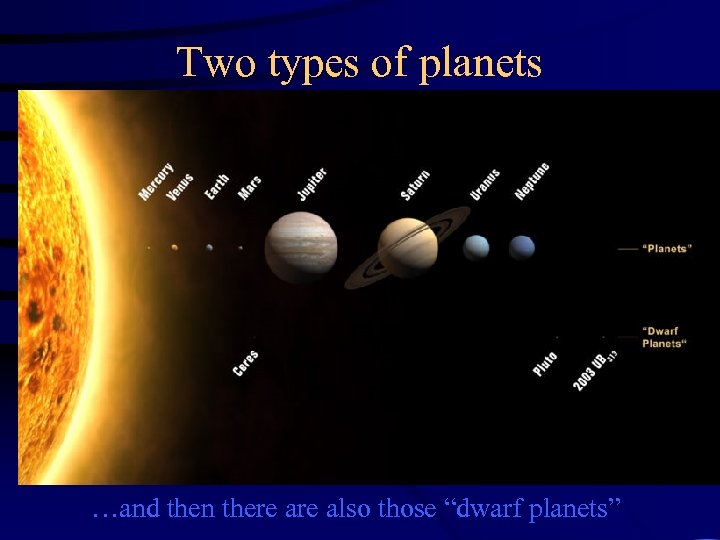
Two types of planets …and then there also those “dwarf planets”
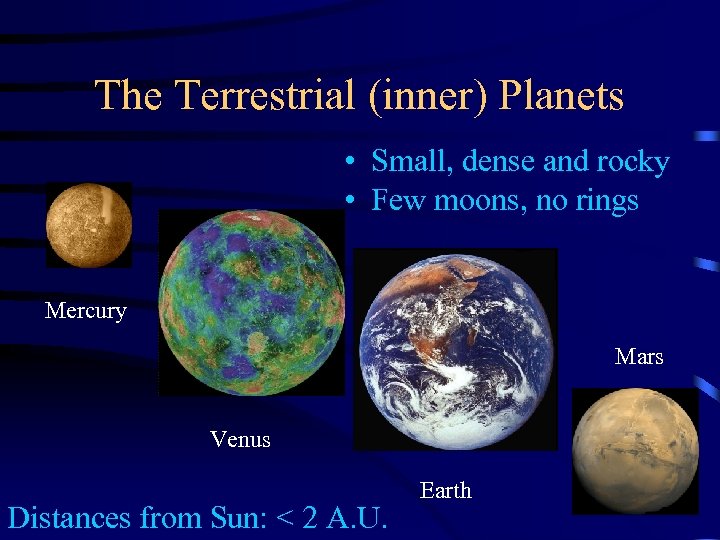
The Terrestrial (inner) Planets • Small, dense and rocky • Few moons, no rings Mercury Mars Venus Distances from Sun: < 2 A. U. Earth
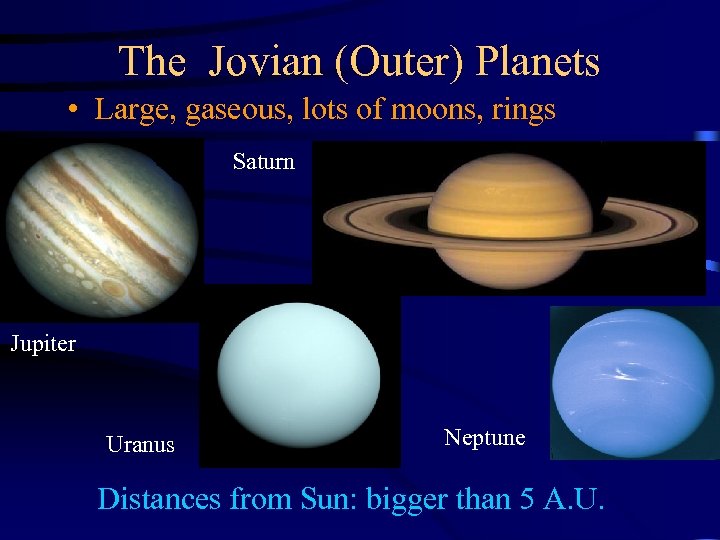
The Jovian (Outer) Planets • Large, gaseous, lots of moons, rings Saturn Jupiter Uranus Neptune Distances from Sun: bigger than 5 A. U.
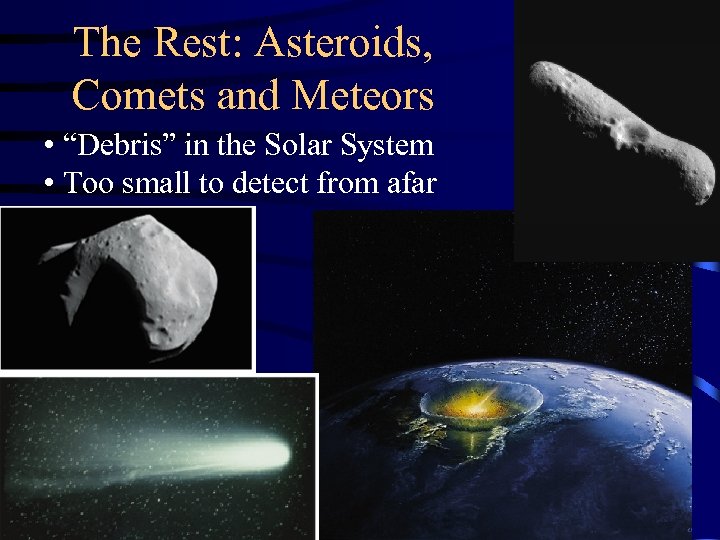
The Rest: Asteroids, Comets and Meteors • “Debris” in the Solar System • Too small to detect from afar
What kind of exo-solar system do we expect to find? • If we live in a typical solar system, we will likely find copies of our own solar system • If we live in a special solar system, we will find exo-solar systems that look very different
What kind of exoplanets do we expect to find? • Big (heavy) planets are easiest to find expect to find mostly those “Jupiters” • Smaller, rocky planets are harder to find, but the most interesting, since life could exist on these “Earths”
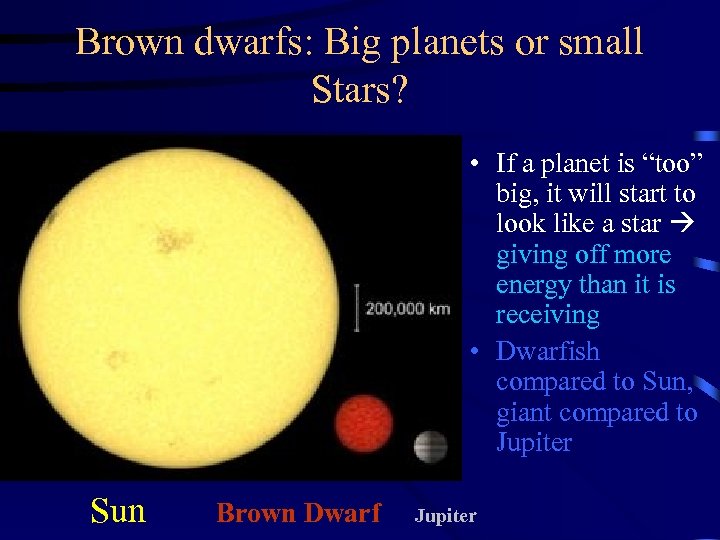
Brown dwarfs: Big planets or small Stars? • If a planet is “too” big, it will start to look like a star giving off more energy than it is receiving • Dwarfish compared to Sun, giant compared to Jupiter Sun Brown Dwarf Jupiter
How do we find Exoplanets? • Direct Observation (works only for double stars, planets are too dim) • Observe gravitational wiggles (Doppler effect) • Observe exoplanet transits (Brightness curve) • Or: Look them up on the internet ☺ http: //exoplanets. org/
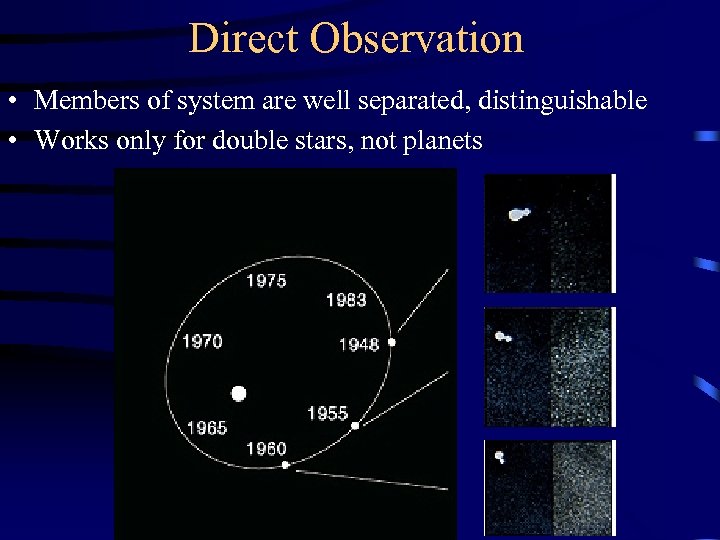
Direct Observation • Members of system are well separated, distinguishable • Works only for double stars, not planets
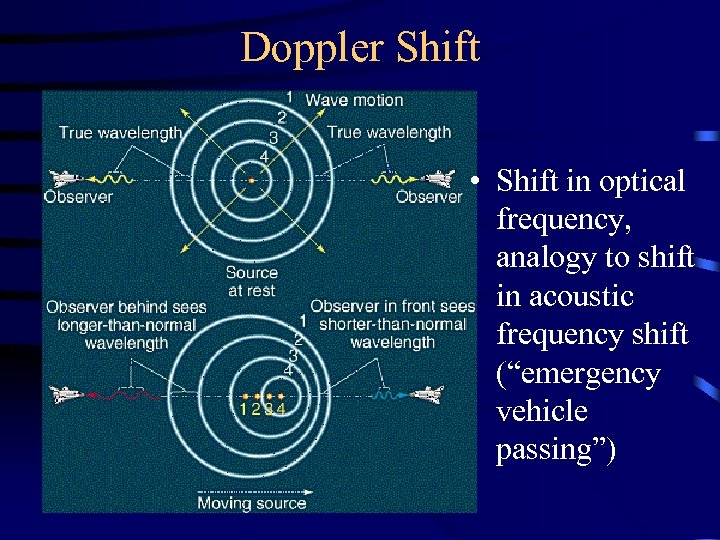
Doppler Shift • Shift in optical frequency, analogy to shift in acoustic frequency shift (“emergency vehicle passing”)
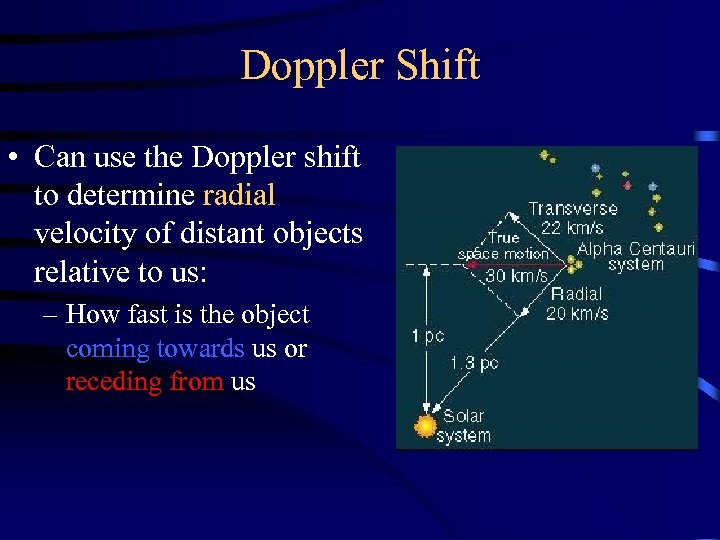
Doppler Shift • Can use the Doppler shift to determine radial velocity of distant objects relative to us: – How fast is the object coming towards us or receding from us
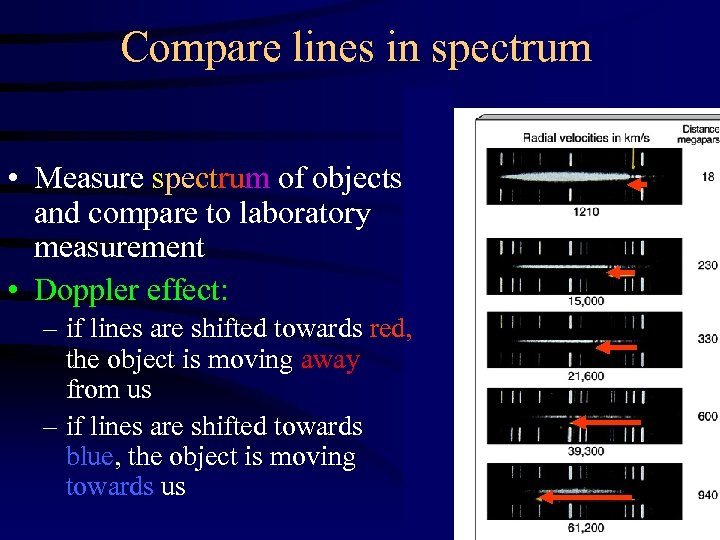
Compare lines in spectrum • Measure spectrum of objects and compare to laboratory measurement • Doppler effect: – if lines are shifted towards red, the object is moving away from us – if lines are shifted towards blue, the object is moving towards us
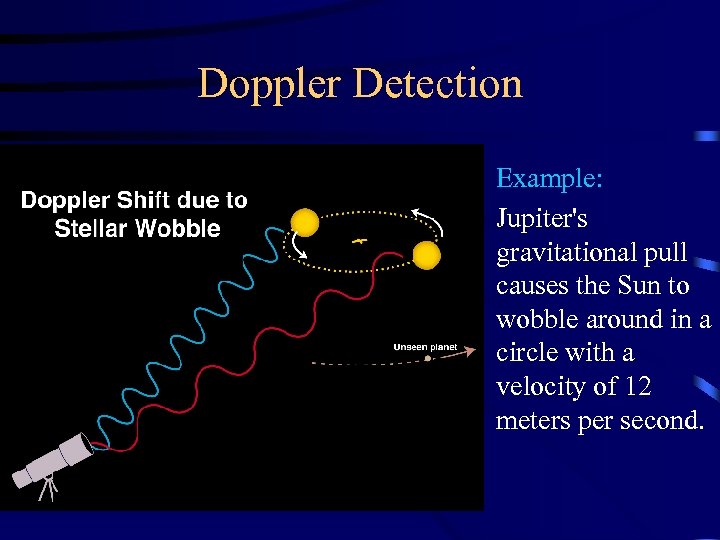
Doppler Detection • Example: • Jupiter's gravitational pull causes the Sun to wobble around in a circle with a velocity of 12 meters per second.
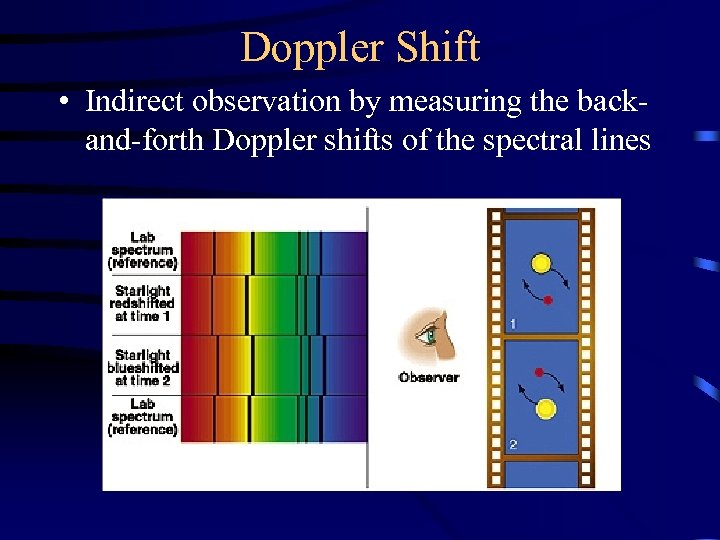
Doppler Shift • Indirect observation by measuring the backand-forth Doppler shifts of the spectral lines
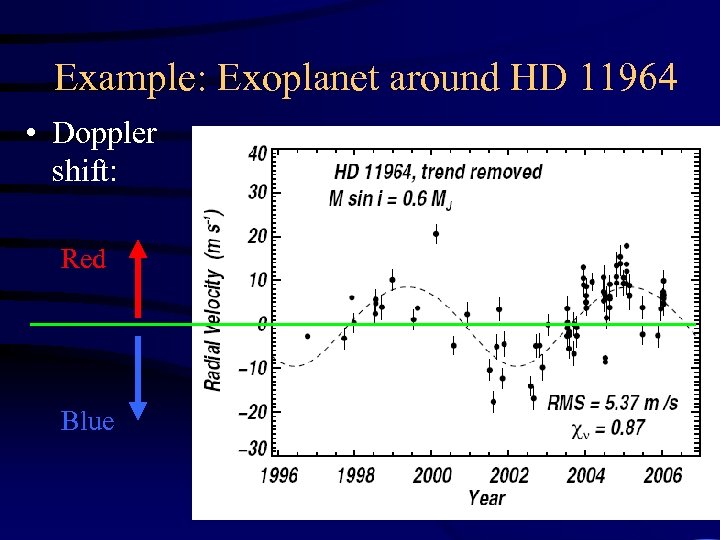
Example: Exoplanet around HD 11964 • Doppler shift: Red Blue
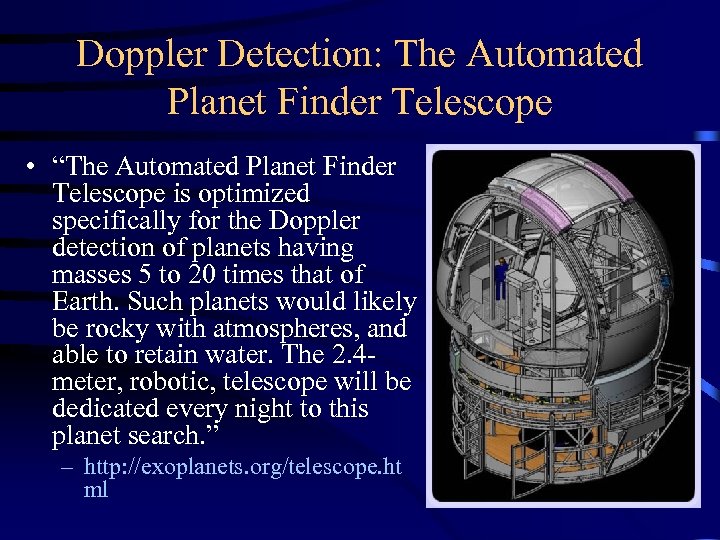
Doppler Detection: The Automated Planet Finder Telescope • “The Automated Planet Finder Telescope is optimized specifically for the Doppler detection of planets having masses 5 to 20 times that of Earth. Such planets would likely be rocky with atmospheres, and able to retain water. The 2. 4 meter, robotic, telescope will be dedicated every night to this planet search. ” – http: //exoplanets. org/telescope. ht ml
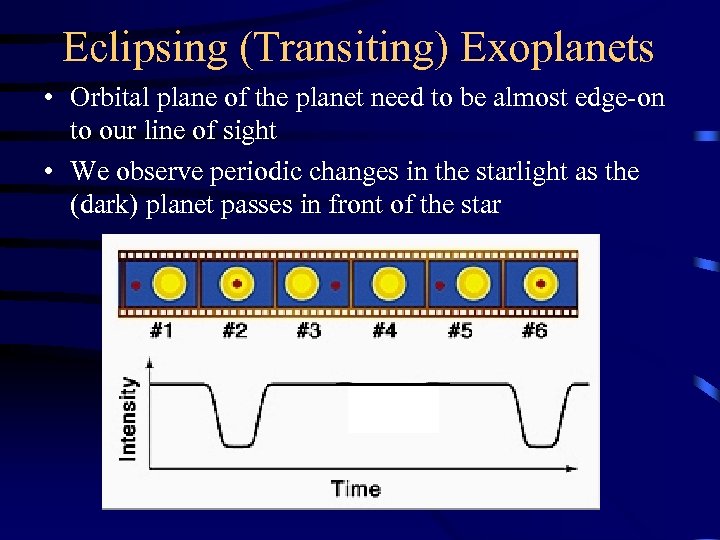
Eclipsing (Transiting) Exoplanets • Orbital plane of the planet need to be almost edge-on to our line of sight • We observe periodic changes in the starlight as the (dark) planet passes in front of the star
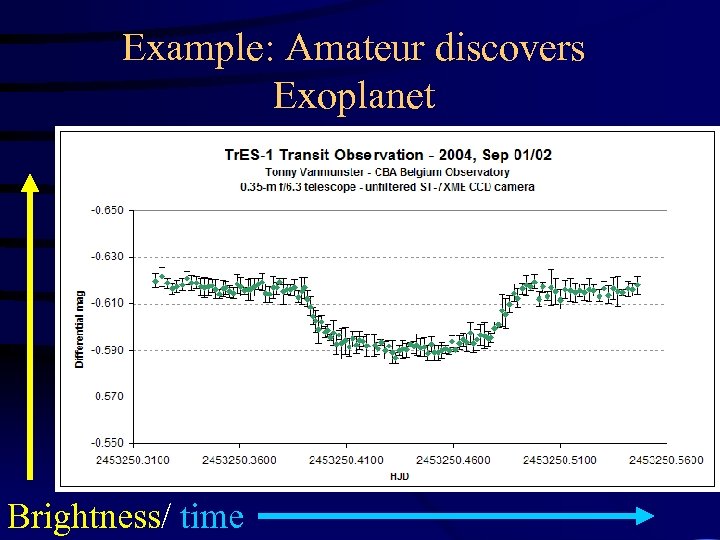
Example: Amateur discovers Exoplanet Brightness/ time
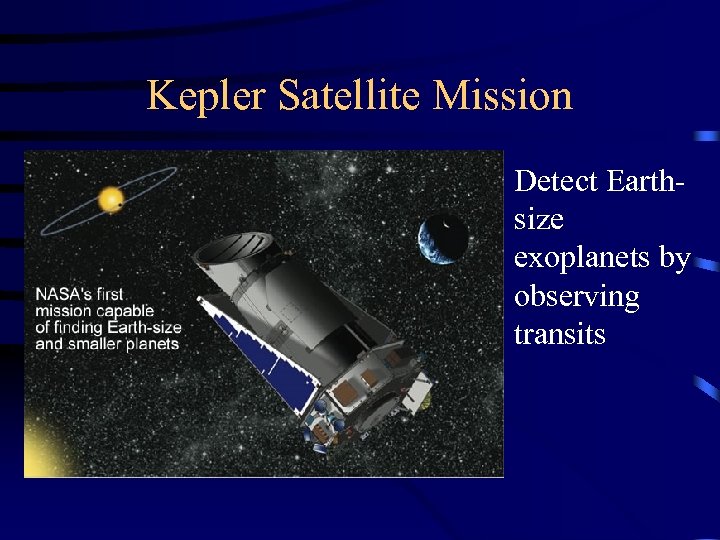
Kepler Satellite Mission • Detect Earthsize exoplanets by observing transits
What do exoplanets teach us? • Is our picture of a “typical” solar system correct? • Is our theory about the formation of solar systems correct?
Formation of the Solar System • Features to explain: – – – – – planets are far apart, not bunched together orbits of planets are nearly circular orbits of planets lie mostly in a single plane directions of revolution of planets about Sun is the same, and is the same as the direction of the Sun's rotation directions of rotation of planets about their axes is also mostly in the same direction as the Sun's (exceptions: Venus, Uranus, Pluto) most moons revolve around their planets in the same direction as the rotation of the planets differentiation between inner (terrestrial) and outer (Jovian) planets existence and properties of the asteroids existence and properties of the comets
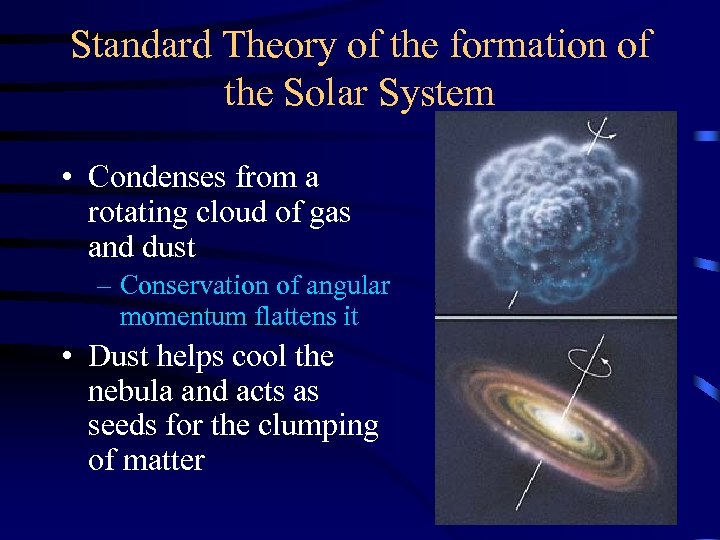
Standard Theory of the formation of the Solar System • Condenses from a rotating cloud of gas and dust – Conservation of angular momentum flattens it • Dust helps cool the nebula and acts as seeds for the clumping of matter
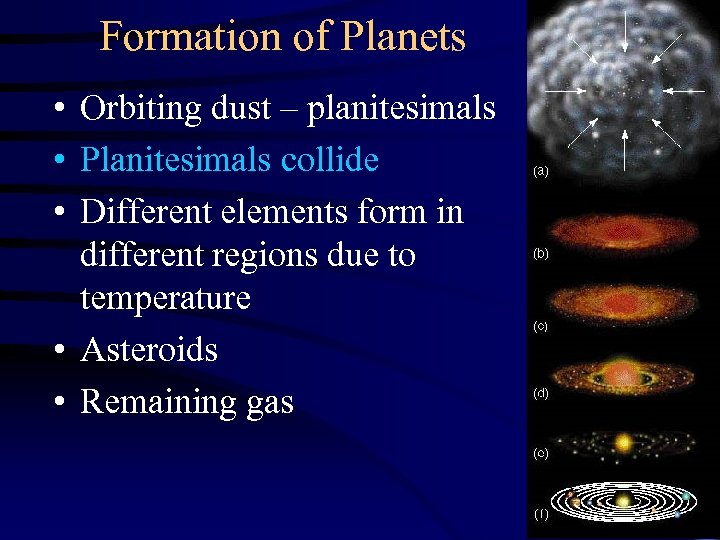
Formation of Planets • Orbiting dust – planitesimals • Planitesimals collide • Different elements form in different regions due to temperature • Asteroids • Remaining gas
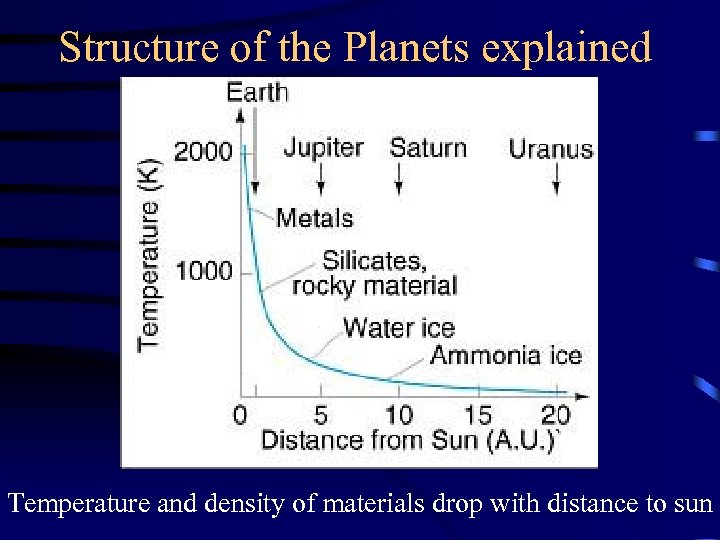
Structure of the Planets explained Temperature and density of materials drop with distance to sun
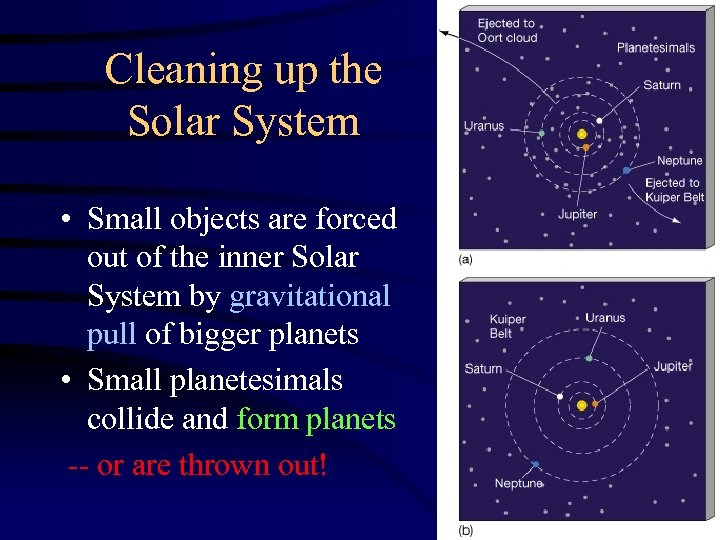
Cleaning up the Solar System • Small objects are forced out of the inner Solar System by gravitational pull of bigger planets • Small planetesimals collide and form planets -- or are thrown out!
What kind of exoplanets are we finding? • So far mostly “big Jupiters”, as expected • Two types of orbits: – Either highly eccentric and close to star – Or circular orbits and “typical” spacing
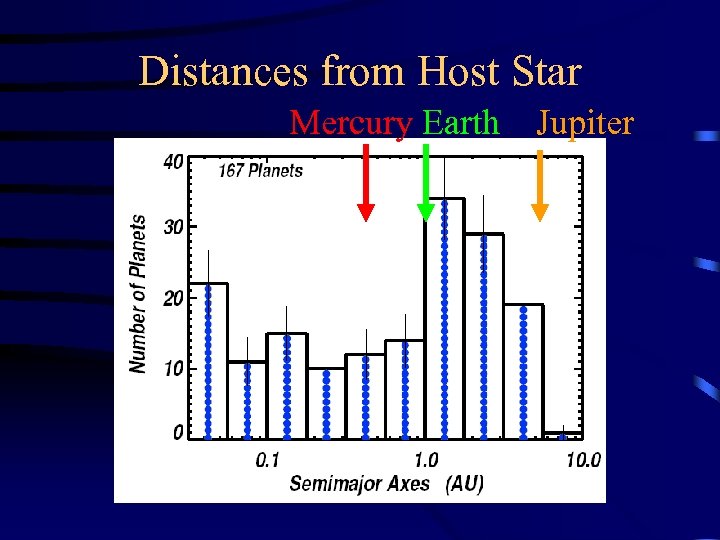
Distances from Host Star Mercury Earth Jupiter
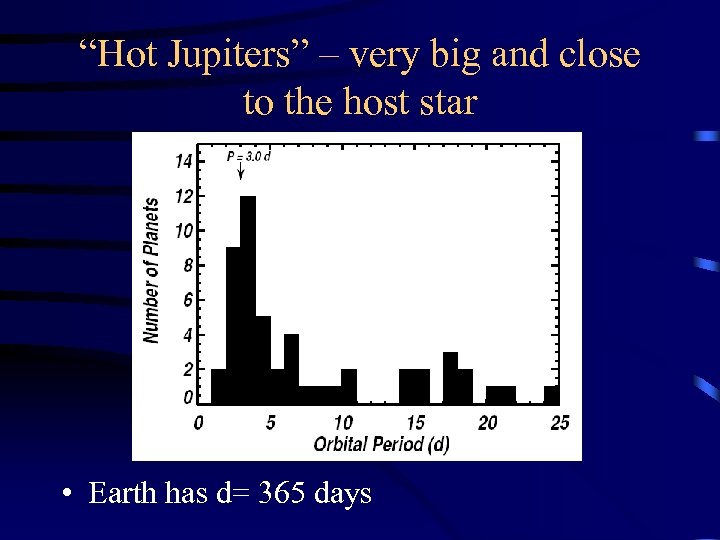
“Hot Jupiters” – very big and close to the host star • Earth has d= 365 days
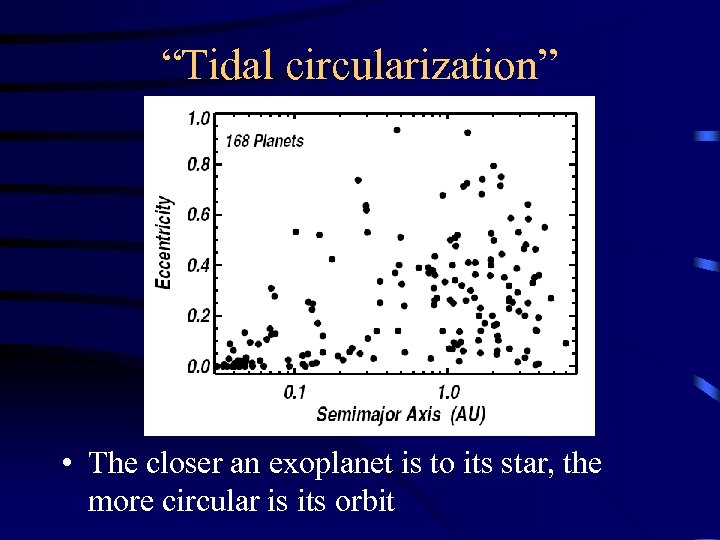
“Tidal circularization” • The closer an exoplanet is to its star, the more circular is its orbit
Resonances • It seems that our solar system is very stable with respect to gravitational effects – The heavy planets are far out – The lighter planets are closer together – (Force of gravity grow with mass, decreases with distance) • This is no accident! If it weren’t like this, the big planets would gravitationally “bully” the others around: – Force them into eccentric orbits – Throw them out of the solar system
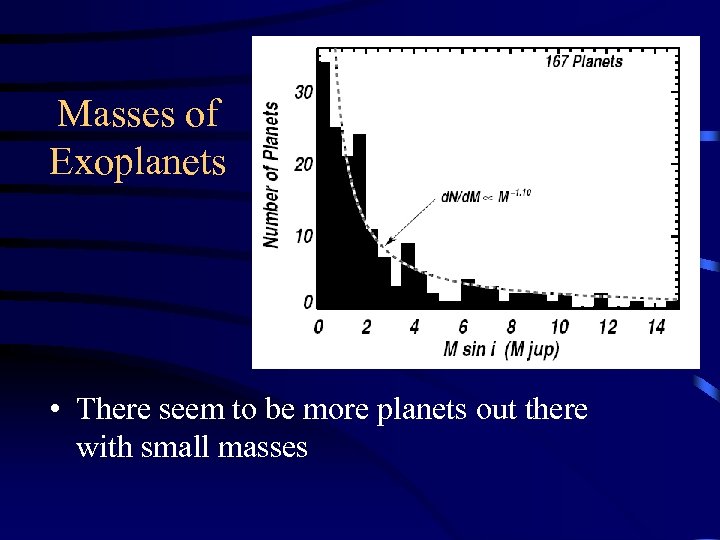
Masses of Exoplanets • There seem to be more planets out there with small masses
A refined Picture • New picture emerges from lessons learned from exoplanets – Formation of a solar system is not necessarily the final word on appearance of a planetary system – Dramatic changes can happen in the millions of years • Collisions • Clean up • migration
Heritage and History • How a planetary system looks like today is determined by how it formed AND what happened in its history • Our solar system seems to be protected from “drama” by its hierarchy and associated stabilizing resonances – Still: Jupiter probably migrated inward by throwing out lots of small bodies (“gravitational slingshot”)
Is there life around other suns? • “Habitable Zones” around the host stars depend on their temperature • Stay tuned! This will be the topic of another Starry Monday
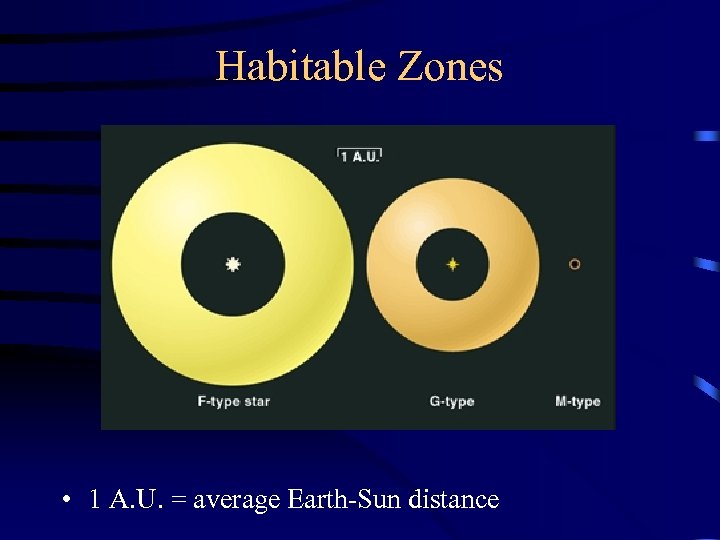
Habitable Zones • 1 A. U. = average Earth-Sun distance
The Night Sky in February • Long nights, early observing! • Winter constellations are up: Orion, Taurus, Gemini, Auriga, Canis Major & Minor lots of deep sky objects! • Saturn at its brightest
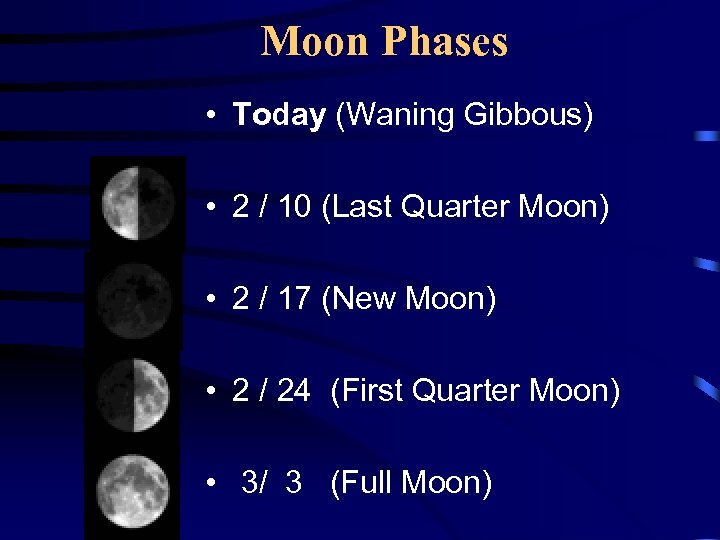
Moon Phases • Today (Waning Gibbous) • 2 / 10 (Last Quarter Moon) • 2 / 17 (New Moon) • 2 / 24 (First Quarter Moon) • 3/ 3 (Full Moon)
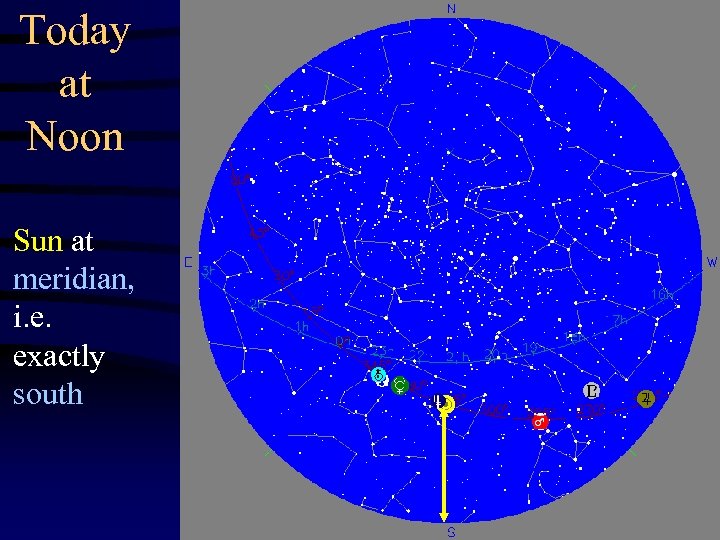
Today at Noon Sun at meridian, i. e. exactly south
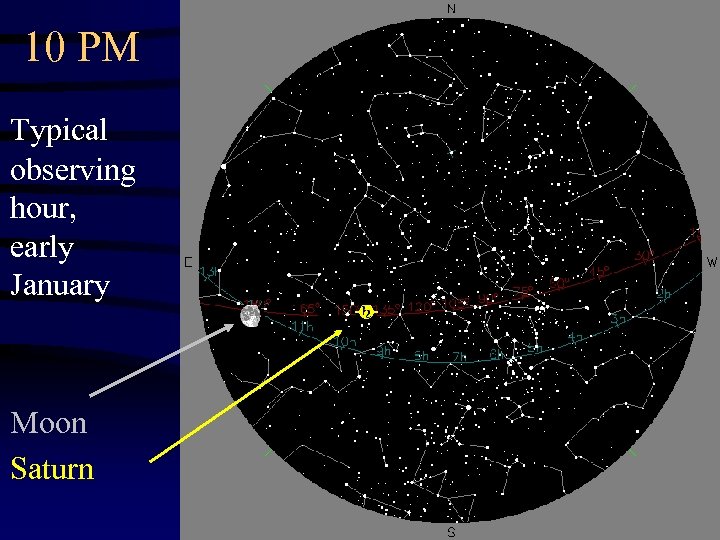
10 PM Typical observing hour, early January Moon Saturn Moon
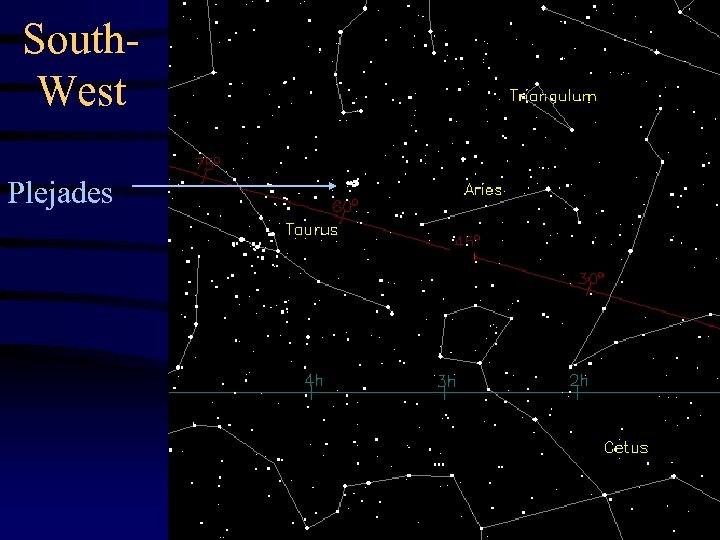
South. West Plejades
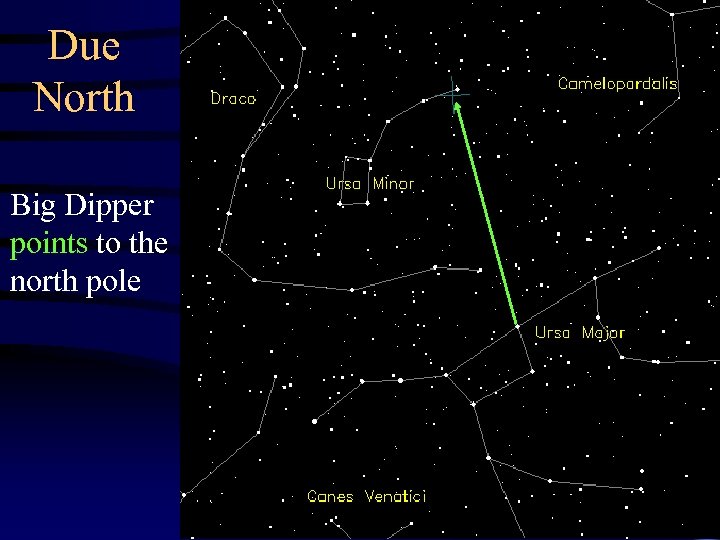
Due North Big Dipper points to the north pole
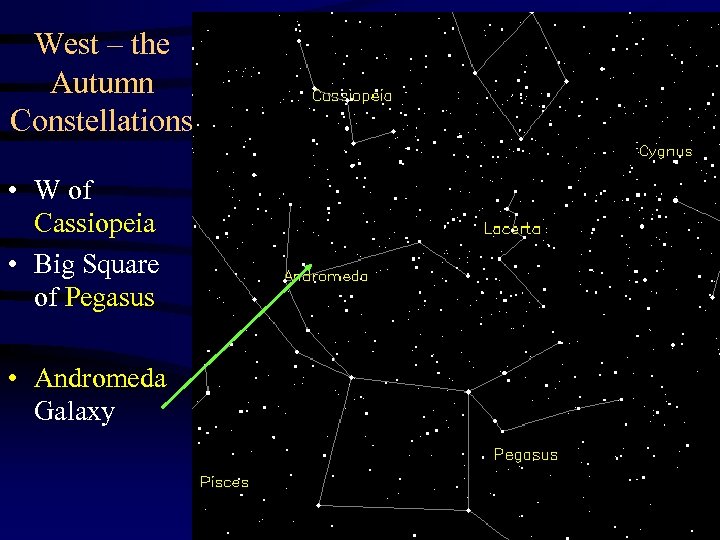
West – the Autumn Constellations • W of Cassiopeia • Big Square of Pegasus • Andromeda Galaxy
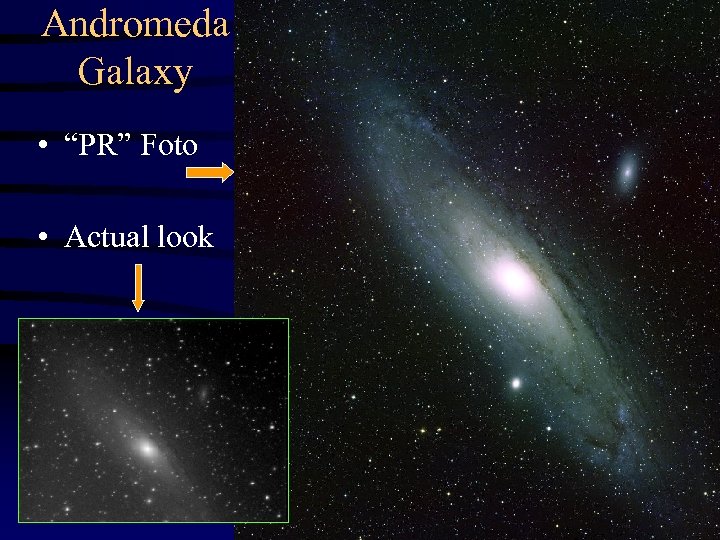
Andromeda Galaxy • “PR” Foto • Actual look
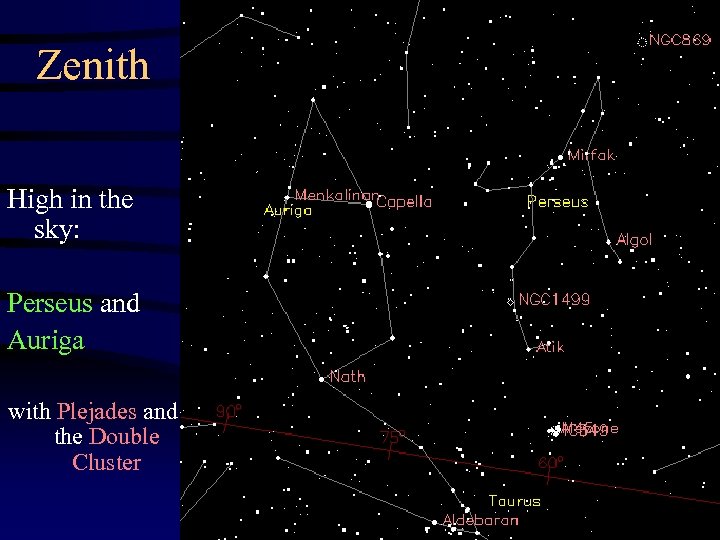
Zenith High in the sky: Perseus and Auriga with Plejades and the Double Cluster
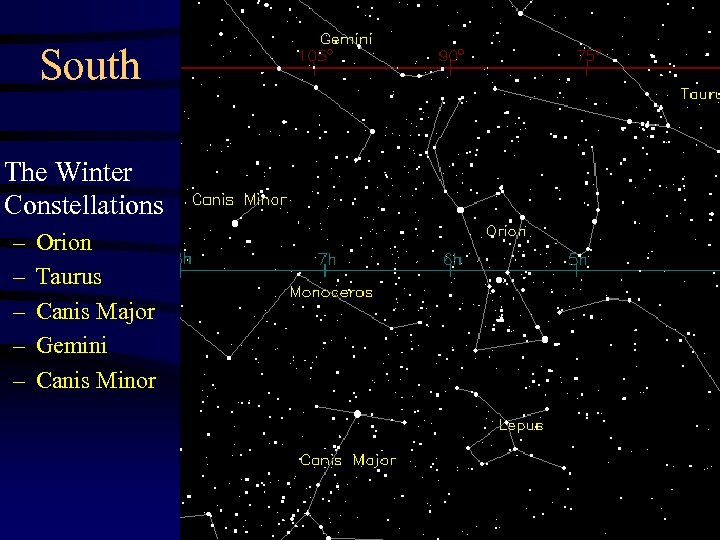
South The Winter Constellations – – – Orion Taurus Canis Major Gemini Canis Minor
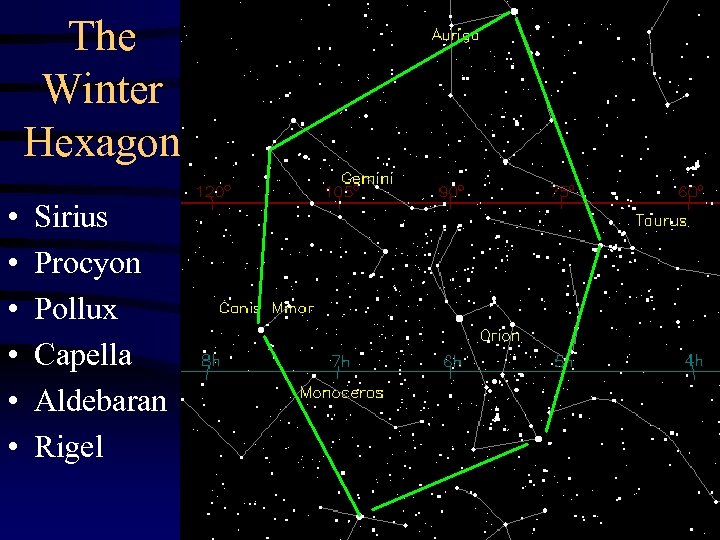
The Winter Hexagon • • • Sirius Procyon Pollux Capella Aldebaran Rigel
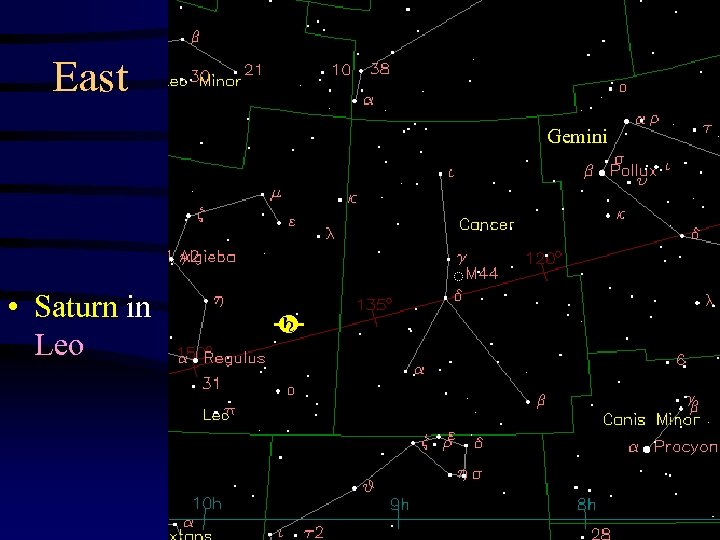
East Gemini • Saturn in Leo
Mark your Calendars! • Next Starry Monday: March 5, 2005, 7 pm (this is a Monday • Observing at Prairie Oaks Metro Park: – Friday, April 27, 8: 30 pm – Friday, May 25, 9: 00 pm • Web pages: – http: //www. otterbein. edu/dept/PHYS/weitkamp. asp (Obs. ) – http: //www. otterbein. edu/dept/PHYS/ (Physics Dept. ) )
Mark your Calendars II • • Physics Coffee is every Wednesday, 3: 30 pm Open to the public, everyone welcome! Location: across the hall, Science 256 Free coffee, cookies, etc.
Planetary Motions • The sky seems to revolve around us because of Earth’s rotation • Additionally, planets move with respect to the fixed stars, that’s why they are called planets (greek: wanderers) • Due to the planet’s movement in their orbit, and Earth’s orbital motion, this additional motion – the apparent motion of the planet as seen from Earth - looks complicated.
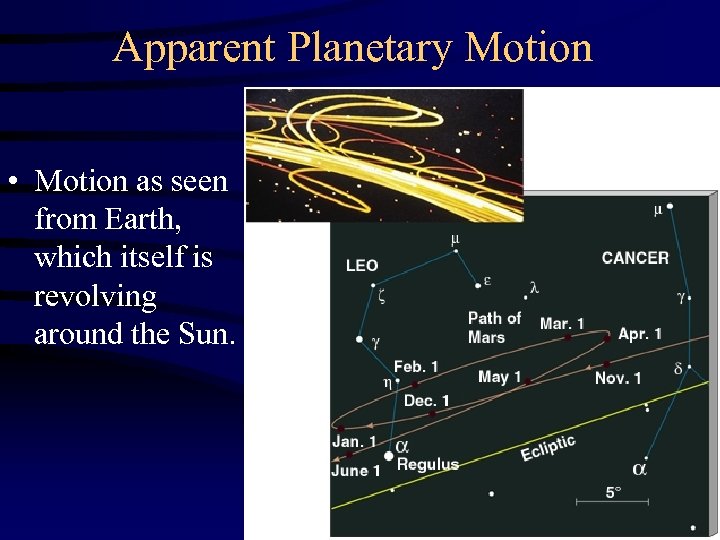
Apparent Planetary Motion • Motion as seen from Earth, which itself is revolving around the Sun.
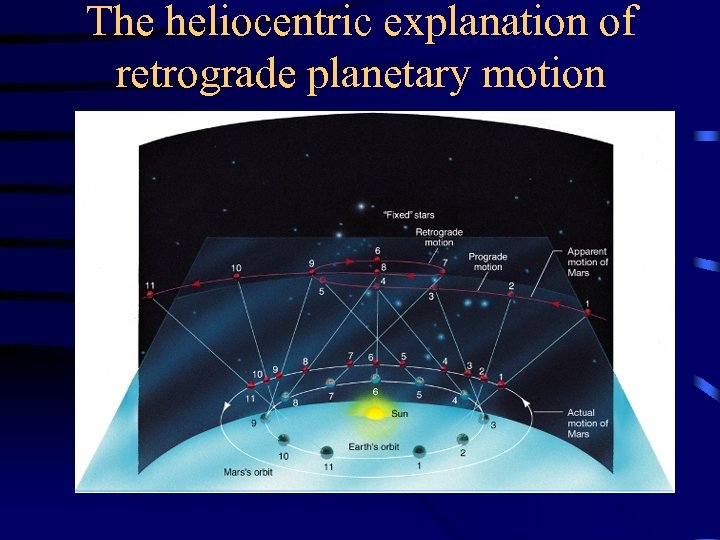
The heliocentric explanation of retrograde planetary motion
Скачать презентацию Welcome to Starry Monday at Otterbein Astronomy Lecture
4621f77af1082466acfec53455be84d9.ppt