 Скачать презентацию WELCOME TO OUR WEBINAR Thursday October 29 2009
277dc7cad8ed5a762fe87a024378102e.ppt
- Количество слайдов: 20



WELCOME TO OUR WEBINAR Thursday, October 29, 2009 | 9: 00 a. m. PST If you cannot hear us speaking, please make sure you have called into the teleconference number on your invite information. § US participants: +1 800 743 9807 § Outside the US: +1 212 231 2905 The audio portion is available via conference call. It is not broadcast through your computer. *This webinar is offered for informational purposes only, and the content should not be construed as legal advice on any matter.
Global Locations § A global organization § 67 offices in 29 countries § 3, 500 lawyers § 8, 000 people worldwide § Over 1, 500 lawyers on each side of the Atlantic § Major presence in Asia § Only global law firm with strategic focus on technology and emerging growth § Successor to Gray Cary Ware & Freidenrich 2
Presenter Mark Radcliffe Partner, DLA Piper mark. radcliffe@dlapiper. com T: 650 833 2266 Silicon Valley Office 2000 University Avenue East Palo Alto, California 94303 -2214 United States § Mark Radcliffe is a partner at DLA Piper and focuses his practice on representing corporations in their intellectual property and finance matters. He chairs DLA Piper’s Open Source Industry Group and has worked with many open source companies. He assisted Sun Microsystems in open sourcing the Solaris operating system and drafting the CDDL, and he chaired Committee C, one of four committees that assisted in the drafting of the GPLv 3. Mr. Radcliffe earned a B. S. in Chemistry, magna cum laude, from the University of Michigan and a J. D. from Harvard Law School. Mark Radcliffe is also the author of a well known blog, www. lawandlifesiliconvalley. com/blog, which frequently covers open source issues. 3
Market Trends § Software development has changed forever § Internet, community development & open source software (OSS) licensing § Componentization and re-use § Recent survey’s confirm OSS has gone mainstream § “When it comes to technology investments, OSS adoption now rises to the top”…. . “Q 4 2008 makes it clear that open source software (OSS) is a top priority for software development professionals in 2009. ” Jeff Hammond, Forrester, Open Source Software Goes Mainstream, April 2009 § While OSS has gone mainstream, management and policy lags behind § A “don’t ask, don’t tell” pact obscures the reality of OSS use (Forrester) § Black Duck Survey at SD West (March 11, 2009): § Only 22% of those surveyed reported that their organizations have explicit management policies and procedures in place § Only 40% of larger companies with more than 500 developers had explicit management policies 4
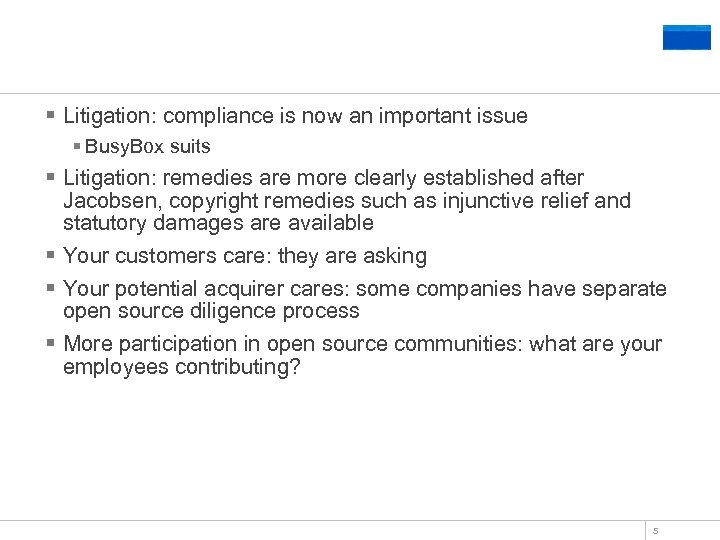
Why Do You Care? § Litigation: compliance is now an important issue § Busy. Box suits § Litigation: remedies are more clearly established after Jacobsen, copyright remedies such as injunctive relief and statutory damages are available § Your customers care: they are asking § Your potential acquirer cares: some companies have separate open source diligence process § More participation in open source communities: what are your employees contributing? 5
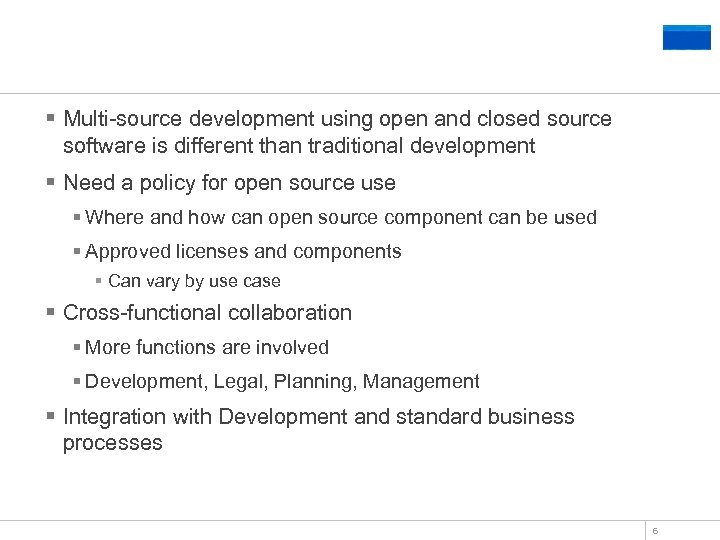
Key Issues § Multi-source development using open and closed source software is different than traditional development § Need a policy for open source use § Where and how can open source component can be used § Approved licenses and components § Can vary by use case § Cross-functional collaboration § More functions are involved § Development, Legal, Planning, Management § Integration with Development and standard business processes 6
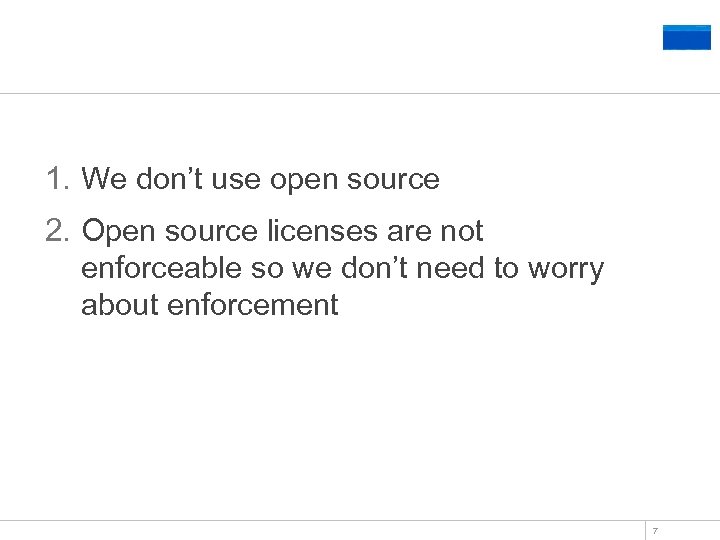
Ten Common Mistakes in Using Open Source 1. We don’t use open source 2. Open source licenses are not enforceable so we don’t need to worry about enforcement 7
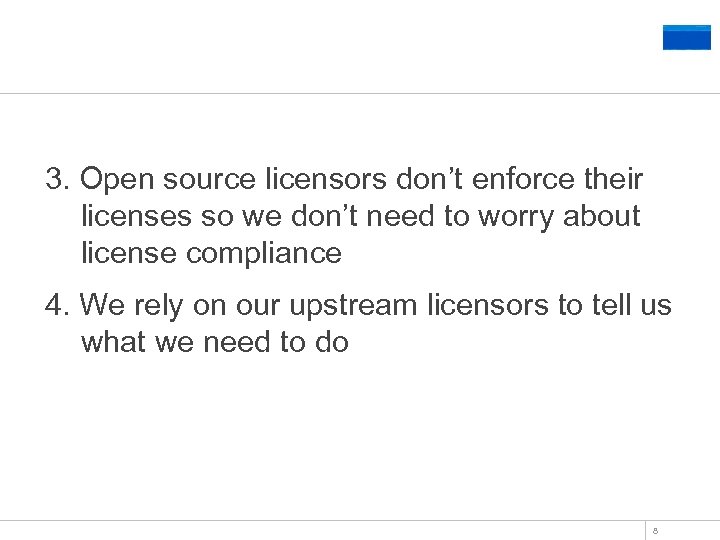
Ten Common Mistakes in Using Open Source 3. Open source licensors don’t enforce their licenses so we don’t need to worry about license compliance 4. We rely on our upstream licensors to tell us what we need to do 8
Ten Common Mistakes in Using Open Source 5. The legal department will take care of it 6. The engineering department will take care of it 9
Ten Common Mistakes in Using Open Source 7. We prohibit participation in open source projects so we don’t have to worry about licensing issues 8. We use so little open source software that we can handle it informally 10
Ten Common Mistakes in Using Open Source 9. Our customers don’t care about our use of open source 10. We are a SAAS company so open source licenses obligations won’t apply 11
What to do? § Open Source is Ubiquitous § Needs to be managed § Process is critical § Cross functional § Product Planning/Management § Legal, Security & Export Compliance § Engineering § Integrated Processes § Component Management § License Management § Release Planning § Release Delivery 12
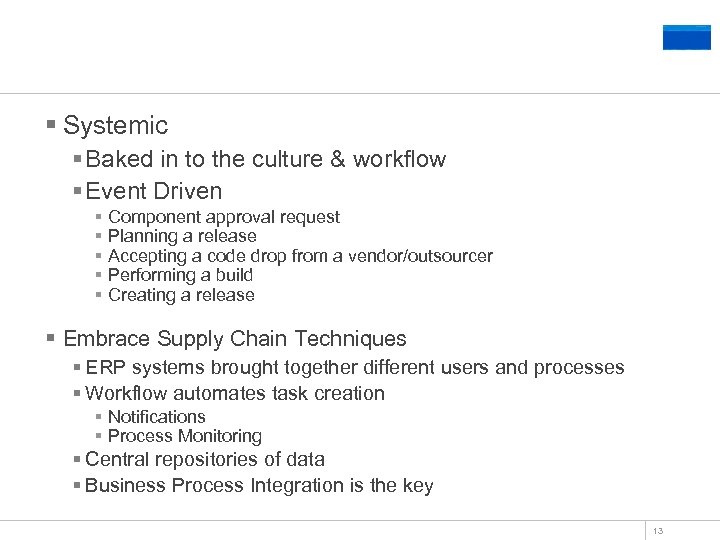
Golden Rule Details § Systemic § Baked in to the culture & workflow § Event Driven § Component approval request § Planning a release § Accepting a code drop from a vendor/outsourcer § Performing a build § Creating a release § Embrace Supply Chain Techniques § ERP systems brought together different users and processes § Workflow automates task creation § Notifications § Process Monitoring § Central repositories of data § Business Process Integration is the key 13
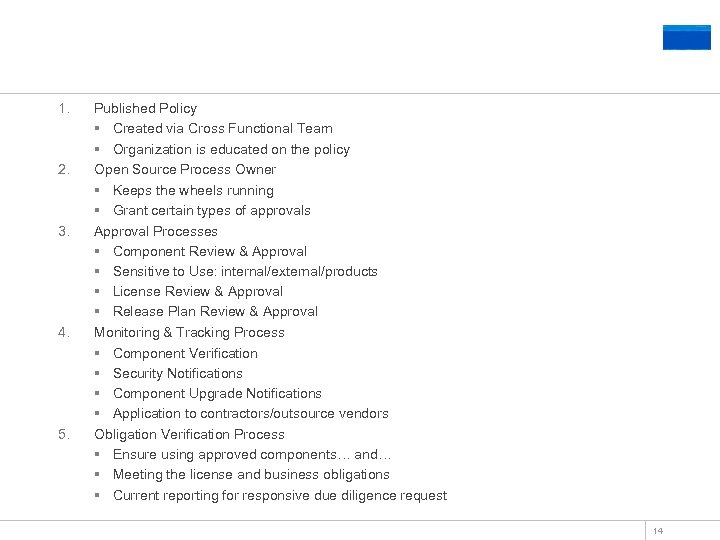
Open Source Program Elements 1. 2. 3. 4. 5. Published Policy § Created via Cross Functional Team § Organization is educated on the policy Open Source Process Owner § Keeps the wheels running § Grant certain types of approvals Approval Processes § Component Review & Approval § Sensitive to Use: internal/external/products § License Review & Approval § Release Plan Review & Approval Monitoring & Tracking Process § Component Verification § Security Notifications § Component Upgrade Notifications § Application to contractors/outsource vendors Obligation Verification Process § Ensure using approved components… and… § Meeting the license and business obligations § Current reporting for responsive due diligence request 14
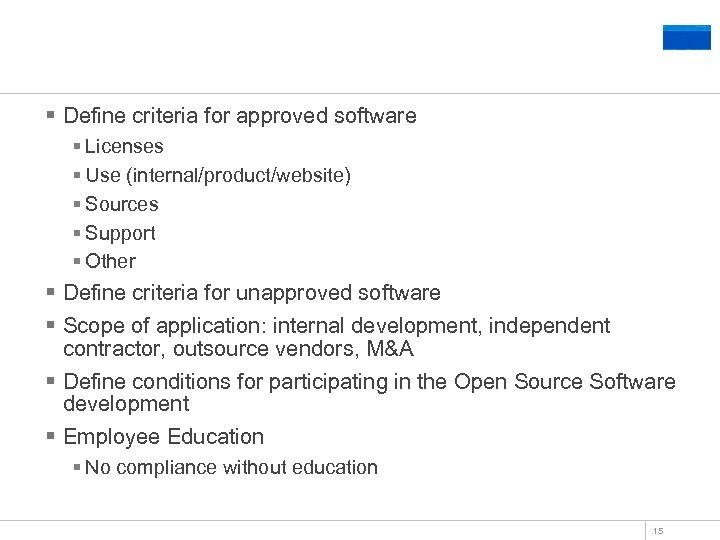
Determine Policies § Define criteria for approved software § Licenses § Use (internal/product/website) § Sources § Support § Other § Define criteria for unapproved software § Scope of application: internal development, independent contractor, outsource vendors, M&A § Define conditions for participating in the Open Source Software development § Employee Education § No compliance without education 15
Sample OSS Policy Contents Source: February 2, 2009, “Best Practices: Improve Development Effectiveness Through Strategic Adoption Of Open Source” Forrester report 16
MCLE Code For those attorneys seeking MCLE credit for participating in this webinar, please use the following code on your request for Certificate of Attendance: G 104701155 17
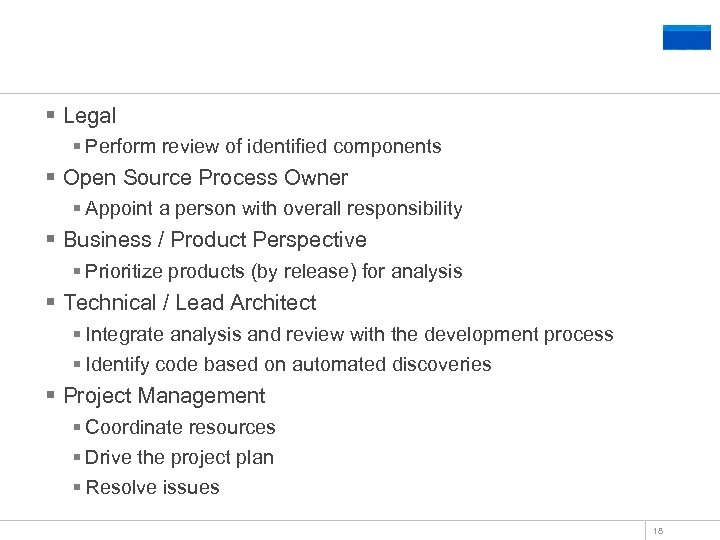
Forming a Compliance Core Team § Legal § Perform review of identified components § Open Source Process Owner § Appoint a person with overall responsibility § Business / Product Perspective § Prioritize products (by release) for analysis § Technical / Lead Architect § Integrate analysis and review with the development process § Identify code based on automated discoveries § Project Management § Coordinate resources § Drive the project plan § Resolve issues 18
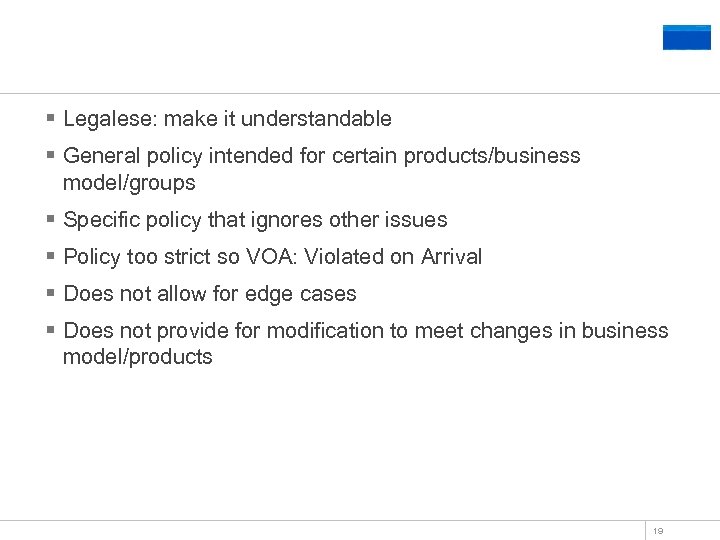
Common Implementation Issues § Legalese: make it understandable § General policy intended for certain products/business model/groups § Specific policy that ignores other issues § Policy too strict so VOA: Violated on Arrival § Does not allow for edge cases § Does not provide for modification to meet changes in business model/products 19
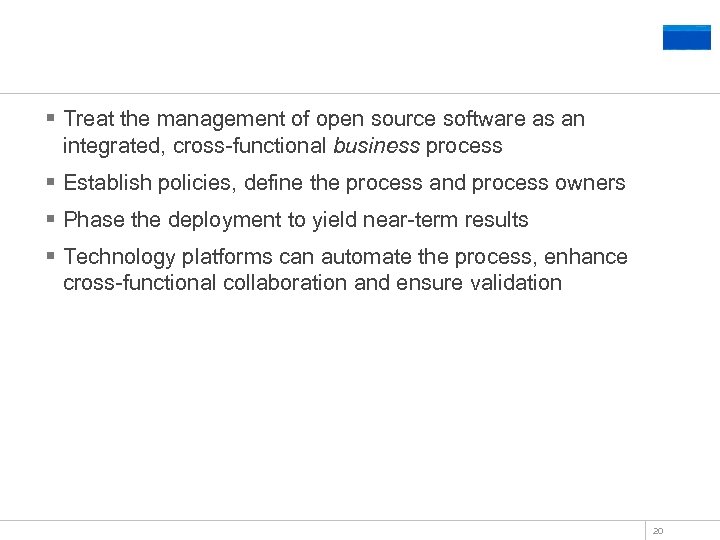
Summary § Treat the management of open source software as an integrated, cross-functional business process § Establish policies, define the process and process owners § Phase the deployment to yield near-term results § Technology platforms can automate the process, enhance cross-functional collaboration and ensure validation 20
Скачать презентацию WELCOME TO OUR WEBINAR Thursday October 29 2009
277dc7cad8ed5a762fe87a024378102e.ppt