


 Скачать презентацию Welcome to my class Unit 19 Modern
048c96c91af36085bfd42e895b318ed9.ppt
- Количество слайдов: 40
 Welcome to my class
 Unit 19 Modern Agriculture
 Pre-reading Presentation Reading Homework
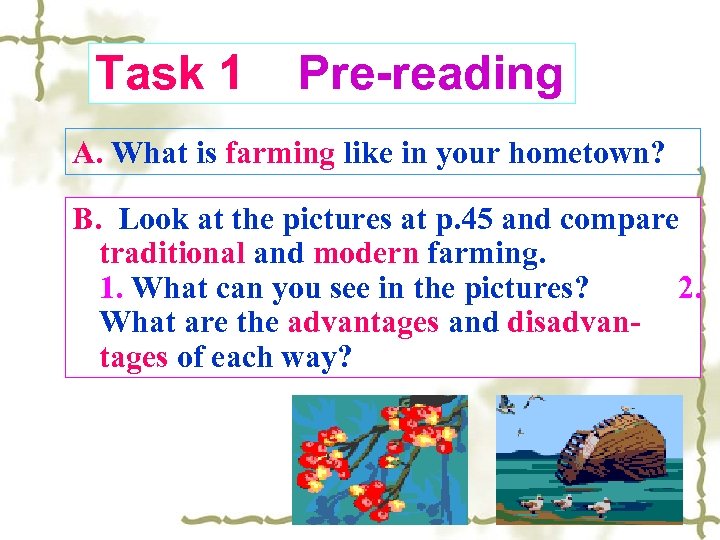 Task 1 Pre-reading A. What is farming like in your hometown? B. Look at the pictures at p. 45 and compare traditional and modern farming. 1. What can you see in the pictures? 2. What are the advantages and disadvantages of each way?
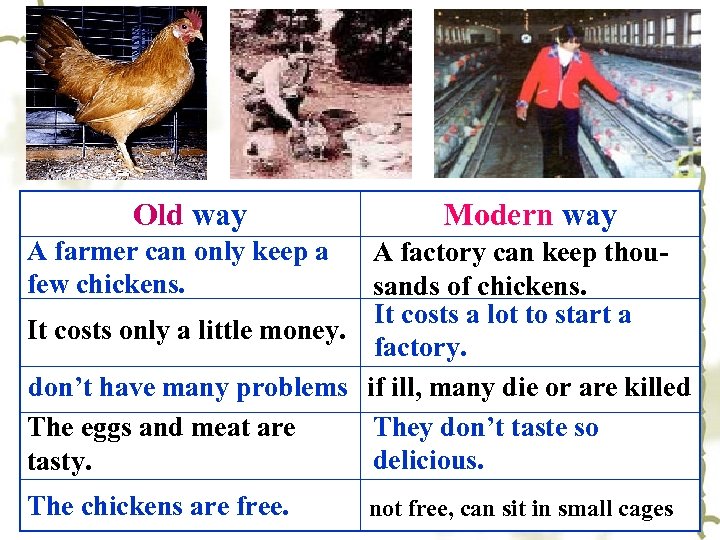 Old way In the first picture: third picture: second picture: A farmer can only keep a few chickens. Modern way A chickenfeeding chickens. modern chicken thou. Afarmer / A hen. farm. factory can keep sands of chickens. It costs a lot to start a It costs only a little money. factory. What are the differences? don’t. Compare problems and the modern killed have many the old if ill, many die or are They don’t taste The eggs and meat are ways of raising chickens. so delicious. tasty. The chickens are free. not free, can sit in small cages
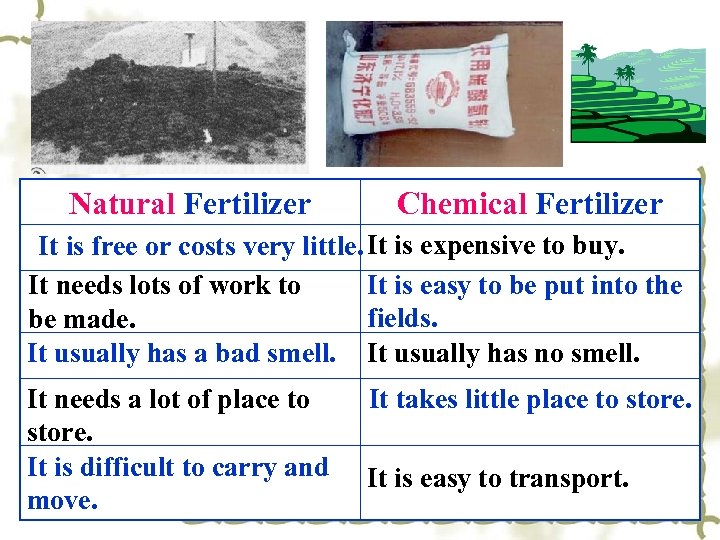 Chemical Fertilizer In Naturalpicture: the first Fertilizer A pile of animal shit (manure) It is free or costs very little. It is expensive to buy. In the second picture: A bag of chemical fertilizer. It is easy to be put into the It needs lots of work to fields. be made. What are the It usually has no It usually has a bad smell. differences? smell. Compare the old and the modernto store. It needs a lot of place to It takes little place store. ways of feeding the crops. It is difficult to carry and It is easy to transport. move.
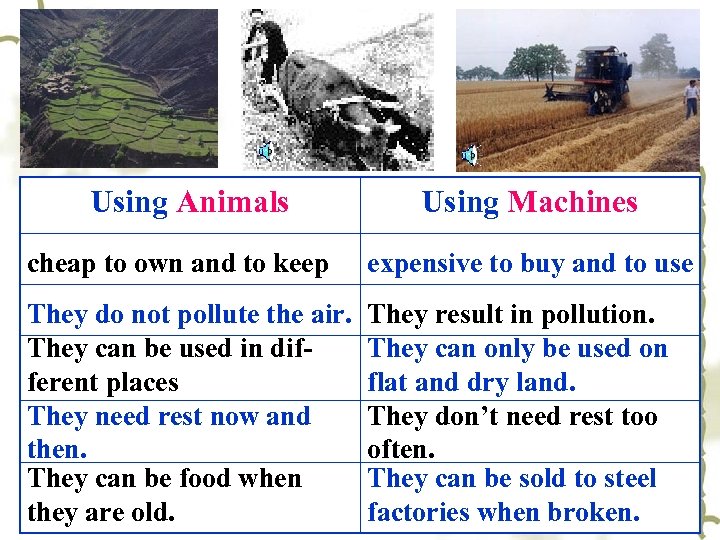 Using Animals In the first picture: Using Machines *Patches of farm fields. cheap to own and to keep *A farmer is ploughing to use expensive to buy and In the second picture: the field with an animal. They do not pollute the air. They result in pollution. In the third used in They can be picture: dif- *Farmers use the tractoron They can only be used toflat and dry land. work the land. ferent places They need rest now and They don’t need rest too What are the differences? then. often. Compare when the modern ways They can be food the old and. They can be sold to steel the fields. they are old. of ploughing factories when broken.
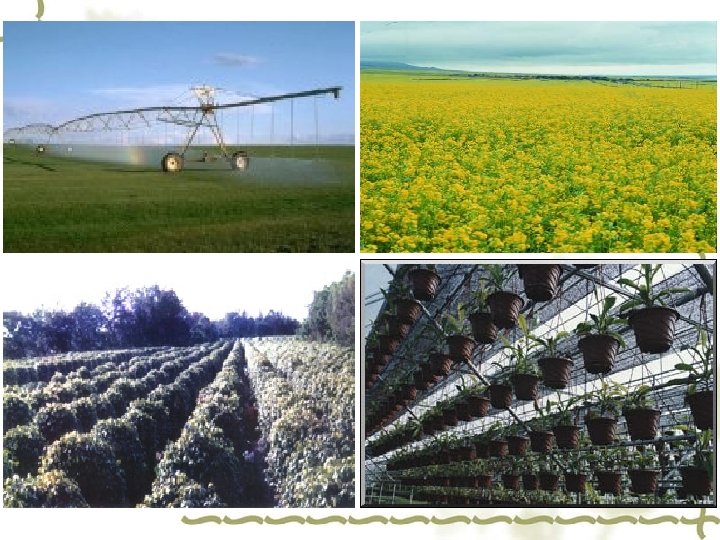
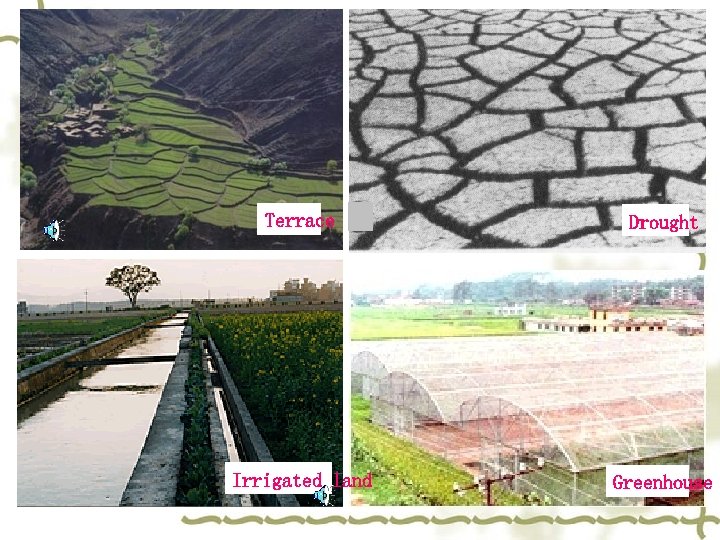 Terrace Drought Irrigated land Greenhouse
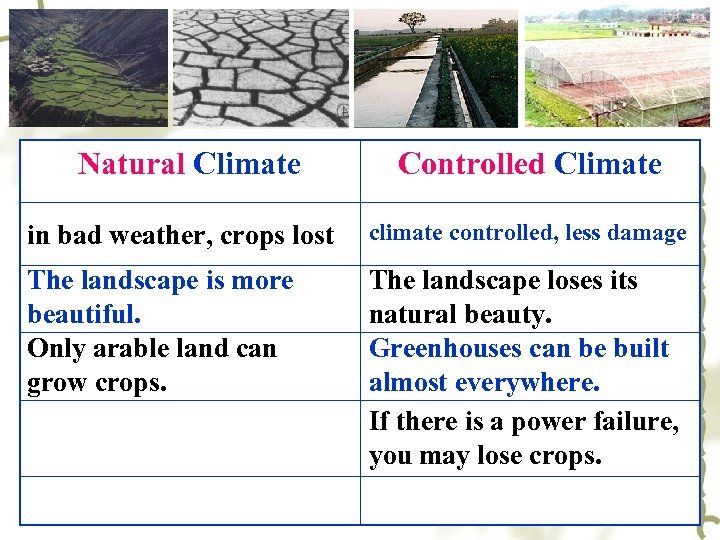 In Naturalpicture: the first Climate Controlled Climate * Terraced fields. Dry barren farmland. in. In the second picture: bad weather, crops lost *climate controlled, less damage In the third is more *The landscape loses its Irrigated farmland. The landscapepicture: beautiful. natural beauty. In the fourth picture: * Greenhouses. Only arable land can Greenhouses can be built grow crops. almost everywhere. What are the differences? If there is a power failure, Compare the old and may lose crops. the modern you ways of irrigation.
 Task 2 Reading—Scanning **Divide the text into 4 parts and find the main idea of each part: The 1 st part — the first paragraph The 2 st part — the second paragraph The 3 st part — the third paragraph The 4 st part — the fourth, fifth and sixth paragraphs.
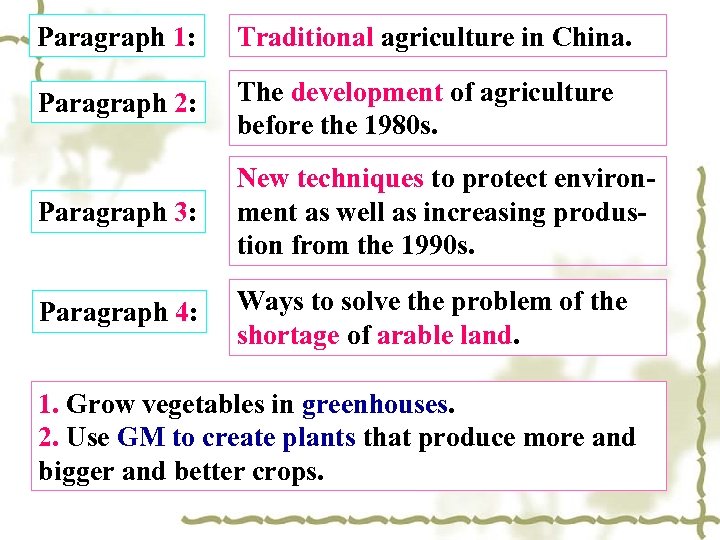 Paragraph 1: Traditional agriculture in China. Paragraph 2: The development of agriculture before the 1980 s. Paragraph 3: New techniques to protect environment as well as increasing produstion from the 1990 s. Paragraph 4: Ways to solve the problem of the shortage of arable land. 1. Grow vegetables in greenhouses. 2. Use GM to. Whatplants the produce more and create are that ways? bigger and better crops.
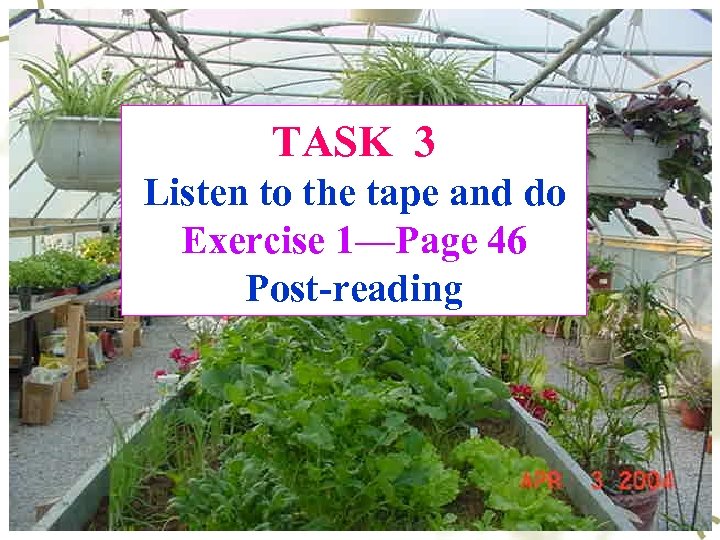
 TASK 3 Listen to the tape and do Exercise 1—Page 46 Post-reading
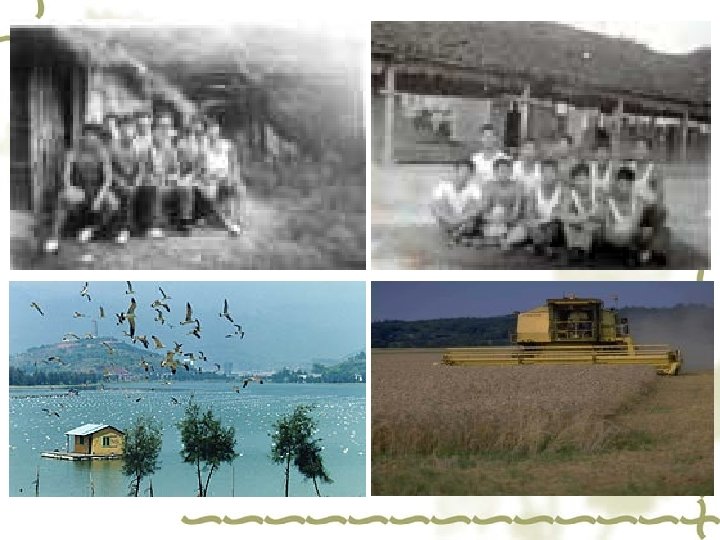
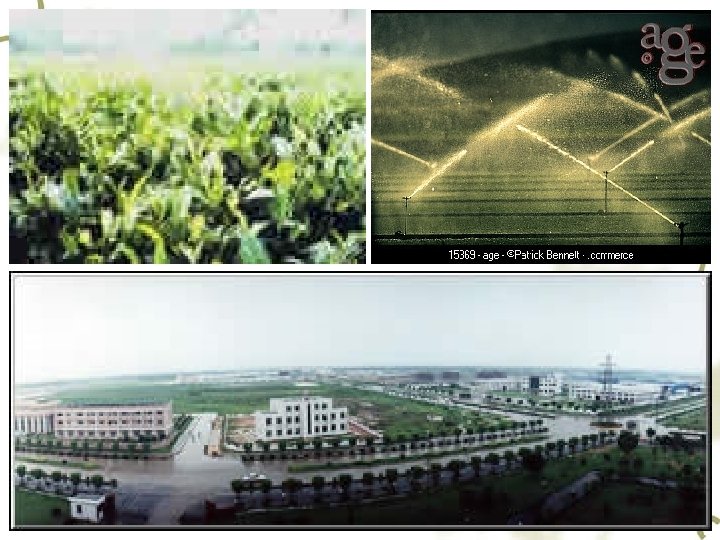
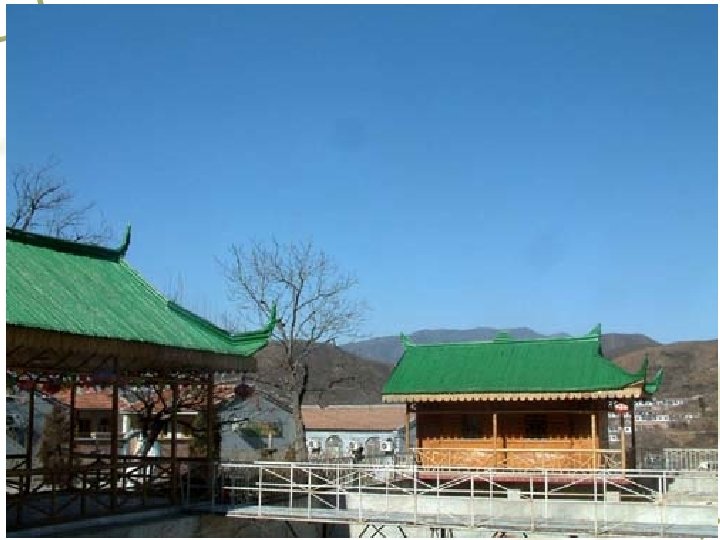
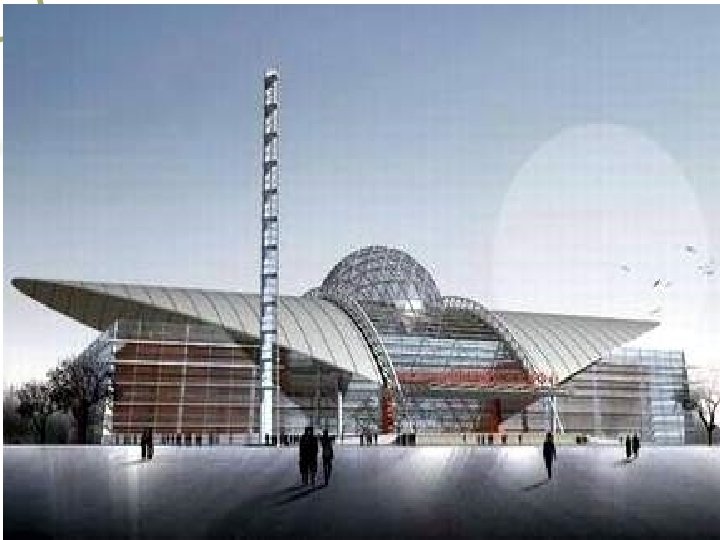
 TASK 3 Listen to the tape and do Exercise 1—Page 46 Post-reading
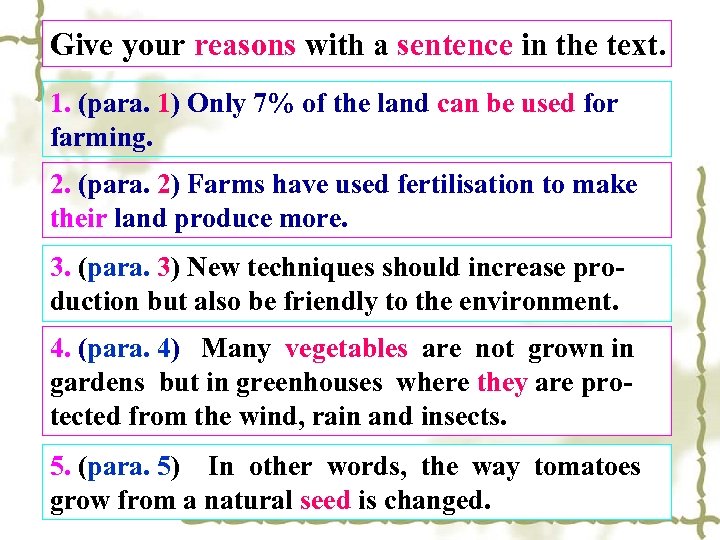 Give your reasons with a sentence in 5. C the text. 1. D 2. A 3. C 4. C 1. (para. 1) Only 7% of the land can be used for farming. 2. (para. 2) Farms have used fertilisation to make their land produce more. 3. (para. 3) New techniques should increase production but also be friendly to the environment. 4. (para. 4) Many vegetables are not grown in gardens but in greenhouses where they are protected from the wind, rain and insects. 5. (para. 5) In other words, the way tomatoes grow from a natural seed is changed.
 TASK 4 Careful Reading True or False
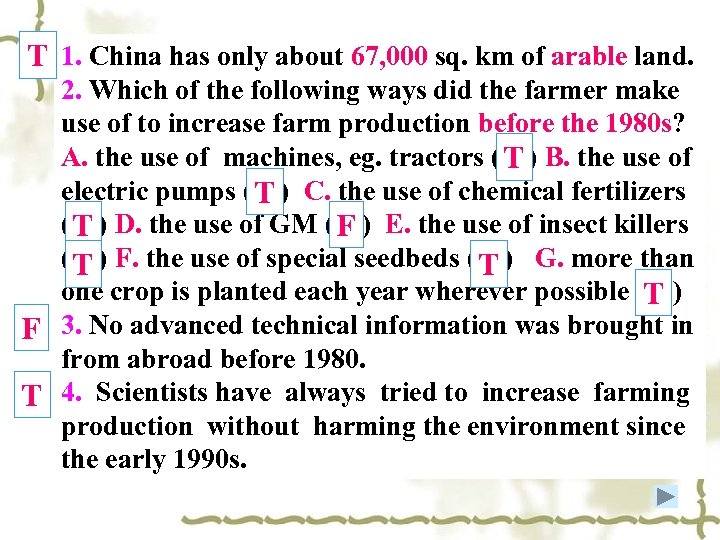
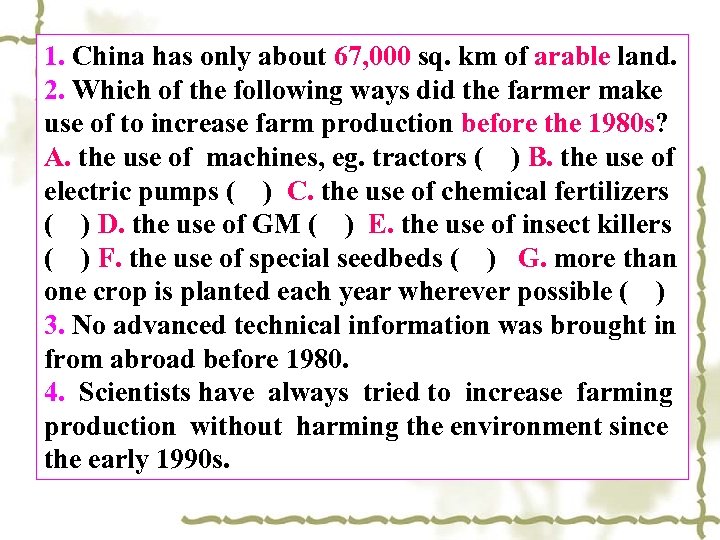 1. China has only about 67, 000 sq. km of arable land. 2. Which of the following ways did the farmer make use of to increase farm production before the 1980 s? A. the use of machines, eg. tractors ( ) B. the use of electric pumps ( ) C. the use of chemical fertilizers ( ) D. the use of GM ( ) E. the use of insect killers ( ) F. the use of special seedbeds ( ) G. more than one crop is planted each year wherever possible ( ) 3. No advanced technical information was brought in from abroad before 1980. 4. Scientists have always tried to increase farming production without harming the environment since the early 1990 s.
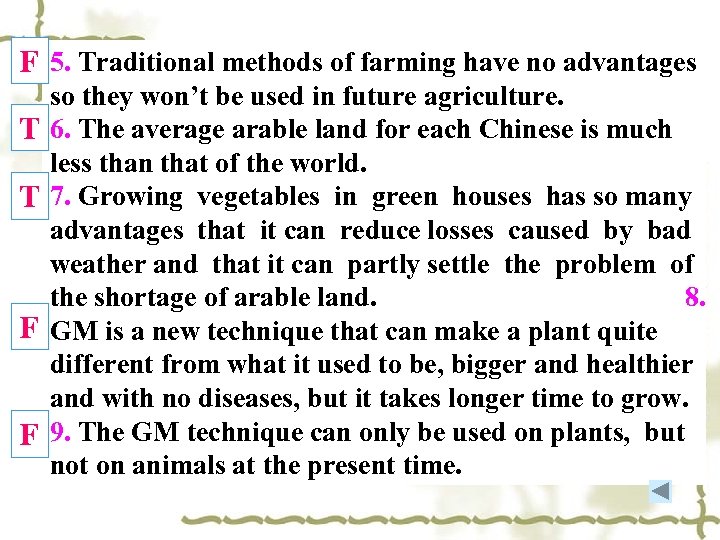
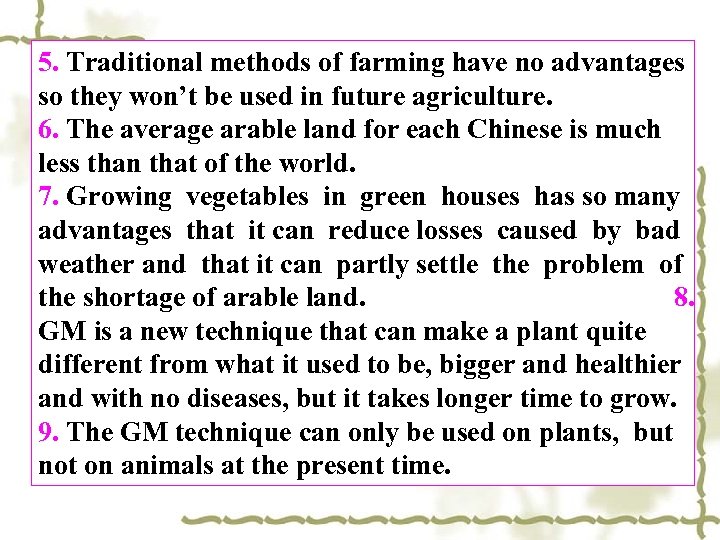 5. Traditional methods of farming have no advantages so they won’t be used in future agriculture. 6. The average arable land for each Chinese is much less than that of the world. 7. Growing vegetables in green houses has so many advantages that it can reduce losses caused by bad weather and that it can partly settle the problem of the shortage of arable land. 8. GM is a new technique that can make a plant quite different from what it used to be, bigger and healthier and with no diseases, but it takes longer time to grow. 9. The GM technique can only be used on plants, but not on animals at the present time.
 T 1. China has only about 67, 000 sq. km of arable land. 2. Which of the following ways did the farmer make use of to increase farm production before the 1980 s? A. the use of machines, eg. tractors ( T ) B. the use of electric pumps ( T ) C. the use of chemical fertilizers ( T ) D. the use of GM ( F ) E. the use of insect killers ( T ) F. the use of special seedbeds ( T ) G. more than one crop is planted each year wherever possible (T ) F 3. No advanced technical information was brought in from abroad before 1980. T 4. Scientists have always tried to increase farming production without harming the environment since the early 1990 s.
 F 5. Traditional methods of farming have no advantages T T F F so they won’t be used in future agriculture. 6. The average arable land for each Chinese is much less than that of the world. 7. Growing vegetables in green houses has so many advantages that it can reduce losses caused by bad weather and that it can partly settle the problem of the shortage of arable land. 8. GM is a new technique that can make a plant quite different from what it used to be, bigger and healthier and with no diseases, but it takes longer time to grow. 9. The GM technique can only be used on plants, but not on animals at the present time.
 TASK 5 Summary of the text
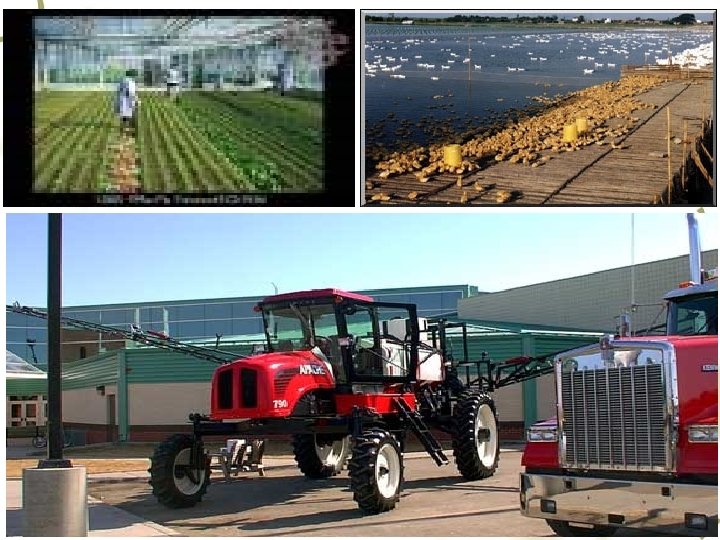
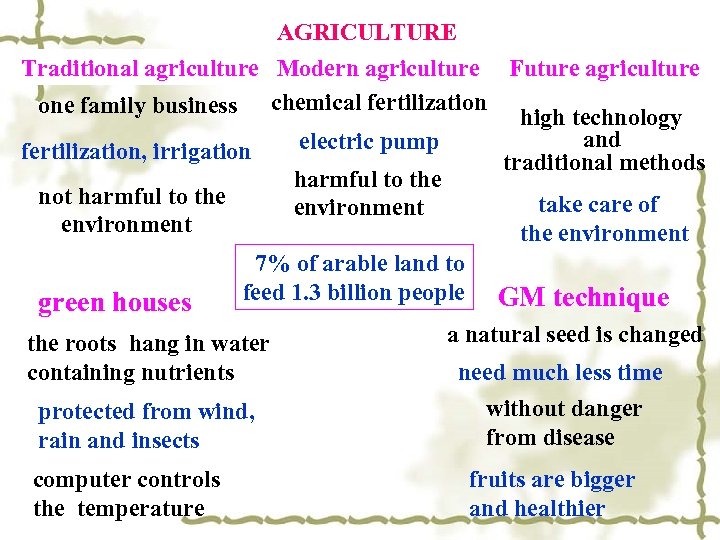 AGRICULTURE Traditional agriculture Modern agriculture Future agriculture one family business chemical fertilization high technology and electric pump fertilization, irrigation traditional methods harmful to the not harmful to the take care of environment the environment 7% of arable land to feed 1. 3 billion people GM technique green houses the roots hang in water containing nutrients protected from wind, rain and insects computer controls the temperature a natural seed is changed need much less time without danger from disease fruits are bigger and healthier
 Homewo rk 1. Go over the “Reading” and find out the useful expressions in it. 2. Exx 1, 2, 3—pp 108 -109— Vocabulary—Practising 3. Rewrite the text with about ten sentences, 100 words.
 Thank you. The End