


 Скачать презентацию WELCOME To Middle School Mr Capo Phone 305
4ac58ab693620651b972fd452516c565.ppt
- Количество слайдов: 27
 WELCOME To Middle School Mr. Capo Phone: 305 -512 -9775 hcapo@matergardens. com “matergardens. com”
 The Art of Teaching The process of putting together ideas that work to achieve the ultimate goal, learning. Adapting, changing and evaluating your plan of approach is the natural evolution of education. The plan like the Constitution of our great nation, is a living document that changes and adjusts to those it serves, the students.
 My Teaching Philosophy • Stumbling blocks can become steppingstones allowing us to step above our circumstances. • Each student is worth the time. • Having a classroom management plan is a major tool in providing students with the required learning environment.
 I believe in each of my students ! My goal each day is to: Encourage, Mentor & Facilitate Equipping students with the tools and attitude to be successful. Learning has no finish line and failure is “simply” not an option!
 Theories that I often use include: • Harry and Rosemary Wong: Procedures are critical to the success of the entire teaching year (Week 1). • William Glasser: Theory that behavior is a choice. • B. F. Skinner: Principles of reinforcements to help develop the “choice” • C. M. Charles: Improving behavior by assigning activities that interest the students (Projects)
 Elements of Creative Thinking Practiced in our classroom are: Fluency The ability to produce many ideas for a given task. (Khatena 2000) Or list items that share a common attribute (Piirto 2004) Flexibility The ability to produce ideas showing a person’s movement from on level of thinking to another, or shifts in thinking related to a given task. (Khatena 2000) Originality The ability to produce unusual, remote, or clever ideas (Khatena 2000). Elaboration The ability to add details to a basic idea (Khatena 2000).
 A Winning Combination • Math and Science core subject matter are taught. This includes items essential for assessment testing such as the FSA and is based on current grade level and above. Students are shown the traditional steps of predicting, solving, and concluding results. • The design of the classroom environment nurtures creativity. When analyzing and testing solutions, students are encouraged to seek alternate methods including math riddles, publishing websites, teaching a topic, creating a song , and the use of other communication methods and skills.
 For those of us that enjoy visual learning, allow me to show you the difference….
 Traditional View of our planet
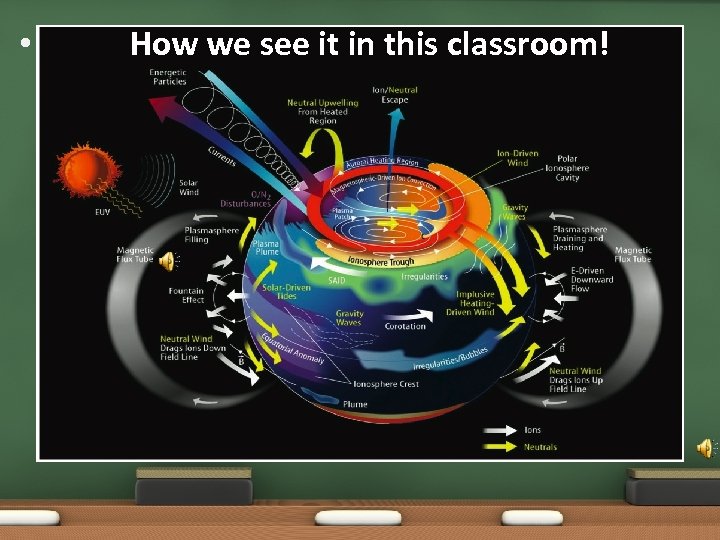 • How we see it in this classroom!
 The Outcome • Required core topics are taught at grade level and above including “HOW” something is done combined with “WHY”. The importance of understanding the process is critical. • • The teacher is a facilitator of both subject matter and opportunities to learn while using enrichment materials and methods to enhance creativity. The classroom is a place where creativity and knowledge come together at a common point. • The freedom to explore solutions and possible alternates accomplished. Students are not limited by one approach to success but allowed to be themselves as they apply the knowledge they have in unique ways.
 Key Word “RESPECT” “Children need to know that their uniqueness is cherished at school as well as at home. ” Class Rules are Simple • Be sure to bring all of your materials to class • Students must respect themselves and others. • Always have a positive attitude • Come ready and willing to learn
 Classroom Economy Salary, Rent, Bonus and Fines “My Classroom Economy” program enables educators to teach children financial responsibility through fun, experiential learning. It's a simple classroom economic system based on the idea that students need to earn school "dollars" so that they can rent their own desks. Please be sure to review related documents sent home during the first week of school, tonight’s letter and visit the program website for program for additional information (Middle School): www. myclassroomeconomy. org
 Consequences • First offense requires a verbal warning • Second offense requires a written explanation • Third offense requires a detention and home notification. NOTE: Any serve disruption or lack of respect towards others or self will result in a referral and being sent to the office.
 Rewards “The best reward is the knowledge you receive. ” • Expect daily praise for work well done • Positive notes issued on returned papers • No weekend homework issued • No uniform for a day pass for consistent compliance issued monthly • Keeping on task as a class will allow for additional perks such as class party
 Class Procedures My classroom management plan is more about how things are done rather than discipline. Currently I have 28 established procedures • Movement in and outside the classroom • Social interaction in class from entering the class to exiting the class and all the in between. • Clarification on visitors, emergencies, students and teacher relationships are included.
 An Example of Class Procedures Entering the classroom during class requires: • Knocking on the door • Wait to be “waved” into the classroom • Enter quickly • Go directly to your seat • Get materials ready • Get to work immediately
 Physical Arrangement of Classroom Class arrangement changes with activity • Class is visually appealing including color and contrast. • There are visual aids throughout the room • Lecture and video days, room is traditional in form rows facing the front. • I use “U”-shaped class for discussions. • Projects require table clustering • Learning centers and labs are located at rear
 A TYPICAL DAY IN CLASS • Greetings and salutations prior to BELL • Bell work, a daily event on current subject • Instructional period: Lectures, textbook, power points, video, interactive activities, student lead presentations, guess speakers, question and answer period, peer to peer teaching and grouping • Closing remarks, exit work and home learning
 TOOLS AND APPLICATIONS üSCEINCE: Earth Space and Science (Holt) 9 Integrated Science & Tech. (Pearson) 6/7 Physical Science CPO (9 th Grade) üMATH: Springboard with AP application 6/7 Bridge to Algebra TEXT, HW booklet 6 -8 Math Course 1 and 2 (Mc. Graw Hill) üHANDOUTS: In class and web based; Enrichment üCOMPUTER: i. Ready, Khan, and Web Discussions
 Constant Assignments Computer Based • Math application software such as KHAN Academy • Web Discussion questions. • Worksheets and book assignments. • Class assignments with web site response FSA Fridays • Fridays teach, review benchmarks with follow up quiz on Mondays.
 Class work and Projects • Work will include class activities and labs • Experiments both in school and at home • Creativity in the form of presentations • Group participation and involvement • Short and long term projects requiring individual commitment to self and teammates
 VISIT THE WEBSITE • Parent registration • Calendar and events • Assignments and discussions • Class Syllabus Grading policies and structure • Expectations & Requirements • WEBSITE Matergardens. com
 Time for questions and clarifications!
 • MGA Parent Committee • First General Meeting • Tuesday, September 22, 2015 • @ Cafeteria • 6: 00 p. m. (snacks) • 6: 30 p. m. (meeting) Open to everyone-“Earn Volunteer Time” See tonight’s Handout ( Sign up for Class messenger)
 Parent Volunteer Program Clearance is required for parents on field trips, as well as any incoming visitors. As per the county policy, parents who are not chaperones and are not cleared MAY NOT follow the bus. All volunteers NEED to be cleared by the MDCPS to be on school grounds and volunteer and must register online by August 28 th (Directions and packet will be issued the first day of school: LOOK FOR IT). The parent volunteer policy has changed due to Mater Academy becoming a district. According to the new parent contract: • • 30 hours per student 15 additional hours per sibling $5. 00 = one hour if using a receipt Half of the hours must be done by the end of the first semester.