 Скачать презентацию Welcome Container Security and Inspection CBMU MONTREAL 22
894d3e86f35d484d311f27445bd0f4f7.ppt
- Количество слайдов: 80



Welcome Container Security and Inspection CBMU MONTREAL 22 Nov. 2005 1
Summary The container inspection process • why we inspect and what we are looking for • how much is the cost, all costs? • is it working • is the container selection process random • same for air imports as sea imports • the issue of the warehousemen that are nominated to perform the destuff and restuff how are they picked • are background checks done on the employees • steps that may be taken to protect the importer from loss or damage • the law and acts that apply, does the innocent importer have rights of recourse if his goods arrive short or damaged. • how does a warehouseman deal with the challenges of destuffing and restuffing "a jigsaw puzzle“ • Mr. Gordon to add his thoughts from the civilian C-TPAT • Underwriters in Canada refusing to cover losses caused by inspection 2
Common Terms • ▲C-TPAT = Customs Trade Partners Against • • • Terrorism ▲CBP = Customs Border Protection (U. S. Customs) ▲CBSA = Canada Border Services Agency (Canada Customs) ▲CSA = Customs Self Assessment ▲FAST = Free and Secure Trade ▲PIP = Partners In Protection (Canada) 3
Vehicle and Cargo Inspection System (VACIS) VACIS inspection (container pre-selected before unloading from vessel) $125. 00 per container. The rate includes: • labor and equipment to segregate unit in a reserved safe zone area, • mounting unit on platform for scanning; • return to import pile or set on ground for manual examination, • delivery to inland carrier; • documentation and clerical work. 2. VACIS inspection (container selected after unloading from vessel) $175. 00 per container. The rate includes: • all of the above (1), plus • sorting and shifting in piles to retrieve targeted container. 3. CUSTOMS inspection (commerce division, primarily tariff enforcement) $275. 00 per container. These inspections are generally carried-out to verify compliance and accuracy of import declarations. Notification of targeted units are only received after the containers have been unloaded from the vessel and stowed in the import section of the yard. The rate includes: • sorting and shifting in import piles to retrieve targeted container; • labor and equipment to segregate unit in a reserved safe zone area, • opening/closing container doors and removing / replacing blocking, • making cargo available and opening cartons or cases if required, • return to import pile; • delivery to inland carrier; 4 • documentation and clerical work. Source : OOCL (Orient Overseas Container Line) and Canada Maritime
The Warehouse problem • Not a big revenue generator • Piecing the “jigsaw puzzle” • Staff background checks • Photos of container upon opening • Photos when restuffed • Following orders of a government officer 5
Colin V. Gordon, CRP • Colin Gordon is the Director of Quality Assurance for The. MIGroup • He represents the company in the Customs-Trade Partnership • • Against Terrorism Born in Hong Kong and educated in Australia and the United Kingdom, Colin has been involved in the Relocation Industry since 1963 and has worked in North America for the last 30 years As the acknowledged expert on the subject of how the threat of terrorism affects the movement of household goods as part of the relocation process Invited speaker at conventions and corporate seminars in Europe, US, Canada and Mexico and presented at ERC, CERC and ORC events. His articles have been published in Mobility, CERC News and the OMNI Observer. 6
Vladimir Omazic Customs Superintendent • Started career as a Customs Inspector in 1998. • Currently, Customs Superintendent at Commercial Operations at • Pearson International Airport. Responsibilities include the management of border protection through efficient screening of goods and conveyances entering Canada resulting in the protection of Canadian society and economy. This includes providing information and explaining CBSA legislation, regulations and requirements to the public to ensure their full understanding and compliance with the requirements pertaining to the entry of persons and goods into Canada. I am directly involved in the development and maintenance of effective working relations with Customs brokers, importers, and commercial carriers. I also monitor the effectiveness of Commercial Operations programs and services. 7
Assia Hussain Chief of Release Processing and Enforcement CBSA - GTA Commercial • Customs Inspector since 1984 and have worked in the Passenger, Postal and • • • • • Commercial Streams of Customs. Gained experience as a technical trainer at the Customs and Excise College and subsequently became a Customs Superintendent. Current position is Chief of Release Processing and Enforcement at Commercial Operations at Pearson Airport. Areas of responsibilities include managing our 7/24 operation which mainly focuses on release and examination of goods entering Canada in the air, rail and marine modes of transportation. I am responsible for managing our cash operation which accounts for $ 500 million on monthly basis for revenue collected. My new responsibilities include managing a new CBSA port of entry to facilitate people on the Rochester-Toronto Ferry, the Canpass Private Air and Marine Programs and the Cross-Border Currency Program. I work with a management team to facilitate the movement of goods and people in the largest inland office in Canada. 8
Jerry Giroux • • • President Subro. Gateway Inc. Speaker and author. With more than 25 years in the marine and insurance business he brings considerable experience and a vast network of contacts. Past President of Eastern Marine Underwriters and most recently, former President of the Maritime Insurance Company and Senior Vice President of CNA Canada. Past president of the Canadian Board of Marine Underwriters and has authored and edited various industry textbooks and publications. He has represented Canada as a delegate at three recent IUMI conferences and is a former director of the 9 Canadian Freight Forwarding Association.
Jean-François Bilodeau • Partner and member of the firm’s Maritime & Shipping, Insurance and Transportation Law Groups. He appears often before the Federal Court of Canada and other Quebec and Canadian courts. • Practice areas include Transportation Law (marine, air, rail and road transportation), Insurance Law and Commercial litigation related to such matters. He acts as counsel to ship owners, charterers and operators, freight forwarders, truckers, cargo interests such as shippers, consignees, warehousemen and their respective agents and insurers. • Member of the Quebec and Montreal Bar, the Canadian Maritime Law Association (CMLA), the Association of Maritime Arbitrators of Canada (AMAC) and the Canadian Board of Marine Underwriters (CBMU). • In addition to his legal background, Me Bilodeau was an officer in the Canadian Naval Reserve between 1981 and 2002. He holds a bridge watch keeping certificate and has sailed on the Atlantic and Pacific Oceans and on the Mediterranean Sea onboard Canadian, British and French warships. He lectures frequently and was a guest lecturer for the Toronto Marine Loss Group in 2003 and for the Quebec Bar on the topic of Marine Insurance in 2004. • Born in Quebec City, Province of Quebec. He graduated from Laval University with a B. C. L. in 1985. He has practiced with Robinson Sheppard Shapiro since 2003. 10
11
Jerry Giroux "The definition of a consultant: Someone who borrows your watch, tells you the time and then charges you for the privilege. " 12
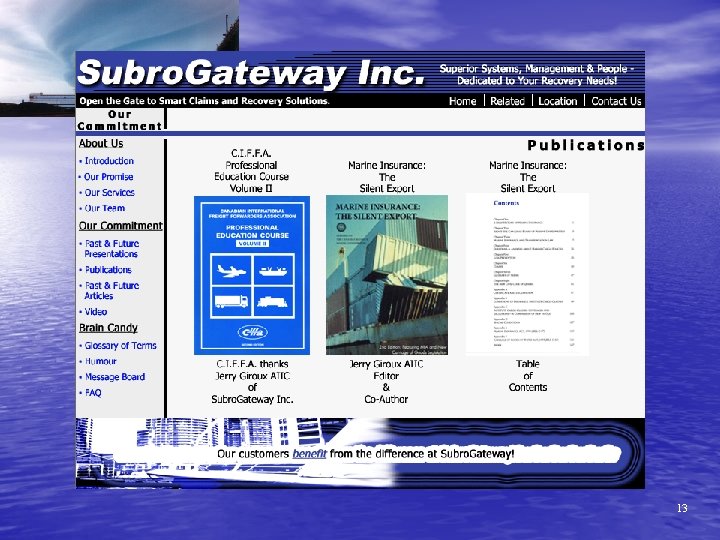
13
14
Subro. Gateway Inc. Open the Gate to a Smart Claims and Recovery Solution Subro. Gateway Inc. the choice of your Marine Underwriters! Our Services Include: Abandoned goods FF lien positions Asset Recoveries and Subrogation (no cure-no pay) Collection of bad debt Claims management Assisting your customer Deductible recovery Marketing of salvage Covering your NVOCC position with carriers Education and Seminars on Marine Insurance Proud to be a member of CIFFA 15
Container Security and Global Relocation for Executives and their Families The Canadian Board of Marine Underwriters AGM November 22, 2005 Toronto Colin Gordon The. MIGroup 16
“September 11 th marked the end of an era during which we could go about lives treating security as something only other people had to worry about. ” Stephen Flynn Retired Coast Guard Commander One of the foremost experts on homeland security and border control from his recent book, America the Vulnerable 17
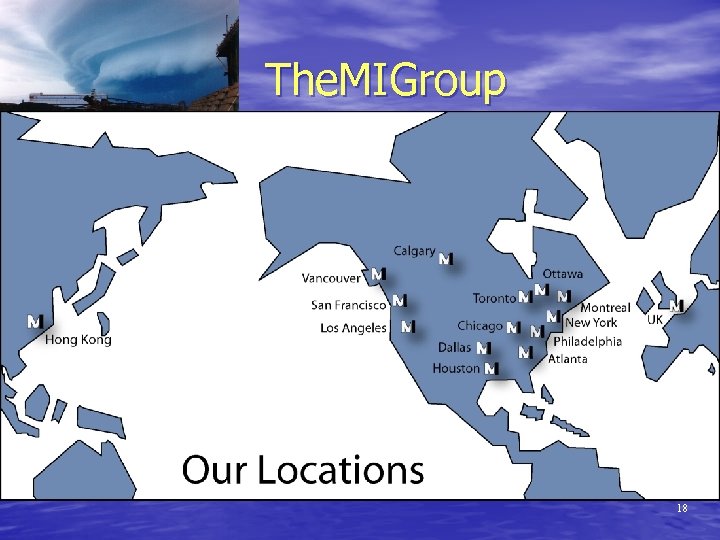
The. MIGroup 18
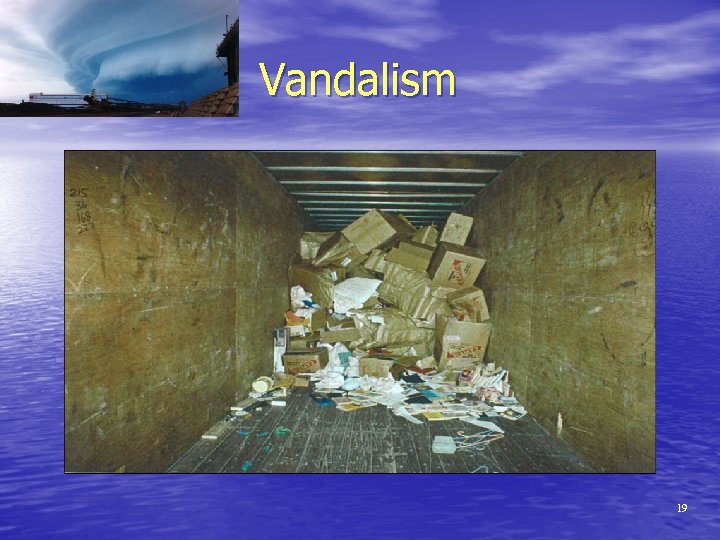
Vandalism 19
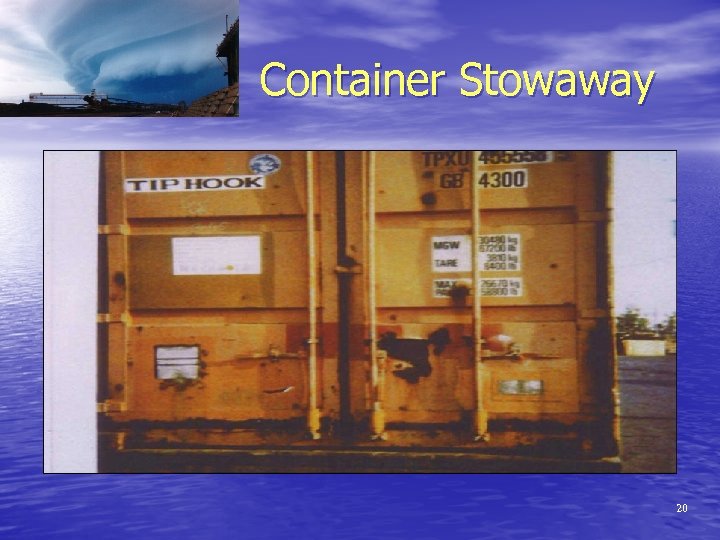
Container Stowaway 20
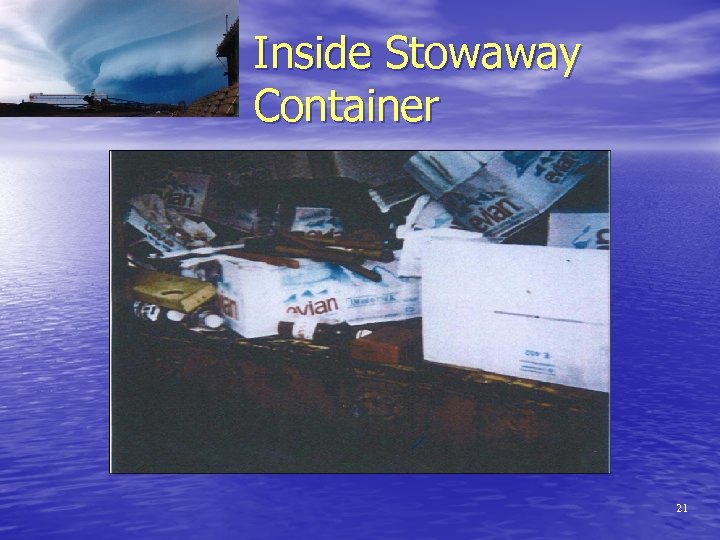
Inside Stowaway Container 21
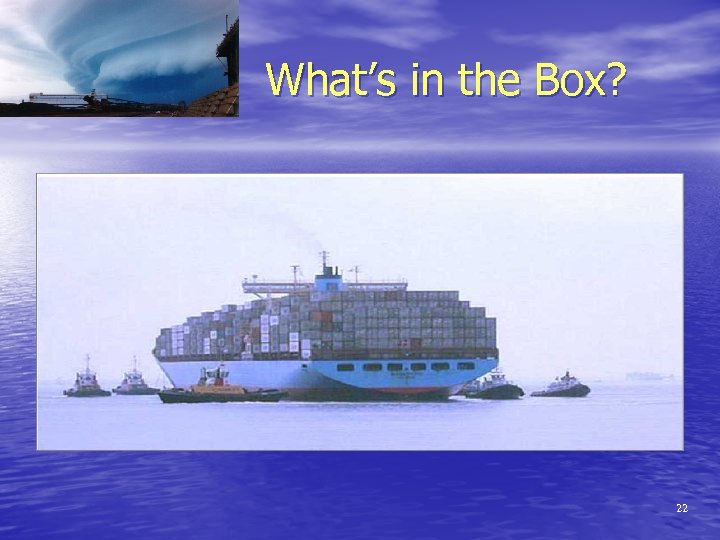
What’s in the Box? 22
Facts: Terrorist in a Box Business-class suspect caught in container By Richard Owen in Rome and Daniel Mc. Grory, The Times (UK), October 25, 2001 • ITALIAN police were investigating last night why a • suspected al-Qaeda hijacker would smuggle himself halfway around the world locked inside a shipping container with its own bed and toilet. The bizarre discovery of an Egyptian carrying a Canadian passport was made on the dockside in Gioia Tauro in southern Italy, where detectives believe they may have 23 foiled another hijacking.
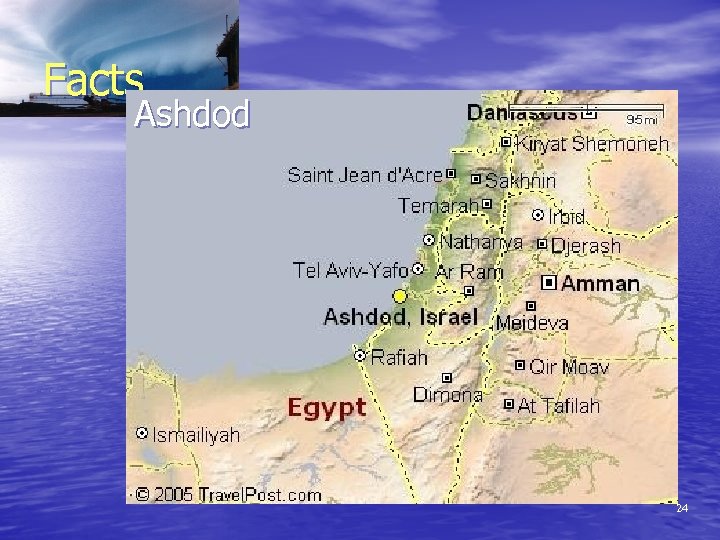
Facts Ashdod 24

Household Goods? 25
Why are Household Goods High Risk Cargo ? 26
Cargo Comparisons Conventional Cargo Regular Trading Patterns – Trading Routes • Supervised Loading Practices • Video Surveillance • Conforming Cargo • X-Ray Inspection – Reveals anomalies within the cargo Household Goods Irregular Trading Patterns • Unsupervised Loading/Remote Areas • No Video Surveillance • Non-Conforming Cargo • X-Ray Inspection – Reveals that everything is an anomaly 27
28
Partners in Protection General MOU PARTNERS IN PROTECTION MEMORANDUM OF UNDERSTANDING TO ENHANCE BORDER SECURITY AND TO SUPPRESS CONTRABAND SMUGGLING BETWEEN THE MINISTER OF NATIONAL REVENUE as represented by the Commissioner of Canada Customs and Revenue Agency (hereinafter referred to at “Customs”) 29
Organized Crime and Drugs • Most valuable contraband item » illegal drugs – $400 billion worldwide – $50 -$100 billion in the United States • Cocaine comprises more than 90% of drugs seized at ports – Ceilings – Walls – Floors 30
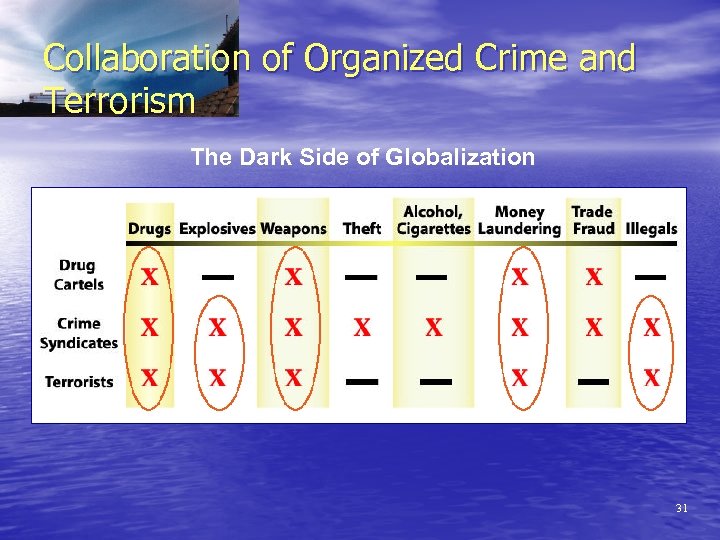
Collaboration of Organized Crime and Terrorism The Dark Side of Globalization 31
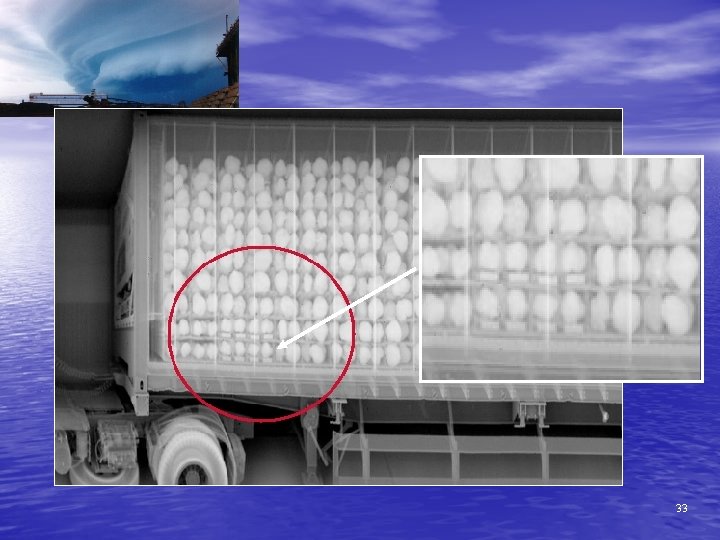
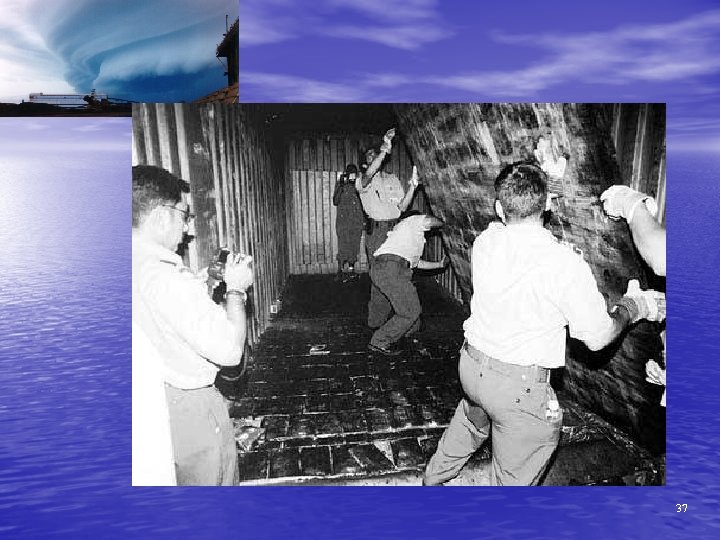
Customs and X-Ray Detection • Vehicle and Cargo Inspection Systems (VACIS) • Equipment is used to find – Voids – False walls – False ceilings – Other secret compartments • All common with illegal drugs, explosives, and weapons • Verify the contents of the cargo 32
33
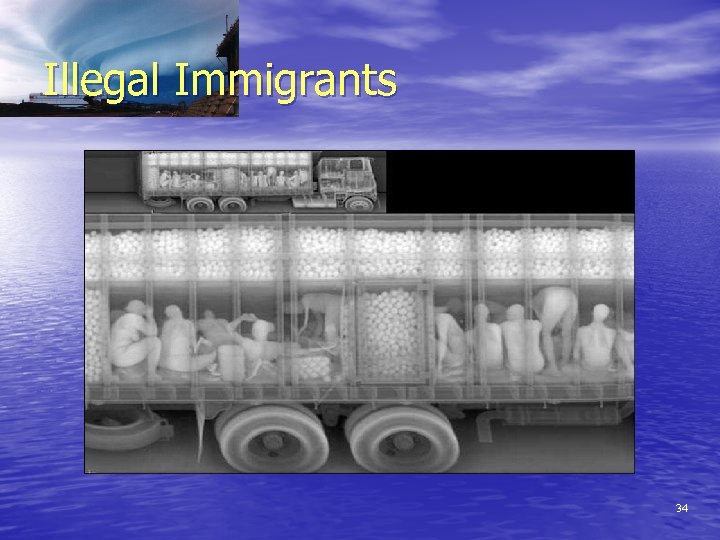
Illegal Immigrants 34
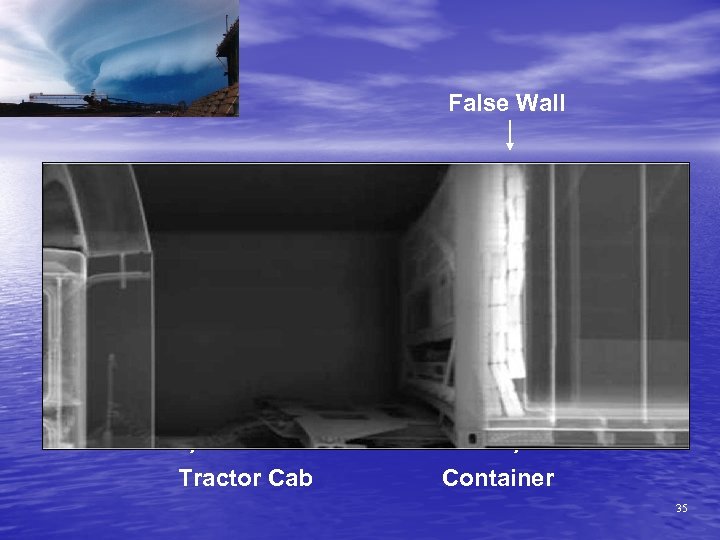
False Wall Tractor Cab Container 35
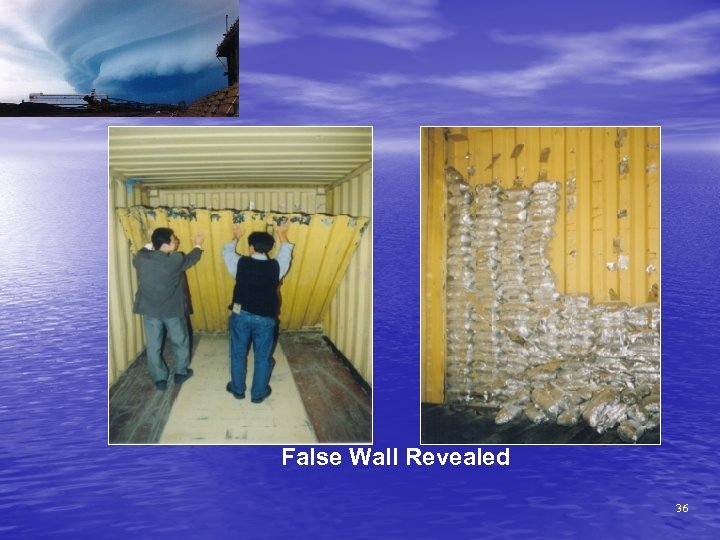
False Wall Revealed 36
37
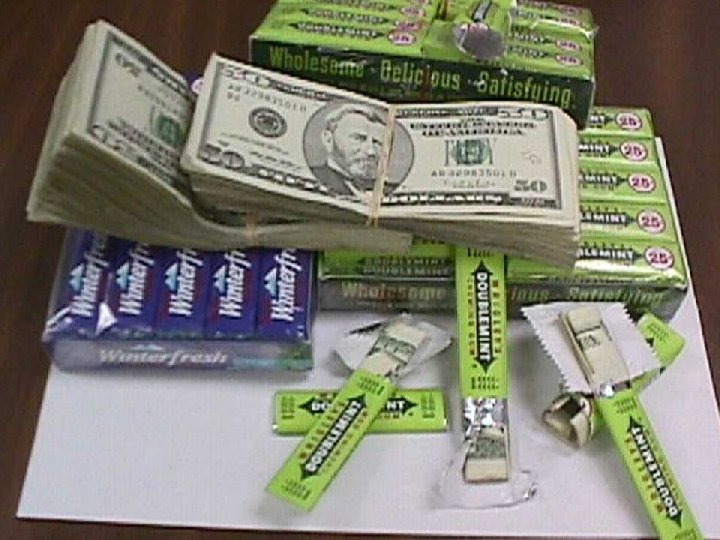
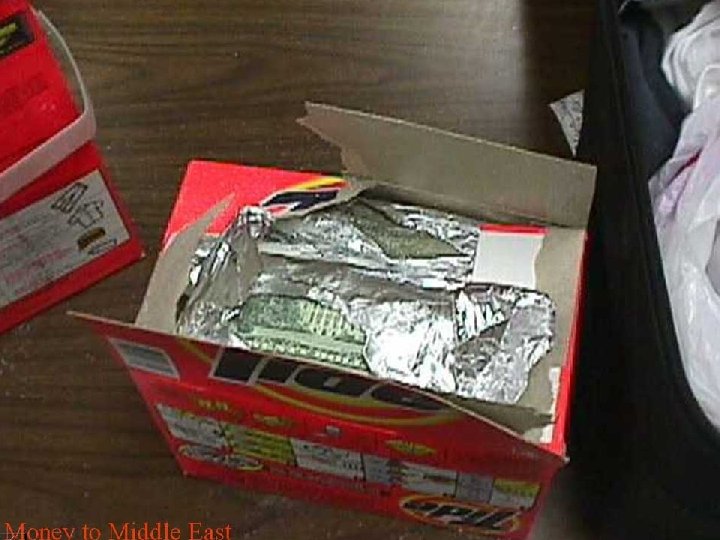
Organized Crime and Terrorism • Currency Smuggling – Money laundering – Financing of terrorism 38
39
40
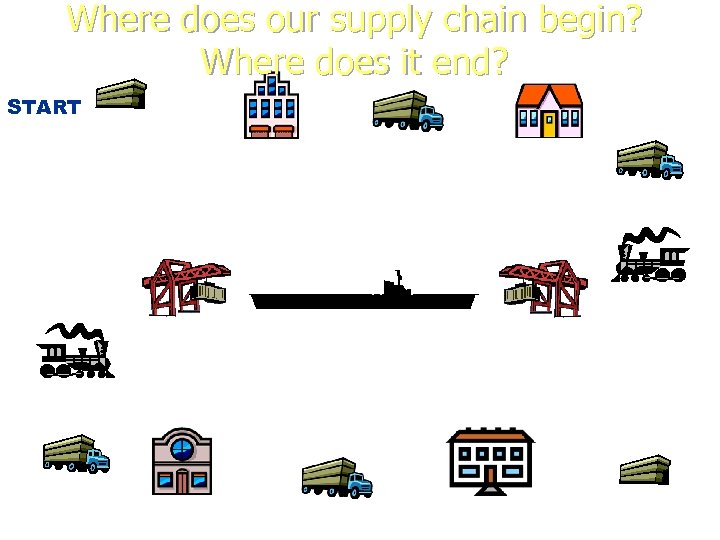
Where does our supply chain begin? Where does it end? START Empty Container Origin Agent Destination Agent Client’s Home Client’s New Home Empty Container 41
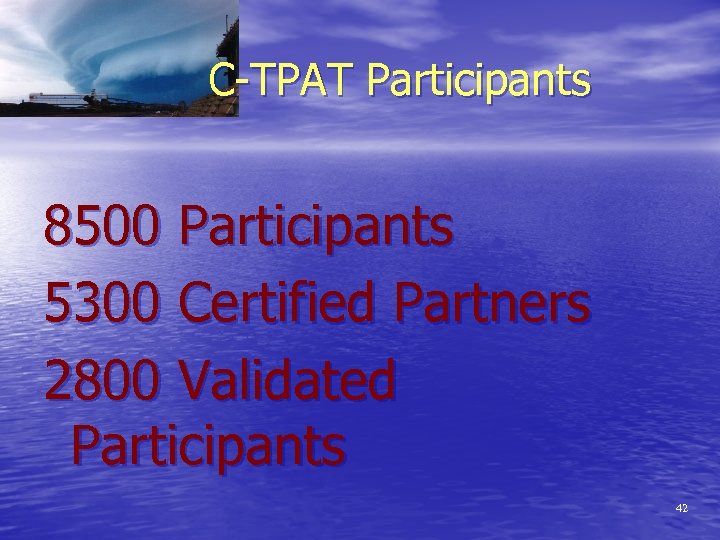
C-TPAT Participants 8500 Participants 5300 Certified Partners 2800 Validated Participants 42
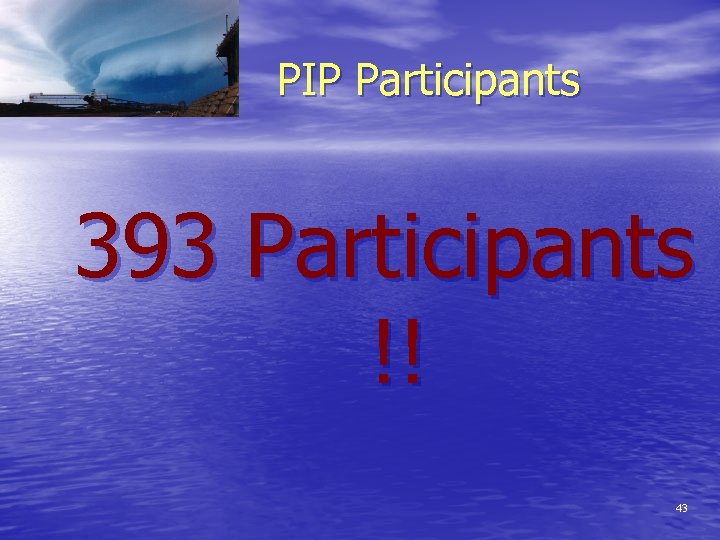
PIP Participants 393 Participants !! 43
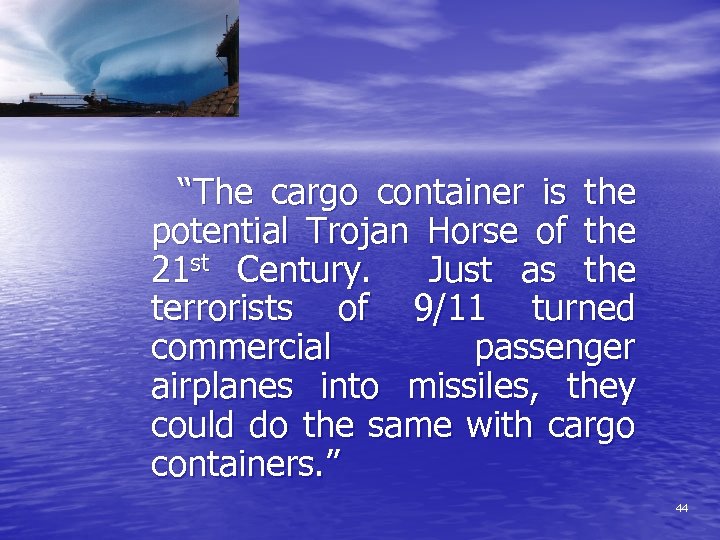
“The cargo container is the potential Trojan Horse of the 21 st Century. Just as the terrorists of 9/11 turned commercial passenger airplanes into missiles, they could do the same with cargo containers. ” 44
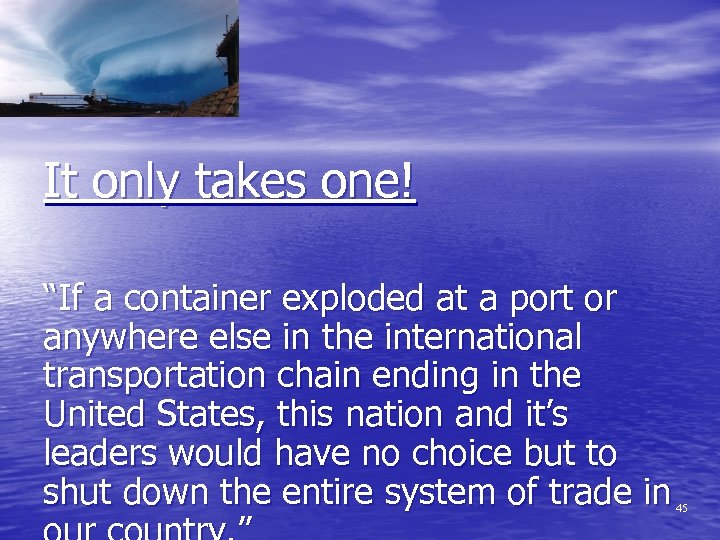
It only takes one! “If a container exploded at a port or anywhere else in the international transportation chain ending in the United States, this nation and it’s leaders would have no choice but to shut down the entire system of trade in 45
Membership is voluntary - for the moment!! 46
Triplock 47
Triplock Map 48
49
To do nothing is not an option. 50
I HAD A DREAM, ABOUT CUSTOMS… Speaker : Jean-François Bilodeau Presented to the CBMU on November 22, 2005 51
I had a dream, about customs • Introduction • The dream • The liability • The nightmare! 52
Introduction Once upon a time, a foreign shipper in a far away land sent a cargo of frozen seafood products to a good consignee in Canada. Unbeknownst to the good consignee the cargo was inspected by Canada Border Services Agency and is delivered in a thawed condition in Toronto! The good consignee contacted his friend the insurer and our journey begins… 53
THE DREAM • The goods consignee contacted his insurer to file a claim concerning his damaged cargo of frozen seafood products; • The insurer instructed a surveyor to investigate the loss and make recommendations concerning the claim; • The surveyor contacted the importer to commence his investigation; 54
THE DREAM • During the course of his investigation, the surveyor learned that the cargo was discharged in Halifax before being railed to Toronto; • While in Toronto, the container into which the cargo had been stuffed was flagged for inspection by Canada Border Service Agency; 55
THE DREAM • Meanwhile, the consignee is contacted by his • freight forwarder and in informed that he must pay a supplementary fee for the container inspection costs incurred in Halifax; The surveyor contacts the shipping line and is provided with computer generated temperature log report showing that the temperature inside the container was constant at -4°F throughout the entire movement; 56
THE DREAM • The surveyor reports to his principal and the • insurer informs the good consignee that the loss is not covered by virtue of the Institute Frozen Food Clauses (A) since the loss did not result from a variation in temperature attributable to a breakdown of refrigerated machinery for a period of no less than 24 consecutive hours. The good consignee has no other choice but to contact his solicitor. 57
THE DREAM • Fortunately for our good consignee, the solicitor • • did some maritime cases in the past; The solicitor decides to institute recovery proceedings against the shipping line, the warehousemen, the trucker, the rail company and Canada Border Service Agency; The line is insulted as it provided good evidence of the temperature showing that the it was constant inside the container! 58
THE DREAM • The Attorney General of Canada, representing Canada Border Service Agency is not happy either as the Queen can do not wrong! • The trucker are not pleased as they argue that they did nothing wrong! • The good consignee and his solicitor decide, despite the odds to advance the matter. 59
THE DREAM • The Canada Border Service Agency representatives inform the consignee of the following: 1. The Customs Act allows the Agency to examine imported goods at any time and to open or cause to be open any package or container (sect. 99); 2. It is the responsibility of the shipping lines to report to Customs the details of goods imported to Canada; 60
THE DREAM 3. The report is made electronically to the 4. 5. Agency; The Agency conducts a risk assessment of the arrivals and selects a number of container for inspection; The Agency notifies the shipping lines of a number of container that have been selected for inspection; 61
THE DREAM 6. In order to allow the Agency to perform its 7. 8. inspection, the shipping lines have selected a warehouse in Halifax to proceed with such inspections; The warehouse is under contract with each lines to provide labour to empty and reload containers; The warehouse also provide space for the Agency inspectors to perform the inspections; 62
THE DREAM 9. The shipping lines are responsible to truck the container from and to the ocean terminal; 10. The Agency officers will, during the inspection, take notes and photographs of cargo and draft a report on their findings; 11. Once the inspection has been completed, the cargo is returned to the ocean terminal to continue its journey to final destination 63
THE LIABILITY • • In order to succeed in its endeavour, the solicitor must determine the cause of the loss and where the it occurred. The ocean carrier will state that it is not responsible for the loss as the temperature inside the container was constant a -4°F; The trucker and rail carrier will state that they took a container from and delivered in the same order and condition to the next person in the line; 64
THE LIABILITY • The Agency will state that its inspectors did not • touch the cargo and that any loss resulted from the condition of the cargo; The warehouseman will state that it received the container, turned off the temperature setting, emptied the content of the reefer container into another container to allow the Agency officers to conduct the inspection and then, re-stuffed the initial container. The reefer unit was restarted and the container picked up the following say. 65
THE LIABILITY • It would appear from the above that the only explanation for the loss would be that the shipper did not deep froze the shipment at origin as the reefer container is not designed to freeze but to maintain the cargo at a set temperature; • However the foreign shipper is adamant in stating that the cargo was deep frozen before departure as showed by the various certificates and that damage could only have occurred during transit; 66
THE LIABILITY • At this stage, the solicitor wonders whether family law would not have been a better field of work! 67
THE LIABILITY Scenario # 1 • During the course of the discoveries, the consignee learns that the trucker retained by the shipping line forgot to re-start the reefer unit after completion of the inspection at the warehouse; 68
THE LIABILITY Scenario # 1 • In this case, the trucker could be held liable for its negligence; • The shipping line would also be vicariously held liable for the negligence of its subcontractor; 69
THE LIABILITY • However, the shipping line is likely to invoke the terms and conditions of the ocean bill of lading and in particular the Himalaya clause whereby its the subcontractors can benefit from the same limitations of liability; 70
THE LIABLILITY Scenario #2 • The warehousemen forgot, after completion of the inspection by the Agency to re-stuff the initial container and let the cargo thaw in the warehouse for the week end; 71
THE LIABLILITY Scenario #2 • The liability of the warehousemen will have to be assessed pursuant to the terms of its contract with the shipping line. The warehousemen could also benefit from the terms of the B/L as could the trucker; 72
THE LIABILITY Scenario #3 • The discoveries did not allow the solicitor to find negligence on the part of any party; • However, the Agency officers took good pictures of the container before the inspection and it appears that the cargo packaging was not wet nor did it display any sign of thawing. Furthermore, one officer visually inspected at random several boxes and found that the cargo was in good order. He even use a pick axe to cut one fish in half and it found it to be frozen hard solid! 73
THE LIABLILITY • The above would indicate that if the cargo was • found in a thawed condition in Toronto, the reefer unit did not function properly from Halifax onward. This would also indicate that the temperature electronic report is not reliable. Under the circumstances, the liability of the shipping line should be retained as the evidence of the Agency as to the condition of the cargo in Halifax is likely to be preferred to that to the electronic data! 74
THE LIABILITY Scenario #4 • The Agency after having completed its initial inspection finds that the container must be detained. However, the container is stolen while detained at the warehouse; 75
THE LIABILITY Scenario #4 • In our view, the Agency would be responsible for theft as it had the care of the cargo and would have been acting as bailee. A recourse could also be made against the warehousemen in tort as it had care custody and control of the cargo at the material time. 76
THE NIGHTMARE • You decide after having reviewed the evidence that theft occurred after the cargo was detained by the Agency; • You contact the consignee and inform him that you are ready to take on the case on a contingency basis as the case against the Agency is clear and liability for theft does not appear to raise any difficulty. 77
THE NIGHTMARE • The solicitor contacts the Attorney general and • • declared that his client is ready to accept a settlement for 75% of the claim in capital and interest! The Attorney General responds that he would be willing to recommend to his client a discontinuance of the claim against his client on the basis of each client paying his costs; The solicitor responds, « Why should I do this? » 78
THE NIGHTMARE • The answer received from the Attorney General is: “ Because of section 106 of the Customs Act”: 106. (1) No action or judicial proceeding shall be commenced against an officer for anything done in the performance of his duties under this act, …, more than three months after the time when the cause of action, …, arose. 79
Any questions ? 80 © 2004 Robinson Sheppard Shapiro
Скачать презентацию Welcome Container Security and Inspection CBMU MONTREAL 22
894d3e86f35d484d311f27445bd0f4f7.ppt