


 Скачать презентацию Welcome Children grow to fill the space
bf440cce670f55d472b156786b1ff35e.ppt
- Количество слайдов: 35
 Welcome ” Children grow to fill the space we create for them and if it’s big, they grow tall ……. ” (Jonathan Sacks)
 Early Years Provider Information Evening Lorraine Davey, Service Manager Early Years Commissioning Alison Bell, Consultant in Public Health 17 th and 23 rd March 2015
 Update on National Policies • Early Years Pupil Premium • Parental Engagement • Introduction of Childminding Agencies • Integrated Health Check • New Common Inspection Framework • Reception Baseline Assessment • Study of Early Education and Development (SEED) • Sustained Shared Thinking and Emotional Well-being (SSTEW) • And the May General Election - future changes to Early Years?
 Update on Local Policies • Early Years Pupil Premium • Getting to Good – Ofsted Seminars (20 th May 2015 invite only) • Support Services for Education - some familiar faces moving into different roles. • New Early Years Advisors • Links with getset family worker and Health Visitor
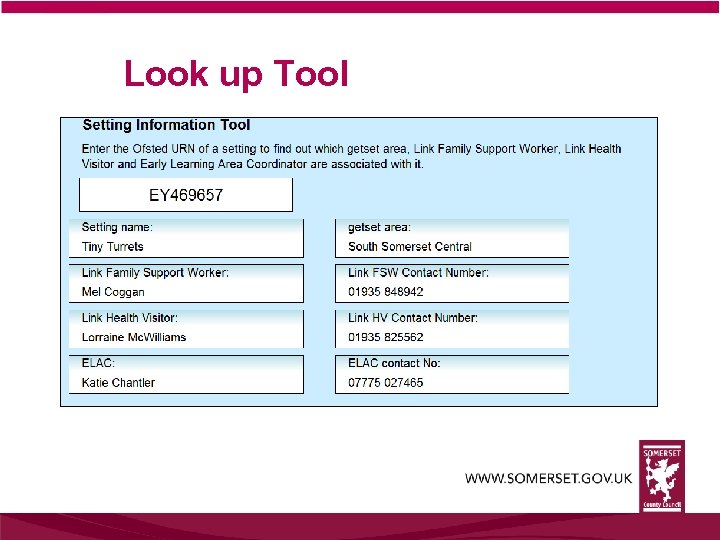 Look up Tool
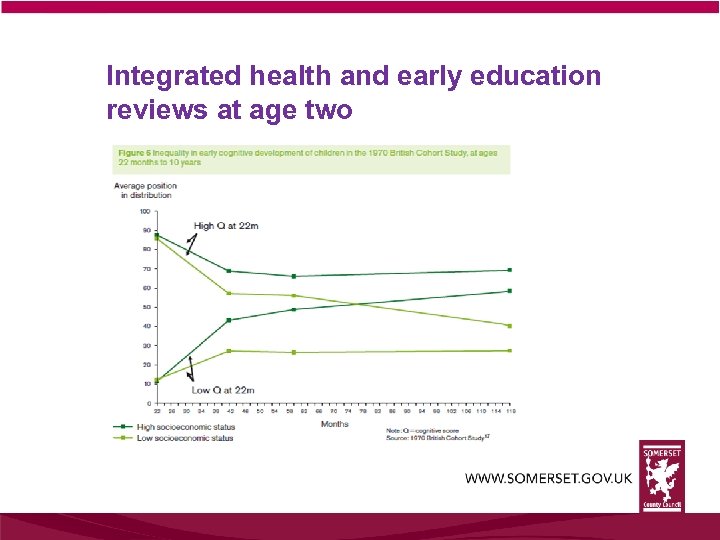 Integrated health and early education reviews at age two
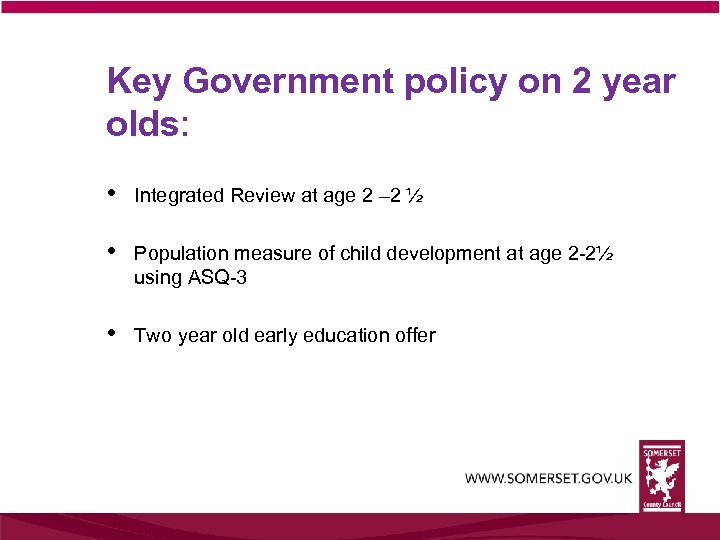 Key Government policy on 2 year olds: • Integrated Review at age 2 – 2 ½ • Population measure of child development at age 2 -2½ using ASQ-3 • Two year old early education offer
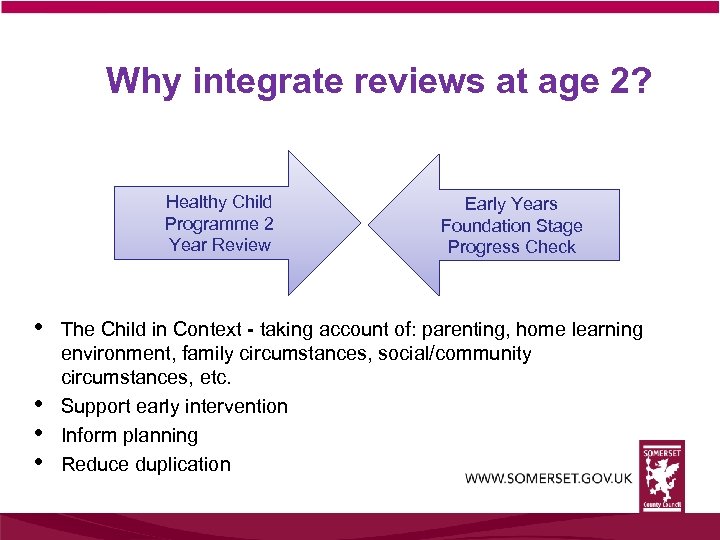 Why integrate reviews at age 2? Healthy Child Programme 2 Year Review • • Early Years Foundation Stage Progress Check The Child in Context - taking account of: parenting, home learning environment, family circumstances, social/community circumstances, etc. Support early intervention Inform planning Reduce duplication
 Integrated Review: the purpose • • • To identify the child’s progress, strengths and needs at this age, in order to promote positive outcomes in health and wellbeing, learning and behaviour. To facilitate appropriate intervention and support for children and their families, especially those for whom progress is less than expected To generate information which can be used to plan services and contribute to the reduction of inequalities in children’s outcomes This was tested in 5 pilot sites during 2012 -13 We are going to use existing process and strengthen – cover in workshops – by Sept 2015
 Integrated Review: the content Draws on content of existing health and education reviews. No significant new content/skills requirements, but new national tool for health element The Child • communication and language • personal social and emotional development • physical health • learning and cognitive development • physical development and self care
 What is ASQ-3? • • 21 questionnaires covering 0 -5 years Integrated review -24 month, 27 month, 30 month Parents answer “yes”, “sometimes”, “not yet” Communication Gross Motor Fine Motor Problem Solving Personal-Social
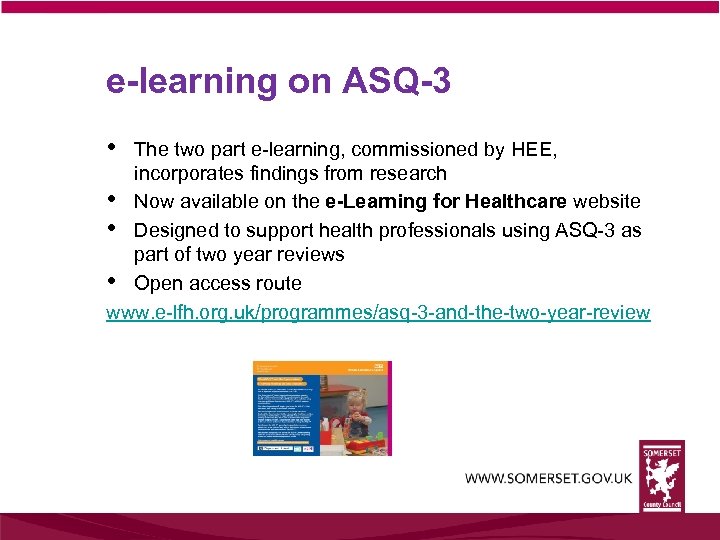 e-learning on ASQ-3 • The two part e-learning, commissioned by HEE, incorporates findings from research • Now available on the e-Learning for Healthcare website • Designed to support health professionals using ASQ-3 as part of two year reviews • Open access route www. e-lfh. org. uk/programmes/asq-3 -and-the-two-year-review
 Useful links –ASQ-3 • DH factsheet on ASQ-3 https: //www. gov. uk/government/publications/measuring-childdevelopment-at-age-2 -to-25 -years • ASQ-3 e-learning: www. e-lfh. org. uk/programmes/asq-3 and-the-two-year-review • Research report on views of parents and health professionals on ASQ-3 and ASQ: SE http: //www. ucl. ac. uk/cpru/accordion/the_healthy_child_project s/population_measure_of_child_development • Further information on ASQ www. agesandstages. com/faqs • Requests for ASQ-3 British English materials rights@brookespublishing. com.
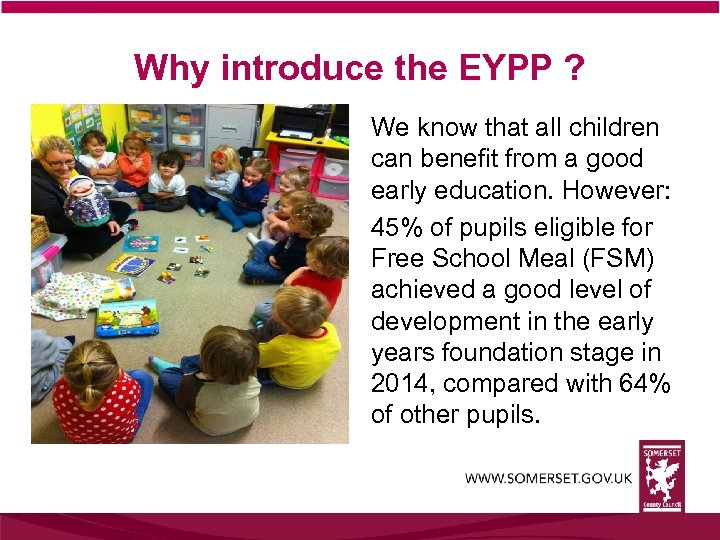 Why introduce the EYPP ? We know that all children can benefit from a good early education. However: 45% of pupils eligible for Free School Meal (FSM) achieved a good level of development in the early years foundation stage in 2014, compared with 64% of other pupils. 14
 Early Years Pupil Premium Accountability & Data • • As with the Schools Pupil Premium, the main accountability route will be through Ofsted. Effective use and impact of the EYPP to be assessed under the leadership and management judgement. Early years and schools census collection modified so that providers must identify EYPP children in their setting. Information on the EYPP process for claiming and payments is in your packs.
 Workshops (40 mins each) • Early Years Pupil Premium • Integrated Health Check
 The Integrated Review Provider Evening March 2015
 Agenda • Update in response to implementation study of the Integrated Review. • • • What next? The process Role of the Link Health Visitor Review and ASQ-3 Questions.
 Implementation Study Implementing Integrated Reviews in health and early years, at age 2. www. gov. uk/government/publications
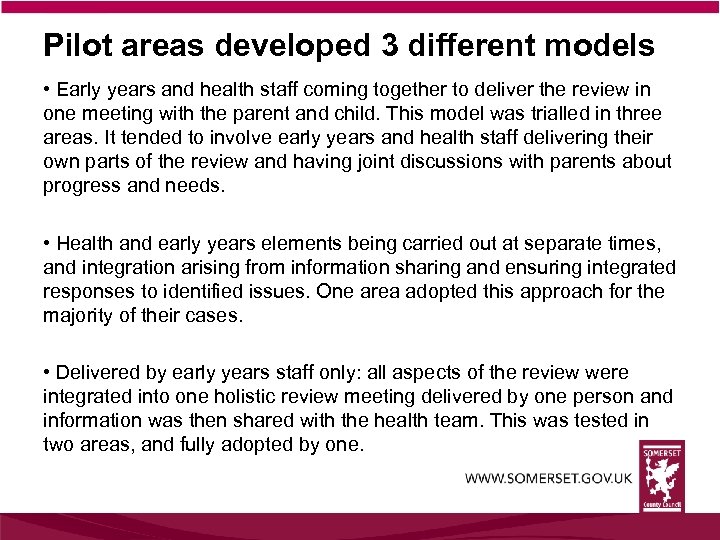 Pilot areas developed 3 different models • Early years and health staff coming together to deliver the review in one meeting with the parent and child. This model was trialled in three areas. It tended to involve early years and health staff delivering their own parts of the review and having joint discussions with parents about progress and needs. • Health and early years elements being carried out at separate times, and integration arising from information sharing and ensuring integrated responses to identified issues. One area adopted this approach for the majority of their cases. • Delivered by early years staff only: all aspects of the review were integrated into one holistic review meeting delivered by one person and information was then shared with the health team. This was tested in two areas, and fully adopted by one.
 How should we implement IR? • • • Local areas have the freedom to define a model that works for them The pilot report reflects two successful models: a) Single meeting involving parent(s), child, early years and health professionals b) Two meetings supported by information sharing https: //www. gov. uk/government/publications/integratedreview-at-age-2 -implementation-study
 How should we implement IR? Making integration work for you • Successful IR needs: • Openness and flexibility on both sides • Key people with the will to push forward and make it work • Professional knowledge from health and early years • • Practical problem solving e. g. who contacts parents, when and how • • Strategic buy-in from senior leaders
 What next? • To continue to disseminate and reinforce the process already in place. • For all practitioners to feel equally part of the integrated review process and jointly responsible. • To have a shared understanding of the role of the Link Health Visitor. • To gain a mutual understanding of different professional cultures, philosophies and approaches. To have a shared understanding of each others roles.
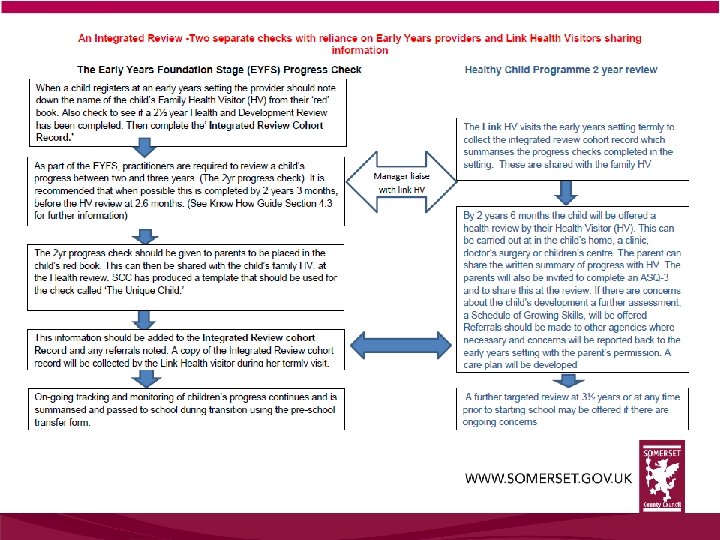
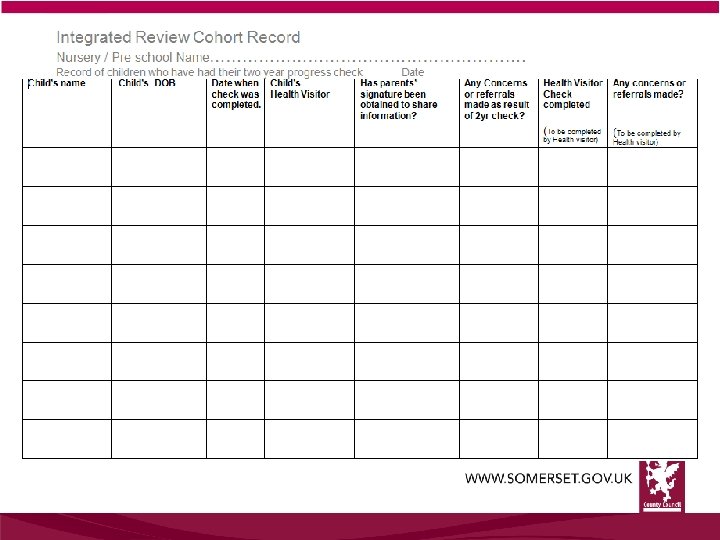
 The Process • When a child registers at an early years setting the provider should note down the name of their Health Visitor from their ‘red’ book. • Also check to see if a 2 year Health and Development Check has been completed • Add information to the ‘Integrated Review Cohort Record’
 Process continued ……………… • As part of the EYFS, Early Years practitioners are required to review a child’s progress between 2 and 3 years • It is recommended that when possible this is completed by 2 years 3 months, before the HV check at 2 years 6 months • See Know How Guide – Section 4. 3 for more information
 Process continued ………… • A written summary of the child’s development in the prime areas should be given to the parents to be placed in the red book • This can then be shared with the Health Visitor the Health review, and other relevant professionals. • SCC has produced a template that should be used for the check called ‘The Unique Child’.
 Process continued ………. . • On-going tracking and monitoring of children’s progress continues and is summarised and passed to school during transition using the pre-school transfer form. • To download the pre-school transition form please visit the Early Years 0 -5 web page on SCC website http: //www. somerset. gov. uk/childrens-services/early-years-for -families/early-years-0 -to-5/
 Health Visitor Process • • The Link Health Visitor visits the early years setting termly Collects the ‘Integrated Review Cohort Record’ which summarises the progress checks completed in the setting. • These are shared with the family Health Visitor
 Health Visitor process cont. …. . • • By 2 years 6 months a health review will be offered This can be carried out in the child’s home; at a clinic; doctor’s surgery or in a children’s centre. The parent can share the written summary of progress with the HV The parents will be invited to complete an ASQ-3 and share this at the review If there are concerns about the child’s development a further assessment, ‘A Schedule of Growing Skills’ will be offered. Referrals should be made to other agencies where necessary. A Care Plan may be developed (with parents permission)
 • This is one of the core contacts in the National Healthy Child Programme which Health Visitors are tasked with leading, in conjunction with other services. • 100% of families should be offered a contact with the health visiting services at 2 -2½. • A further targeted review at 3 years 6 months or at any time prior to starting school may be offered if there are ongoing concerns.
 The Role of the Link Health Visitor • To provide information about child development, childhood ailments, immunisations and other matters relating to general health and well – being of children. • To discuss a scenario, to enable a setting to make decisions about how to proceed. • To collect the Integrated Review Cohort Record from the settings and share with the family Health Visitors. To feed back information from the Health Visiting Review. •
 Any Questions?
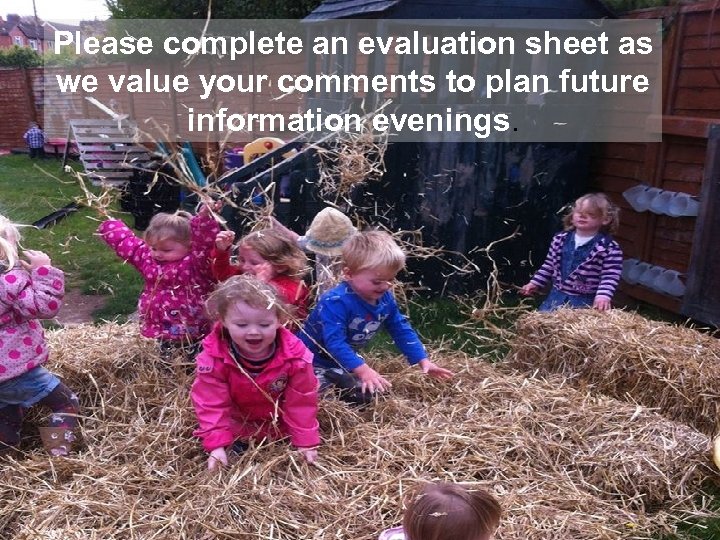 Please complete an evaluation sheet as we value your comments to plan future information evenings.