

WELCOME BIENVENUE TO AU CANADA ! Country Profile


WELCOME BIENVENUE TO AU CANADA !
![Country Profile CANADA ['kænədə]](https://present5.com/presentacii-2/20171213\38306-canada.ppt\38306-canada_4.jpg "Country Profile CANADA ['kænədə]")
Country Profile CANADA ['kænədə]
Canada most probably got its name from the word Kanata, meaning village or settlement. In 1535 locals were trying to direct an explorer called Jacques Cartier to the village of Standalone. Cartier used the word CANADA to refer to the village and the hole area. By 1545 books and maps began to call the whole region CANADA.
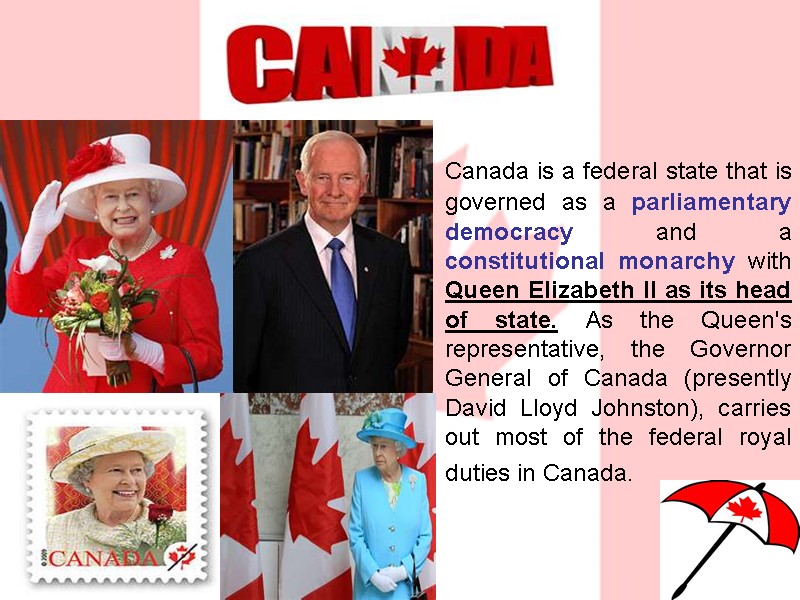
Canada is a federal state that is governed as a parliamentary democracy and a constitutional monarchy with Queen Elizabeth II as its head of state. As the Queen's representative, the Governor General of Canada (presently David Lloyd Johnston), carries out most of the federal royal duties in Canada.
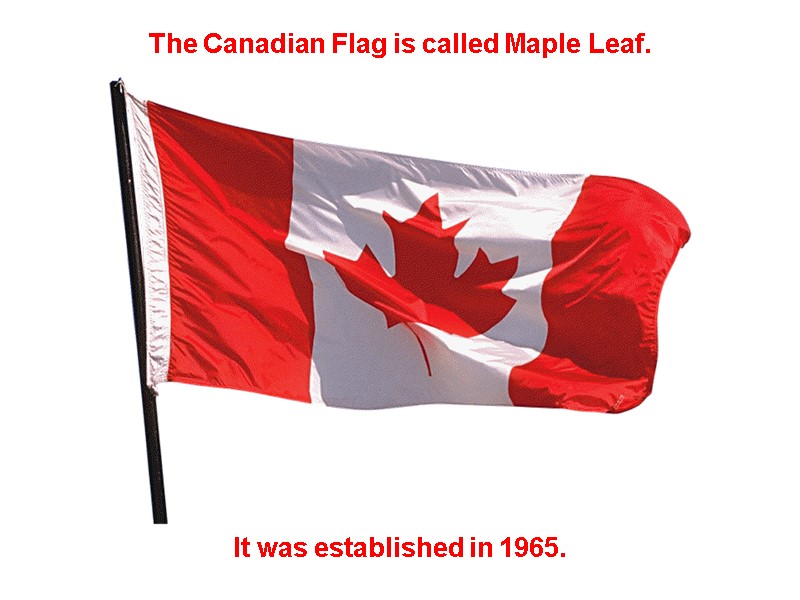
It was established in 1965. The Canadian Flag is called Maple Leaf.
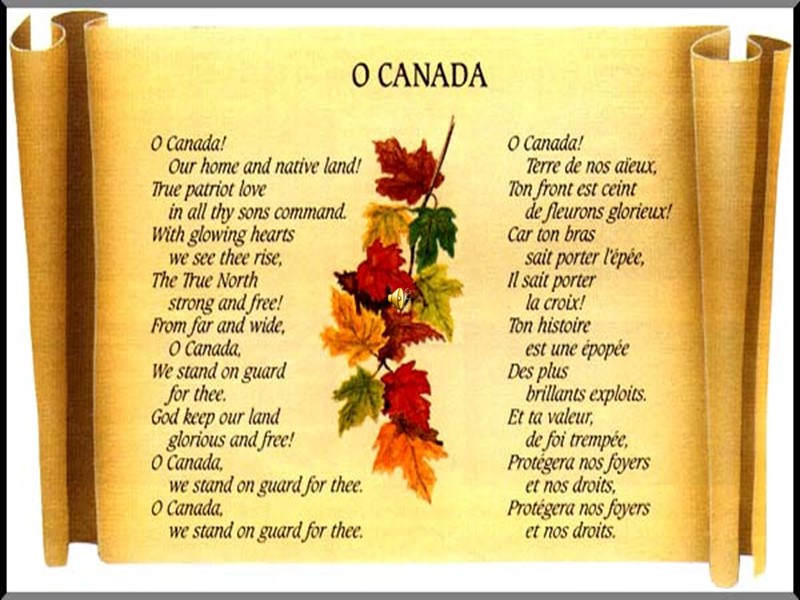
Anthem: "O Canada" Royal anthem: "God Save the Queen"
Canada is a country in northern North America, extending from the Atlantic Ocean in the east to the Pacific Ocean in the west and northward into the Arctic Ocean.
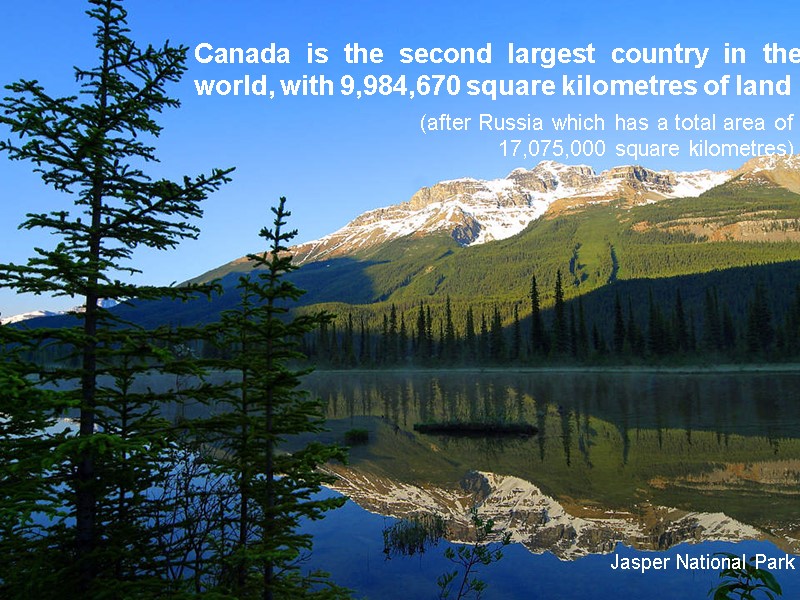
Jasper National Park Canada is the second largest country in the world, with 9,984,670 square kilometres of land (after Russia which has a total area of 17,075,000 square kilometres)
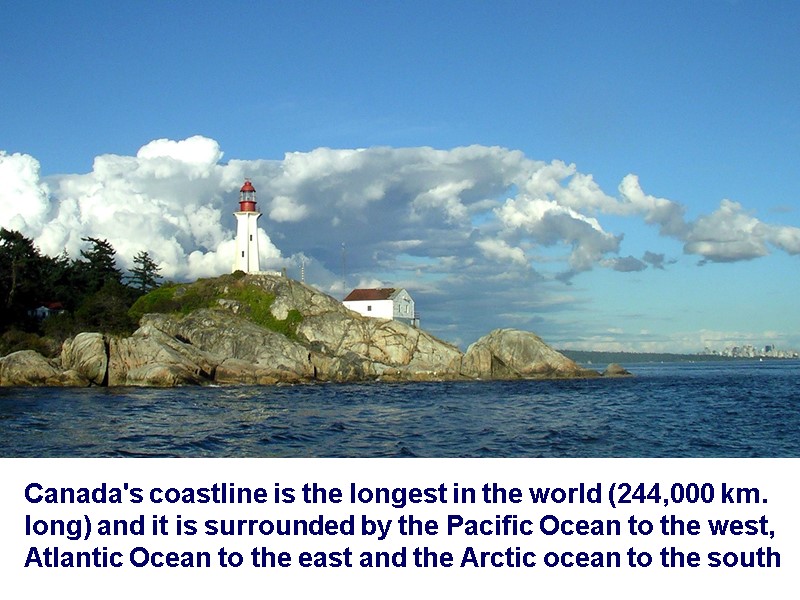
Canada's coastline is the longest in the world (244,000 km. long) and it is surrounded by the Pacific Ocean to the west, Atlantic Ocean to the east and the Arctic ocean to the south
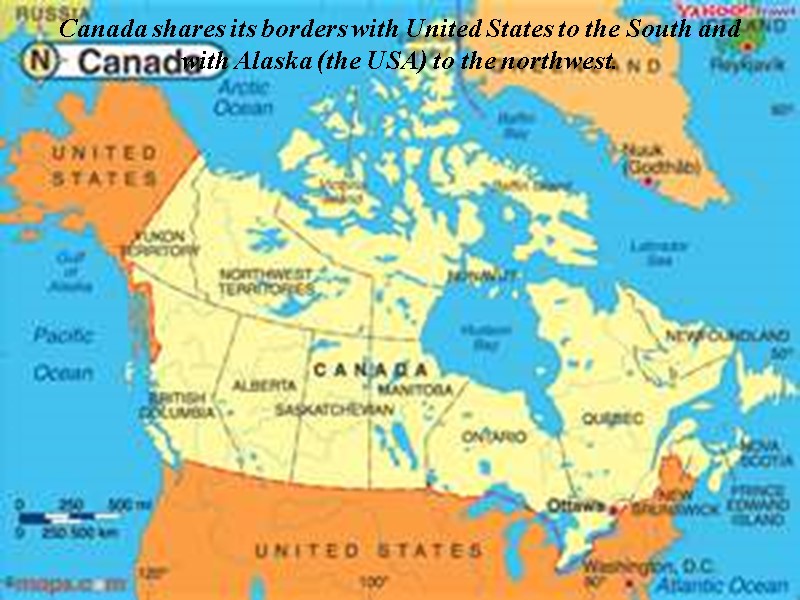
Canada shares its borders with United States to the South and with Alaska (the USA) to the northwest.
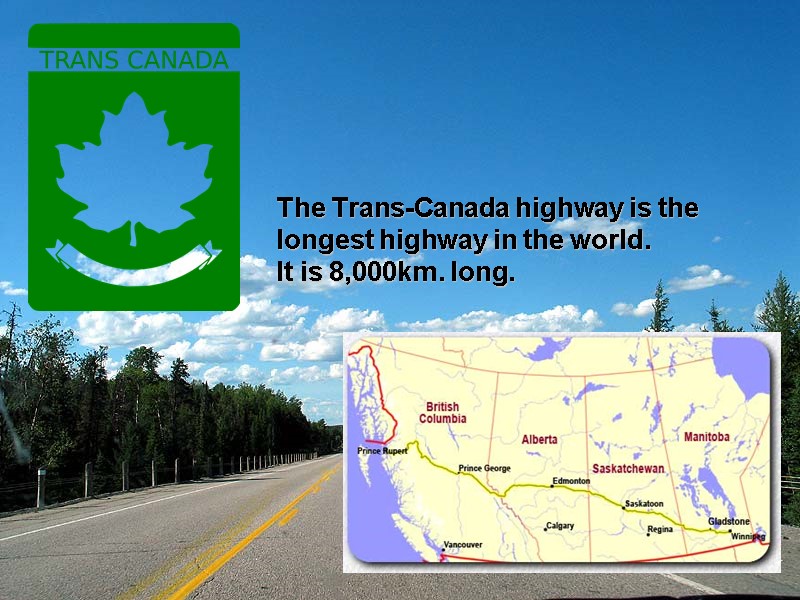
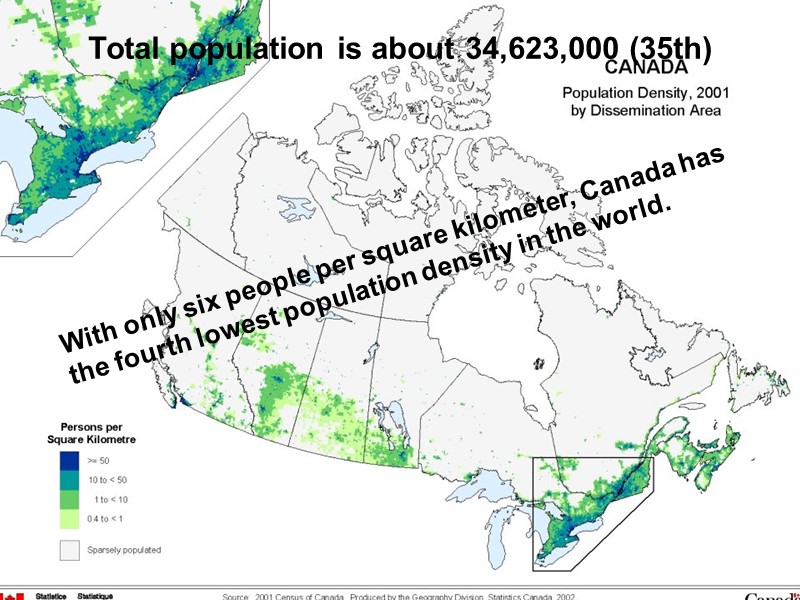
With only six people per square kilometer, Canada has the fourth lowest population density in the world. Total population is about 34,623,000 (35th)

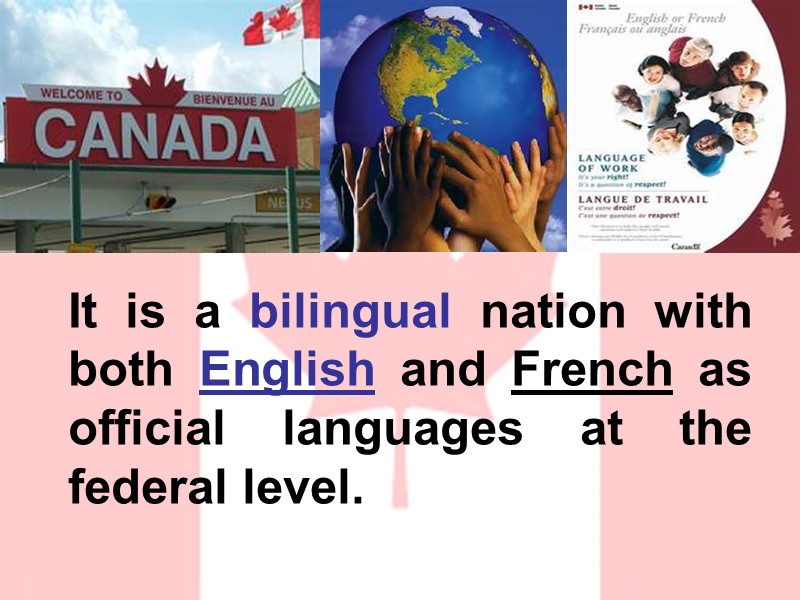
It is a bilingual nation with both English and French as official languages at the federal level.
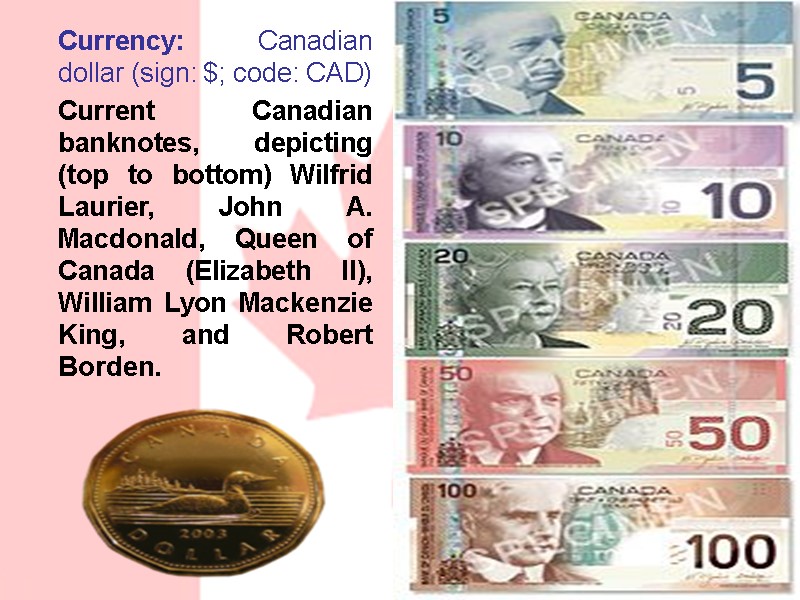
Currency: Canadian dollar (sign: $; code: CAD) Current Canadian banknotes, depicting (top to bottom) Wilfrid Laurier, John A. Macdonald, Queen of Canada (Elizabeth II), William Lyon Mackenzie King, and Robert Borden.
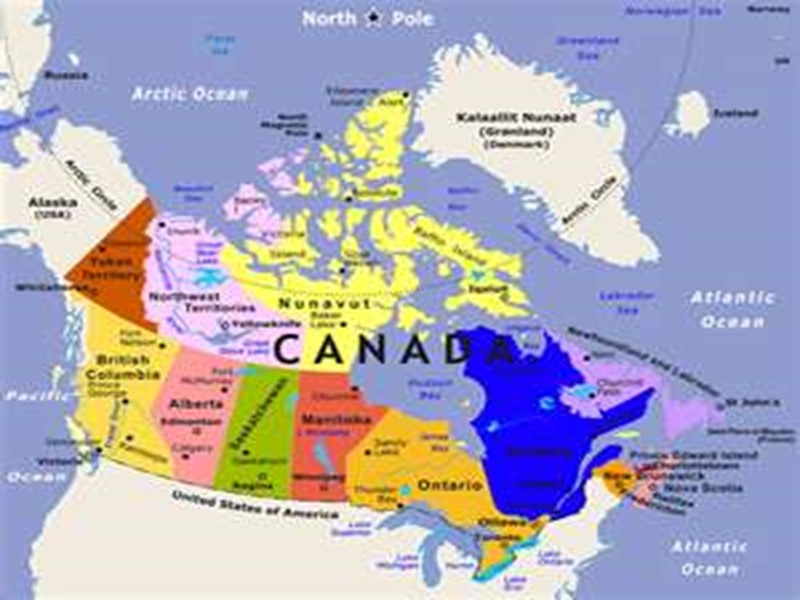
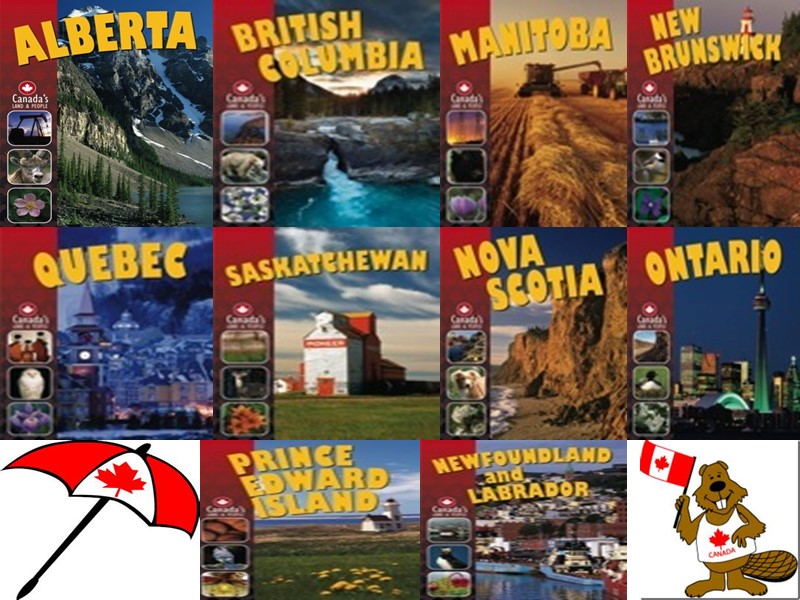
Canada is a federation composed of ten provinces and three territories. In turn, these may be grouped into regions: Western Canada, Central Canada, Atlantic Canada, and Northern Canada (the latter made up of the three territories: Yukon, Northwest Territories, and Nunavut).
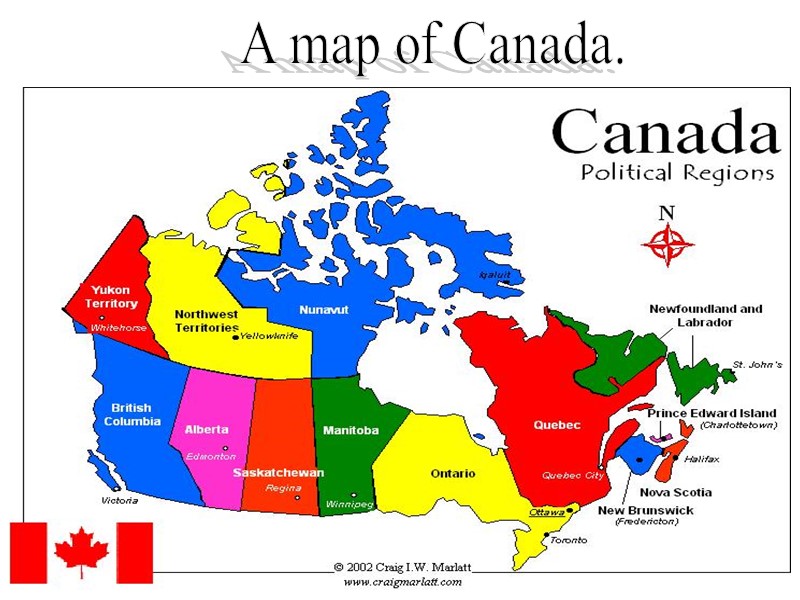
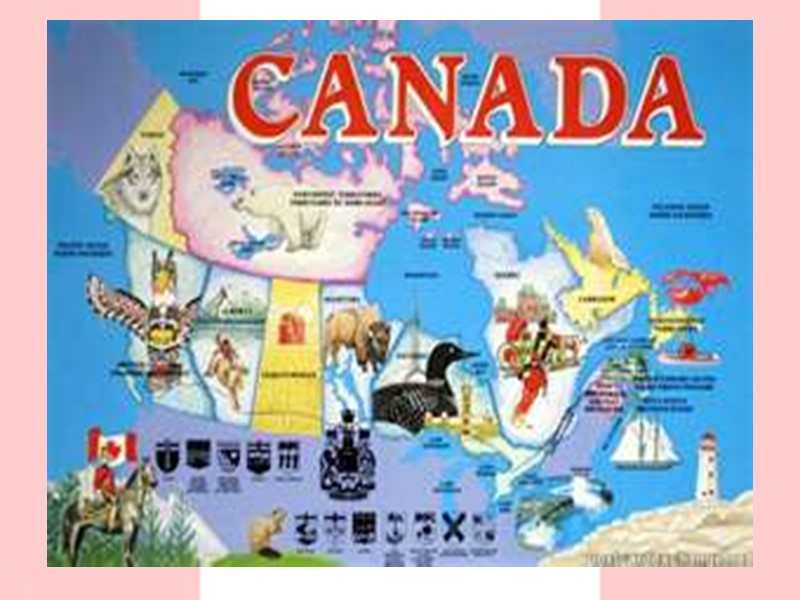
A map of Canada.
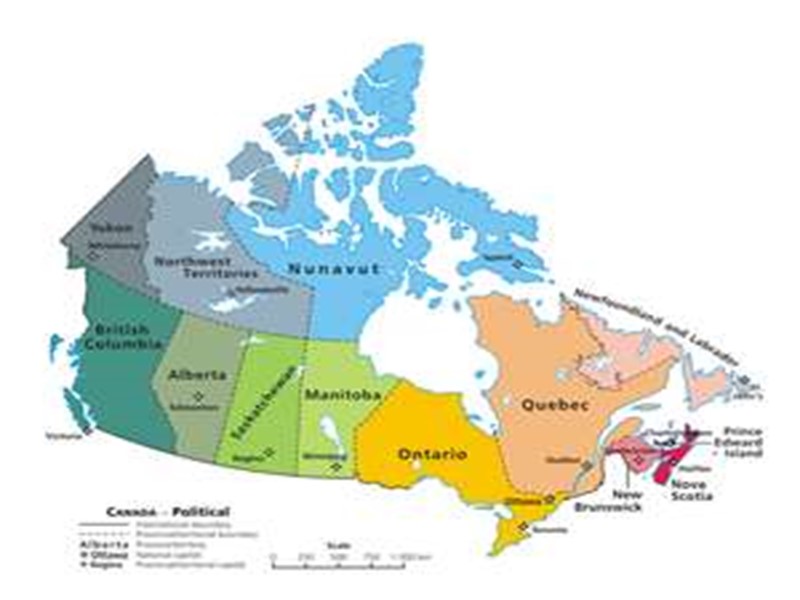
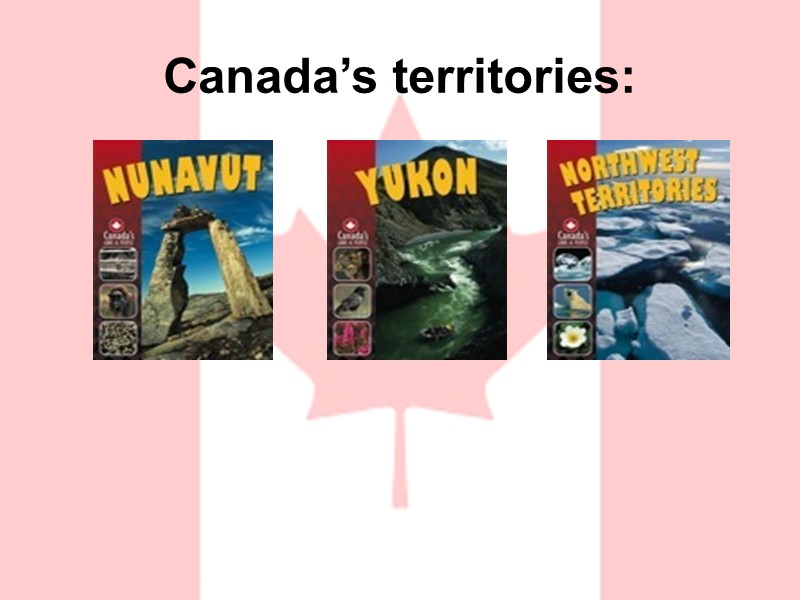
Canada’s territories:
Alberta, the capital is Edmonton. British Columbia, the capital is Victoria. Manitoba, the capital is Winnipeg. Northwest Territories, the capital is Yellowknife. Nunavut, the capital is Iqaluit. Saskatchewan, the capital is Regina. Yukon Territory, the capital is Whitehorse. New Brunswick, the capital is Fredericton. New Found Land, the capital is St. John's. Nova Scotia, the capital is Halifax. Ontario, the capital is Toronto. Prince Edward island, the capital is Charlotte town. Quebec, the capital is Quebec City.
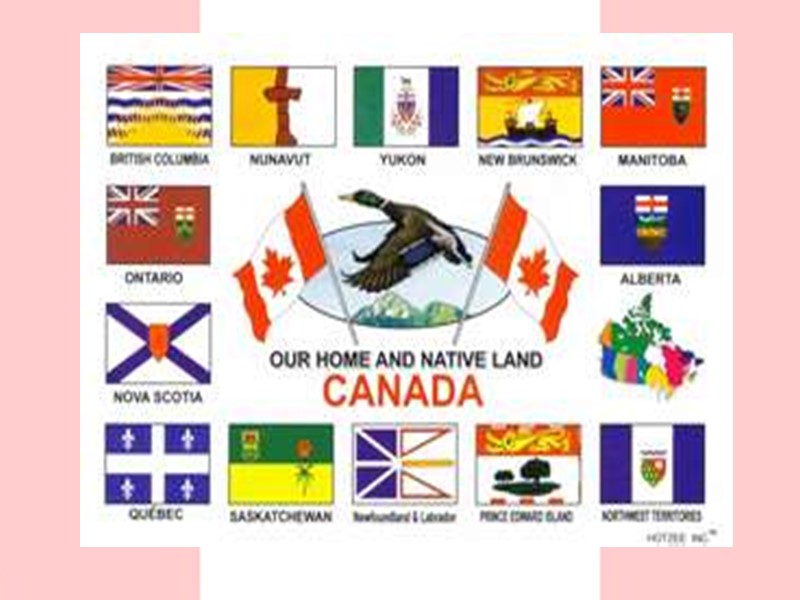
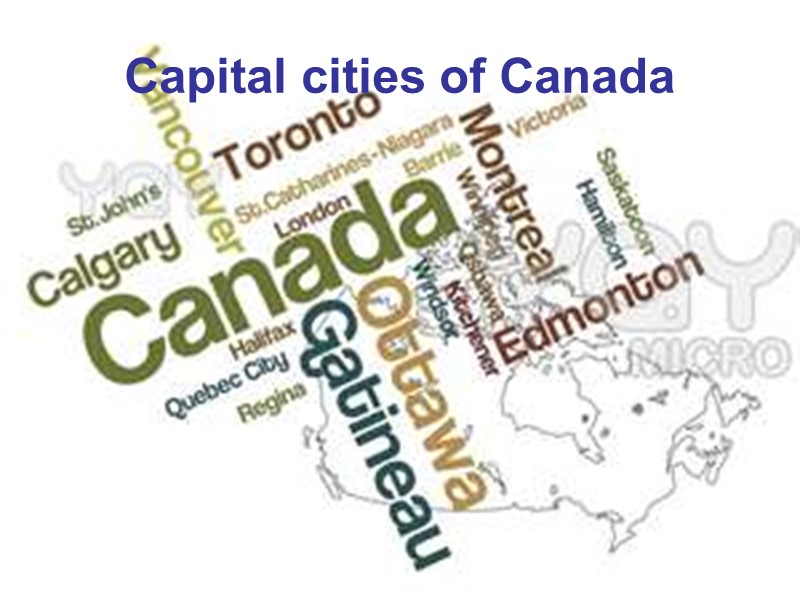
Capital cities of Canada
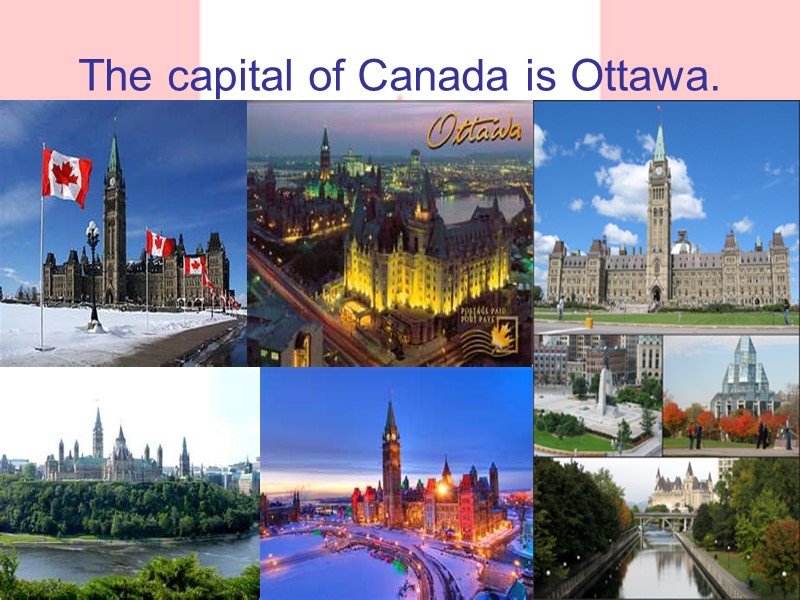
The capital of Canada is Ottawa.
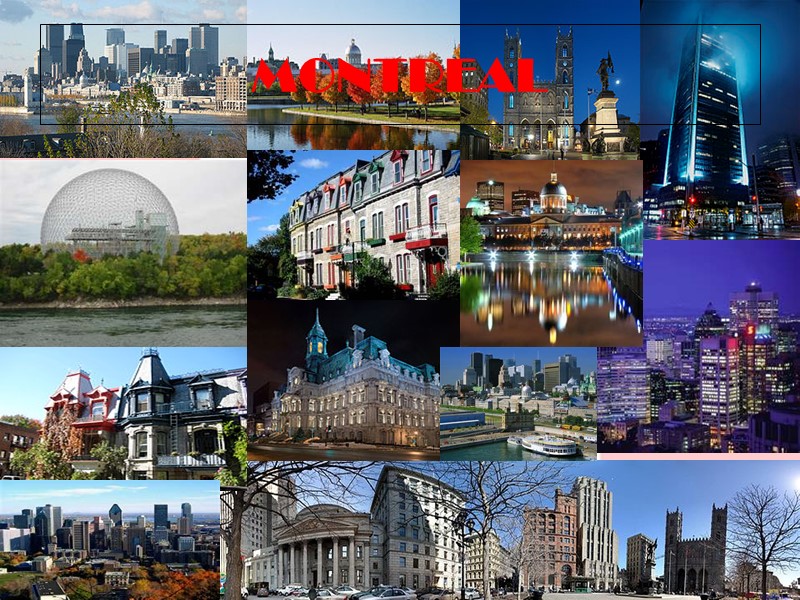
MONTREAL
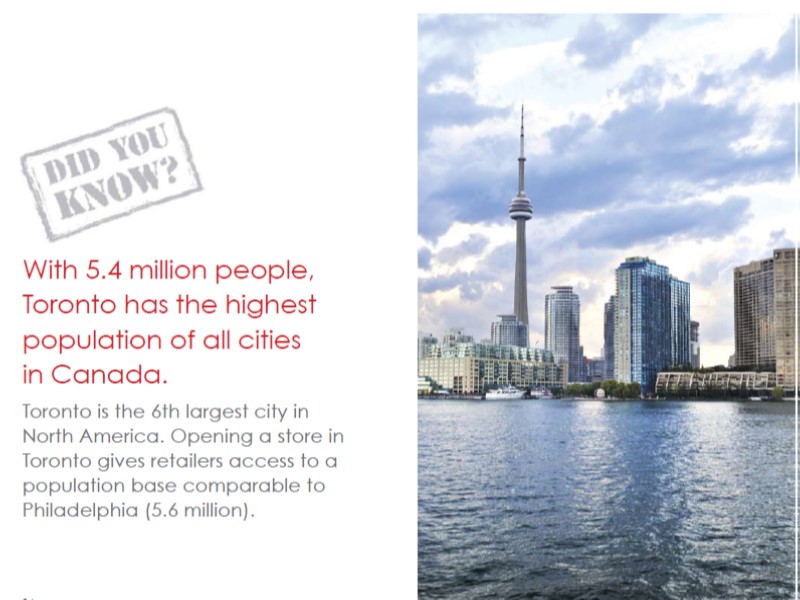
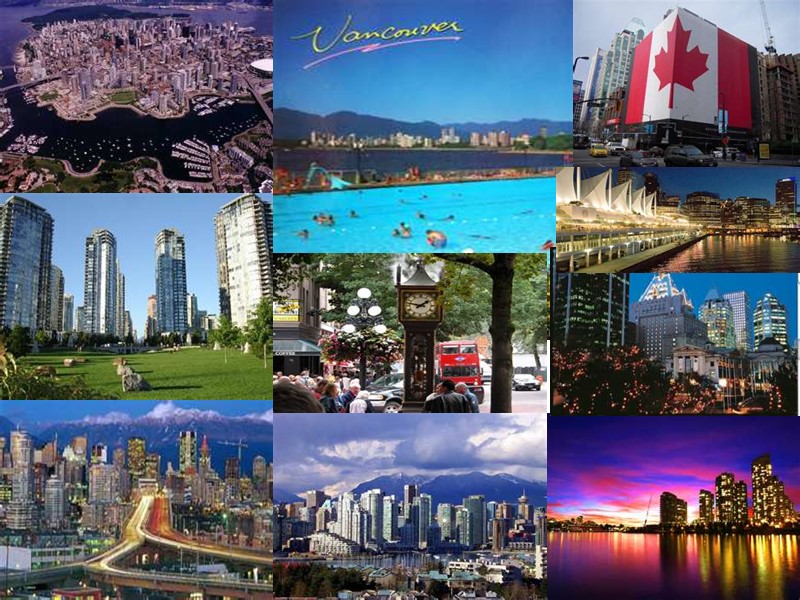
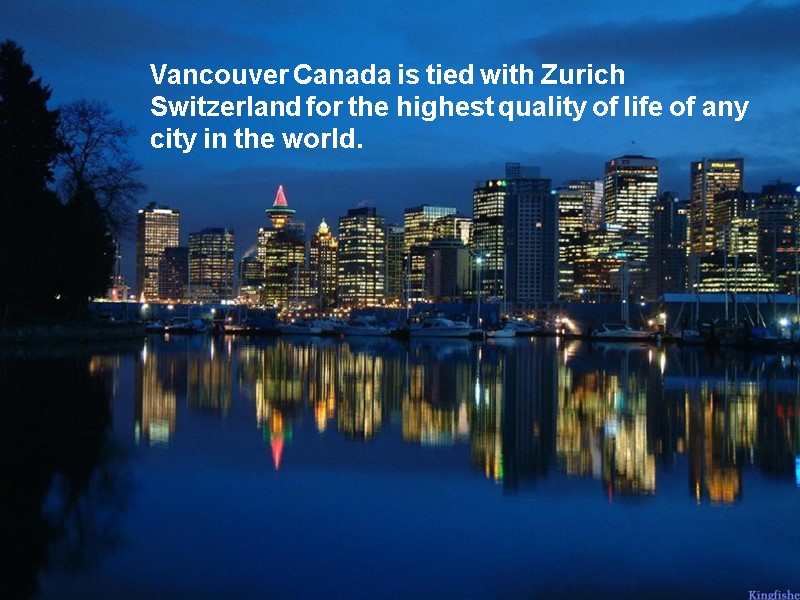
Vancouver Canada is tied with Zurich Switzerland for the highest quality of life of any city in the world.
According to the United Nations Human Development Index, Canada has the highest quality of life in the world.
One of the world's most highly developed countries, Canada has a diversified economy that is reliant upon its abundant natural resources and upon trade – particularly with the United States, with which Canada has had a long and complex relationship. It is a member of the G7, G8, G20, NATO, OECD, WTO, Commonwealth of Nations, Francophonie, OAS, APEC, and UN.
Canada has the ninth biggest economy of the world




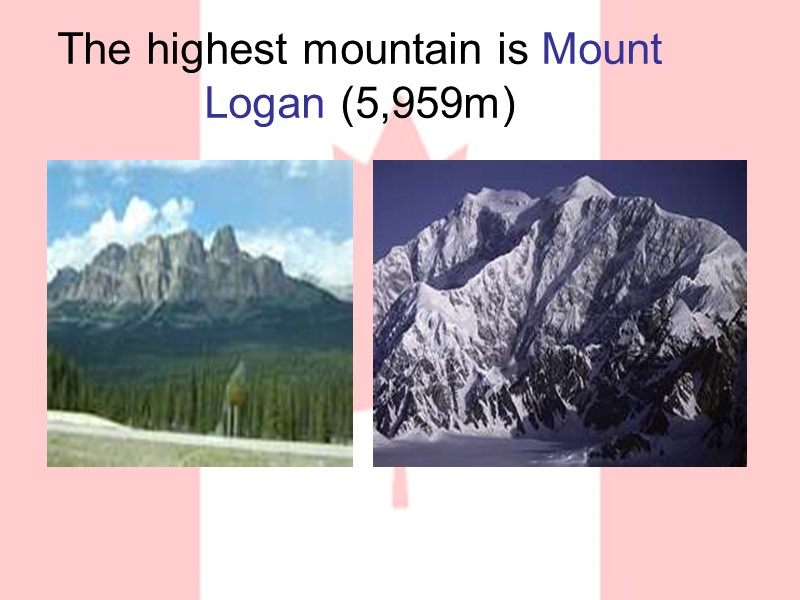
The highest mountain is Mount Logan (5,959m)
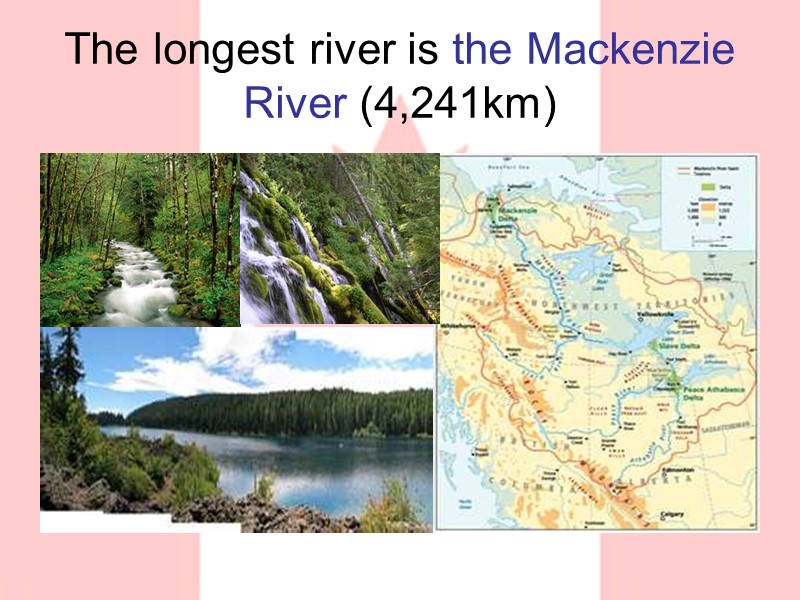
The longest river is the Mackenzie River (4,241km)
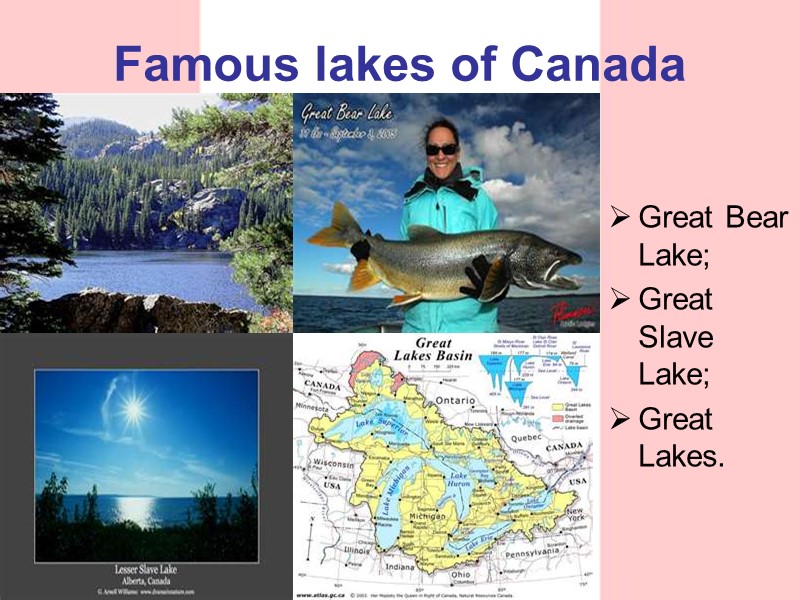
Famous lakes of Canada Great Bear Lake; Great Slave Lake; Great Lakes.
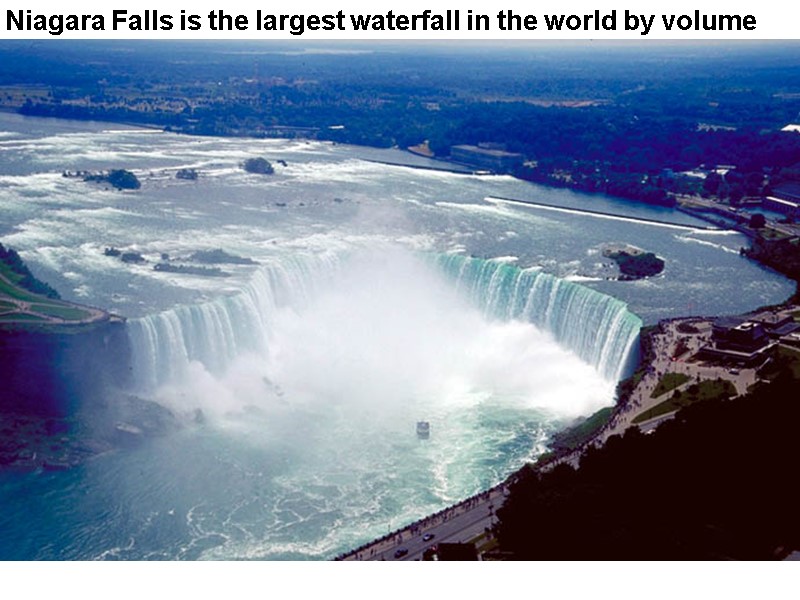
Niagara Falls is the largest waterfall in the world by volume
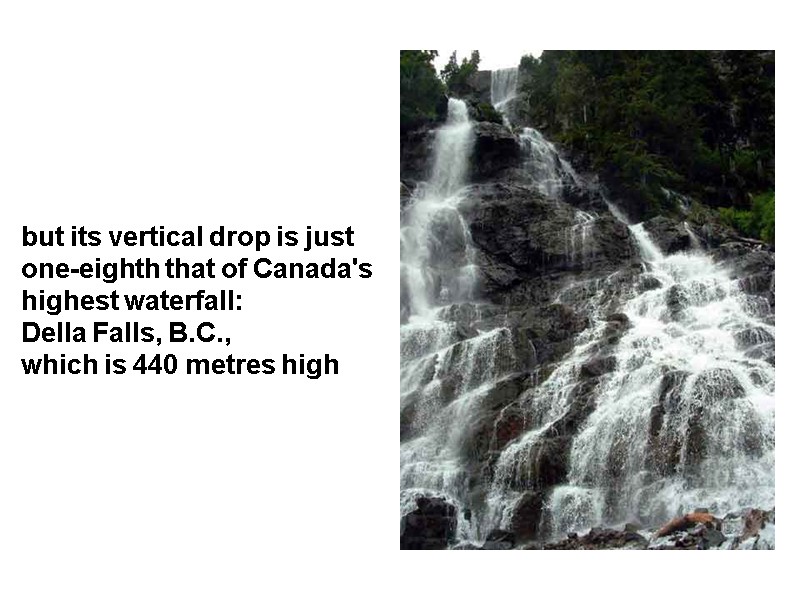
but its vertical drop is just one-eighth that of Canada's highest waterfall: Della Falls, B.C., which is 440 metres high
Climate Average winter and summer high temperatures across Canada vary according to the location. Winters can be harsh in many regions of the country, particularly in the interior and Prairie provinces, which experience a continental climate, where daily average temperatures are near −15 °C (5 °F) but can drop below −40 °C (−40 °F) with severe wind chills. In noncoastal regions, snow can cover the ground almost six months of the year (more in the north). Coastal British Columbia has a temperate climate, with a mild and rainy winter. On the east and west coasts, average high temperatures are generally in the low 20s °C (70s °F), while between the coasts, the average summer high temperature ranges from 25 to 30 °C (77 to 86 °F), with occasional extreme heat in some interior locations exceeding 40 °C (104 °F)
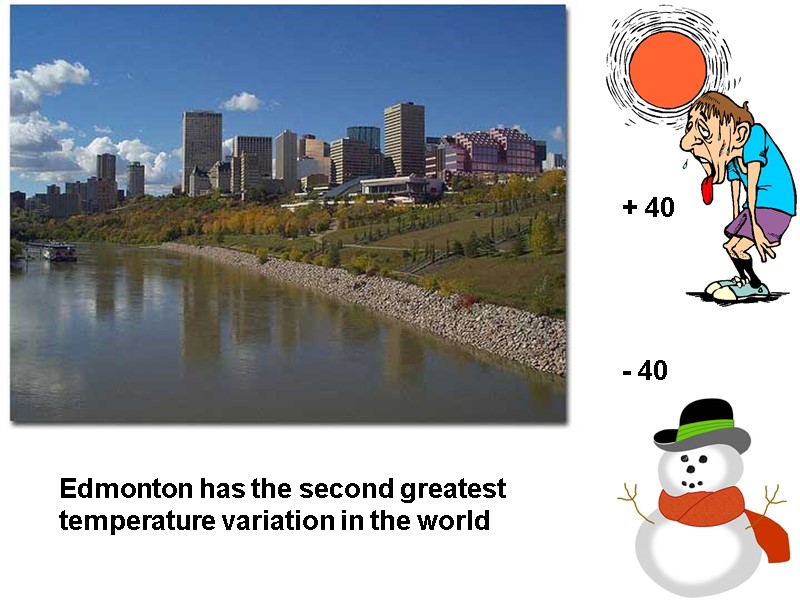
Edmonton has the second greatest temperature variation in the world

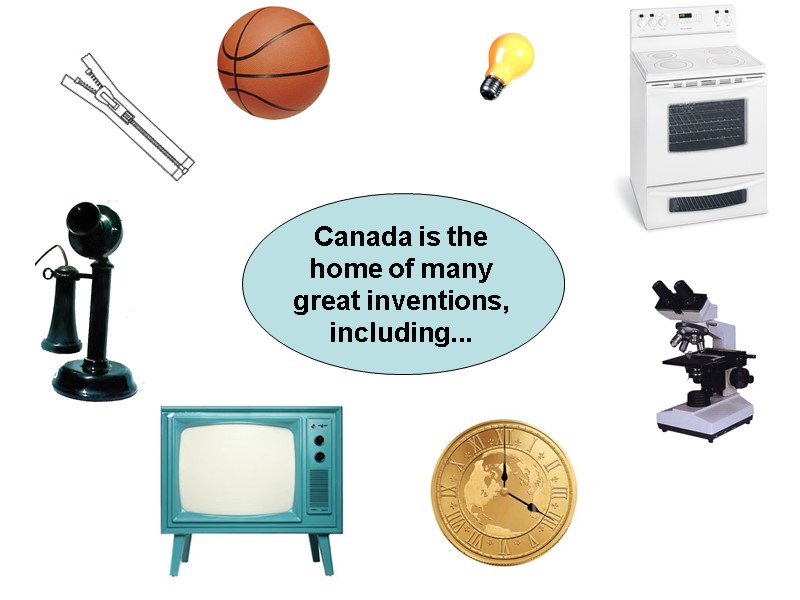
Canada is the home of many great inventions, including...


What famous comic was created by a Canadian, Joe Shuster, who was born in Toronto in 1914?

Some famous Canadians…
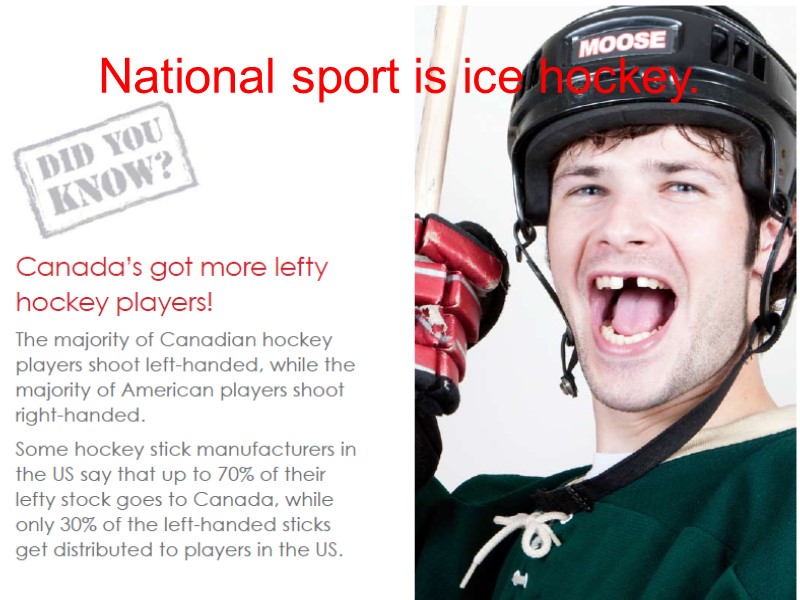
National sport is ice hockey.
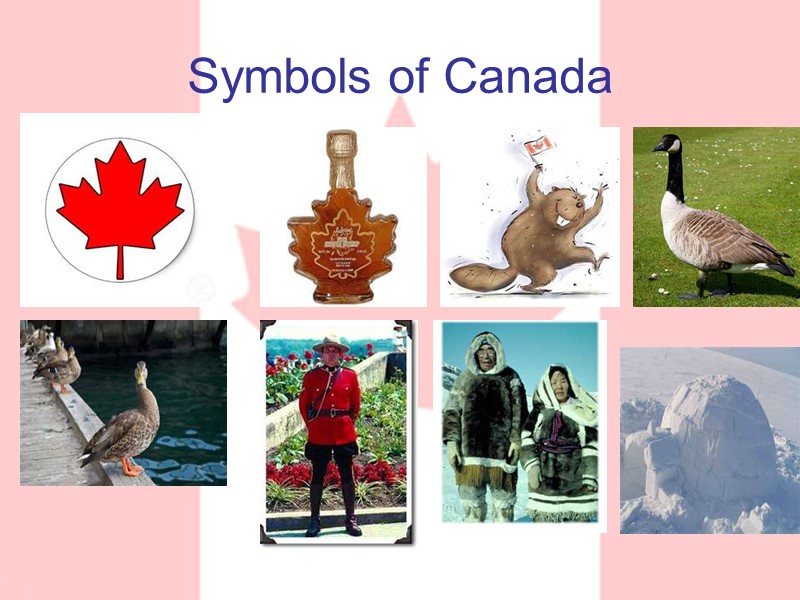
Symbols of Canada
 Скачать презентацию WELCOME BIENVENUE TO AU CANADA ! Country Profile
38306-canada.ppt
- Количество слайдов: 61