


 Скачать презентацию Welcome 2015 ECRI INSTITUTE Emerging Outpatient
c8b5e3069b90bc5cb6dd75e3f4801af8.ppt
- Количество слайдов: 42
 Welcome © 2015 ECRI INSTITUTE
 Emerging Outpatient Concepts— What Healthcare Design Leaders Should Keep an Eye On Post-Discharge Clinics and AYA Cancer Centers November 15, 2015 Natalie Abell, Senior Associate, ECRI Institute © 2015 ECRI INSTITUTE
 Session Description Post-Discharge Clinics and AYA Cancer Centers Two new specialty outpatient concepts from ECRI Institute's 2015 TOP 10 Hospital C-Suite Watch List © 2015 ECRI INSTITUTE
 Session Objectives • Examine the parameters of new outpatient concepts and their potential impact on clinical design • Discuss how these concepts can improve patient care and influence design decisions • Obtain best practices for implementation, including clinical and support spaces • Understand how post-discharge clinics and AYA Centers affect design cost and how to prepare for the construction © 2015 ECRI INSTITUTE
 ECRI Institute An independent nonprofit that researches the best approaches to improving patient care © 2015 ECRI INSTITUTE New York Times called us “the country’s mostrespected laboratory for testing medical products. ”
 HISTORY OF ECRI INSTITUTE’S TOP 10 HOSPITAL C-SUITE WATCH LIST Fifth annual edition u ECRI experts polled for topics regarding…. u ■ Something newsworthy ■ The potential to positively affect patient outcomes in major illnesses, diseases, or injuries ■ Ready or near ready for implementation ■ Turf wars or, conversely, improved collaboration ■ Improving patient and staff safety ■ A marketplace differentiator u © 2015 ECRI INSTITUTE Vote on nominated topics
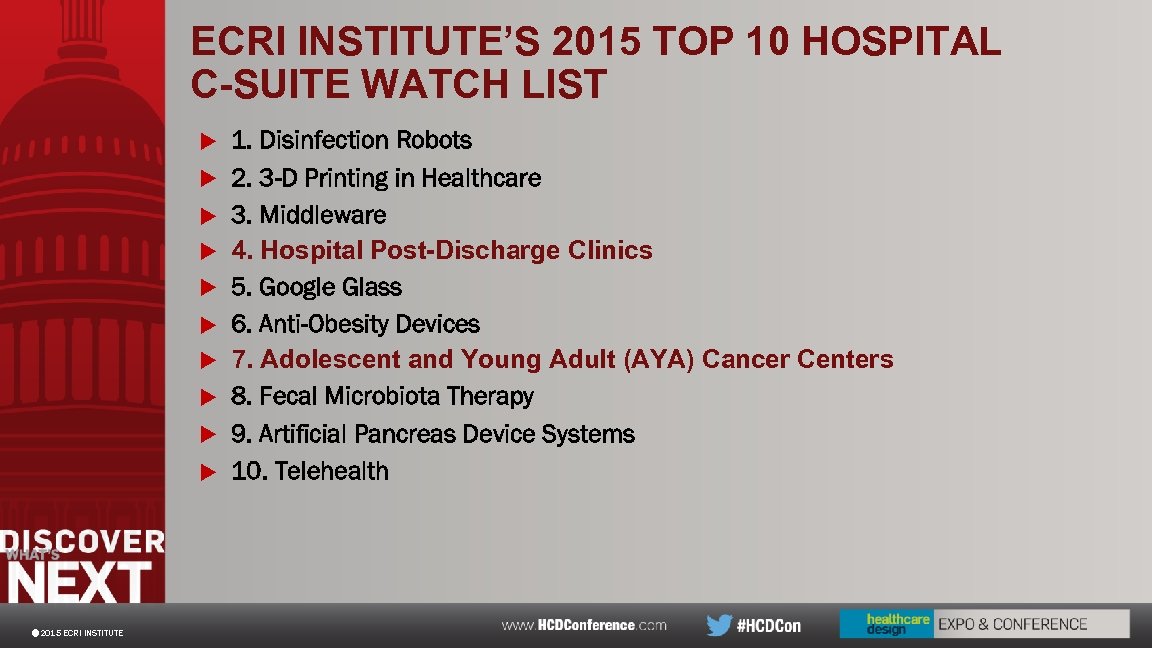 ECRI INSTITUTE’S 2015 TOP 10 HOSPITAL C-SUITE WATCH LIST u u u u u © 2015 ECRI INSTITUTE 1. Disinfection Robots 2. 3 -D Printing in Healthcare 3. Middleware 4. Hospital Post-Discharge Clinics 5. Google Glass 6. Anti-Obesity Devices 7. Adolescent and Young Adult (AYA) Cancer Centers 8. Fecal Microbiota Therapy 9. Artificial Pancreas Device Systems 10. Telehealth
 Hospital Post-Discharge Clinics © 2015 ECRI INSTITUTE
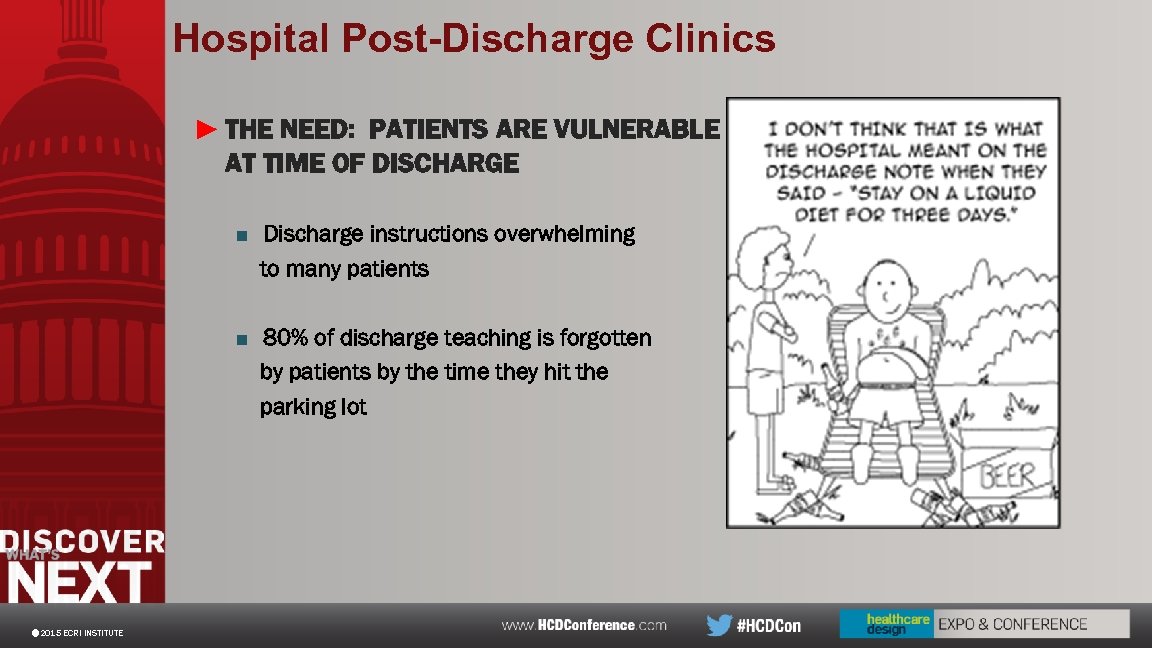 Hospital Post-Discharge Clinics ► THE NEED: PATIENTS ARE VULNERABLE AT TIME OF DISCHARGE ■ Discharge instructions overwhelming to many patients ■ 80% of discharge teaching is forgotten by patients by the time they hit the parking lot © 2015 ECRI INSTITUTE
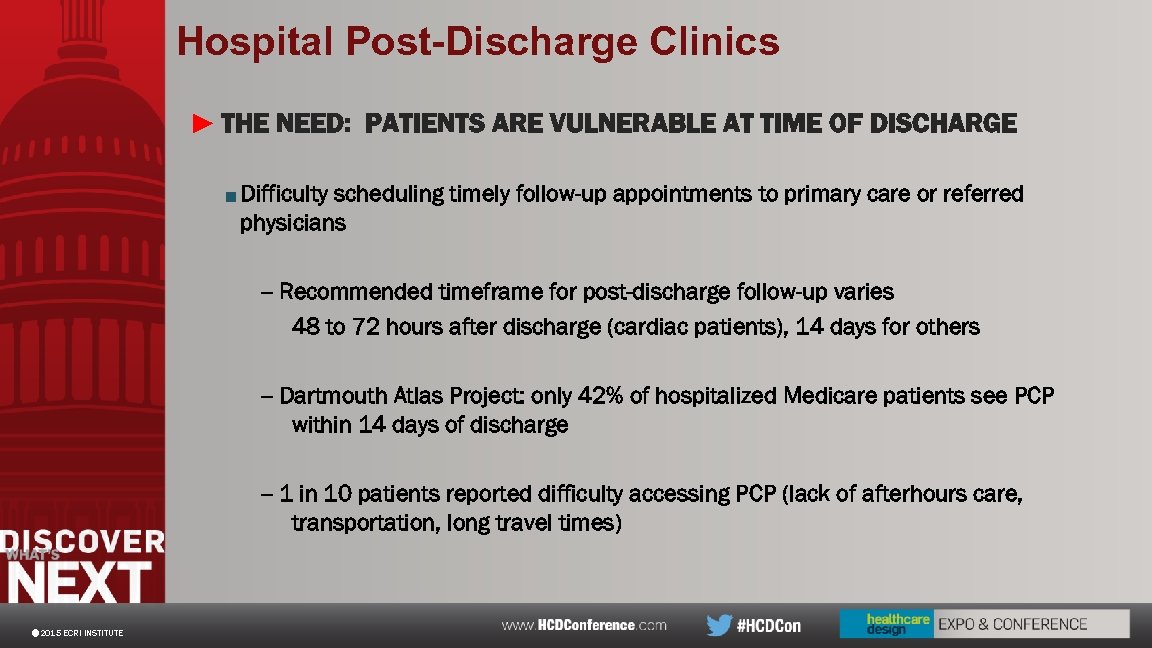 Hospital Post-Discharge Clinics ► THE NEED: PATIENTS ARE VULNERABLE AT TIME OF DISCHARGE ■ Difficulty scheduling timely follow-up appointments to primary care or referred physicians -- Recommended timeframe for post-discharge follow-up varies 48 to 72 hours after discharge (cardiac patients), 14 days for others -- Dartmouth Atlas Project: only 42% of hospitalized Medicare patients see PCP within 14 days of discharge -- 1 in 10 patients reported difficulty accessing PCP (lack of afterhours care, transportation, long travel times) © 2015 ECRI INSTITUTE
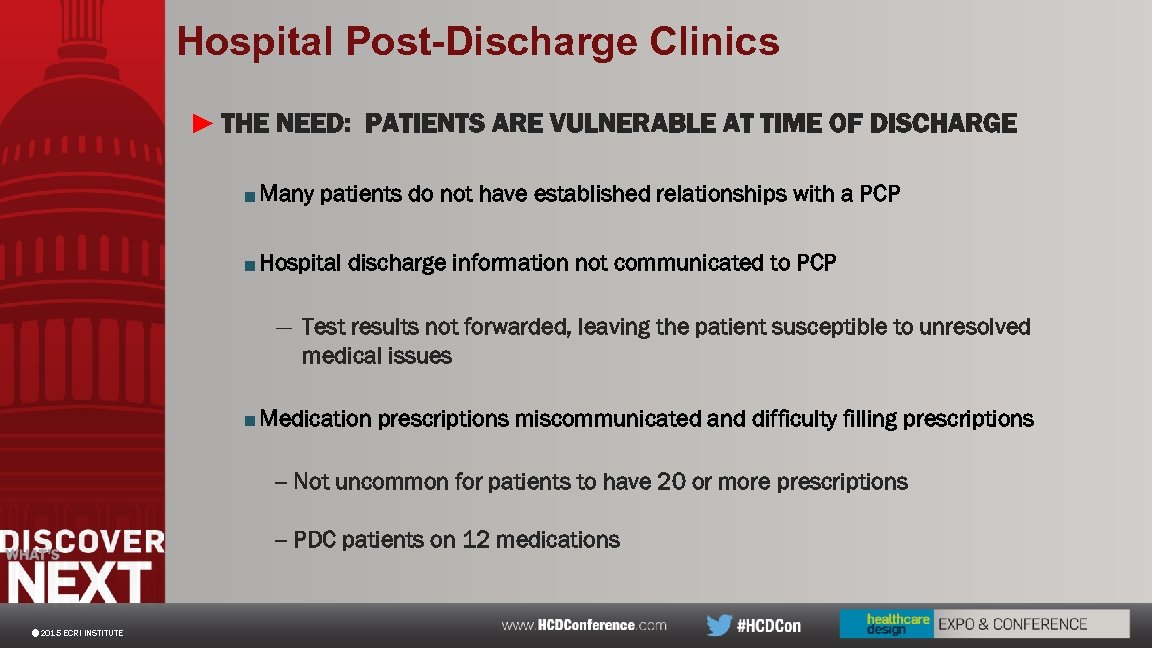 Hospital Post-Discharge Clinics ► THE NEED: PATIENTS ARE VULNERABLE AT TIME OF DISCHARGE ■ Many patients do not have established relationships with a PCP ■ Hospital discharge information not communicated to PCP — Test results not forwarded, leaving the patient susceptible to unresolved medical issues ■ Medication prescriptions miscommunicated and difficulty filling prescriptions -- Not uncommon for patients to have 20 or more prescriptions -- PDC patients on 12 medications © 2015 ECRI INSTITUTE
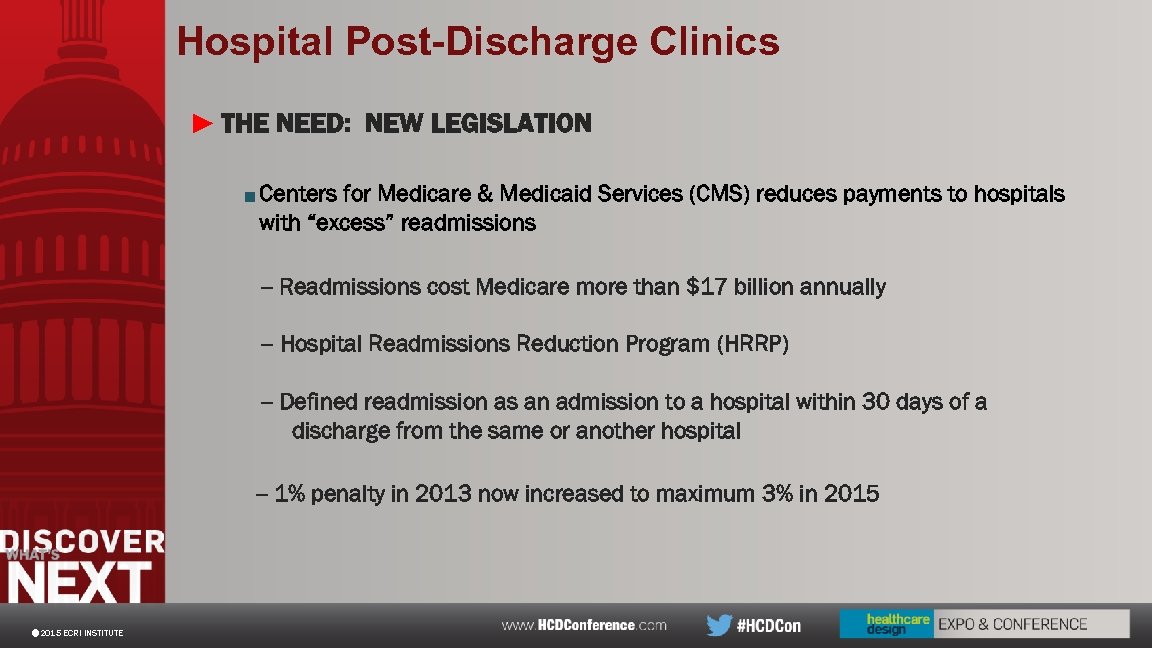 Hospital Post-Discharge Clinics ► THE NEED: NEW LEGISLATION ■ Centers for Medicare & Medicaid Services (CMS) reduces payments to hospitals with “excess” readmissions -- Readmissions cost Medicare more than $17 billion annually -- Hospital Readmissions Reduction Program (HRRP) -- Defined readmission as an admission to a hospital within 30 days of a discharge from the same or another hospital -- 1% penalty in 2013 now increased to maximum 3% in 2015 © 2015 ECRI INSTITUTE
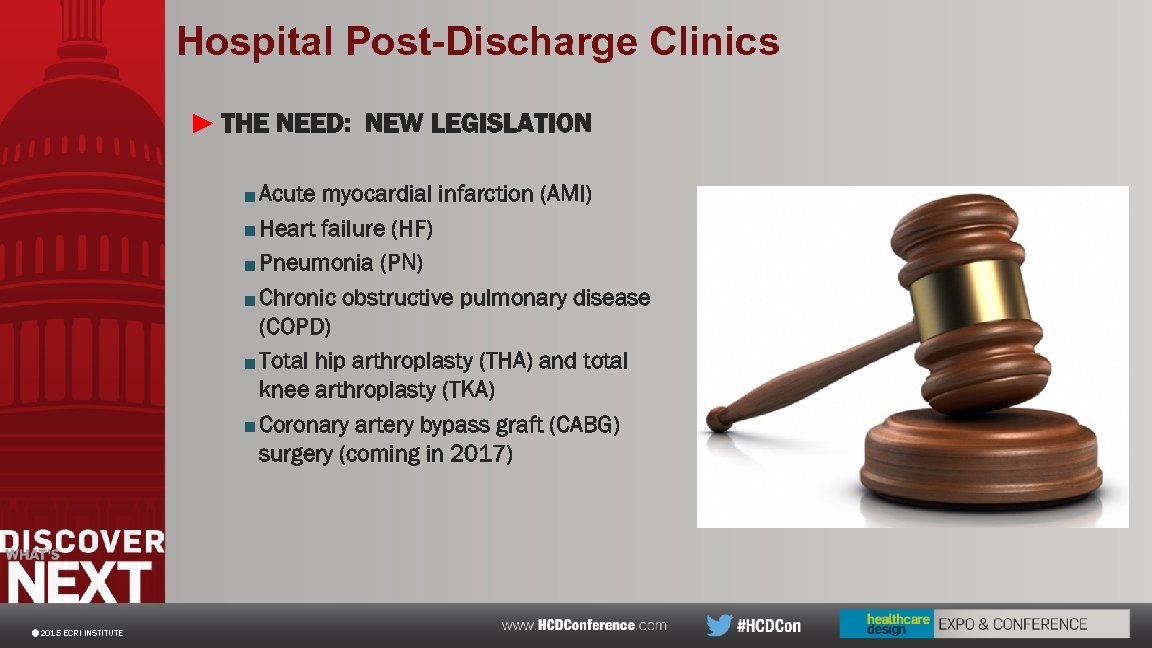 Hospital Post-Discharge Clinics ► THE NEED: NEW LEGISLATION ■ Acute myocardial infarction (AMI) ■ Heart failure (HF) ■ Pneumonia (PN) ■ Chronic obstructive pulmonary disease (COPD) ■ Total hip arthroplasty (THA) and total knee arthroplasty (TKA) ■ Coronary artery bypass graft (CABG) surgery (coming in 2017) © 2015 ECRI INSTITUTE
 Hospital Post-Discharge Clinics u WHAT ARE THEY ■ Clinics that use hospitalists and nurse practitioners to bridge hospital care and needed follow-up care ■ Includes comprehensive discharge planning process and follow up to reduce avoidable readmissions ■ Also known as Transitional Care Clinics or After-Care Clinics © 2015 ECRI INSTITUTE
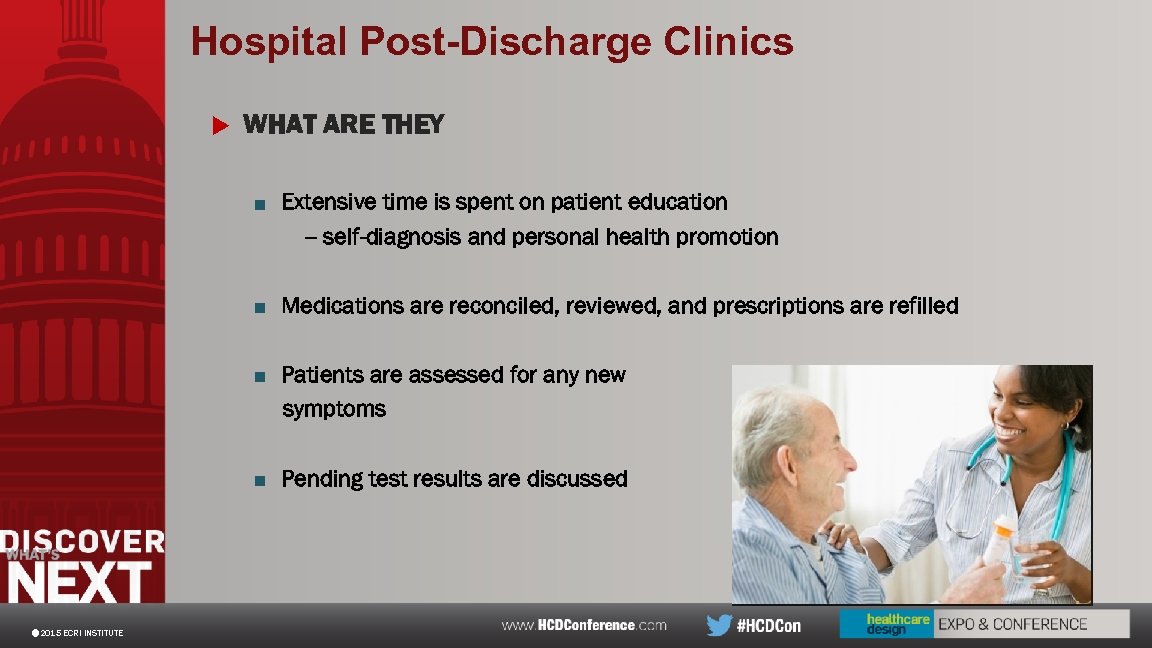 Hospital Post-Discharge Clinics u WHAT ARE THEY ■ Extensive time is spent on patient education -- self-diagnosis and personal health promotion ■ Medications are reconciled, reviewed, and prescriptions are refilled ■ Patients are assessed for any new symptoms ■ Pending test results are discussed © 2015 ECRI INSTITUTE
 Hospital Post-Discharge Clinics u WHAT ARE THEY ■ Referral appointments are made with PCP or specialist ■ Case management, insurance status, and durable medical equipment needs are addressed ■ Clinical staff may also establish home health or skilled nursing facility care ■ Social environment and other non-medical issues that might cause readmissions ■ Everything is documented in EMR and sent to the PCP © 2015 ECRI INSTITUTE
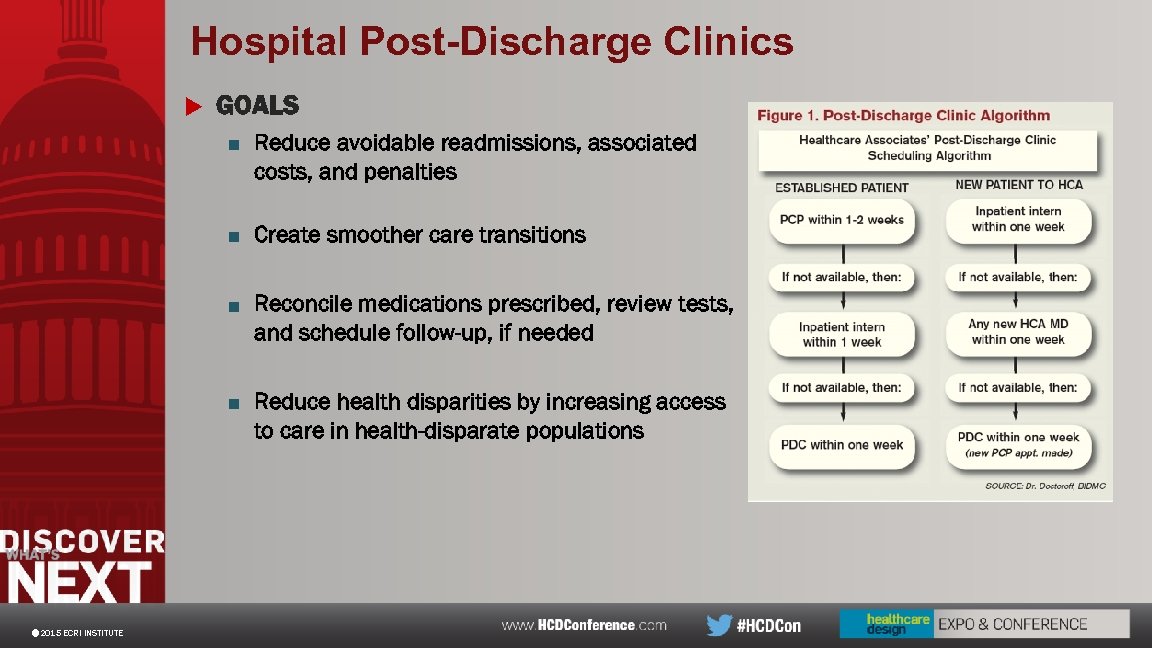 Hospital Post-Discharge Clinics u GOALS ■ Reduce avoidable readmissions, associated costs, and penalties ■ Create smoother care transitions ■ Reconcile medications prescribed, review tests, and schedule follow-up, if needed ■ Reduce health disparities by increasing access to care in health-disparate populations © 2015 ECRI INSTITUTE
 Hospital Post-Discharge Clinics u EVIDENCE ■ Very little clinical evidence has been published on whether post-discharge clinics lead to lower hospital readmission rates or provide a return on investment ■ Potential to shorten time to first visit after hospitalization ■ Used for vulnerable subgroups of patients for whom access tends to be most fragmented -- majority of patients did not have a primary care provider (88%) or access to health coverage (79%). © 2015 ECRI INSTITUTE
 Hospital Post-Discharge Clinics u EVIDENCE ■ Denver VA Hospital post-discharge clinic reported shorter stays with equivalent outcomes at 30 days to follow-up in primary care ■ Tallahassee Memorial Hospital saw ER visits and readmissions for uninsured patients drop 68 percent, thanks to its after-care facility ■ University of North Carolina Hospitals found their PDC reduced readmission rates within 30 days by 65% © 2015 ECRI INSTITUTE
 Hospital Post-Discharge Clinics u RECOMMENDATIONS ■ To determine need for such a clinic, hospitals should first assess compliance with CMS requirements and identify deficits ■ Do they have readmission penalties? Evaluate the issues causing serious readmission penalties ■ Identify patients admitted for clinical conditions who correlate with higher readmission rates ■ Design and implement a screening process to identify patients unable to self- manage their post-discharge care plan © 2015 ECRI INSTITUTE
 Hospital Post-Discharge Clinics u DESIGN ■ Located on or near the hospital campus -- Hospitalist staffed ■ Ambulatory Care Centers or General Medical Clinics ■ Access to imaging, lab, social services, and pharmacy -- integral part of delivering a continuum of care -- provide care to patients in a one-stop shopping area © 2015 ECRI INSTITUTE
 Hospital Post-Discharge Clinics u DESIGN ■ Patient-centric primary care clinic ■ Space for support services generally not available in primary care clinics -- Social work -- Addiction and chronic pain services -- Continuity with inpatient care and subspecialists © 2015 ECRI INSTITUTE
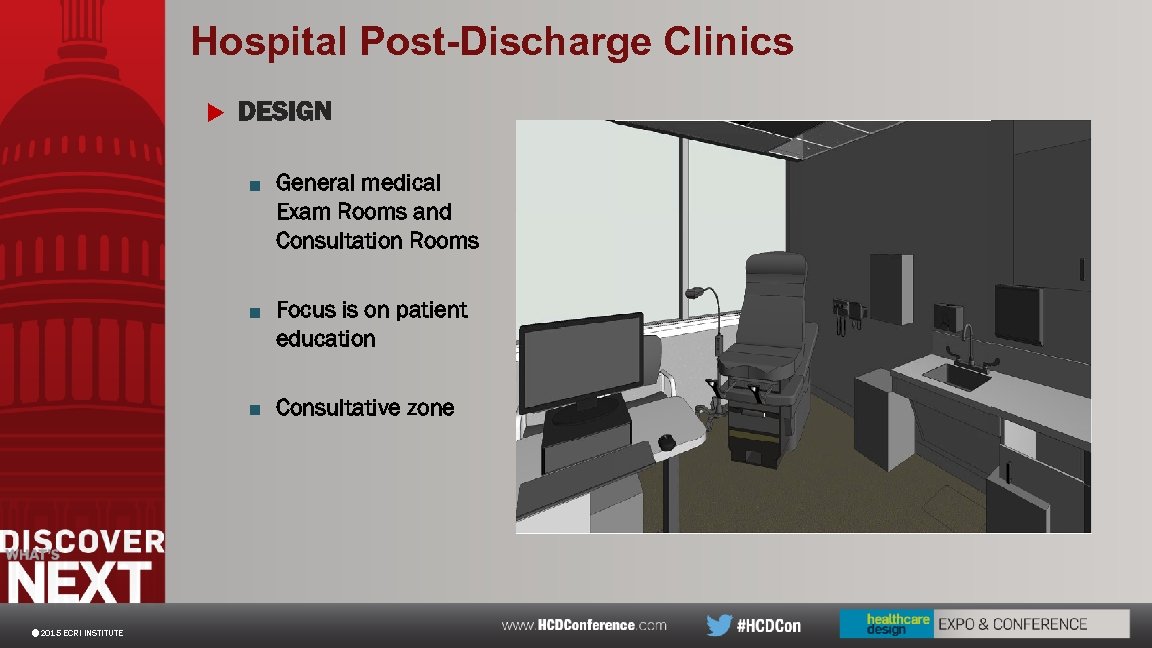 Hospital Post-Discharge Clinics u DESIGN ■ General medical Exam Rooms and Consultation Rooms ■ Focus is on patient education ■ Consultative zone © 2015 ECRI INSTITUTE
 Hospital Post-Discharge Clinics u COSTS ■ Costs to establish and maintain vary based on the hospital’s needs, patient load, and available resources ■ Space and a dedicated support staff are needed for an effective operation -- cost of constructing or updating space for the clinic ■ Clinic generates revenue for the parent hospital through billing for patient visits -- revenue is less important than the costs saved by avoiding readmissions © 2015 ECRI INSTITUTE
 Hospital Post-Discharge Clinics u EXAMPLES ■ Bridge Clinic of San Francisco General Hospital, CA ■ Beth Israel Deaconess Medical Center, Boston, MA ■ Harborview Medical Center, Seattle, WA ■ Tallahassee Memorial Hospital, FL ■ JPS Health Network, Ft. Worth, TX ■ Denver VA Medical Center, CO ■ Metropolitan Hospital Center, New York, NY ■ University of Florida, Shands Hospital Care. One, Gainesville, FL ■ University of North Carolina, Hospitals Internal Medicine Clinic Post-discharge Program, Chapel Hill, NC © 2015 ECRI INSTITUTE
 Adolescent and Young Adult (AYA) Cancer Centers © 2015 ECRI INSTITUTE
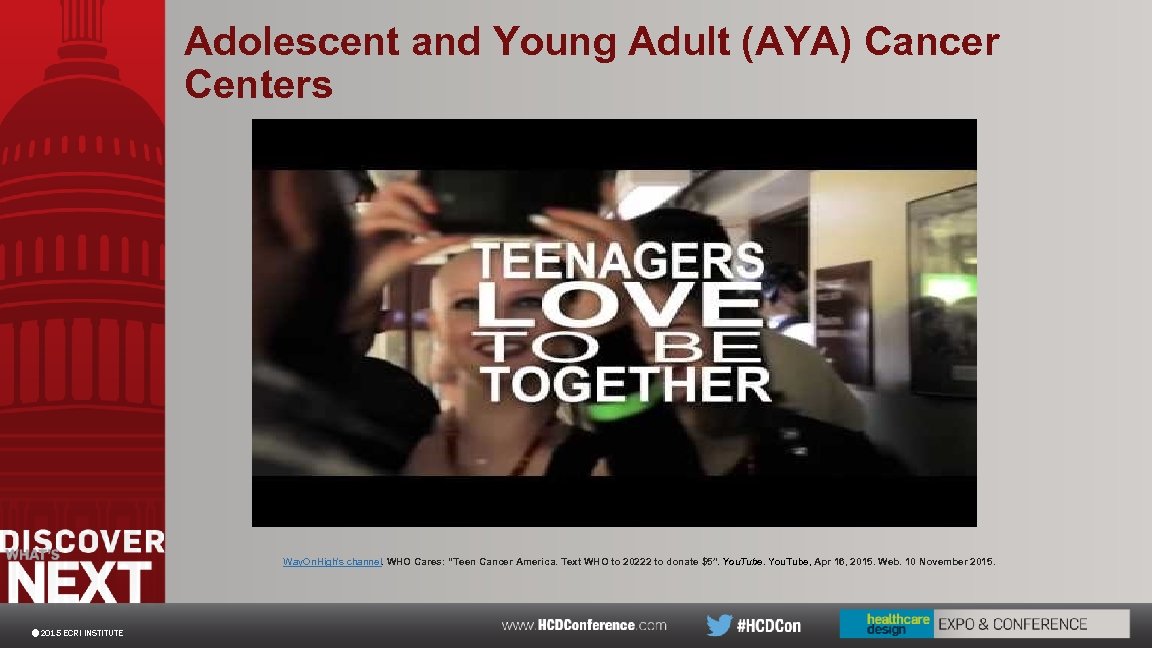 Adolescent and Young Adult (AYA) Cancer Centers Way. On. High's channel. WHO Cares: “Teen Cancer America. Text WHO to 20222 to donate $5”. You. Tube, Apr 16, 2015. Web. 10 November 2015. © 2015 ECRI INSTITUTE
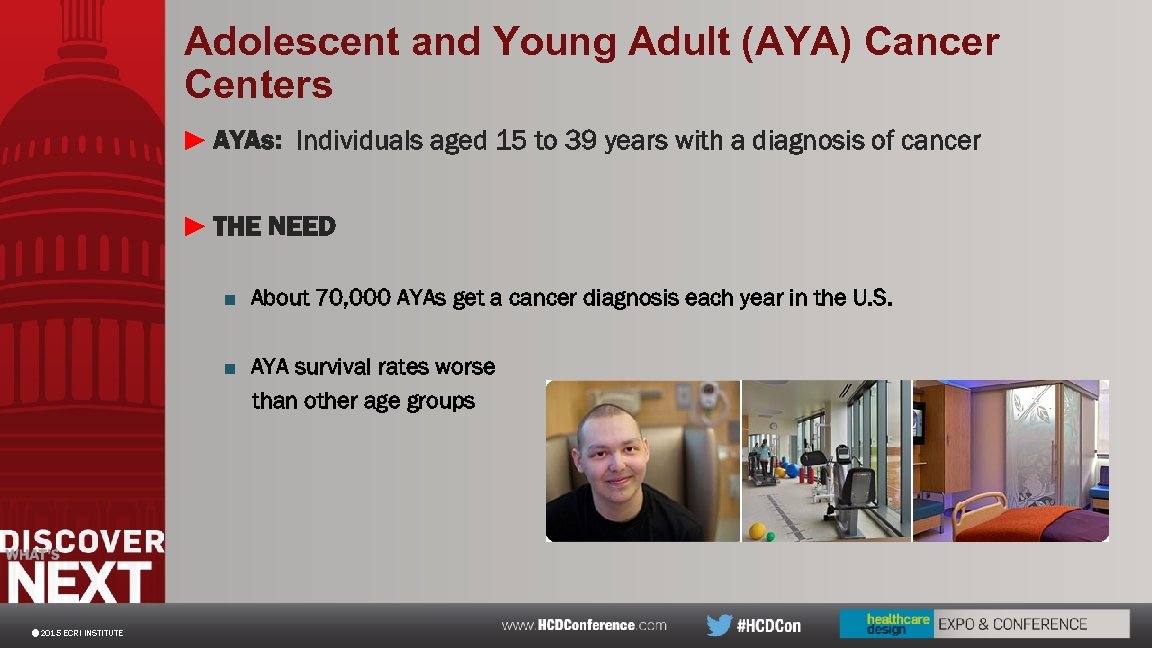 Adolescent and Young Adult (AYA) Cancer Centers ► AYAs: Individuals aged 15 to 39 years with a diagnosis of cancer ► THE NEED ■ About 70, 000 AYAs get a cancer diagnosis each year in the U. S. ■ AYA survival rates worse than other age groups © 2015 ECRI INSTITUTE
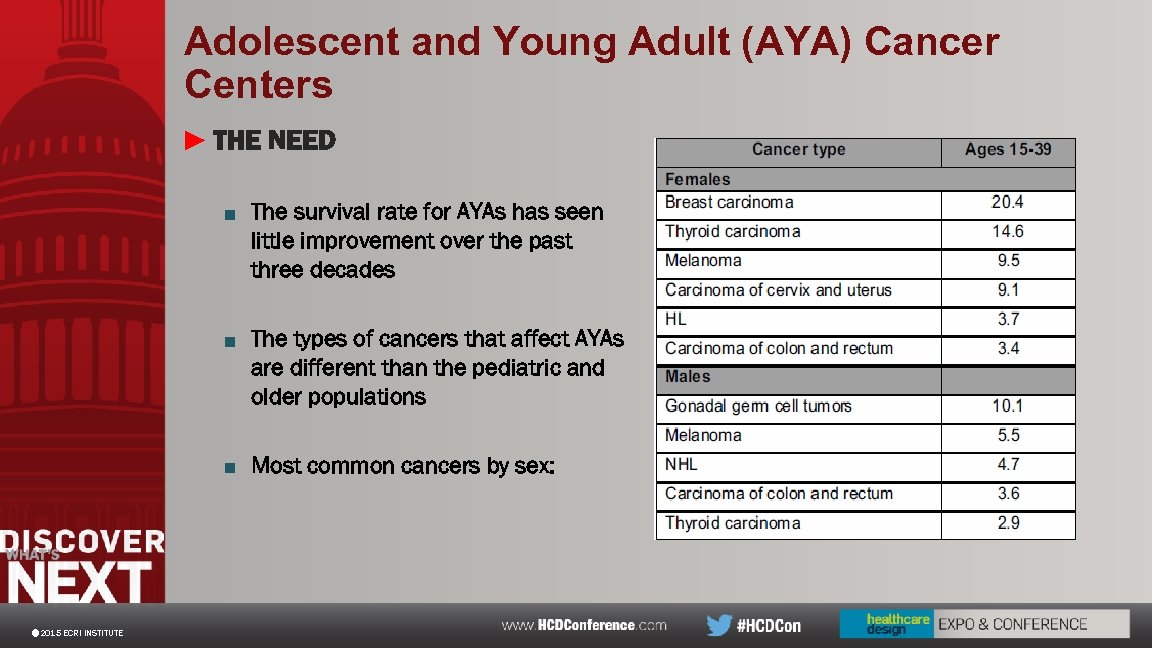 Adolescent and Young Adult (AYA) Cancer Centers ► THE NEED ■ The survival rate for AYAs has seen little improvement over the past three decades ■ The types of cancers that affect AYAs are different than the pediatric and older populations ■ Most common cancers by sex: © 2015 ECRI INSTITUTE
 Adolescent and Young Adult (AYA) Cancer Centers ► THE NEED ■ Standard care settings do not address AYA needs, such as: — — Ongoing education Developing careers and relationships Emotional and financial vulnerability Fertility, family planning, and pregnancy ■ More patients needed in clinical trials on AYA common cancers to learn what yields best outcomes in AYAs © 2015 ECRI INSTITUTE
 Adolescent and Young Adult (AYA) Cancer Centers ► WHAT ARE THEY ■ Cancer centers with specialized programs, services, and built environment for AYAs with cancer (outpatient and inpatient service) — Clinical staff with expertise in AYA common cancers — Social areas where AYAs can rest, socialize, study, eat, etc. — Additional space designated for staff offices and consultations — Flexible appointment times (nights and weekends) © 2015 ECRI INSTITUTE
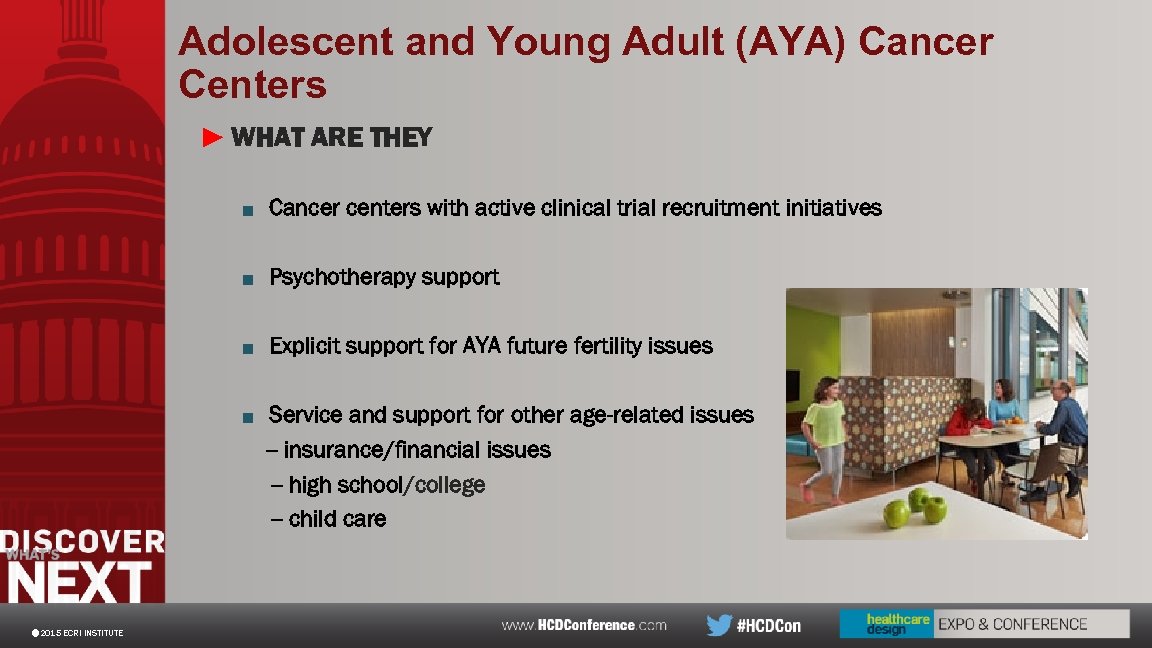 Adolescent and Young Adult (AYA) Cancer Centers ► WHAT ARE THEY ■ Cancer centers with active clinical trial recruitment initiatives ■ Psychotherapy support ■ Explicit support for AYA future fertility issues ■ Service and support for other age-related issues -- insurance/financial issues -- high school/college -- child care © 2015 ECRI INSTITUTE
 Adolescent and Young Adult (AYA) Cancer Centers ► GOALS ■ Improve AYA patient outcomes ■ Make AYA centers accessible nationwide ■ Train clinical staff and develop educational materials aimed at AYA needs ■ Promote investment in AYA clinical research and enroll more patients in the clinical trial process ■ Facilitate collaboration among AYA cancer centers © 2015 ECRI INSTITUTE
 Adolescent and Young Adult (AYA) Cancer Centers u RECOMMENDATIONS ■ Cancer centers may develop their own programs or follow models set by various AYA organizations -- One model was developed by the Teen Center America, a nonprofit organization -- Established in 2011 as the U. S. extension of Teenage Cancer Trust -- Organizations that form partnerships with hospitals and cancer centers to design and implement AYA cancer units © 2015 ECRI INSTITUTE
 Adolescent and Young Adult (AYA) Cancer Centers u RECOMMENDATIONS ■ Health systems should determine if they serve a significant number of AYA cancer patients ■ Identify and access availability of existing AYA cancer services in the area, and the model(s) being used ■ Determine whether they would need to build new infrastructure or renovate existing infrastructure to suit the specific needs of the program ■ Research and review existing models to see what might be appropriate to adapt or modify to provide AYA cancer care © 2015 ECRI INSTITUTE
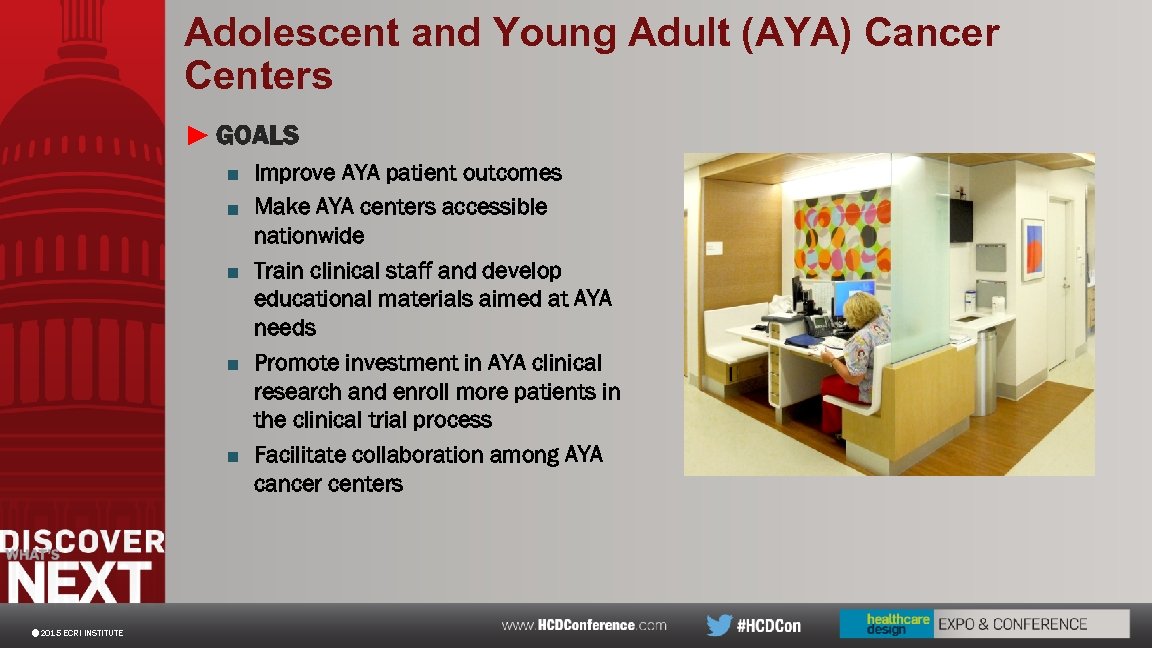
 Adolescent and Young Adult (AYA) Cancer Centers u DESIGN ■ Units have zones for social activity and utility that surround a centrally located nurses’ station to create a patient-focused environment that maintains clinical functionality ■ Noisier areas such as kitchen, dining, and lounge spaces are separated from treatment rooms and doctors’ offices ■ Home-like environment and tailored construction to conceal medical equipment ■ Areas where patients require constant monitoring are oriented closest to the nurses’ stations with remote monitoring zones located on the unit’s periphery. © 2015 ECRI INSTITUTE
 Adolescent and Young Adult (AYA) Cancer Centers u DESIGN ■ Individual rooms and common areas are outfitted with personal computers, gaming systems, televisions ■ Social areas -- Therapy room -- Television lounge -- Kitchen and dining area -- Recreational spaces -- Classrooms for school programs -- Units that cater to young adults may also include daycare service © 2015 ECRI INSTITUTE
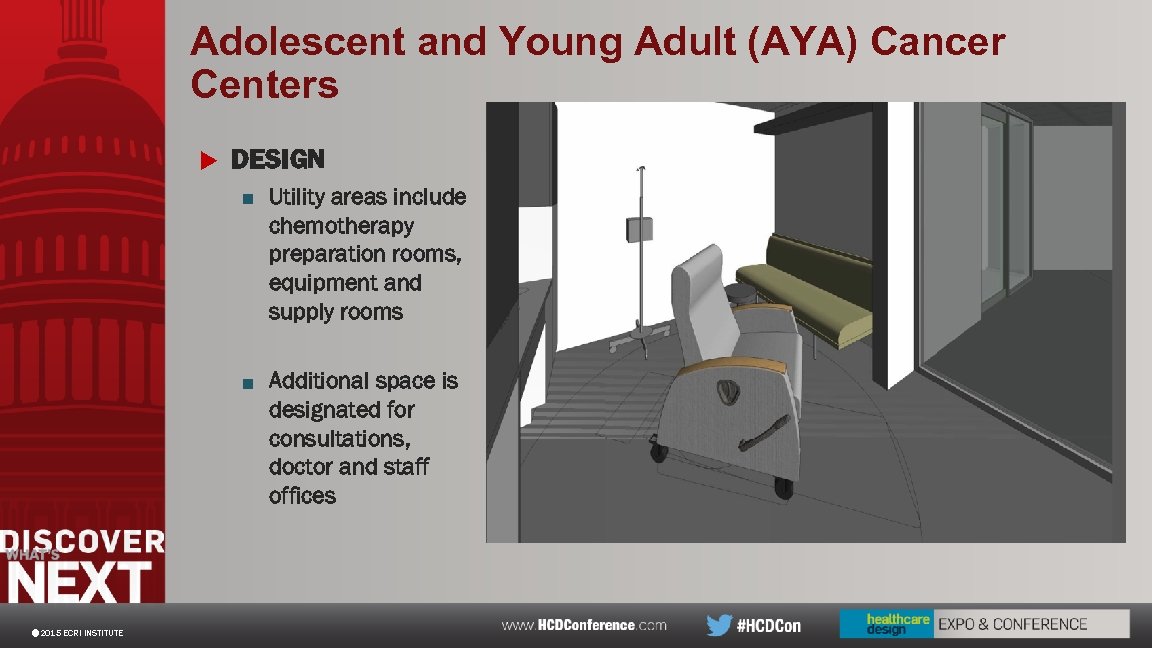 Adolescent and Young Adult (AYA) Cancer Centers u DESIGN ■ Utility areas include chemotherapy preparation rooms, equipment and supply rooms ■ Additional space is designated for consultations, doctor and staff offices © 2015 ECRI INSTITUTE
 Adolescent and Young Adult (AYA) Cancer Centers u COSTS ■ Charitable organizations (Teen Cancer America and Live. Strong) sometimes assume fundraising and financial responsibilities for building and operating ■ It can cost an estimated $3 million to $5 million for hospitals or cancer centers to establish and outfit an AYA unit © 2015 ECRI INSTITUTE
 Adolescent and Young Adult (AYA) Cancer Centers u EXAMPLES ■ Children’s Hospital of Philadelphia ■ Cleveland Clinic Children’s Hospital ■ Hyundai Cancer Institute at the Children’s Hospital of Orange County, Orange ■ Knight Cancer Institute of Oregon Health & Science University, Portland ■ Moffitt Cancer Center & Research Institute, Tampa ■ Robert H. Lurie Comprehensive Cancer Center of Northwestern University, ■ ■ ■ © 2015 ECRI INSTITUTE Chicago Roswell Park Cancer Institute, Buffalo Seattle Children’s Hospital The University of Chicago Medicine The University of Texas MD Anderson Cancer Center, Houston UCLA Daltrey/Townshend Teen & Young Adult Cancer Program, Santa Monica USC Norris Comprehensive Cancer Center, Los Angeles
 Natalie Abell, Senior Associate, ECRI Institute nabell@ecri. org 610 -825 -6000 x 5301 © 2015 ECRI INSTITUTE
 Thank You © 2015 ECRI INSTITUTE