


 Скачать презентацию Week of 4 April American Federal Government
65700eb7be80b51fc480177deb7d8a13.ppt
- Количество слайдов: 28
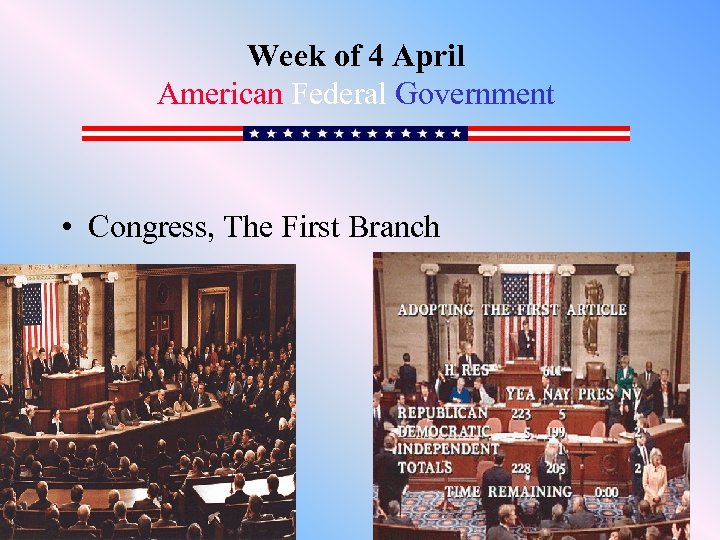 Week of 4 April American Federal Government • Congress, The First Branch
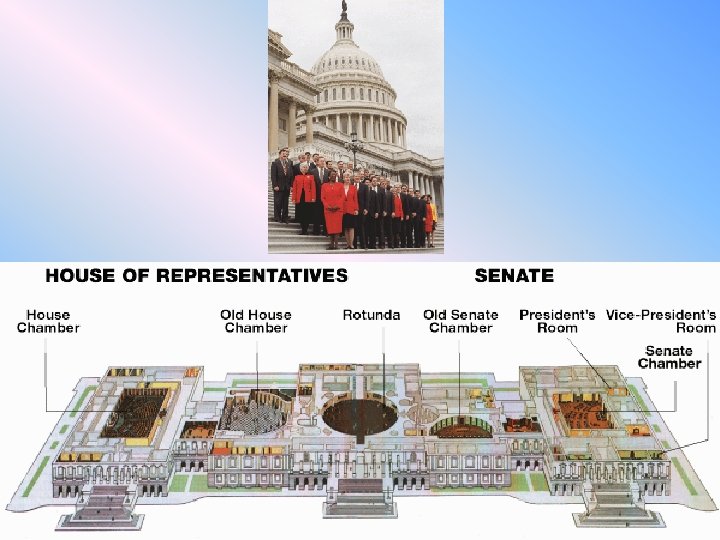
 Congress • Bicameral institution – 435 seats in the House of Representatives • approximately 650, 000 persons in each district – 100 seats in the Senate
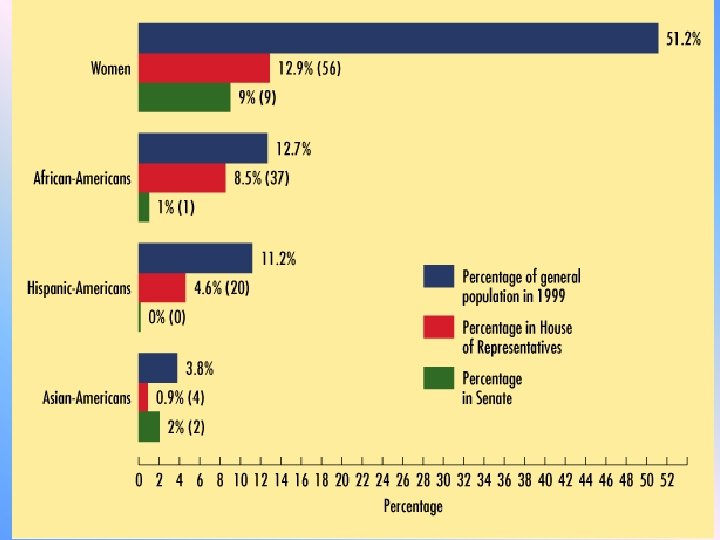
 Congress • Fair Representation? – Women/Minorities
 Congress • Fair Representation? – States determine geography of House districts – Malapportionment – Gerrymandering & the Census
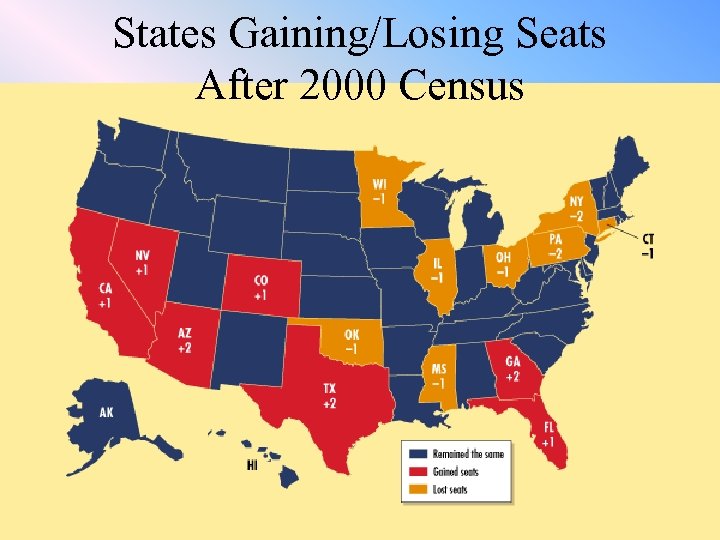 States Gaining/Losing Seats After 2000 Census
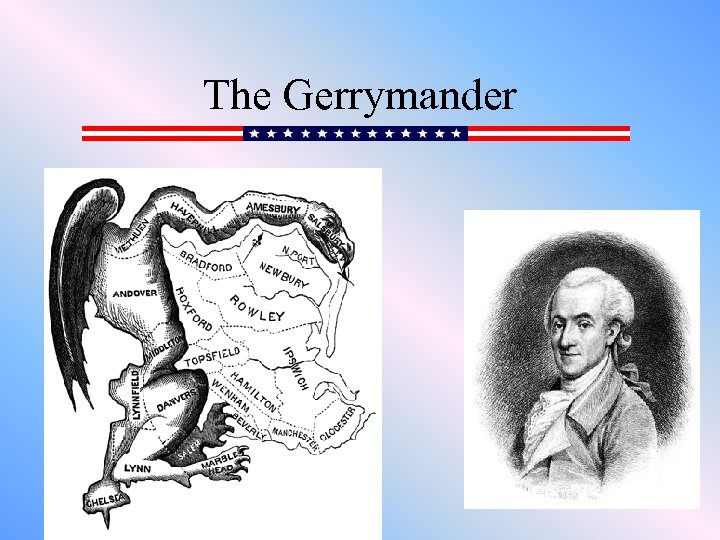 The Gerrymander
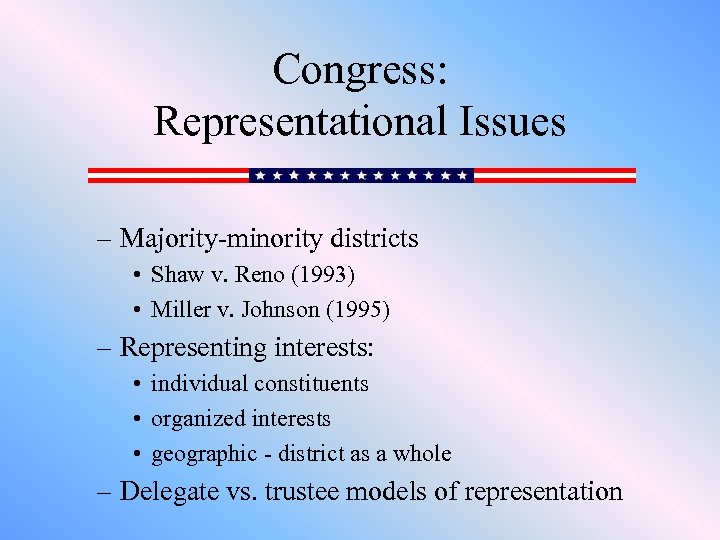 Congress: Representational Issues – Majority-minority districts • Shaw v. Reno (1993) • Miller v. Johnson (1995) – Representing interests: • individual constituents • organized interests • geographic - district as a whole – Delegate vs. trustee models of representation
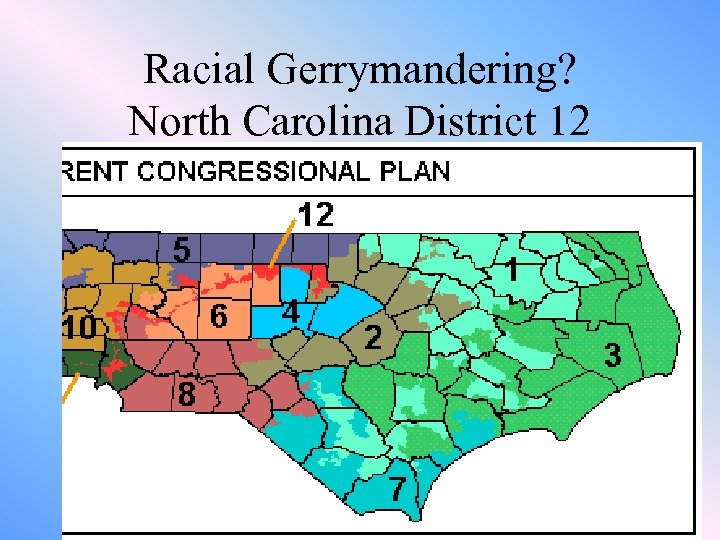 Racial Gerrymandering? North Carolina District 12
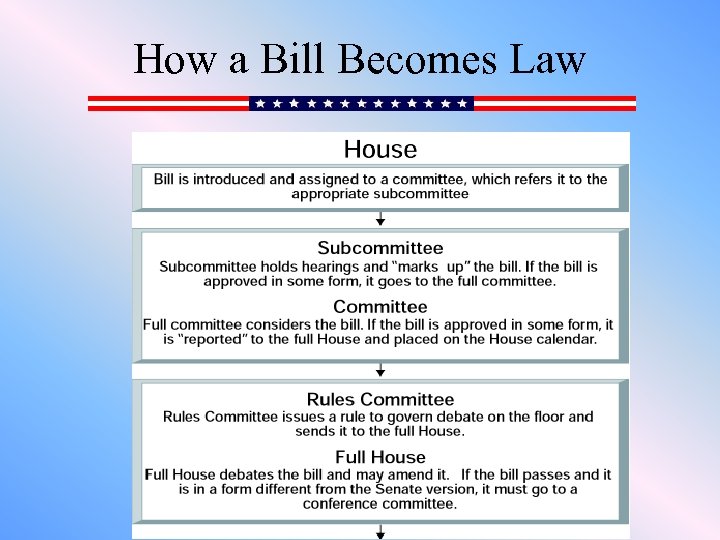 How a Bill Becomes Law
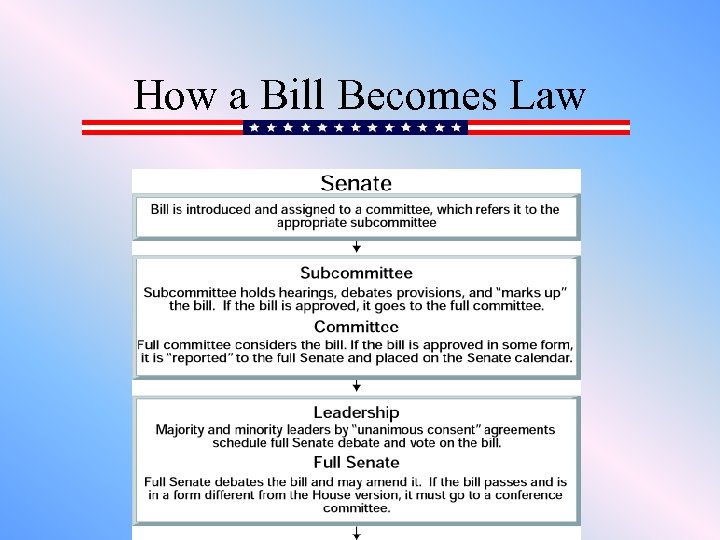 How a Bill Becomes Law
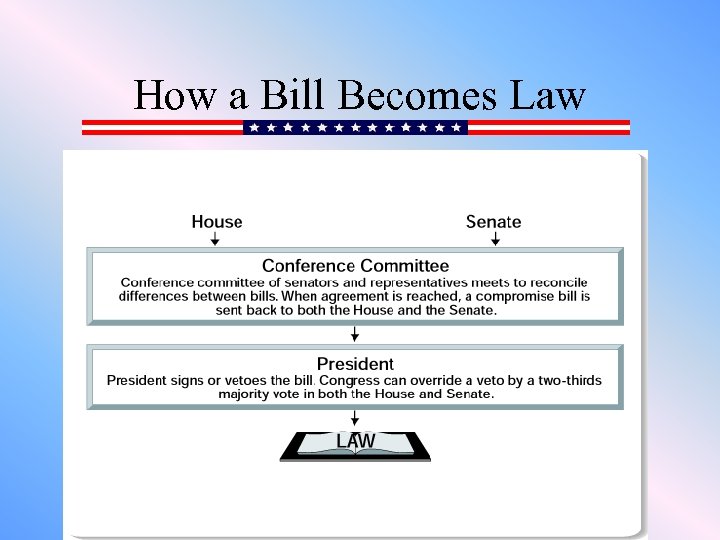 How a Bill Becomes Law
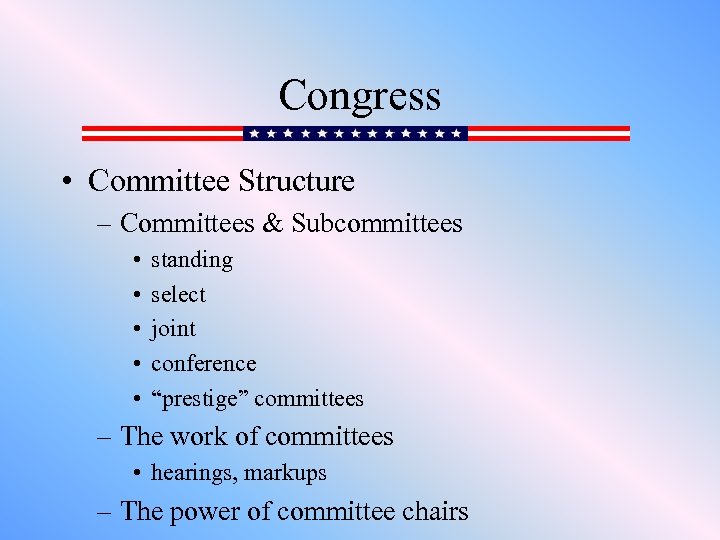 Congress • Committee Structure – Committees & Subcommittees • • • standing select joint conference “prestige” committees – The work of committees • hearings, markups – The power of committee chairs
 Congress • Staff Agencies – Congressional Research Service (CRS) – General Accounting Office (GAO) – Office of Technology Assessment (OTA) – Congressional Budget Office (CBO)
 Congress • Organizing Congress: The Importance of Party – House: more majoritarian • Speaker’s role • majority leader & whips • minority party - a life of frustration? – minority leader’s role: loyal opposition?
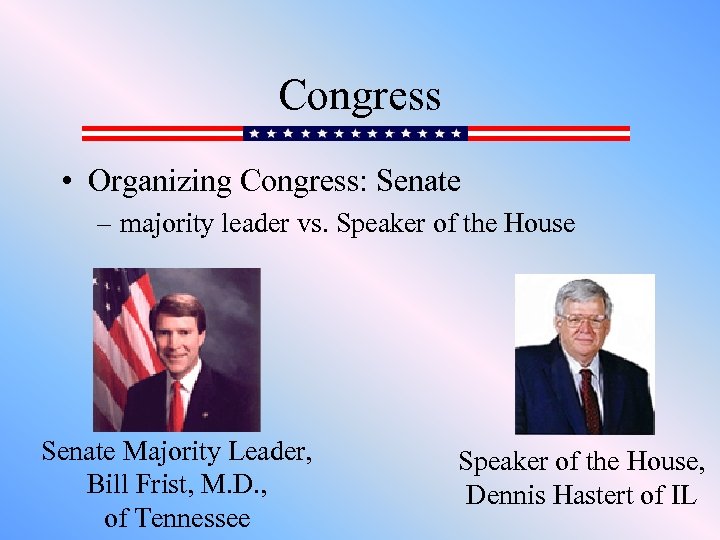 Congress • Organizing Congress: Senate – majority leader vs. Speaker of the House Senate Majority Leader, Bill Frist, M. D. , of Tennessee Speaker of the House, Dennis Hastert of IL
 Congress • Floor Proceedings – House • • quorum closed rules open rules restrictive rules – king of the hill and queen of the hill rules • The importance of the Rules Committee • discharge petitions
 Congress • Floor Proceedings – Senate • • • no rules limiting debate germaneness amendments filibuster cloture = 60 votes unanimous consent agreements – the way much business gets conducted
 Congress • Types of Bills – Public – Private – Resolutions (HR 200, SJR 20) • simple • concurrent (joint)
 Congress • Voting – voice votes – roll-call votes • How do members decide? – Representational view – Organizational view – Attitudinal view
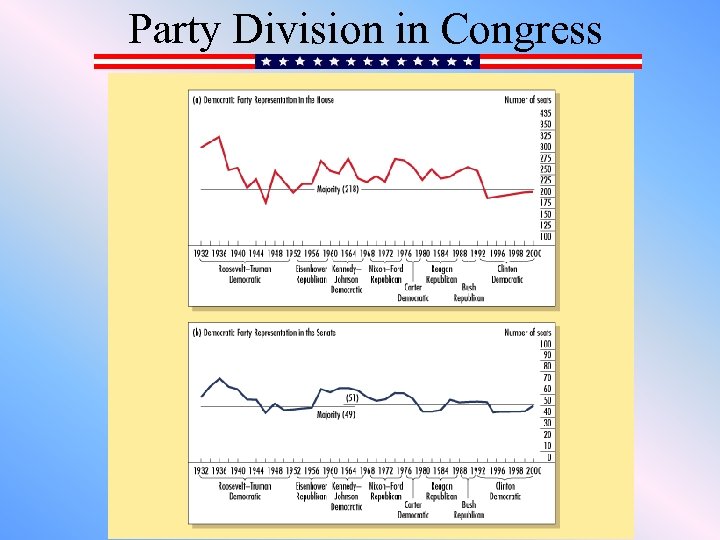 Party Division in Congress
 Congress • The Rise of Party Unity Voting – 51% of members of one party voting against 51% of the members of the other party • Leadership reforms in the House
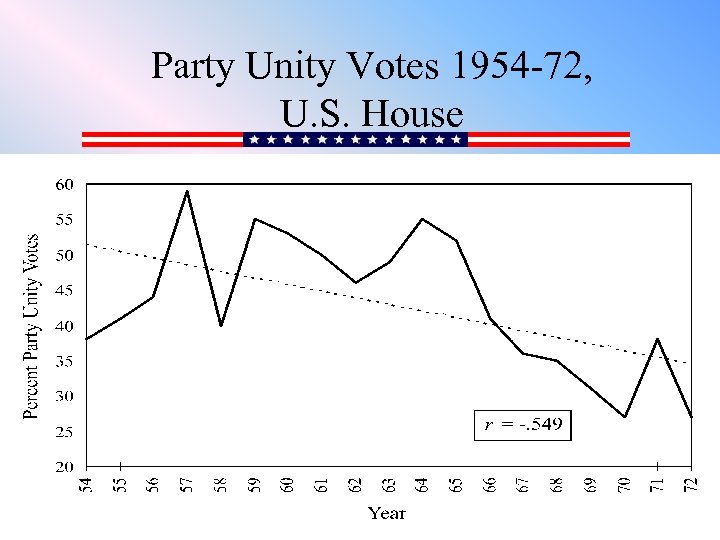 Party Unity Votes 1954 -72, U. S. House
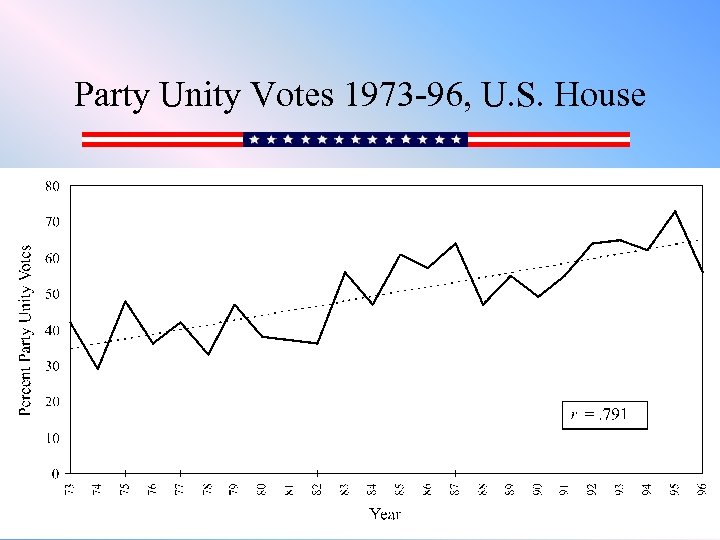 Party Unity Votes 1973 -96, U. S. House
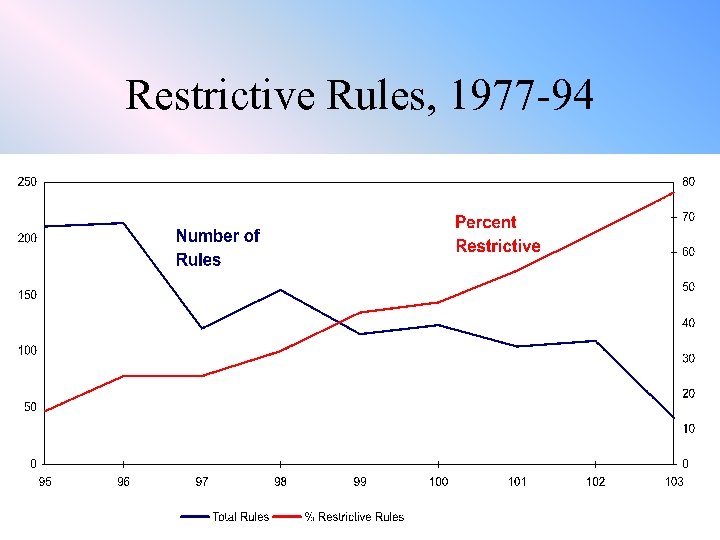 Restrictive Rules, 1977 -94
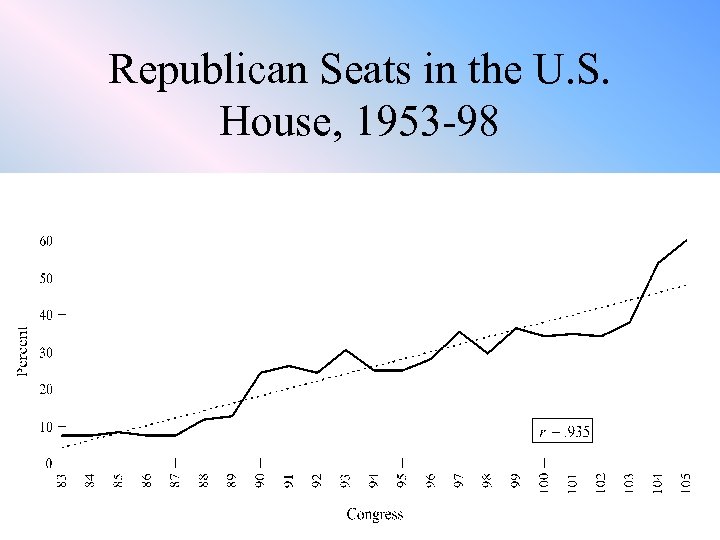 Republican Seats in the U. S. House, 1953 -98
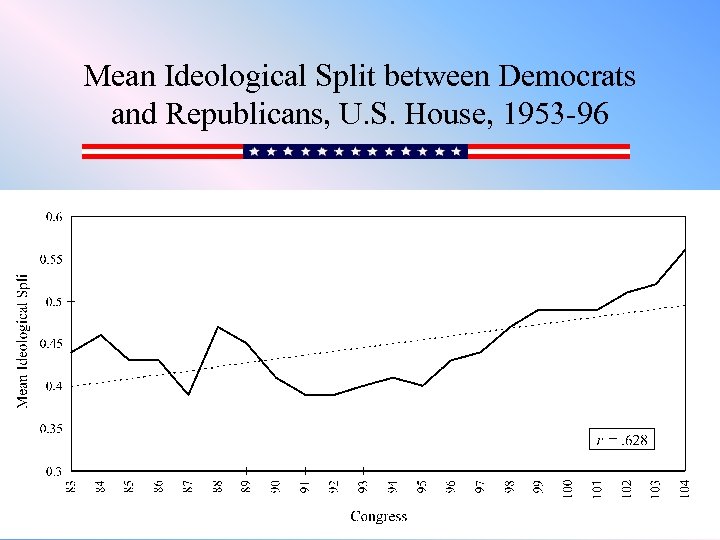 Mean Ideological Split between Democrats and Republicans, U. S. House, 1953 -96