 Скачать презентацию Week 6 — Systems Engineering and Analysis Buede
f9b5553b67d658e8eaf46271ce31d75f.ppt
- Количество слайдов: 57




Week 6 - Systems Engineering and Analysis Buede ch 8 & Wasson ch 40 – Physical Architecture Believe it or not – we’ll even apply this topic to the “Newton free” world of software! Image of “Second Life” from http: //secondlifetalk. com/. 1
Buede starts here – for Wasson, see slide 47! Functional vs. Physical Functional • What the system must do. Physical • How the system will do it. 2
Physical Architecture • Provides system resources for every function in the Functional Architecture Resource types : – Hardware – Software – Facilities – People – Procedures 3
Physical Architecture-2 • Must be a Physical Architecture for each system associated with the system life cycle. • Two types of Physical Architectures : – Generic and Instantiated. 4
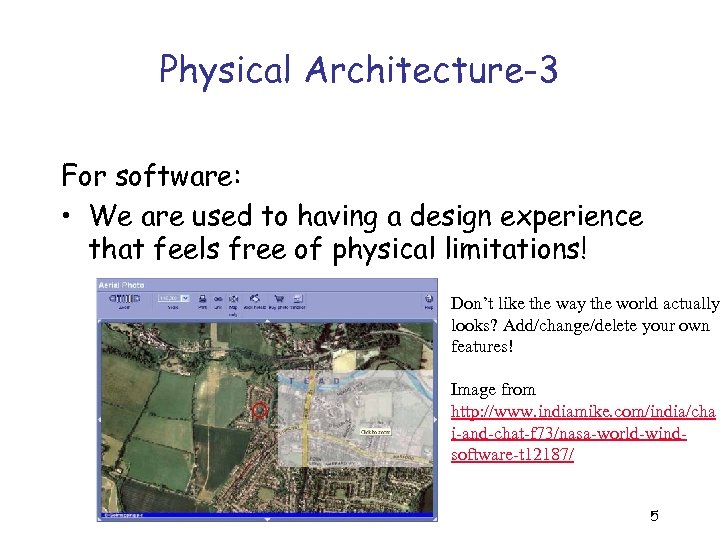
Physical Architecture-3 For software: • We are used to having a design experience that feels free of physical limitations! Don’t like the way the world actually looks? Add/change/delete your own features! Image from http: //www. indiamike. com/india/cha i-and-chat-f 73/nasa-world-windsoftware-t 12187/ 5
Physical Architecture-4 For software: • “Physical” means “real” – like: – What families of components would we choose? – What “bottom up” characteristics would fit? • Without going all the way to naming those pieces • But this is systems engineering, and we also can learn from design work that does have some physical reality… 6
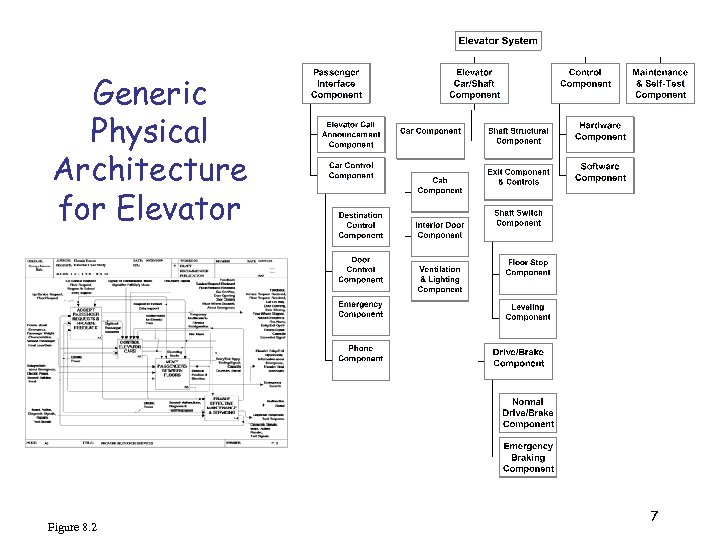
Generic Physical Architecture for Elevator Figure 8. 2 7
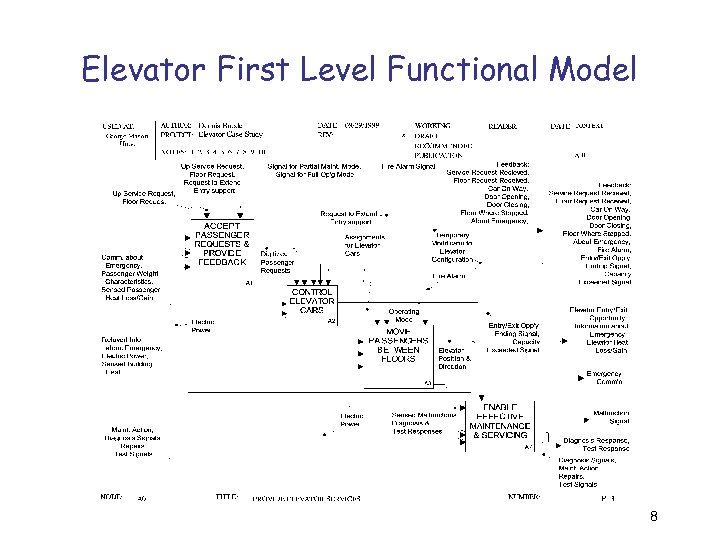
Elevator First Level Functional Model 8
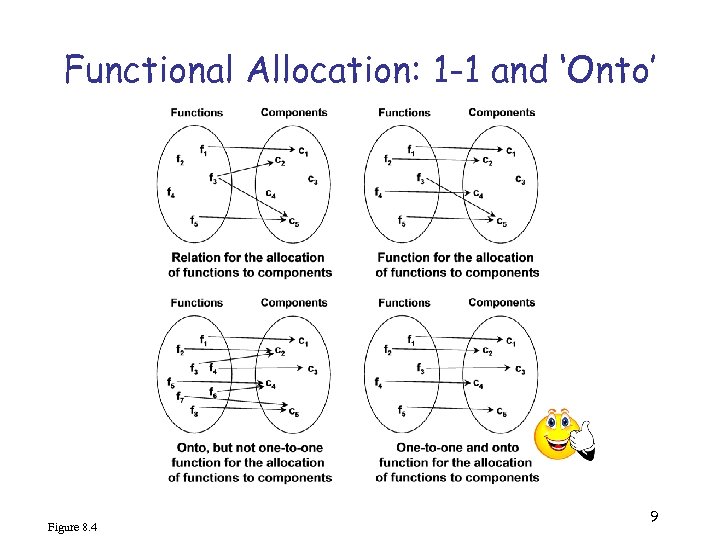
Functional Allocation: 1 -1 and ‘Onto’ Figure 8. 4 9
Functional Allocation Goal • Allocate Functions Components. • There is great advantage to having Functional and Physical Architectures match (one-to-one and onto). 10
Functional Allocation Goal • There is great advantage to having Functional and Physical Architectures match (one-to-one and onto). – When does this happen ? ? – When does this not happen ? ? Product or system architecture decisions ? ? 11
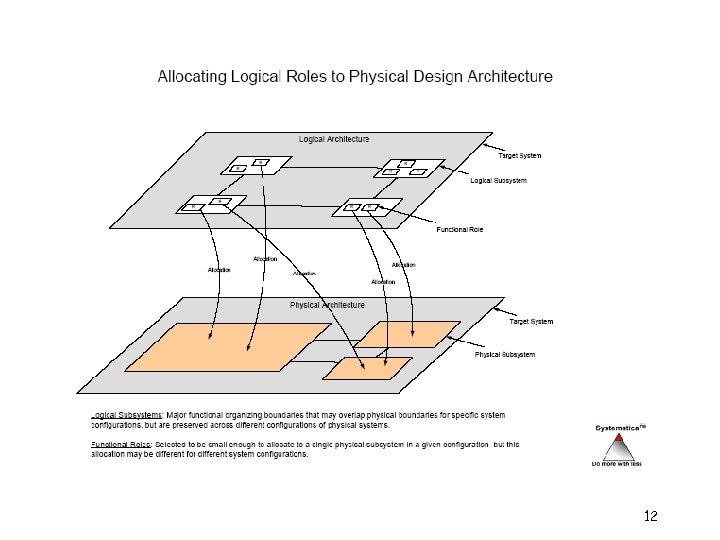
12
Two Levels of Physical Architecture • Generic physical architecture: description of the partitioned elements of the physical architecture without any specification of the performance characteristics of the physical resources that comprise each element • Instantiated physical architecture: generic physical architecture to which complete definitions of the performance characteristics of the resources have been added 13
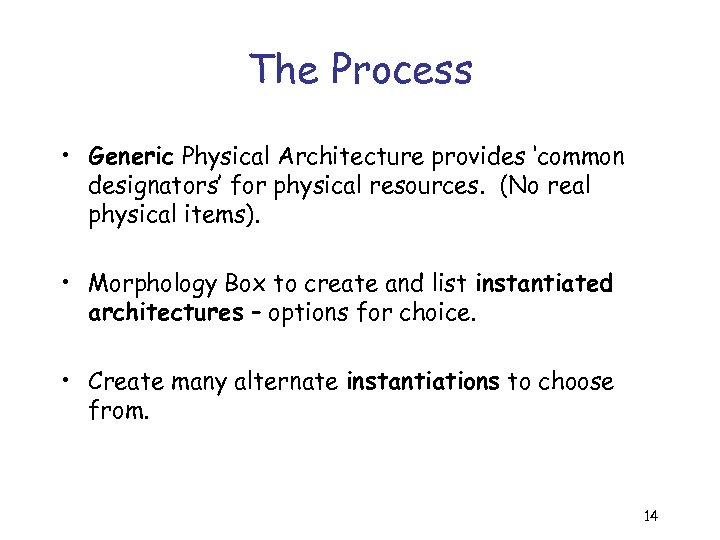
The Process • Generic Physical Architecture provides ‘common designators’ for physical resources. (No real physical items). • Morphology Box to create and list instantiated architectures – options for choice. • Create many alternate instantiations to choose from. 14
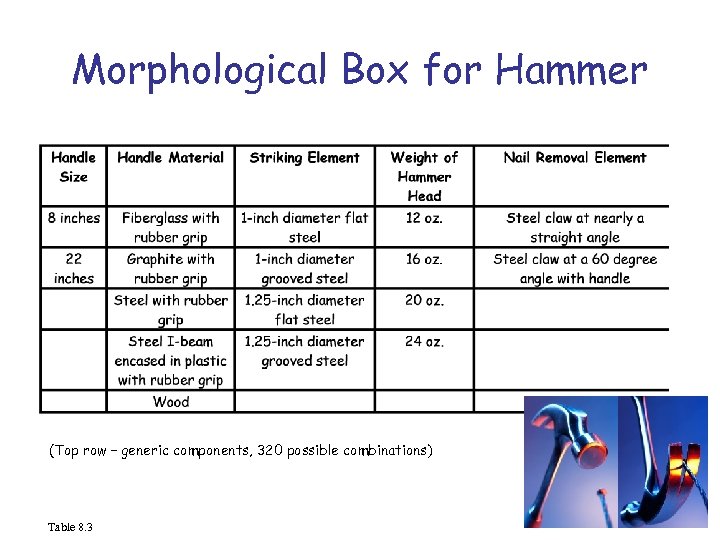
Morphological Box for Hammer (Top row – generic components, 320 possible combinations) Table 8. 3 15
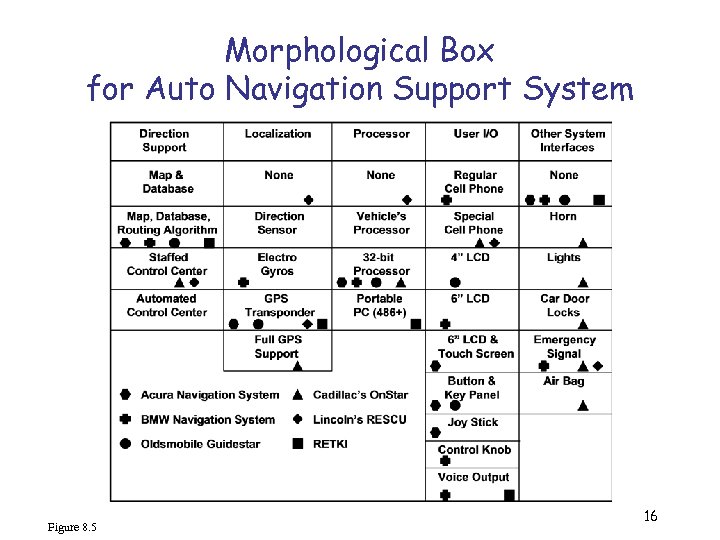
Morphological Box for Auto Navigation Support System Figure 8. 5 16
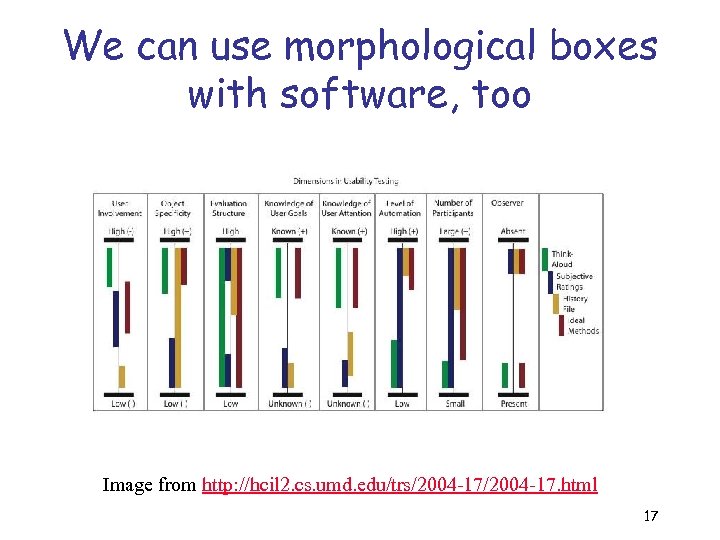
We can use morphological boxes with software, too Image from http: //hcil 2. cs. umd. edu/trs/2004 -17. html 17
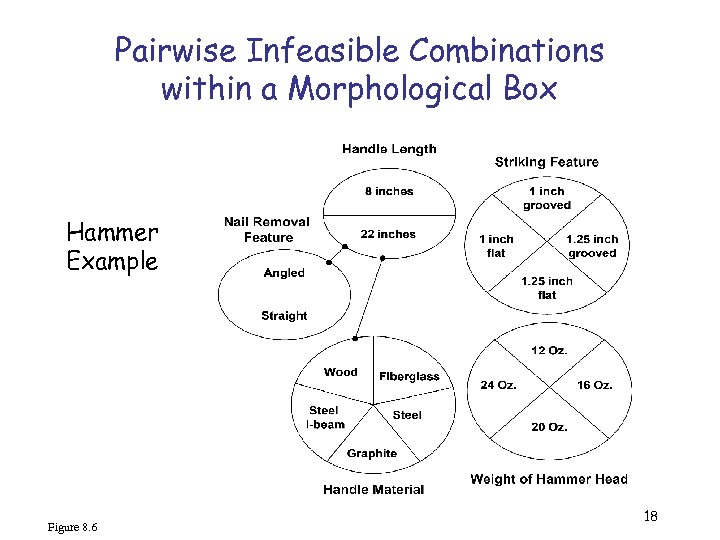
Pairwise Infeasible Combinations within a Morphological Box Hammer Example Figure 8. 6 18
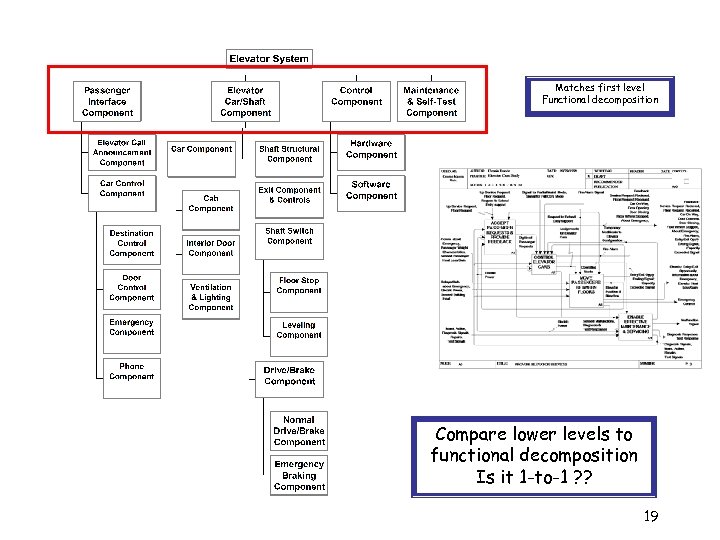
Matches first level Functional decomposition Compare lower levels to functional decomposition Is it 1 -to-1 ? ? 19
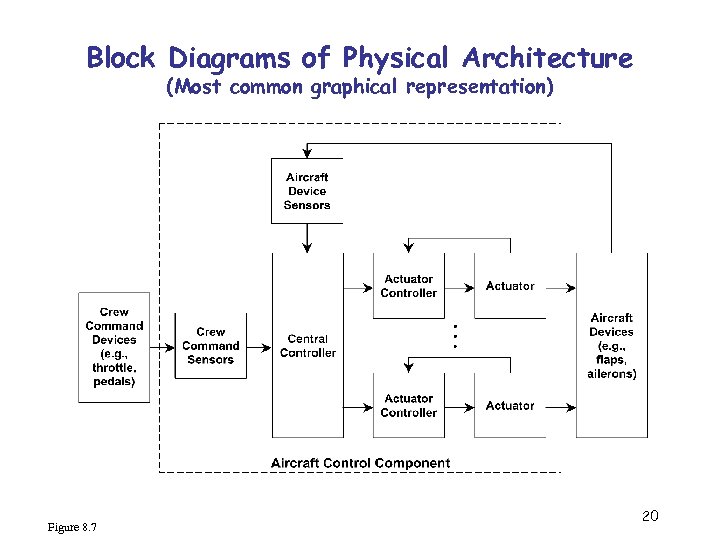
Block Diagrams of Physical Architecture (Most common graphical representation) Figure 8. 7 20
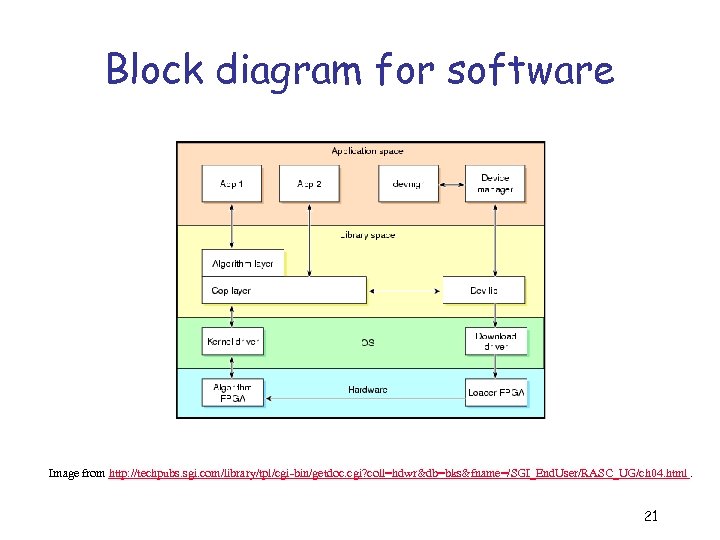
Block diagram for software Image from http: //techpubs. sgi. com/library/tpl/cgi-bin/getdoc. cgi? coll=hdwr&db=bks&fname=/SGI_End. User/RASC_UG/ch 04. html. 21
Issues in Physical Architecture Development • Functional performance, availability (cost, safety, fault tolerance), and other system-wide traits. • Commercial and ‘product line’ factors. • Operational architecture finishes this process. • Looking ahead – physical architecture elements are added as mechanisms on the Functional Architecture to produce the Operational Architecture. 22

Vehicle Theft Deterrence • It’s fairly easy to understand conceptually how an effective system could work… See https: //www. youtube. com/watch? v=Ee 3 L 9 BQQ 4 Gs 23
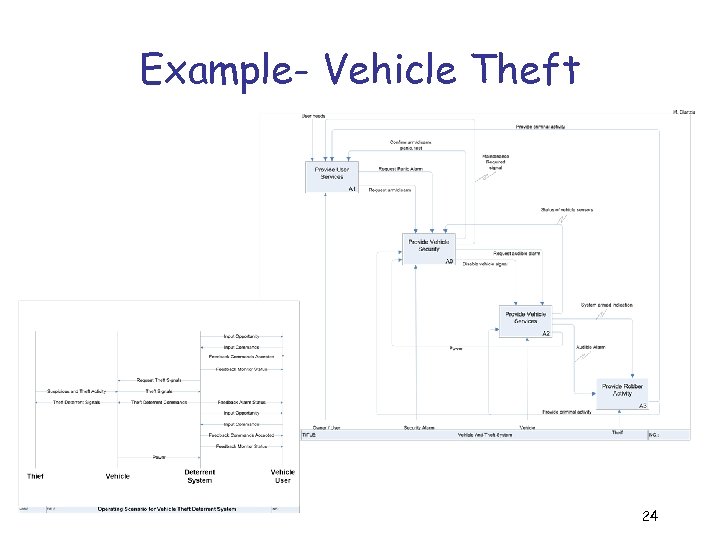
Example- Vehicle Theft 24
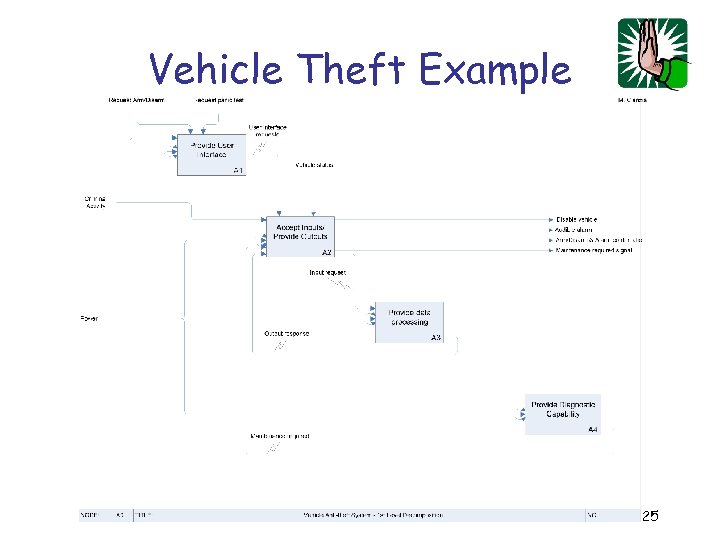
Vehicle Theft Example 25
Major Concepts for Physical Architecture • Centralized vs. Decentralized • Modular vs. Integral • Standardization, Serviceability • ‘COTS’ components 26
Mostly Software Example : FBI Fingerprint Identification System • IAFIS: Integrated Automated Fingerprint Identification System – ITN/FBI: Identification Tasking and Networking segment – focus of this case study – III/FBI: Interstate Identification Index segment – AFIS/FBI: Automated Fingerprint Identification System segment 27
ITN/FBI: Identification Tasking and Networking • RFP identified subelements • TPS: Ten-print Processing Subelement was key – Processed paper cards with 10 fingerprints – Organized as work stations within a workgroup (distributed system) – Processed ~ 30, 000 per day – Scanned, converted to binary data, and analyzed – Images had to be compressed by at least 10 to 1 – Average time to perform a fingerprint image comparison was 60 seconds – Time allowed for display of human-machine interface was 1 second from time of request 28
Critical Design Issues for TPS • Implementation of wavelet scalar quantization (WSQ) algorithm (hardware vs. software) • Workstation capabilities • Server capabilities • Workflow management capabilities • Communications interface 29
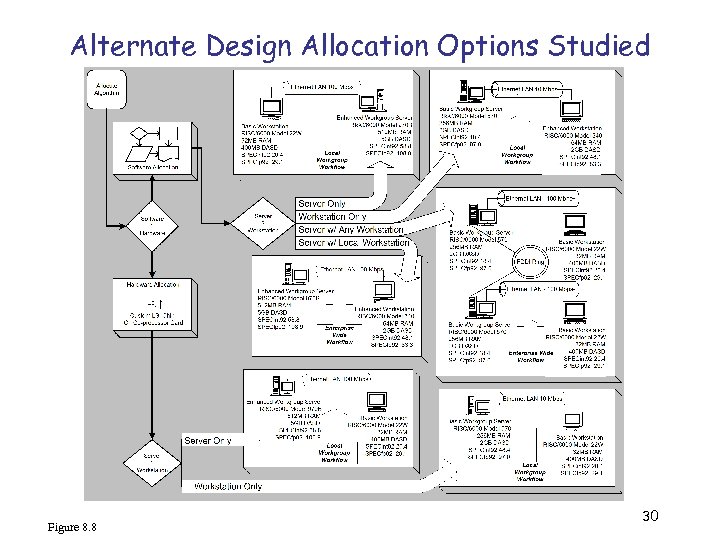
Alternate Design Allocation Options Studied Figure 8. 8 30
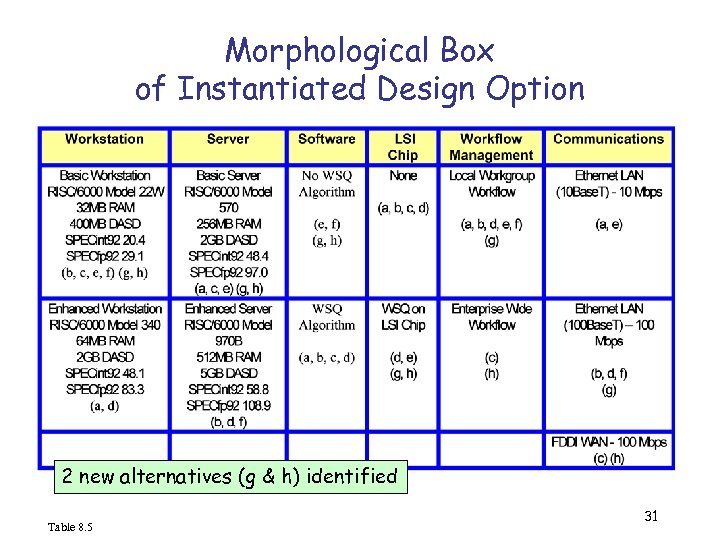
Morphological Box of Instantiated Design Option 2 new alternatives (g & h) identified Table 8. 5 31
Use of Redundancy to Achieve Fault Tolerance • Hardware: adds extra hardware to enable detection of and recovery from errors • Software: N-version – N different software developers for same routine – Comparison of results via voting – Seldom used due to expense of software development • Information: adding extra bits of information to enable error detection • Time: replaces hardware or software redundancy when there is slack processing time - recalculation 32
Hardware Redundancy A crucial choice for software • Passive: extra hardware operating concurrently using voting – Errors are masked or hidden (system unaware) – Approaches • N-modular redundancy (NMR) – Triplicated: TMR – masks 1 error – 5 MR – masks 2 errors • Triplicated NMR • Active: detects errors, confines damage, recovers from errors, & isolates/reports fault – Duplication with comparison: extra hardware with comparison, not voting – Hot standby: extra hardware, only one reporting, monitor of outputs to detect error – Cold standby: extra hardware inactive until error detected – Pair-and-a-spare: Duplication with comparison & hot standby – Hybrid: combinations of the above 33
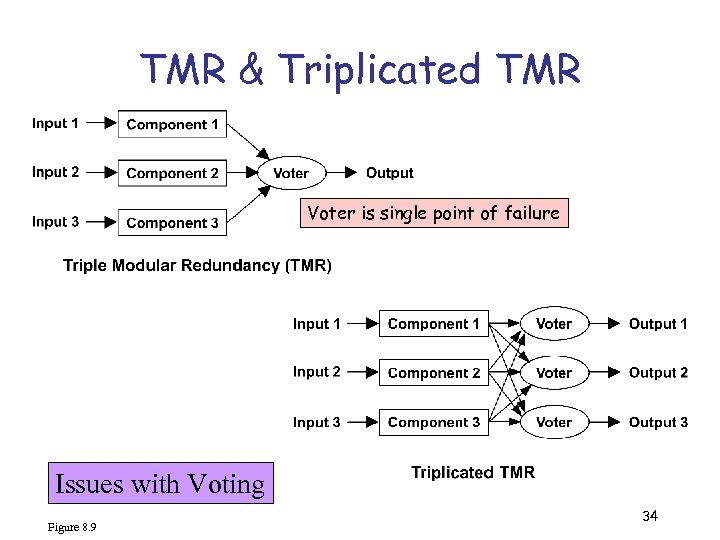
TMR & Triplicated TMR Voter is single point of failure Issues with Voting Figure 8. 9 34
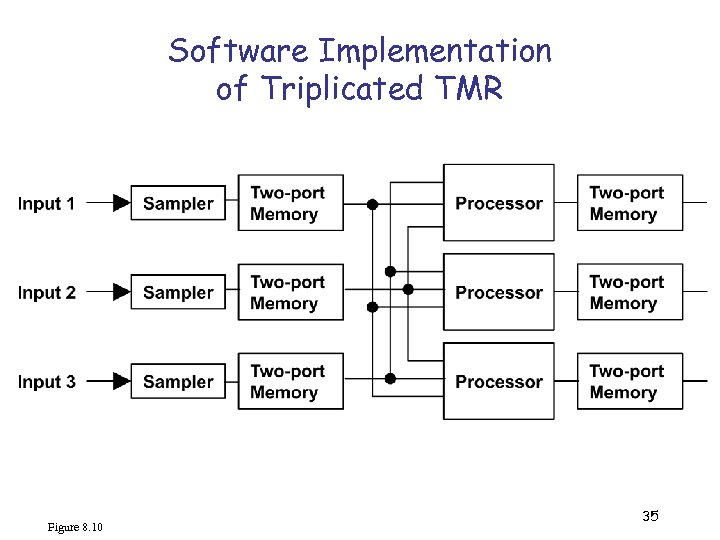
Software Implementation of Triplicated TMR Figure 8. 10 35
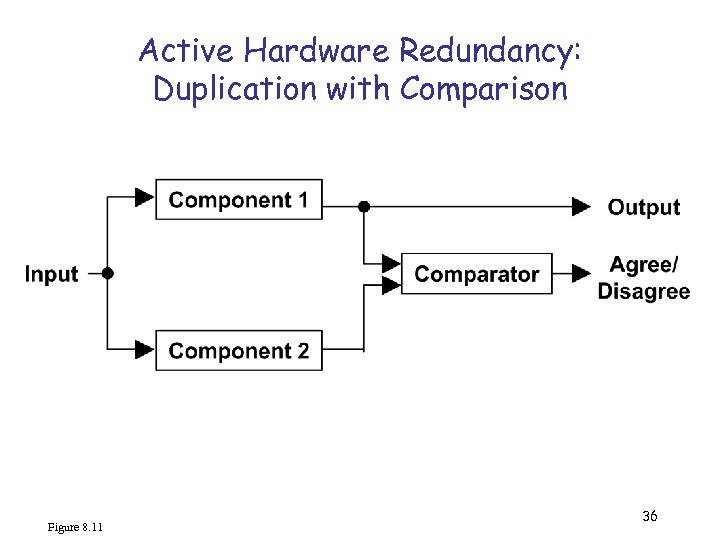
Active Hardware Redundancy: Duplication with Comparison Figure 8. 11 36
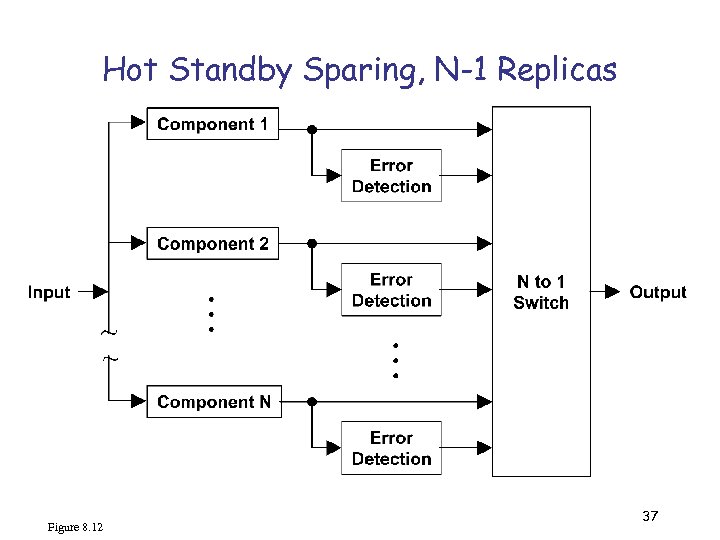
Hot Standby Sparing, N-1 Replicas Figure 8. 12 37
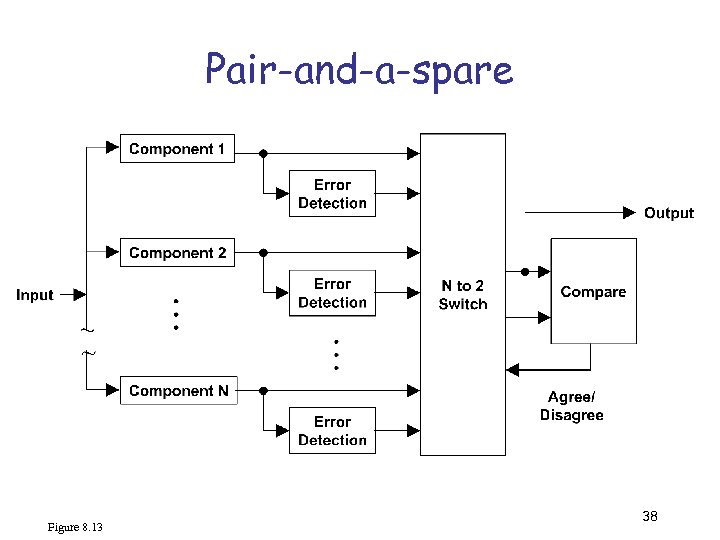
Pair-and-a-spare Figure 8. 13 38
Practicality of Redundancy • How practical is redundancy ? – In your car. – In an airplane. 39
Redundancy Warning • Redundant components and systems must truly be independent systems. • Often a ‘single point of failure’ takes out all ‘redundant’ systems. – Space Shuttle Challenger (o-rings) – Genesis space vehicle (g-switches) – UA 232 Sioux City (hydraulic systems) (P. 242) 40
Discussion Q 1 • The physical architecture for the hammer : – what does the functional architecture look like 41
Discussion Q 2 • For the drink machine functional architecture, does Hatley Pirbhai or ‘Energy, Materials, Signal Flows’ ‘work better’ with respect to giving a functional architecture that produces a ‘more realistic’ physical architecture. 42
Discussion Q 3 • For the ATM machine, develop an external systems diagram and a first level function decomposition for the Acme ATM Company – a manufacturer and seller of ATM machines. • Consider the possible uses of the functional model and physical implementations of the system. 43
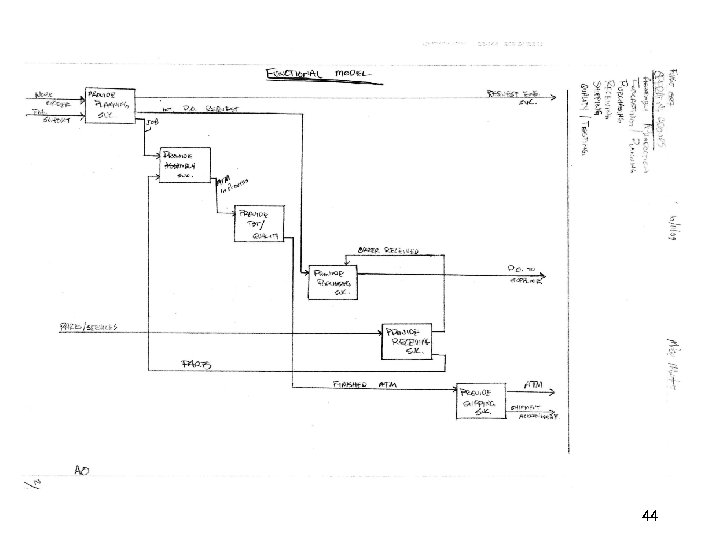
44
Discussion Q 4 • Given the first level decomposition for the ATM machine: 1. Sketch the generic physical architecture 2. Sketch a morphological box and some possible instantiated physical implementations 45
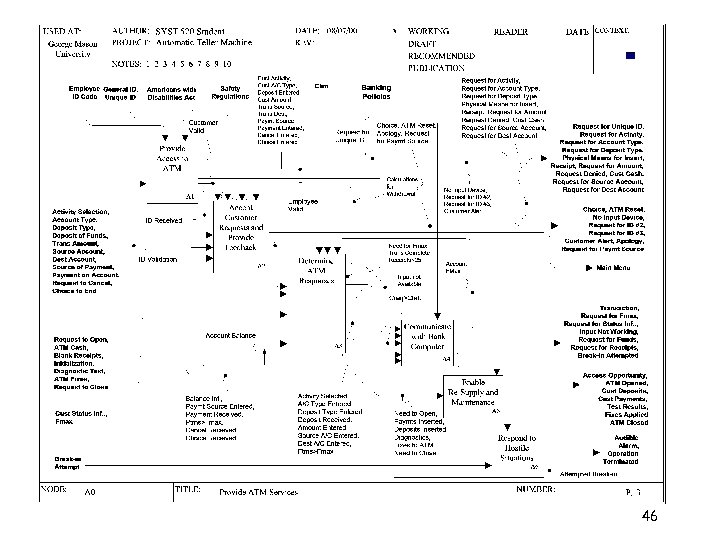
46
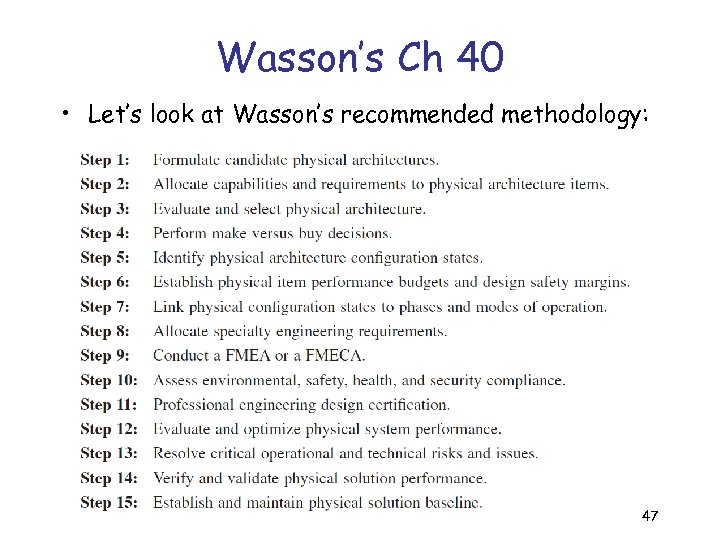
Wasson’s Ch 40 • Let’s look at Wasson’s recommended methodology: 47
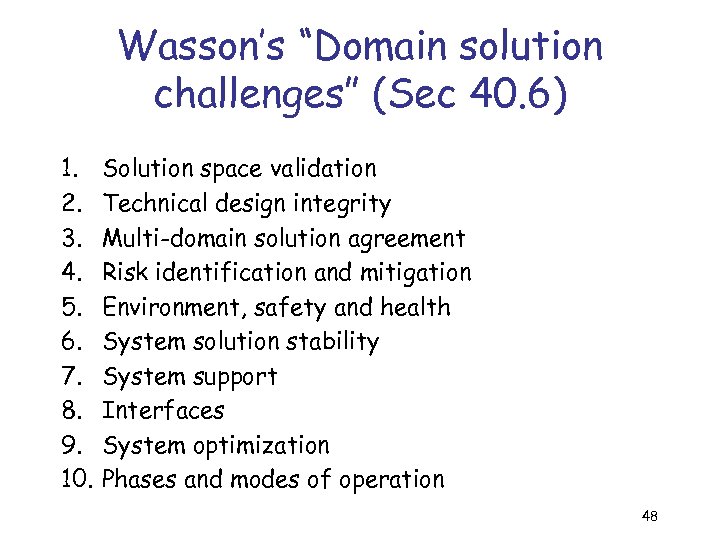
Wasson’s “Domain solution challenges” (Sec 40. 6) 1. 2. 3. 4. 5. 6. 7. 8. 9. 10. Solution space validation Technical design integrity Multi-domain solution agreement Risk identification and mitigation Environment, safety and health System solution stability System support Interfaces System optimization Phases and modes of operation 48
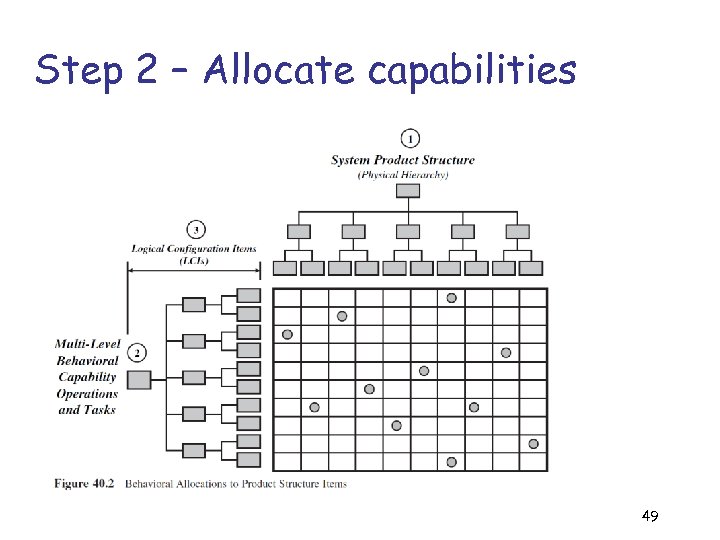
Step 2 – Allocate capabilities 49
Extra Slides • See the last slide! 50
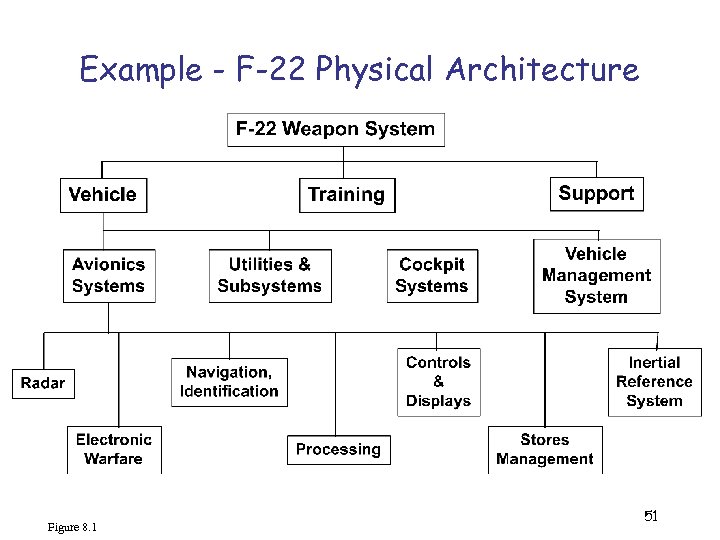
Example - F-22 Physical Architecture Figure 8. 1 51
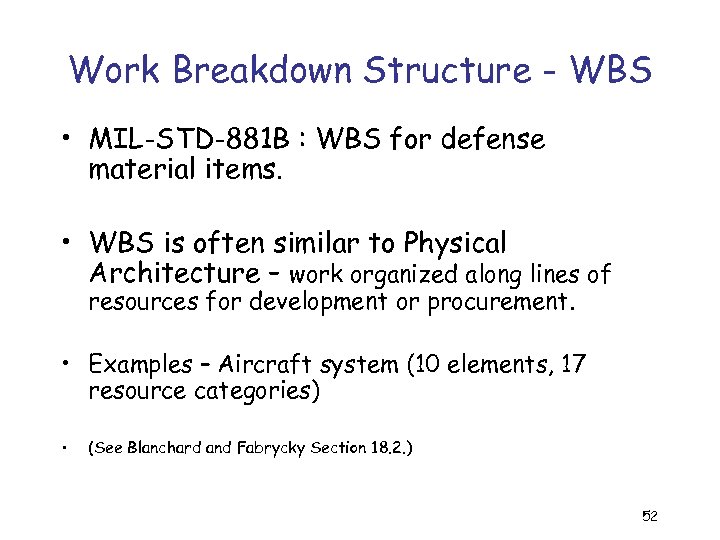
Work Breakdown Structure - WBS • MIL-STD-881 B : WBS for defense material items. • WBS is often similar to Physical Architecture – work organized along lines of resources for development or procurement. • Examples – Aircraft system (10 elements, 17 resource categories) • (See Blanchard and Fabrycky Section 18. 2. ) 52
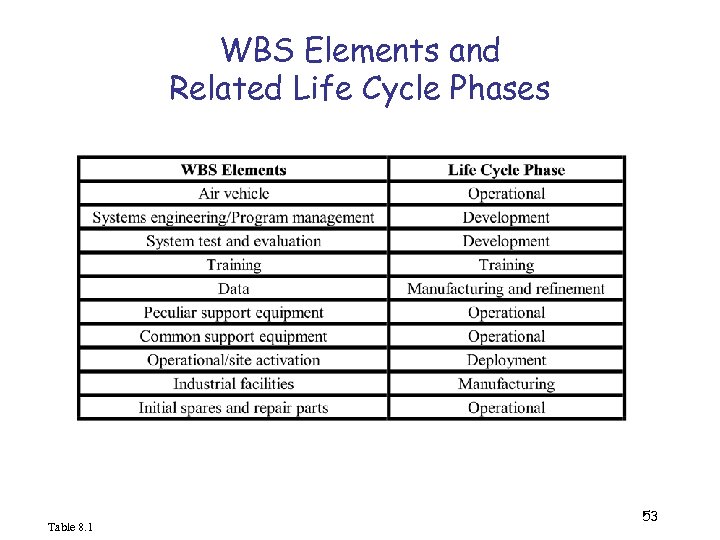
WBS Elements and Related Life Cycle Phases Table 8. 1 53
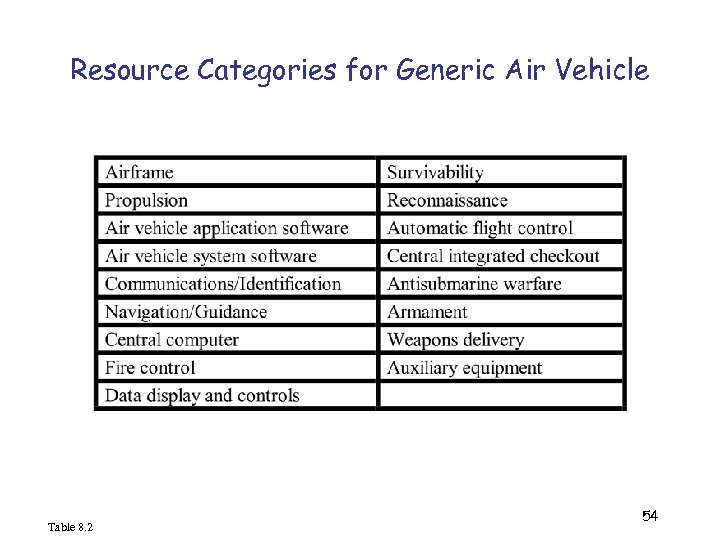
Resource Categories for Generic Air Vehicle Table 8. 2 54
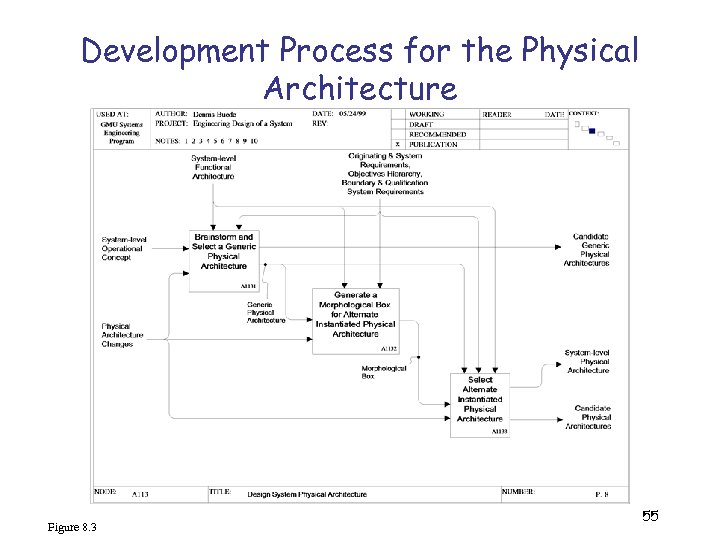
Development Process for the Physical Architecture Figure 8. 3 55
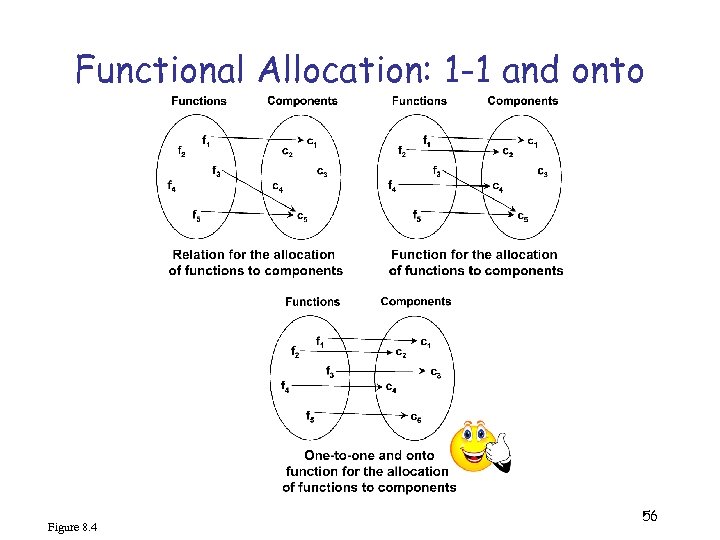
Functional Allocation: 1 -1 and onto Figure 8. 4 56
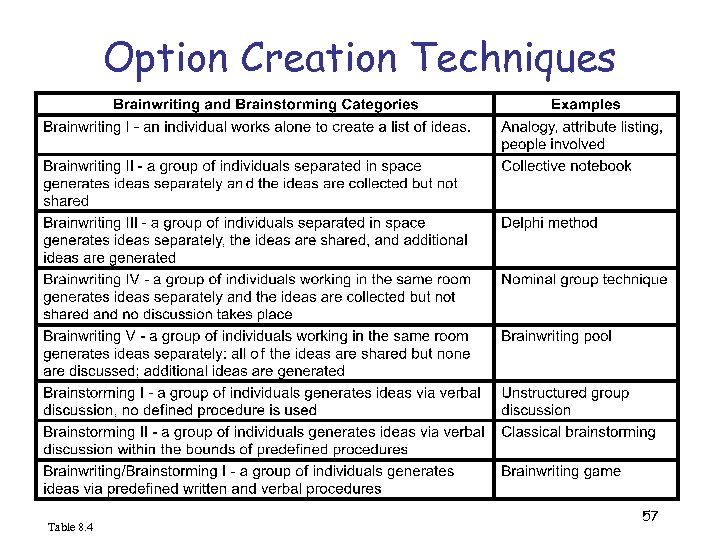
Option Creation Techniques Table 8. 4 57
Скачать презентацию Week 6 — Systems Engineering and Analysis Buede
f9b5553b67d658e8eaf46271ce31d75f.ppt