


 Скачать презентацию Week 2 outline Pharmacokinetics How drugs are
a459ac5f75548a77fe76b24947853eb8.ppt
- Количество слайдов: 82
 Week 2 outline Pharmacokinetics: ◦ How drugs are handled by the body ◦ Overview followed by details!!
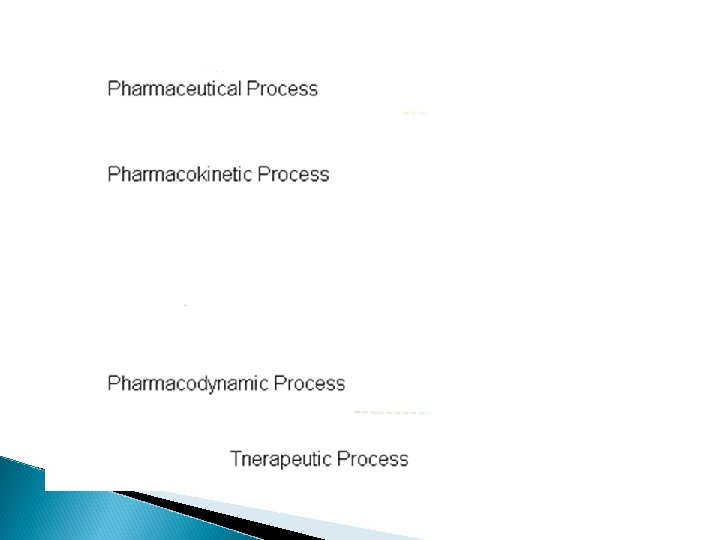
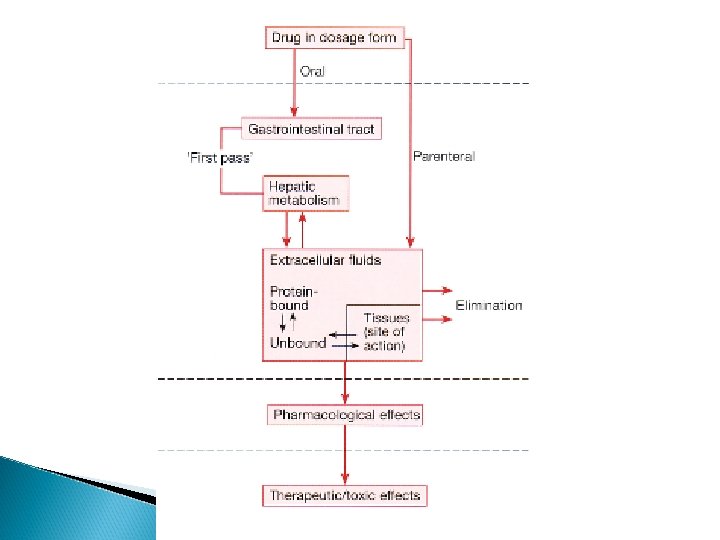
 Lets say you have a headache or a really bad reaction to poison ivy and you take some meds – This illustrates the basic processes in the branch of pharmacokinetics
 pharmacokinetics. . . . 1. 2. the route of administration - how a drug is taken into the body absorption and distribution - factors affecting its absorption and how it gets distributed to the brain
 3. metabolism (detoxification or breakdown) how a drug is broken down or made into inactive forms 4. excretion – (elimination) ◦ how the drug is eliminated
 Knowing about pharmacokinetics tells us critical information about insight into the actions of a drug. Ex. benzodiazepenes ultra short acting, long acting
 lorazepam (Ativan) and triazolam (Halcion) – pharmacokinetics lorazepam – persists for at least 24 hr triazolam – 6 – 8 hours midazolam – 1 – 2 hrs
 Drug Absorption – the process by which a drug enters the bloodstream chemically altered or without being The movement of a drug from its site of application into the blood
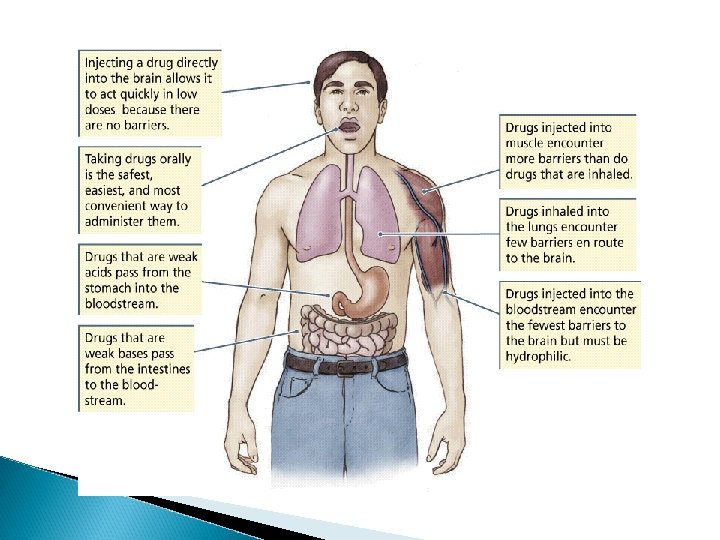
 What are the routes of drug administration? oral injection ◦ iv, im, sc, intrathecal, intraperitoneal
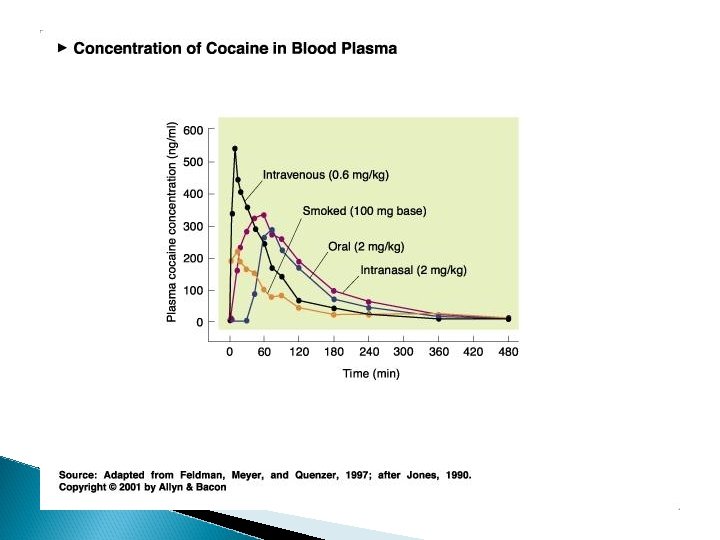
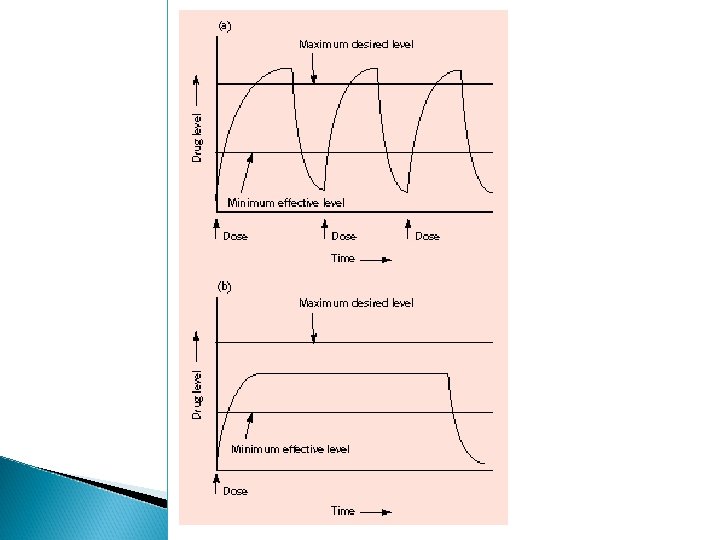
 oral administration most common, sometimes referred to as po safe, self administered, economical BUT blood levels are often irregular (most complicated route of adm) liquid more readily absorbed than solids
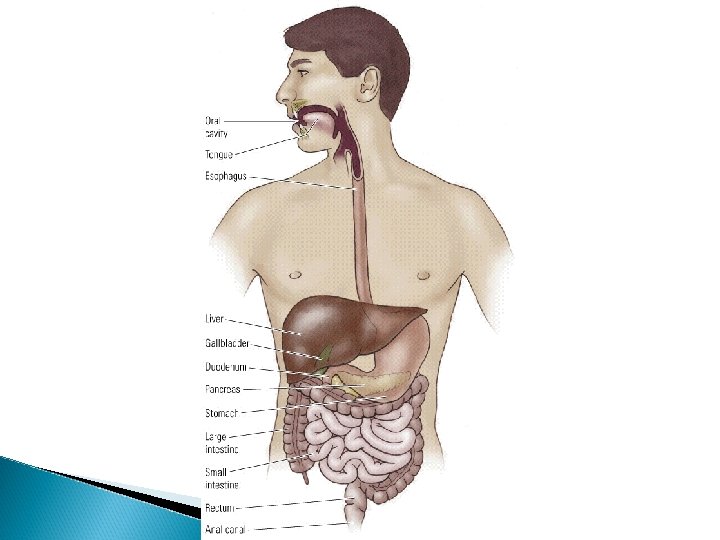
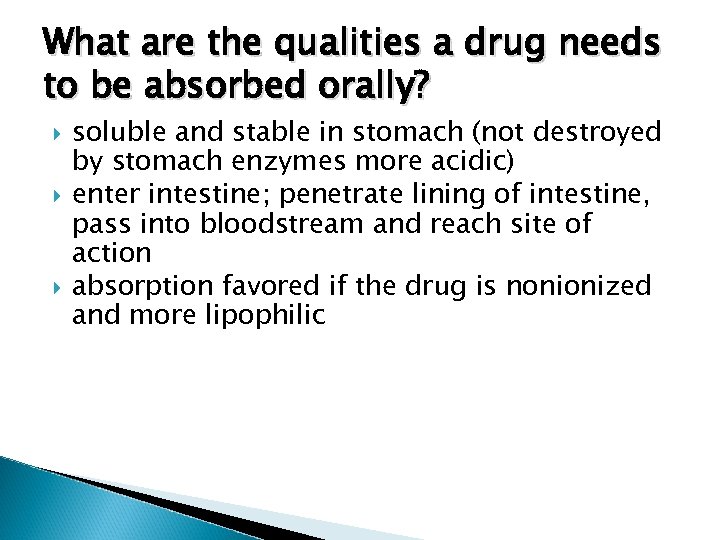 What are the qualities a drug needs to be absorbed orally? soluble and stable in stomach (not destroyed by stomach enzymes more acidic) enter intestine; penetrate lining of intestine, pass into bloodstream and reach site of action absorption favored if the drug is nonionized and more lipophilic
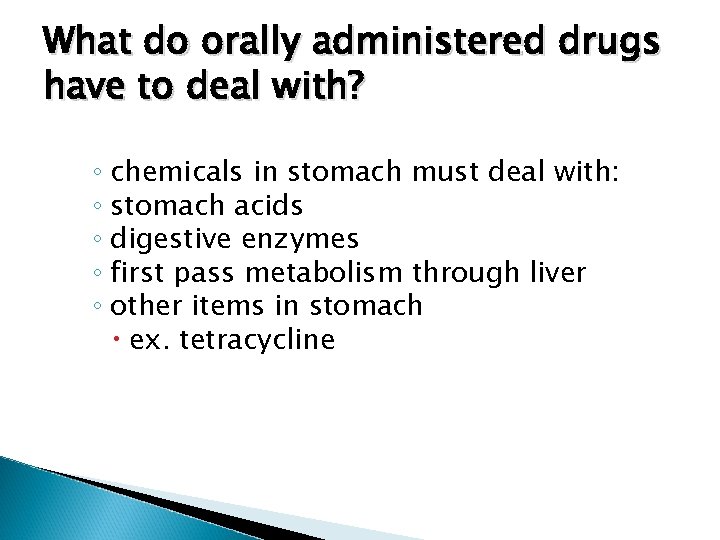 What do orally administered drugs have to deal with? ◦ chemicals in stomach must deal with: ◦ stomach acids ◦ digestive enzymes ◦ first pass metabolism through liver ◦ other items in stomach ex. tetracycline
 Advantages of oral administration ◦ Convenient - can be self- administered, pain free, easy to take ◦ Absorption - takes place along the whole length of the GI tract ◦ Inexpensive - compared to most other parenteral routes
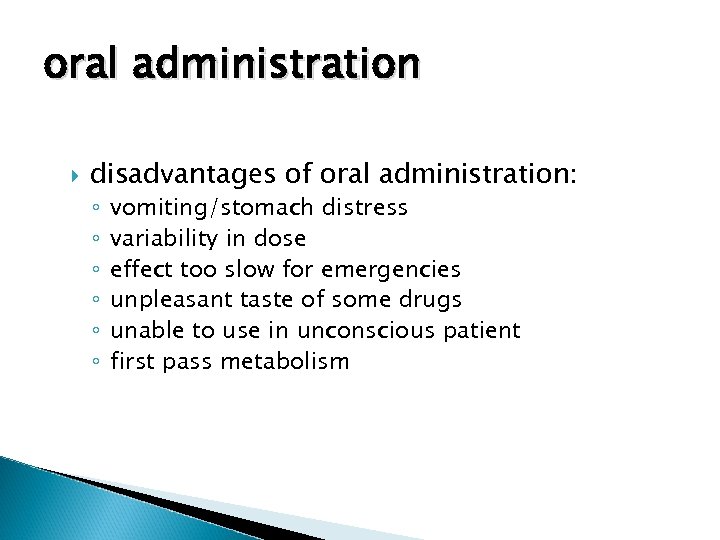 oral administration disadvantages of oral administration: ◦ ◦ ◦ vomiting/stomach distress variability in dose effect too slow for emergencies unpleasant taste of some drugs unable to use in unconscious patient first pass metabolism
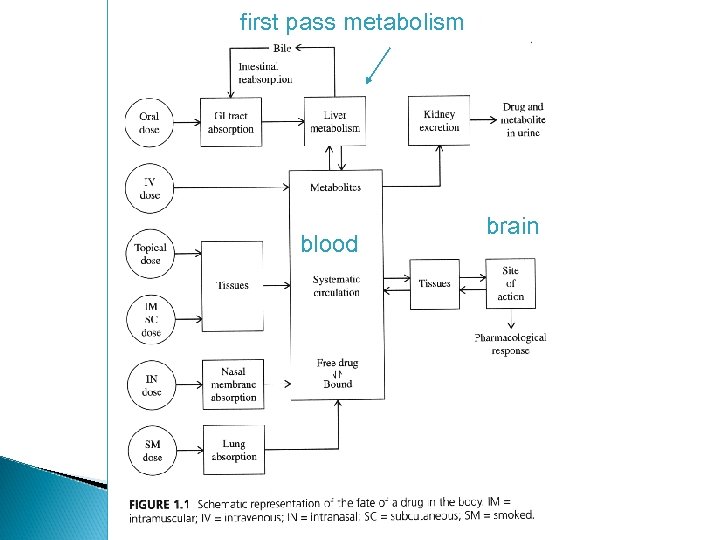
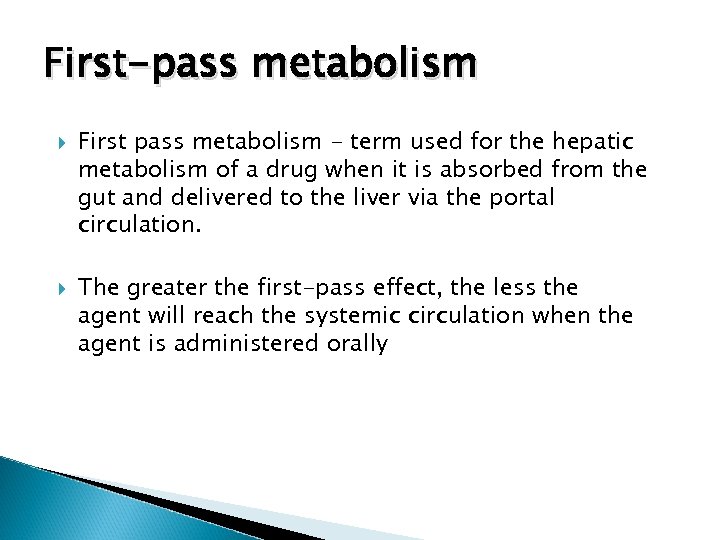 First-pass metabolism First pass metabolism - term used for the hepatic metabolism of a drug when it is absorbed from the gut and delivered to the liver via the portal circulation. The greater the first-pass effect, the less the agent will reach the systemic circulation when the agent is administered orally
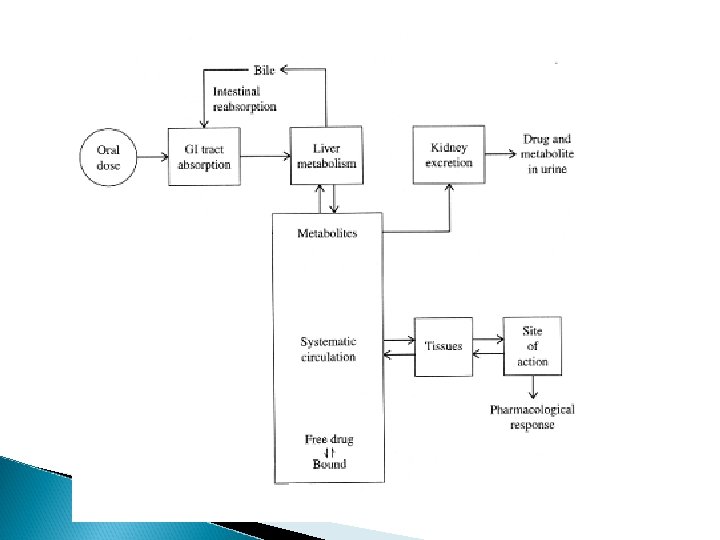 first pass metabolism
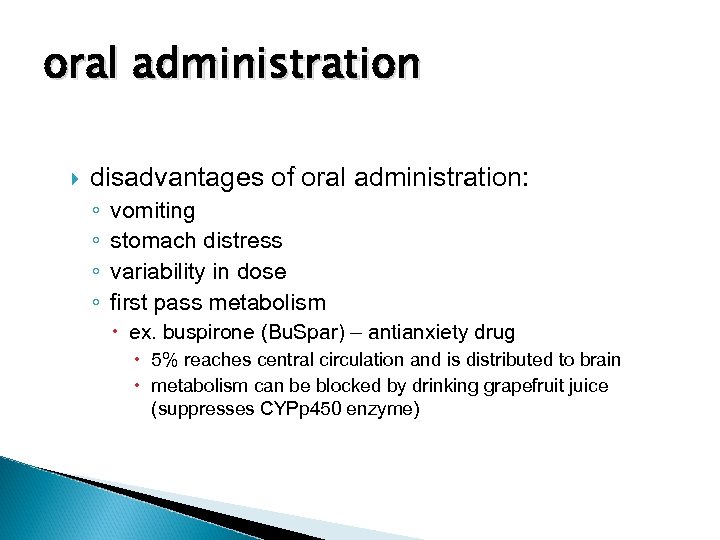 oral administration disadvantages of oral administration: ◦ ◦ vomiting stomach distress variability in dose first pass metabolism ex. buspirone (Bu. Spar) – antianxiety drug 5% reaches central circulation and is distributed to brain metabolism can be blocked by drinking grapefruit juice (suppresses CYPp 450 enzyme)
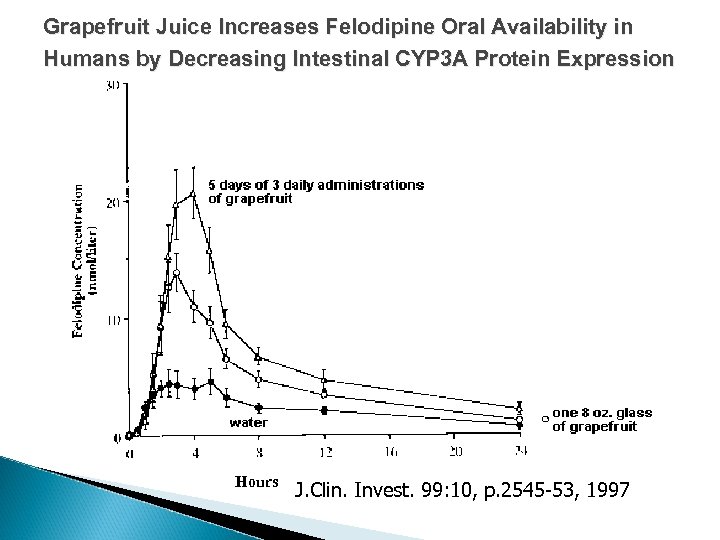 Grapefruit Juice Increases Felodipine Oral Availability in Humans by Decreasing Intestinal CYP 3 A Protein Expression Hours J. Clin. Invest. 99: 10, p. 2545 -53, 1997
 Some additional interesting points regarding oral adm Drugs that are destroyed by gastric juice or cause gastric irritation can be administered in a coating that prevents dissolution in acidic gastric contents (however may also preclude dissolution in intestines) Controlled – Release Preps -
 Factors that affect rate of absorption following PO route GI motility- speed of gastric emptying affects rate of absorption ◦ ex. migraine and analgesics vs metoclopramide Malabsorptive States - ◦ GI diseases, ex. Crohn’s disease can affect absorption
 Factors that affect rate of absorption following PO route Food - ◦ iron, milk alters tetracycline ◦ fats first pass metabolism
 Parenteral or Injection chemicals delivered with a hypodermic needle; ◦ most commonly - injected into vein, muscle or under the upper layers of skin, in rodents also intraperitoneal cavity requirements for parenteral: must be soluble in solution (so it can be injected)
 B. Parenteral (Injection) ◦ ◦ ◦ Intravenous Intramuscular Subcutaneous Intracranial Epidural Intraperitoneal
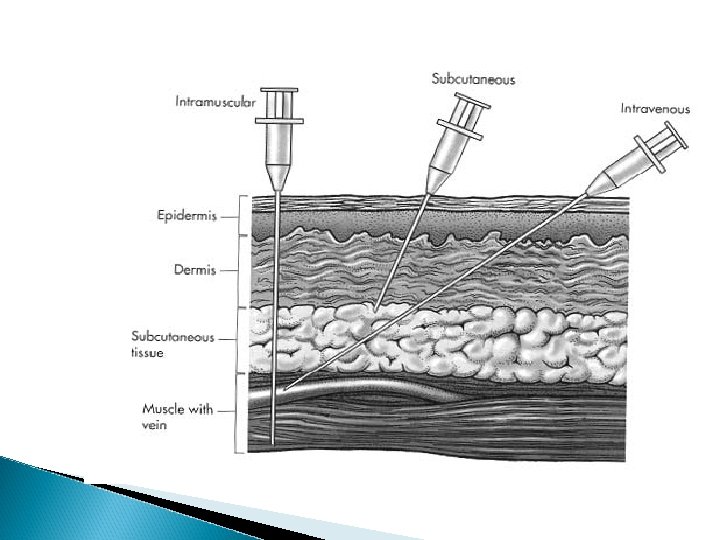
 Intramuscular absorption more rapid than SC ◦ less chance of irritation; ways to speed up or slow down absorption depot injections -
 Intravenous extremely rapid rate of absorption adv: useful when you need rapid response or for irritating substances Disadv: rapid rate of absorption
 Absorption for parenteral route contingent on blood flow SO ◦ IV, intraperitoneal, IM, SC increasing or decreasing blood flow affects drug absorption Drugs leave bloodstream and are exchanged between blood capillaries and body tissues
 What if a drug is injected in oil? bolus or depot shots related - drugs that accumulate in fat ◦ ex. THC
 Mucosal membranes nasal, oral, buccal medications include: nitroglycerine, fentanyl –(1998) , nicotine gum, lozenges, buprenorphine cocaine – snuff, cigars
 Advantages and Disadvantages of Buccal ◦ Advantages: rapid absorption avoid first-pass effect ◦ Disadvantages: inconvenient small doses unpleasant taste of some drugs
 transdermal or transcutaneous 1990’s – several medications incorporated into transdermal patches: ◦ estrogen, nicotine, fentanyl, nitroglycerin, scopolamine controlled slow release for extended periods of time
 Rectal Administration usually suppository form for unconscious, vomiting or unable to swallow disadv: not very well regulated dose; irritation (yikes)
 Inhalation not really used for psychotropics
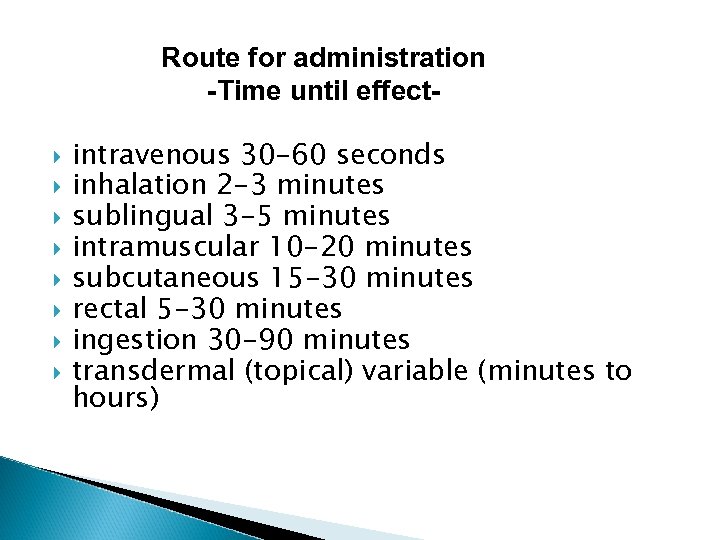 Route for administration -Time until effect intravenous 30 -60 seconds inhalation 2 -3 minutes sublingual 3 -5 minutes intramuscular 10 -20 minutes subcutaneous 15 -30 minutes rectal 5 -30 minutes ingestion 30 -90 minutes transdermal (topical) variable (minutes to hours)
 Drug Absorption The rate at which a drug reaches it site of action depends on: ◦ Absorption - involves the passage of the drug from its site of administration into the blood ◦ Distribution - involves the delivery of the drug to the tissues
 Drug Absorption Factors which influence the rate of absorption ◦ ◦ ◦ routes of administration dosage forms the physicochemical properties of the drug protein binding circulation at the site of absorption concentration of the drug
 Distribution drugs are distributed throughout body by blood very little at site of action at any one time role of passive diffusion, concentration gradient
 Absorption Mostly a passive process - ◦ from higher conc to lower (in blood)
![Concentration Gradient Drug goes from higher concentration to lower concentration [DRUG] receptors ≈ [DRUG]](https://present5.com/presentation/a459ac5f75548a77fe76b24947853eb8/image-43.jpg "Concentration Gradient Drug goes from higher concentration to lower concentration [DRUG] receptors ≈ [DRUG]") Concentration Gradient Drug goes from higher concentration to lower concentration [DRUG] receptors ≈ [DRUG] circulation
Concentration Gradient Drug goes from higher concentration to lower concentration [DRUG] receptors ≈ [DRUG] circulation
 Absorption and Distribution Mostly a passive process - ◦ from higher conc to lower (in blood) Binding to plasma proteins ◦ results in a store of bound drug in plasma examples - 95 -99% - chlorpromazine, diazepam, imipramine 90 - 95% - valproate, propanolol, phenytoin
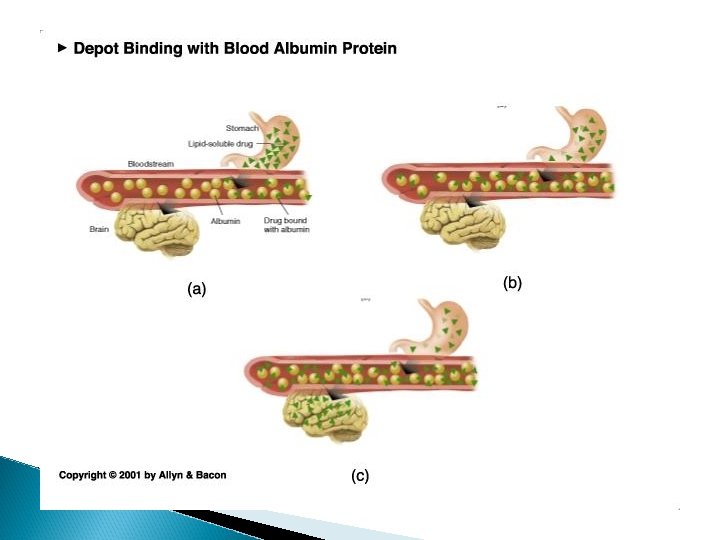
 Factors that can play a role in reducing the amount of drug bound to proteins Renal insufficiency last trimester of pregnancy drug interactions (other drugs that bind to proteins) diseases
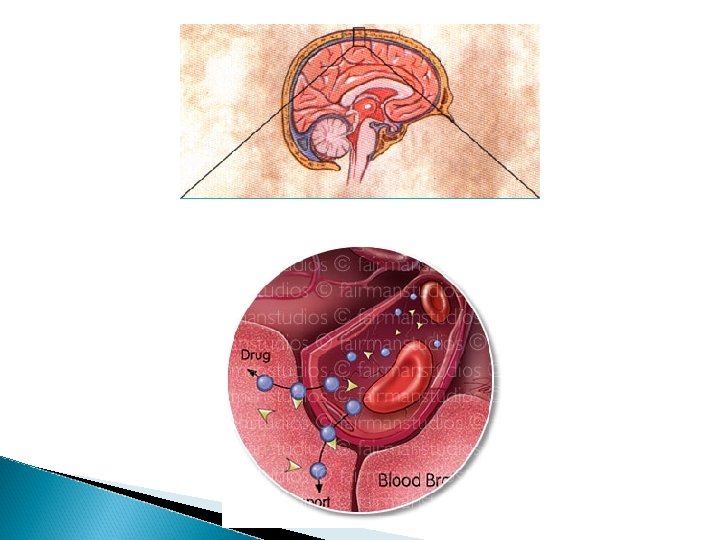
 Additional issue for drugs to reach the CNS Blood brain barrier- ◦ layer of thickly packed epithelial cells and astrocytes that restrict access of many toxins/drugs to the brain
 3 Factors that affect how well a drug can cross the blood brain barrier (or placental barrier) Lipid solubility – how soluble the drug is in fats ◦ cell membranes are lipid bilayers ◦ similar characteristics allow drugs to cross brain as to cross into cells
 3 Factors that affect how well a drug can cross the blood brain barrier Lipid solubility Size of molecule Ionization – whether the degree has a charge (+ or -)
 p. Ka – the p. H at which ½ of the molecules are ionized most drugs are either weakly basic or weakly acidic Basic drugs are highly ionized in acidic environment Acidic drugs are highly ionized in basic environment
 p. Ka – the p. H at which ½ of the molecules are ionized the closer the p. Ka of the drug is to the local tissue p. H, the more unionized the drug is. ex. morphine – p. Ka of 8 stomach ~ p. H ~ 3 caffeine – p. H. 5
 Distribution half-life and therapeutic levels ◦ Distribution half-life: the amount of time it takes for half of the drug to be distributed throughout the body ◦ Therapeutic level: the minimum amount of the distributed drug necessary for the main effect.
 Until this time, drug movement has been mostly passive from regions of higher concentration to lower concentration. Elimination of drugs usually requires more of an active process (except gaseous drugs).
 How are drugs eliminated? 1. Biotransformation (metabolism) chemical transformation of a drug into a different compound in the body (metabolite) Most biotransformation takes place in the liver
 2. Excretion - removal of drug to outside world ***Drug elimination may be by both or either of these mechanisms
 Biotransformation role of liver ◦ most significant organ in biotransformation
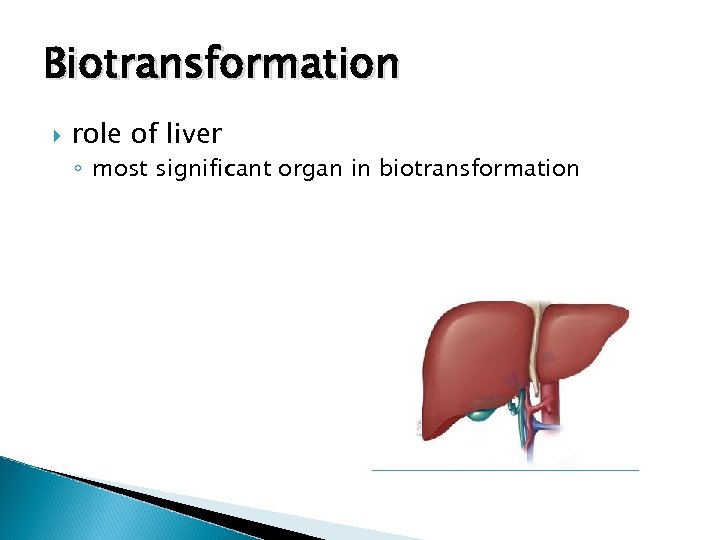
 Biotransformation role of liver ◦ most significant organ in biotransformation ◦ largest organ in body ◦ serves many functions transforms molecules via enzymes
 Liver enzymes biotransform drugs (and other compounds) by 1. deactivating the molecule 2. ionize the molecule 3. make it less lipid soluble ** product of biotransformation is called a metabolite
 Cytochrome p 450 enzyme family located primarily in hepatocytes important for metabolism of alcohol, tranquilizers, barbiturates, antianxiety drugs, estrogens, androgens, PCBs and other agents oxidative metabolism – makes drugs more water soluble (so more easily excreted)
 Can metabolism rate be altered? CYP enzymes - ◦ enzyme induction liver produces extra enzyme to break down drug with continued exposure
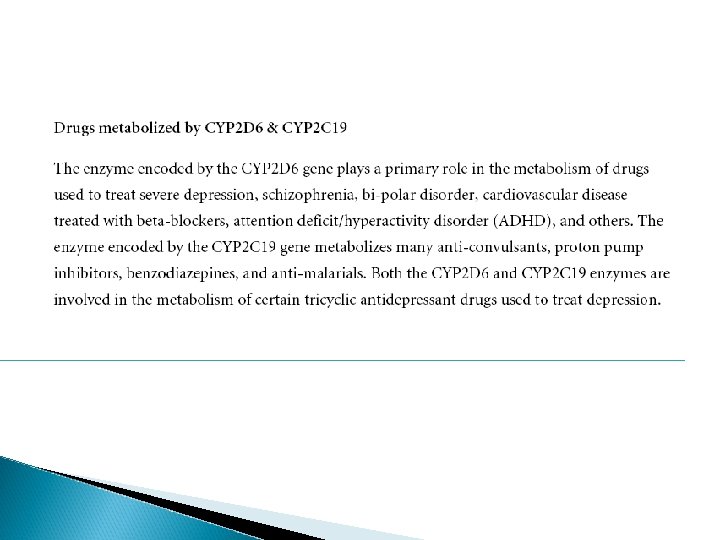
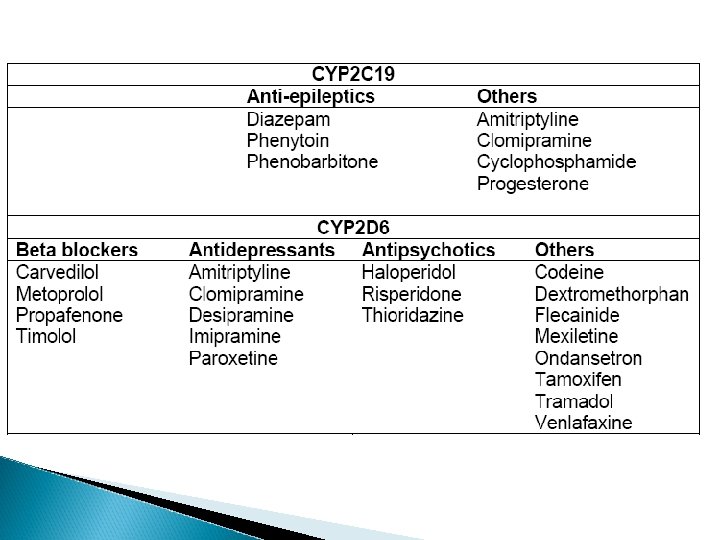
 Can metabolism rate be altered? CYP enzymes ◦ enzyme induction liver produces extra enzyme to break down drug with continued exposure Genetics
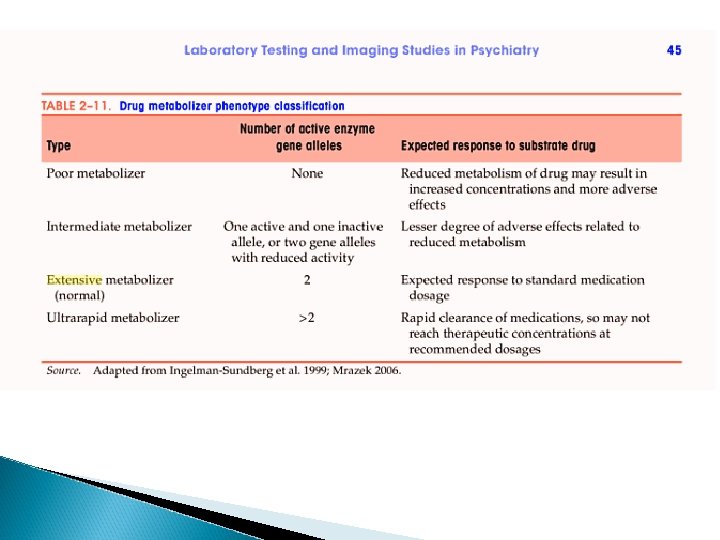
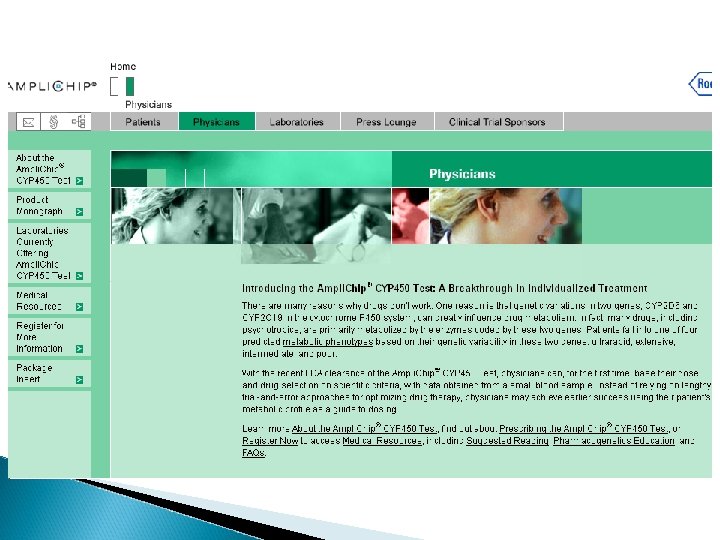
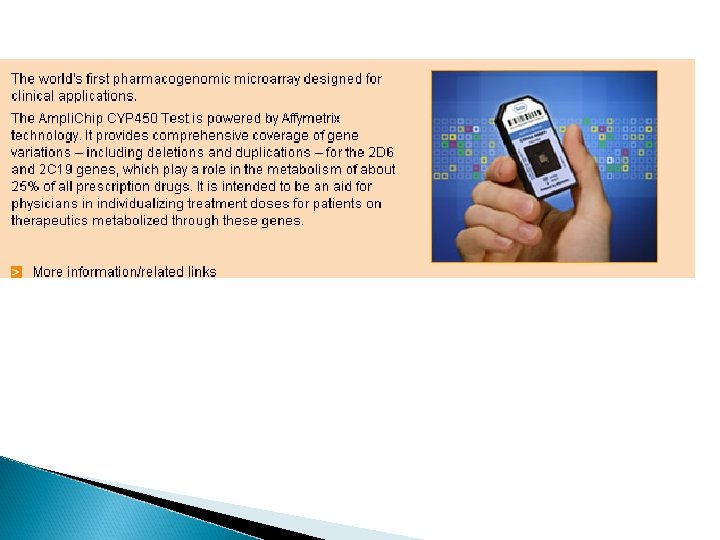
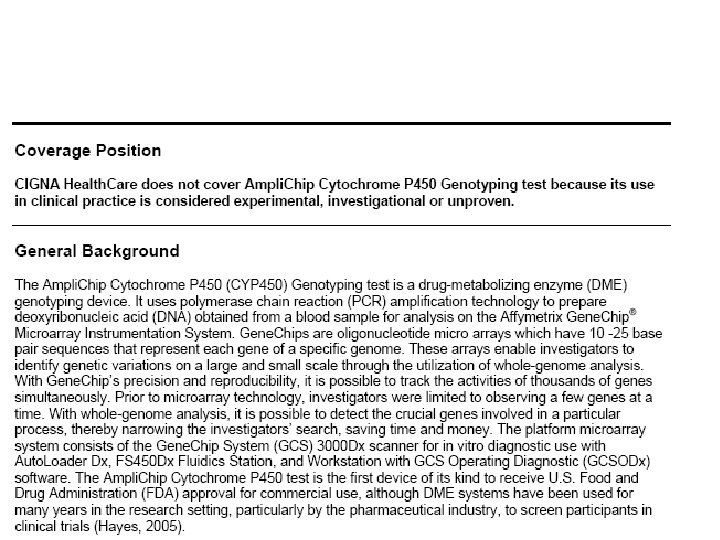
 Can metabolism rate be altered? CYP enzymes - ◦ enzyme induction - liver produces extra enzyme to break down drug with continued exposure Genetics Liver disease
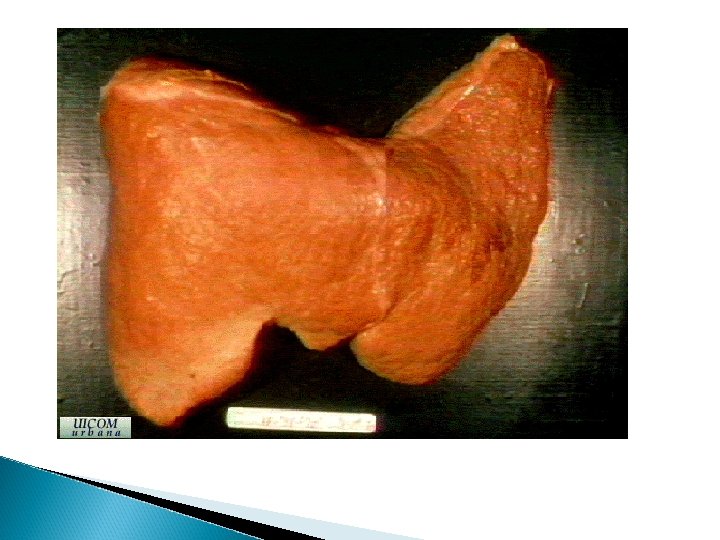 cirrhotic liver
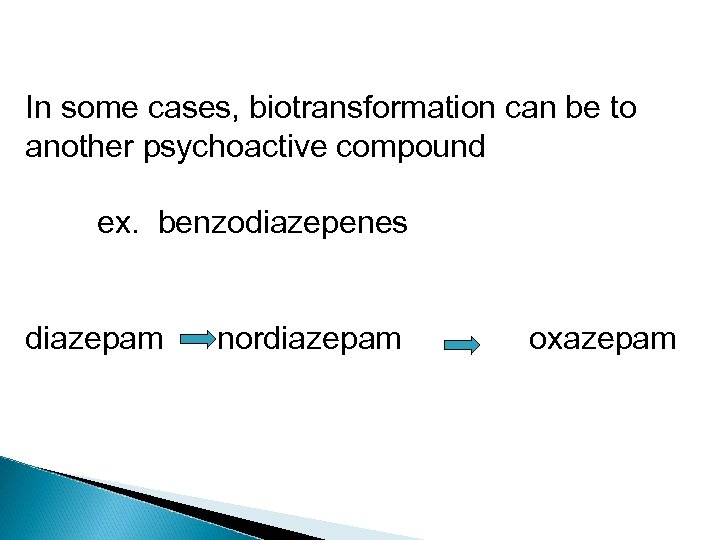 In some cases, biotransformation can be to another psychoactive compound ex. benzodiazepenes diazepam nordiazepam oxazepam
 Routes of Excretion- fluid all drugs not in gaseous state need to use fluid routes of excretion ◦ fluid routes include -sweat, tears, saliva, mucous, urine, bile, human milk ◦ amount of drug excreted in each of these fluids is in direct proportion to amount of fluid excreted SO…….
 Kidneys numerous functions – ◦ filters out metabolic products
 Kidneys numerous functions – main function – maintain correct balance between water and salt in body fluids ◦ filters out metabolic products ◦ blood continuously flowing through kidneys factors that influence a substance not being resorbed not lipid soluble ionized dialysis –
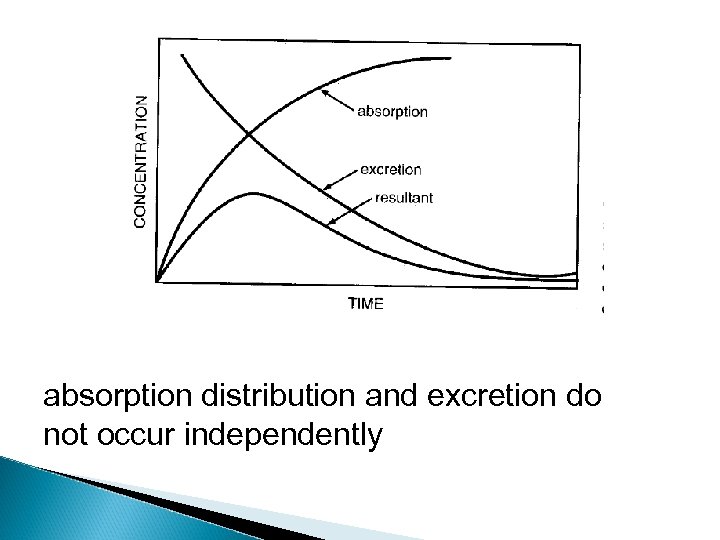 absorption distribution and excretion do not occur independently
 first pass metabolism blood brain
 Other factors that affect drug pharmacokinetics 1. Body weight - smaller size • concentration of drug based on body fluid 2. Sex differences 3. Age
 Other factors that affect drug pharmacokinetics 4. Interspecies differences rabbits – belladonna (deadly nightshade) 5. Intraspieces differences 6. Disease states 7. Nutrition 8. Biorhythm
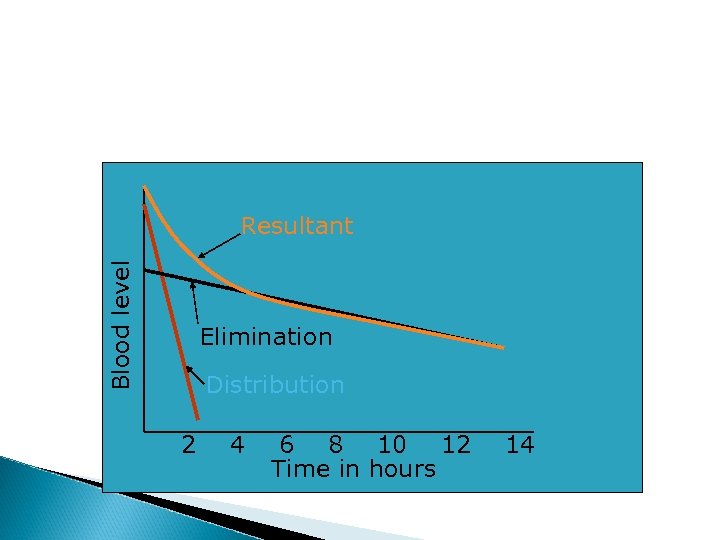 Blood level Resultant Elimination Distribution 2 4 6 8 10 12 Time in hours 14
 half-life - time takes for the blood concentration to fall to half its initial value after a single dose ½ life tells us critical information about how long the action of a drug will last
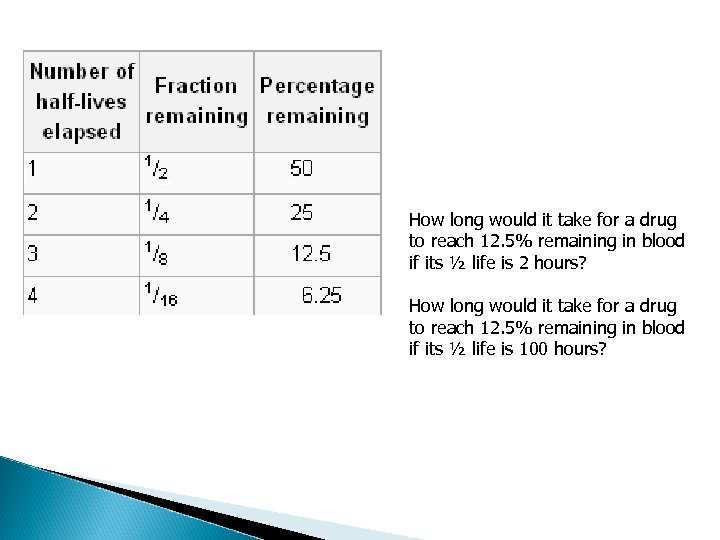 How long would it take for a drug to reach 12. 5% remaining in blood if its ½ life is 2 hours? How long would it take for a drug to reach 12. 5% remaining in blood if its ½ life is 100 hours?