


 Скачать презентацию Weed Control and Issues in Developing Countries Peter
54f10eb2fed1a502fa1e878115f1119d.ppt
- Количество слайдов: 38
 Weed Control and Issues in Developing Countries Peter R Hobbs 609 Bradfield Department Crops and Soil Science
 Challenge for Agriculture • To increase food production sustainably to meet food security needs of a growing population now and in the future while at the same time minimizing the effects on the environment and improving the livelihoods of those involved in agriculture • Improve the efficiency of natural resource use needed for agriculture
 Convergence of opinions • Demand for food - increasing • Harvested area - possibly shrinking • Traditional sources of productivity growth – are they exhausted? • More competition for blue water • More severe weather as a result of GHG emissions and global climate change • In addition, there is resource and environmental degradation?
 Resource Poor Farmers? Subsistence Farmers? • Not produce enough food to feed their family or market any excess. Nutritional quality of food produced can also be poor. • Lack basic infra-structure to transport, store and sell the food they grow • Lack income and access to credit to invest in new technology • Little capacity to manage risks associated with technology
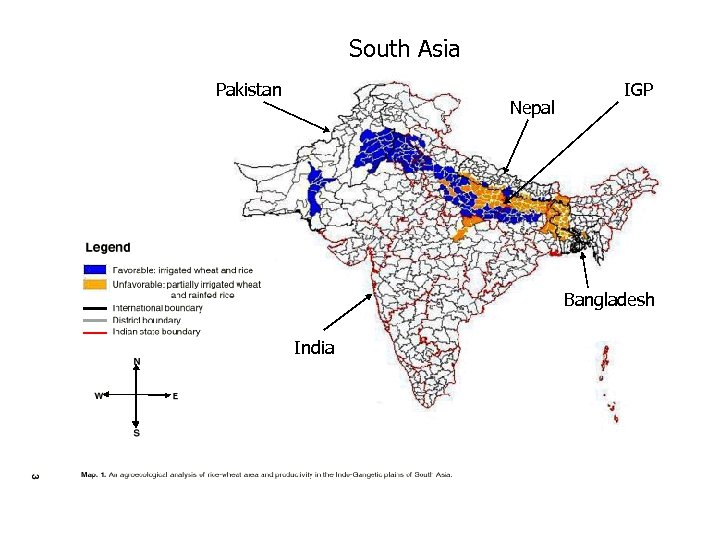 South Asia Pakistan Nepal IGP Bangladesh India
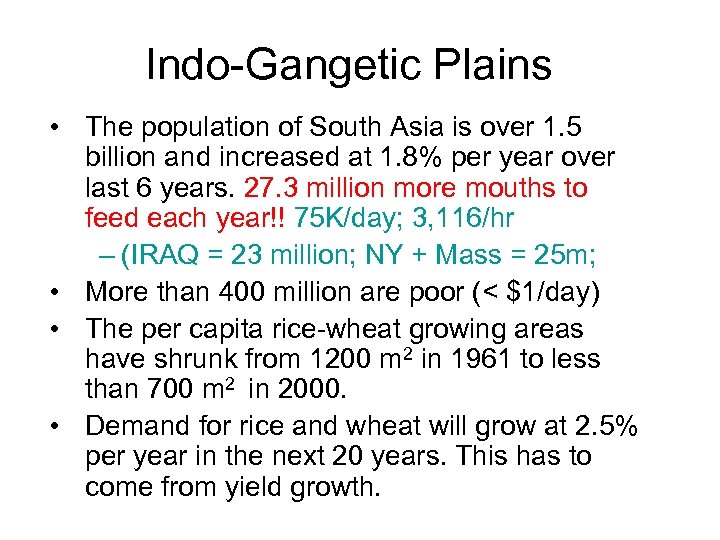 Indo-Gangetic Plains • The population of South Asia is over 1. 5 billion and increased at 1. 8% per year over last 6 years. 27. 3 million more mouths to feed each year!! 75 K/day; 3, 116/hr – (IRAQ = 23 million; NY + Mass = 25 m; • More than 400 million are poor (< $1/day) • The per capita rice-wheat growing areas have shrunk from 1200 m 2 in 1961 to less than 700 m 2 in 2000. • Demand for rice and wheat will grow at 2. 5% per year in the next 20 years. This has to come from yield growth.
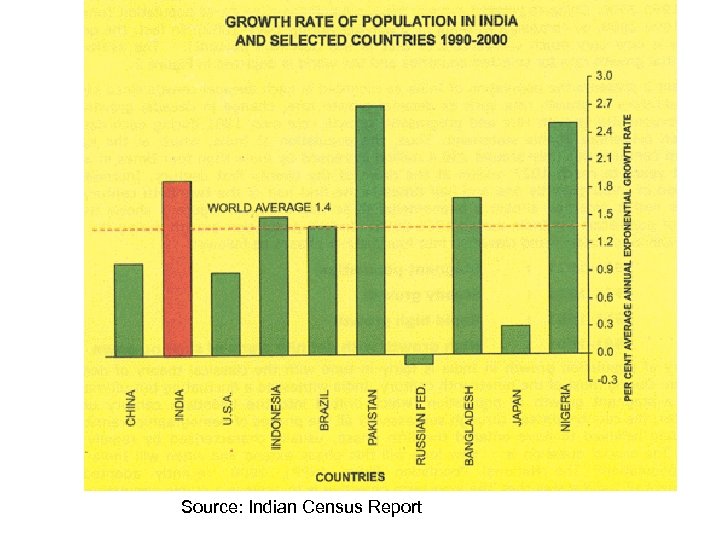 Source: Indian Census Report
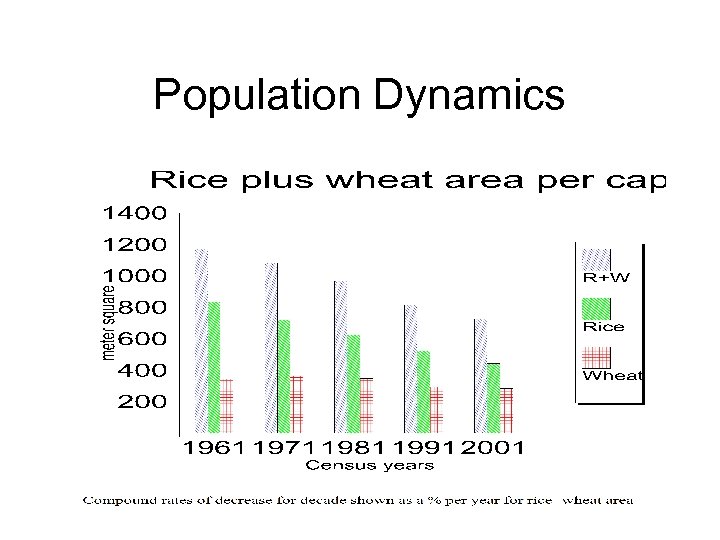 Population Dynamics
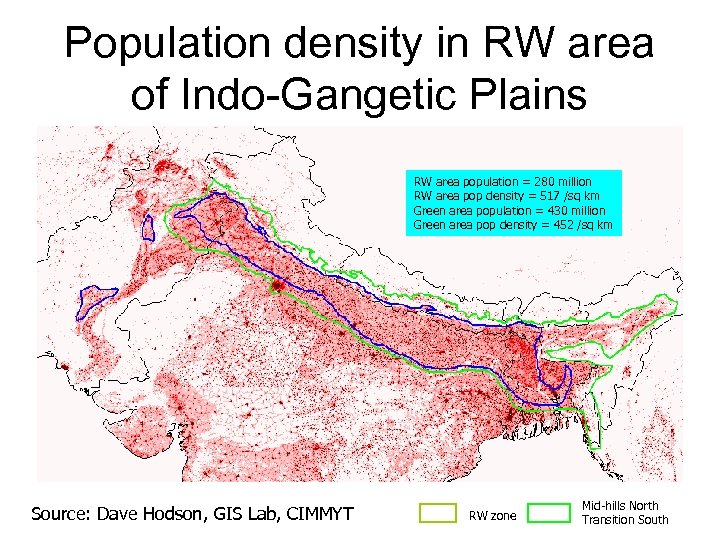 Population density in RW area of Indo-Gangetic Plains RW area population = 280 million RW area pop density = 517 /sq km Green area population = 430 million Green area pop density = 452 /sq km Source: Dave Hodson, GIS Lab, CIMMYT RW zone Mid-hills North Transition South
 Rice-wheat systems in South Asia • Rice and wheat grown in the same calendar year in S. Asia (13. 5 m ha’s) – Rice in the wet monsoon summer and wheat in the dry cool winter – Rice grown by puddling soil and transplanting seedlings – This creates a problem for the next wheat crop because of poor soil physical properties – This also affects soil biology
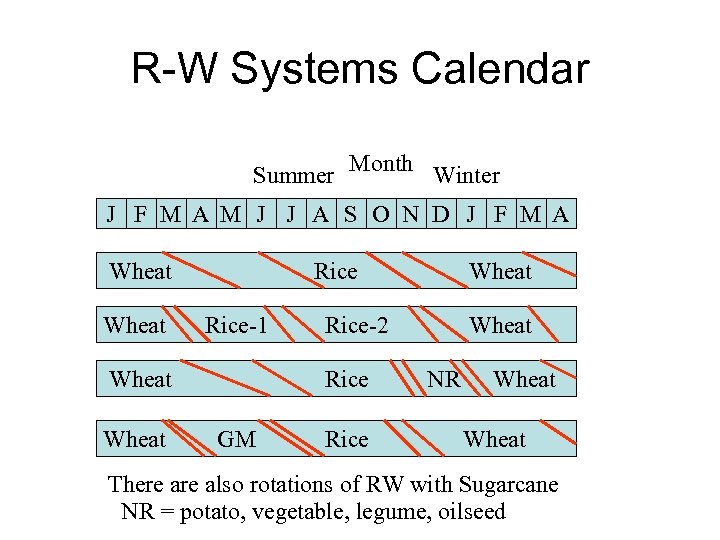 R-W Systems Calendar Summer Month Winter J F M A M J J A S O N D J F M A Rice Wheat Rice-1 Wheat Rice-2 Rice GM Wheat Rice Wheat NR Wheat There also rotations of RW with Sugarcane NR = potato, vegetable, legume, oilseed
 Phalaris minor issue • This WAS a major problem in NW India and Pakistan in wheat in the 1990’s. • Herbicide resistant Phalaris to Isoproturon started show in early 1990’s • It became a major problem by mid-1990’s • Need for integrated weed management approaches – – rotations, tillage, seed, variety etc.
 Promote Integrated Weed Management Systems • • Hand weeding Rotations – use of a fodder crop Inter-cultivation Mulching – allelopathic properties of some residues and cover crops Prevent seed set of weeds Clean seed Use herbicides when needed in proper manner Etc.
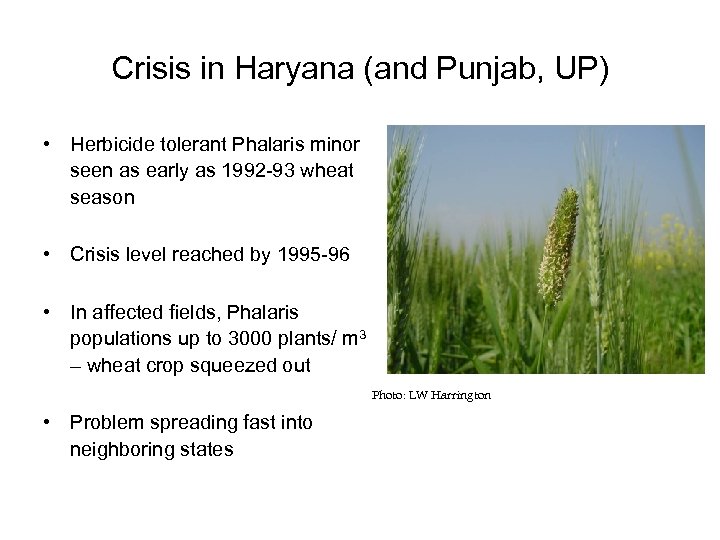 Crisis in Haryana (and Punjab, UP) • Herbicide tolerant Phalaris minor seen as early as 1992 -93 wheat season • Crisis level reached by 1995 -96 • In affected fields, Phalaris populations up to 3000 plants/ m 3 – wheat crop squeezed out Photo: LW Harrington • Problem spreading fast into neighboring states
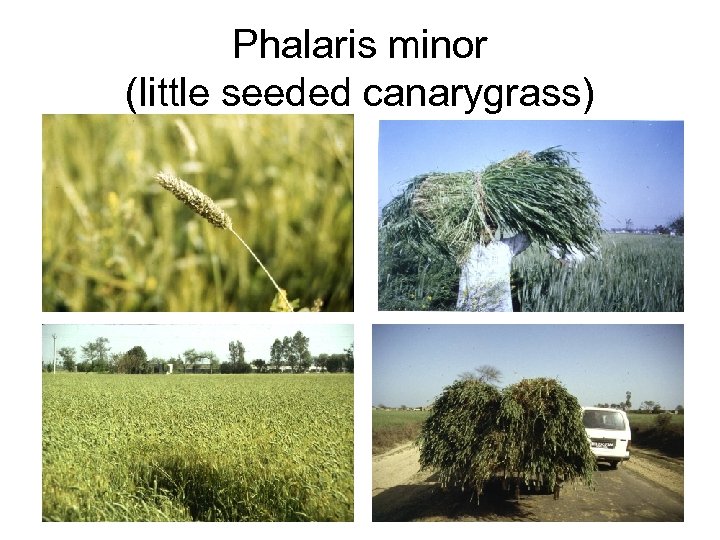 Phalaris minor (little seeded canarygrass)
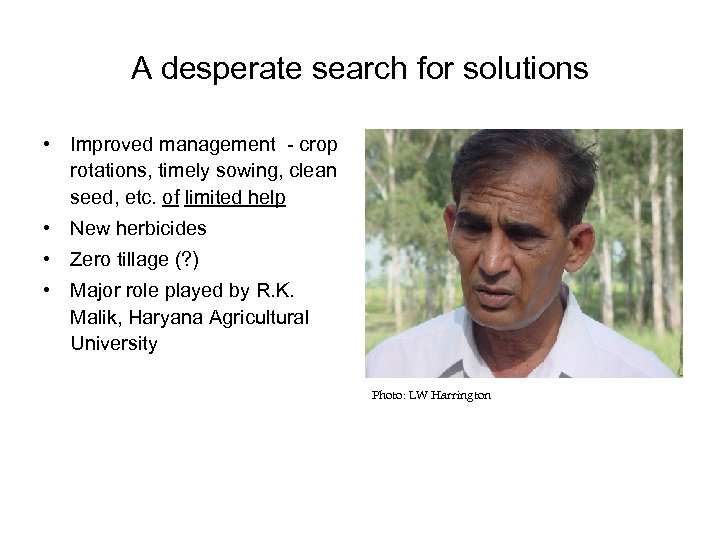 A desperate search for solutions • Improved management - crop rotations, timely sowing, clean seed, etc. of limited help • New herbicides • Zero tillage (? ) • Major role played by R. K. Malik, Haryana Agricultural University Photo: LW Harrington
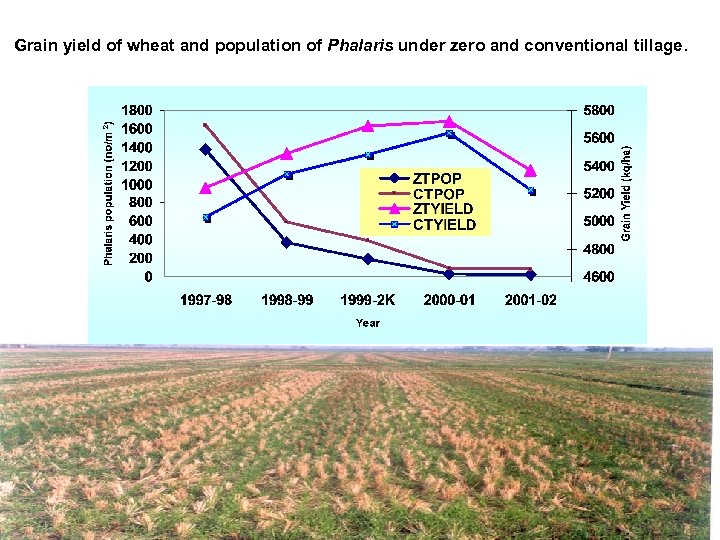 Grain yield of wheat and population of Phalaris under zero and conventional tillage.
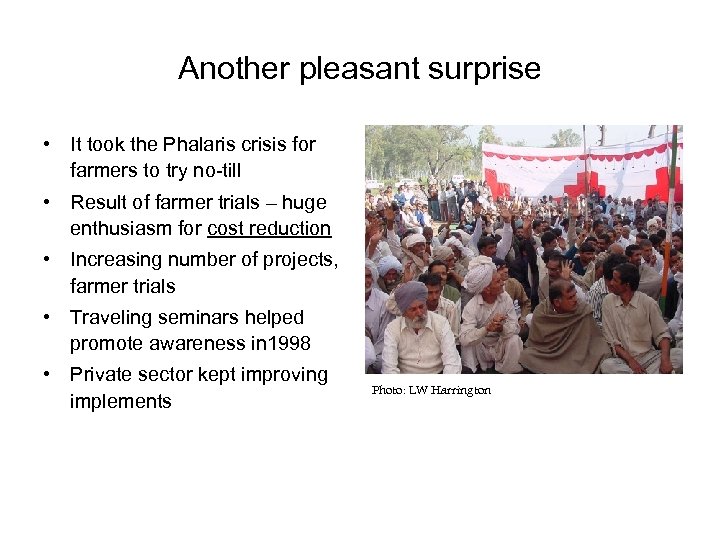 Another pleasant surprise • It took the Phalaris crisis for farmers to try no-till • Result of farmer trials – huge enthusiasm for cost reduction • Increasing number of projects, farmer trials • Traveling seminars helped promote awareness in 1998 • Private sector kept improving implements Photo: LW Harrington
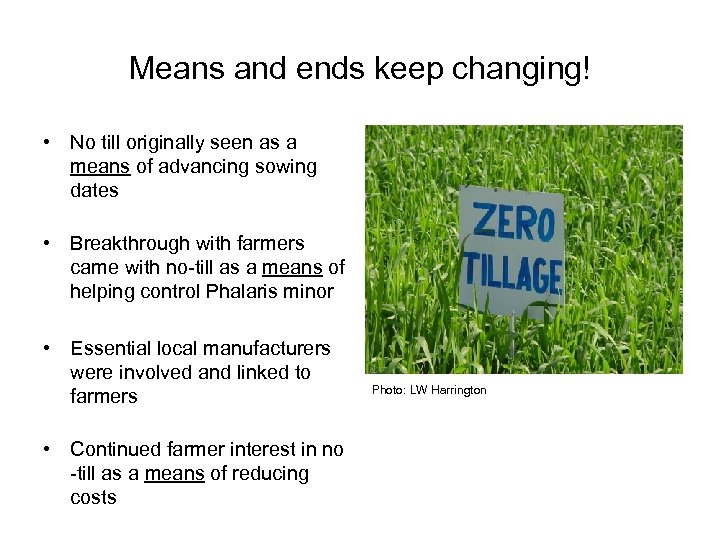 Means and ends keep changing! • No till originally seen as a means of advancing sowing dates • Breakthrough with farmers came with no-till as a means of helping control Phalaris minor • Essential local manufacturers were involved and linked to farmers • Continued farmer interest in no -till as a means of reducing costs Photo: LW Harrington
 New Herbicides • • Topik -- Clodinafop Puma -- Fenoxyprop Leader – Sulfosulfuron -- Sulfonylurea Grasp -- Tralkoxydim • Need to be applied with a sprayer – low quantities active ingredient used per hectare used (10 -50 grams/ha)
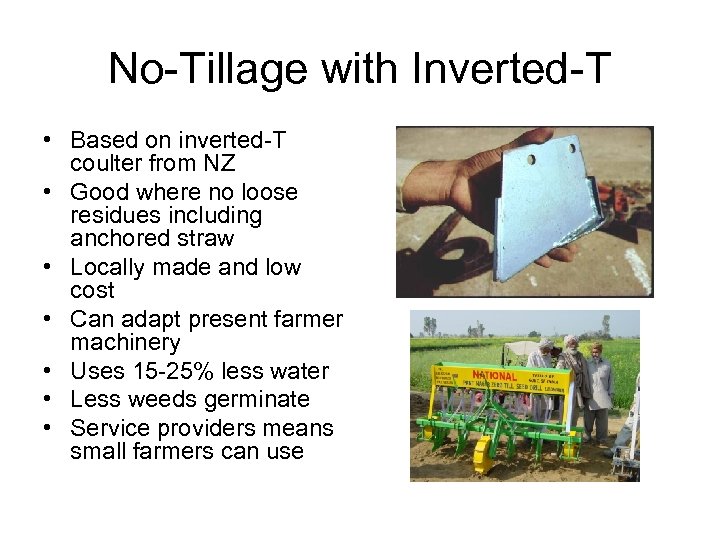 No-Tillage with Inverted-T • Based on inverted-T coulter from NZ • Good where no loose residues including anchored straw • Locally made and low cost • Can adapt present farmer machinery • Uses 15 -25% less water • Less weeds germinate • Service providers means small farmers can use
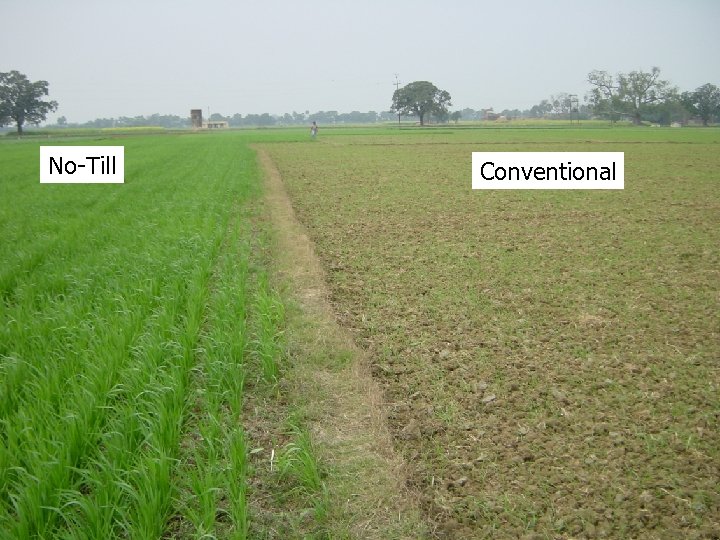 No-Till Conventional
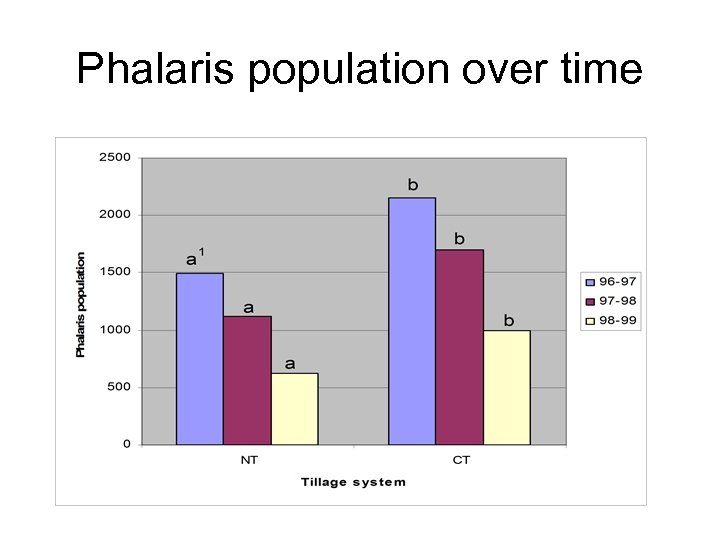 Phalaris population over time
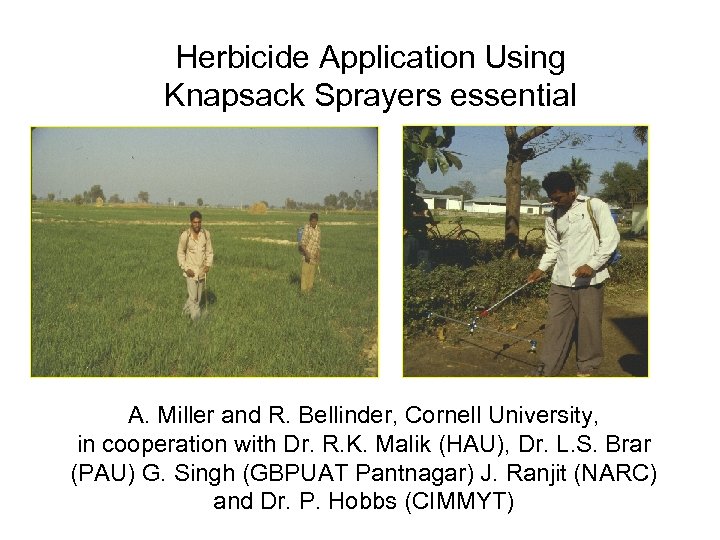 Herbicide Application Using Knapsack Sprayers essential A. Miller and R. Bellinder, Cornell University, in cooperation with Dr. R. K. Malik (HAU), Dr. L. S. Brar (PAU) G. Singh (GBPUAT Pantnagar) J. Ranjit (NARC) and Dr. P. Hobbs (CIMMYT)
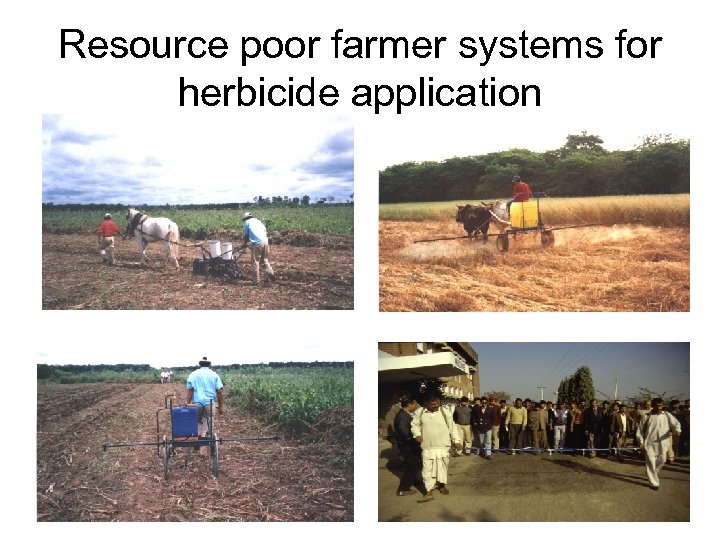 Resource poor farmer systems for herbicide application
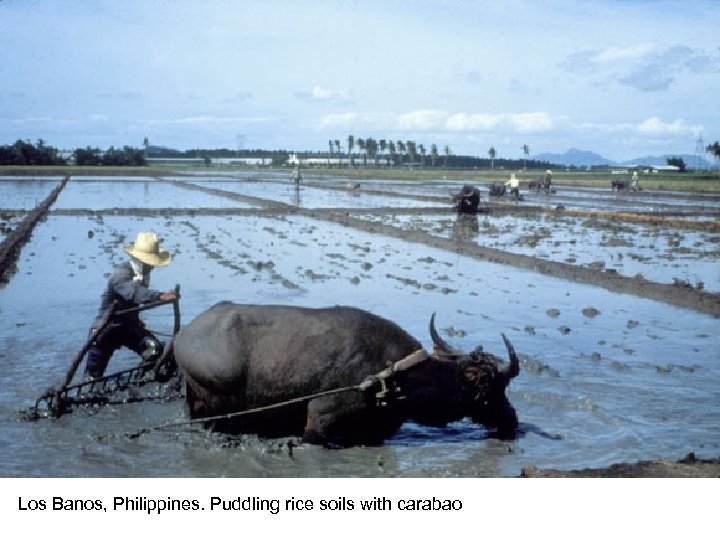 Los Banos, Philippines. Puddling rice soils with carabao
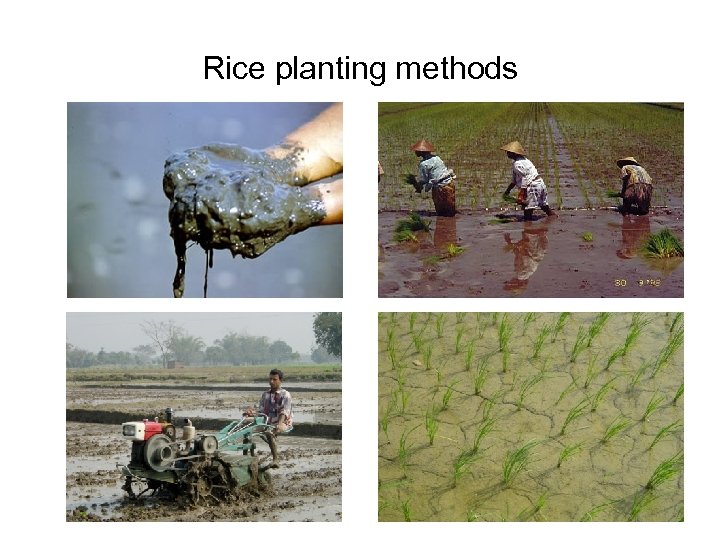 Rice planting methods
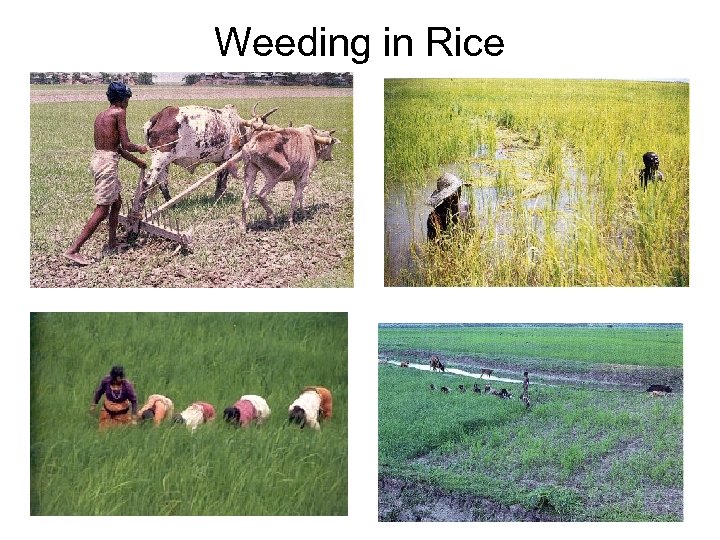 Weeding in Rice
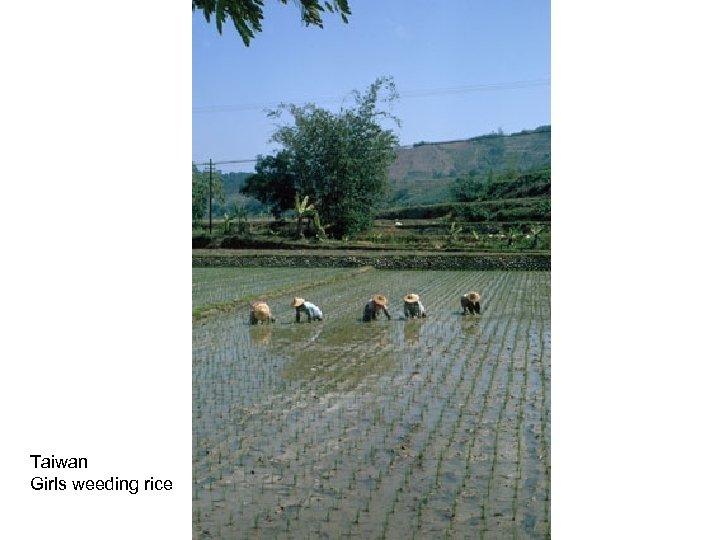 Taiwan Girls weeding rice
 No-till rice-wheat • In order to get the full benefit of no-till wheat, also need to no-till rice – Problems of weeds because difficult to pond water when no puddling – Traditionally hand weeded – Tedious and usually done by women • One solution would be to introduce herbicide resistant rice varieties • Use of cover crops
 Other Future Issues Rice • Better 0 -till and DSR varieties – Oryza sativa by O. glaberimma crosses – Chromosome substitution lines • Use of Genetic Engineering – Roundup ready rice – Blast resistant rice – Drought tolerant rice • Improved equipment for seeding rice
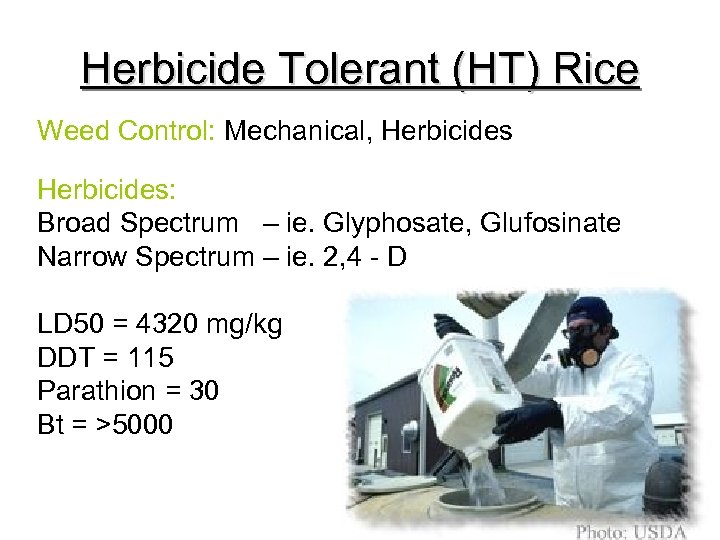 Herbicide Tolerant (HT) Rice Weed Control: Mechanical, Herbicides: Broad Spectrum – ie. Glyphosate, Glufosinate Narrow Spectrum – ie. 2, 4 - D LD 50 = 4320 mg/kg DDT = 115 Parathion = 30 Bt = >5000
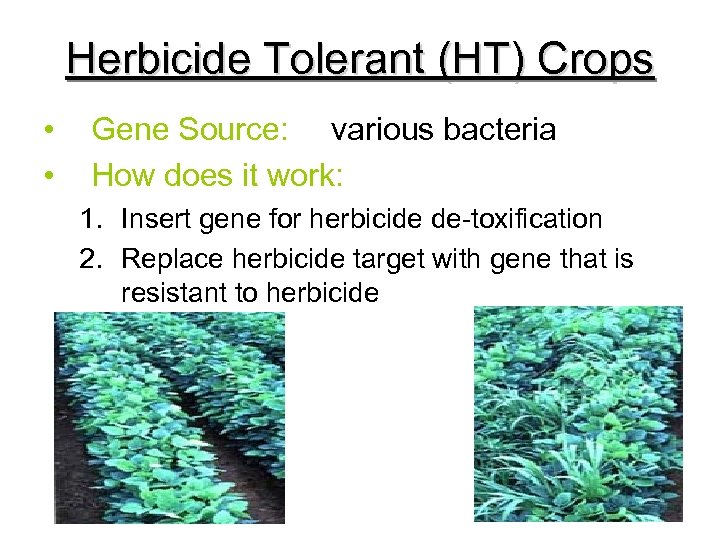 Herbicide Tolerant (HT) Crops • • Gene Source: various bacteria How does it work: 1. Insert gene for herbicide de-toxification 2. Replace herbicide target with gene that is resistant to herbicide
 Benefit of HT to Environment? • Depends on Herbicide not GM Plant • Post emergence broad spectrum Roundup herbicide replace numerous narrow spectrum herbicides that are more toxic – Depends on breakdown product of herbicide in plant/soil • Allows farmer to practice no-till and conservation agriculture practices
 Negative issues • Weeds used for fodder • Employment of the poor for weeding • Availability of technology to resource poor farmers: – Credit to buy sprayer and herbicide – Training in proper use – Spurious products on the market – Extension of improved system poor
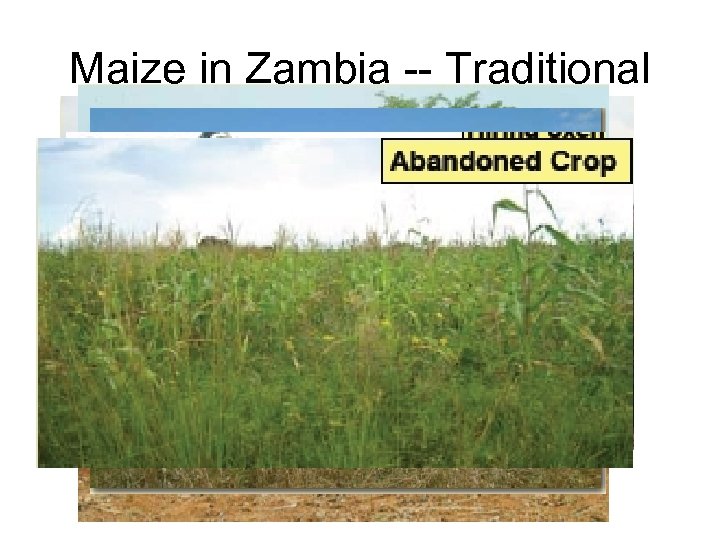 Maize in Zambia -- Traditional
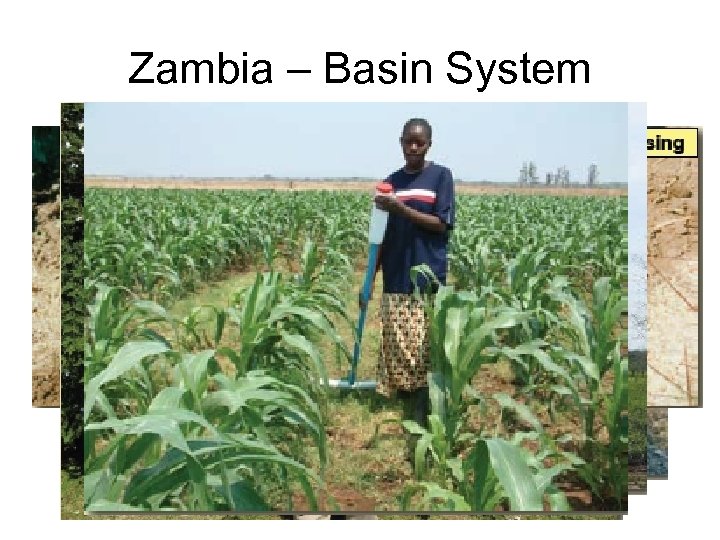 Zambia – Basin System
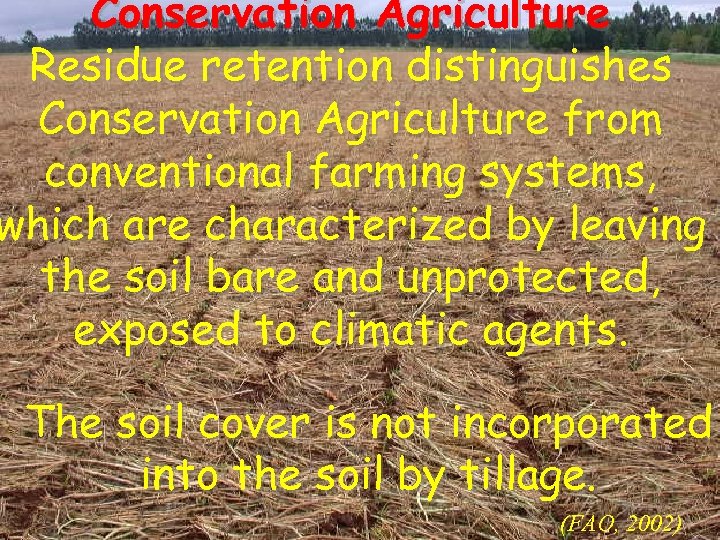 Conservation Agriculture Residue retention distinguishes Conservation Agriculture from conventional farming systems, which are characterized by leaving the soil bare and unprotected, exposed to climatic agents. The soil cover is not incorporated into the soil by tillage. (FAO, 2002)