 Скачать презентацию Web to World Predicting Transitions from Self-Diagnosis to
08cef1cc0de97653e38ed81fed8168a6.ppt
- Количество слайдов: 18



Web to World Predicting Transitions from Self-Diagnosis to the Pursuit of Local Medical Assistance in Web Search Ryen White, Ph. D Eric Horvitz, MD Ph. D AMIA November 2010 Microsoft Research
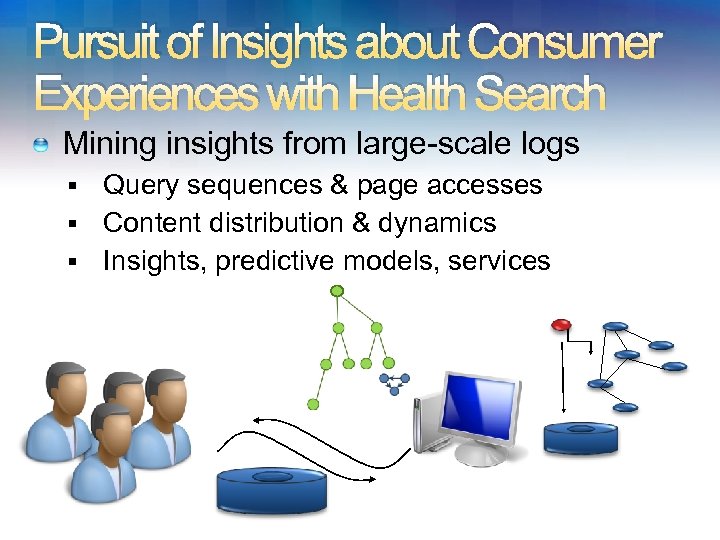
Pursuit of Insights about Consumer Experiences with Health Search Mining insights from large-scale logs Query sequences & page accesses § Content distribution & dynamics § Insights, predictive models, services §
Prior Study: Escalation of Concerns Large-scale crawl & log analysis, survey (TOIS 2009) Transition from common symptoms to rare diseases e. g. , {headache, nausea, dizziness} rare illness § Conclusions - Escalations of concerns widespread - Web suffers from & amplifies biases of judgment • Base-rate neglect • Availability bias
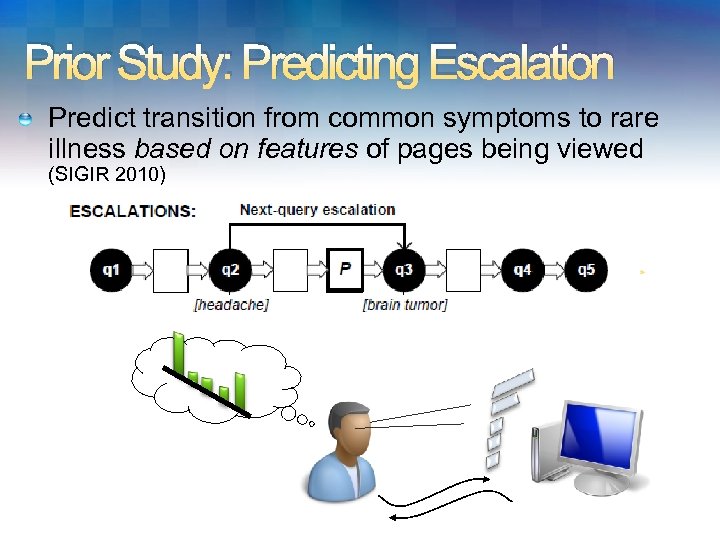
Prior Study: Predicting Escalation Predict transition from common symptoms to rare illness based on features of pages being viewed (SIGIR 2010)
New Work: Influence of Web on Seeking Healthcare Professionals Web search more engagement with healthcare system (AMIA 2009) Survey of Microsoft employees (n=515): “Web content put you over the threshold for scheduling an appointment with a health professional, when you would likely have not sought professional medical attention if you had not reviewed Web content. ” 23. 7% Yes!
Web to World Predict pursuit of in-world healthcare resources: Healthcare Utilization Intention (HUI) Querying for information on proximal physicians, specialists, healthcare centers e. g. , “neurologist in seattle, wa”, “evergreen hospital”, “urgent care clinic” Automated detection: - Appropriate medical specialty for the symptom (e. g. , neurologist for symptom: muscle twitches); - medical resource (e. g. , hospital, physician) - five-digit US zipcode, US city & state name pair (e. g. , Redmond, Washington)
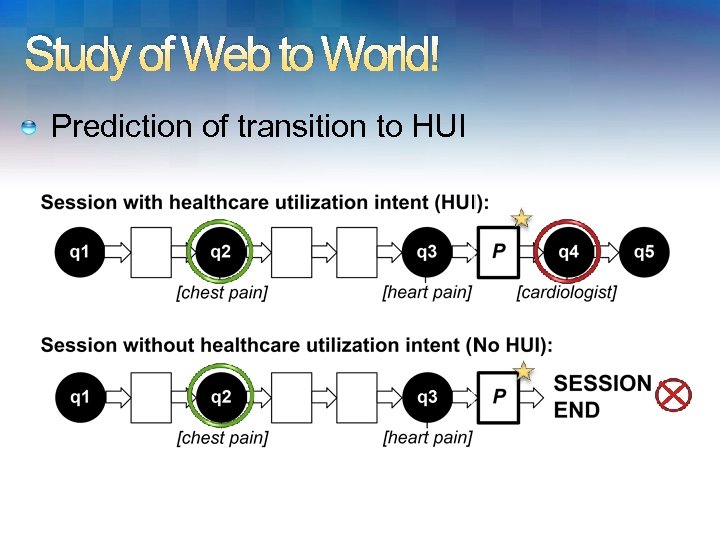
Study of Web to World! Prediction of transition to HUI
Methods Analysis of Log Data Six mos. anonymized logs from MSN Toolbar (opt in) Extract search sessions using automated tools Sessions: start query and all queries and URLs Symptoms: chest pain, muscle twitches, abdominal pain Automatic extraction of sessions w/ symptom HUI 700 HUI, 700 no-HUI sessions
![Characteristics of Resource Pursuits Treatment center for [back pain, peoria illinois] condition 4% [emergency](https://present5.com/presentation/08cef1cc0de97653e38ed81fed8168a6/image-9.jpg "Characteristics of Resource Pursuits Treatment center for [back pain, peoria illinois] condition 4% [emergency")
Characteristics of Resource Pursuits Treatment center for [back pain, peoria illinois] condition 4% [emergency clinic in sacramento] [endocrinologists in chattanooga, tn] Any physician 5% Medical specialist 13% Any treatment location 19% [physicians near 32713] [tacoma urgent care] Specific treatment location 38% Specific physician 21% [dr smith everett]
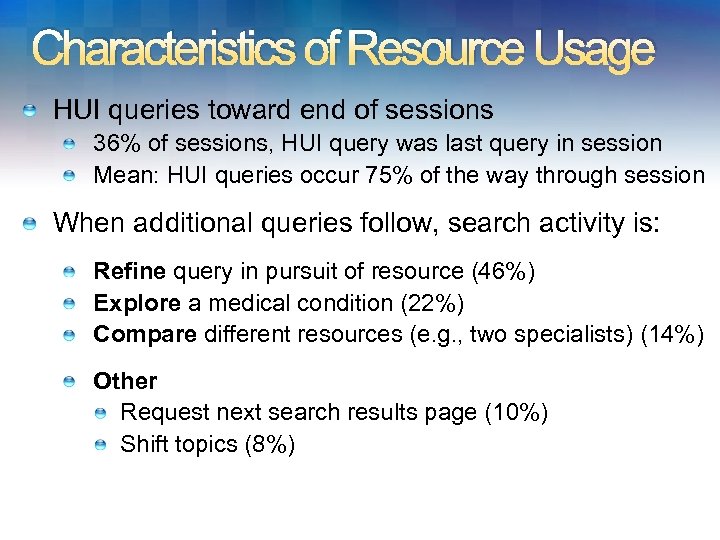
Characteristics of Resource Usage HUI queries toward end of sessions 36% of sessions, HUI query was last query in session Mean: HUI queries occur 75% of the way through session When additional queries follow, search activity is: Refine query in pursuit of resource (46%) Explore a medical condition (22%) Compare different resources (e. g. , two specialists) (14%) Other Request next search results page (10%) Shift topics (8%)
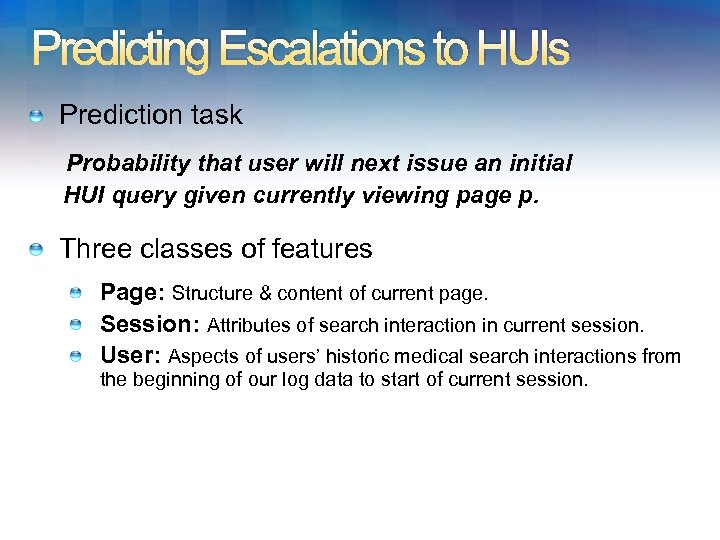
Predicting Escalations to HUIs Prediction task Probability that user will next issue an initial HUI query given currently viewing page p. Three classes of features Page: Structure & content of current page. Session: Attributes of search interaction in current session. User: Aspects of users’ historic medical search interactions from the beginning of our log data to start of current session.
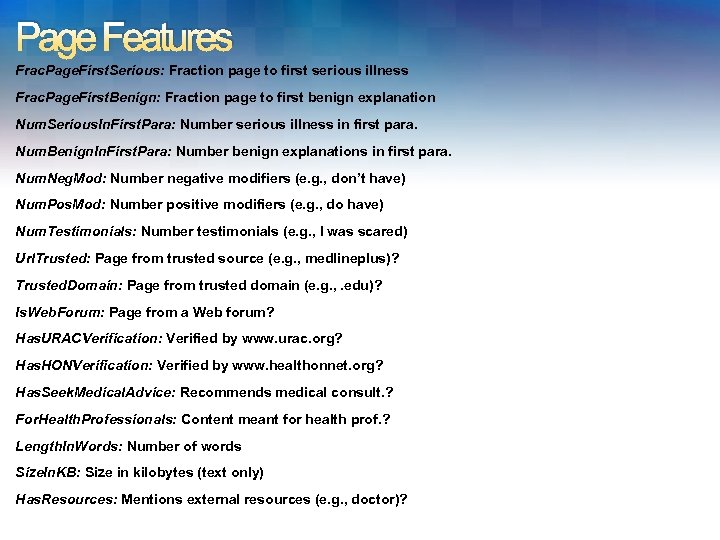
Page Features Frac. Page. First. Serious: Fraction page to first serious illness Frac. Page. First. Benign: Fraction page to first benign explanation Num. Serious. In. First. Para: Number serious illness in first para. Num. Benign. In. First. Para: Number benign explanations in first para. Num. Neg. Mod: Number negative modifiers (e. g. , don’t have) Num. Pos. Mod: Number positive modifiers (e. g. , do have) Num. Testimonials: Number testimonials (e. g. , I was scared) Url. Trusted: Page from trusted source (e. g. , medlineplus)? Trusted. Domain: Page from trusted domain (e. g. , . edu)? Is. Web. Forum: Page from a Web forum? Has. URACVerification: Verified by www. urac. org? Has. HONVerification: Verified by www. healthonnet. org? Has. Seek. Medical. Advice: Recommends medical consult. ? For. Health. Professionals: Content meant for health prof. ? Length. In. Words: Number of words Size. In. KB: Size in kilobytes (text only) Has. Resources: Mentions external resources (e. g. , doctor)?
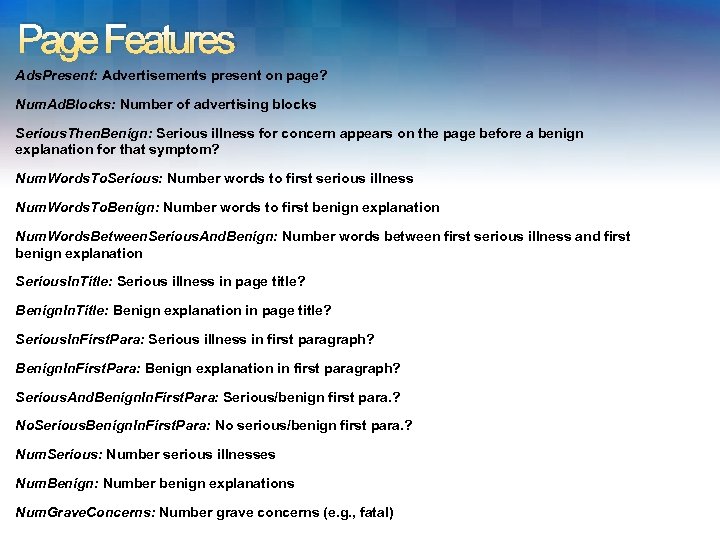
Page Features Ads. Present: Advertisements present on page? Num. Ad. Blocks: Number of advertising blocks Serious. Then. Benign: Serious illness for concern appears on the page before a benign explanation for that symptom? Num. Words. To. Serious: Number words to first serious illness Num. Words. To. Benign: Number words to first benign explanation Num. Words. Between. Serious. And. Benign: Number words between first serious illness and first benign explanation Serious. In. Title: Serious illness in page title? Benign. In. Title: Benign explanation in page title? Serious. In. First. Para: Serious illness in first paragraph? Benign. In. First. Para: Benign explanation in first paragraph? Serious. And. Benign. In. First. Para: Serious/benign first para. ? No. Serious. Benign. In. First. Para: No serious/benign first para. ? Num. Serious: Number serious illnesses Num. Benign: Number benign explanations Num. Grave. Concerns: Number grave concerns (e. g. , fatal)
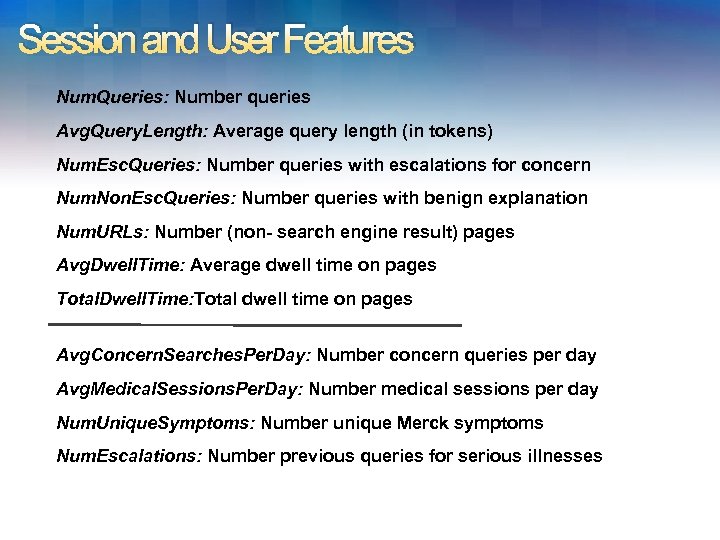
Session and User Features Num. Queries: Number queries Avg. Query. Length: Average query length (in tokens) Num. Esc. Queries: Number queries with escalations for concern Num. Non. Esc. Queries: Number queries with benign explanation Num. URLs: Number (non- search engine result) pages Avg. Dwell. Time: Average dwell time on pages Total. Dwell. Time: Total dwell time on pages Avg. Concern. Searches. Per. Day: Number concern queries per day Avg. Medical. Sessions. Per. Day: Number medical sessions per day Num. Unique. Symptoms: Number unique Merck symptoms Num. Escalations: Number previous queries for serious illnesses
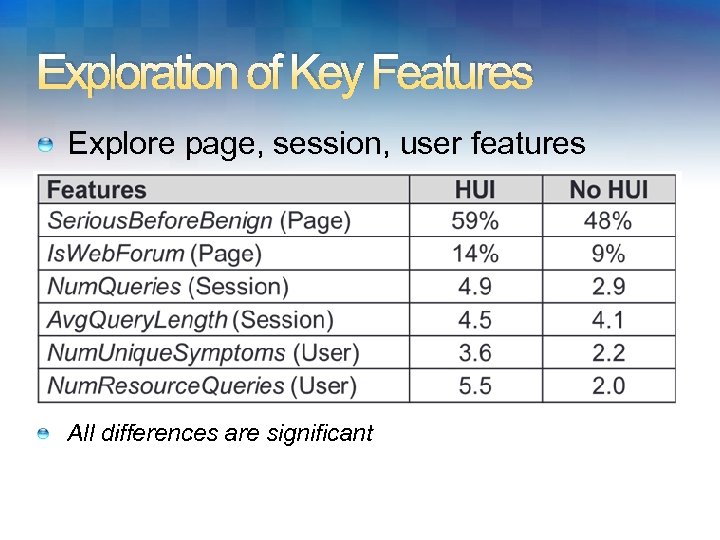
Exploration of Key Features Explore page, session, user features All differences are significant

Study of Predictive Model Logistic regression with five-fold cross-validation Accuracy: 1 True positive rate - Page features = 59. 3% - Page + session = 68. 9% - Page + session + user = 77. 7% 0. 8 0. 6 0. 4 Page + Session + User 0. 2 Page + Session Page 0 0 0. 2 0. 4 0. 6 False positive rate 0. 8 1

Prediction Findings Inspected feature weights Top features by evidential weight, relative to most predictive feature, Avg. Dwell. Time: Value of multiple classes of features in building predictive models

Summary Web to world: Predicting Health Utilization Intention (HUI) Predictive models of escalation to HUI given features of a page, session, user Characterized resource seeking: Most HUIs are searches for specific locations or physicians Post-initial HUI query, users refine, explore, or compare
Скачать презентацию Web to World Predicting Transitions from Self-Diagnosis to
08cef1cc0de97653e38ed81fed8168a6.ppt