


 Скачать презентацию We use the coast in many ways u
2da864d3684b4a00fe45f8accad627a9.ppt
- Количество слайдов: 29
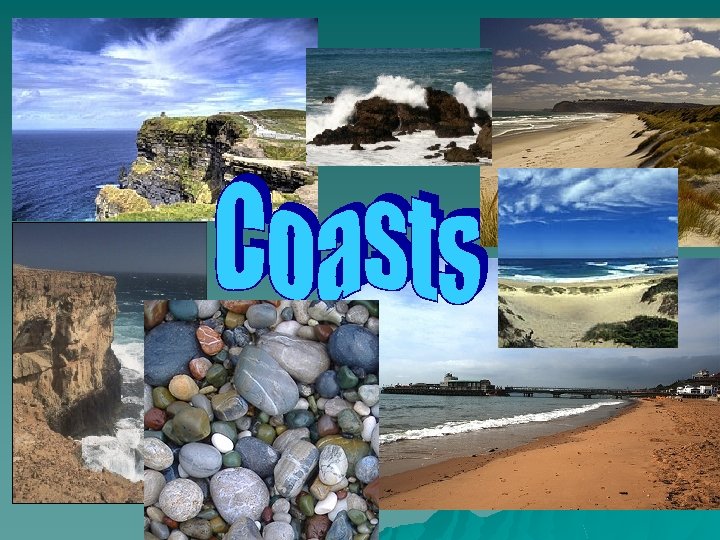
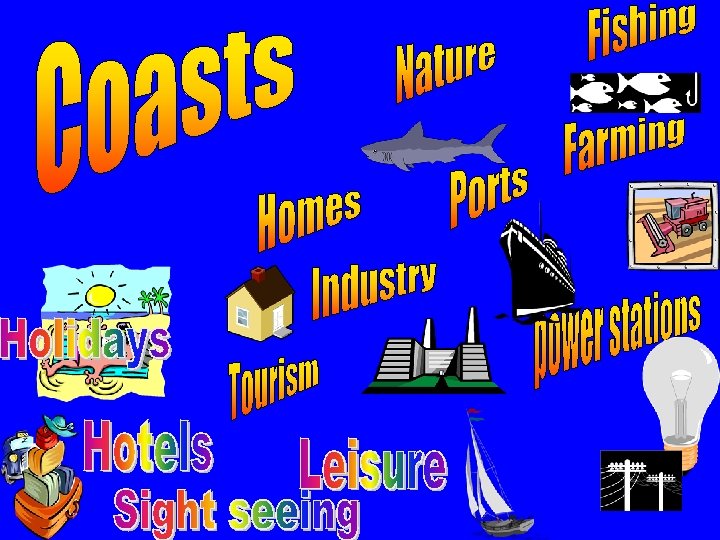
 We use the coast in many ways. u. How could some of these uses conflict with tourism? u Use your earlier homework task to help you here.
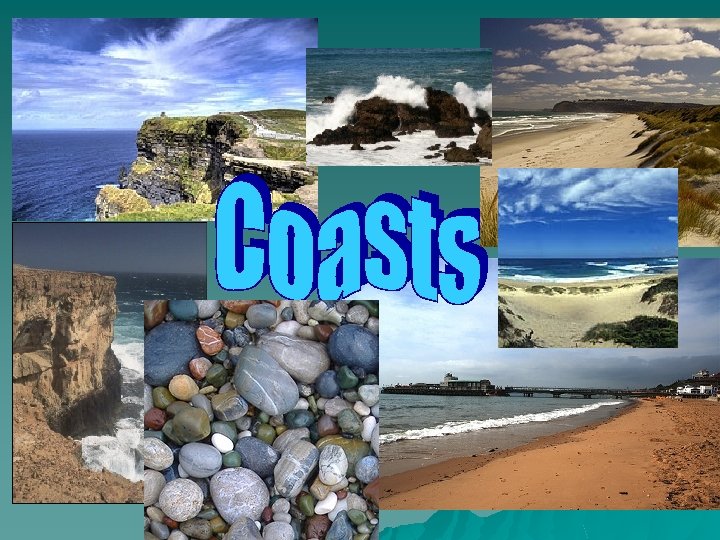
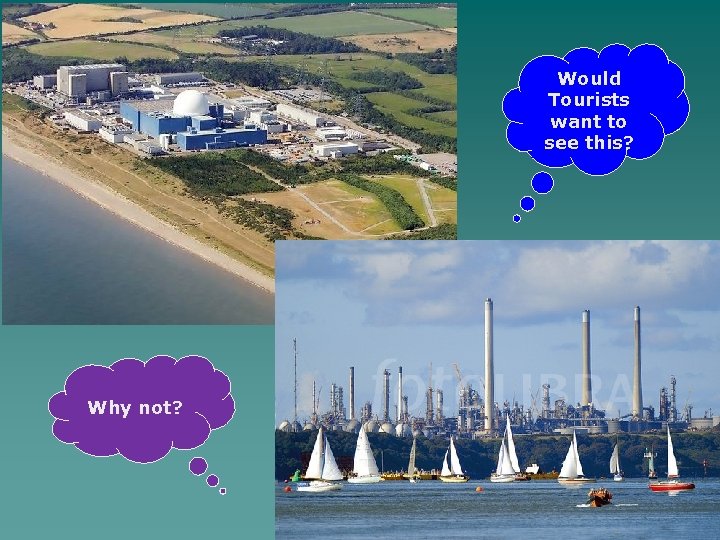 Would Tourists want to see this? Why not?
 Conflict at the Coast u Tourist and visitors would not want ____ at the coast, u Because __________ u ______________.
 Today’s Objectives Investigate: u What is changing the coast u To identify some of the main erosion processes. u Explain the jobs that waves do. u Explain how the waves erode the coast
 Our Coast is always changing. Why?
 It’s to do with the sea. u It is all about the Waves. u What are waves? How are they created what do they do? u http: //www. bbc. co. uk/education/clip s/zk 23 cdm u
 The Coast is always changing. Let’s have a look at examples in the West of Wales and the East of England. http: //www. bbc. co. uk/education/clips/zx 6 g 9 j 6 http: //www. bbc. co. uk/learningzone/clips/coastl ines-drastic-erosion/8434. html
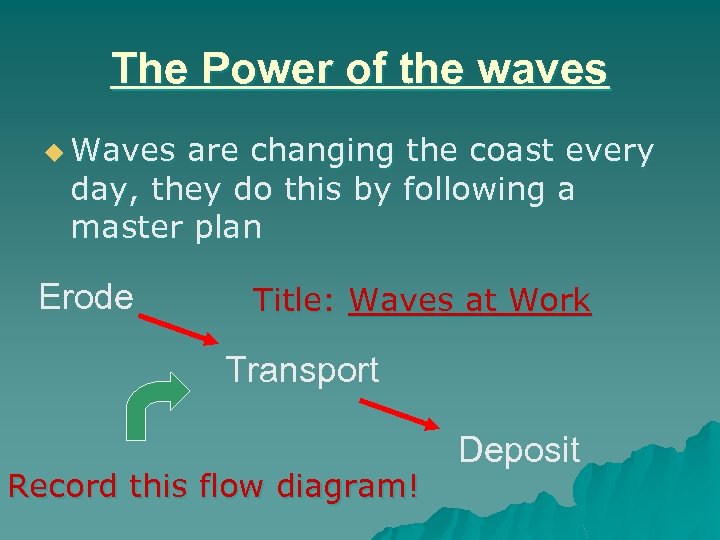 The Power of the waves u Waves are changing the coast every day, they do this by following a master plan Erode Title: Waves at Work Transport Record this flow diagram! Deposit
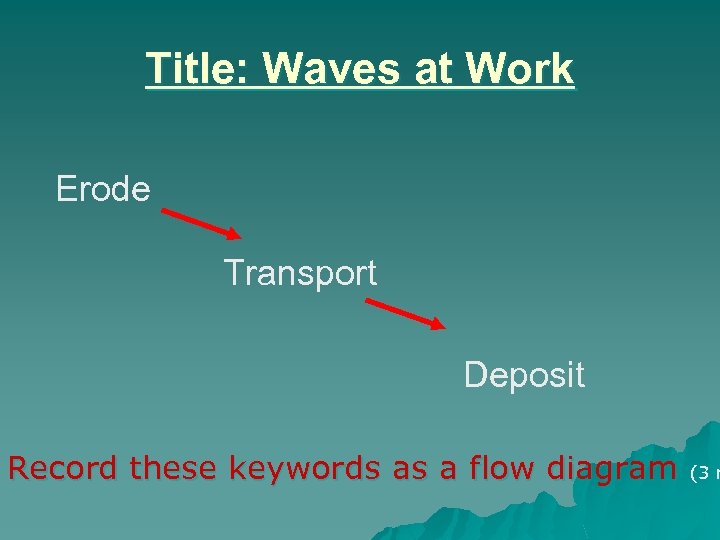 Title: Waves at Work Erode Transport Deposit Record these keywords as a flow diagram (3 m
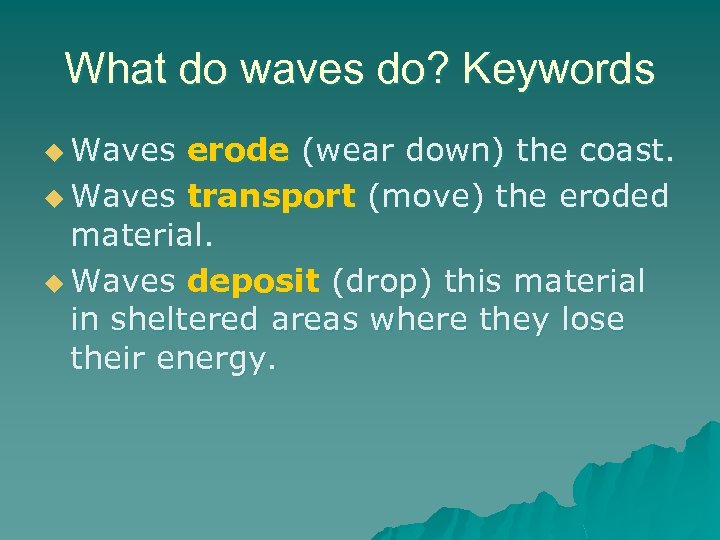 What do waves do? Keywords u Waves erode (wear down) the coast. u Waves transport (move) the eroded material. u Waves deposit (drop) this material in sheltered areas where they lose their energy.
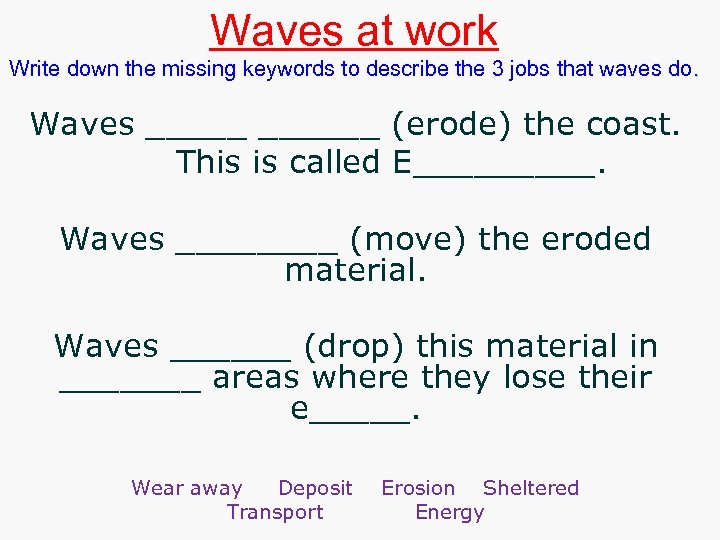 Waves at work Write down the missing keywords to describe the 3 jobs that waves do. Waves ______ (erode) the coast. This is called E_____. Waves ____ (move) the eroded material. Waves ______ (drop) this material in _______ areas where they lose their e_____. Wear away Deposit Transport Erosion Sheltered Energy
 Erosion u http: //www. bbc. co. uk/education/clip s/zdxg 9 j 6 u This clip introduces 3 of the ways waves erode (wear down) the coast. u There are in total 4 erosion processes. Let’s learn more…
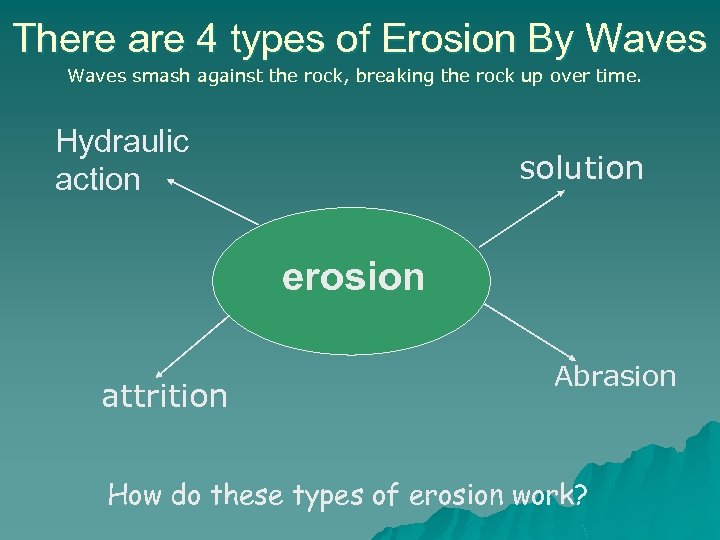 There are 4 types of Erosion By Waves smash against the rock, breaking the rock up over time. Hydraulic action solution erosion attrition Abrasion How do these types of erosion work?
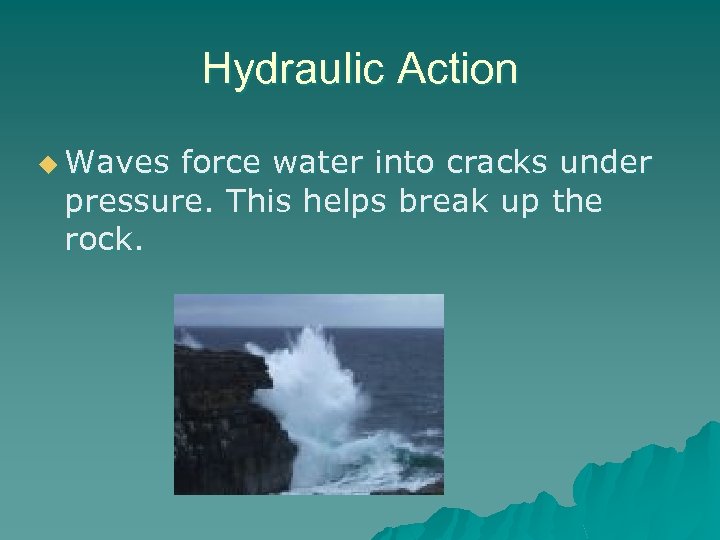 Hydraulic Action u Waves force water into cracks under pressure. This helps break up the rock.
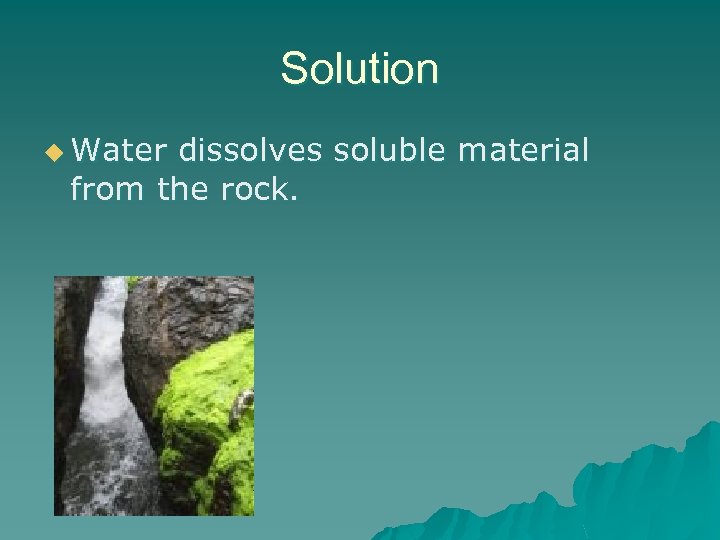 Solution u Water dissolves soluble material from the rock.
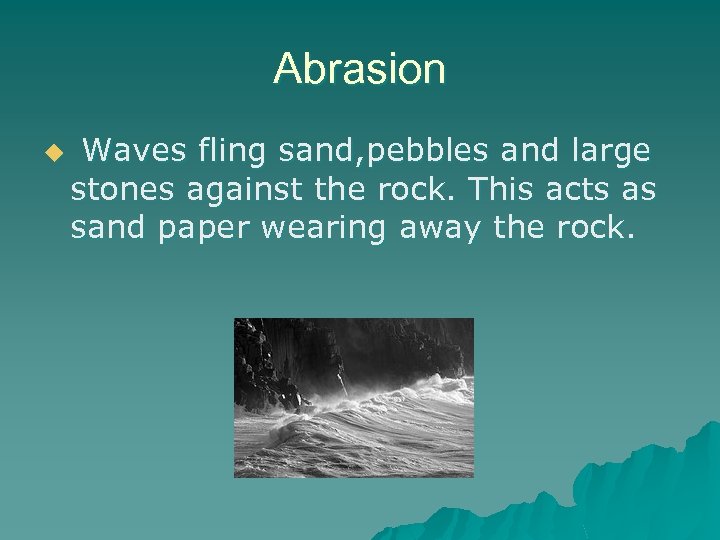 Abrasion u Waves fling sand, pebbles and large stones against the rock. This acts as sand paper wearing away the rock.
 Attrition u Waves knock together the pieces of rock broken off by erosion. These wear down into smaller and smaller pieces. u The rock wears down into shingle (Pebbles) and sand.
 Title: Waves at Work Write down the definitions of these key words in your books u Use Page 8 of Geog 2 to find the meanings of these key words. u Hydraulic Action is…? u Abrasion is…? u Attrition is…? u Solution is…?
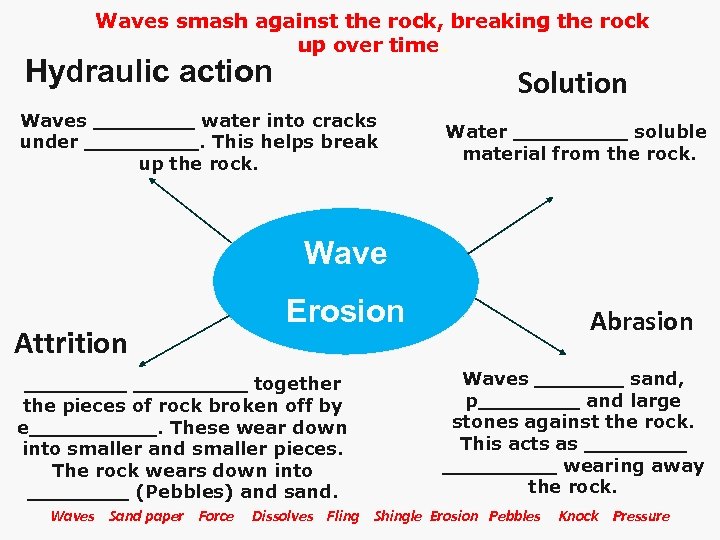 Waves smash against the rock, breaking the rock up over time. Hydraulic action Solution Waves ____ water into cracks under _____. This helps break up the rock. Water _____ soluble material from the rock. Wave Attrition Erosion _________ together the pieces of rock broken off by e_____. These wear down into smaller and smaller pieces. The rock wears down into ____ (Pebbles) and sand. Waves Sand paper Force Abrasion Waves _______ sand, p____ and large stones against the rock. This acts as _________ wearing away the rock. Dissolves Fling Shingle Erosion Pebbles Knock Pressure
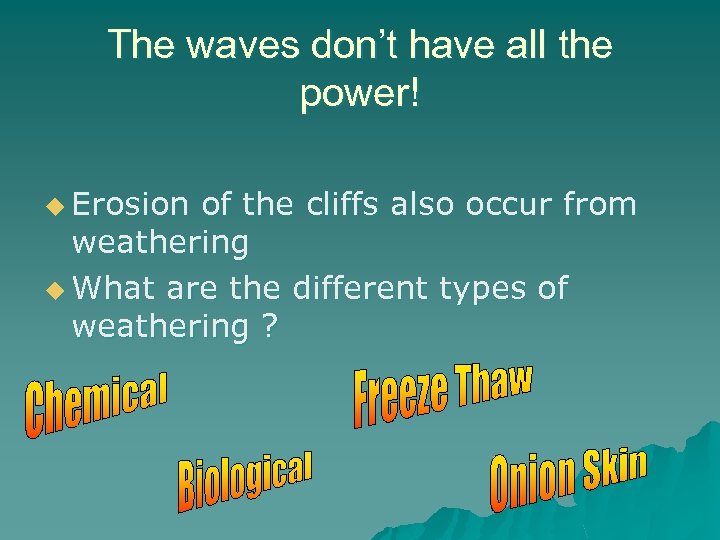 The waves don’t have all the power! u Erosion of the cliffs also occur from weathering u What are the different types of weathering ?
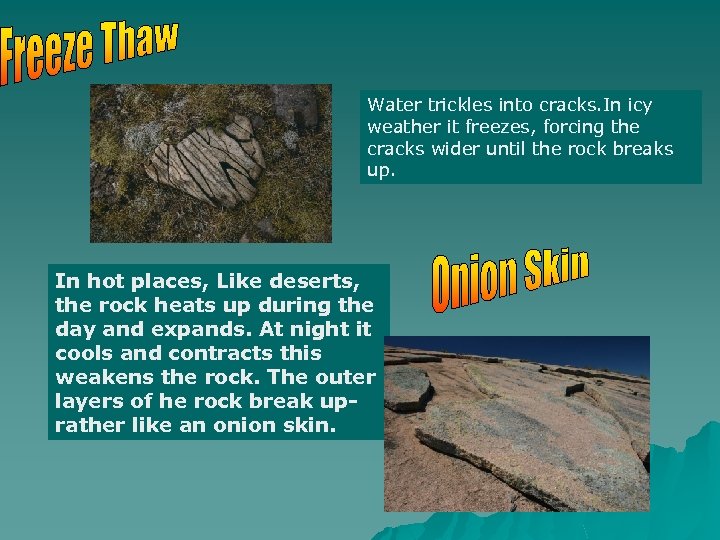 Water trickles into cracks. In icy weather it freezes, forcing the cracks wider until the rock breaks up. In hot places, Like deserts, the rock heats up during the day and expands. At night it cools and contracts this weakens the rock. The outer layers of he rock break uprather like an onion skin.
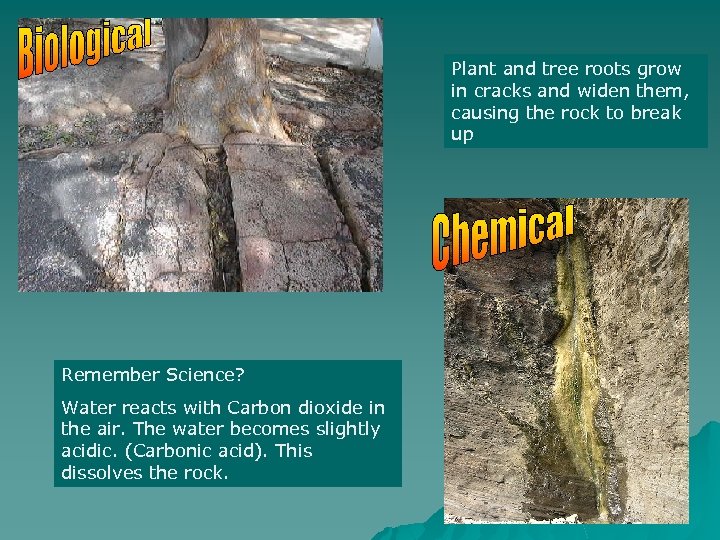 Plant and tree roots grow in cracks and widen them, causing the rock to break up Remember Science? Water reacts with Carbon dioxide in the air. The water becomes slightly acidic. (Carbonic acid). This dissolves the rock.
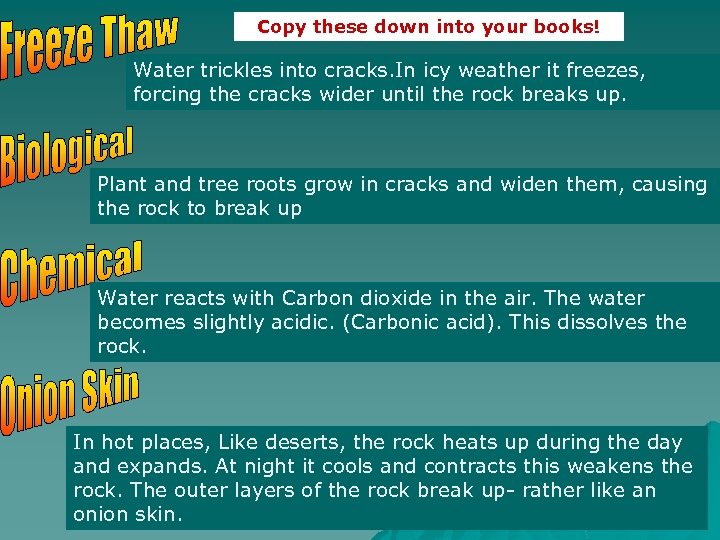 Copy these down into your books! Water trickles into cracks. In icy weather it freezes, forcing the cracks wider until the rock breaks up. Plant and tree roots grow in cracks and widen them, causing the rock to break up Water reacts with Carbon dioxide in the air. The water becomes slightly acidic. (Carbonic acid). This dissolves the rock. In hot places, Like deserts, the rock heats up during the day and expands. At night it cools and contracts this weakens the rock. The outer layers of the rock break up- rather like an onion skin.
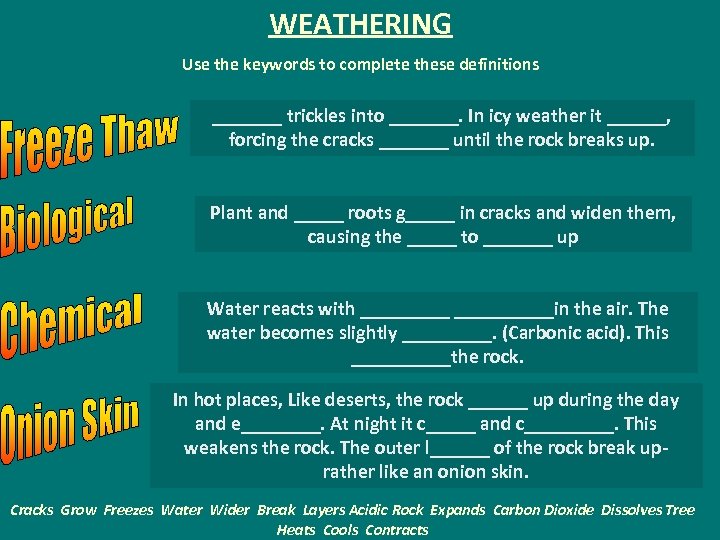 WEATHERING Use the keywords to complete these definitions _______ trickles into _______. In icy weather it ______, forcing the cracks _______ until the rock breaks up. Plant and _____ roots g_____ in cracks and widen them, causing the _____ to _______ up Water reacts with __________in the air. The water becomes slightly _____. (Carbonic acid). This _____the rock. In hot places, Like deserts, the rock ______ up during the day and e____. At night it c_____ and c_____. This weakens the rock. The outer l______ of the rock break uprather like an onion skin. Cracks Grow Freezes Water Wider Break Layers Acidic Rock Expands Carbon Dioxide Dissolves Tree Heats Cools Contracts
 WEATHERING Use the keywords to complete these definitions Cracks Grow Freezes Water Wider Break Layers Acidic Rock Expands Carbon Dioxide Dissolves Tree Heats Cools Contracts _______ trickles into _______. In icy weather it ______, forcing the cracks _______ until the rock breaks up. Plant and _____ roots g_____ in cracks and widen them, causing the _____ to _______ up Water reacts with __________in the air. The water becomes slightly _____. (Carbonic acid). This _____the rock. In hot places, Like deserts, the rock ______ up during the day and e____. At night it c_____ and c_____. This weakens the rock. The outer l______ of the rock break up- rather like an onion skin. Cracks Grow Freezes Water Wider Break Layers Acidic Rock Expands Carbon Dioxide Dissolves Tree Heats Cools Contracts
 Using what we have found out this lesson…. u Complete the worksheet 1 b “Wearing the coast away” Q 1 and 2 u Put your name on the sheet.