 Скачать презентацию We use if to talk about
e54189948c08492222eb17bfc479fd73.ppt
- Количество слайдов: 31



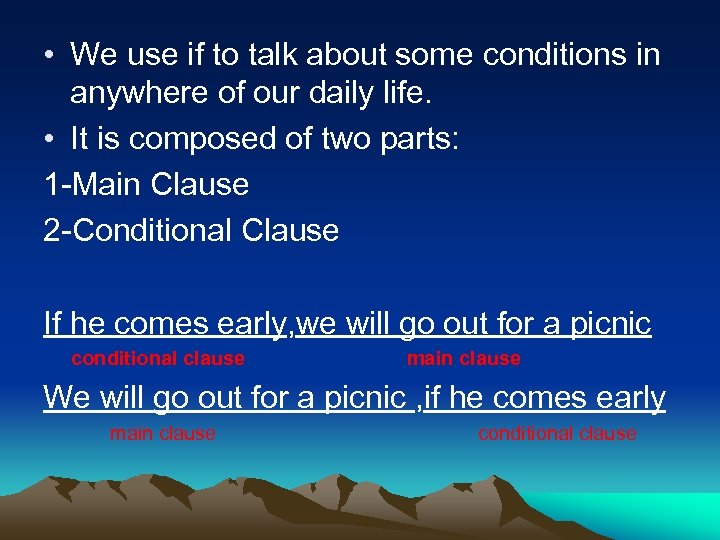
• We use if to talk about some conditions in anywhere of our daily life. • It is composed of two parts: 1 -Main Clause 2 -Conditional Clause If he comes early, we will go out for a picnic conditional clause main clause We will go out for a picnic , if he comes early main clause conditional clause
TYPES OF IF CLAUSES • Type 0: General facts • We use this type to talk about scientific and general facts. • The water boils in 100 celcius • When you heat ice, it melts
TYPES OF IF CLAUSES • Type 1: True in the Present or future We use this to talk about a thing which is true in present or in the future • If the weather is nice, we usually sit in the garden. (present) • If the weather is nice tomorrow, we will sit in the garden. (future)
As we see we use this type about something which is habitually done or ordinarily done and the main tenses we can use in this formation is either present simple or future tense with will
• If she passes the university exam, her life will completely change • I will visit my parents tomorrow, if I have time. • I will not come you again, if you do this again.
When the action is a part of future in the conditional clause we do not use will with if. • Perhaps she will come tomorrow. Then we will study together. If she comes tomorrow, we will study together • Perhaps it will not be her day off tomorrow. Then I will go shopping alone If it is not her day of tomorrow, I will go shopping alone
The tenses we can use in type 1 1. Variations of will (will be doing, will have done, will have been doing) 2. May/Might/Could (Possibility) 3. May(Permission) and can (Permission or Ability) 4. Must/have to/have got to(necessity)/should/ought to/had better(advisibility) and any expression of command, request, suggestion or advice. 5. The simple present tenses
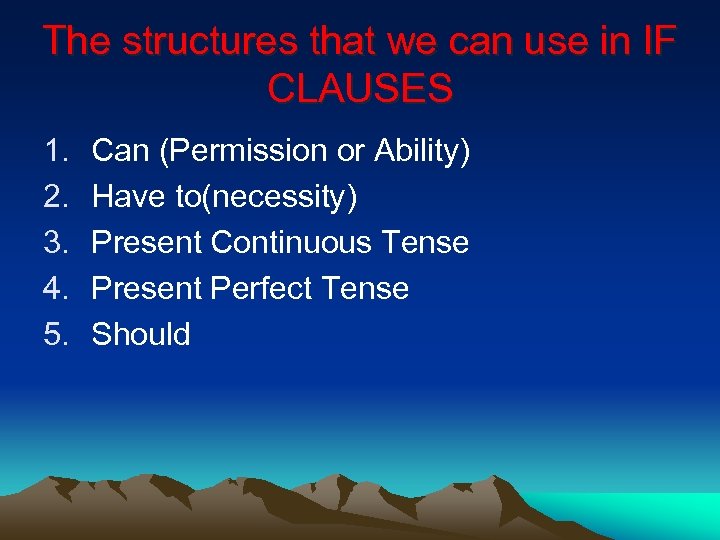
The structures that we can use in IF CLAUSES 1. 2. 3. 4. 5. Can (Permission or Ability) Have to(necessity) Present Continuous Tense Present Perfect Tense Should
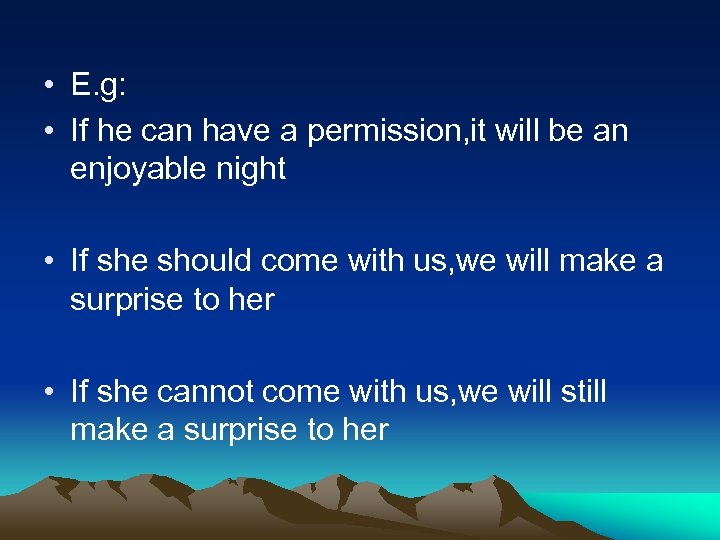
• E. g: • If he can have a permission, it will be an enjoyable night • If she should come with us, we will make a surprise to her • If she cannot come with us, we will still make a surprise to her
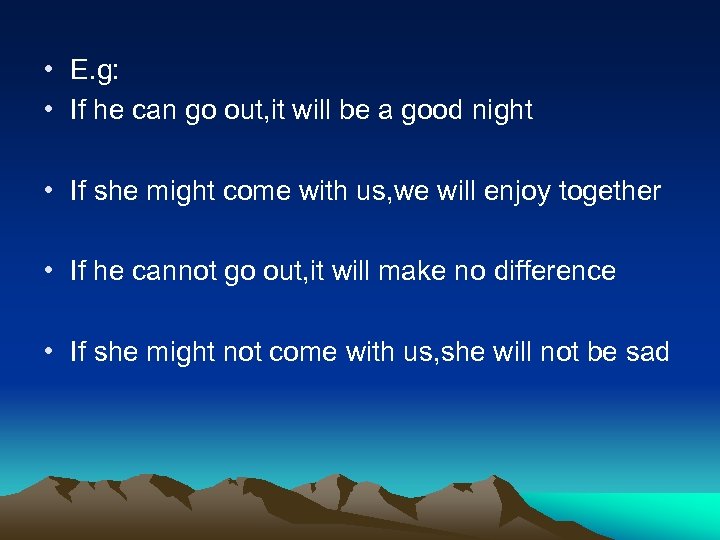
• E. g: • If he can go out, it will be a good night • If she might come with us, we will enjoy together • If he cannot go out, it will make no difference • If she might not come with us, she will not be sad
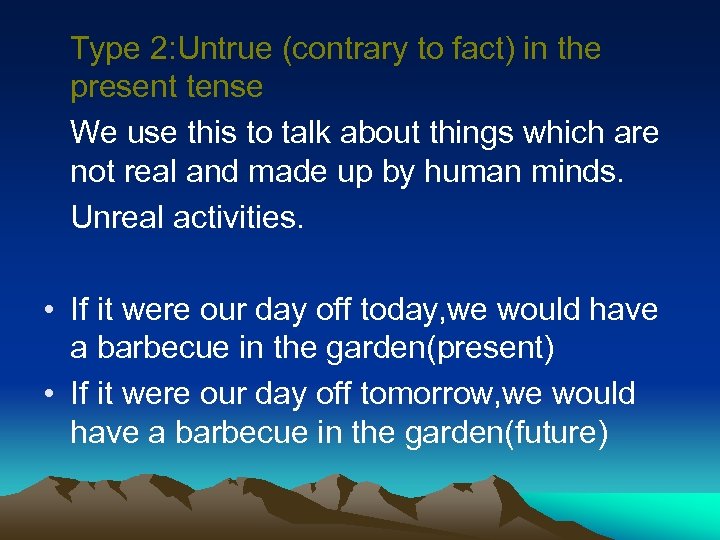
Type 2: Untrue (contrary to fact) in the present tense We use this to talk about things which are not real and made up by human minds. Unreal activities. • If it were our day off today, we would have a barbecue in the garden(present) • If it were our day off tomorrow, we would have a barbecue in the garden(future)
We also use this structure when we think about and action about future but say just the opposite. That is why the tense that we should use should be past tense to stress that they are unreal events. Truth: I don’t have enough money now, so I cannot lend you any to buy that tshirt(present) Conditionals: If I had enough money now, I would lend you some to buy that t-shirt Here, even though we use past tense meaning is present tense.
The tenses that we can use in type 2 • 1 -The structures used in Main Clause • Would/would be doing • Could/would be able to/might/would have to • 2 -The structures used in Conditional Clause • Past form of “be” (was/were)
• Past Tense • Could / had to • Should
• E. g: • If he could have the money, he would go on a holiday • If she could get permission, she will be free for tonight • If he could save money, he would get a new car
• Type 3: Untrue (contrary to fact) in the past We use this type to talk about past things which are not true. • If the weather had been nice yesterday, we would have sat in the garden(past) • If it had been our day off yesterday, we would have had a barbecue in the garden (past)
This type is also used to talk about something that we think about past and think just the opposite of events. Truth: She did not hard enough, so she didn’t pass the test. Conditional: If she studied hard enough, she would have passed the test
The structures that we can use in type 3 1. Would have done / would have been doing 2. Would have had to / would have been able to 3. Might have done (possibility) / could have done (permission and ability)
The tenses that we can use in type 3 • Past Perfect Tense • Past Perfect Continuous (had been doing) • Had had to / had been able to
SUMMARY OF IF CLAUSES
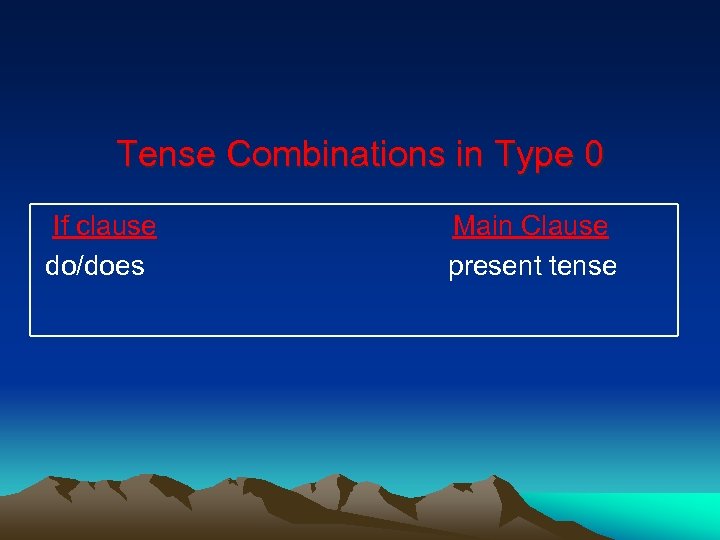
Tense Combinations in Type 0 If clause do/does Main Clause present tense
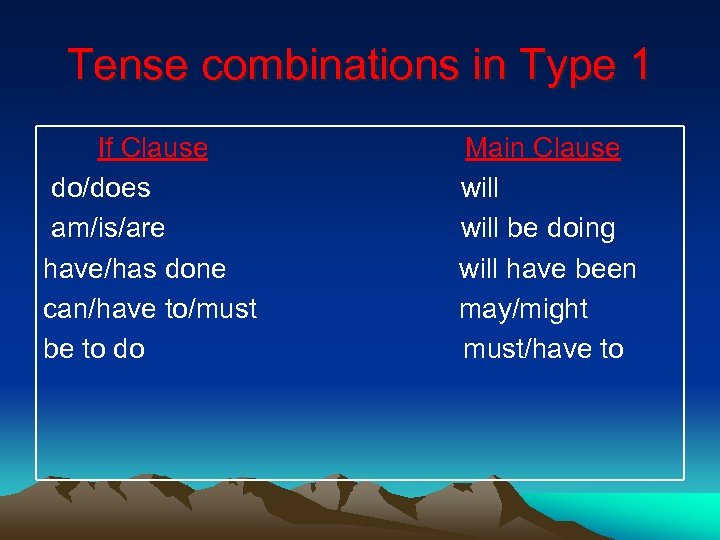
Tense combinations in Type 1 If Clause do/does am/is/are have/has done can/have to/must be to do Main Clause will be doing will have been may/might must/have to
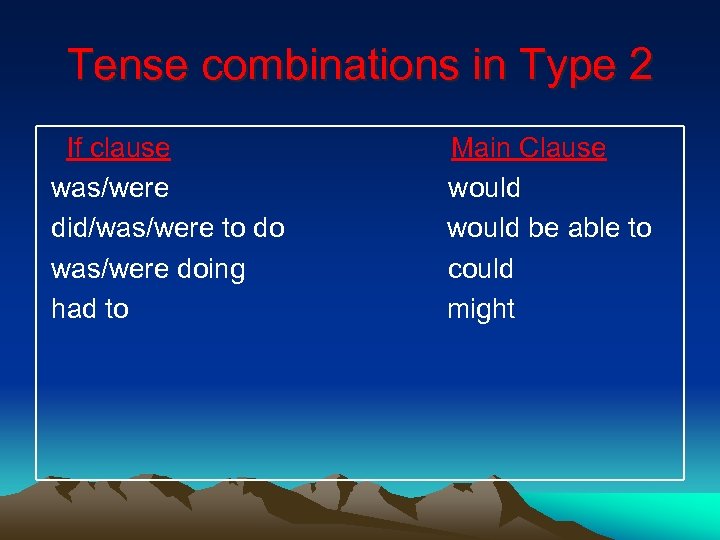
Tense combinations in Type 2 If clause was/were did/was/were to do was/were doing had to Main Clause would be able to could might
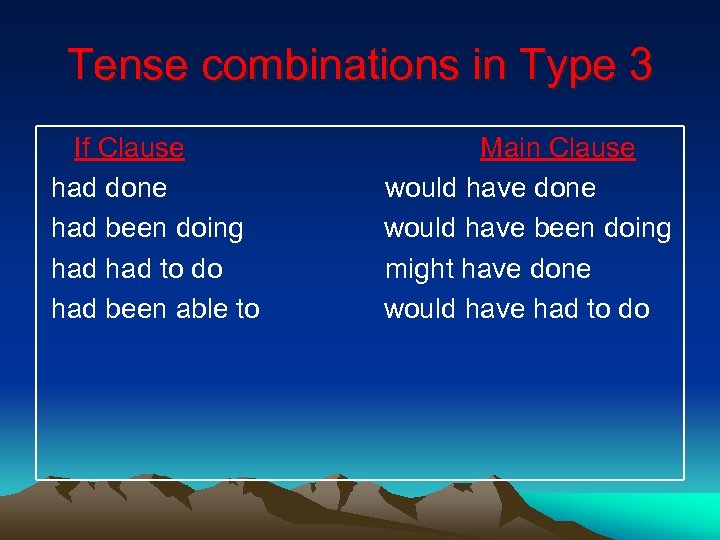
Tense combinations in Type 3 If Clause had done had been doing had to do had been able to Main Clause would have done would have been doing might have done would have had to do
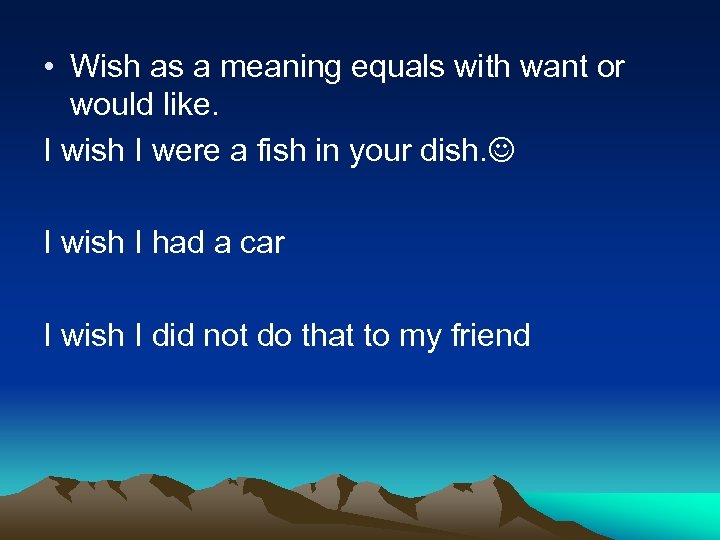
• Wish as a meaning equals with want or would like. I wish I were a fish in your dish. I wish I had a car I wish I did not do that to my friend
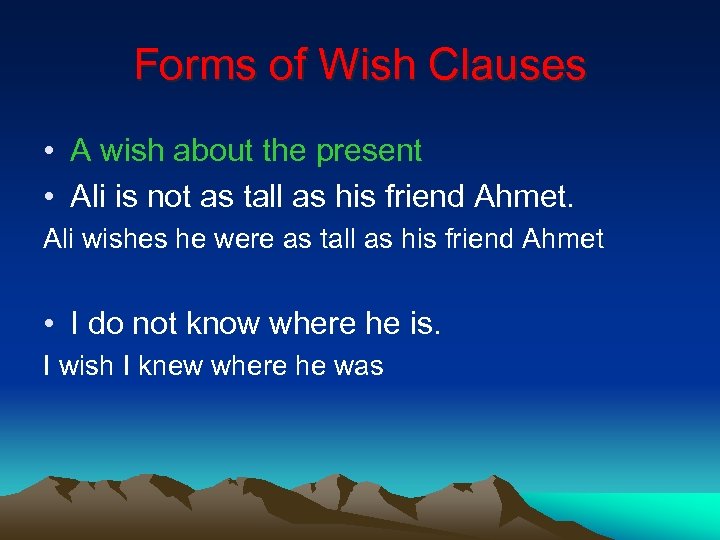
Forms of Wish Clauses • A wish about the present • Ali is not as tall as his friend Ahmet. Ali wishes he were as tall as his friend Ahmet • I do not know where he is. I wish I knew where he was
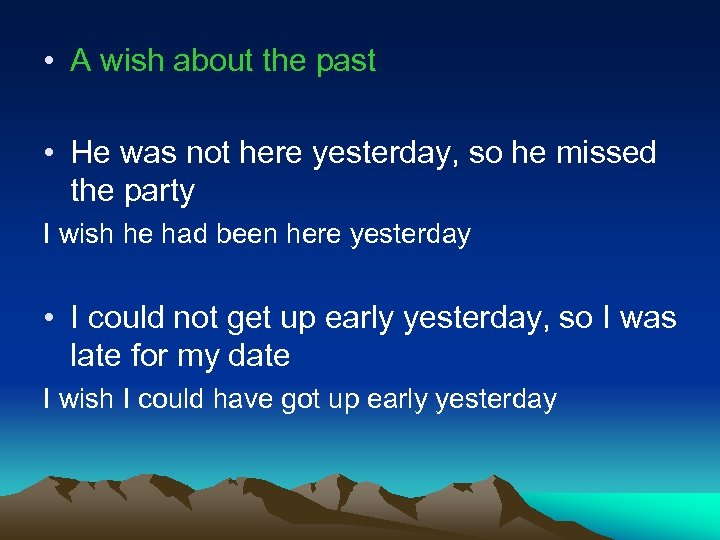
• A wish about the past • He was not here yesterday, so he missed the party I wish he had been here yesterday • I could not get up early yesterday, so I was late for my date I wish I could have got up early yesterday
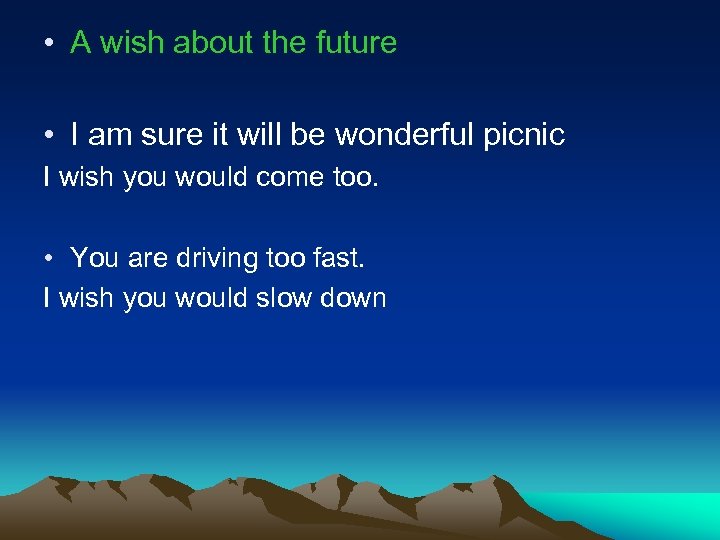
• A wish about the future • I am sure it will be wonderful picnic I wish you would come too. • You are driving too fast. I wish you would slow down
Metin Kıvanç Ayhan 1090620052 İİÖP
Скачать презентацию We use if to talk about
e54189948c08492222eb17bfc479fd73.ppt