 Скачать презентацию We can play Umíme si hrát BRNO —
586cae06adf010693966c389c1c78202.ppt
- Количество слайдов: 15



We can play! Umíme si hrát! BRNO - LEEDS
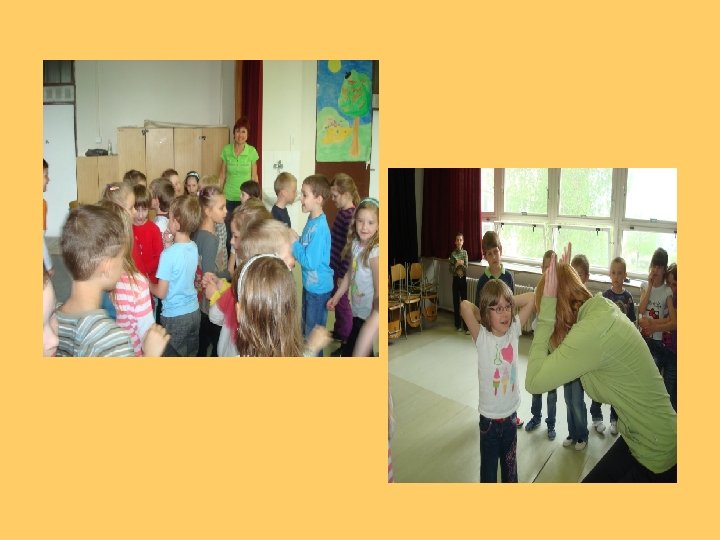
On Tuesday, 26 th April, we enjoyed a project day called “We can play!” All children from classes 1. – 5. visited six stations where could play Czech well known games. But for this day all games were played in English (teachers gave instructions in English and all rhymes of games were in English). That all because we would like to teach you some of our typical Czech children´s games like. . .
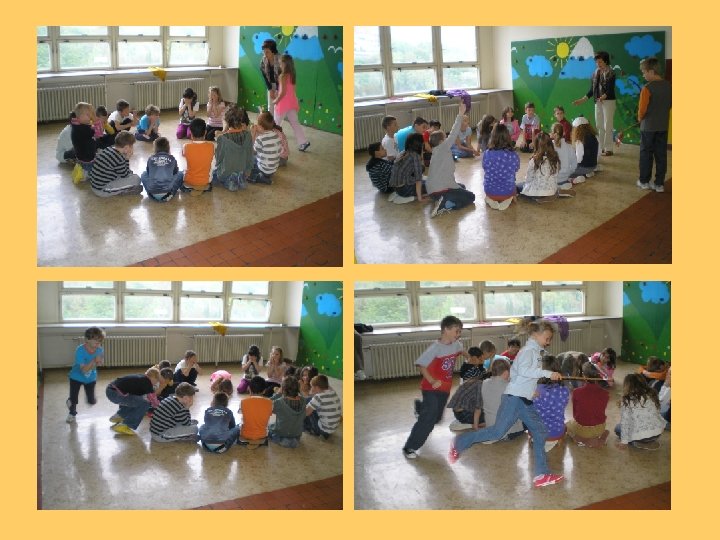
Pešek All of children sit down in the circle. One of them is chosen as Pešek. Everybody (except Pešek) close eyes and Pešek walks around the circle of children and sings: „Pešek’s walking round and round, you are sitting on the ground, close your eyes and wait for hit, stand up quickly and catch it“ Meanwhile Pesek bangs someone. He must run after Pešek and catch him. Provided he doesn't catch Pešek earlier than Pešek sits down on his place, he becomes a new Pešek.
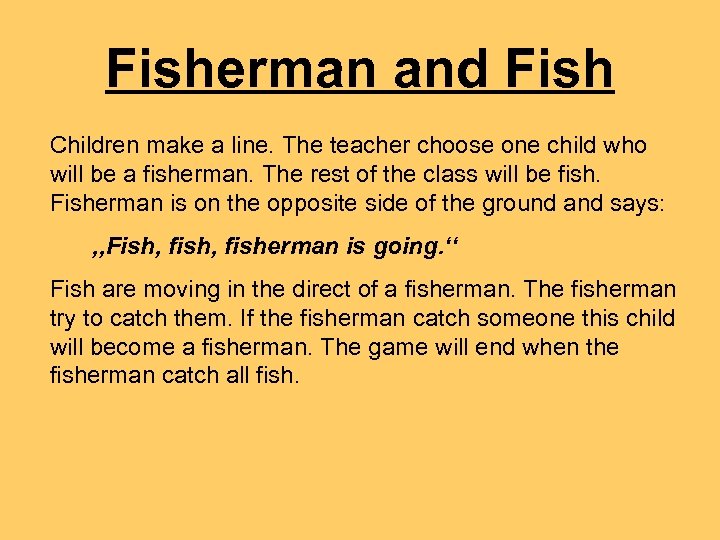
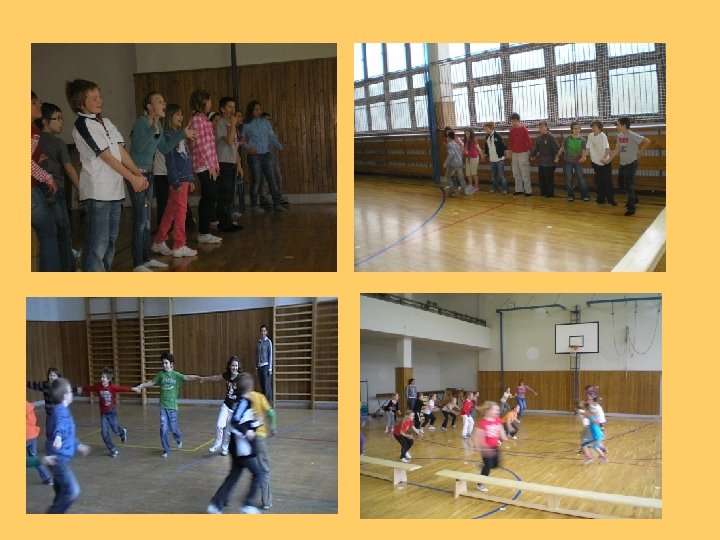
Fisherman and Fish Children make a line. The teacher choose one child who will be a fisherman. The rest of the class will be fish. Fisherman is on the opposite side of the ground and says: , , Fish, fisherman is going. ‘‘ Fish are moving in the direct of a fisherman. The fisherman try to catch them. If the fisherman catch someone this child will become a fisherman. The game will end when the fisherman catch all fish.
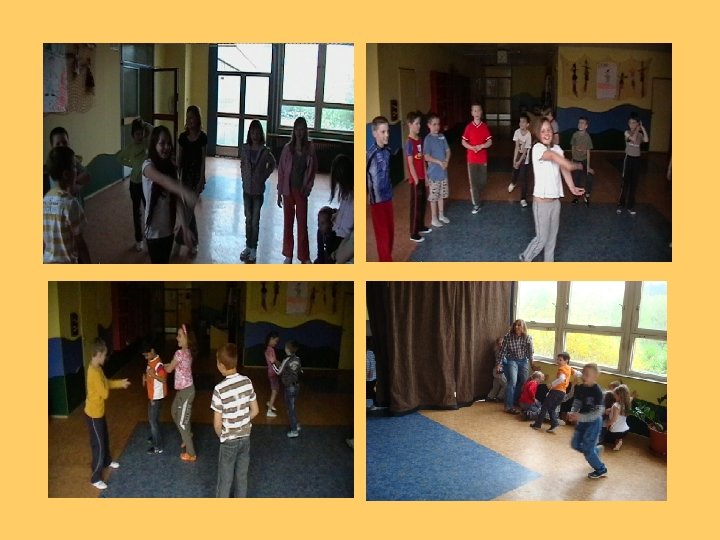
Stork lost its cap Children go together in a circle one of them will be the „čáp“ (the white stork) and she/he stands in the middle of the circle. She/he starts to say the riddle: „White stork lost its cap, it is doing clap. What´s the colour of its cap? The cap is …………!“ In the last line she/he thinks up the colour and shouts it! Now children must find this colour on their clothes. The last one who finds the colour is the stork for the next round.
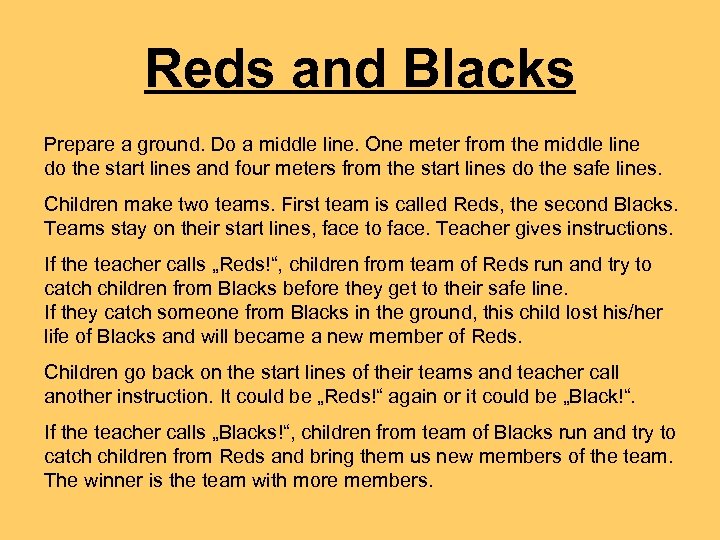
Reds and Blacks Prepare a ground. Do a middle line. One meter from the middle line do the start lines and four meters from the start lines do the safe lines. Children make two teams. First team is called Reds, the second Blacks. Teams stay on their start lines, face to face. Teacher gives instructions. If the teacher calls „Reds!“, children from team of Reds run and try to catch children from Blacks before they get to their safe line. If they catch someone from Blacks in the ground, this child lost his/her life of Blacks and will became a new member of Reds. Children go back on the start lines of their teams and teacher call another instruction. It could be „Reds!“ again or it could be „Black!“. If the teacher calls „Blacks!“, children from team of Blacks run and try to catch children from Reds and bring them us new members of the team. The winner is the team with more members.
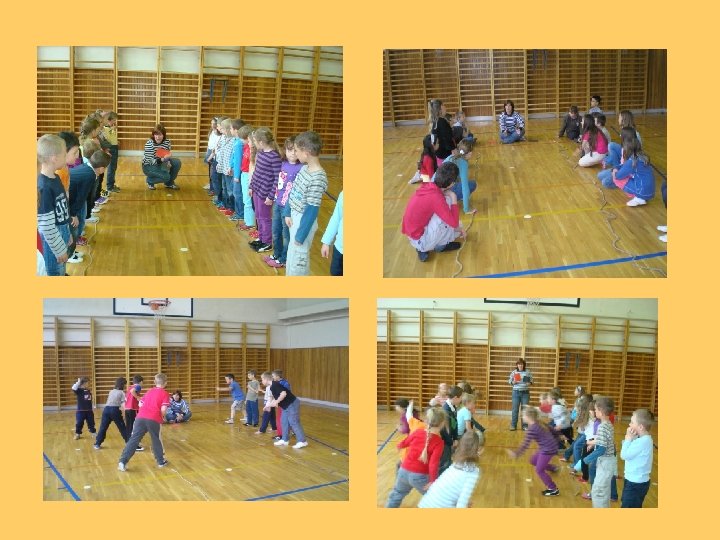
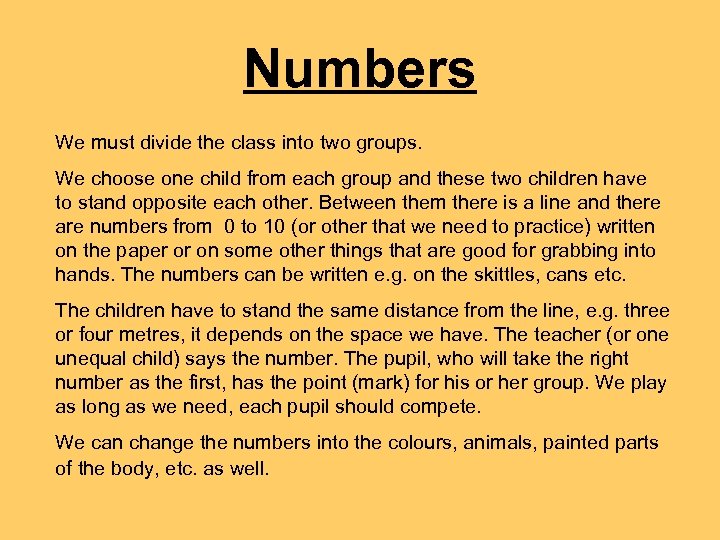
Numbers We must divide the class into two groups. We choose one child from each group and these two children have to stand opposite each other. Between them there is a line and there are numbers from 0 to 10 (or other that we need to practice) written on the paper or on some other things that are good for grabbing into hands. The numbers can be written e. g. on the skittles, cans etc. The children have to stand the same distance from the line, e. g. three or four metres, it depends on the space we have. The teacher (or one unequal child) says the number. The pupil, who will take the right number as the first, has the point (mark) for his or her group. We play as long as we need, each pupil should compete. We can change the numbers into the colours, animals, painted parts of the body, etc. as well.
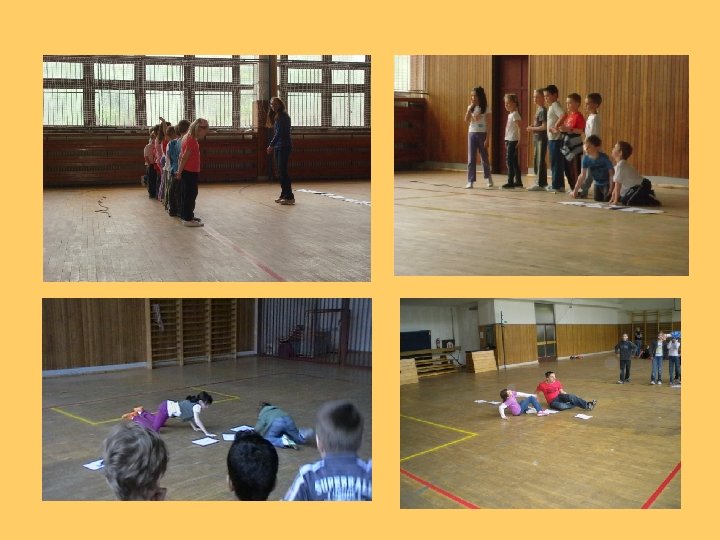
Animals Prepare cards with names of animals which do same sounds (cat, dog, frog, donkey, hen, goat, sheep, cow, lion, monkey, snake, pig…). Each child takes a card and reads the name. 2 or 3 pupils have the same animal, but they don´t know about each other. They can´t speak just make sounds like these animals and find the same animal only by ear. At last each group demonstrates its animals.
During our project day we had a lot of fun. We hope that you will also enjoy these games. Please, can you teach us your favourite games?
Скачать презентацию We can play Umíme si hrát BRNO —
586cae06adf010693966c389c1c78202.ppt