


 Скачать презентацию We can do anything We are Family
676901897042415ce0fb3047027b2c83.ppt
- Количество слайдов: 34
 We can do anything!!!! We are Family!
 The State is throwing much at us! So What
 Goals 1. We conquer it together 2. To understand OIP and to work together to have a voice to improve. 3. To understand Growth Measures, the reason for recommendations and a plan 4. Continue to study/learn the rubric on teacher performance
 West Branch Local Schools Ohio Improvement Process (OIP) Facilitating District-wide Improvement in Instructional Practices and Student Performance
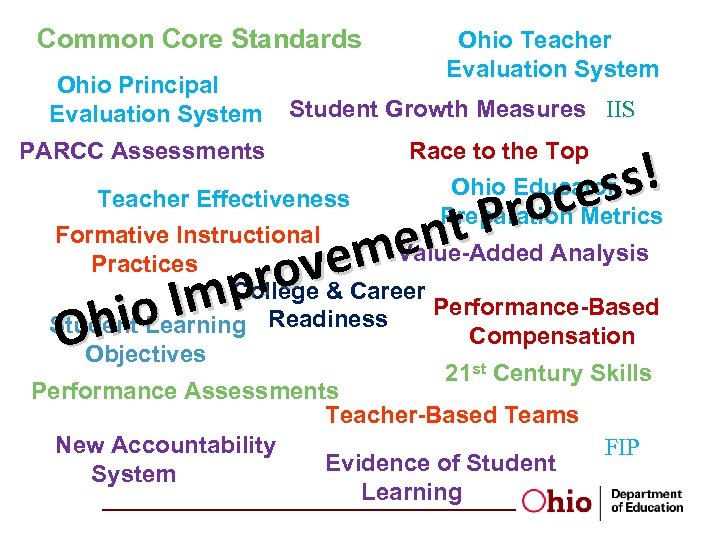 Common Core Standards Ohio Principal Evaluation System PARCC Assessments Ohio Teacher Evaluation System Student Growth Measures IIS Race to the Top Ohio Educator Preparation Metrics ss! Teacher Effectiveness oce Pr Analysis Formative Instructional nt e m. Value-Added Practices e v& Career o College pr. Readiness Performance-Based o Im Student Learning hi Compensation OObjectives 21 st Century Skills Performance Assessments Teacher-Based Teams New Accountability Evidence of Student System Learning FIP

 Sometimes it is like it is raining! All we need is an umbrella! • http: //www. youtube. com/watch? v=w 40 ush. YAa. YA
 As a family We can make this work! Watch and Listen!
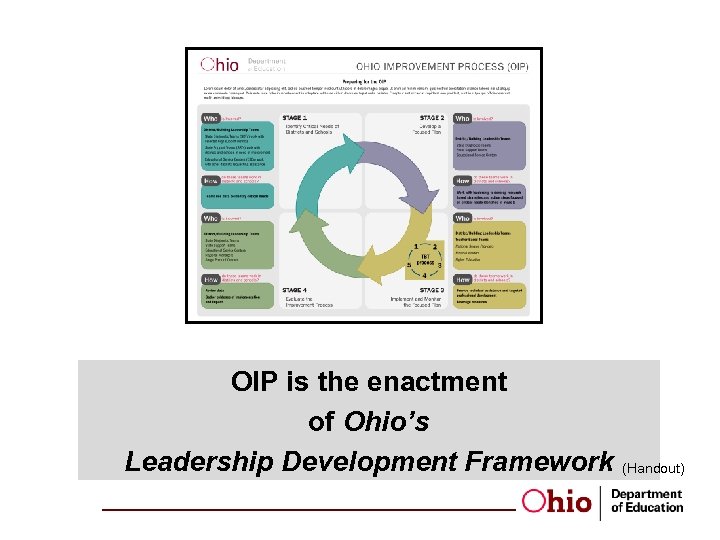 OIP is the enactment of Ohio’s Leadership Development Framework (Handout)
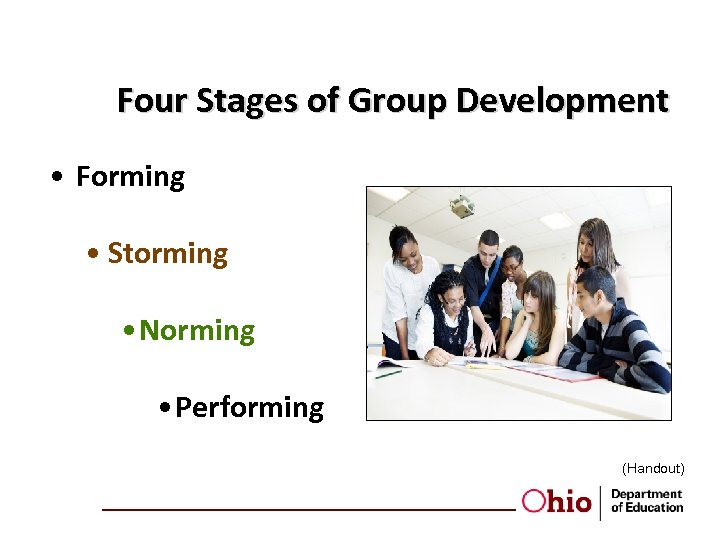 Four Stages of Group Development • Forming • Storming • Norming • Performing (Handout)
 Forming • Initial orientation to the purpose of the group • Structure of group not yet formed • Relationship of group members not yet established • Group members often speak hesitantly or are quiet • Group members trying to understand the group’s purpose, how group will function, their role in the group, and the leadership of the group.
 Storming • Group members questioning the group’s purpose, how group will function, their role in the group, and the leadership of the group • Conflict can range from almost nonexistent to intense • Conflict leads to clarification and buy-in
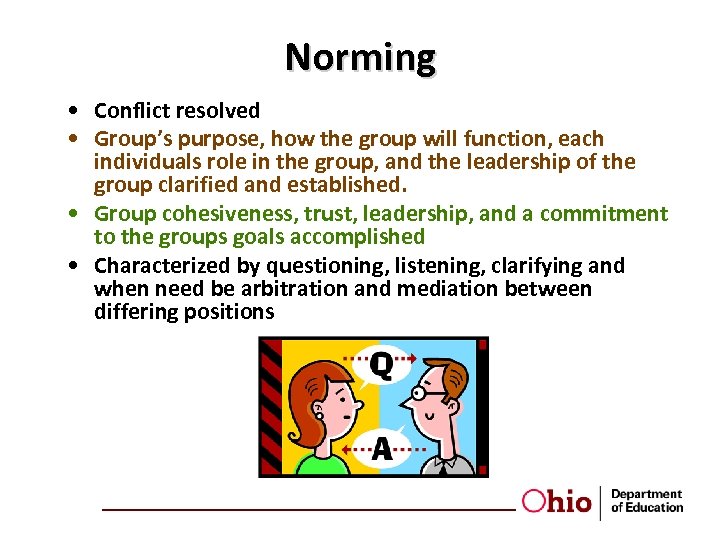 Norming • Conflict resolved • Group’s purpose, how the group will function, each individuals role in the group, and the leadership of the group clarified and established. • Group cohesiveness, trust, leadership, and a commitment to the groups goals accomplished • Characterized by questioning, listening, clarifying and when need be arbitration and mediation between differing positions
 Performing • Tasks of the group are undertaken • Group remains on-task • People participate; free flow of information with differing positions and viewpoints heard and considered • Decisions made and upheld without a rehearing of differing positions or viewpoints
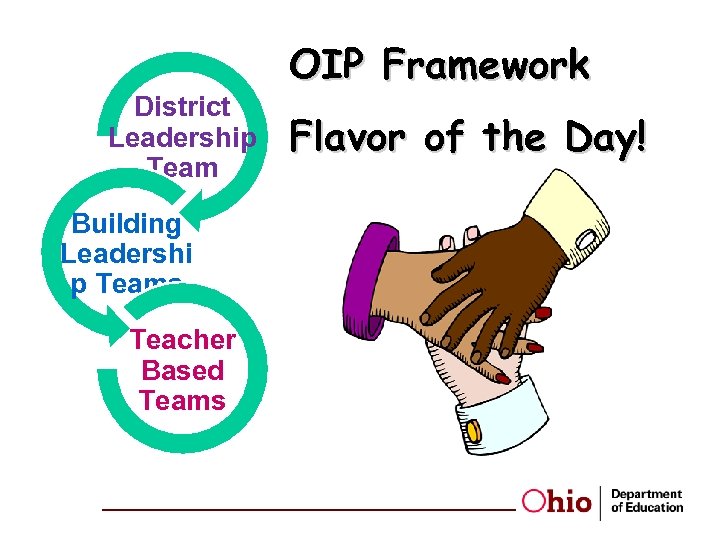 District Leadership Team Building Leadershi p Teams Teacher Based Teams OIP Framework Flavor of the Day!
 Seven Core Principles of OIP 1. A focused plan aligns vision, mission, and philosophy. 2. The process is continuous and recursive, and the plan is a dynamic document. 3. The process relies on quality data interpretation. 4. All leadership teams use a collaborative, collegial process. 5. An efficient communication approach ensures all stakeholders are consistently informed of progress at each stage. 6. The process produces one focused, integrated plan that directs all work and resources. (Handout) 7. The process expects substantive changes in
 Collaborative Leadership Team Structures in the OIP Shift focus from single individuals to teams that can function as purposeful communities Distribute key leadership functions Ensure effective leadership is exercised at all levels of the system Align work system-wide while focusing on a limited number of data-based district goals Engage in all four stages of the OIP for the long-term
 Stage 0: Planning and Preparing for the Ohio Improvement Process
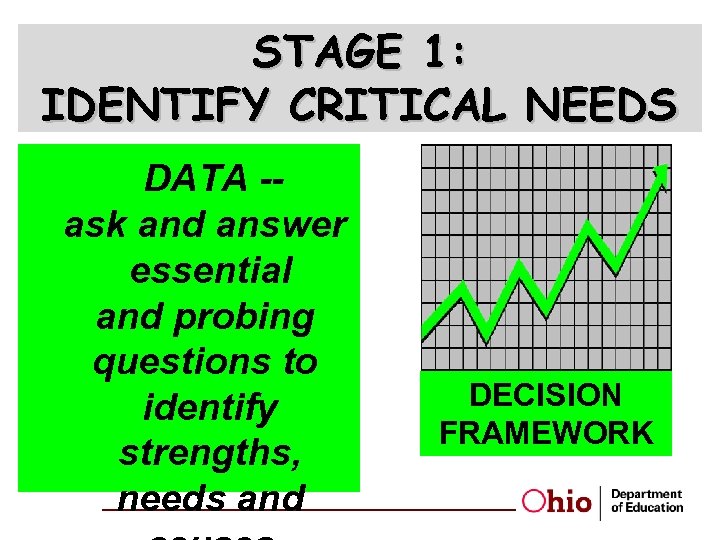 STAGE 1: IDENTIFY CRITICAL NEEDS DATA -ask and answer essential and probing questions to identify strengths, needs and DECISION FRAMEWORK
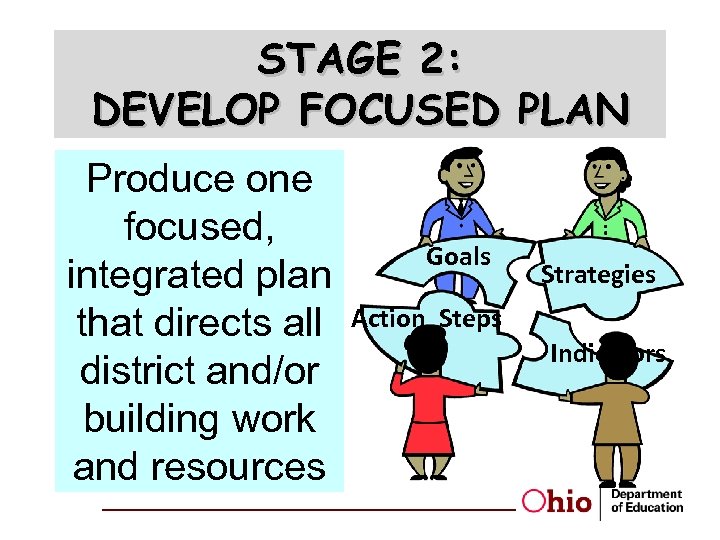 STAGE 2: DEVELOP FOCUSED PLAN Produce one focused, integrated plan that directs all district and/or building work and resources Goals Strategies Action Steps Indicators
 Stage 3: Implement and Monitor the OIP Focused Action Plan Implementation Carry out the planned strategies and actions with fidelity Monitoring Ensure that both adults and students fulfill focused action plan expectations
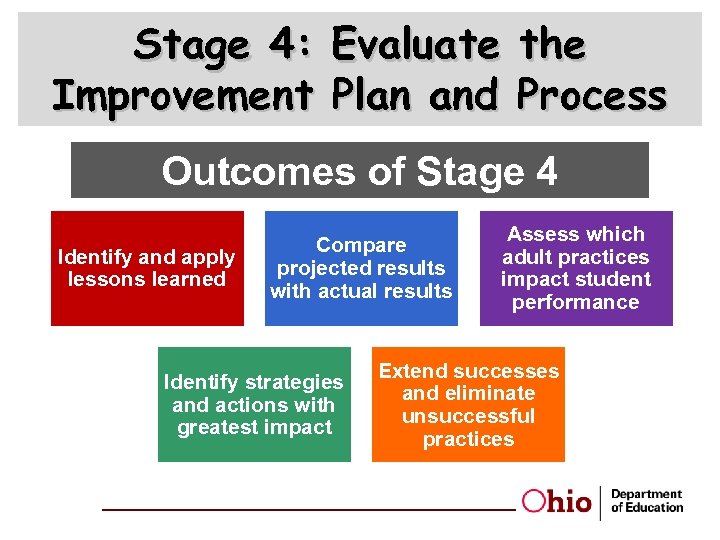 Stage 4: Evaluate the Improvement Plan and Process Outcomes of Stage 4 Identify and apply lessons learned Compare projected results with actual results Identify strategies and actions with greatest impact Assess which adult practices impact student performance Extend successes and eliminate unsuccessful practices
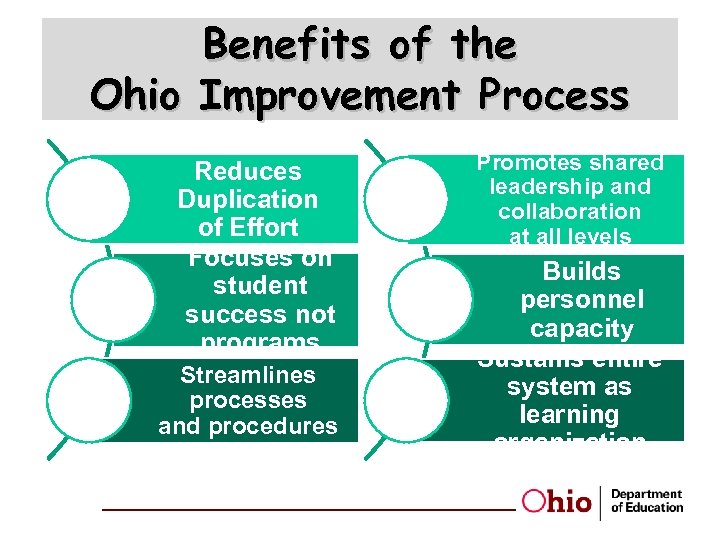 Benefits of the Ohio Improvement Process Reduces Duplication of Effort Focuses on student success not programs Streamlines processes and procedures Promotes shared leadership and collaboration at all levels Builds personnel capacity Sustains entire system as learning organization
 What Personality Are You in a Group? Compass Points Teaming Activity Ø Take out Compass Points activity and questions Ø Once reviewing the “Directions” descriptors whole group, go to self-selected “Direction” Ø Review activity questions and post answers with others in your “Direction” Ø Share out answers whole group Ø Debrief importance of activity for collaborative teaming
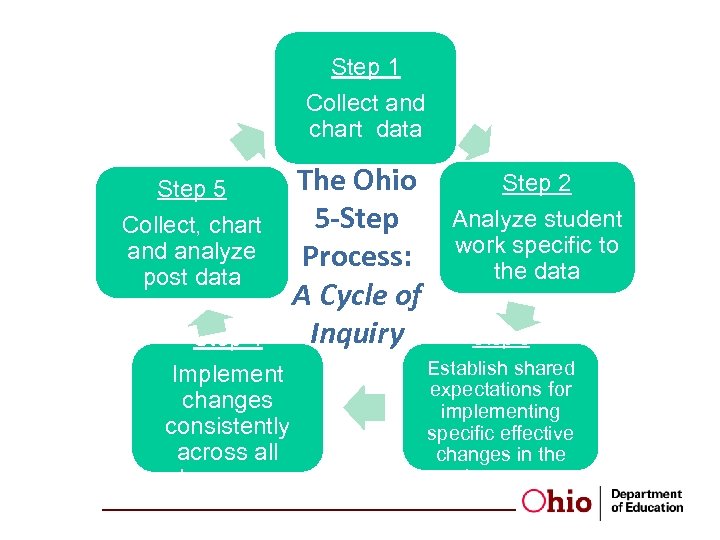 Step 1 Collect and chart data Step 5 Collect, chart and analyze post data Step 4 Implement changes consistently across all classrooms The Ohio 5 -Step Process: A Cycle of Inquiry Step 2 Analyze student work specific to the data Step 3 Establish shared expectations for implementing specific effective changes in the classroom
 Stage 1: Identify Critical Needs DATA ask essential and probing questions
 Stage 1: Identify Critical Needs Ohio’s Decision Framework • Sorts and organizes district and building data into specific data sets • Data helps identify major problems and causes • Leadership teams answer questions about selected data and make data-related decisions – Decisions displayed in series of scorecards – Scorecards provide profiles of defined district or building needs • Organized decision-making process produces clear Needs Assessment
 Focus of the Decision Framework ØAchievement ØExpectations & Conditions ØResource Management
 Achievement ØStudent data by content areas (i. e. Math) - 3 -year trends - Aggregated/disaggregated ØCurriculum, assessment, instructional practices ØTeacher/administrator quality and stability ØPD quality and alignment
 Expectations & Conditions ØLeadership practices ØDiscipline, attendance, expulsions, graduation, dropout - 3 -year trend - Aggregated/disaggregated ØParent/community engagement and practices
 Resource Management ØTime ØPersonnel ØMoney ØIntentional decision-making
 Working Through the Decision Framework (Ohio’s Five Step Process) ØPreviewing and Analyzing Data From Many Sources ØDiscussing Strength and Concern Areas ØRating Level of Concern or Level of Implementation for Consensus ØYour Turn to Work the DF
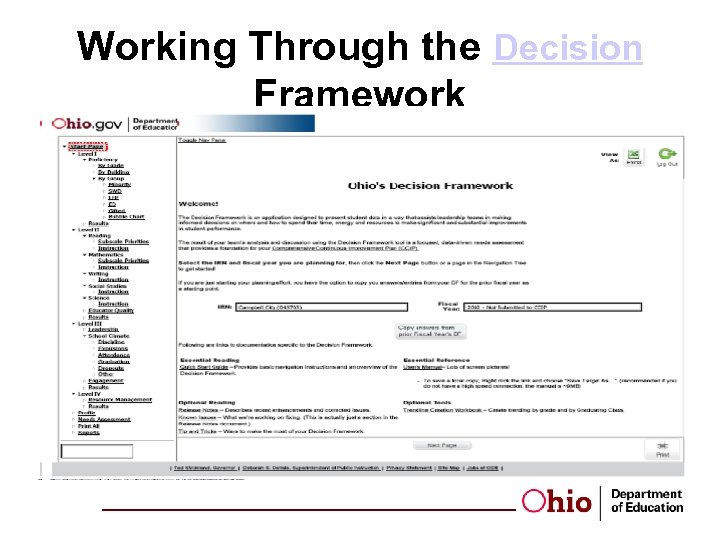 Working Through the Decision Framework
 Meeting Summary/Next Steps – Once Around the Table (Optional) – Process Observation – Member Expectations Before Next Meeting – OIP Communication Protocol – Next Meeting Date – Survey Monkey Evaluation