 Скачать презентацию WATERBIRDS AND HUMAN DISTURBANCE IN URBANIZED AREAS John
088070550bcdfcc435afcd2f807d538b.ppt
- Количество слайдов: 49



WATERBIRDS AND HUMAN DISTURBANCE IN URBANIZED AREAS John Takekawa USGS Western Ecological Research Center Vallejo, California Jules Evens Avocet Research Associates Point Reyes Station, California Kevin Lafferty USGS Western Ecological Research Center Santa Barbara, California
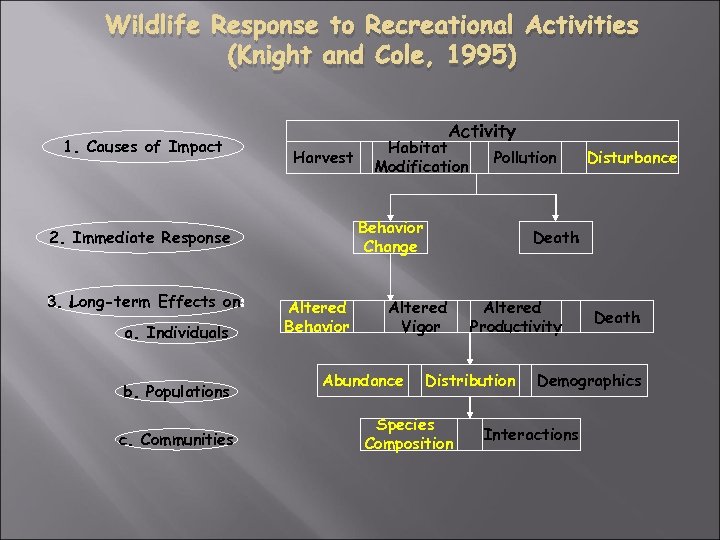
Wildlife Response to Recreational Activities (Knight and Cole, 1995) 1. Causes of Impact Activity Harvest a. Individuals b. Populations c. Communities Pollution Behavior Change 2. Immediate Response 3. Long-term Effects on: Habitat Modification Altered Behavior Death Altered Vigor Abundance Disturbance Altered Productivity Distribution Species Composition Death Demographics Interactions
Generalizations about disturbance of waterbirds Size correlation: larger birds are less tolerant of human disturbance than smaller ones (Rodgers and Schwikert 2003, Fernandez-Juricic et al. 2002) Larger flocks flush at greater distances than smaller flocks or individuals. Flight distance correlated positively with flock size and species diversity. Flight distances longer for species that used open water foraging than for resting (Mori et al. 2003, ARA 2008) To compensate for increased disturbance, birds may increase food intake or relocate to less profitable areas to feed.
Factors affecting response Size of area available: the larger the habitat patch, the shorter the distance of flight response, the lower the disturbance. Proximity of refuge. The “shyness” of the species (Scaup versus Ring-billed Gull) Size of the species (a black rail allows closer approach than a heron) Season: periods of high-energy costs exact more “expensive” responses. Flight distances are longer for waterfowl that used an area foraging than for resting (Mori et al. 2001)
Waterbirdssusceptible to disturbance by watercraft Solitary nesting birds Colonial nesting birds Flocking shorebirds Rafting waterbirds
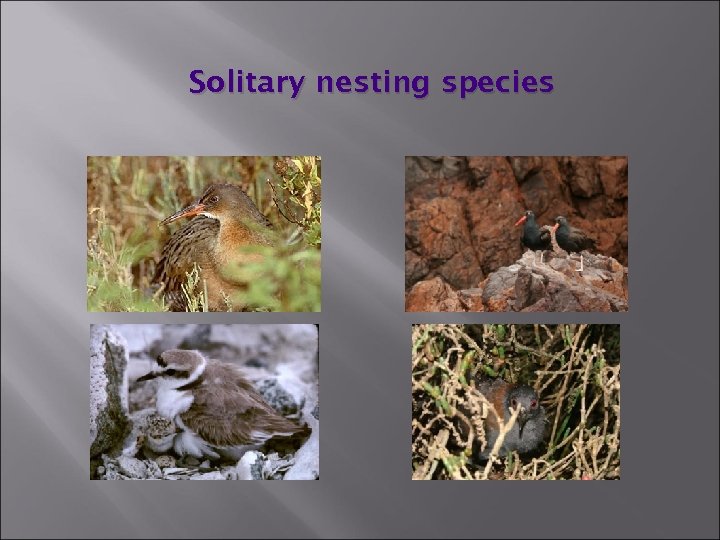
Solitary nesting species
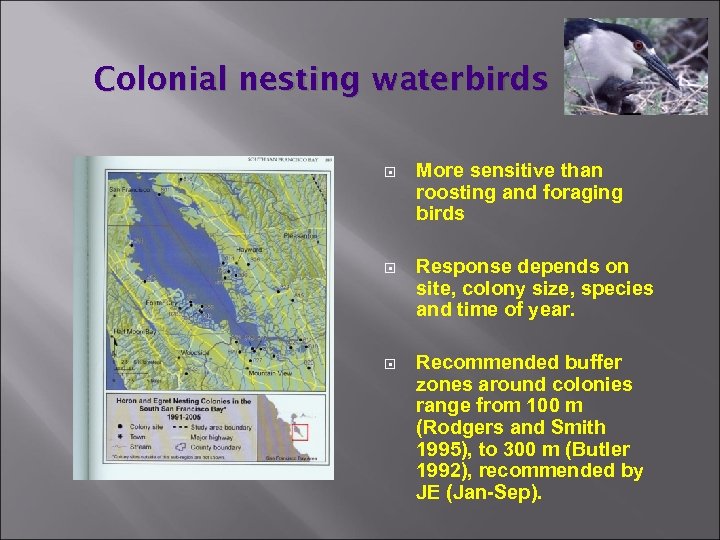
Colonial nesting waterbirds More sensitive than roosting and foraging birds Response depends on site, colony size, species and time of year. Recommended buffer zones around colonies range from 100 m (Rodgers and Smith 1995), to 300 m (Butler 1992), recommended by JE (Jan-Sep).
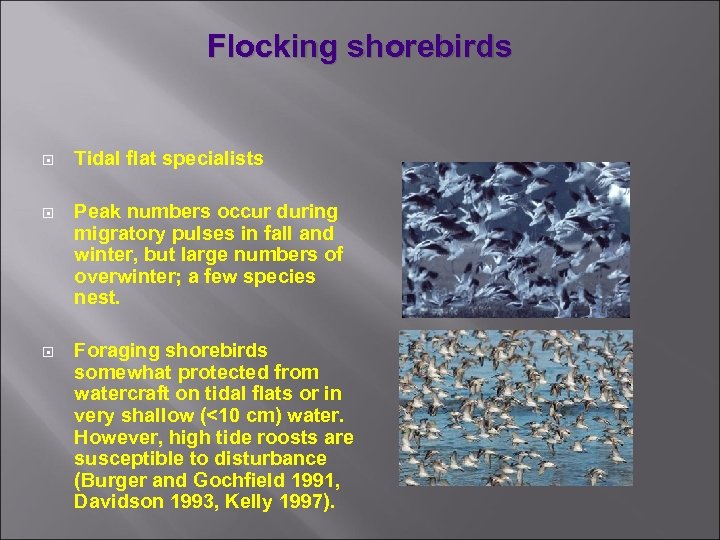
Flocking shorebirds Tidal flat specialists Peak numbers occur during migratory pulses in fall and winter, but large numbers of overwinter; a few species nest. Foraging shorebirds somewhat protected from watercraft on tidal flats or in very shallow (<10 cm) water. However, high tide roosts are susceptible to disturbance (Burger and Gochfield 1991, Davidson 1993, Kelly 1997).
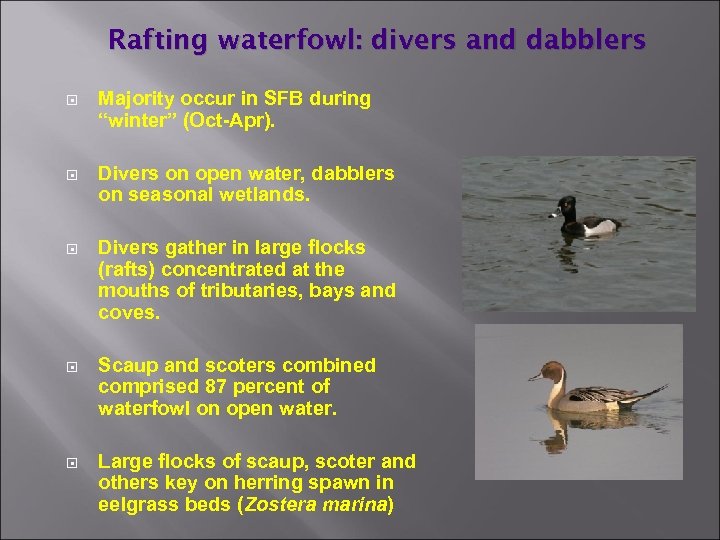
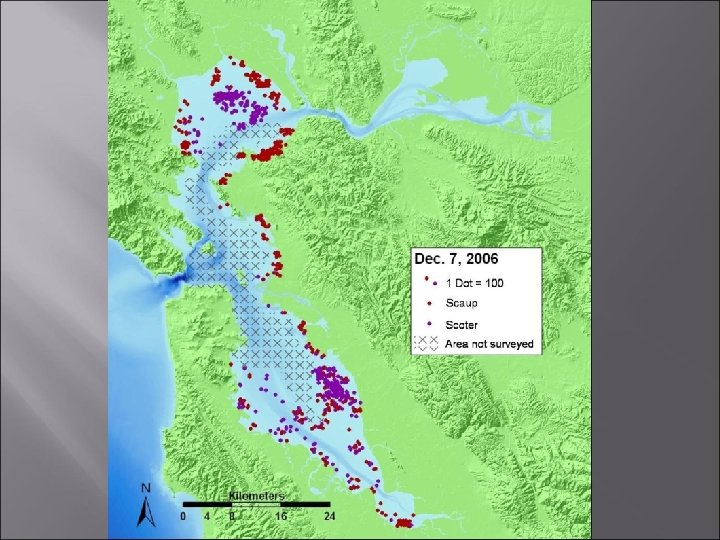
Rafting waterfowl: divers and dabblers Majority occur in SFB during “winter” (Oct-Apr). Divers on open water, dabblers on seasonal wetlands. Divers gather in large flocks (rafts) concentrated at the mouths of tributaries, bays and coves. Scaup and scoters combined comprised 87 percent of waterfowl on open water. Large flocks of scaup, scoter and others key on herring spawn in eelgrass beds (Zostera marina)
Waterfowl abundance on SFB Mid-winter aerial surveys from 1970 -1991 averaged 425, 000 waterfowl present in mid-Feb. Mid-winter waterfowl surveys 1992 -2007 (exclusive of 1996) averaged 182, 818 birds present in mid-Jan. Numbers of waterfowl decreased 25% from the 1950 s until 1990 (Takekawa et al. 2000). Waterfowl continue their downward trend from 300, 000 in the late 1980 s (Accurso 1992) to 184, 160 (SE± 65, 670) from 1992 -2007.
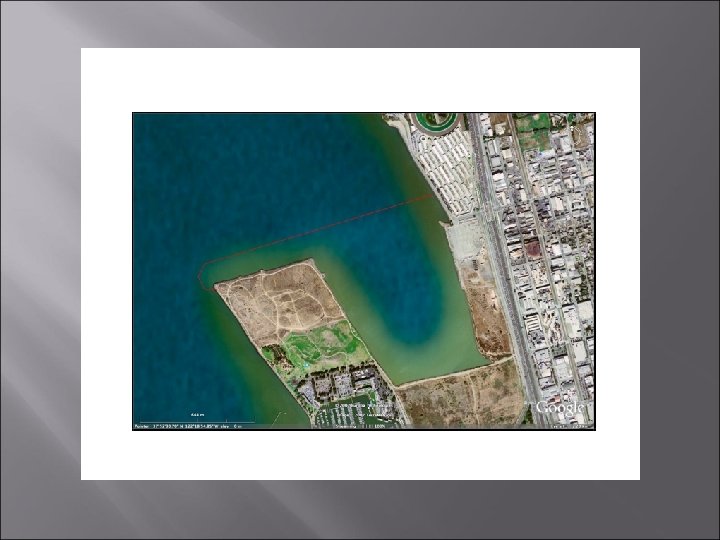
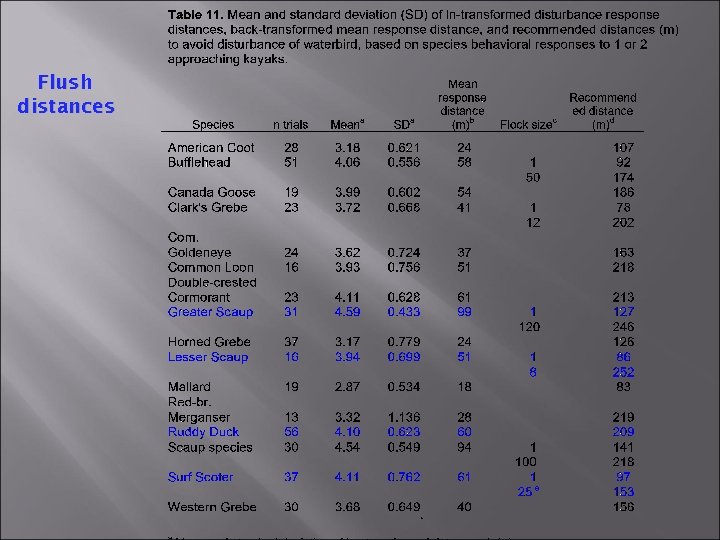
Flush distances
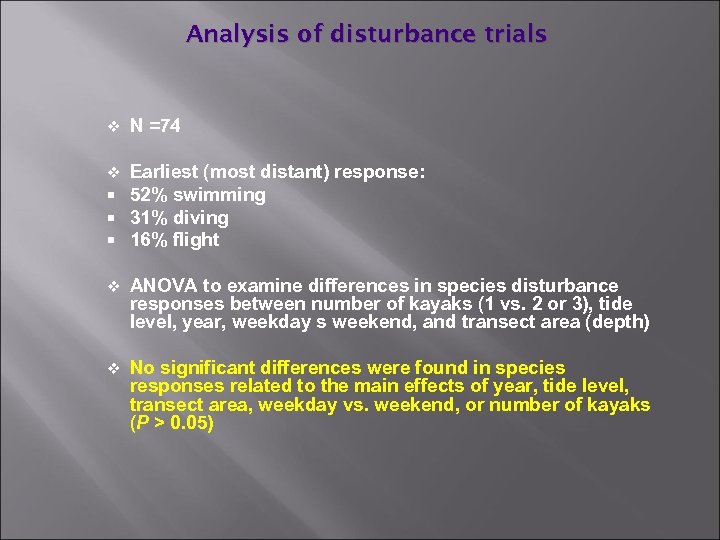
Analysis of disturbance trials v N =74 v Earliest (most distant) response: 52% swimming 31% diving 16% flight v ANOVA to examine differences in species disturbance responses between number of kayaks (1 vs. 2 or 3), tide level, year, weekday s weekend, and transect area (depth) v No significant differences were found in species responses related to the main effects of year, tide level, transect area, weekday vs. weekend, or number of kayaks (P > 0. 05)
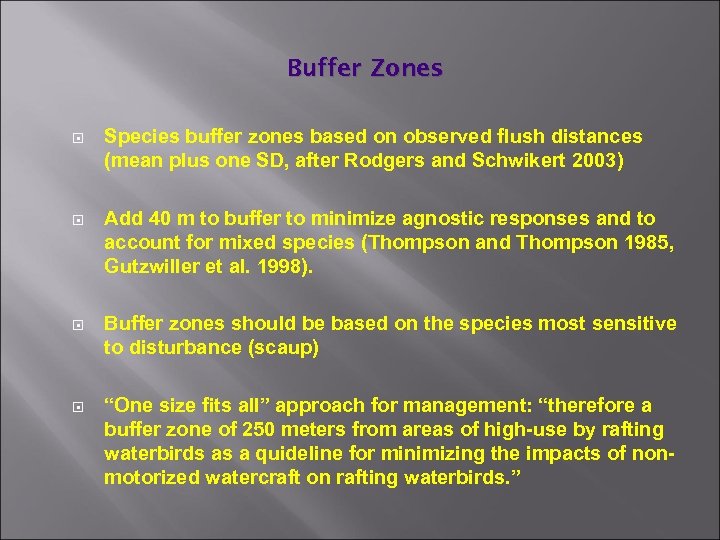
Buffer Zones Species buffer zones based on observed flush distances (mean plus one SD, after Rodgers and Schwikert 2003) Add 40 m to buffer to minimize agnostic responses and to account for mixed species (Thompson and Thompson 1985, Gutzwiller et al. 1998). Buffer zones should be based on the species most sensitive to disturbance (scaup) “One size fits all” approach for management: “therefore a buffer zone of 250 meters from areas of high-use by rafting waterbirds as a quideline for minimizing the impacts of nonmotorized watercraft on rafting waterbirds. ”
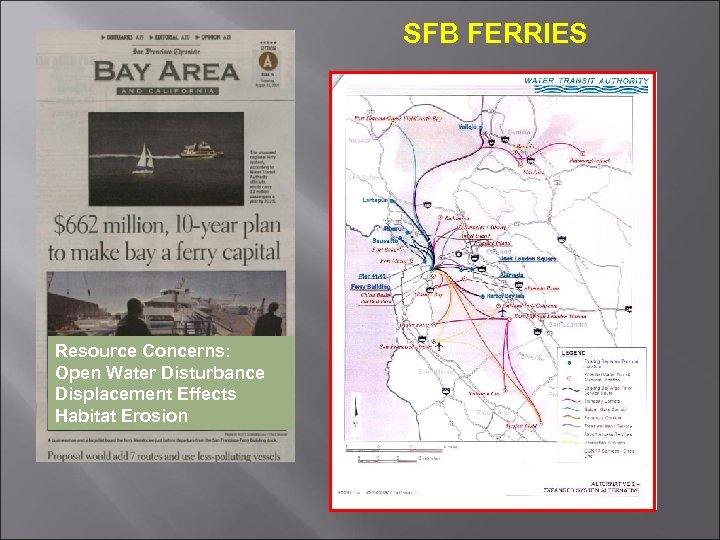
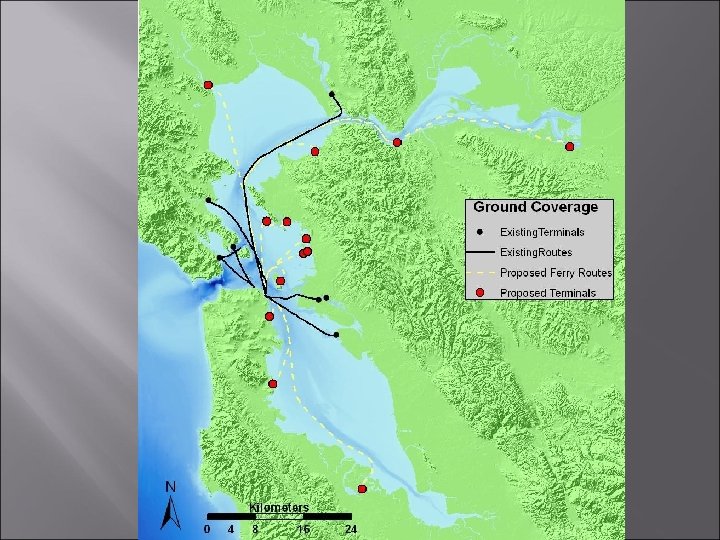
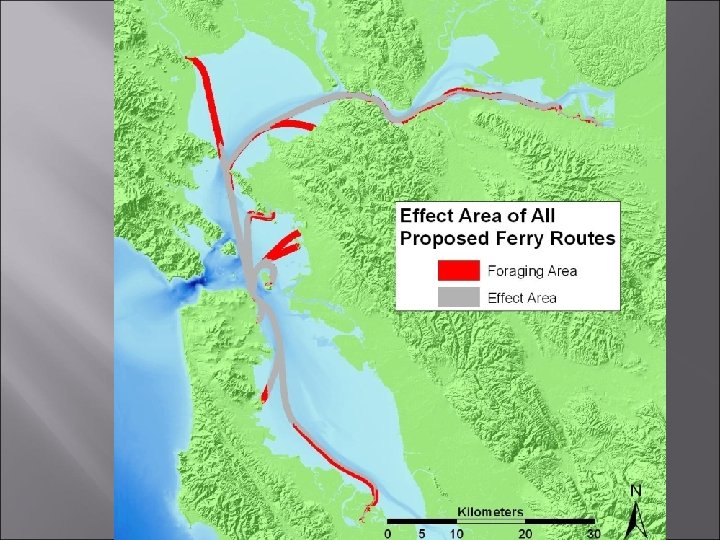
SFB FERRIES Resource Concerns: Open Water Disturbance Displacement Effects Habitat Erosion
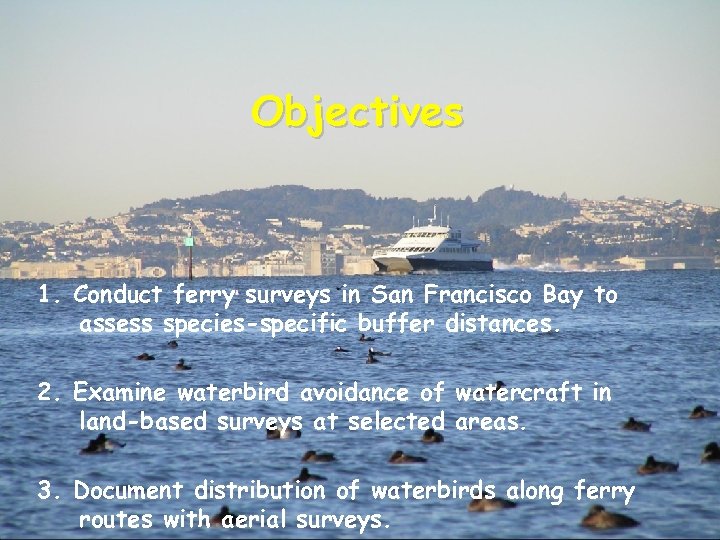
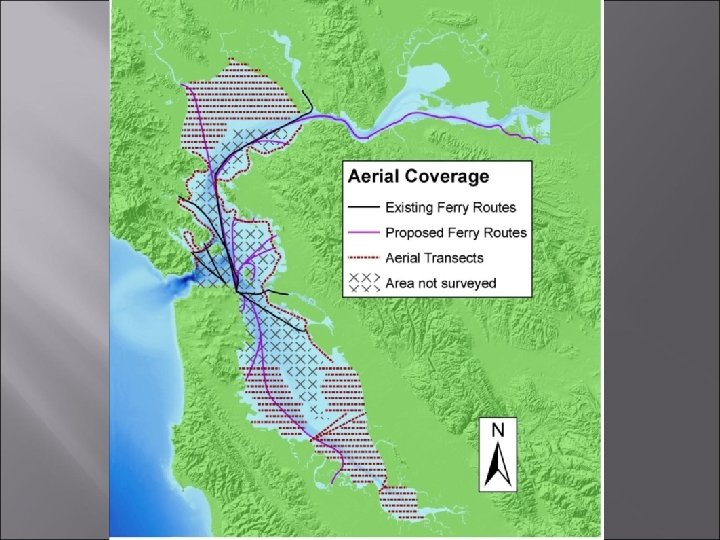
Objectives 1. Conduct ferry surveys in San Francisco Bay to assess species-specific buffer distances. 2. Examine waterbird avoidance of watercraft in land-based surveys at selected areas. 3. Document distribution of waterbirds along ferry routes with aerial surveys.
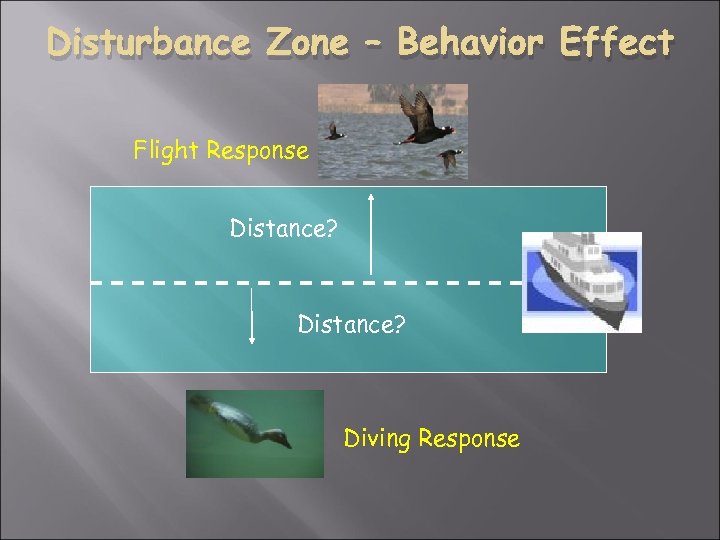
Disturbance Zone – Behavior Effect Flight Response Distance? Diving Response
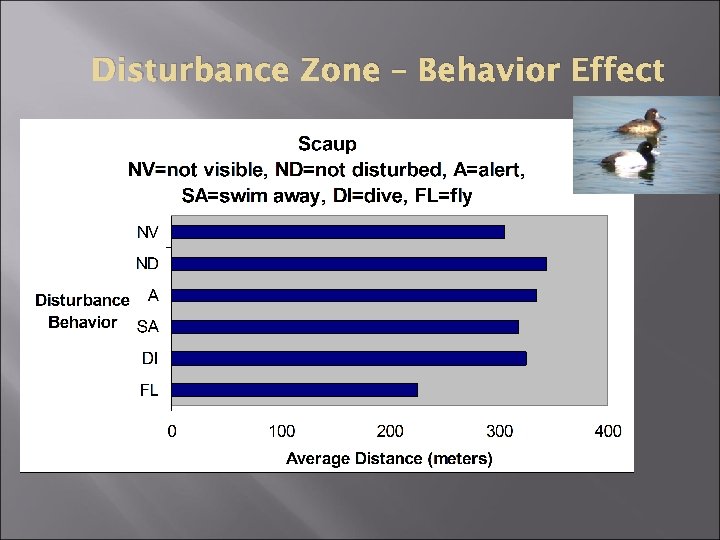
Disturbance Zone – Behavior Effect
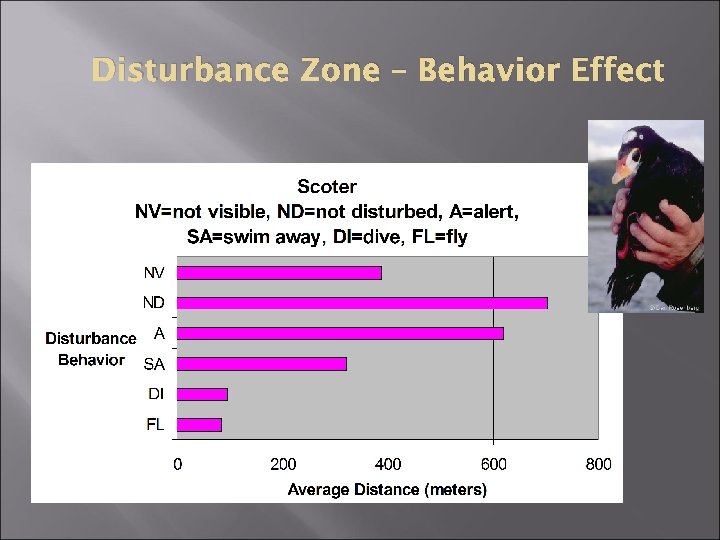
Disturbance Zone – Behavior Effect
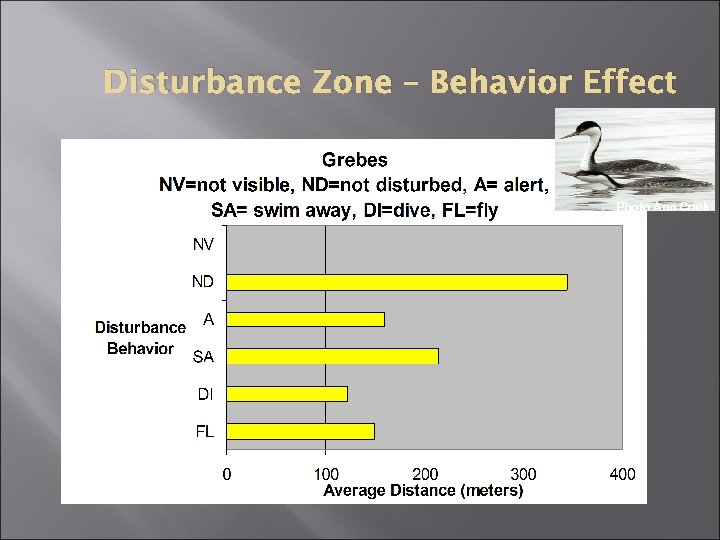
Disturbance Zone – Behavior Effect Photo Ann Cook
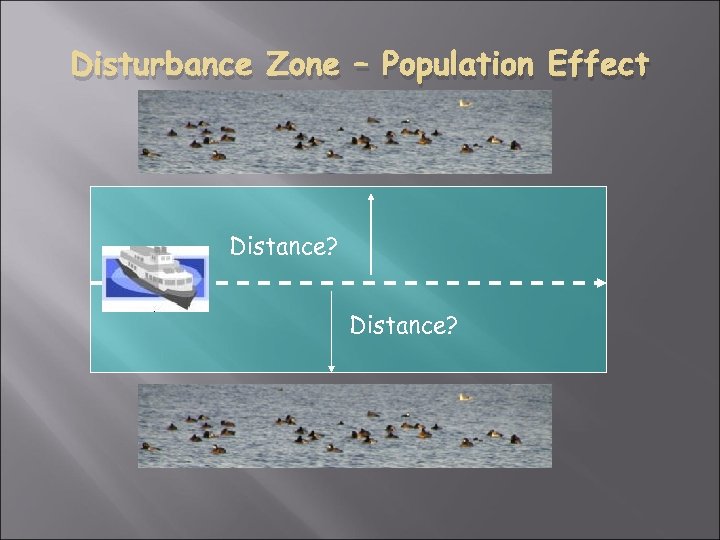
Disturbance Zone – Population Effect Distance?
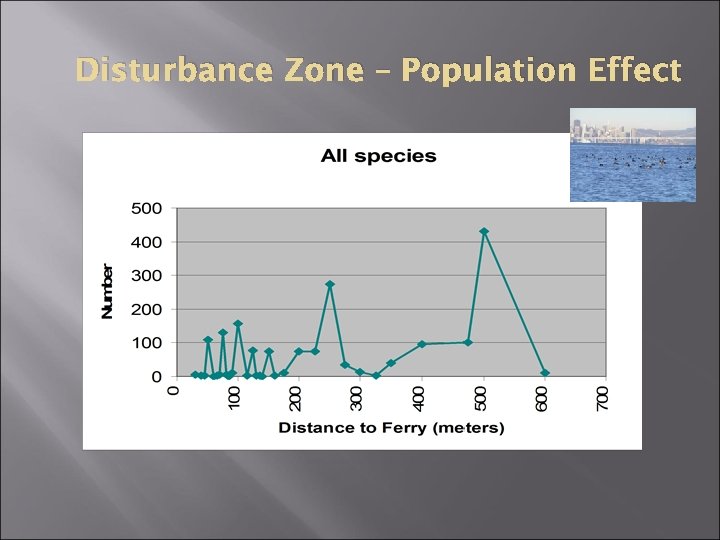
Disturbance Zone – Population Effect
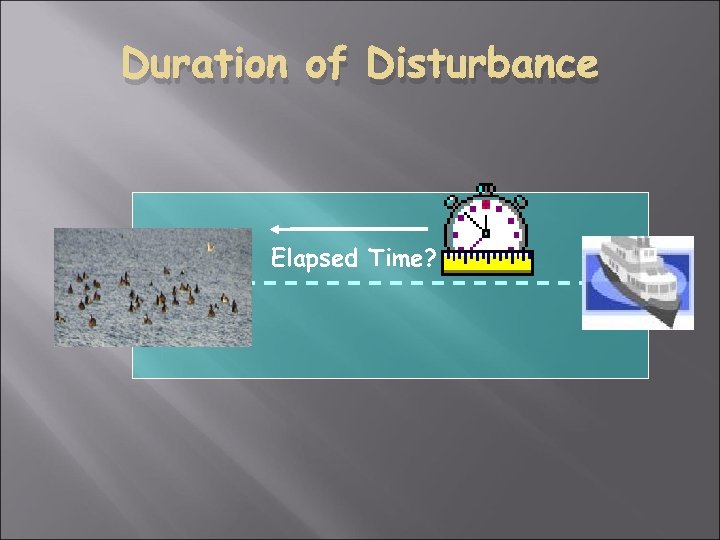
Duration of Disturbance Elapsed Time?
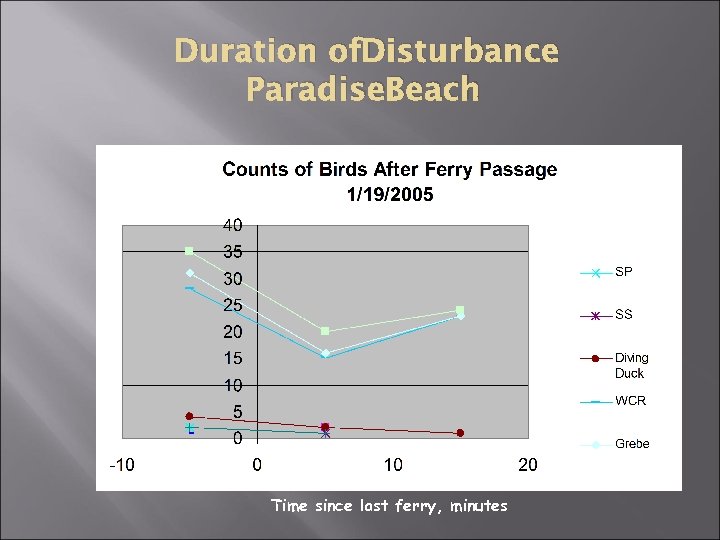
Duration of. Disturbance Paradise. Beach Time since last ferry, minutes
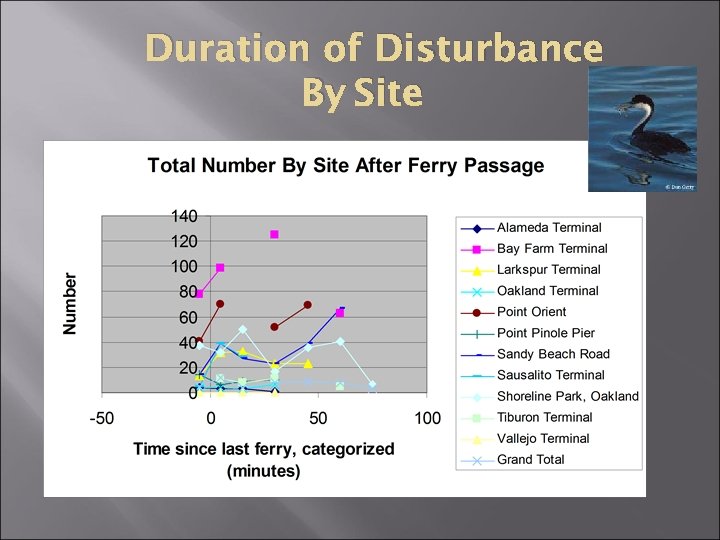
Duration of Disturbance By Site
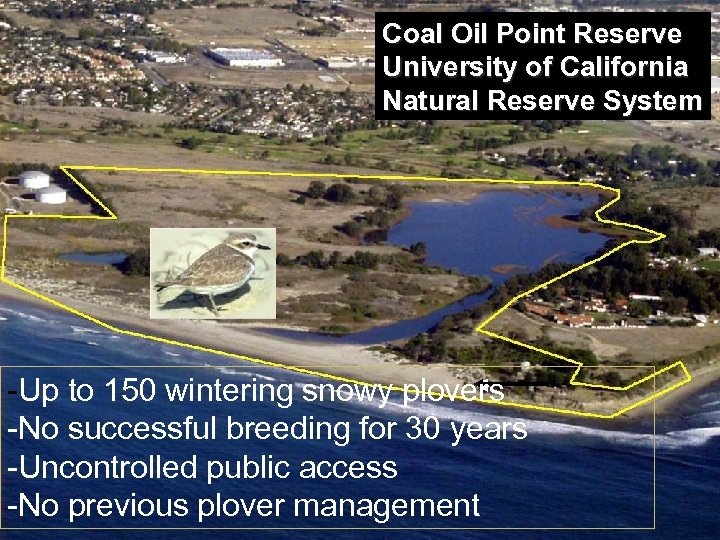
Coal Oil Point Reserve University of California Natural Reserve System -Up to 150 wintering snowy plovers -No successful breeding for 30 years -Uncontrolled public access -No previous plover management
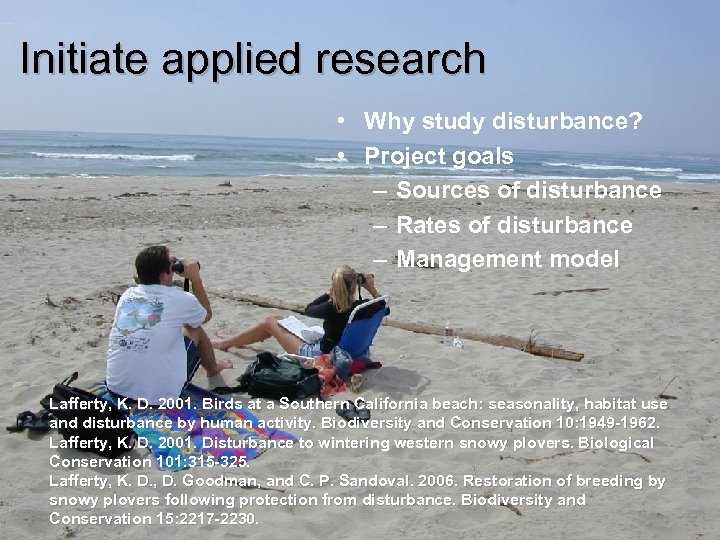
Initiate applied research • Why study disturbance? • Project goals – Sources of disturbance – Rates of disturbance – Management model Lafferty, K. D. 2001. Birds at a Southern California beach: seasonality, habitat use and disturbance by human activity. Biodiversity and Conservation 10: 1949 -1962. Lafferty, K. D. 2001. Disturbance to wintering western snowy plovers. Biological Conservation 101: 315 -325. Lafferty, K. D. , D. Goodman, and C. P. Sandoval. 2006. Restoration of breeding by snowy plovers following protection from disturbance. Biodiversity and Conservation 15: 2217 -2230.
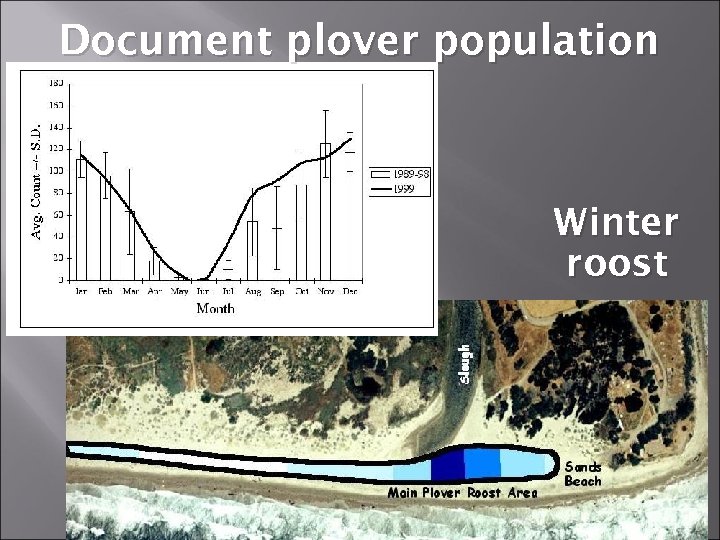
Document plover population Winter roost
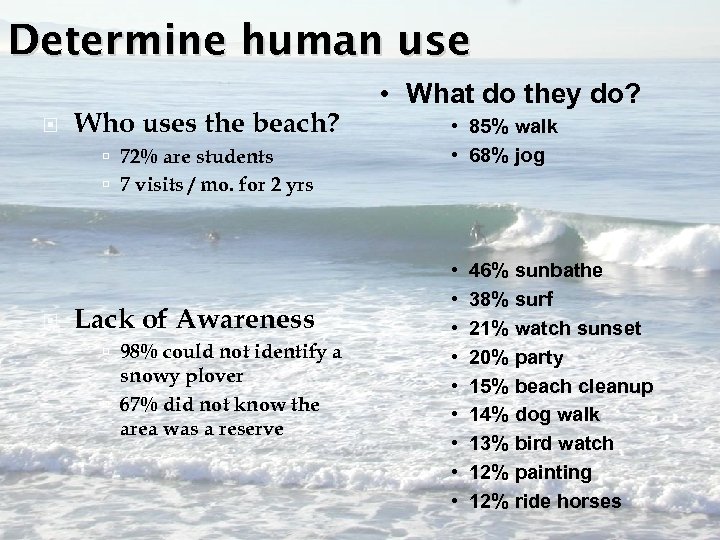
Determine human use Who uses the beach? 72% are students 7 visits / mo. for 2 yrs Lack of Awareness 98% could not identify a snowy plover 67% did not know the area was a reserve • What do they do? • 85% walk • 68% jog • • • 46% sunbathe 38% surf 21% watch sunset 20% party 15% beach cleanup 14% dog walk 13% bird watch 12% painting 12% ride horses
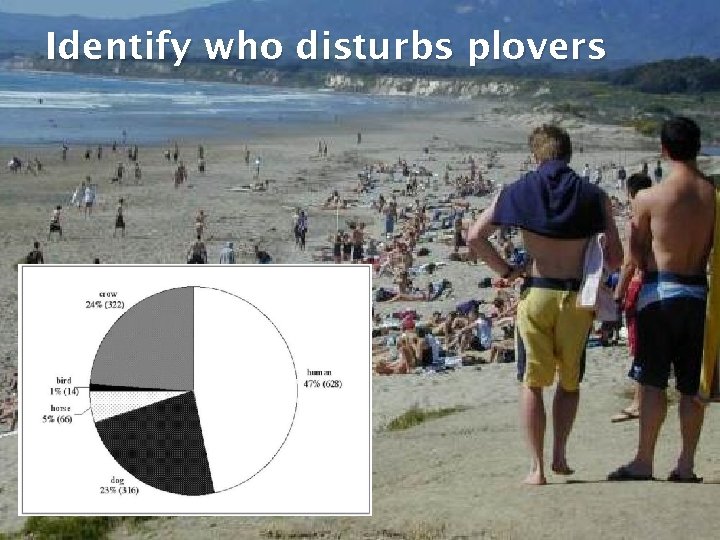
Identify who disturbs plovers
Measure disturbance rates How much disturbance does each plover experience? Weekday: every 43 min. Weekend: every 27 min. 16 times higher than at protected beaches
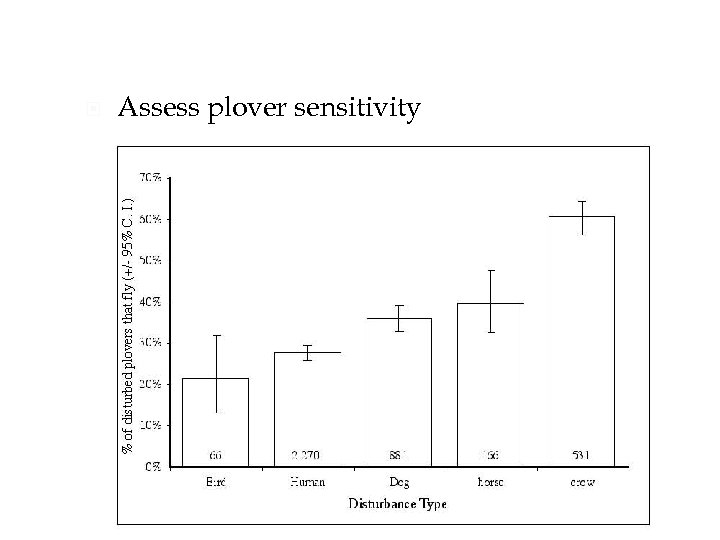
Assess plover sensitivity
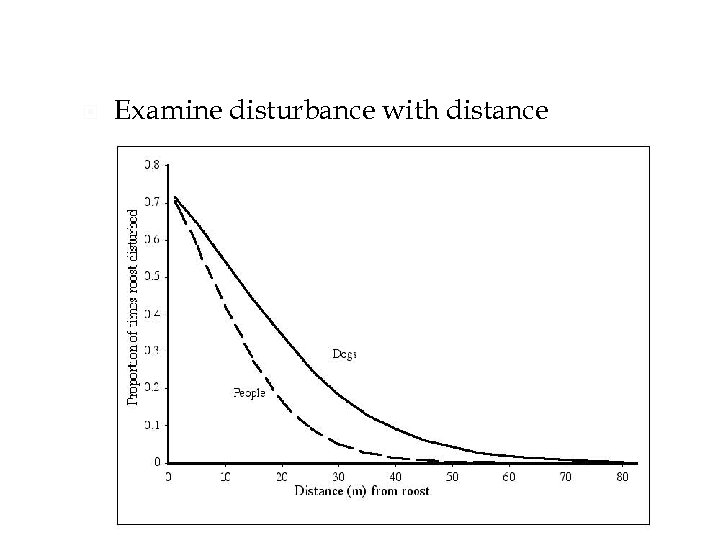
Examine disturbance with distance
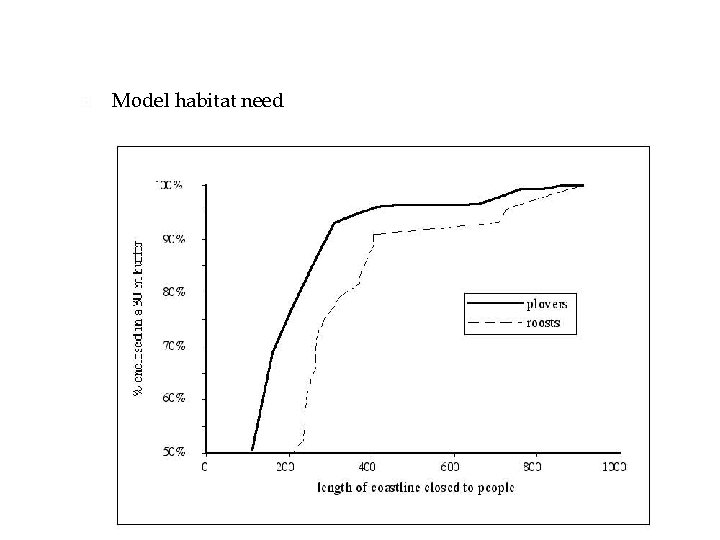
Model habitat need
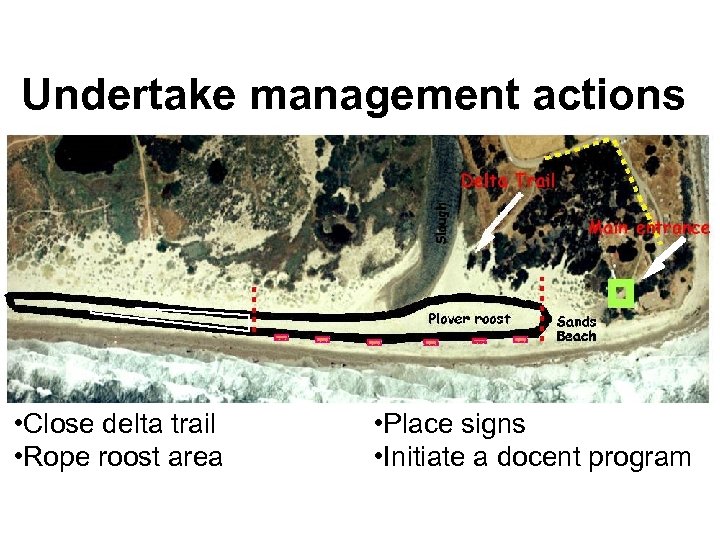
Undertake management actions • Close delta trail • Rope roost area • Place signs • Initiate a docent program
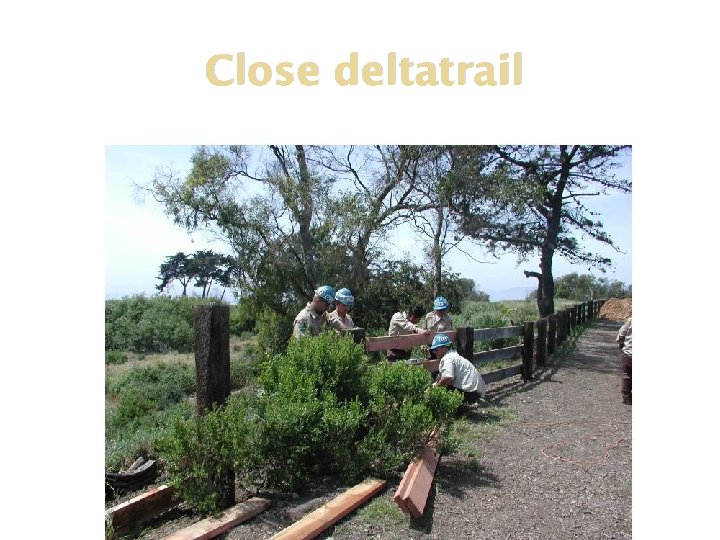
Close deltatrail
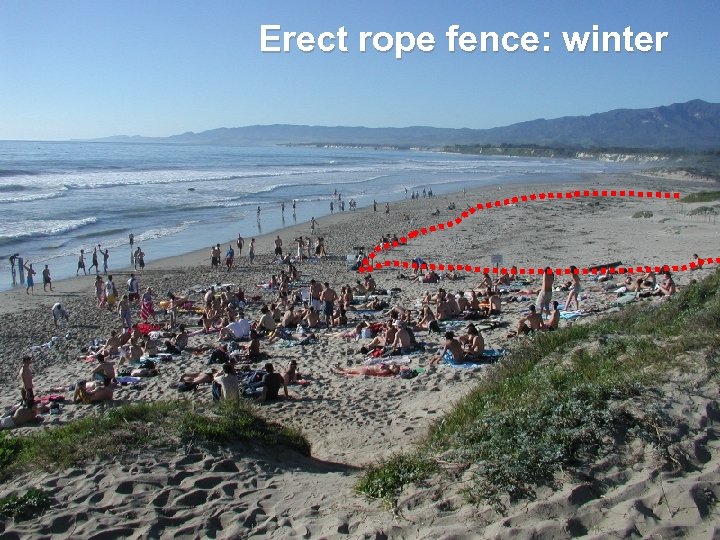
Erect rope fence: winter
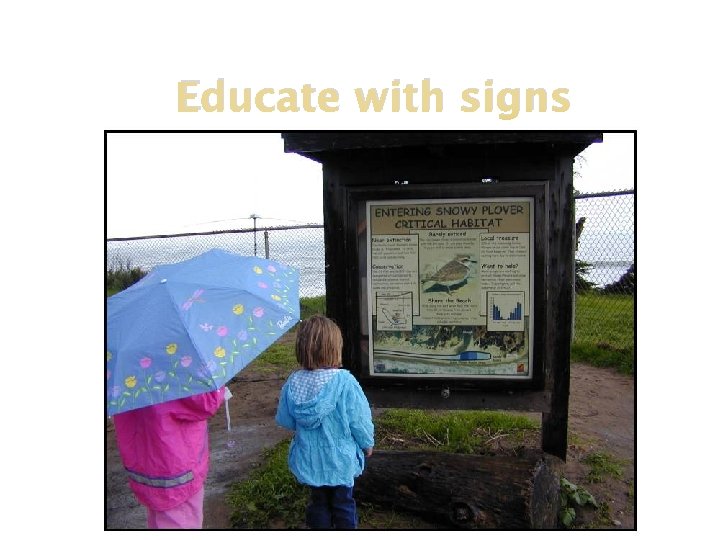
Educate with signs
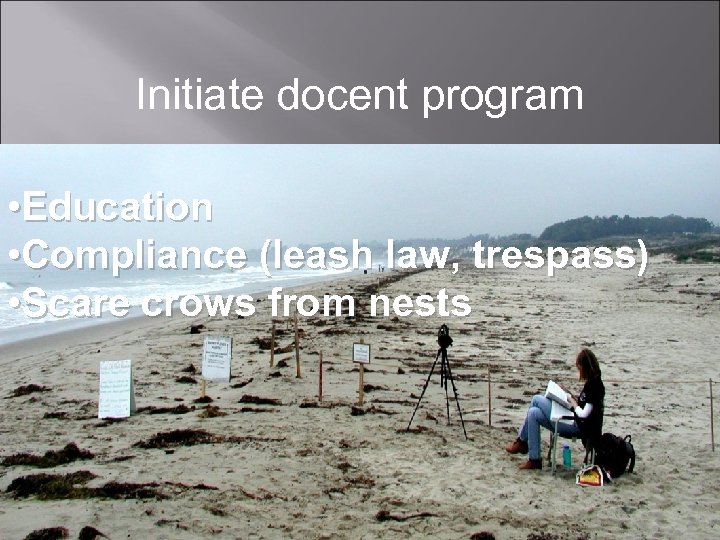
Initiate docent program • Education • Compliance (leash law, trespass) • Scare crows from nests
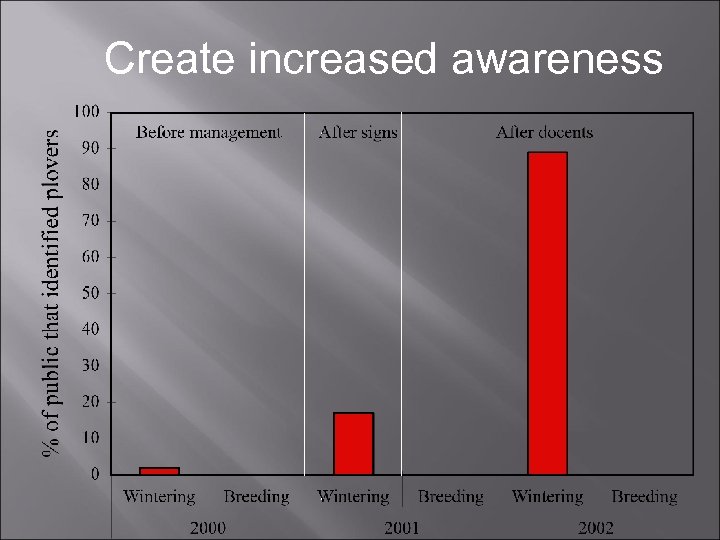
Create increased awareness
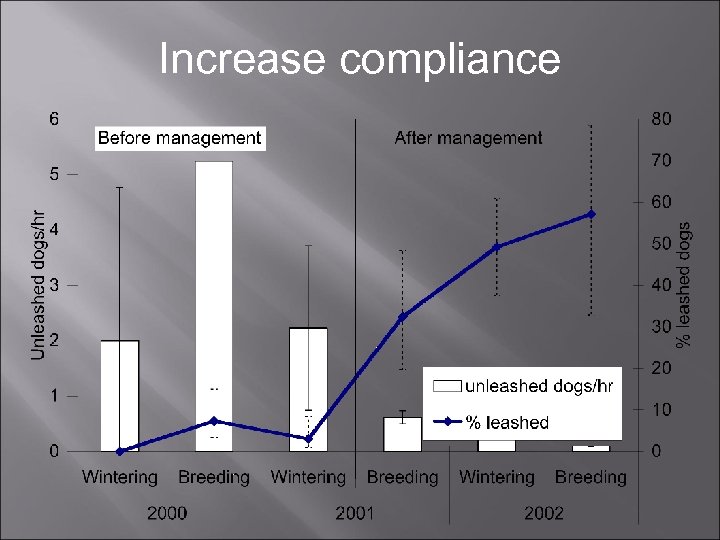
Increase compliance
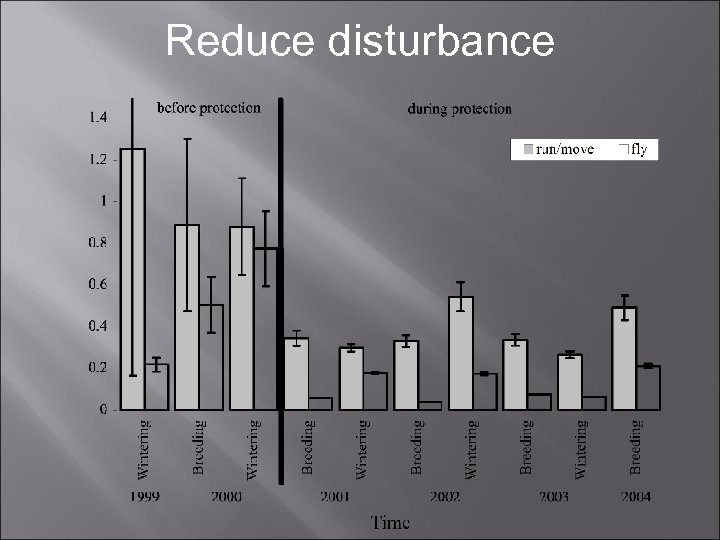
Reduce disturbance
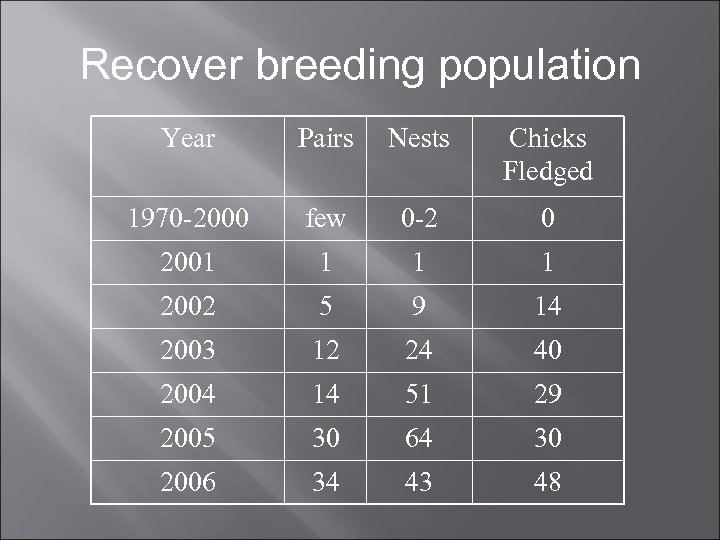
Recover breeding population Year Pairs Nests Chicks Fledged 1970 -2000 few 0 -2 0 2001 1 2002 5 9 14 2003 12 24 40 2004 14 51 29 2005 30 64 30 2006 34 43 48
Questions How do we measure non-lethal costs of disturbance and weigh those at the population level? The effects of disturbance may be primarily behavioral rather than numerical; do multiple regression studies designed to examine the effects of independent variables measure disturbance effectively? Site specific habitat elements may override expected responses by waterbirds: How do we identify which sites are peculiar and which are normal. How does habituation factor in and what are the costs to reproductive fitness? What would be the habitat values if background disturbance didn’t eliminate larger and more sensitive species?
Скачать презентацию WATERBIRDS AND HUMAN DISTURBANCE IN URBANIZED AREAS John
088070550bcdfcc435afcd2f807d538b.ppt