 Скачать презентацию Water Quality Management Assisting Local Government by Leveraging
688a980141b60122578b1e52f5d7e494.ppt
- Количество слайдов: 31



Water Quality Management Assisting Local Government by Leveraging Existing Good Practise Thabisa Manxodidi Grant Mackintosh
Main Objectives • Current Situation & Challenges • Examples of co-operative governance in water sector: Free State • Examples of supportive tools for use by Local Government via Sector Initiatives • Lets think Innovatively – Open Source Tools
Importance of Water Quality Management • Drinking-water & sanitation significant impact on community health • WHO considers DW as biggest impact on Primary Health • Water Quality is Cost-effective Indicator of Local Government Water Services • Guides Effective Assistance to Local Government: Ø Capacity Development Ø Infrastructure Development Ø Operations and Management
Governance Overview… • Local Government Ø WSA (municipality) local regulator of water services Ø Sets local policies, promulgates by-laws, plans service provision (WSDP’s), sets tariffs, etc • Provincial Government Ø Oversee and support Local Government Ø Municipal planning, water and sanitation services, etc • National Government (DWAF) Ø Sector Leader ØOverall national regulator
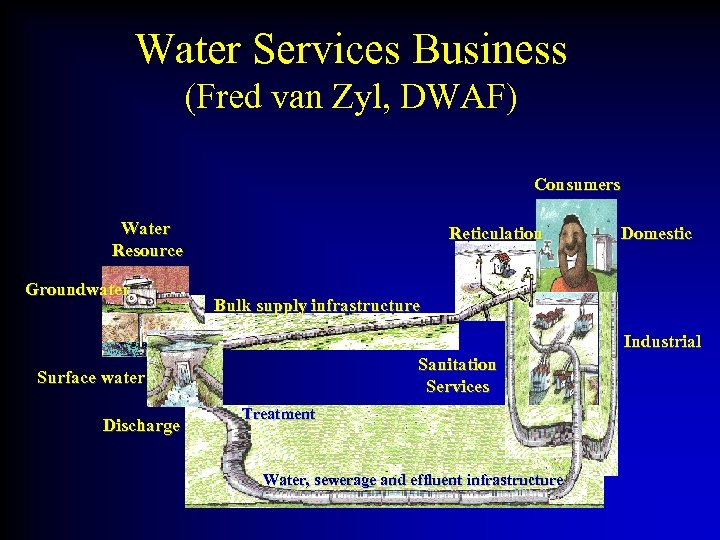
Water Services Business (Fred van Zyl, DWAF) Consumers Water Resource Groundwater Reticulation Domestic Bulk supply infrastructure Industrial Sanitation Services Surface water Discharge Treatment Water, sewerage and effluent infrastructure
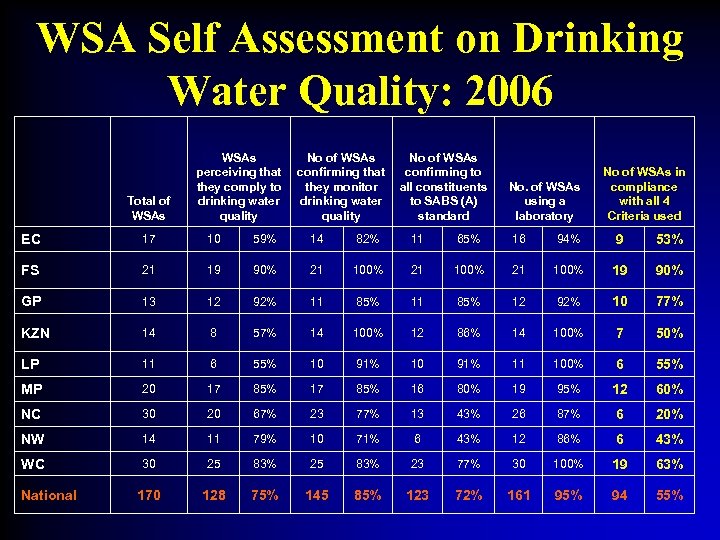
WSA Self Assessment on Drinking Water Quality: 2006 Total of WSAs perceiving that they comply to drinking water quality No of WSAs confirming that they monitor drinking water quality No of WSAs confirming to all constituents to SABS (A) standard No. of WSAs using a laboratory No of WSAs in compliance with all 4 Criteria used EC 17 10 59% 14 82% 11 65% 16 94% 9 53% FS 21 19 90% 21 100% 19 90% GP 13 12 92% 11 85% 12 92% 10 77% KZN 14 8 57% 14 100% 12 86% 14 100% 7 50% LP 11 6 55% 10 91% 11 100% 6 55% MP 20 17 85% 16 80% 19 95% 12 60% NC 30 20 67% 23 77% 13 43% 26 87% 6 20% NW 14 11 79% 10 71% 6 43% 12 86% 6 43% WC 30 25 83% 23 77% 30 100% 19 63% 170 128 75% 145 85% 123 72% 161 95% 94 55% National
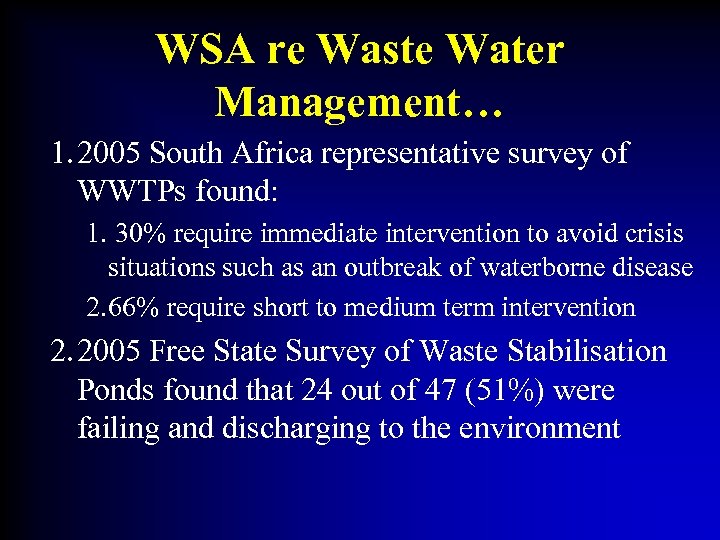
WSA re Waste Water Management… 1. 2005 South Africa representative survey of WWTPs found: 1. 30% require immediate intervention to avoid crisis situations such as an outbreak of waterborne disease 2. 66% require short to medium term intervention 2. 2005 Free State Survey of Waste Stabilisation Ponds found that 24 out of 47 (51%) were failing and discharging to the environment
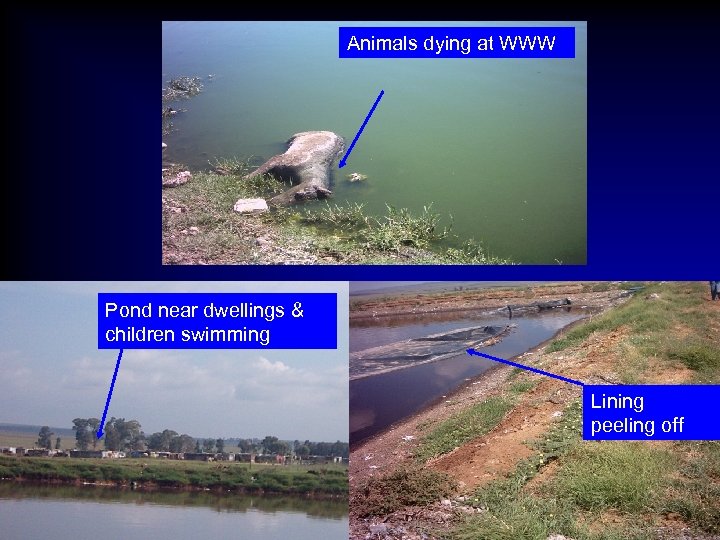
Animals dying at WWW Pond near dwellings & children swimming Lining peeling off
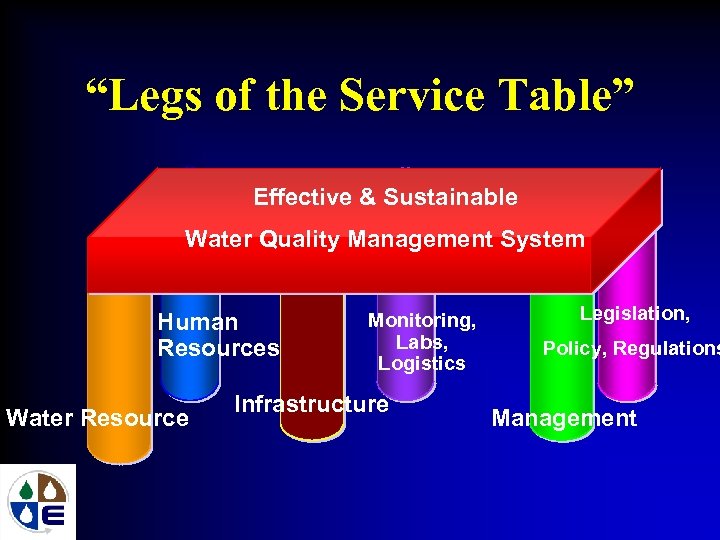
“Legs of the Service Table” Effective & Sustainable Water Quality Management System Human Resources Water Resource Monitoring, Labs, Logistics Infrastructure Legislation, Policy, Regulations Management
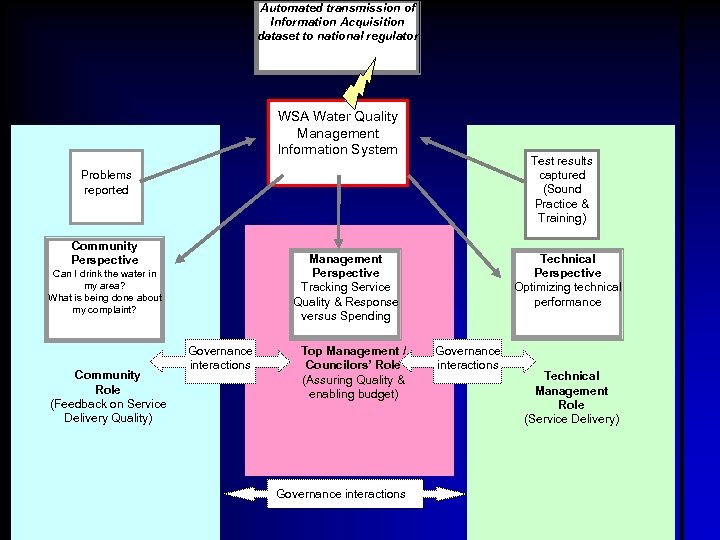
Automated transmission of Information Acquisition dataset to national regulator WSA Water Quality Management Information System Test results captured (Sound Practice & Training) Problems reported Community Perspective Management Perspective Tracking Service Quality & Response versus Spending Can I drink the water in my area? What is being done about my complaint? Community Role (Feedback on Service Delivery Quality) Governance interactions Top Management / Councilors’ Role (Assuring Quality & enabling budget) Governance interactions Technical Perspective Optimizing technical performance Governance interactions Technical Management Role (Service Delivery)
Free State Water Quality Management Collaboration = Success
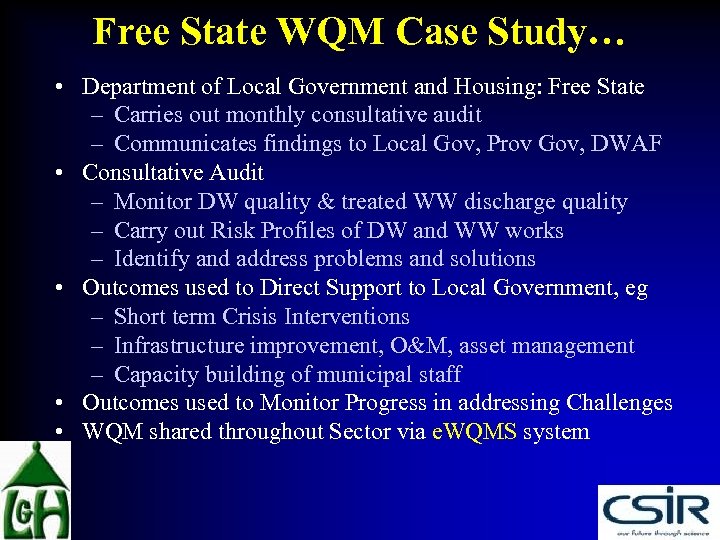
Free State WQM Case Study… • Department of Local Government and Housing: Free State – Carries out monthly consultative audit – Communicates findings to Local Gov, Prov Gov, DWAF • Consultative Audit – Monitor DW quality & treated WW discharge quality – Carry out Risk Profiles of DW and WW works – Identify and address problems and solutions • Outcomes used to Direct Support to Local Government, eg – Short term Crisis Interventions – Infrastructure improvement, O&M, asset management – Capacity building of municipal staff • Outcomes used to Monitor Progress in addressing Challenges • WQM shared throughout Sector via e. WQMS system
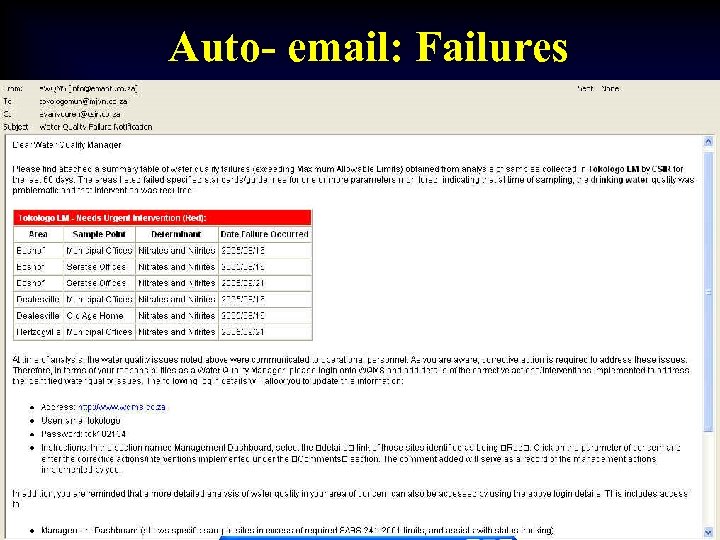
Auto- email: Failures
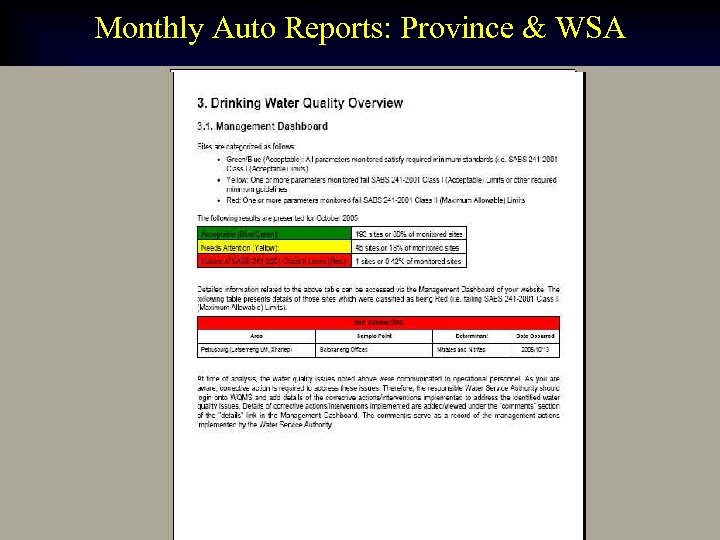
Monthly Auto Reports: Province & WSA
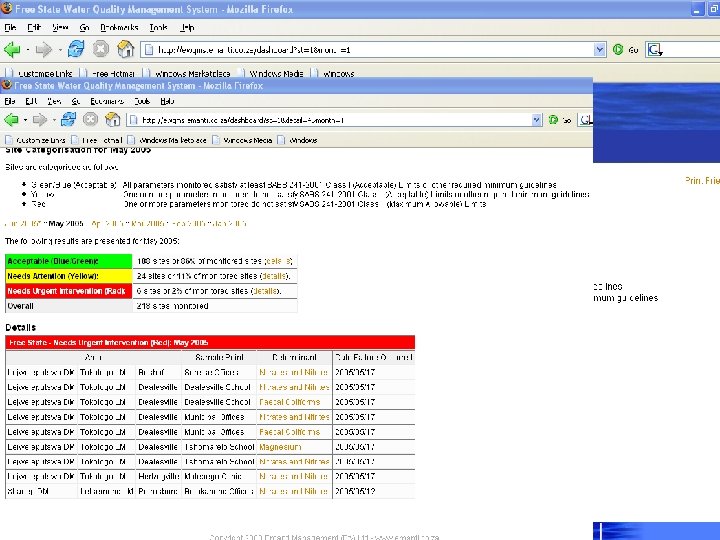
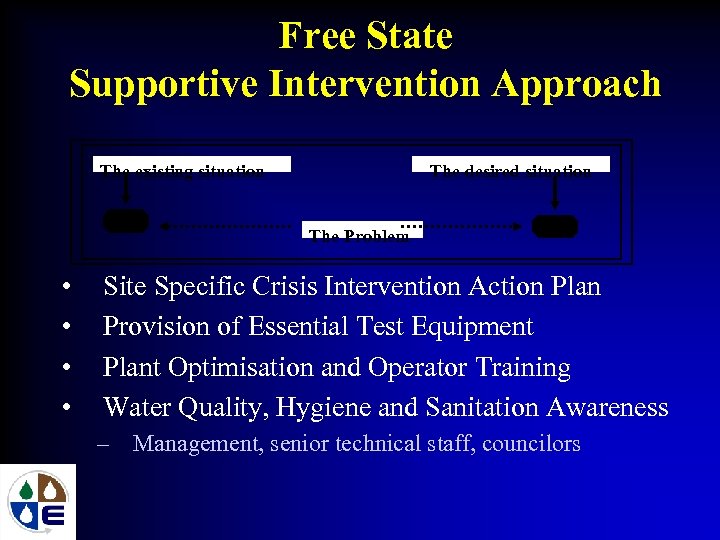
Free State Supportive Intervention Approach The existing situation The desired situation The Problem • • Site Specific Crisis Intervention Action Plan Provision of Essential Test Equipment Plant Optimisation and Operator Training Water Quality, Hygiene and Sanitation Awareness – Management, senior technical staff, councilors
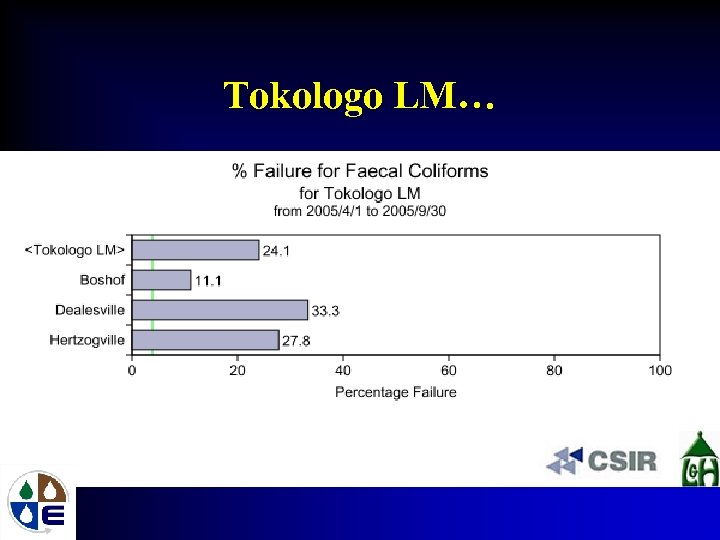
Tokologo LM…
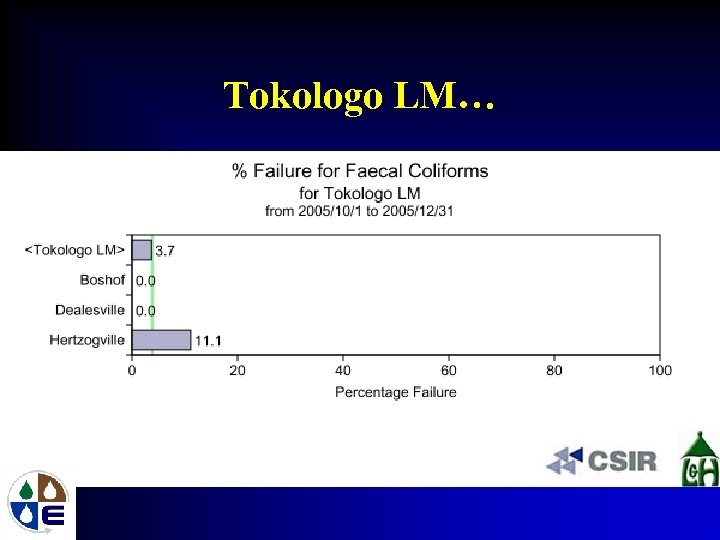
Tokologo LM…
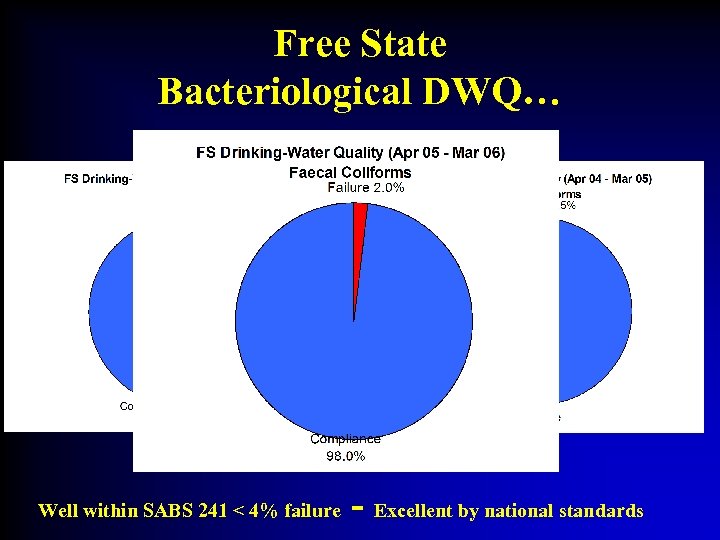
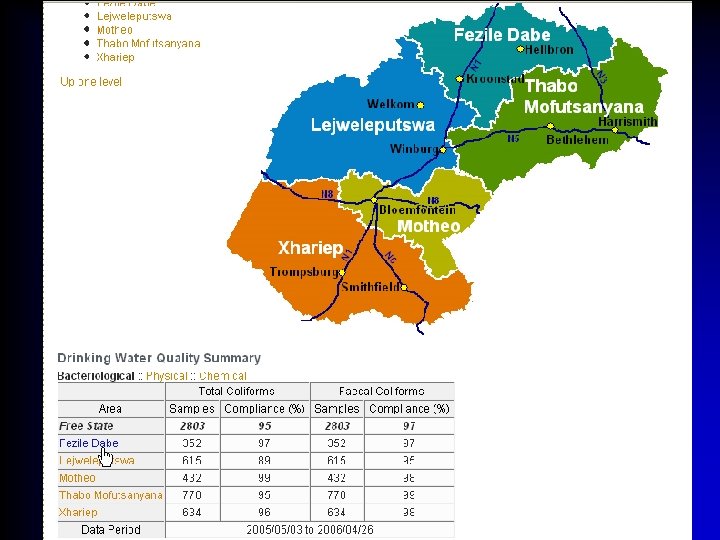
Free State Bacteriological DWQ… Well within SABS 241 < 4% failure - Excellent by national standards
Sector Developed Tools for Assisting Local Government …
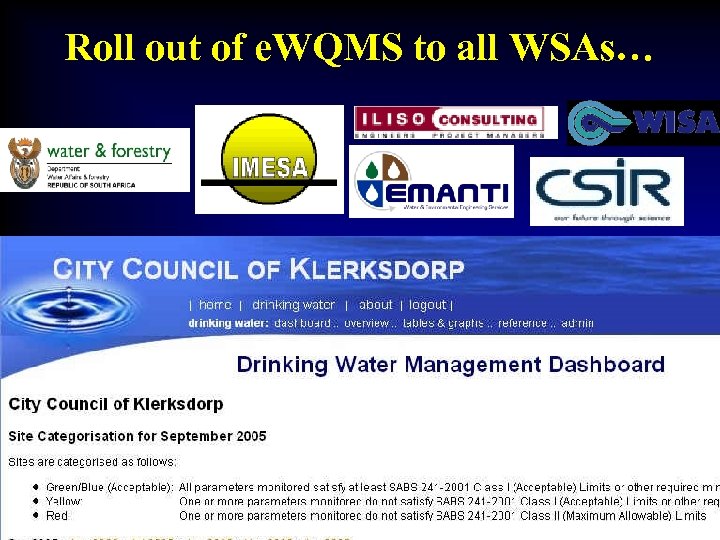
Roll out of e. WQMS to all WSAs…
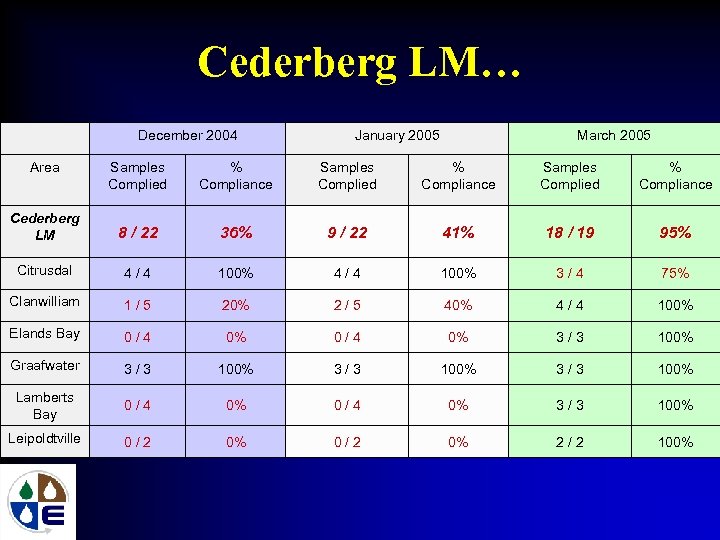
Cederberg LM… Area December 2004 January 2005 March 2005 Samples Complied % Compliance Cederberg LM 8 / 22 36% 9 / 22 41% 18 / 19 95% Citrusdal 4 / 4 100% 3 / 4 75% Clanwilliam 1 / 5 20% 2 / 5 40% 4 / 4 100% Elands Bay 0 / 4 0% 3 / 3 100% Graafwater 3 / 3 100% Lamberts Bay 0 / 4 0% 3 / 3 100% Leipoldtville 0 / 2 0% 2 / 2 100%
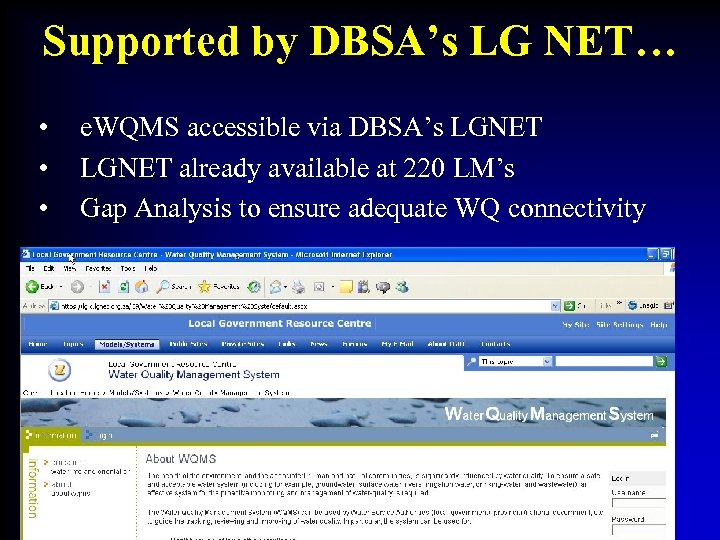
Supported by DBSA’s LG NET… • • • e. WQMS accessible via DBSA’s LGNET already available at 220 LM’s Gap Analysis to ensure adequate WQ connectivity
Water Research Commission Risk Management Tools… Located on WSA’s e. WQMS system By Which: – “self-management” by WSAs – Guides provincial and National support In Brief: – Simple, Robust, Reliable – Can be completed by range of people with same outcome – Identifies & assesses Key Areas of Risk – Allows for comparative assessments – Guides Proactive & Supportive Intervention
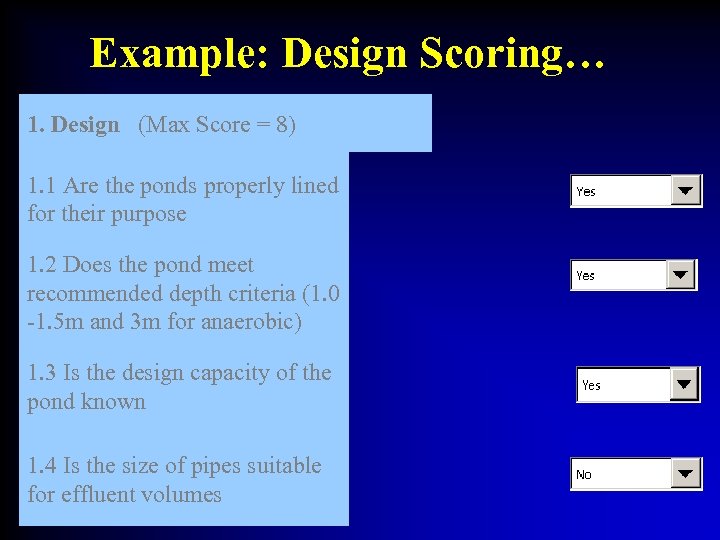
Example: Design Scoring… 1. Design (Max Score = 8) 1. 1 Are the ponds properly lined for their purpose 1. 2 Does the pond meet recommended depth criteria (1. 0 -1. 5 m and 3 m for anaerobic) 1. 3 Is the design capacity of the pond known 1. 4 Is the size of pipes suitable for effluent volumes
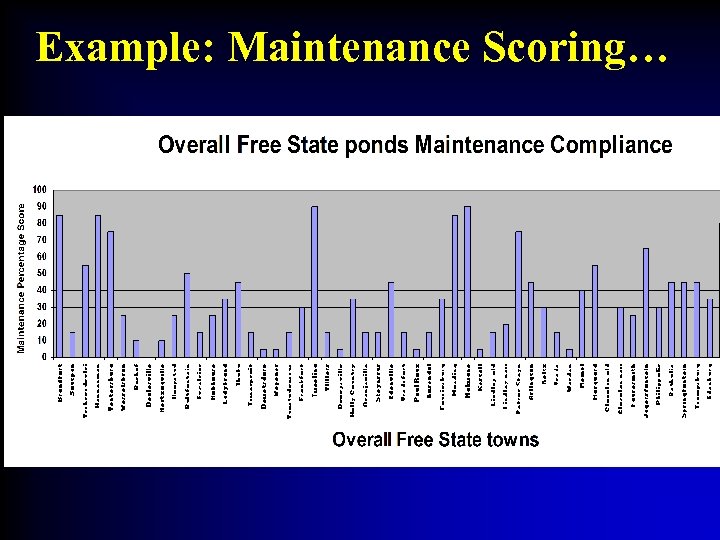
Example: Maintenance Scoring…
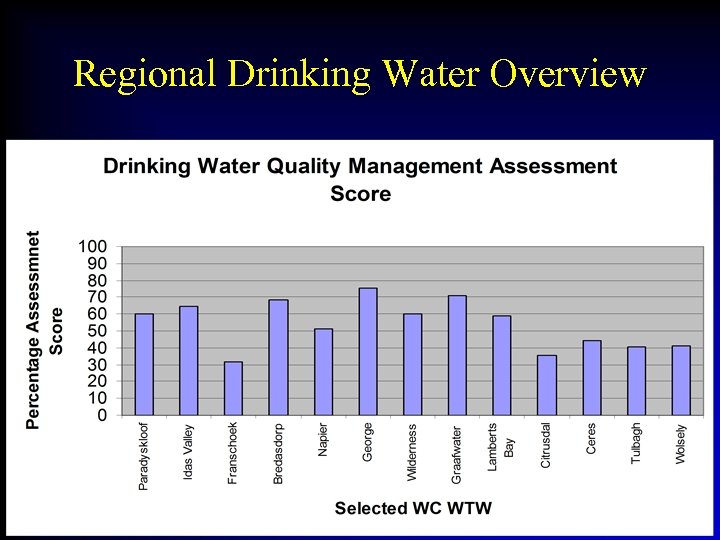
Regional Drinking Water Overview
Open Source: e. WQMS • Open Source approach is powerful new way of generating knowledge and economic value • Mark Shuttleworth & Presidents Office note this an area of strategic opportunity for South Africa • Available at little or no cost (eg WSA’s e. WQMS) • Used in SA by inter alia Treasury, SARS, Dept of Agriculture • CSIR's Meraka Institute using OSS to take computing to the community , eg Soweto and Limpopo • Also used by Peru, France, Mexico, Brazil, People’s Republic of China, Scandinavian countries, USA, NASA and US Navy, Pakistan, Australia, India, Cambodia, Thailand, Argentina, UK Government and European Union
In Conclusion • Need exists for “one view” that adequately conveys overall status of Water Systems to different stakeholders – Roll out of e. WQMS to all WSAs will help considerably • Supportive Simple, Robust, Reliable Tools can guide Provincial Sector and WSAs to address Gaps • “Bottom up” & Consultative development of WSA oriented tools helps ensure success thereof • Best Practice examples exist to guide • Open Source approach provides great opportunity for sector collaboration
THANK YOU! ANY QUESTIONS!! Thabisa Manxodidi/Grant Mackintosh thabisam@emanti. co. za, grantm@emanti. co. za
Скачать презентацию Water Quality Management Assisting Local Government by Leveraging
688a980141b60122578b1e52f5d7e494.ppt