


 Скачать презентацию Water Quality Acquisition Systems in Australia Address
a5d7b69aad876a4aae4350be20321052.ppt
- Количество слайдов: 25
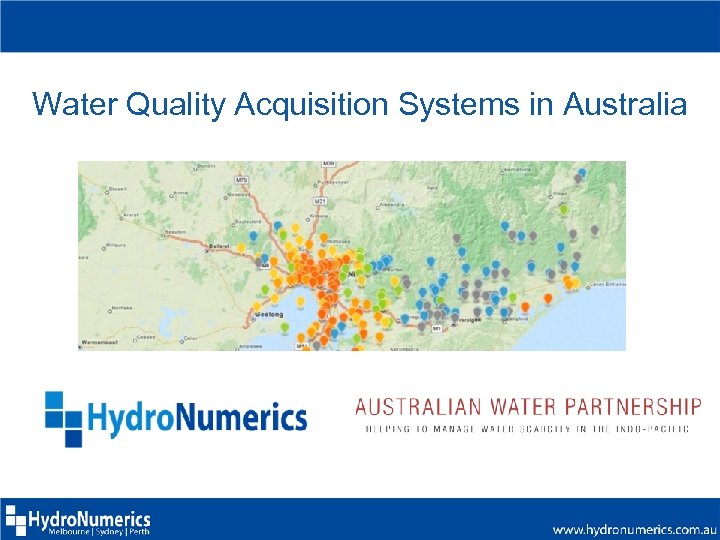 Water Quality Acquisition Systems in Australia
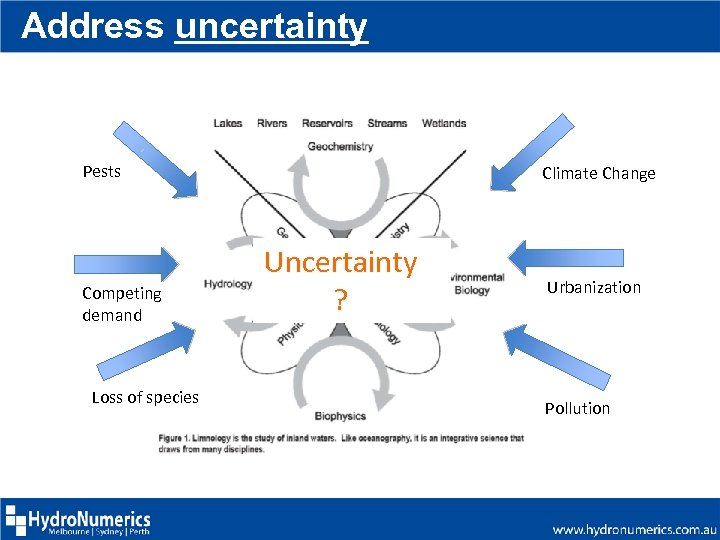 Address uncertainty Pests Competing demand Loss of species Climate Change Uncertainty ? Urbanization Pollution
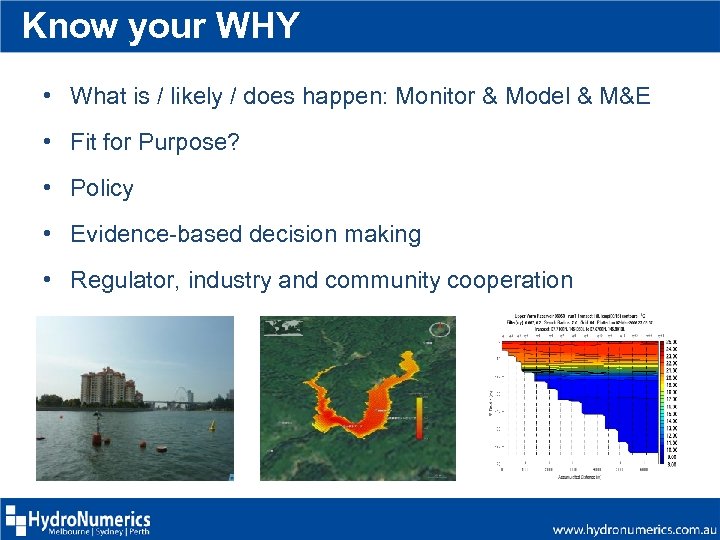 Know your WHY • What is / likely / does happen: Monitor & Model & M&E • Fit for Purpose? • Policy • Evidence-based decision making • Regulator, industry and community cooperation
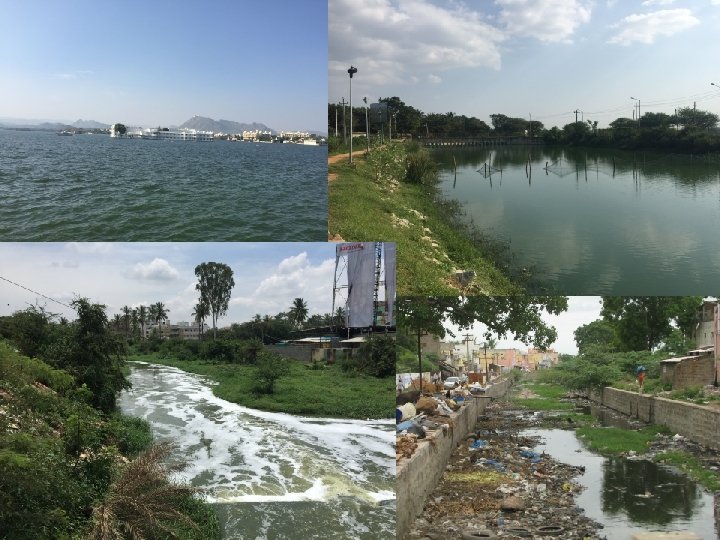 Why
Why
 Things to do – add excel
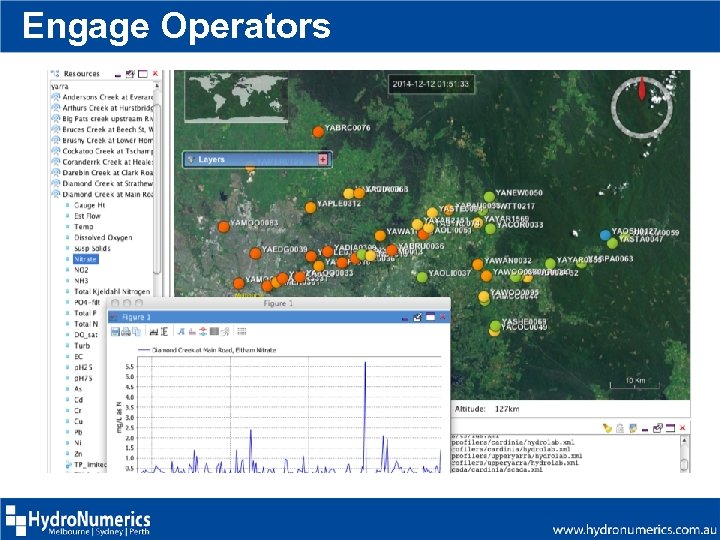
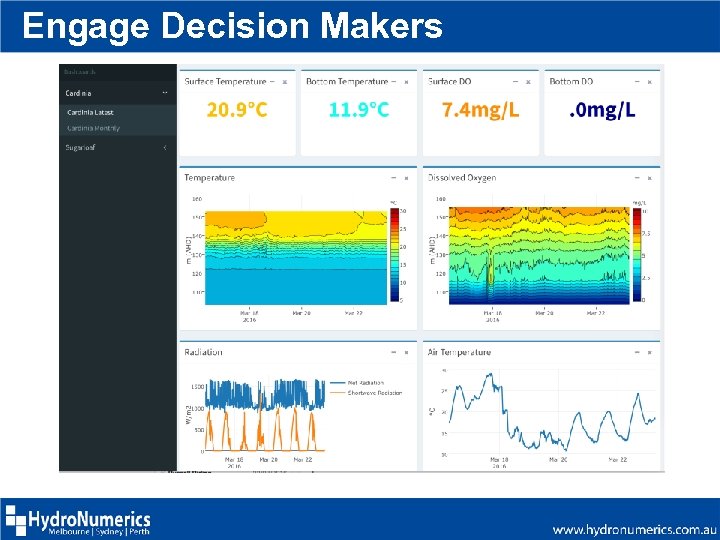
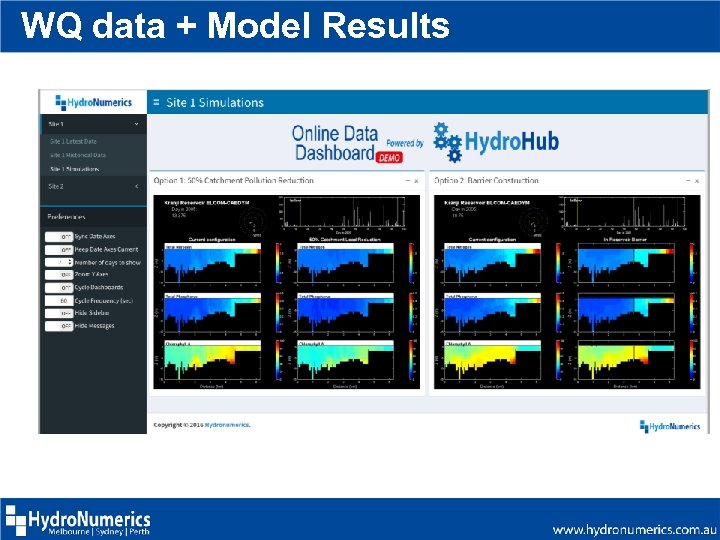
 Specialist Hydro-Met Monitoring • Real-time flood forecasting, reservoir modelling and online Decision Support System for hydrology, water quality and flooding • Hydrolog, XPSWMM, SCADA, AEM 3 D+ SOURCE Catchments • Postgres database generation, secondary Postgres database • Warning system and multiple scenario forecasting • Online diagnostic and forecasting system • ORACLE and SQL Server databases integration
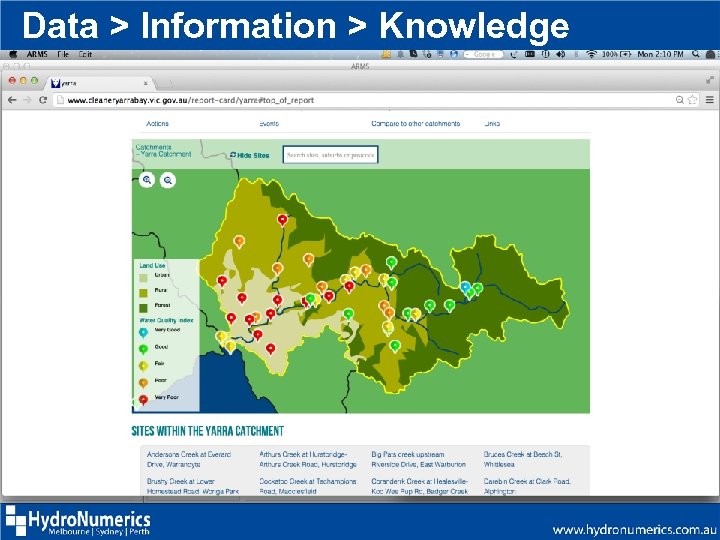 Data > Information > Knowledge
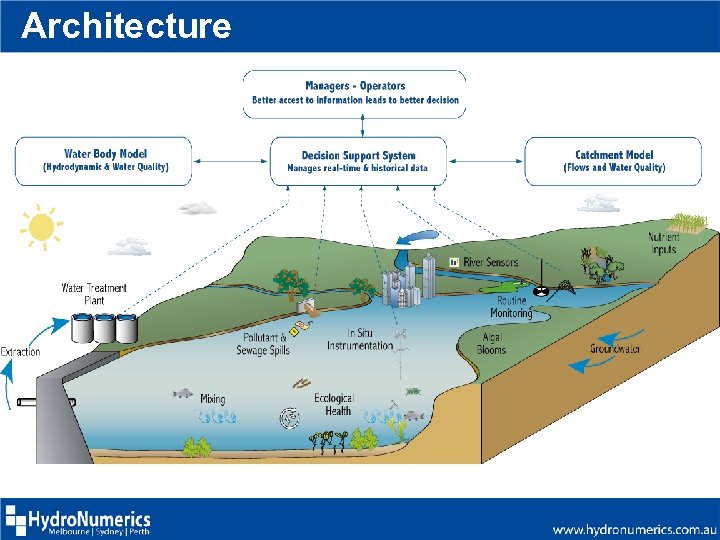 Architecture
 Engaging Experts
 Engage Operators
 Engage Decision Makers
 WQ data + Model Results
 Engaging before Trust communities. Use
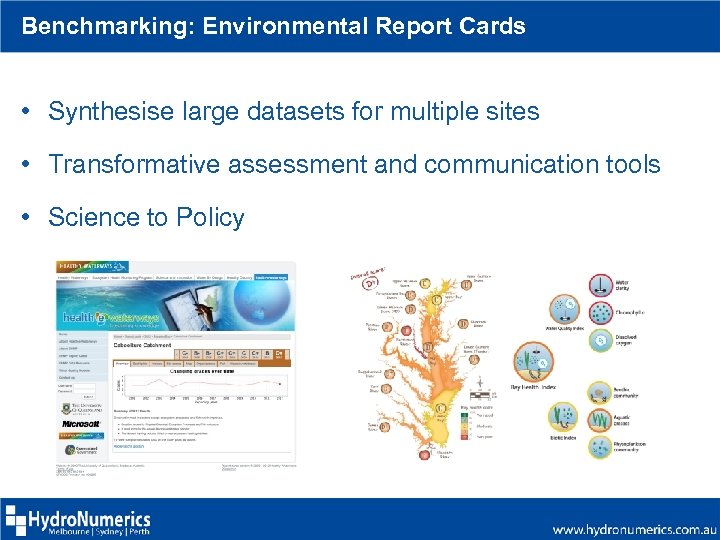 Benchmarking: Environmental Report Cards • Synthesise large datasets for multiple sites • Transformative assessment and communication tools • Science to Policy
 Water Quality Index (WQI) • Single number to express overall water quality based on range of biological, physical or chemical parameters • Complex > Easy to Use • Geo-spatial and spatio-temporal consolidation
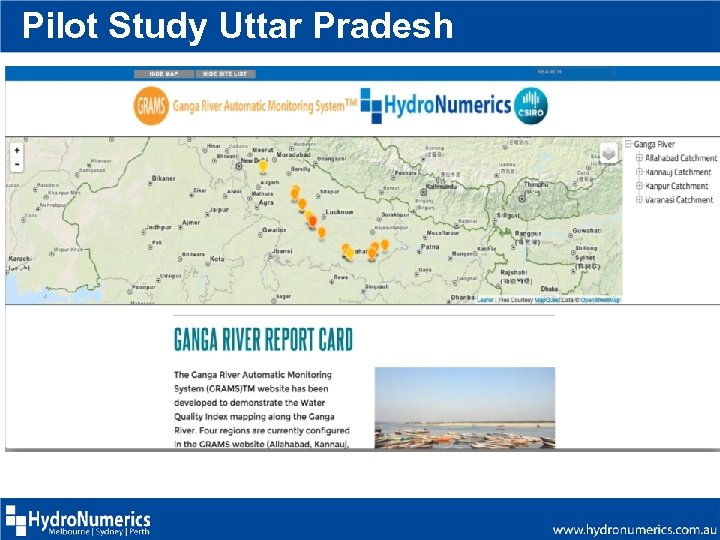 Pilot Study Uttar Pradesh
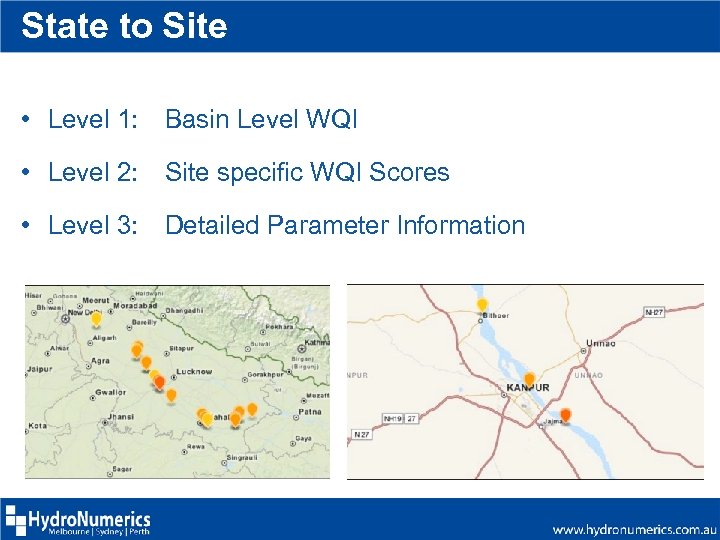 State to Site • Level 1: Basin Level WQI • Level 2: Site specific WQI Scores • Level 3: Detailed Parameter Information
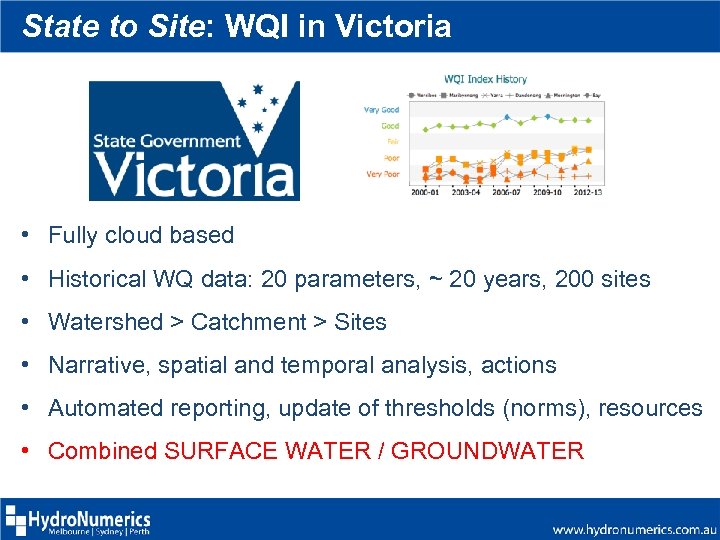 State to Site: WQI in Victoria • Fully cloud based • Historical WQ data: 20 parameters, ~ 20 years, 200 sites • Watershed > Catchment > Sites • Narrative, spatial and temporal analysis, actions • Automated reporting, update of thresholds (norms), resources • Combined SURFACE WATER / GROUNDWATER
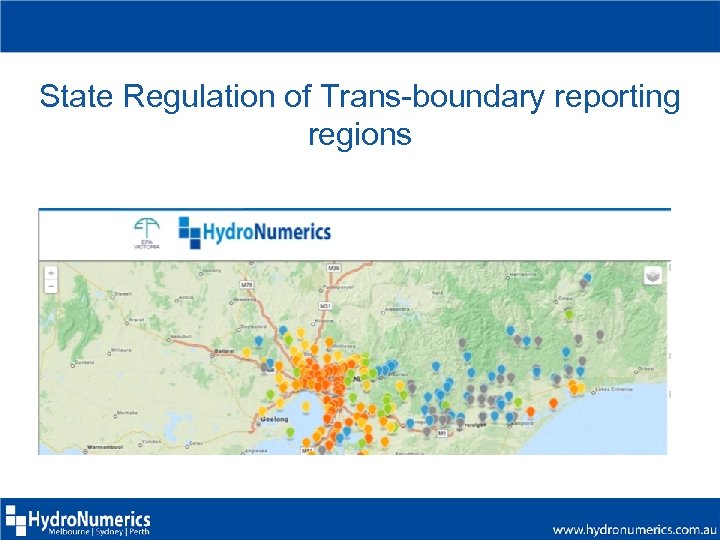 State Regulation of Trans-boundary reporting regions
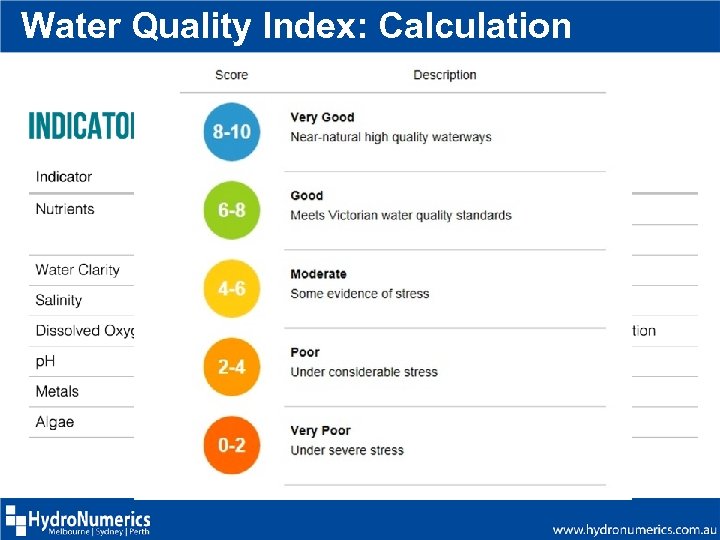 Water Quality Index: Calculation
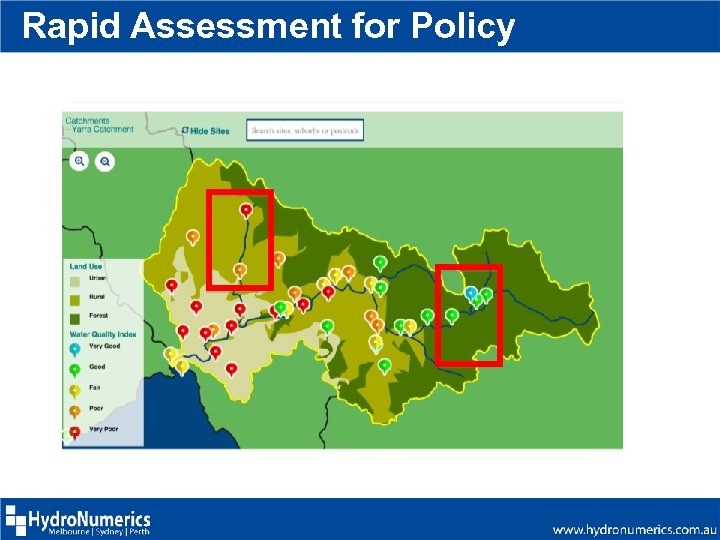 Rapid Assessment for Policy
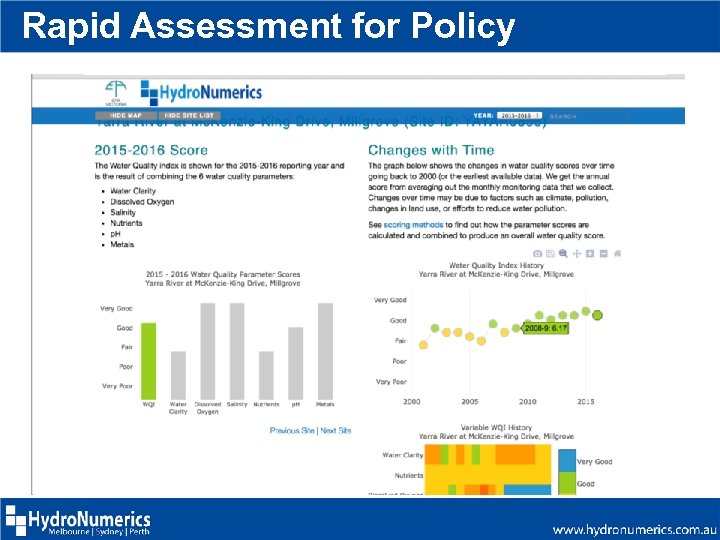 Rapid Assessment for Policy
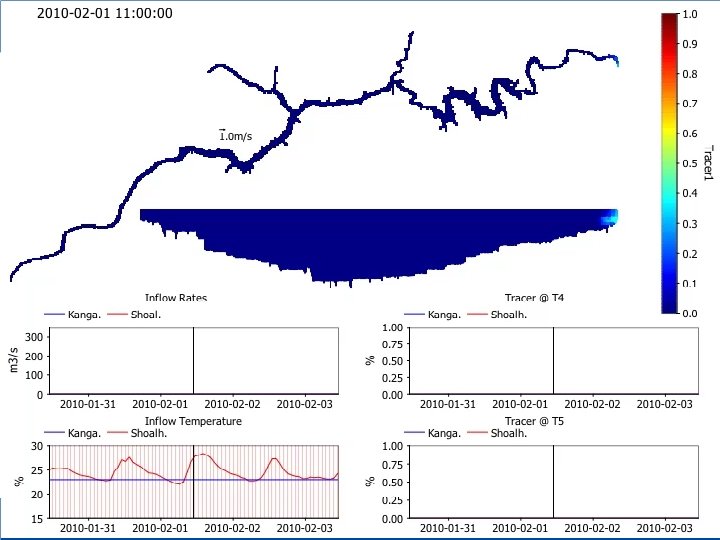 Where do I monitor?
 Lessons from Australia • Use data to assist investment framework • Build Trust among states/stakeholders/users • Whole-of-life-Cycle Cost Assessment • Think ‘downstream’ & ‘off-stream’ • Combine qualitative and quantitative • Consider alternative measures of ‘security’ • The data are used to improve environment
 Thank you IMG_3479