


 Скачать презентацию Water Erosion Research at Washington State University Joan
5869b5f712b9175503e58839eddf6169.ppt
- Количество слайдов: 39
 Water Erosion Research at Washington State University Joan Wu, Markus Flury, Shuhui Dun, Cory Greer, Prabhakar Singh Washington State University, Pullman, WA Don Mc. Cool USDA ARS PWA, Pullman, WA Bill Elliot USDA FS RMRS, Moscow, ID Dennis Flanagan USDA ARS NSERL, West Lafayette, IN
 Major Funding Sources § In-house funding from various collaborating research institutes § US Forest Service Rocky Mountain Research Station § Inland Northwest Research Alliance § USDA National Research Initiatives Programs § US Geological Survey/State of Washington Water Research Center
 The Needs § Protecting and improving water quality in agricultural watersheds are major goals of the USDA NWQ and NRI Programs § For many watersheds, sediment is the greatest pollutant § In watershed assessment, it is crucial to understand sedimentation processes and their impacts on water quality § To successfully implement erosion control practices, it is necessary to determine the spatio-temporal distribution of sediment sources and potential long-term effectiveness of sediment reduction by these practices
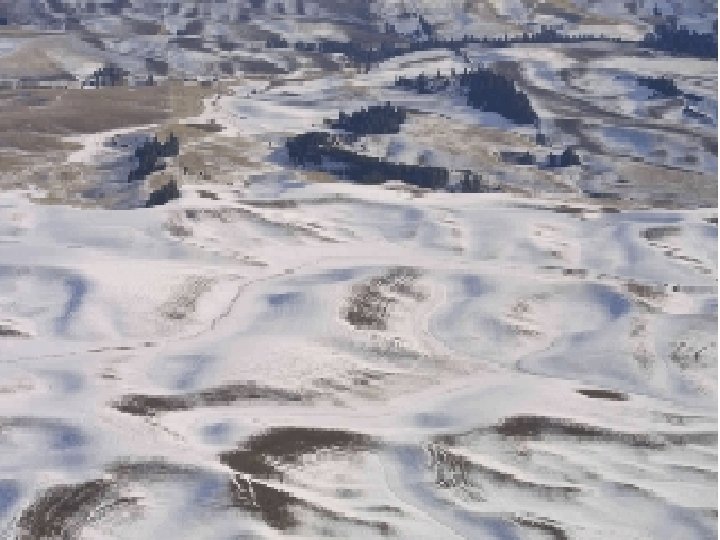
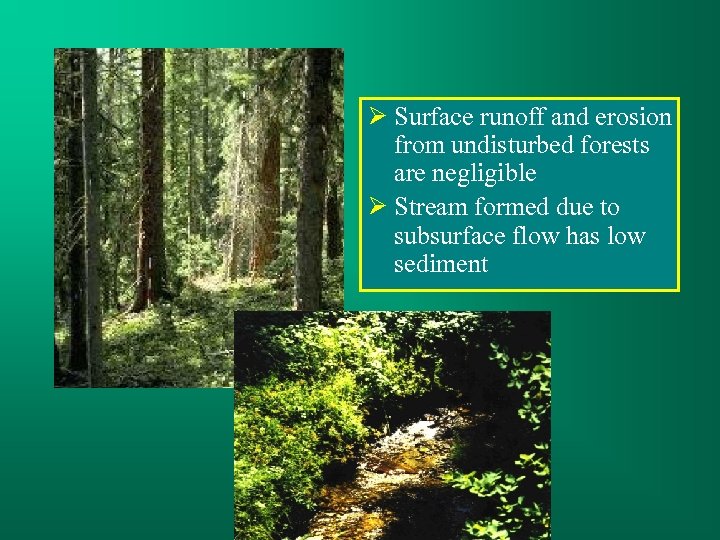 Surface runoff and erosion from undisturbed forests are negligible Stream formed due to subsurface flow has low sediment
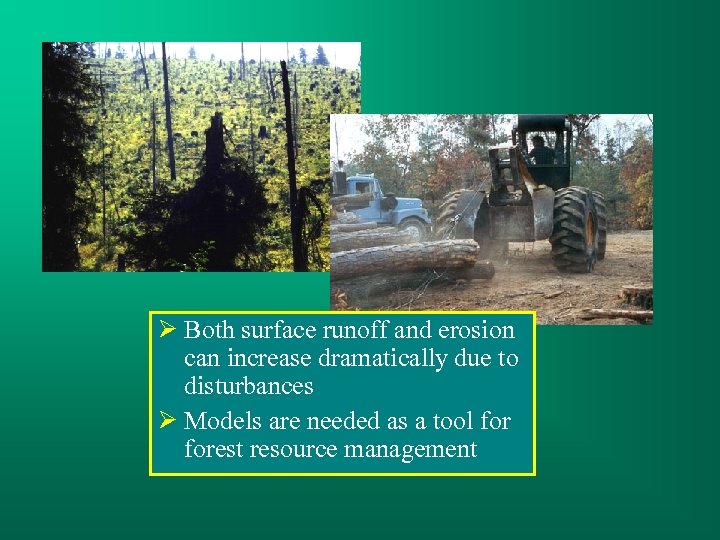 Both surface runoff and erosion can increase dramatically due to disturbances Models are needed as a tool forest resource management
 The WEPP Model § WEPP: Water Erosion Prediction Project a process-based erosion prediction model developed by the USDA ARS to replace the functional model USLE built on fundamentals of hydrology, plant science, hydraulics, and erosion mechanics § WEPP uses observed or stochastically-generated climate inputs to predict spatial and temporal distributions of soil detachment and deposition on an event or continuous basis, along a hillslope or across a watershed § Equipped with a geospatial processing interface, WEPP is a promising tool in watershed assessment and management
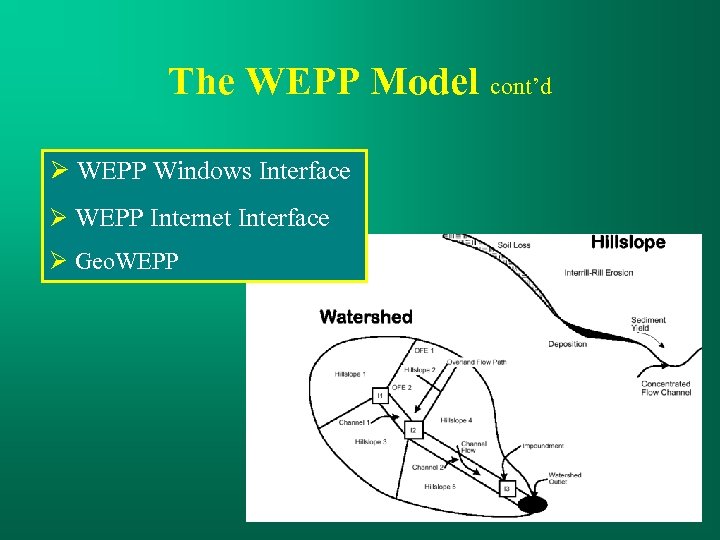 The WEPP Model cont’d WEPP Windows Interface WEPP Internet Interface Geo. WEPP
 Long-term Research Efforts § Goal Continuously develop, refine and apply the WEPP model for watershed assessment and restoration under different land-use, climatic and hydrologic conditions § Objectives Improve the subsurface hydrology routines so that WEPP can be used under both infiltration-excess and saturation-excess runoff conditions in crop-, range- and forestlands Improve the winter hydrology and erosion routines through combined experimentation and modeling so that WEPP can be used for quantifying water erosion in the US PNW and other cold regions where winter hydrology is important Continually test the suitability of WEPP using data available from different localities within and outside the US
 Progresses Made § Numerous modifications to WEPP have been made to Correct the hydraulic structure routines Improve the water balance algorithms Incorporate the Penman-Monteith ET method (UN FAO standard) Improve the subsurface runoff routines Expand improve winter hydrology routines to better simulate § Freeze-thaw processes § Snow redistribution processes § WEPP new releases accessible at NSERL’s website http: //topsoil. nserl. purdue. edu/nserlweb/index. html
 Ongoing Studies
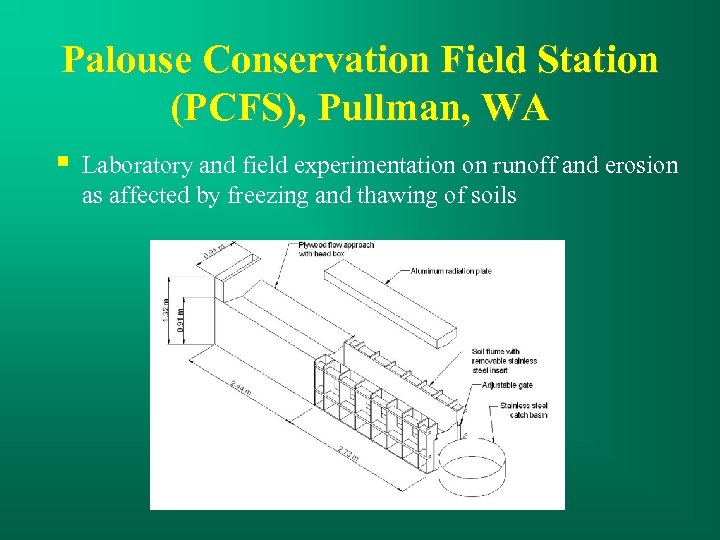 Palouse Conservation Field Station (PCFS), Pullman, WA § Laboratory and field experimentation on runoff and erosion as affected by freezing and thawing of soils
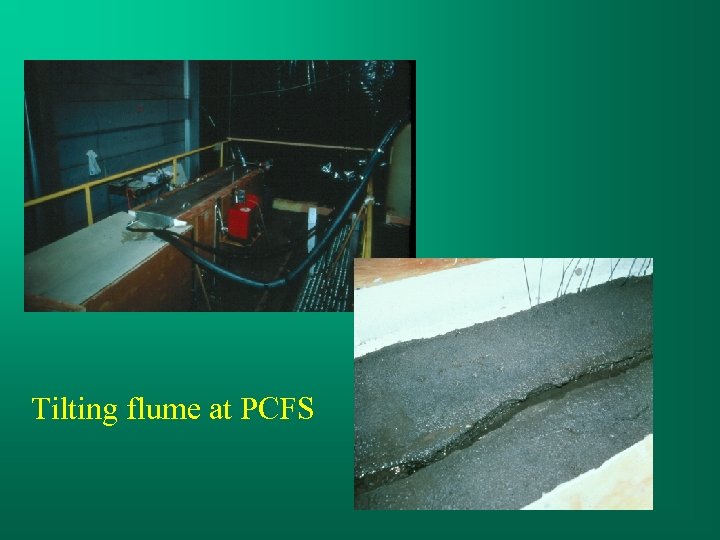 Tilting flume at PCFS
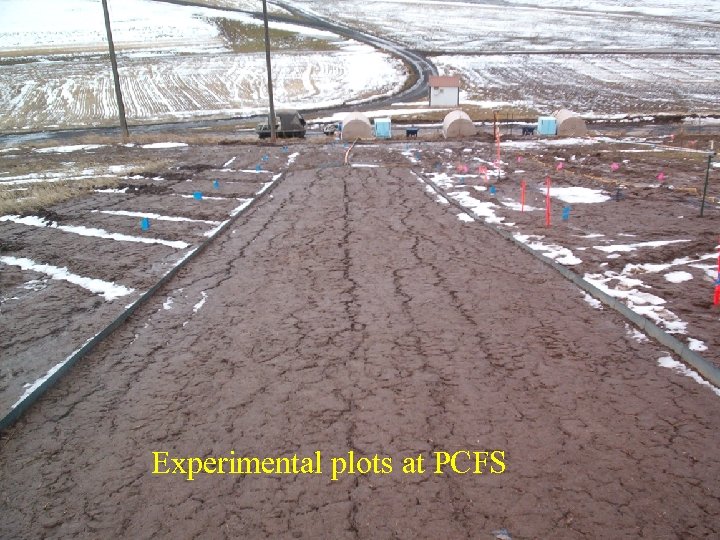 Experimental plots at PCFS
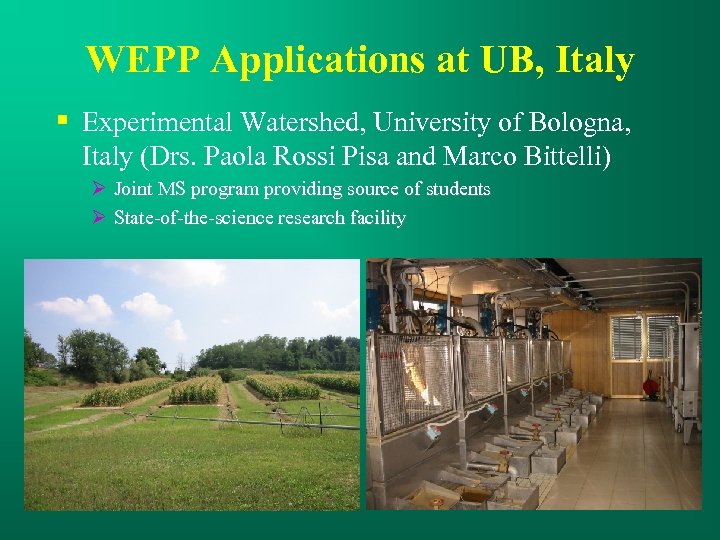 WEPP Applications at UB, Italy § Experimental Watershed, University of Bologna, Italy (Drs. Paola Rossi Pisa and Marco Bittelli) Joint MS program providing source of students State-of-the-science research facility
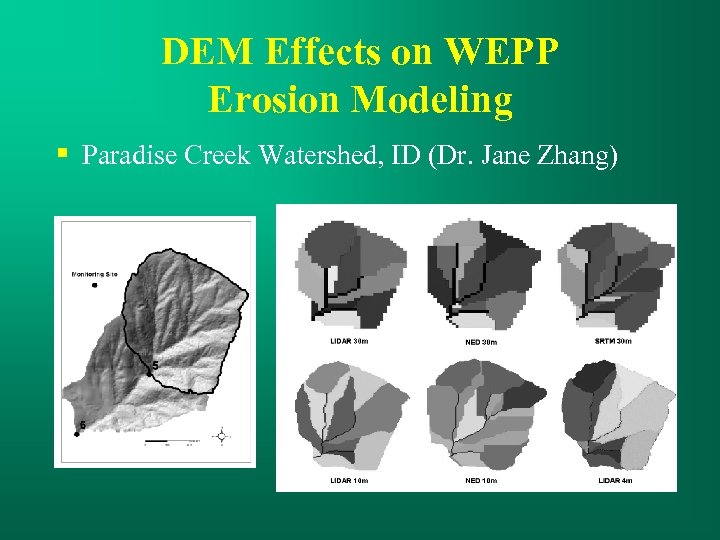 DEM Effects on WEPP Erosion Modeling § Paradise Creek Watershed, ID (Dr. Jane Zhang)
 WEPP Applications for Watershed Erosion Modeling § Reeder Experimental Watershed at the USDA ARS CPCRC, Pendleton, OR (Dr. John Williams) § Paradise Creek Watershed, ID (Drs. Jan Boll and Erin Brooks) § Mica Creek Watershed, ID (Dr. Tim Link)
 Long-term Research Efforts § Goal Continuously develop, refine and apply the WEPP model for watershed assessment and restoration under different land-use, climatic and hydrologic conditions § Objectives Improve the subsurface hydrology routines so that WEPP can be used under both infiltration-excess and saturation-excess runoff conditions in crop-, range- and forestlands Improve the winter hydrology and erosion routines through combined experimentation and modeling so that WEPP can be used for quantifying water erosion in the US PNW and other cold regions where winter hydrology is important Continually test the suitability of WEPP using data available from different localities within and outside the US
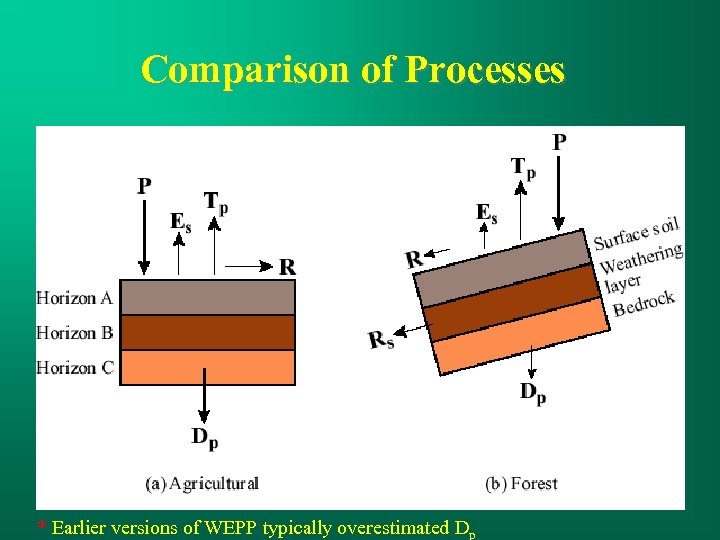 Comparison of Processes * Earlier versions of WEPP typically overestimated Dp
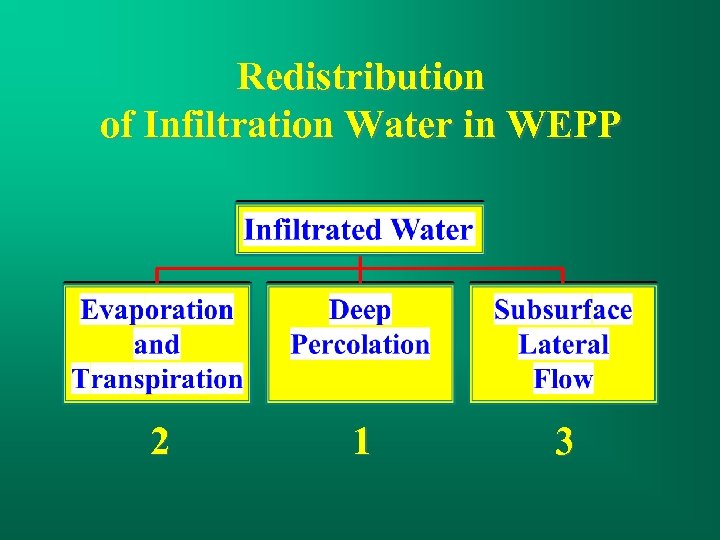 Redistribution of Infiltration Water in WEPP 2 1 3
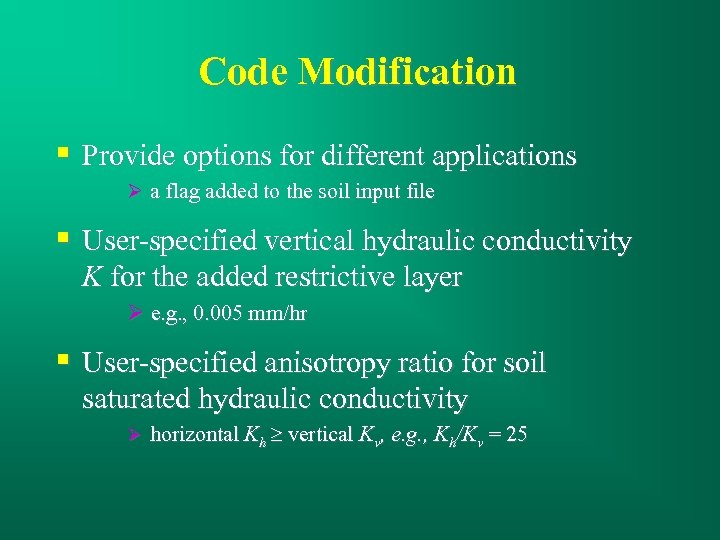 Code Modification § Provide options for different applications a flag added to the soil input file § User-specified vertical hydraulic conductivity K for the added restrictive layer e. g. , 0. 005 mm/hr § User-specified anisotropy ratio for soil saturated hydraulic conductivity horizontal Kh vertical Kv, e. g. , Kh/Kv = 25
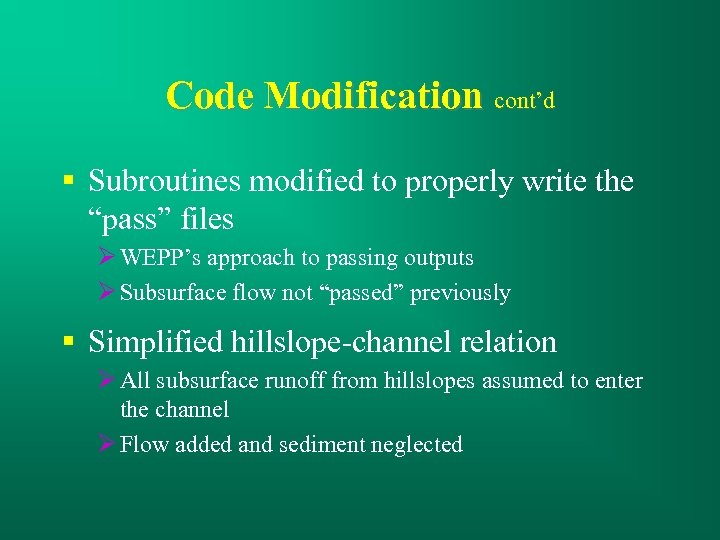 Code Modification cont’d § Subroutines modified to properly write the “pass” files WEPP’s approach to passing outputs Subsurface flow not “passed” previously § Simplified hillslope-channel relation All subsurface runoff from hillslopes assumed to enter the channel Flow added and sediment neglected
 A Case Application: Modeling Forest Runoff and Erosion Dun, S. , J. Q. Wu, W. J Elliot, P. R. Robichaud, D. C. Flanagan, J. R. Frankenberger, R. E. Brown, A. C. Xu, 2007. J. Hydrol (in review)
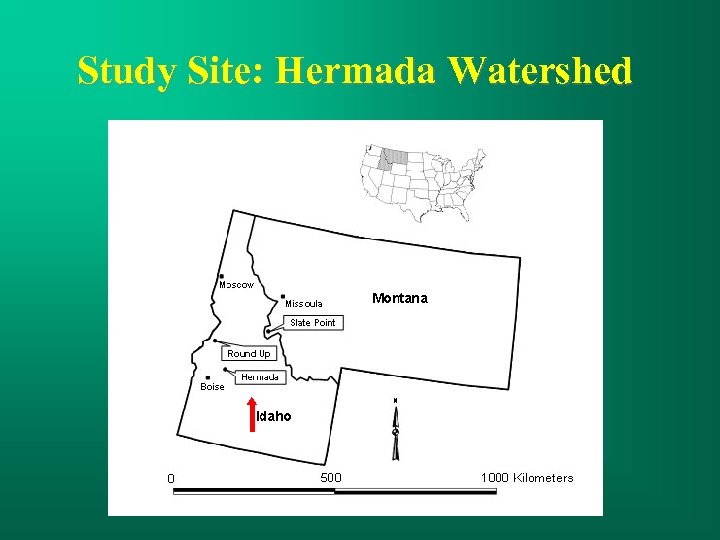 Study Site: Hermada Watershed
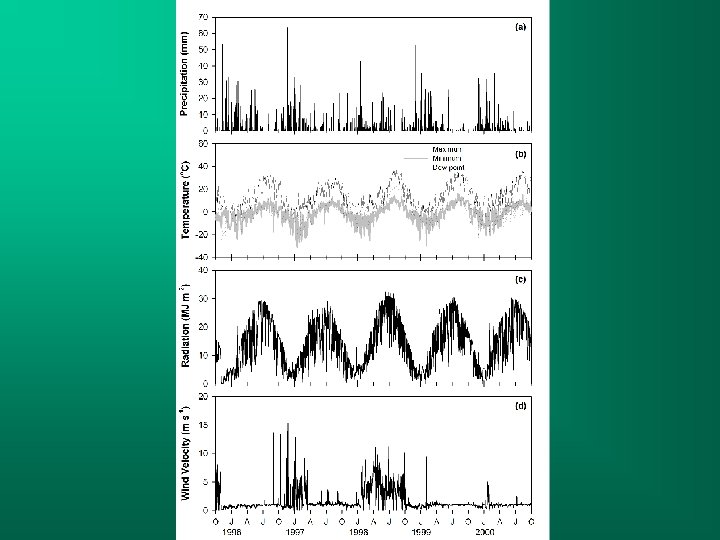
 Physical Setting § Located in the Boise National Forest, SE Lowman, ID § Instrumented during 1995− 2000 to collect whether, runoff, and erosion data § 5 -yr observed data showing an average annual precipitation of 954 mm, among which nearly 30% was runoff
 Re-processed Precipitation
 Watershed Discretization
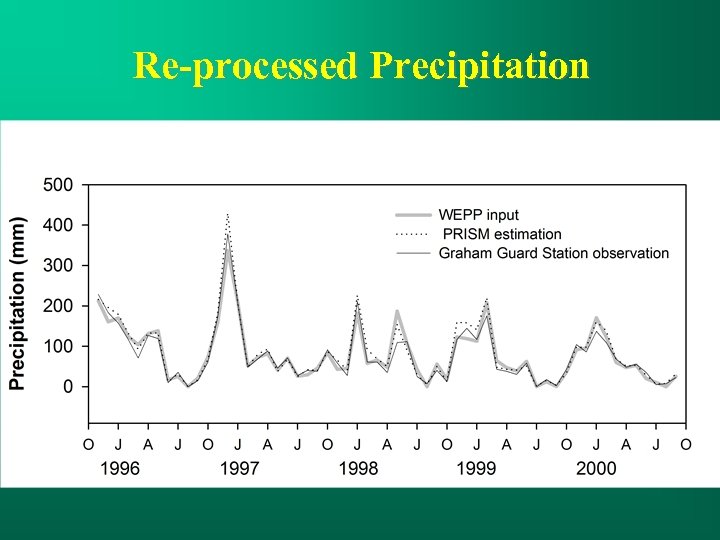
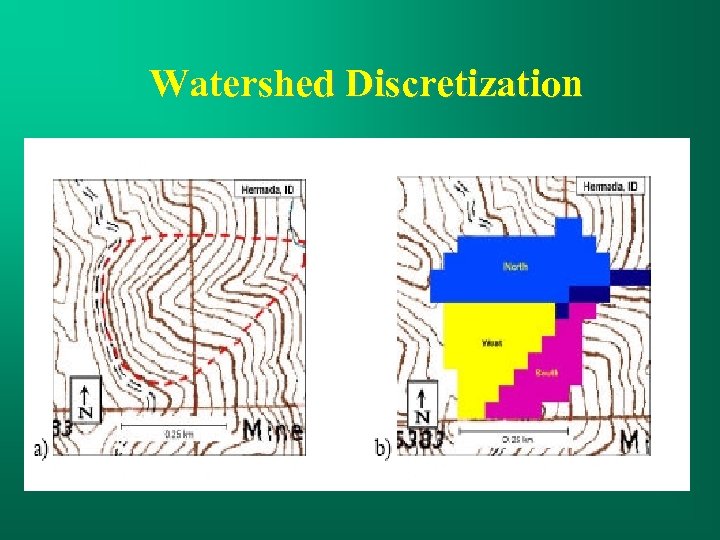
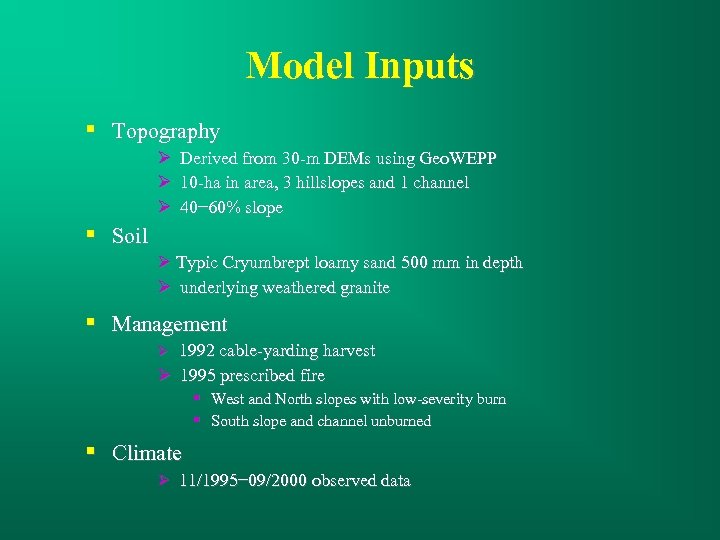 Model Inputs § Topography Derived from 30 -m DEMs using Geo. WEPP 10 -ha in area, 3 hillslopes and 1 channel 40− 60% slope § Soil Typic Cryumbrept loamy sand 500 mm in depth underlying weathered granite § Management 1992 cable-yarding harvest 1995 prescribed fire § West and North slopes with low-severity burn § South slope and channel unburned § Climate 11/1995− 09/2000 observed data
 Results
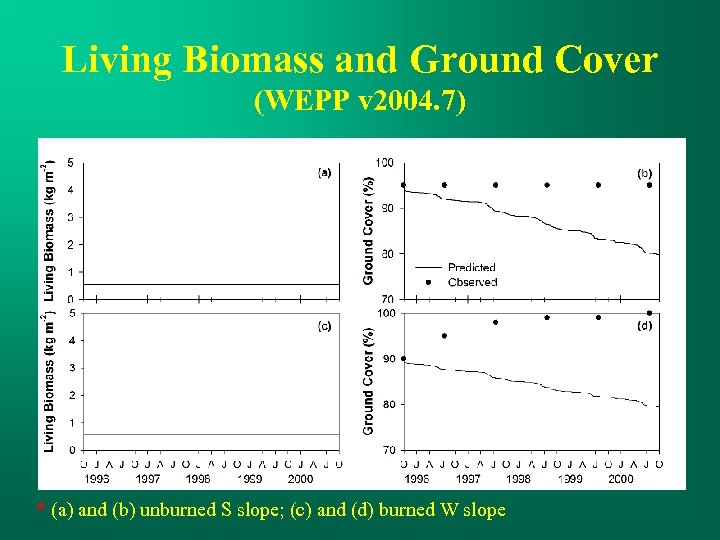 Living Biomass and Ground Cover (WEPP v 2004. 7) * (a) and (b) unburned S slope; (c) and (d) burned W slope
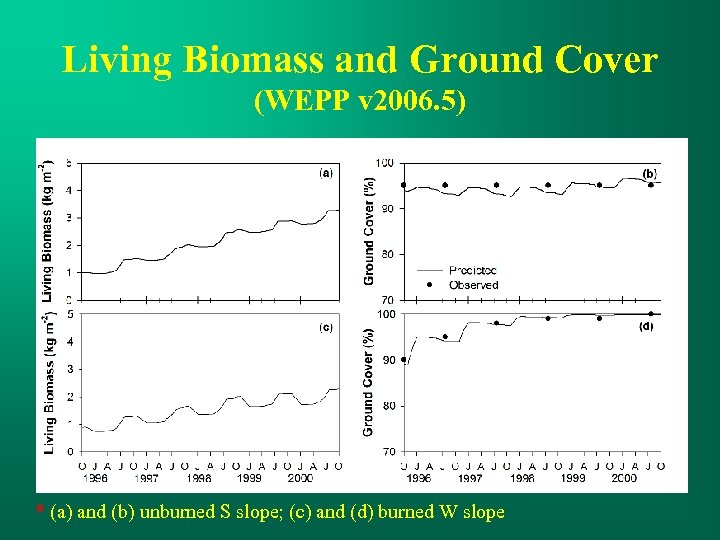 Living Biomass and Ground Cover (WEPP v 2006. 5) * (a) and (b) unburned S slope; (c) and (d) burned W slope
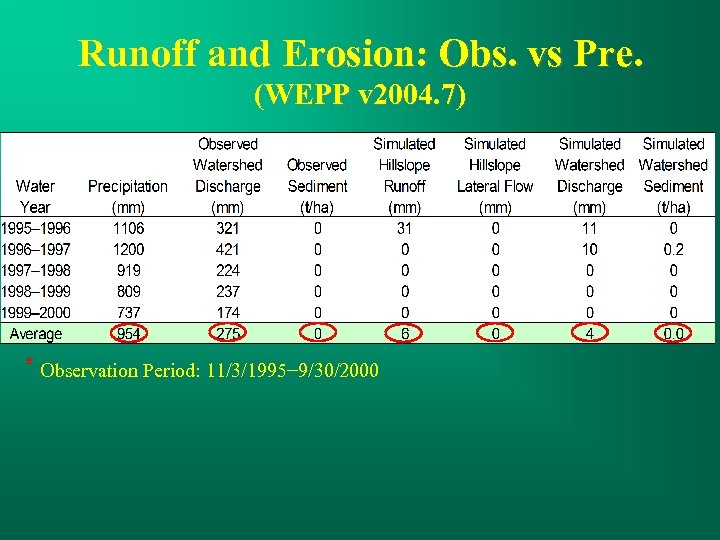 Runoff and Erosion: Obs. vs Pre. (WEPP v 2004. 7) * Observation Period: 11/3/1995− 9/30/2000
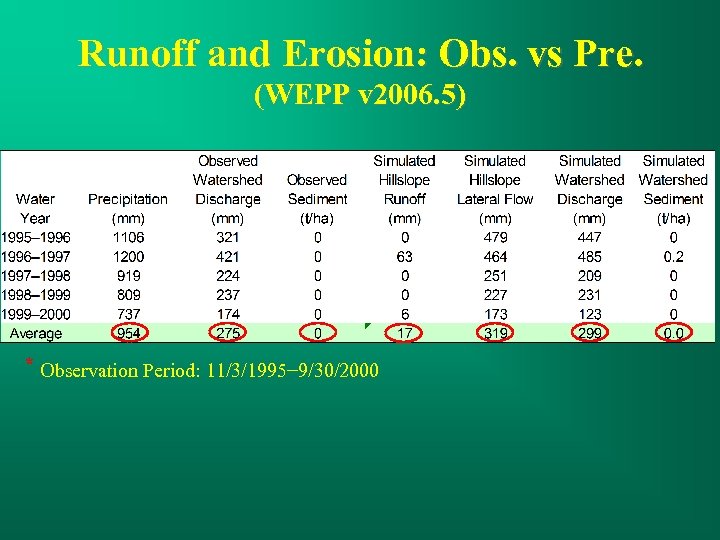 Runoff and Erosion: Obs. vs Pre. (WEPP v 2006. 5) * Observation Period: 11/3/1995− 9/30/2000
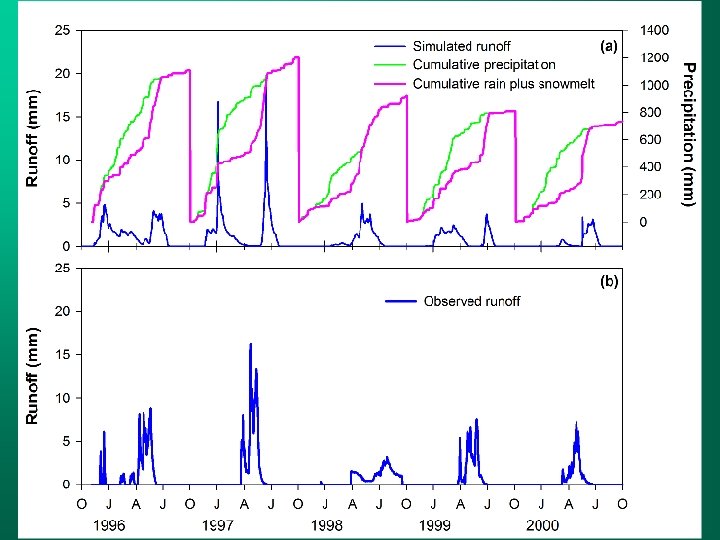
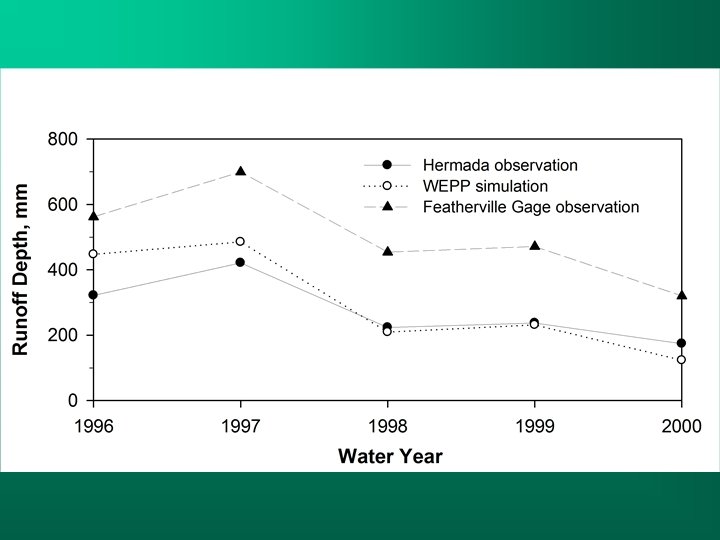
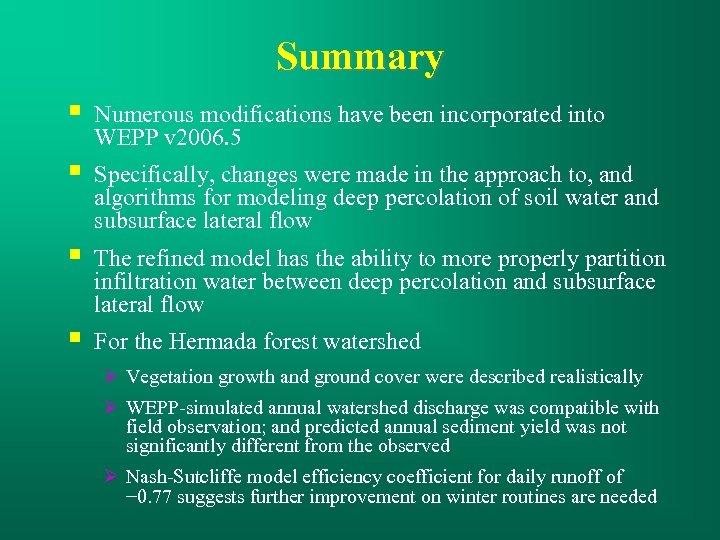 Summary § Numerous modifications have been incorporated into WEPP v 2006. 5 § Specifically, changes were made in the approach to, and algorithms for modeling deep percolation of soil water and subsurface lateral flow § The refined model has the ability to more properly partition infiltration water between deep percolation and subsurface lateral flow § For the Hermada forest watershed Vegetation growth and ground cover were described realistically WEPP-simulated annual watershed discharge was compatible with field observation; and predicted annual sediment yield was not significantly different from the observed Nash-Sutcliffe model efficiency coefficient for daily runoff of − 0. 77 suggests further improvement on winter routines are needed
 Thank You! Questions?